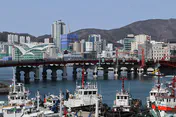
Ghost of Tsushima, one of my favourite PlayStation games, is set during the Mongol invasion of 1274. The game’s island is fictional, but the invaders landed in Hakata Bay. There a low-ranking samurai, Takezaki Suenaga, charged without waiting for orders.
That’s truly brave, but then he paid for scrolls to make sure everyone knew… which I guess is an early example of personal branding.
— Nick
Fukuoka is the most populous city on Kyushu, in Japan, and it is built along the shores of Hakata Bay. It was formed in 1889 from the castle town of Fukuoka and the port of Hakata, and it has been a centre of trade since ancient times. Its stories here are a monk with tea seeds, a samurai against the Mongols, a spear won with sake, a farmer’s gold seal, and a grocer’s free recipe.
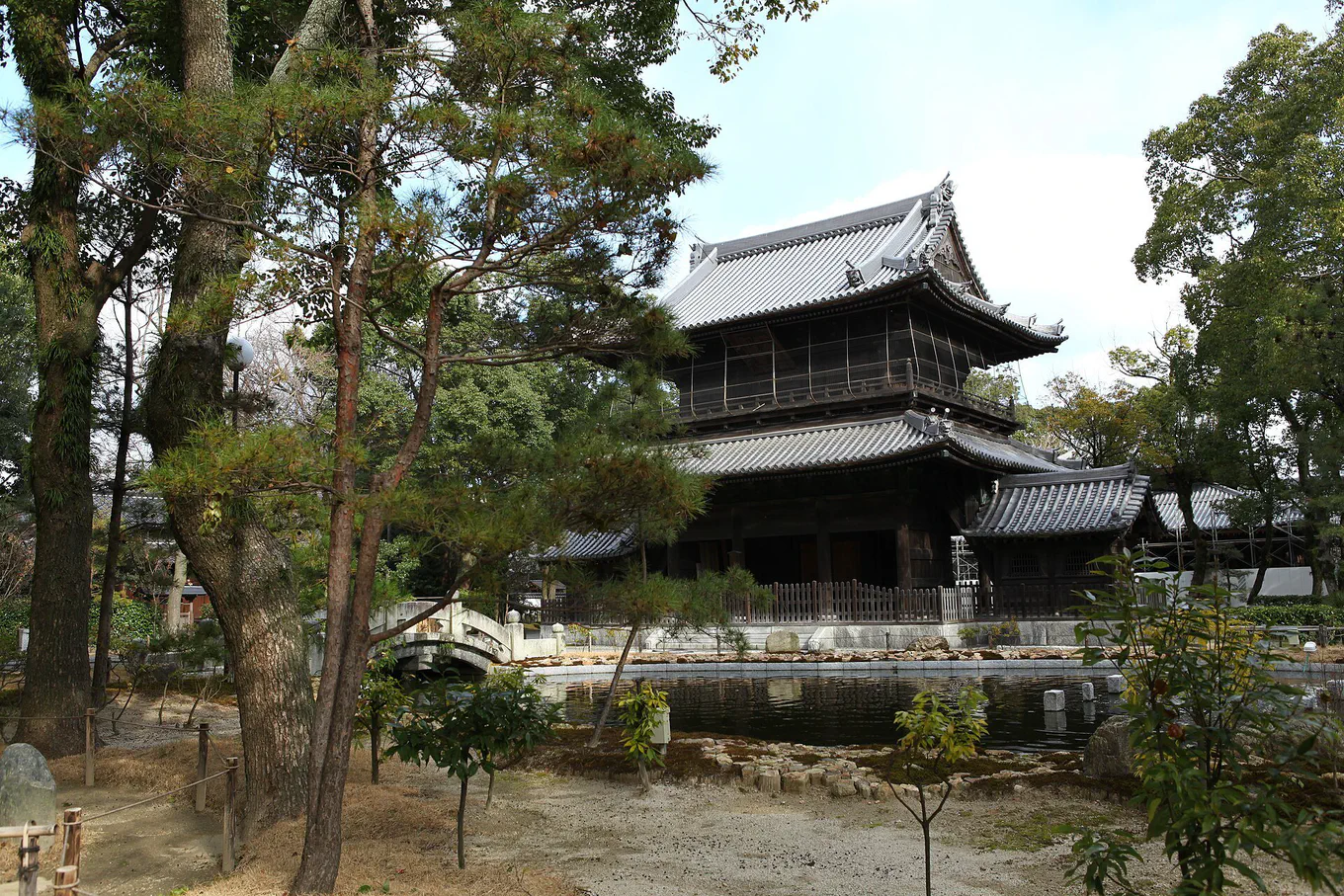
Japan’s tea tradition is credited to Eisai, a priest who came back from China with Zen scriptures and green tea seeds. In 1195, he was given land here in Hakata for Japan’s first full-fledged Zen temple. But at the shōgun’s court, Eisai won notice another way. The shōgun had drunk too much wine the night before. Eisai’s cure was tea, with a scroll setting out its virtues.
2 Takezaki Suenaga and the Mongol wall on Hakata Bay
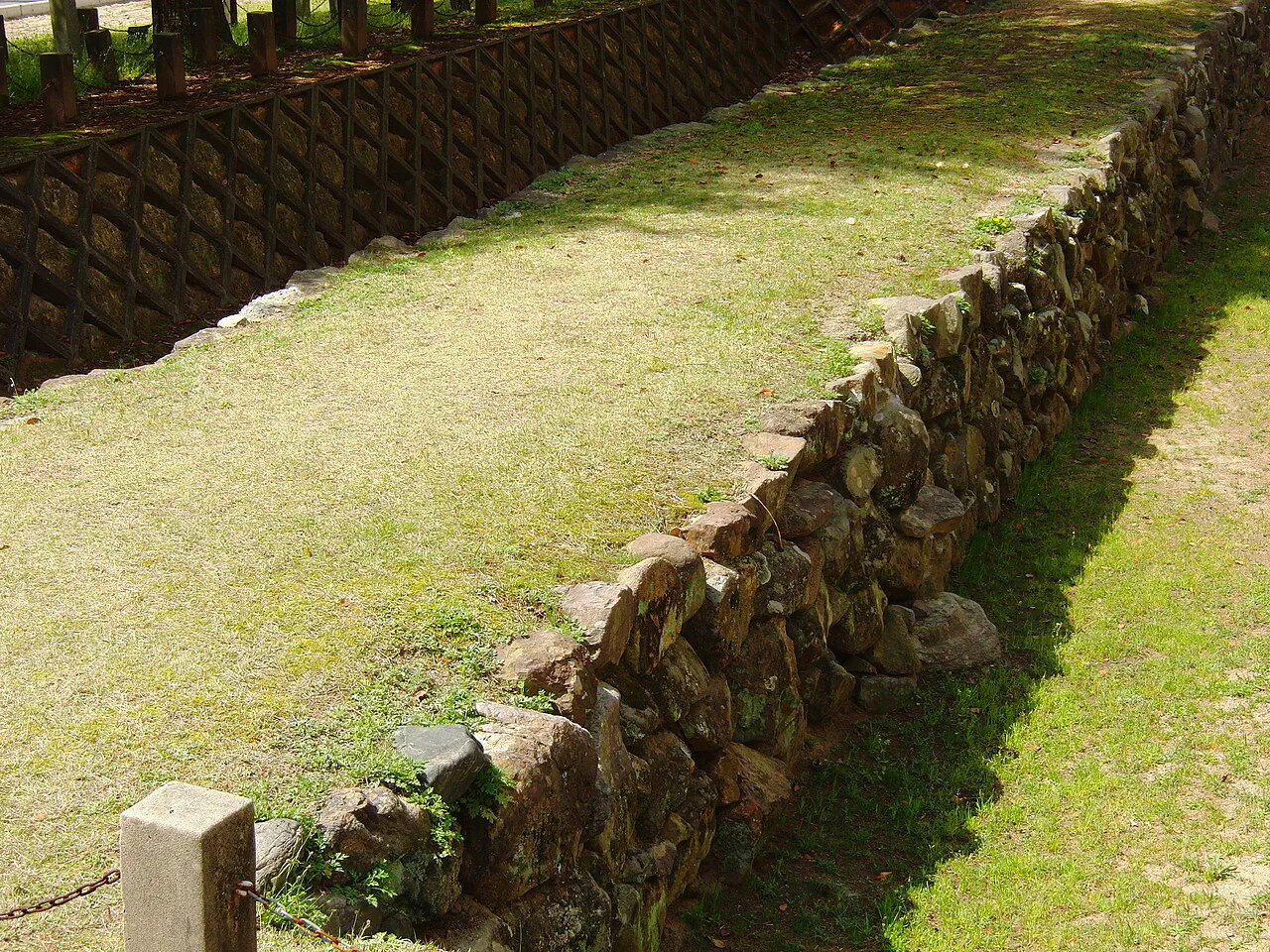
Stand here. The Genkō Bōrui, the Mongol defence wall, at Nishijin near Seinan Gakuin University, where the tops of a few stone sections show.
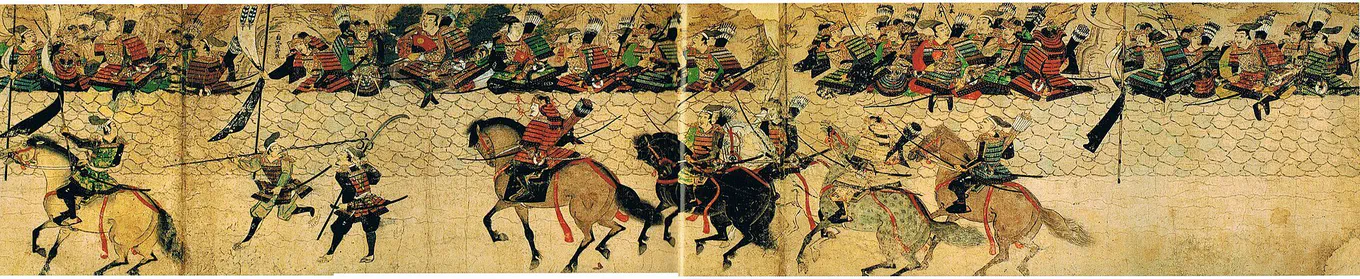
Samurai at the stone defence wall on Hakata Bay, in the Mōko Shūrai Ekotoba scrolls commissioned by Takezaki Suenaga.Unknown / Public domain.
Before the typhoon called kamikaze wrecked the second Mongol fleet, the first landed in Hakata Bay in 1274. Takezaki Suenaga, a low-ranking samurai, was told to wait and attacked anyway. But his commander’s report was never sent to the shogunate, so his deeds went unrecognised. He sold his horses and saddles to plead in Kamakura, and won a horse and land. He paid for scrolls showing him among the defenders before the new wall. In his words, “Other than advancing and having my deeds known, I have nothing else to live for.”
3 Mori Tahei, the samurai who drank for a spear
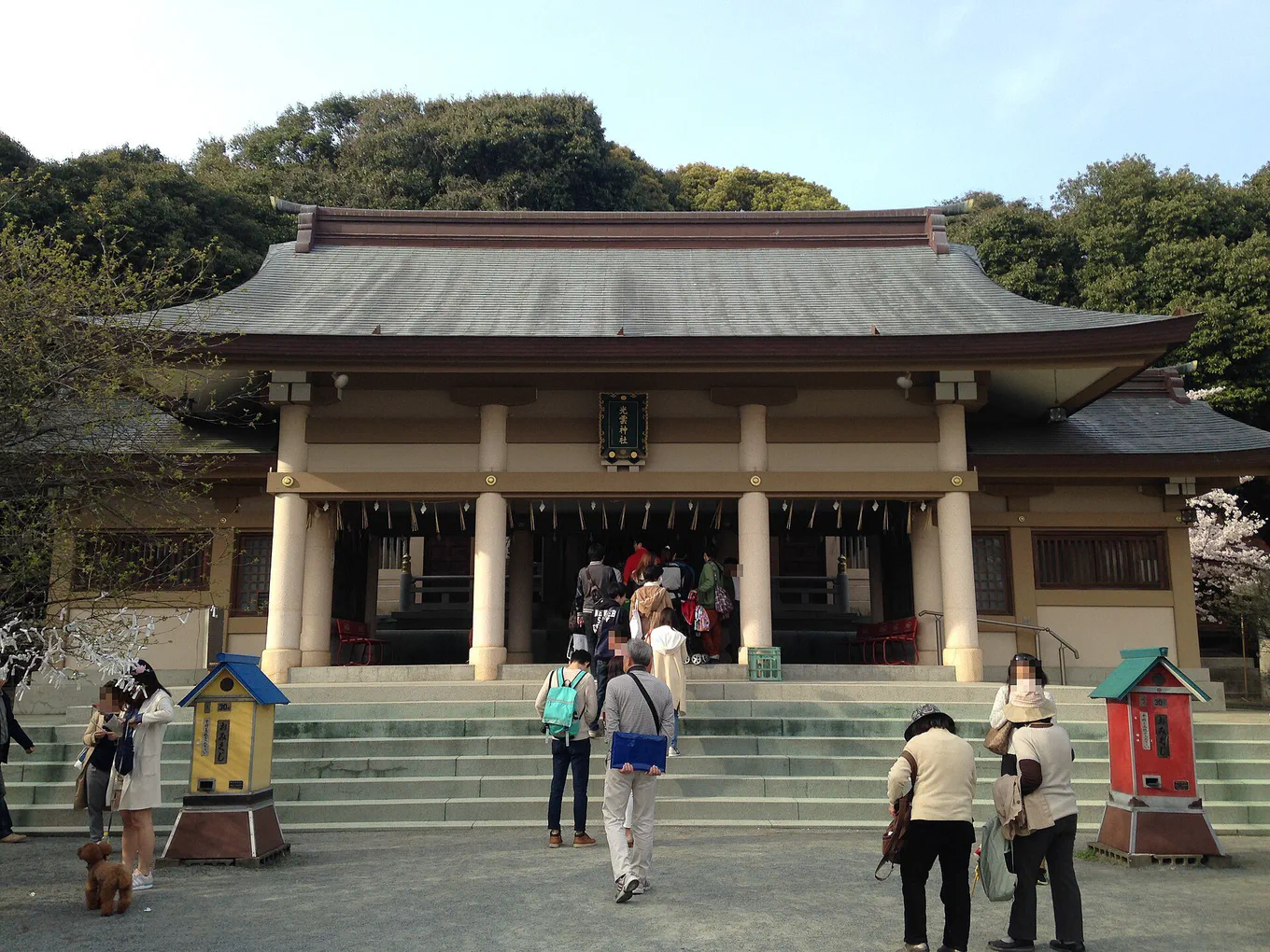
Stand here. Terumo Shrine in Nishi Park, where a statue of Tahei holds the spear and a huge sake cup.
The folk song Kuroda-bushi tells how Mori Tahei won one of the Three Great Spears of Japan. The story goes that his lord, Kuroda Nagamasa, who named Fukuoka, sent him to the warlord Fukushima Masanori in Kyoto and forbade him any sake. Masanori pressed a huge bowl on him and promised him anything in the room if he drained it. Tahei drank it straight down and called for another. Then he claimed the spear, which Masanori had from his own master, Toyotomi Hideyoshi. Bound by his word, Masanori handed it over.
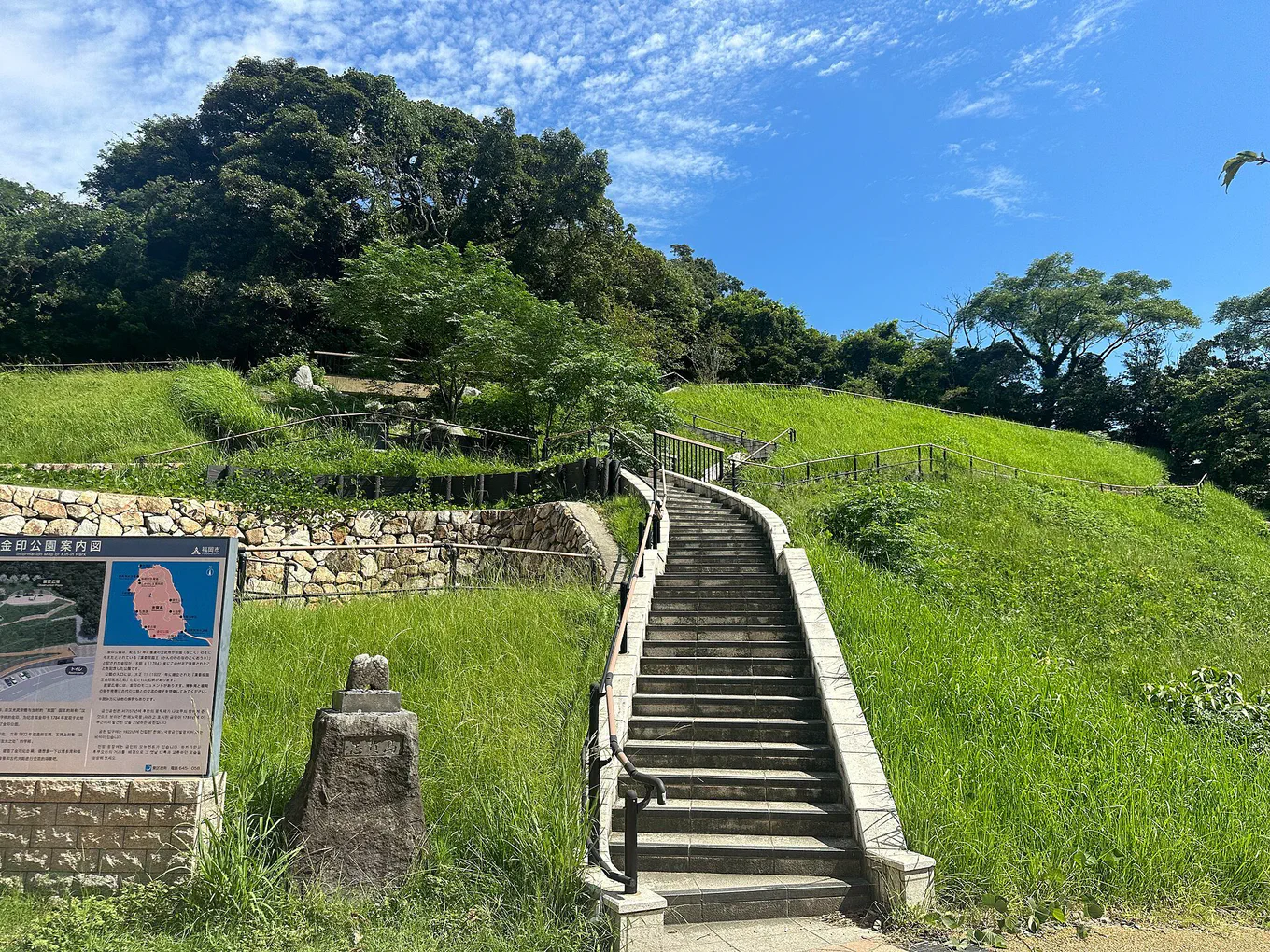
The gold seal in Japan’s school textbooks turned up here in 1784. According to contemporary reports, a farmer named Jinbei was repairing an irrigation ditch. Under a stone that took two adults to lift lay a seal of solid gold, 2.3 centimetres square, with a snake for a handle. It might have been melted down. But Kamei Nanmei, a Fukuoka scholar, traced it through a Chinese chronicle, the Book of the Later Han. A Han emperor had given it to an envoy from Na, in Japan, in AD 57.
5 Toshio Kawahara, the grocer who gave away Hakata’s mentaiko
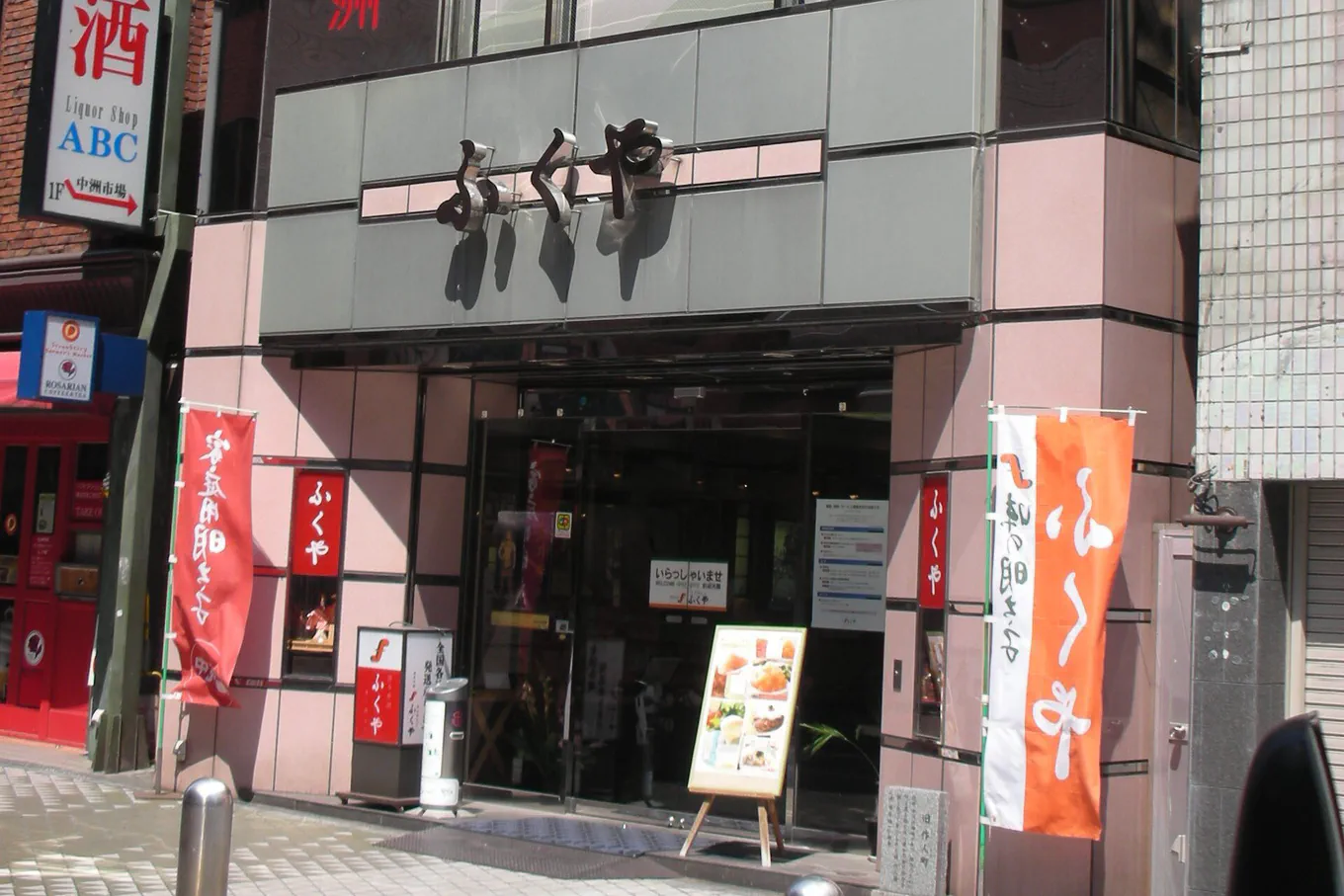
Stand here. Fukuya’s main store, at 2-6-10 Nakasu in downtown Hakata. Kawahara opened his small grocery in Nakasu soon after the war.
Mentaiko, the spicy cod roe linked with Fukuoka, came to Japan with Toshio Kawahara, who had eaten cod roe in kimchi as a boy in Busan, Korea. After the war he opened a small grocery in burnt-out Nakasu and made his own. He put it on sale in January 1949, and nobody wanted it. It took about ten years to get right. Then he taught his rivals his suppliers, ingredients, and methods, with no trademark and no patent. Shops sprang up across Fukuoka, and his childhood taste became the city’s.
Pack nothing. Leave Friday.
Every Friday, I write a free letter, Journey, that takes us on a trip through places, stories, and ideas.
Points and Lines(Seichō Matsumoto, 1958). A novel. Two bodies are found on a beach at Kashii.
The Sea and Poison(Shūsaku Endō, 1957). A short novel. It is set in a Fukuoka hospital late in the Second World War, as air raids wear Japan down.
From the Fatherland, with Love(Ryu Murakami, 2005). A novel set in Fukuoka. North Korean commandos take hostages at a baseball game and occupy the city, until a gang of young misfits saves it.
Films to watch before you visit Fukuoka
Points and Lines(Toei, 1958). A film of Matsumoto’s novel.
The Sea and Poison(Kei Kumai, 1986). A film of Endō’s novel.
Villain(Sang-il Lee, 2010). A film. Looking for company on dating sites, a man meets a young insurance saleswoman from Fukuoka.
Fukuoka(Zhang Lu, 2019). A film. A Korean bookseller travels to Fukuoka and meets Hae-hyo, who runs a bar there.
Questions
Where is the King of Na gold seal kept?
At Fukuoka City Museum, in Momochihama, Sawara-ku, where it is the museum’s signature holding. The Kuroda family, once lords of the Fukuoka domain, gave it to the city in 1978. The hill on Shikanoshima where the seal was found in 1784 became Kin-in Park.
Why is the city called Fukuoka and not Hakata?
Hakata was the old port and merchant town. Fukuoka was the castle town that Kuroda Nagamasa named in 1600, after his clan’s ancestral home in Bizen Province. When the two merged in 1889, a meeting to choose the new name tied several times before settling on Fukuoka.
What is left of Fukuoka Castle?
Building began in 1601 and finished in 1607, and the castle was abandoned in 1871, when Japan abolished its feudal domains. Much of the grounds became Maizuru Park. The inner stone walls are fairly well preserved, and some gates and turrets survive, among them the Minamimaru Tamon Yagura, completed in 1854.