Until we visited Gdańsk in 2024, I had no idea that it represented the start of World War II. We took a boat out to Westerplatte, the peninsula in Gdańsk harbour, where the Germans attacked their first military outpost.
(Of course, back then Gdańsk was the Free City of Danzig, which had been created under the Treaty of Versailles.)
— Nick
Gdańsk is Poland’s major seaport, on the Baltic coast of northern Poland at the mouth of the Motława River, and, as Danzig, it joined the Hanseatic League in 1358. Its stories here are a painting seized at sea, an astronomer couple’s observatory lost to fire, an orphan who gave his name to a temperature scale, a philosopher’s family leaving for a free city, and a crane operator whose sacking came before the strike that led to Solidarity.
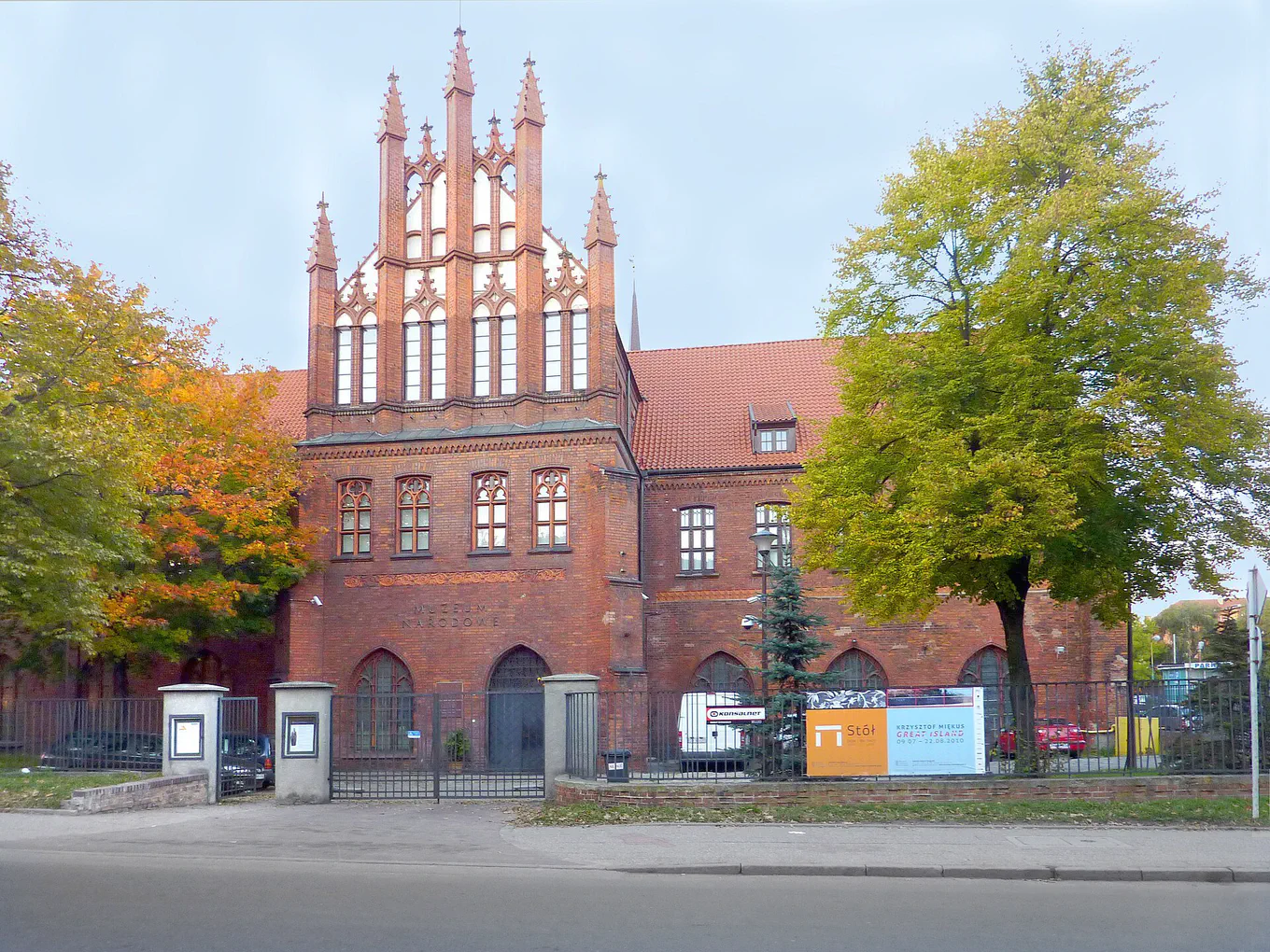
Hans Memling’s Last Judgment was painted for Angelo Tani, head of the Medici Bank’s branch in Bruges, to hang in his family chapel near Florence. In 1473, Gdańsk privateers boarded the galley carrying it to Italy, and the painting went to St Mary’s Church. Charles the Bold demanded the cargo back, the owners went to the papal court, and Gdańsk defended the seizure as a legitimate act of war. An emperor offered 40,000 thalers, and the town council said no. Tani probably never saw his painting.
2 Hevelius and Elisabeth’s rooftop observatory in the Old Town
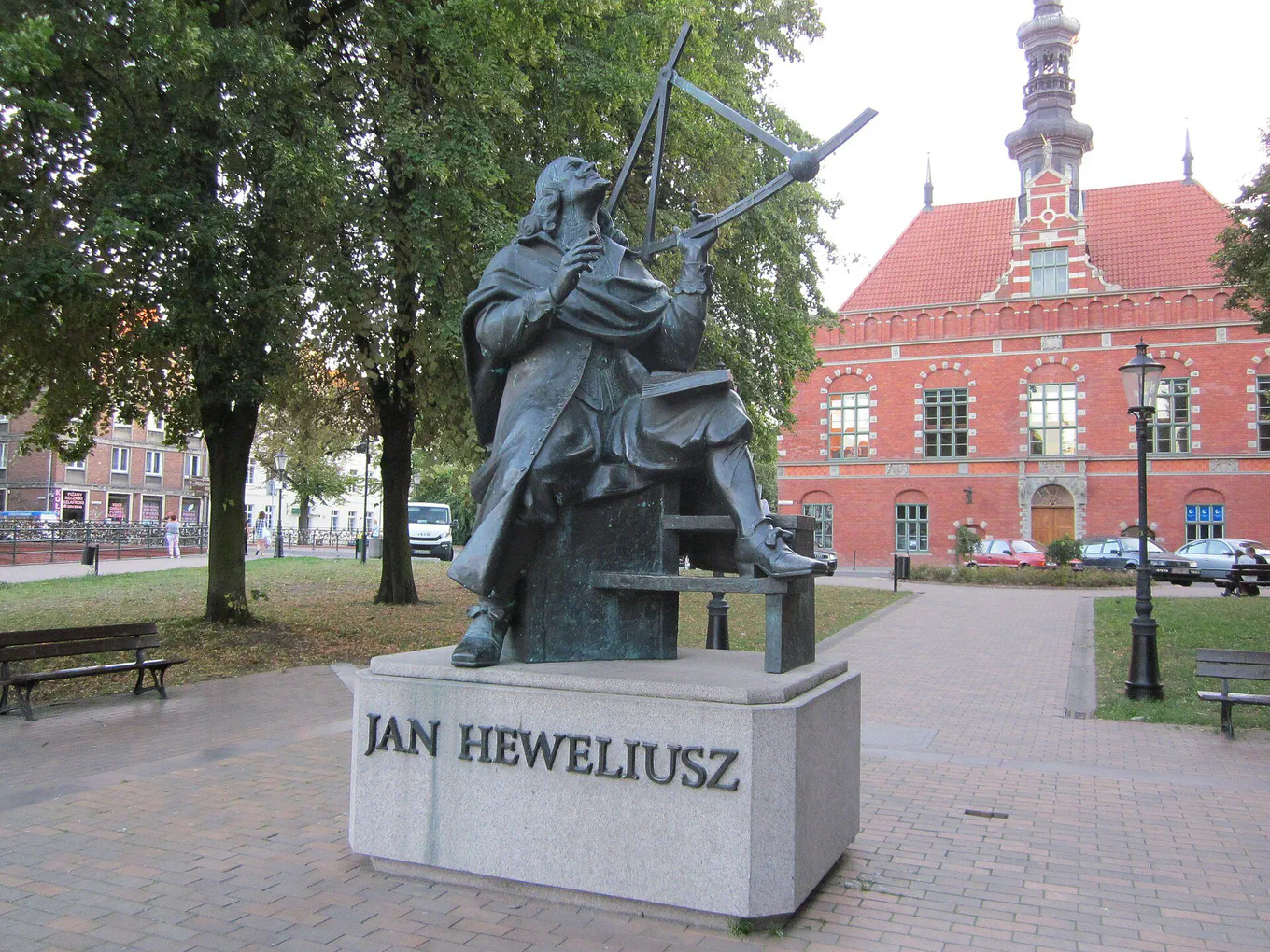
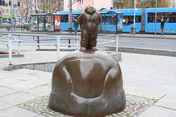
Stand here. Korzenna Street, where his houses stood. A life-size bronze of Hevelius, seated, has been in front of the Old Town Hall since 2006.
In 1679, the English astronomer Edmond Halley stayed in Gdańsk from May to July, watching Johannes Hevelius and his wife Elisabeth at work, and found their measurements accurate. Hevelius, a brewer and councillor, had built his observatory, the Star Castle, across the roofs of his three connected houses. That September, fire destroyed the observatory, its instruments, the library, and the printing works. The couple rebuilt the observatory. When Hevelius died, Elisabeth, one of the first women astronomers, saw his catalogue of 1,564 stars into print.
3 Fahrenheit, the Gdańsk orphan behind the temperature scale
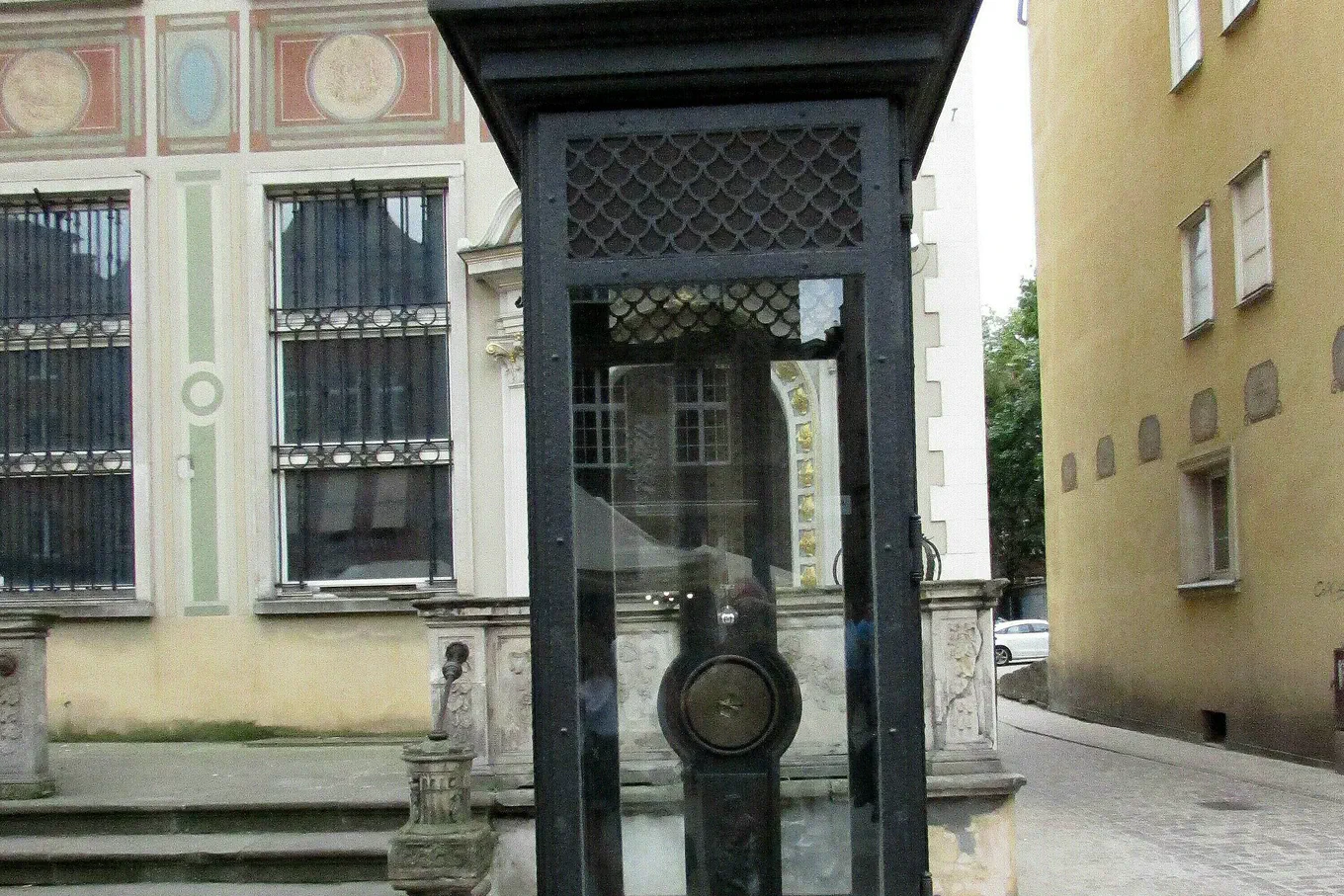
Stand here. The corner of Długi Targ and Mieszczańska. A replica of one of his mercury thermometers stands there, a block from his birthplace on Ogarna Street.
The Fahrenheit scale takes its name from Daniel Gabriel Fahrenheit, born in Gdańsk into a merchant family. In 1701, his parents died after eating poisonous mushrooms, and his guardians sent him to Amsterdam as a merchant’s apprentice. When the apprenticeship ended, he ran off. His guardians had a warrant issued for his arrest, meaning to put him into the Dutch East India Company, but the warrant was dropped. He went on to be credited with the first successful mercury-in-glass thermometers. He was given a pauper’s funeral in The Hague.
4 Schopenhauer’s birthplace, and the family that left Gdańsk
Stand here. Świętego Ducha 47. A plaque unveiled in 2008 marks his birthplace, where the first plaque went up in 1888.
Long before he wrote The World as Will and Representation, Arthur Schopenhauer was born on this street, the son of a wealthy merchant, Heinrich, and his wife Johanna, twenty years younger. Both parents were republicans who supported the French Revolution. In 1793, Gdańsk became part of Prussia, and Heinrich moved the family to Hamburg, a free city with a republican constitution. Johanna became a writer and, from the late 1810s to the early 1830s, the most famous woman author in Germany.
5 Anna Walentynowicz and the shipyard strike that began Solidarity
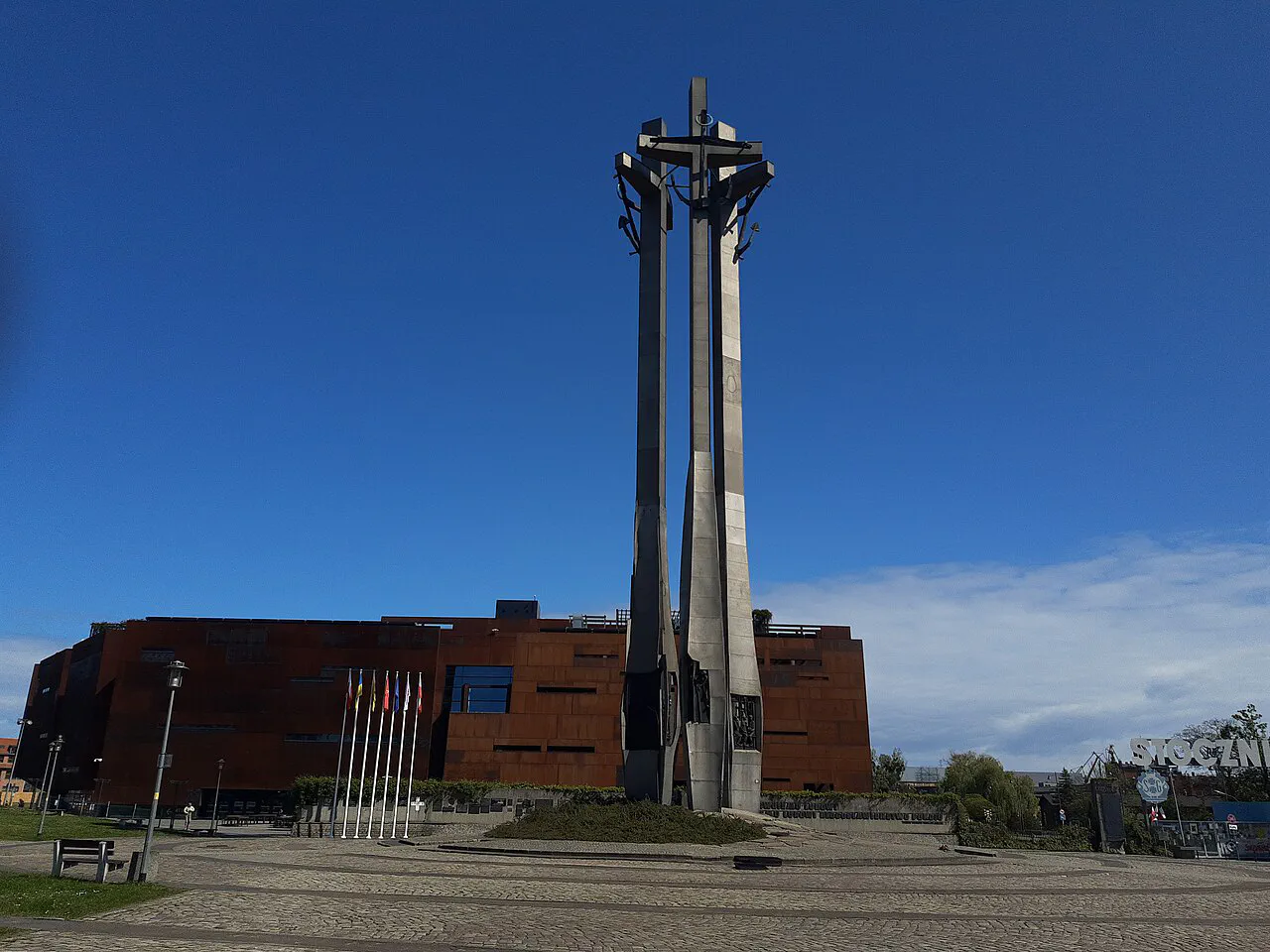
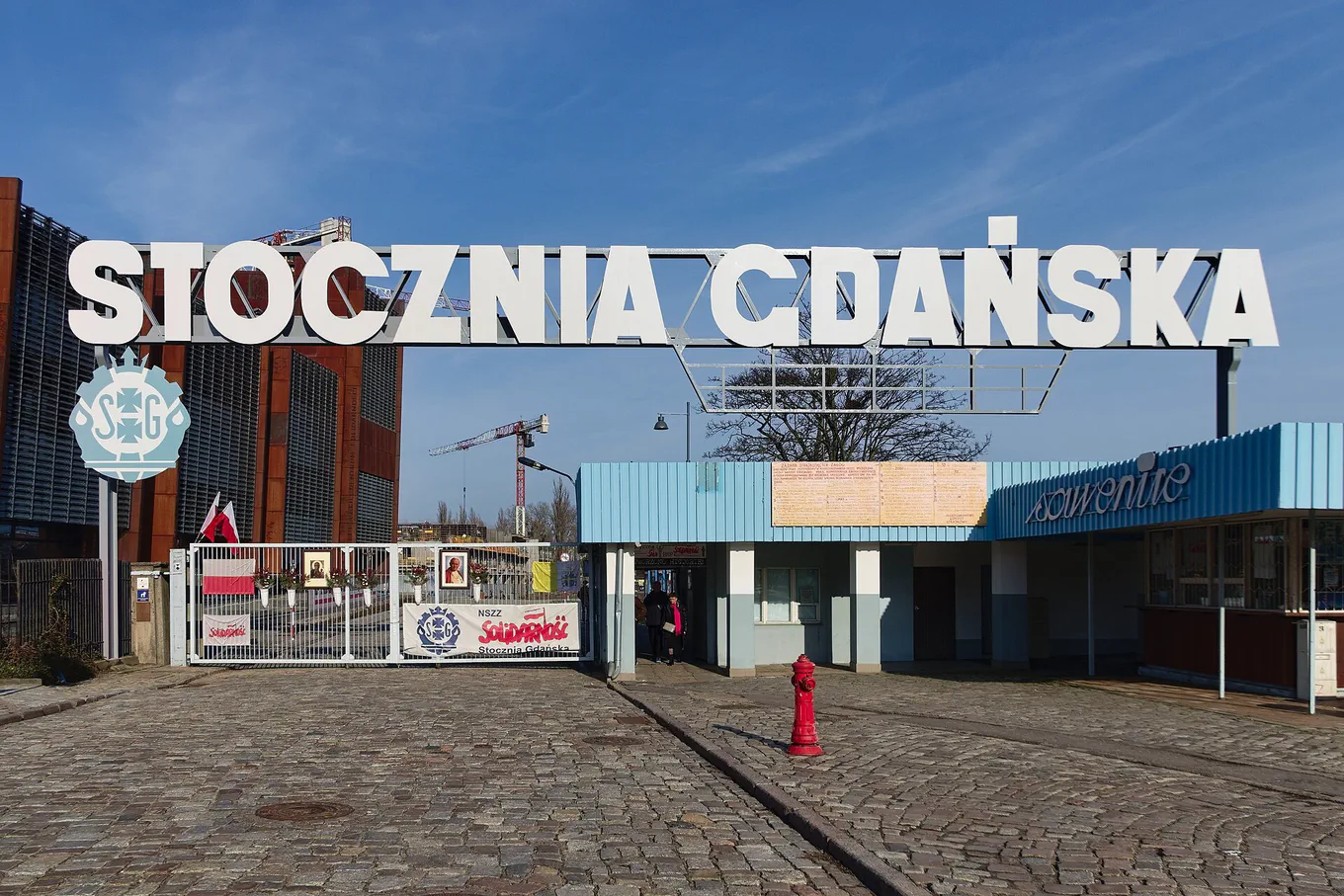
Stand here. Gate No. 2 of the Gdańsk Lenin Shipyard, where the strikers hung their 21 demands. The original boards are in the European Solidarity Centre.
The strike behind Solidarity began after one woman’s sacking. Anna Walentynowicz, a crane operator, had worked at the Lenin Shipyard since 1950. On 7 August 1980, five months before she was due to retire, the shipyard fired her. A week later, the workers went on strike to demand her back. On 31 August, Lech Wałęsa, one of the strike leaders, announced from this gate that the strike was over and the Gdańsk Agreement, recognising free trade unions, was signed. The woman the shipyard had fired became one of Solidarity’s founders.
Pack nothing. Leave Friday.
Every Friday, I write a free letter, Journey, that takes us on a trip through places, stories, and ideas.
The Tin Drum(Günter Grass, 1959). A novel. Oskar, who stops growing at three, leads his mother’s cousin to the Polish Post Office in Danzig to have his drum mended.
Cat and Mouse(Günter Grass, 1961). A novella. It is the second book of Grass’s Danzig Trilogy, set in Danzig (Gdańsk) around the time of the Second World War and Nazi rule.
Dog Years(Günter Grass, 1963). A novel. The third volume of Grass’s Danzig Trilogy, following the childhood friendship of Walter and Eduard in the Vistula estuary of the interwar Free City of Danzig.
Films to watch before you visit Gdańsk
The Tin Drum(Volker Schlöndorff, 1979). A film of Grass’s novel, which shared the Palme d’Or. Street scenes at Danzig landmarks were shot in Gdańsk, the Post Office scenes in Zagreb.
Man of Iron(Andrzej Wajda, 1981). A film. A man is admitted to the Gdańsk Shipyard, where he joins a strike against the Communist authorities.
Strike(Volker Schlöndorff, 2006). A film. Agnieszka, a welder at the Lenin Shipyard, lives through events that include the dedication of the Monument to the Fallen Shipyard Workers of 1970.
Wałęsa: Man of Hope(Andrzej Wajda, 2013). A film about Lech Wałęsa, shot on location in Gdańsk’s historic shipyard and its surroundings.
Questions
Where can you see Memling’s Last Judgment in Gdańsk?
At the National Museum in Gdańsk. The painting belongs to its Department of Ancient Art, whose main home is the former Franciscan monastery at Toruńska 1, beside the Church of the Holy Trinity. The Red Army found it in 1946 and sent it to the Hermitage in Leningrad, and it came back to Gdańsk in 1956.
What was the Free City of Danzig?
It was a city-state, set up on 15 November 1920 under the Treaty of Versailles and placed under the protection of the League of Nations. It lasted until 1939, when Germany invaded Poland and the Nazis abolished it. Gdańsk had also been a free city from 1807 to 1814.
Is the Gdańsk Crane original?
Partly. The crane on the Motława was finished by 1444 and was the largest port crane in medieval Europe. The wooden crane was destroyed in the siege of 1945, then restored between 1956 and 1959, and its old lifting mechanisms were put back in 1966.