A well-travelled friend says that Swiss cities are a little dull. (Forgive and correct me, Swiss readers.) Then again, Mary Shelley dreamed up Frankenstein in a wet summer by Lake Geneva… so we owe the city our thanks.
— Nick
Where the Rhône leaves Lake Geneva, in south-west Switzerland, sits Geneva. In 1541 John Calvin made it a “Protestant Rome”, and today it hosts more international organisations than anywhere else. The wet summer that began Frankenstein starts a run that ends with the birth of the World Wide Web, taking in a runaway who signed himself its citizen, the businessman behind the Red Cross, and an empress on the lakeside.
1 Mary Shelley’s Frankenstein and a wet summer by Lake Geneva
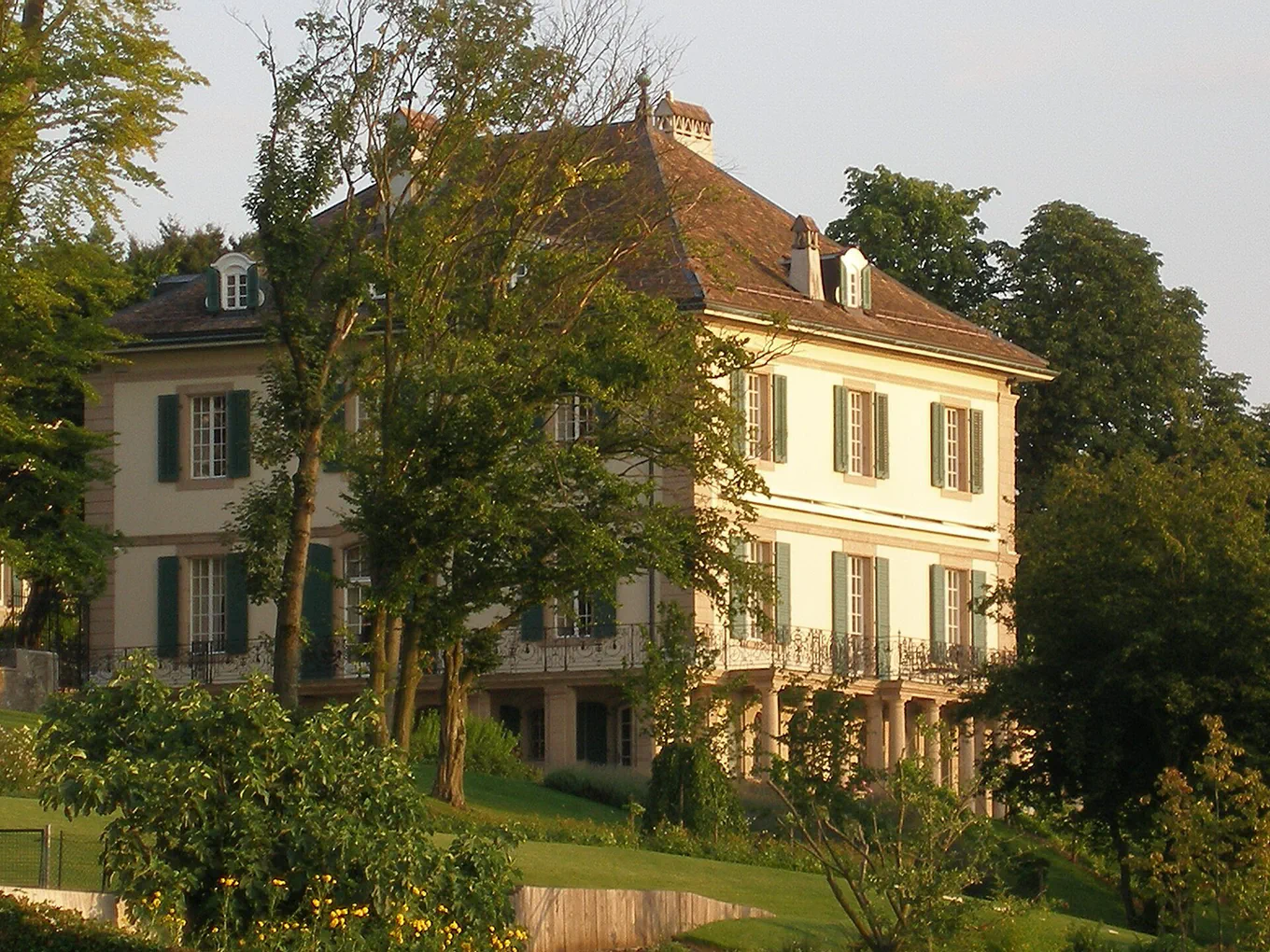
Stand here. The Villa Diodati, in the village of Cologny near Lake Geneva. It is still privately owned, and has been split into apartments.
The Villa Diodati, Lord Byron’s rented house on the slopes above Lake Geneva at Cologny.Robertgrassi / Public domain.
Frankenstein grew out of a challenge set here in June 1816, when Mary Shelley, aged 18, and her lover were visiting Lord Byron. Rain kept them indoors for days, so Byron proposed that they “each write a ghost story”. Each morning, by her own account, she was asked for hers and could give only “a mortifying negative”. One sleepless night, a “waking dream” showed her a pale student kneeling beside “the thing he had put together”. She began writing what she thought would be a short story.
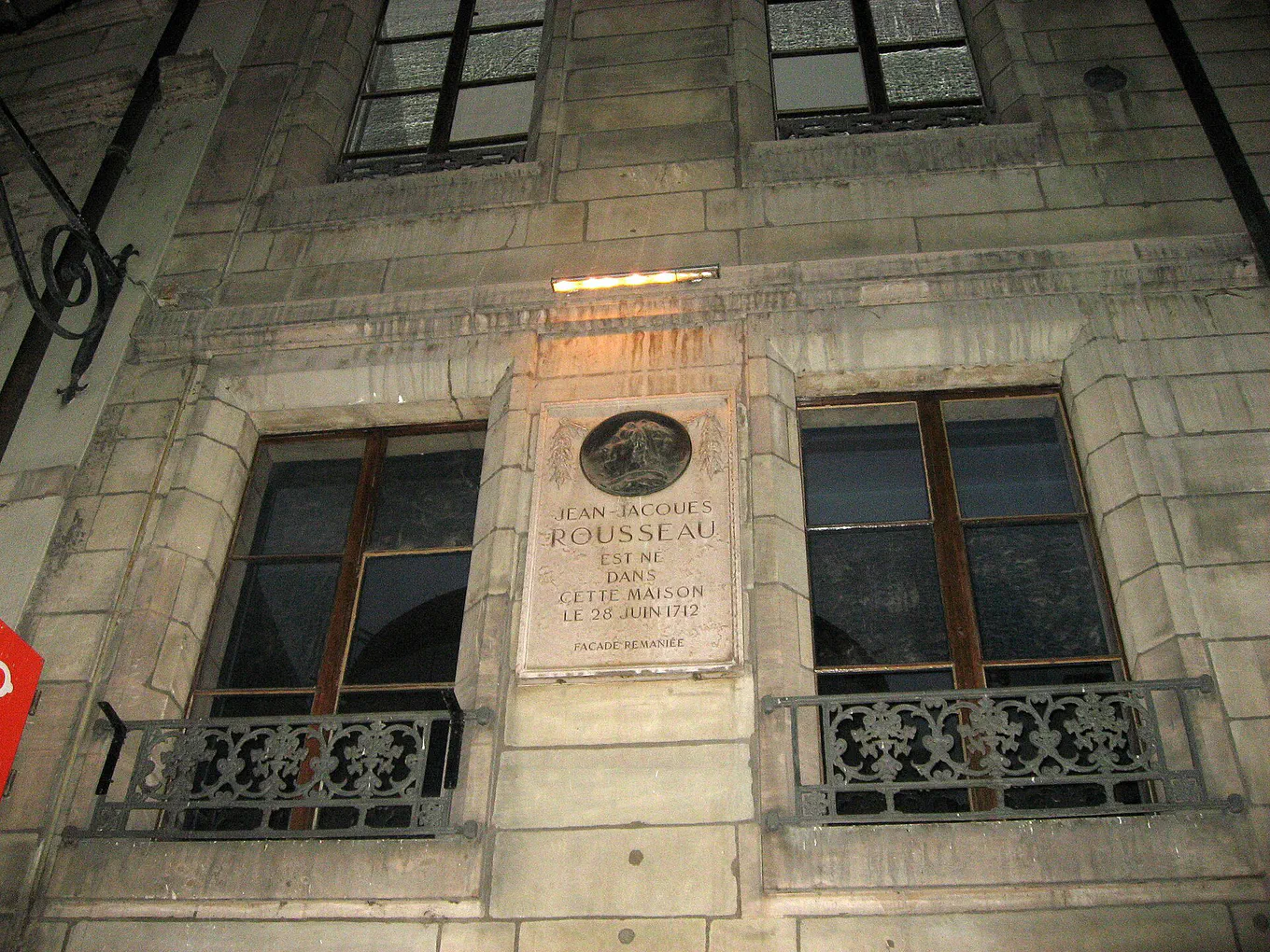
Stand here. Grand-Rue 40, in the Old Town. The Maison Rousseau et Littérature stands on the site of the house where he was born, with a permanent exhibition.
The front of Grand-Rue 40 in Geneva’s Old Town, with the plaque marking Jean-Jacques Rousseau’s birthplace.Brücke-Osteuropa / CC0.
The author of The Social Contract, Jean-Jacques Rousseau, was born on this spot. At 15, he came back to find the city gates locked for the curfew, and he ran away. Turning Catholic cost him his Genevan citizenship, so years later he came home, turned Calvinist again, and won it back. He took the city’s institutions as his political model and signed his books “Jean-Jacques Rousseau, Citizen of Geneva”. In 1762, Geneva banned his books, and banned him too.
3 Henry Dunant and the first Geneva Convention
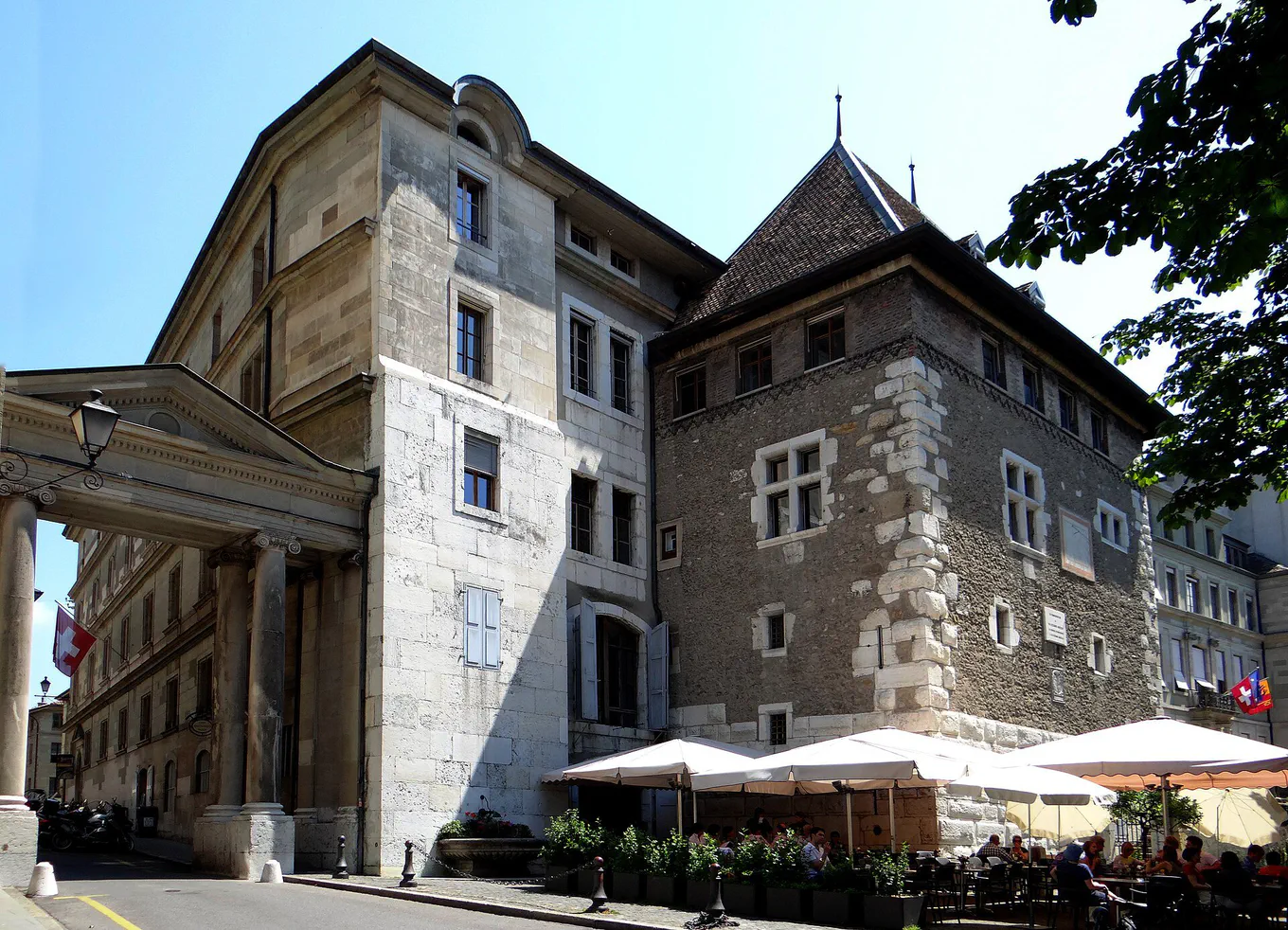
Stand here. Geneva’s town hall, the Hôtel de Ville, still the seat of the canton’s government. The 1864 conference that produced the convention met in its Alabama room.
In 1859, Henry Dunant, the Geneva businessman behind the Red Cross, decided to petition Napoleon III over land and water rights in Algeria. At Solferino, on the evening of a battle, he organised local women and girls to care for the wounded. His campaign led to the first Geneva Convention, signed in 1864. Three years later, he left Geneva for good, the same year a financial scandal ruined him. After decades of poverty and obscurity, he shared the first Nobel Peace Prize. He never spent the money.
4 Empress Sisi’s last walk on the Quai du Mont-Blanc
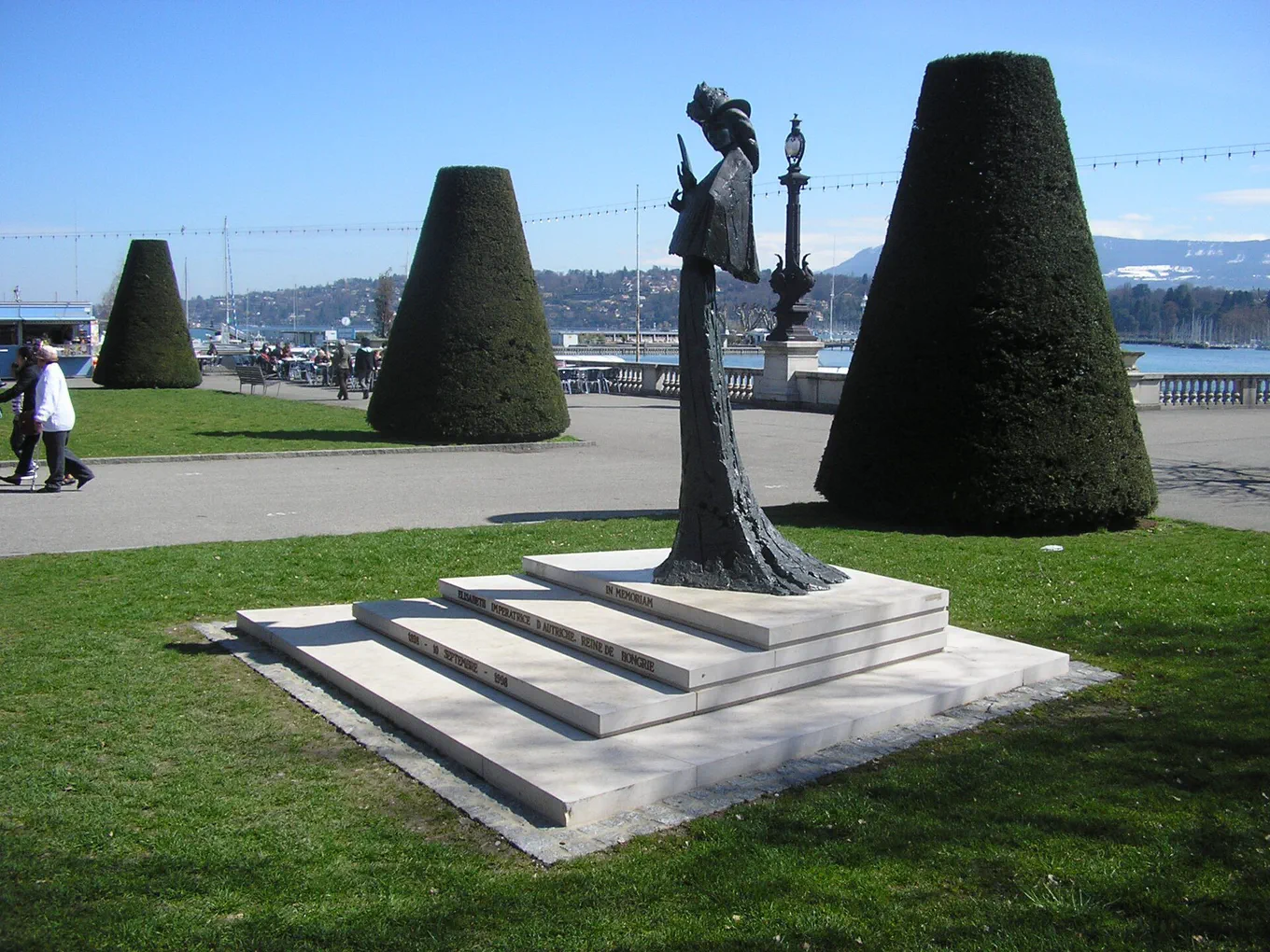
Stand here. The promenade on the Quai du Mont-Blanc, where a statue in her memory stands near the spot. Her hotel, the Beau-Rivage, is at number 13.
In 1898, Empress Elisabeth of Austria, known as Sisi, came to Geneva under a false name. Luigi Lucheni, an Italian anarchist, had come to kill a sovereign, but his target, the Duke of Orléans, had already left. Then a Geneva newspaper revealed who the elegant visitor was. On this promenade, Lucheni stabbed her with a sharpened file. She walked on and boarded her steamer before she collapsed, and she died back at her hotel. Lucheni, jailed for life, was furious that Geneva had abolished the death penalty.
5 Tim Berners-Lee’s “vague, but exciting” web at CERN
Stand here. CERN, in Meyrin, a western suburb of Geneva on the border with France, home of the Large Hadron Collider.
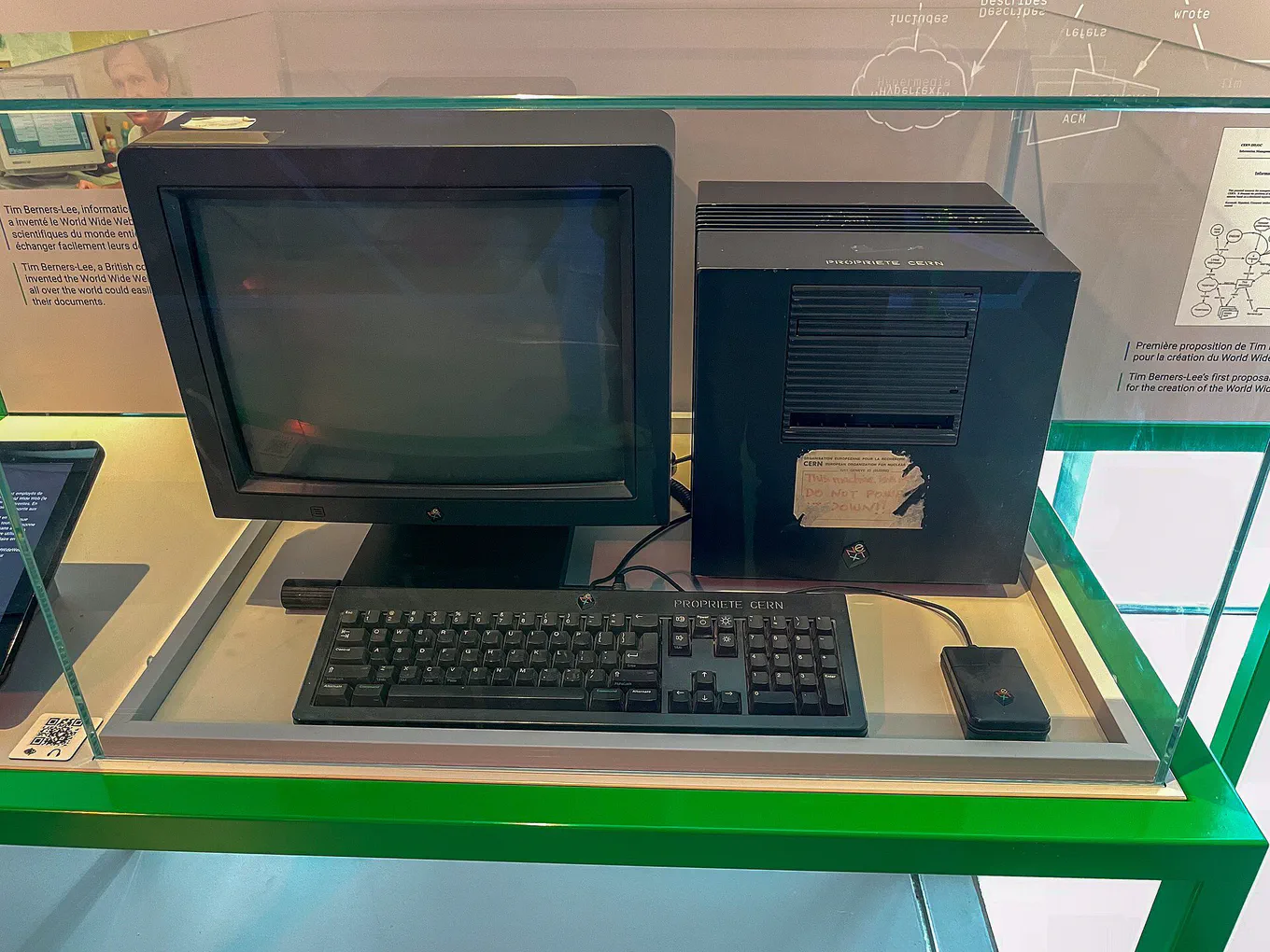
“Vague, but exciting” was what Tim Berners-Lee’s manager called the proposal that became the World Wide Web. Berners-Lee, an English computer scientist, put it forward here on 12 March 1989, as a way to manage information at CERN, and his manager accepted it. A NeXT computer that Berners-Lee used here became the world’s first web server. He took out no patent and asked for no royalties, and in 1993 CERN announced that the web would be free to anyone.
Pack nothing. Leave Friday.
Every Friday, I write a free letter, Journey, that takes us on a trip through places, stories, and ideas.
Frankenstein(Mary Shelley, 1818). A novel. Victor Frankenstein is a Genevese, and his young brother William is murdered after a family walk in Plainpalais.
Belle du Seigneur(Albert Cohen, 1968). A novel set in 1930s Geneva, about a Mediterranean Jew who works for the League of Nations.
Doctor Fischer of Geneva or The Bomb Party(Graham Greene, 1980). A novel. Doctor Fischer’s dinner parties are famous, or infamous, around Geneva.
Angels & Demons(Dan Brown, 2000). A novel. One of CERN’s top physicists, who has found how to create antimatter, is murdered.
Films to watch before you visit Geneva
Le Petit Soldat(Jean-Luc Godard, 1963). A film. A deserter from the French army is living in Geneva.
Three Colours: Red(Krzysztof Kieślowski, 1994). A film about fraternity and closely interconnected lives. Valentine Dussaut is a student at the University of Geneva who works part-time as a model.
Vol spécial(Fernand Melgar, 2011). A documentary. Filmed at the Frambois administrative detention centre in the suburbs of Geneva, where men are deprived of their liberty while awaiting removal.
Questions
Can you visit Rousseau’s birthplace in Geneva?
Yes. The Maison Rousseau et Littérature stands on the site of the house where he was born, at Grand-Rue 40 in the Old Town, with a permanent exhibition, the Parcours Rousseau. It opens Tuesday to Friday from 8.00 to 18.00, and at weekends from 11.00 to 18.00.
Can you visit CERN, where the World Wide Web was invented?
Yes. CERN’s Science Gateway, in Meyrin on the France–Switzerland border, is free to visit, though you need to register first. It opens Tuesday to Sunday, from 9.00 to 17.00, with last entry at 16.30.
How high is Geneva’s Jet d’Eau, and why was it built?
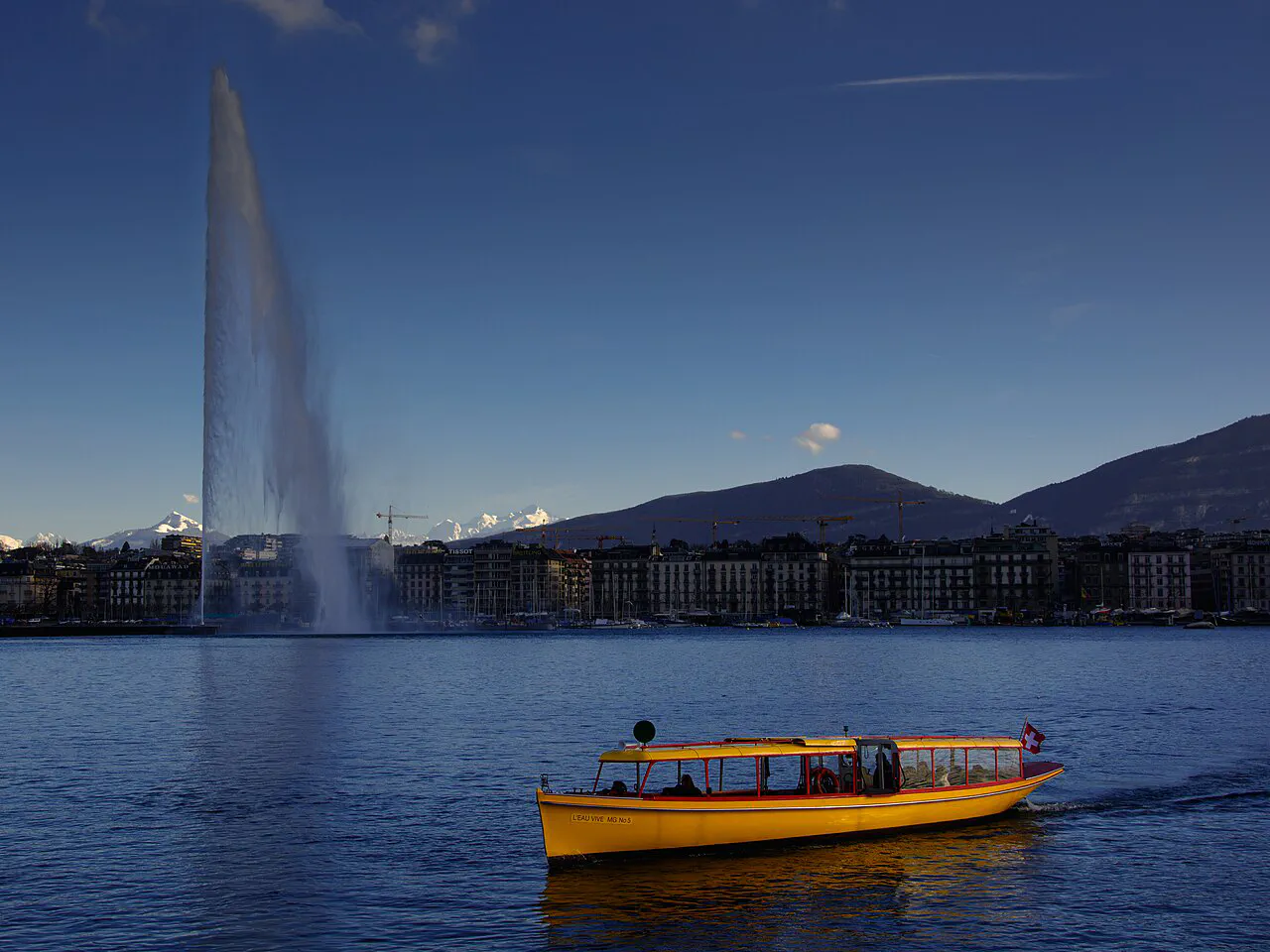
It throws 500 litres of water a second 150 metres into the air. The first jet, in 1886, was a safety valve for a hydraulic power network and reached about 30 metres. In 1891, it was moved to its present spot for its looks. Today’s jet dates from 1951 and pumps lake water.