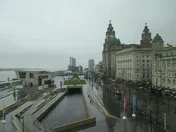
Apparently, much of the gritty 2022 Batman movie was shot in Glasgow. I loved that movie, but my Gotham will always be the amazing “hell erupted through the pavement and kept on going” version of the 1989 movie. Rest in peace, Anton Furst.
— Nick
Saint Mungo is said to have founded Glasgow in the 6th century, with a church where the cathedral now stands. It is Scotland’s most populous city, on the River Clyde in the country’s west. Mungo’s city has since seen a queen’s last battle, an engineer’s walk across a park, the first international football match, an art school that burned twice, and a duke in a traffic cone.
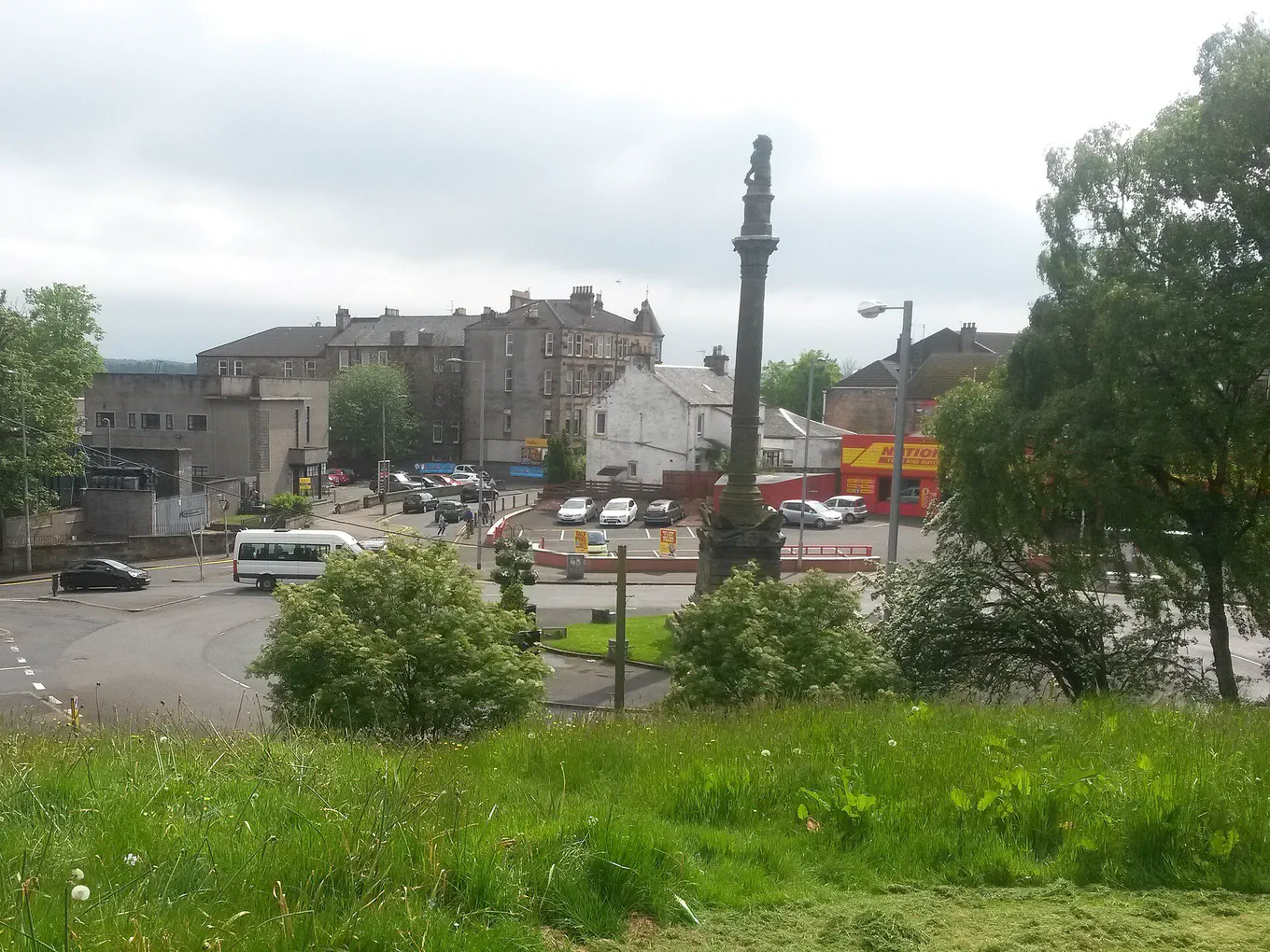
In May 1568, Mary, Queen of Scots, escaped from Lochleven Castle. Forced to give up her crown the summer before, she gathered about 6,000 men and headed west for Dumbarton Castle. The regent, her half-brother Moray, met her at Langside, then a village south of Glasgow. From a mound half a mile behind the lines, she watched her army lose in about forty-five minutes. Three days later she crossed to England. She never saw Scotland again.
2 James Watt’s steam-engine idea on Glasgow Green
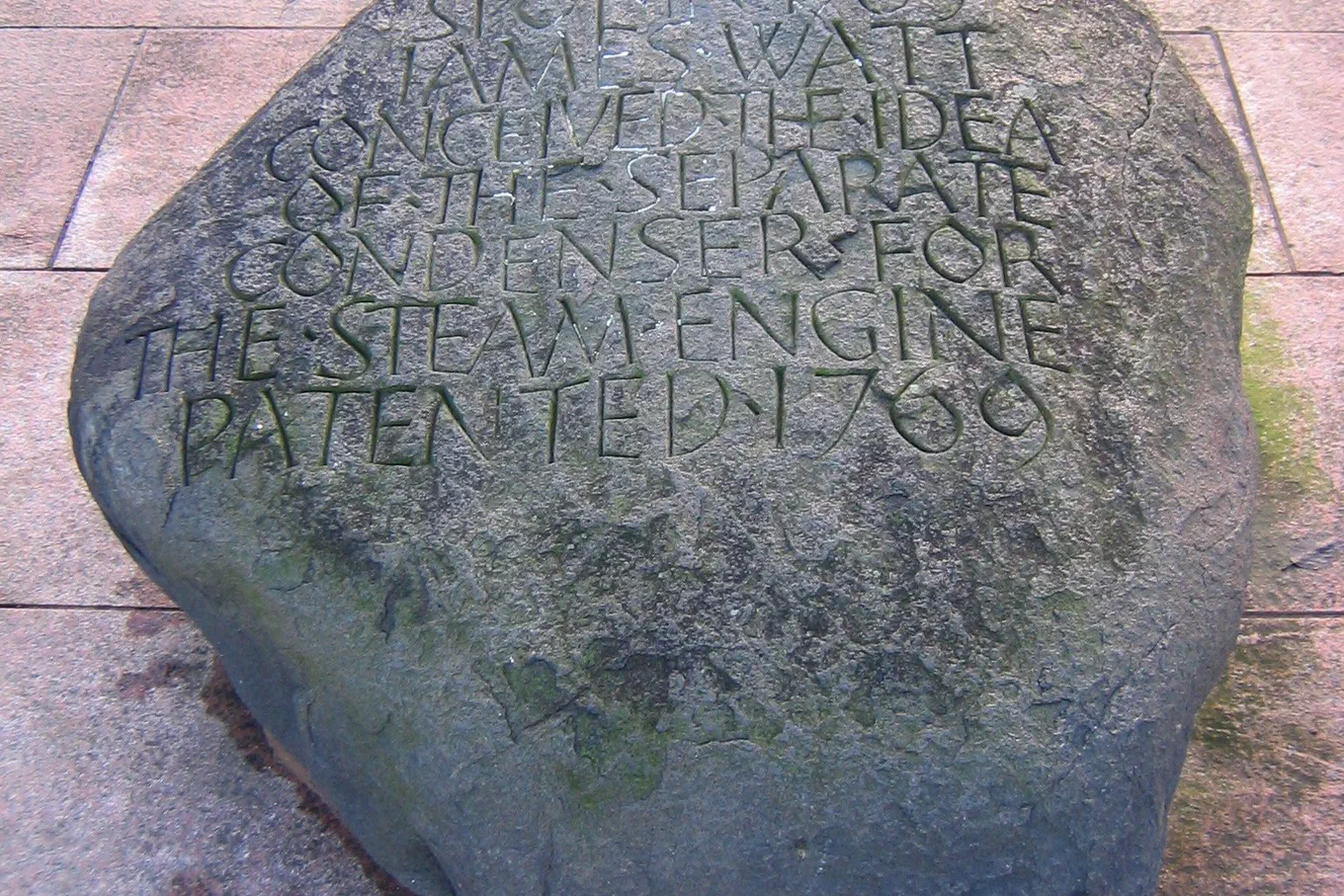
Stand here. On Glasgow Green, the city’s oldest park, in the East End, a boulder marks where Watt is said to have had his idea.
As the University of Glasgow’s instrument maker, James Watt was asked to mend its model steam engine. He mended it, and it still barely worked. Heating the cylinder and cooling it again, over and over, wasted most of the engine’s energy. In May 1765, crossing Glasgow Green, Watt saw the way out. The steam should condense in a separate chamber, apart from the piston. His idea made steam engines far more powerful, more efficient, and cheaper to run. It came to him in a park.
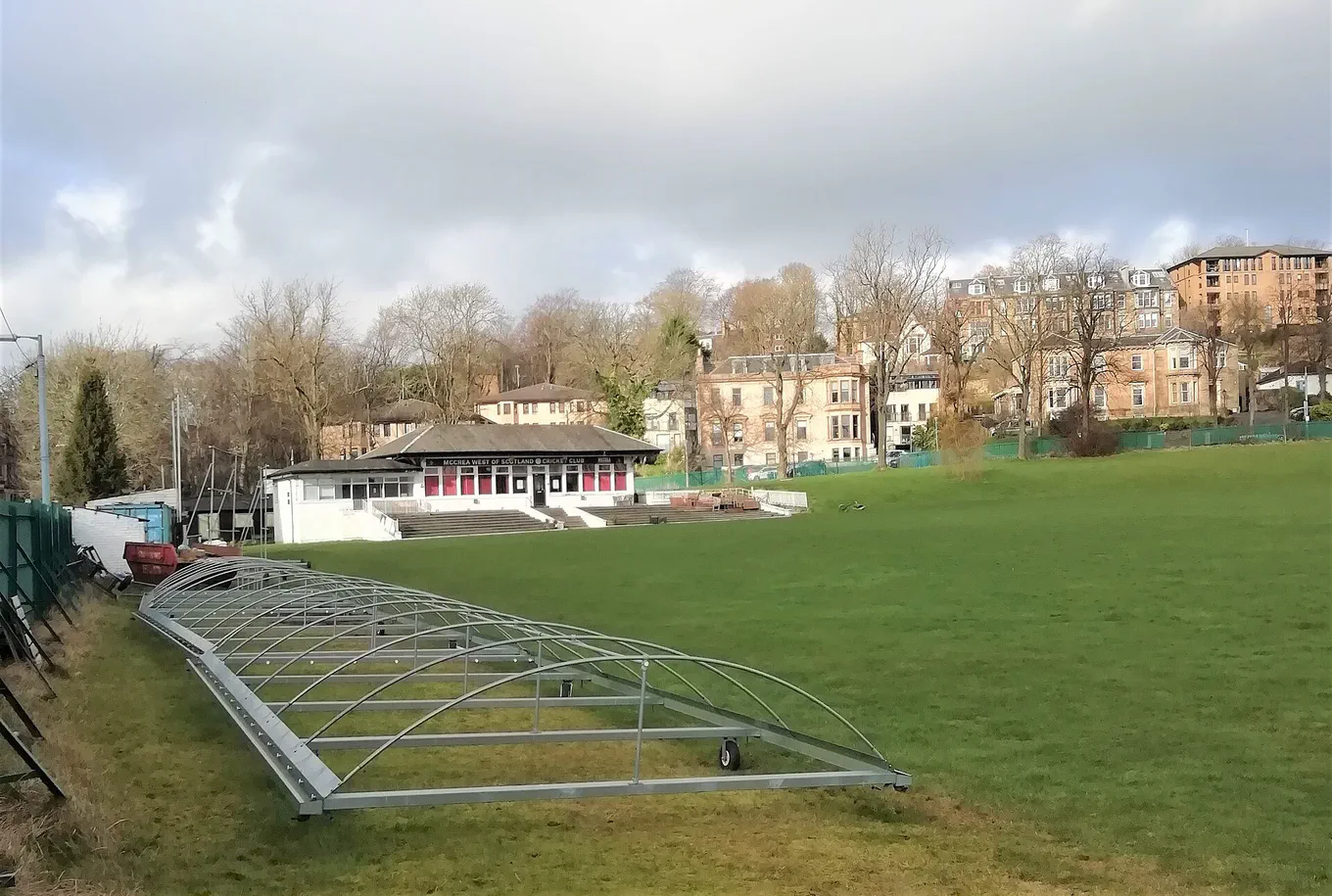
FIFA recognises the game played here on St Andrew’s Day 1872 as the first international football match. Charles Alcock, the Football Association’s secretary, had already set up England v Scotland games, but the “Scotland” players were mainly London-based. Then Queen’s Park, Scotland’s leading club, took up his challenge, and all eleven Scots came from it. Alcock picked England’s side but was injured and couldn’t play. On a pitch heavy from three days of rain, the smaller, lighter Scots pushed England hard. Four thousand people paid a shilling each. Nobody scored.
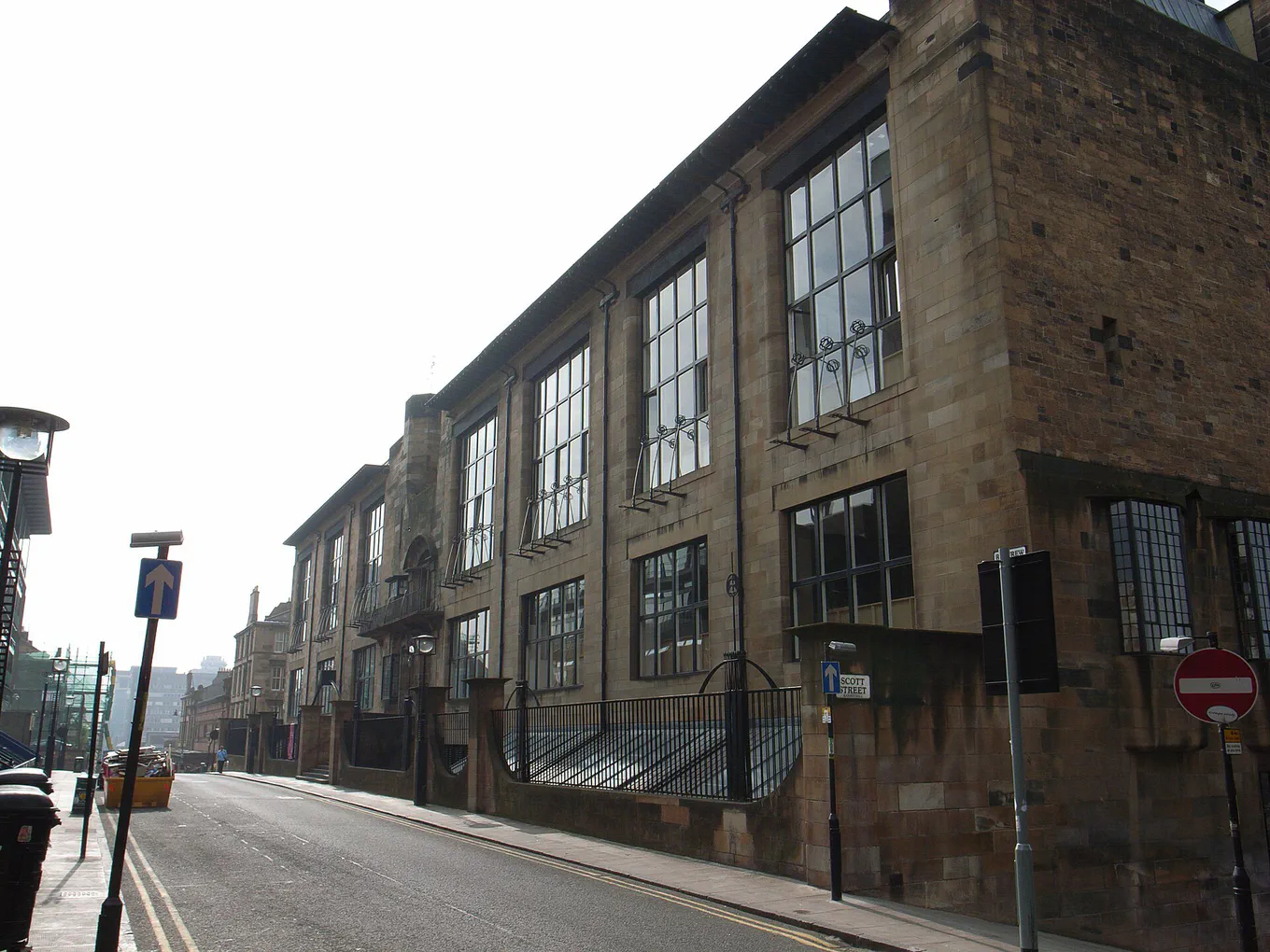
4 Charles Rennie Mackintosh’s Glasgow School of Art and its two fires
Stand here. Renfrew Street, on Garnethill. Fires in 2014 and 2018 gutted the Mackintosh Building.
The Glasgow School of Art helped make Charles Rennie Mackintosh’s international reputation, and its library was renowned. In May 2014, as students prepared their degree show, a can of expanding foam used near a hot projector started a fire, and the library was destroyed. The school began a careful restoration, using the original species of wood. Parts for a fire-suppression system had just been delivered, still weeks from being fitted, when on 15 June 2018 a second, far worse fire broke out. It left only a burnt-out shell.
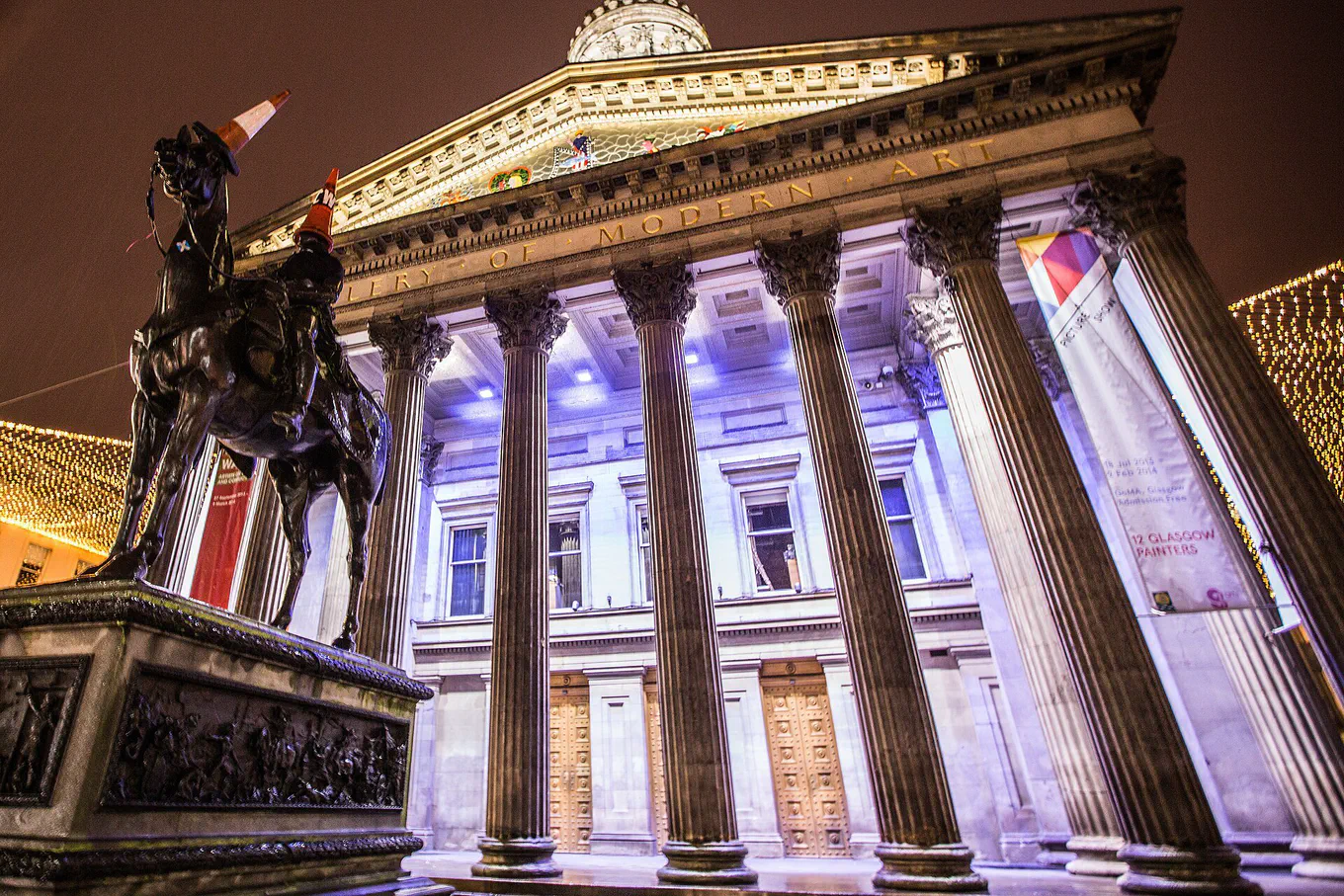
5 The Duke of Wellington’s traffic cone
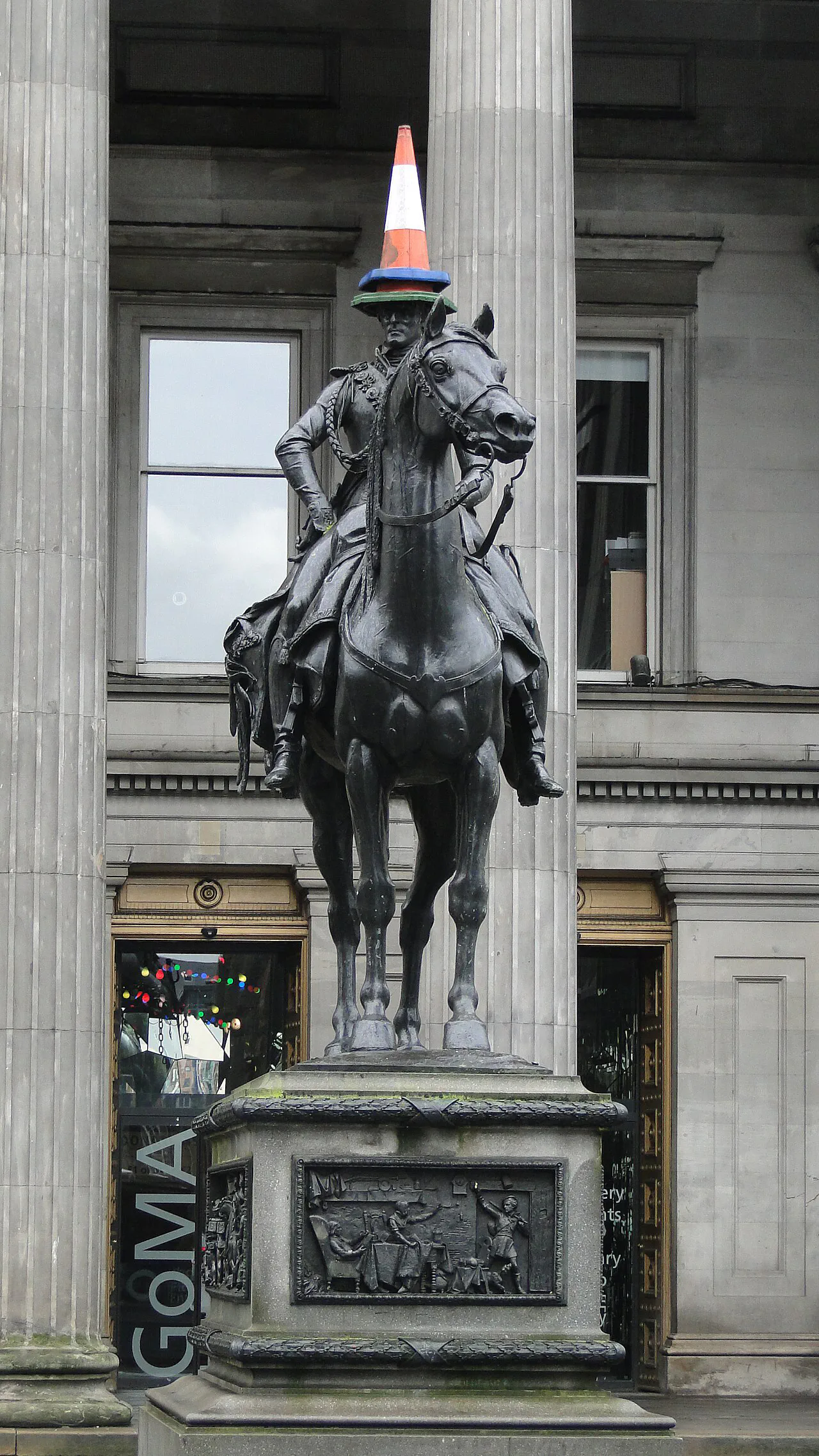
Stand here. Outside the Gallery of Modern Art, once the Royal Exchange, where the Duke has sat on his horse since 1844.
The Duke of Wellington beat Napoleon at Waterloo, but in Glasgow his statue wears a traffic cone. Members of the public have put one on his head since at least the 1980s, a habit described as Glaswegian humour and spirit. In 2013, the council proposed doubling the height of the plinth, to “deter all but the most determined of vandals”, and put the cost of taking cones down at £100 a callout. More than 10,000 people signed a petition against the plan, and the council withdrew it. The Duke kept his cone.
Pack nothing. Leave Friday.
Every Friday, I write a free letter, Journey, that takes us on a trip through places, stories, and ideas.
No Mean City(Alexander McArthur and H. Kingsley Long, 1935). A novel of life in the Gorbals, then a run-down slum district of Glasgow.
Lanark: A Life in Four Books(Alasdair Gray, 1981). A novel. Its hero, Thaw, is born in the East End and wins a scholarship to the Glasgow School of Art.
Shuggie Bain(Douglas Stuart, 2020). A novel. In 1981, five-year-old Shuggie lives with his grandparents in a tenement flat in Sighthill.
Films to watch before you visit Glasgow
Small Faces(Gillies MacKinnon, 1996). A film. Growing up with a mother on Glasgow’s South Side in 1968.
Ratcatcher(Lynne Ramsay, 1999). A film, shot in Govan to reflect the “ugly beautiful” contrasts of life there.
World War Z(Marc Forster, 2013). A film. George Square and the city centre double for Philadelphia, with false shop fronts and American cars on the roads.
Indiana Jones and the Dial of Destiny(James Mangold, 2023). A film. St Vincent Street plays New York’s 1969 Apollo 11 parade, with a stunt double in Harrison Ford’s place throughout the Glasgow shoot.
Questions
Why does the Duke of Wellington statue in Glasgow wear a traffic cone?
Members of the public have capped the statue outside the Gallery of Modern Art with a traffic cone since at least the 1980s, a habit described as Glaswegian humour and spirit. The council tried to stop it in 2013, but dropped the plan after more than 10,000 people signed a petition. The cone has become a symbol of the city.
Can you visit the Mackintosh Building at the Glasgow School of Art?
Fires in 2014 and 2018 left Charles Rennie Mackintosh’s building on Renfrew Street a burnt-out shell, and the school chose a “faithful reinstatement” of his design.
What does the name Glasgow mean?
The name is Brittonic in origin and means “green hollow”. It is often said to mean “dear green place”, a phrase sometimes traced to the Gaelic Glas Caomh. The modern Gaelic name, Glaschu, comes from the same roots as the Brittonic.