Granada sits at the foot of the Sierra Nevada, in Andalusia, Spain. From the 13th century it was the capital of the Nasrid emirate, the last Muslim stronghold in Spain, until Ferdinand and Isabella took it in 1492. Its stories here are a king giving up the Alhambra, Columbus called back, an American writer in the palace, a young woman who wouldn’t name names, and a poet’s last summer.
1 Boabdil gives up the Alhambra, and the Moor’s last sigh
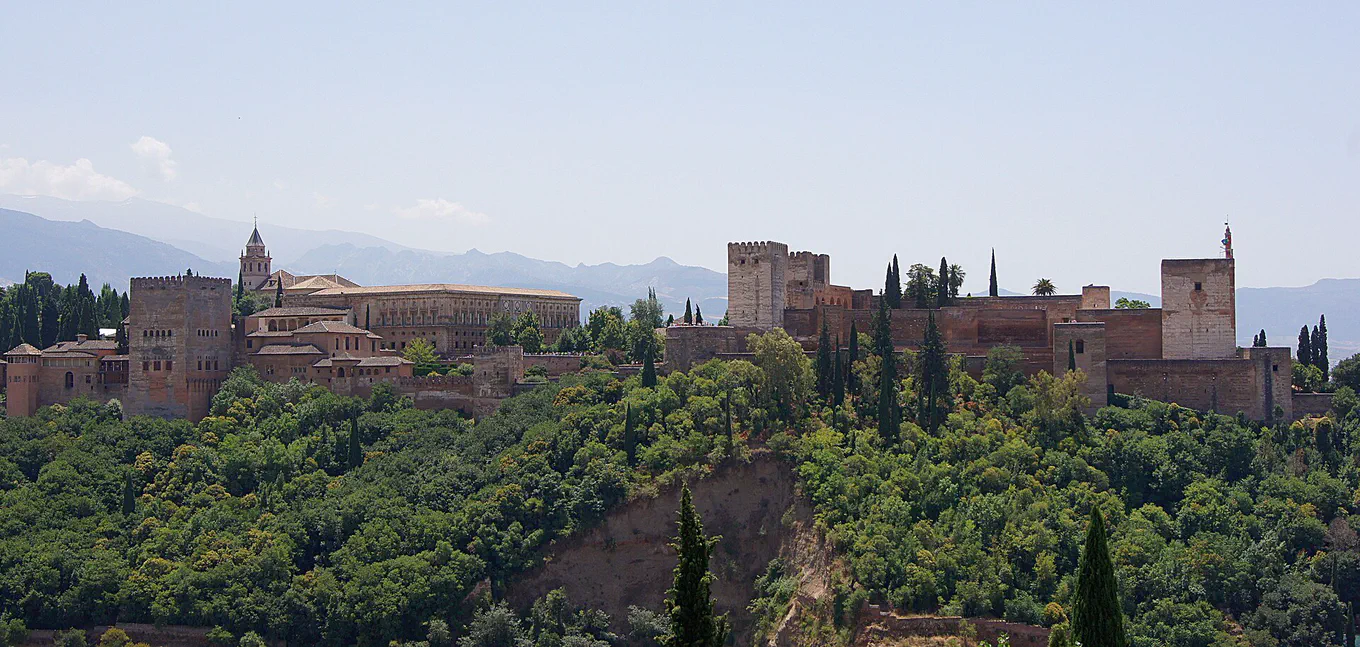
Stand here. The Alhambra, the Nasrid citadel and palace, now a UNESCO World Heritage Site open to visitors.
The Alhambra and its Nasrid palaces, seen across the Darro valley from the Mirador de San Nicolás, Granada.Jebulon / Public domain.
The title of Salman Rushdie’s The Moor’s Last Sigh comes from Boabdil, the last Nasrid ruler of Granada. On 2 January 1492, he handed the city and the Alhambra to Ferdinand and Isabella. Legend says he looked back from a mountain pass as he went into exile and sighed, and his mother told him to weep like a woman for what he couldn’t defend like a man. The surrender treaty had promised the mosques would stay as they were. By 1501, Granada’s Muslims had to convert, become slaves, or be exiled.
2 Columbus, Isabella, and the second chance at Granada
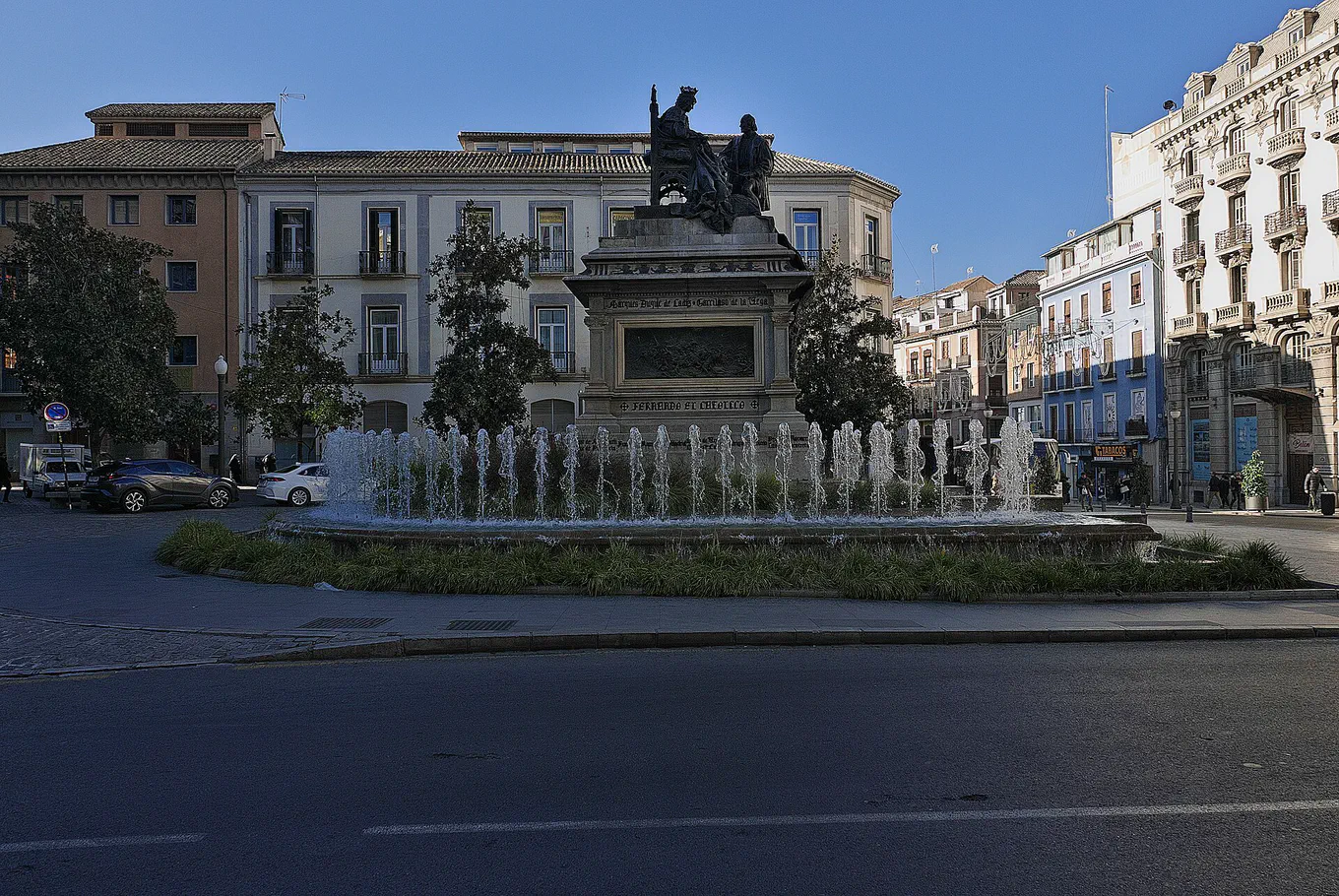
Stand here. Plaza de Isabel la Católica. A bronze of 1892 shows Columbus bowing to the seated queen, not far from her tomb in the Royal Chapel.
When Granada fell in January 1492, Christopher Columbus was waiting in King Ferdinand’s camp, hoping for backing to reach the Indies. A council led by Queen Isabella’s confessor had found his plan implausible, and he left for France. Then the king’s clerk warned the queen that Columbus would take his ideas elsewhere. She sent a royal guard to fetch him back from the road to Córdoba. That April, outside the city, the crown made him admiral of the Ocean Sea, with a tenth of whatever riches the voyage brought.
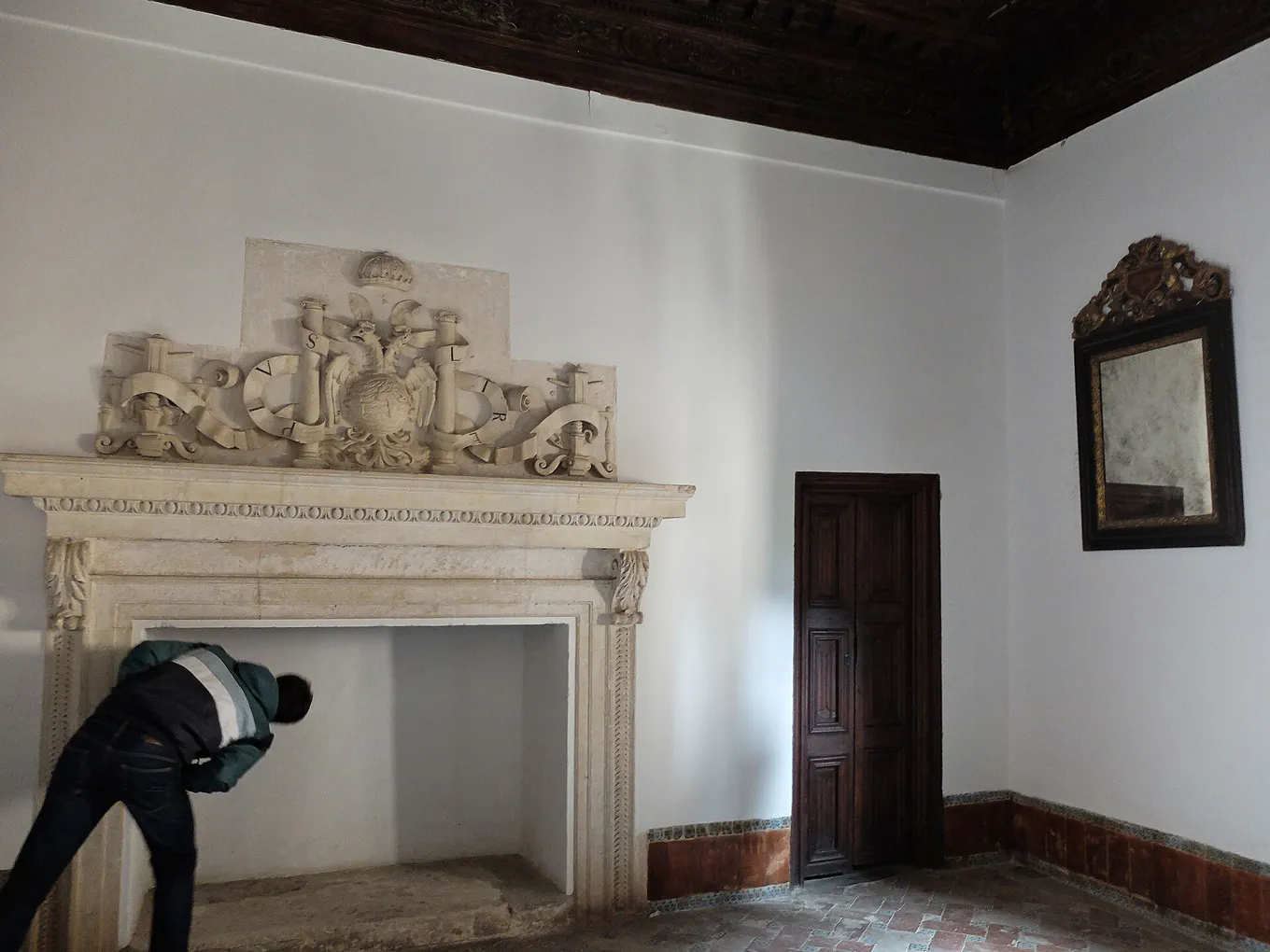
Washington Irving, the American author of “Rip Van Winkle”, moved into the Alhambra in 1829, “determined to linger here”. The palace had fallen into disrepair over the centuries, with squatters in its buildings. Irving lodged in the Halls of the Fruits, named for the decoration on their ceilings. About three months later, he was appointed to the American legation in London, and he left Spain that July. The book that came of his stay, Tales of the Alhambra, helped bring the palace back to Western readers.
4 Mariana Pineda and the flag found in her Granada house
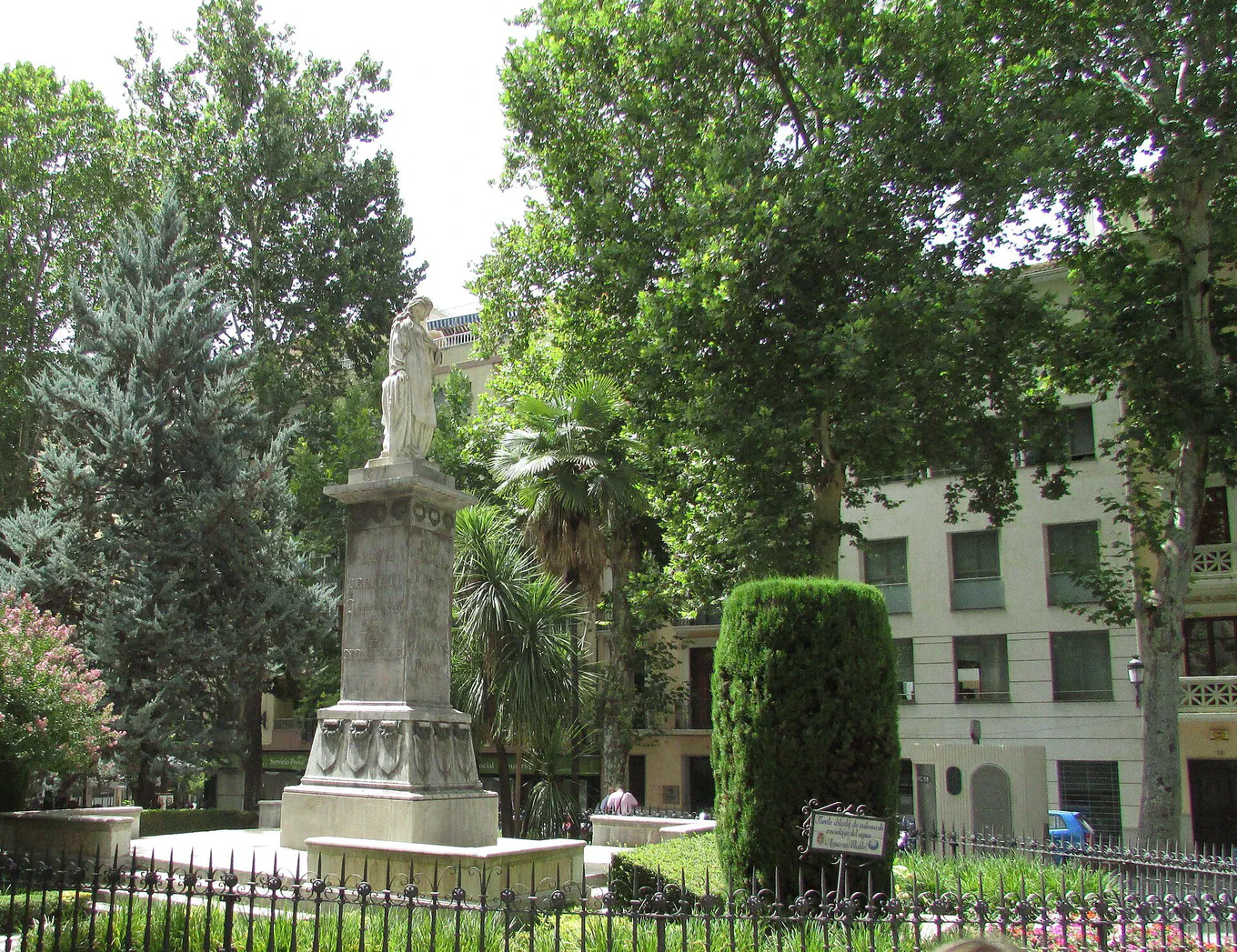
Stand here. Plaza de Mariana Pineda. Her monument, raised by the First Spanish Republic in 1873, stands in the square named after her.
Federico García Lorca’s play Mariana Pineda opened in Barcelona with sets by Salvador Dalí. The real Mariana Pineda was a young Granada liberal who smuggled friar’s robes to her cousin in prison, and he walked out disguised. In 1831, police searched her house on Calle del Águila and found a flag embroidered “Equality, Freedom and Law”. She was offered leniency if she named her accomplices, and refused to the end. On 26 May, aged 26, she was publicly executed by garrotte. Her flag was burned in front of her.
5 Lorca’s last summer at the Huerta de San Vicente
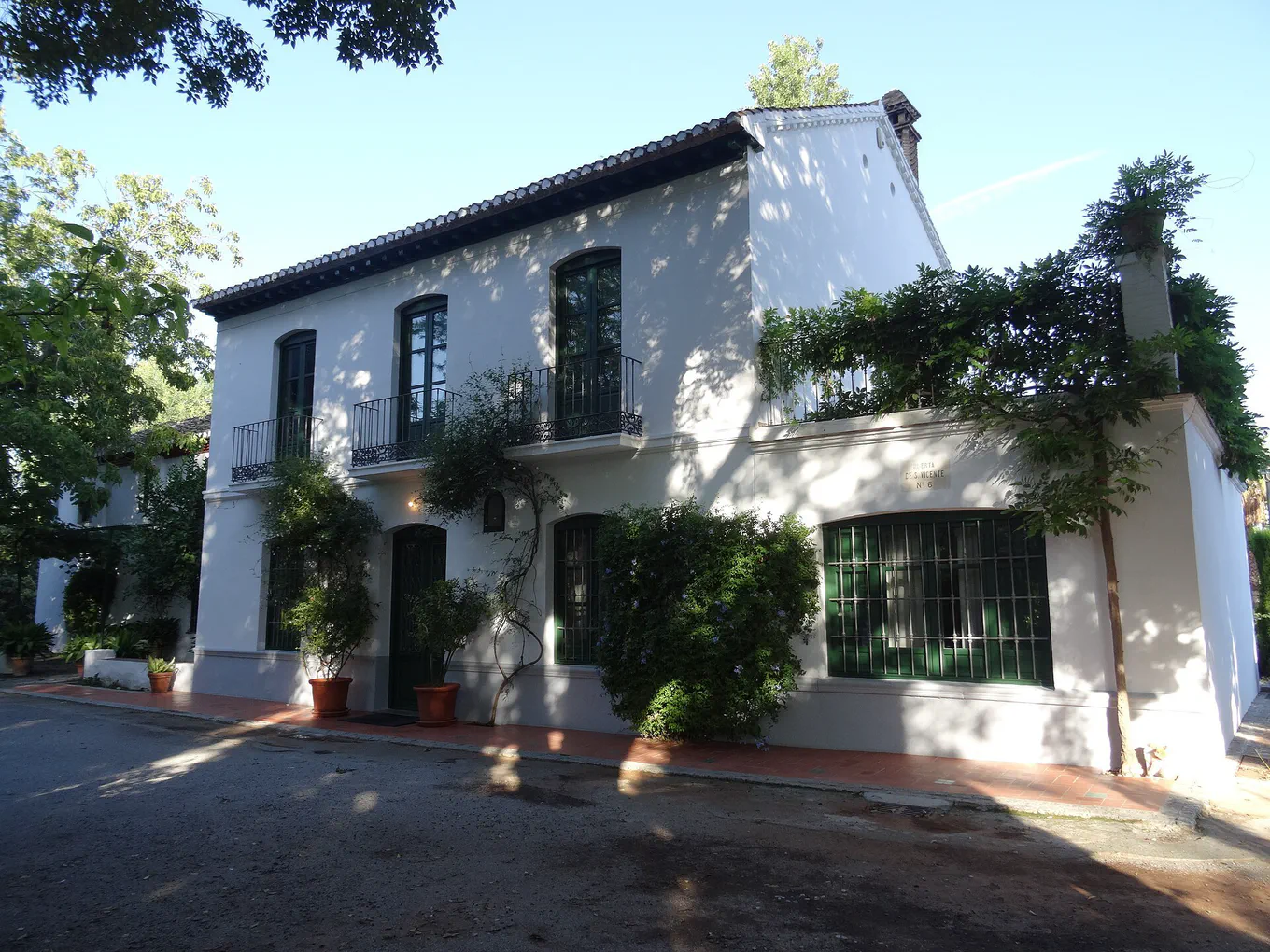
Stand here. The Huerta de San Vicente, Lorca’s family summer house, now a museum in the Parque Federico García Lorca, largely unchanged.
Blood Wedding and Yerma were written at the Huerta de San Vicente, the family summer house where Federico García Lorca had “Granada outside my balcony”. He came back for the summer on 14 July 1936. Granada was so tumultuous that no one dared be mayor. Lorca’s brother-in-law took the job and was killed within a week. In August, Lorca left the Huerta to hide with a friend, two of whose brothers were high-ranking Falangists. He was arrested there and shot by Nationalist militia. His body has never been found.
Pack nothing. Leave Friday.
Every Friday, I write a free letter, Journey, that takes us on a trip through places, stories, and ideas.
Tales of the Alhambra(Washington Irving, 1832). Essays and tales, partly written in the Alhambra itself, where Irving lived in an apartment for about three months in 1829.
Mariana Pineda(Federico García Lorca, 1927). A play about the liberal heroine executed in Granada in 1831, first staged in Barcelona with sets by Salvador Dalí.
Doña Rosita the Spinster(Federico García Lorca). A play set in Granada in three different years, a poem of 1900 Granada told through gardens, with song and dance.
The Death of Lorca(Ian Gibson, 1972). A history of the Nationalist repression in Granada in 1936 and Lorca’s killing, first published in Spanish in Paris in 1971 and banned in Spain under Franco.
Lorca’s Granada: A Practical Guide(Ian Gibson, 1992). A guidebook to the city of Federico García Lorca, translated by Gibson from his own Spanish original of 1989.
Films to watch before you visit Granada
La luz prodigiosa(Miguel Hermoso, 2003). A Spanish film. Early in the Civil War, a shepherd rescues a man left for dead by executioners; forty years later, in 1980, they meet again in Granada.
Granada Nights(Abid Khan, 2021). A coming-of-age film set in Granada, where a heartbroken British tourist, stuck in the city, befriends young foreigners and crashes into the international student scene.
Memories of the Alhambra(Ahn Gil-ho, 2018). A TV series. A South Korean series, filmed in Granada, about an augmented reality game of medieval battles in the Alhambra.
Questions
Can you see Washington Irving’s rooms in the Alhambra?
Yes. The rooms are known as the Emperor’s Chambers, or Washington Irving’s Chambers, and a marble plaque of 1914 is over the door. Irving lodged in the adjoining Halls of the Fruits in 1829.
Where are Ferdinand and Isabella buried?
In the Royal Chapel of Granada, built between 1505 and 1517 beside the cathedral. Their tombs lie in the centre of the transept, and the crown and sceptre of the Catholic Monarchs, as Ferdinand and Isabella are known, are on display. Not far away, in the Plaza de Isabel la Católica, a bronze shows Columbus bowing to the queen.
What does Alhambra mean?
Its name means “the red one”, short for “the red fortress”, after the reddish colour of its rammed-earth walls. The Alhambra was the citadel and palace of Granada’s Nasrid rulers, and in 1984 it was listed, with the Generalife, as a UNESCO World Heritage Site.