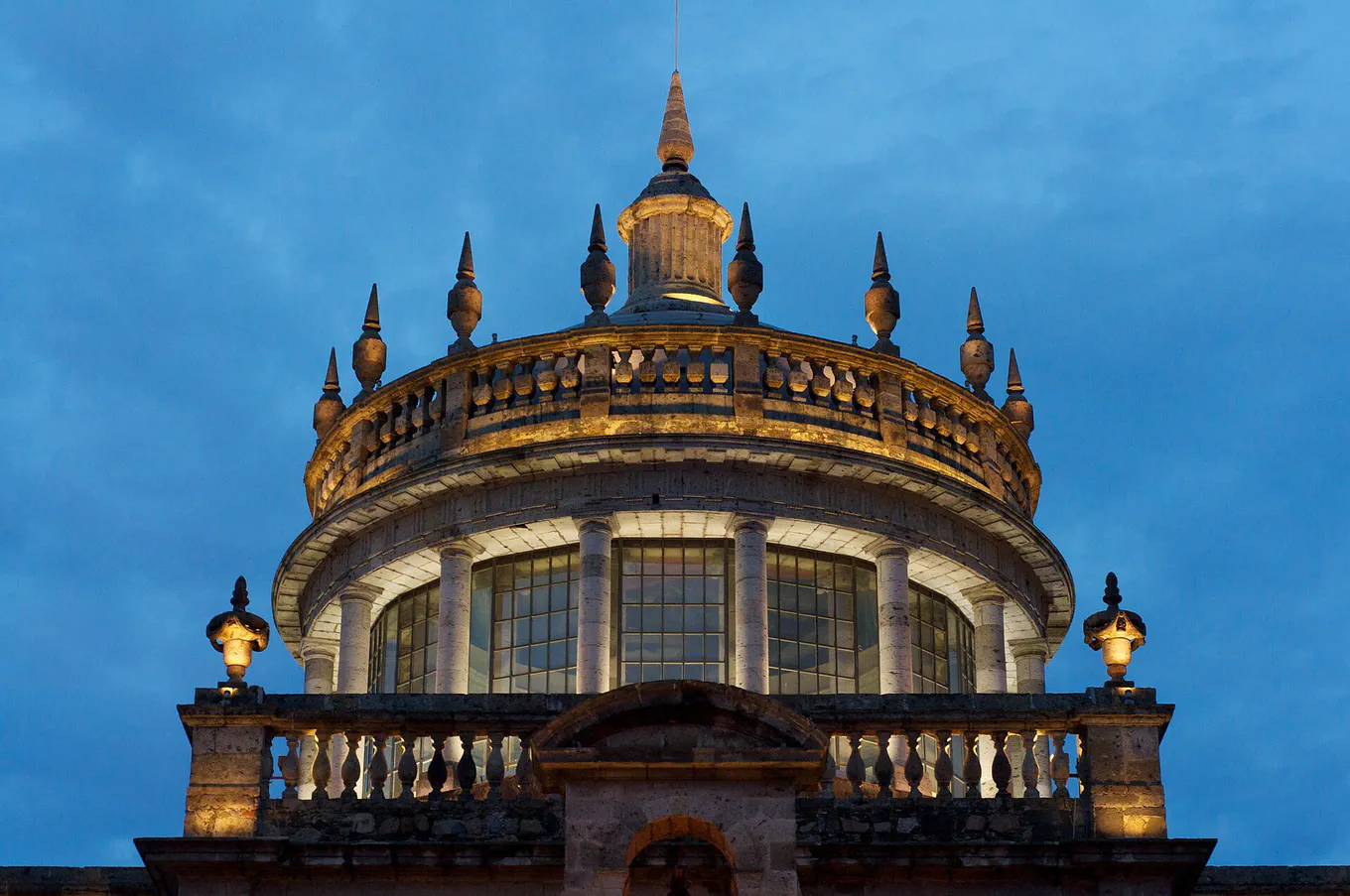
José Clemente Orozco lost his left hand making fireworks at 21. Later, one-handed, he covered a chapel in 57 frescoes, with The Man of Fire in the dome. Next time I blame my tools, please remind me.
— Nick
Guadalajara is the capital and largest city of Jalisco, in western Mexico. It was founded in the Atemajac Valley in 1542, and its metropolitan area is now the third-largest in the country. Its stories here are a Virgin made of corn stalks, a settler who stopped the city moving, a priest who abolished slavery, a one-handed painter’s dome, and a goalkeeper’s save from Pelé.
1 The corn-stalk Virgin of Zapopan and her walk home
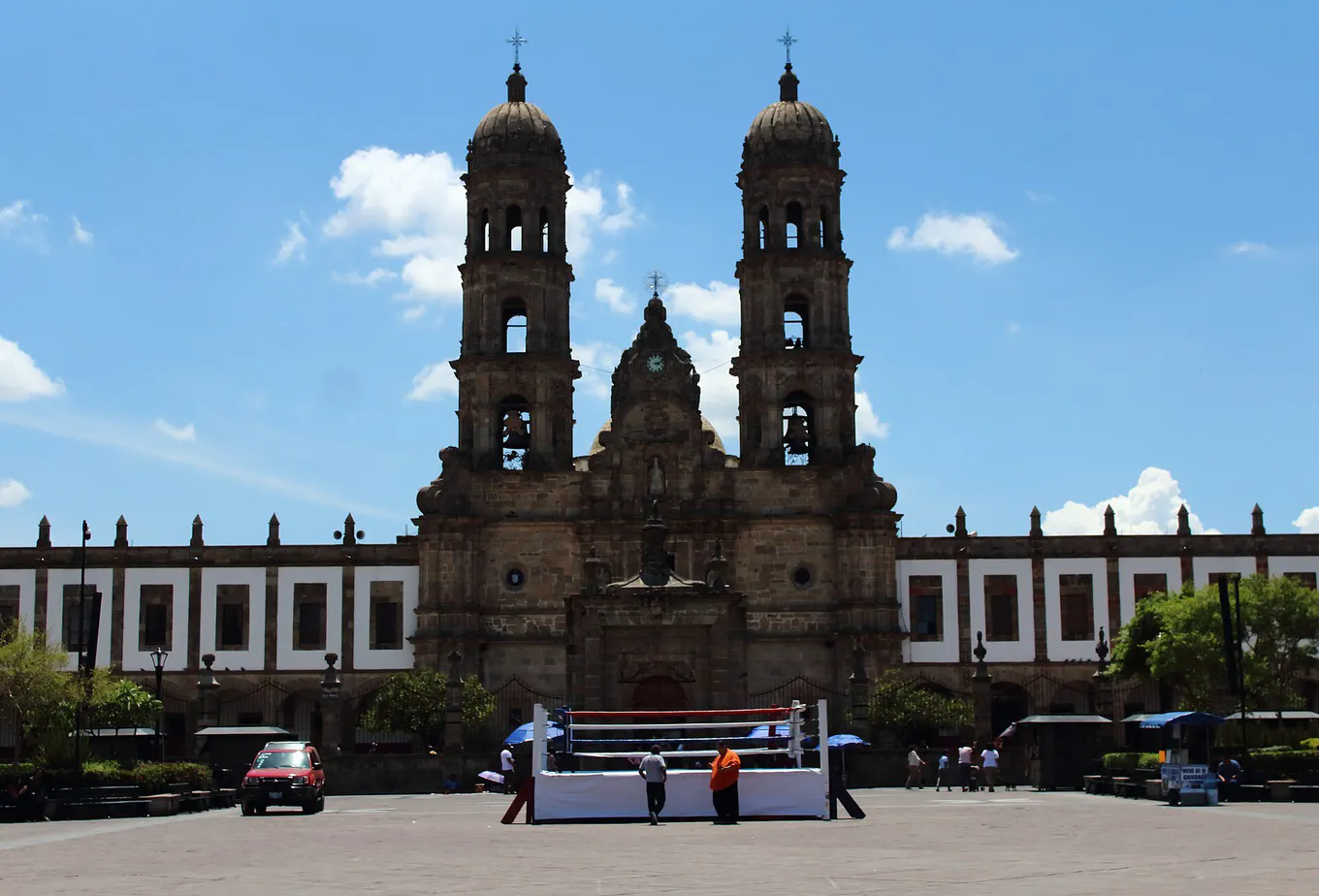
Stand here. The Basilica of Our Lady of Zapopan, in greater Guadalajara. Bronze statues of Fray Antonio de Segovia and Pope John Paul II stand in its atrium.
In 1541, during the Mixtón War, when Indigenous peoples fought back against the colonists, a Franciscan friar called Antonio de Segovia had artisans from Michoacán make him a Virgin of corn stalks, with wooden hands. He gave her to Zapopan to help spread the faith, and tradition says she helped to end the war. Since 1734, every 12 October at dawn, she has been carried 8 kilometres from Guadalajara Cathedral back to her basilica. UNESCO puts the crowd at more than two million, all for a figure 34 centimetres tall.
2 Beatriz Hernández and the last move of Guadalajara
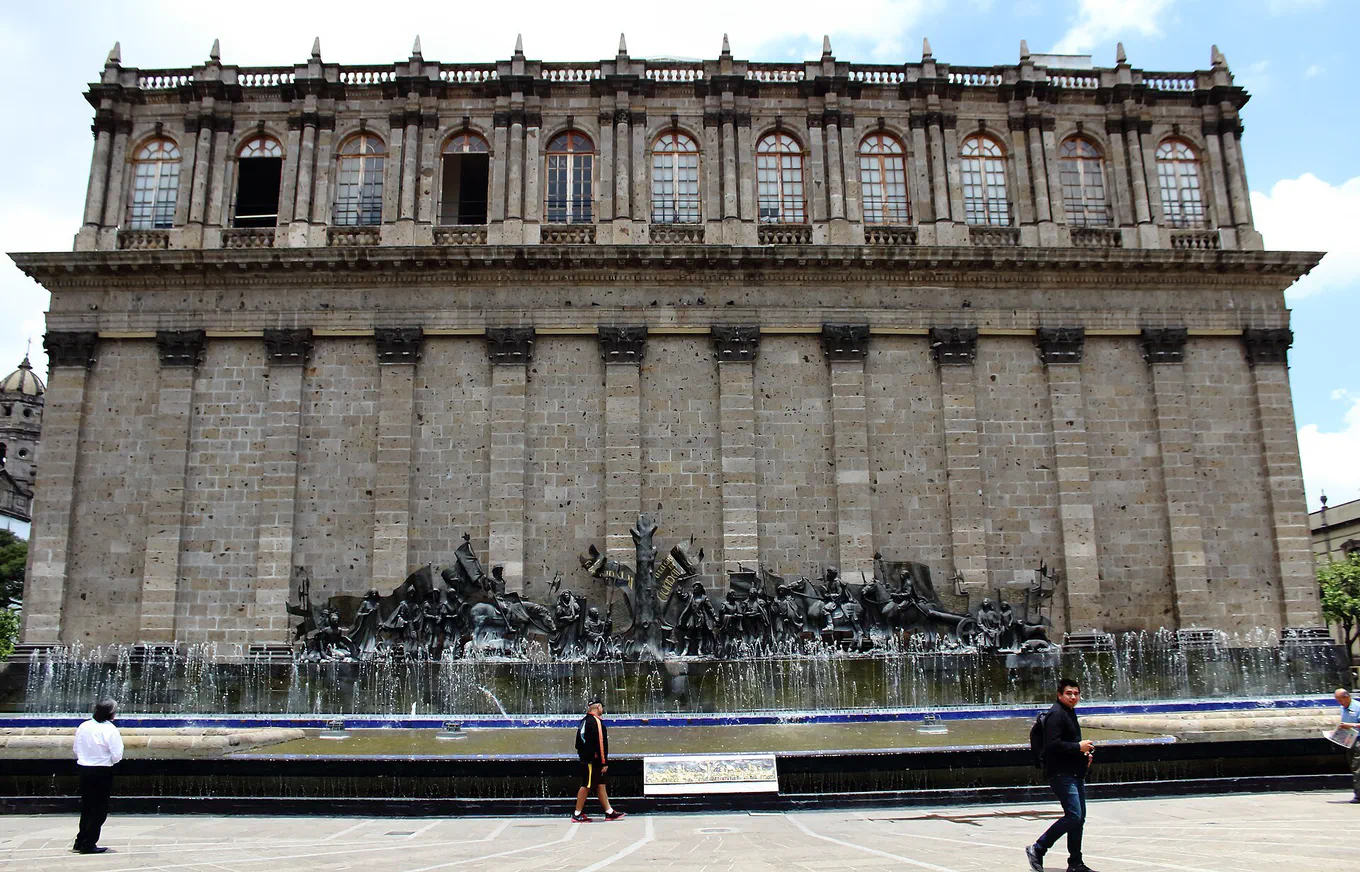
Stand here. Plaza Fundadores, behind the Teatro Degollado. A bronze relief of the city’s founders, 21 metres long, stands here.
Guadalajara was moved twice, from Nochistlán to a site near Tonalá and on to Tlacotán. Then, as the plaque on her statue tells it, a settler called Beatriz Hernández put an end to it. “Señores, el Rey es mi gallo,” she said (“Gentlemen, the King is my rooster”), and she proposed the Atemajac Valley. Another retelling has her refusing to move again at all. Either way, the city was founded in the valley on 14 February 1542, and it has never moved since.
3 Miguel Hidalgo abolishes slavery in Guadalajara
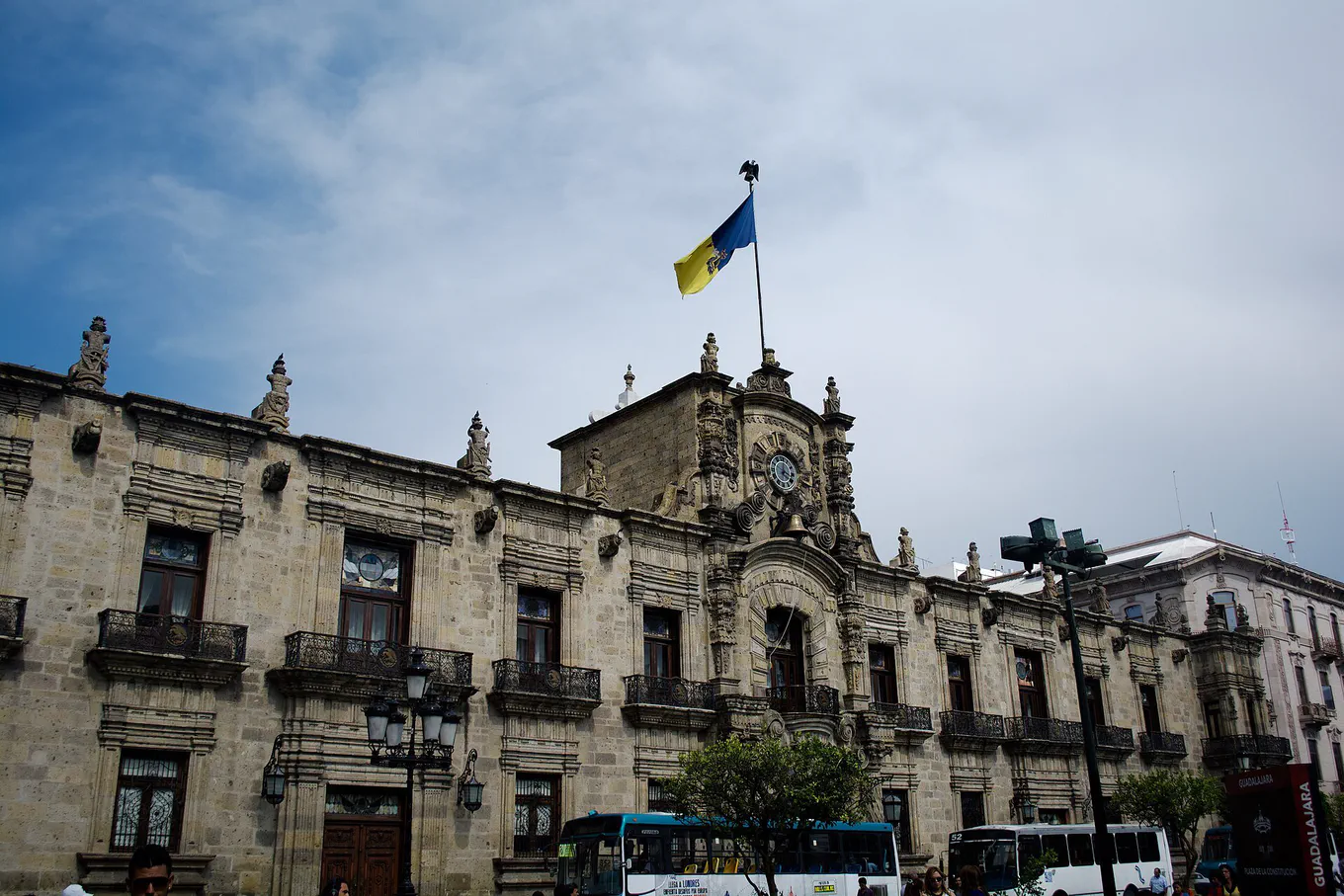
Stand here. The Palacio de Gobierno, still Jalisco’s government palace. Orozco’s mural of Hidalgo with a flaming torch is on the vault above the staircase.
Miguel Hidalgo, the priest remembered as Mexico’s Father of the Nation, began the armed struggle against Spanish rule in September 1810. By late November, he had reached Guadalajara with more than 7,000 poorly armed men and made himself head of a rebel government. Here in the palace, on 6 December, he declared slavery abolished, on pain of death. But royalist troops soon crushed his army 60 kilometres east of the city. He fled north, and by the end of July 1811 he had been caught, defrocked, and shot.
4 Orozco’s Man of Fire in the Hospicio Cabañas dome
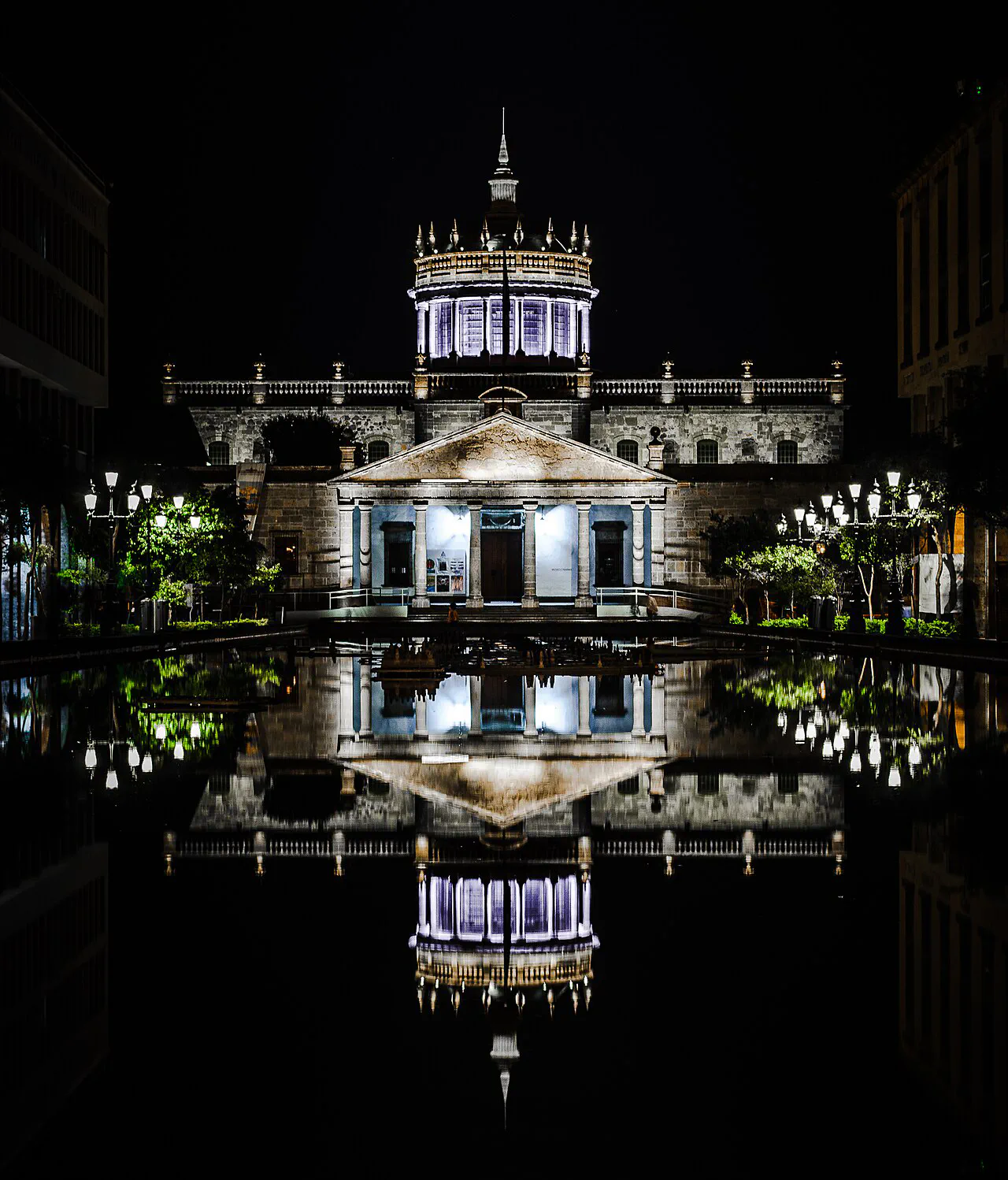
Stand here. The chapel of the Hospicio Cabañas, the old orphanage, now a museum and a UNESCO World Heritage Site.
At 21, José Clemente Orozco, later one of Mexico’s “Big Three” muralists with Diego Rivera, lost his left hand making fireworks. In the late 1930s, he took on the chapel of the Hospicio Cabañas, which a bishop had meant as a shelter for orphans. He had one hand, but by 1939 he had covered the chapel in 57 frescoes. At the centre of the dome, 27 metres high, he put The Man of Fire, now counted his masterpiece. Orphans went on living in the building until 1980.
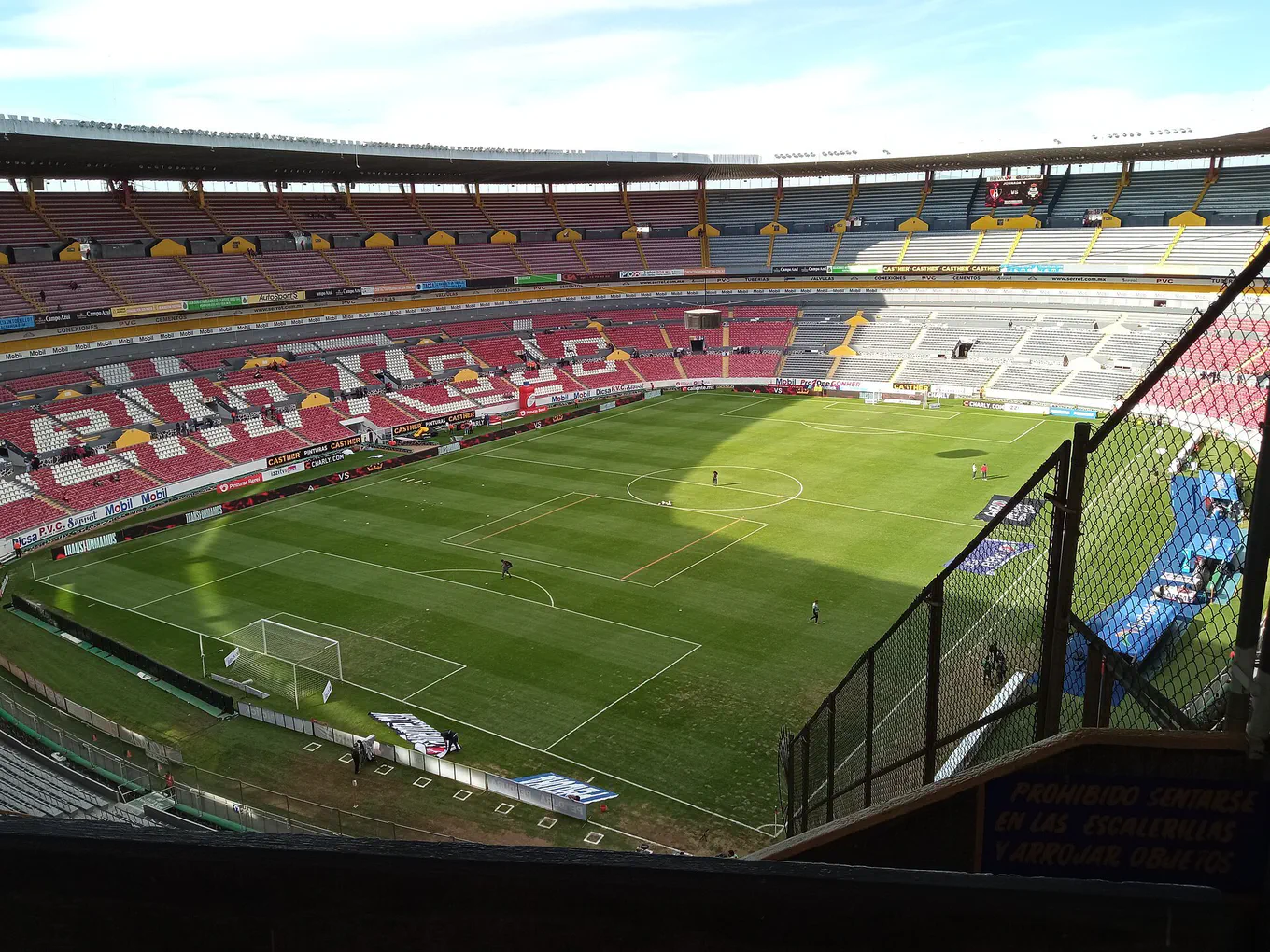
5 Gordon Banks’s save from Pelé at the Estadio Jalisco
Stand here. The Estadio Jalisco, still in use as the home ground of Atlas and Club Universidad de Guadalajara.
The pitch and stands of the Estadio Jalisco in Guadalajara, seen from high in the south stand.Alejan98 / CC0.
Pelé and Gordon Banks faced each other here at the 1970 World Cup, when Brazil played England. Banks, England’s goalkeeper, found the heat and altitude hard to cope with. Jairzinho sped past England’s left-back and crossed. Pelé met the ball with a powerful header, low towards the corner, and shouted “Gol!” But Banks blocked it. Brazil still won 1–0, through Jairzinho, and went on to win the tournament. The block came to be called the save of the century, and Pelé himself rated it the greatest of his career.
Pack nothing. Leave Friday.
Every Friday, I write a free letter, Journey, that takes us on a trip through places, stories, and ideas.
Clemencia(Ignacio Manuel Altamirano, 1869). A novel. Set in Guadalajara in 1863, during the Second French Intervention, as a battalion arrives in the city and some families leave when the French approach.
Olinka(Antonio Ortuño, 2019). A novel. After fifteen years in prison over the Olinka luxury-development fraud, Aurelio Blanco seeks revenge in Guadalajara, which its publisher calls a paradise for money laundering.
Flor de juegos antiguos(Agustín Yáñez, 1942). A short-story collection. Children’s games in Guadalajara’s streets link every story. It was published in the city for its fourth centenary celebrations.
Films to watch before you visit Guadalajara
Narcos: Mexico(Chris Brancato, Carlo Bernard and Doug Miro, 2018). A TV series. It dramatises the creation and rise of the Guadalajara Cartel in the 1980s, as Miguel Angel Félix Gallardo builds a drug empire in Guadalajara.
Doña Herlinda y su hijo(Jaime Humberto Hermosillo, 1985). A film. Set in Guadalajara, it follows Doña Herlinda, a widowed and possessive mother whose son Rodolfo is a paediatric neurosurgeon.
Los insólitos peces gato(Claudia Sainte-Luce, 2013). A film. Claudia, a shy young supermarket worker who lives somewhere in Guadalajara, is hospitalised with stomach pain and finds Martha in the next bed.
Questions
Where can you see Orozco’s Man of Fire?
In the chapel of the Hospicio Cabañas, in central Guadalajara. The old orphanage is now a museum, and The Man of Fire is the central figure in the chapel’s dome, among the 57 frescoes Orozco finished there in 1939. The building has been a UNESCO World Heritage Site since 1997.
Is Guadalajara the birthplace of mariachi?
Not quite. Most sources agree that modern mariachi began in the 19th century in Cocula, a town in Jalisco. Guadalajara holds the International Mariachi Festival, a ten-day event every year, and UNESCO recognised mariachi as Intangible Cultural Heritage in 2011.
What happened to Guadalajara Cathedral’s towers?
Earthquakes brought them down twice. The first toppled the original towers and the dome, and the replacements fell in another earthquake in 1849. The towers standing today are covered in yellow and blue Talavera-style tiles.