I love the legend of how the Beatles got so great, which is essentially that they played and played and played and played. Not when they were “THE BEATLES”… when they were no one. And a lot of that “no one” playing happened here. Thank you, Hamburg!
— Nick
Hamburg’s alliance with Lübeck in 1241 is seen as the founding of the Hanseatic League. On the River Elbe, with the country’s largest port, it is Germany’s second-largest city, after Berlin. Alongside the Beatles in St. Pauli are a concert hall on a warehouse, a headless pirate, Brahms and the job that came too late, and a shipping magnate’s emigrant halls.
1 The Beatles’ first Hamburg nights at the Indra Club
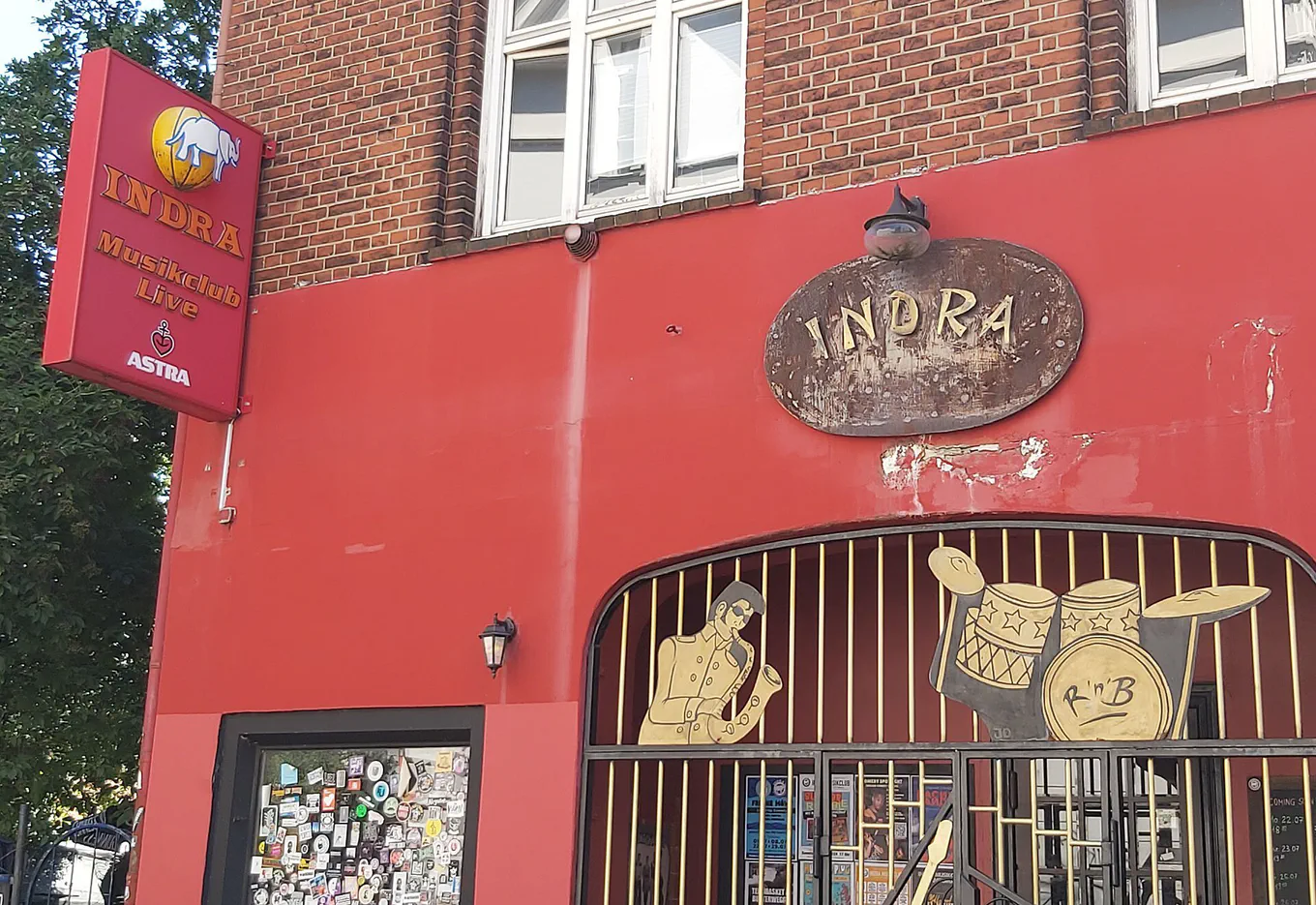
Stand here. The Indra-Musikclub, Große Freiheit 64, St. Pauli. Where Große Freiheit meets the Reeperbahn, Beatles-Platz has five steel outline figures of the band.
The Indra music club at Große Freiheit 64, in Hamburg’s St. Pauli district.JeanPaulGRingault / CC0.
On 17 August 1960, the Beatles reached St. Pauli to play the Indra Club, sleeping in a cold cinema storeroom. Three months later, it went wrong. George Harrison, at 17, was too young to play after midnight and was deported. Paul McCartney and Pete Best set fire to a condom on the storeroom wall. There was no real damage, but the cinema’s owner reported them for attempted arson, and they were deported too. John Lennon still said, “I might have been born in Liverpool, but I grew up in Hamburg.”
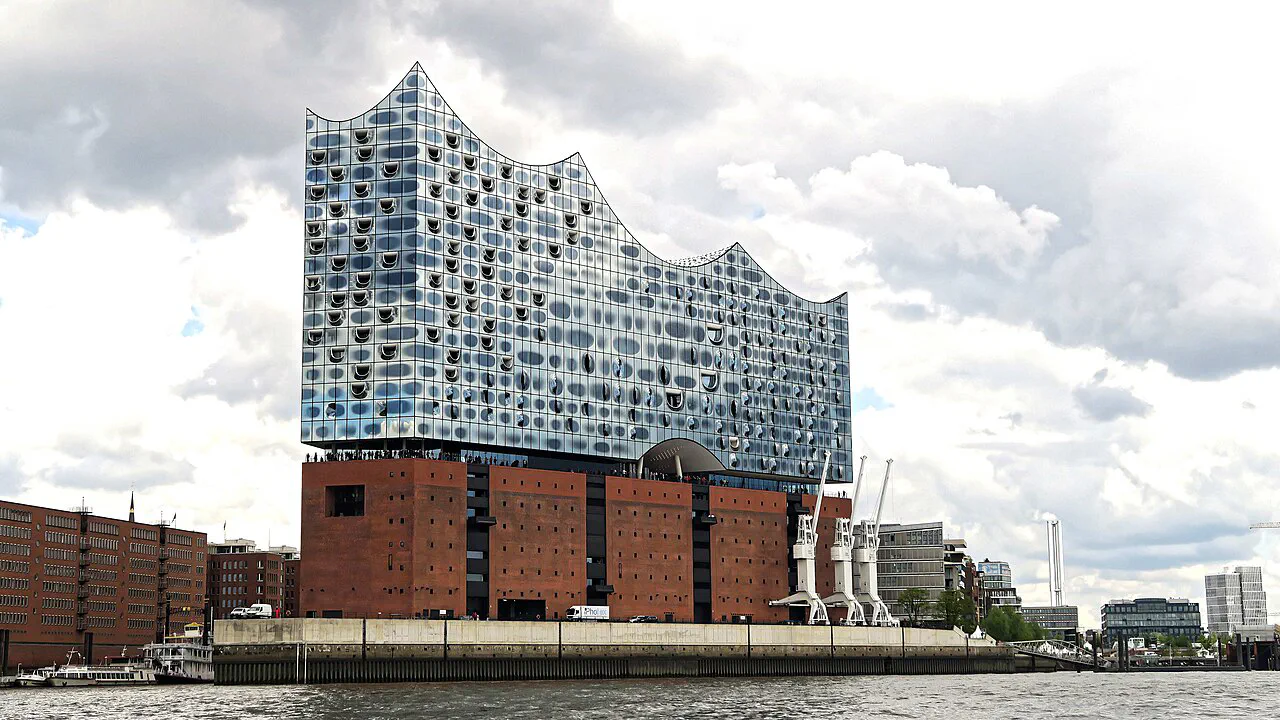
Hamburg’s Elbphilharmonie began as a private idea. The developer Alexander Gérard and his wife, Jana Marko, commissioned the Swiss architects Herzog & de Meuron to set a concert hall on top of Kaispeicher A, a 1960s brick warehouse built for cocoa, tobacco, and tea. It was due to be finished by 2010, at an estimated €241 million. Then the costs climbed, and for months building stopped. The opening concert came on 11 January 2017. The bill was €866 million.
3 Störtebeker’s headless walk on the Grasbrook
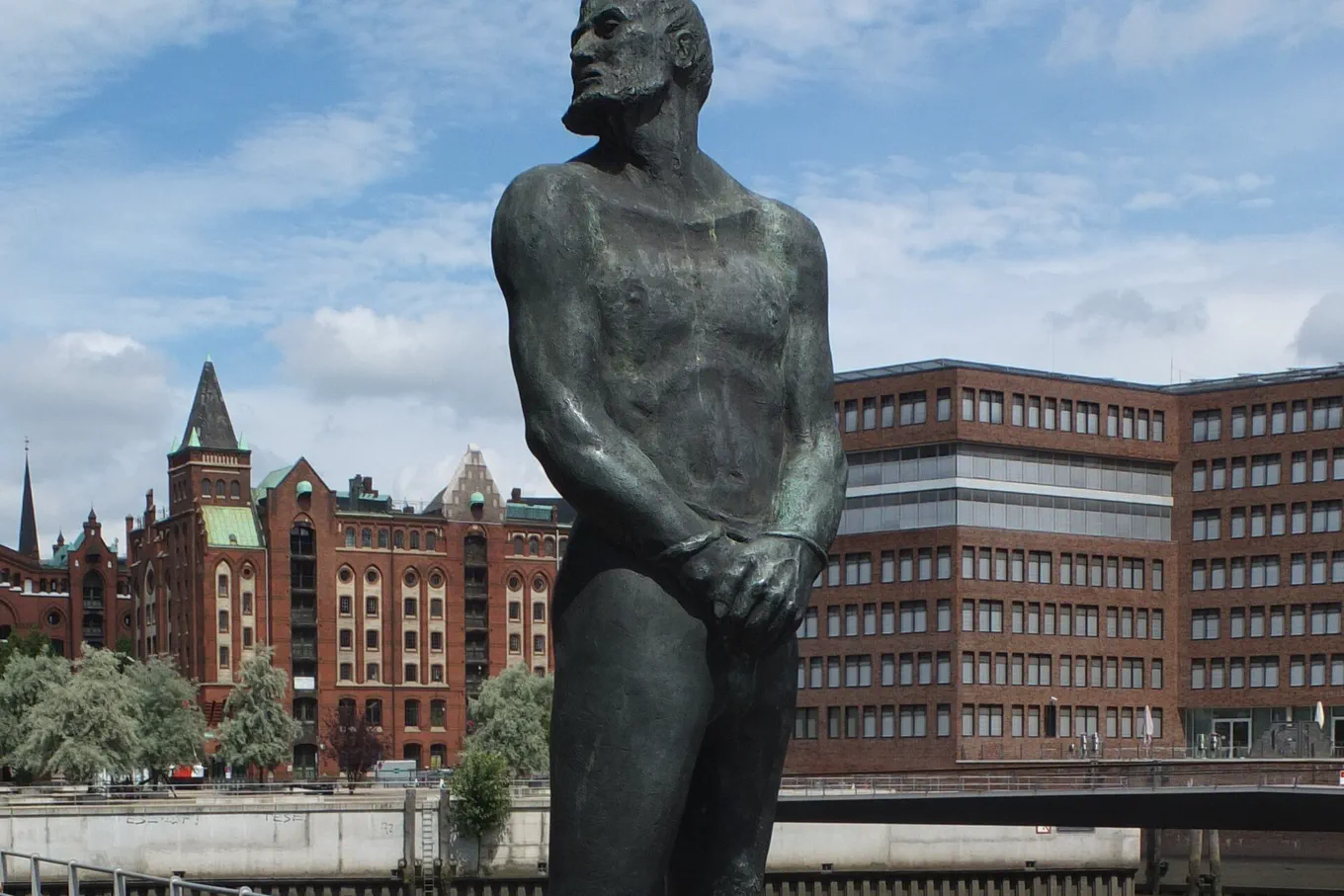
Stand here. The Störtebeker-Ufer in HafenCity, opposite the Maritime Museum, where a bronze shows him stripped and bound before his execution.
Legend makes Klaus Störtebeker the leader of the Victual Brothers, pirates who raided merchant ships in the North Sea and the Baltic. By tradition, a Hamburg fleet caught him in 1401, and he and his men were sentenced to be beheaded on the Grasbrook. The story goes that he asked the mayor to spare every man he could walk past once his head was off. His body rose and passed eleven of them before the executioner stuck out a foot and tripped it. The eleven died anyway.
4 Brahms and the Hamburg job that came too late
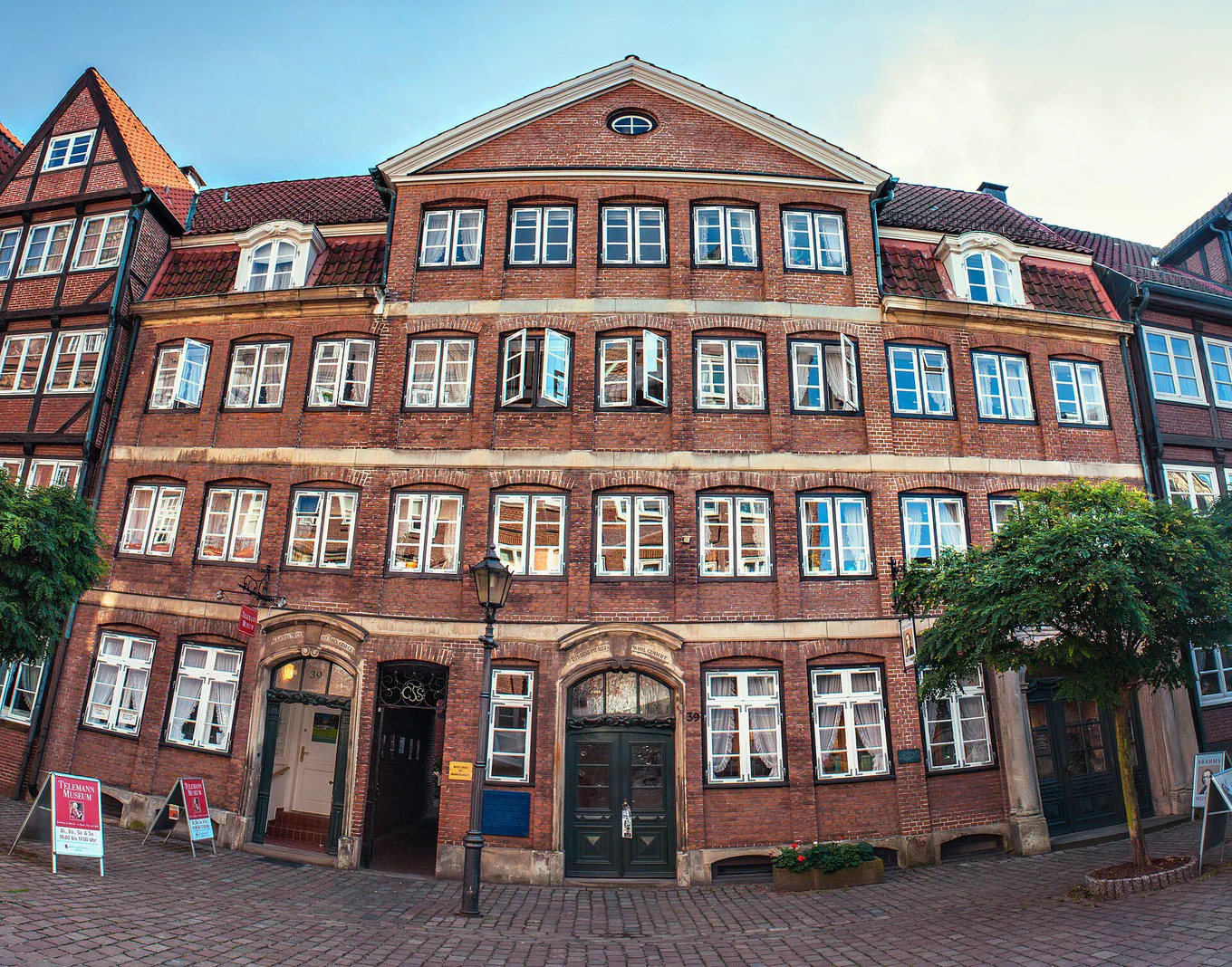
Stand here. The Brahms Museum, Peterstraße 39, a 1751 merchant’s house near the site of his birthplace, which bombing destroyed in 1943.
Born in Hamburg to a struggling musical family, Johannes Brahms hoped one day to conduct the Hamburg Philharmonic. In 1862, the post went to a singer instead. That autumn, Brahms went to Vienna for the first time, and he soon made it his home. He went on hoping. Thirty-one years later, Hamburg finally offered him the directorship, and he turned it down. He had, he said, “got used to the idea of having to go along other paths.”
5 Albert Ballin and the emigrant halls on Veddel
Stand here. BallinStadt, on the island of Veddel. The halls, demolished in 1934, have been rebuilt as a museum holding the Hamburg passenger lists.
Albert Ballin ran the Hamburg-America Line, for a time the world’s largest shipping company, though as a Jew who didn’t own it, he was not accepted by all of Hamburg society. In 1901, he built halls on Veddel for the thousands who came each week to sail to the Americas on his ships. Ballin helped bring Britain and Germany to talks before the First World War, and they failed. When Kaiser Wilhelm II, his protector, abdicated in 1918, Ballin took an overdose. The war ended two days later.
Pack nothing. Leave Friday.
Every Friday, I write a free letter, Journey, that takes us on a trip through places, stories, and ideas.
The Man Outside(Wolfgang Borchert, 1947). A play. Its hero, Beckmann, wakes floating in the Elbe after a suicide attempt. It opened at the Hamburger Kammerspiele the day after Borchert died.
The Man Outside(Wolfgang Borchert, 1947). A play, first staged at the Hamburger Kammerspiele the day after Borchert’s death. Its returning soldier, Beckmann, wakes to find himself floating in the Elbe.
A Most Wanted Man(John le Carré, 2008). A novel set in Hamburg, where the author was once a British agent and consul.
Films to watch before you visit Hamburg
Backbeat(Iain Softley, 1994). A film about the Beatles’ early Hamburg days, at the Kaiserkeller and in the Bambi Kino storeroom. Mostly shot in London, with some filming in St. Pauli.
Tomorrow Never Dies(Roger Spottiswoode, 1997). A film. Pierce Brosnan’s Bond goes to Hamburg, and parts were shot in the Hotel Atlantic, in St. Georg, between the Außenalster and the main station.
Soul Kitchen(Fatih Akın, 2009). A comedy film. Its restaurant was created for the film in a factory building on Industriestraße, in Wilhelmsburg.
The Golden Glove(Fatih Akın, 2019). A biographical horror film, named after the pub in Hamburg’s red-light district where Honka met his victims.
Questions
Can you go up the Elbphilharmonie without a concert ticket?
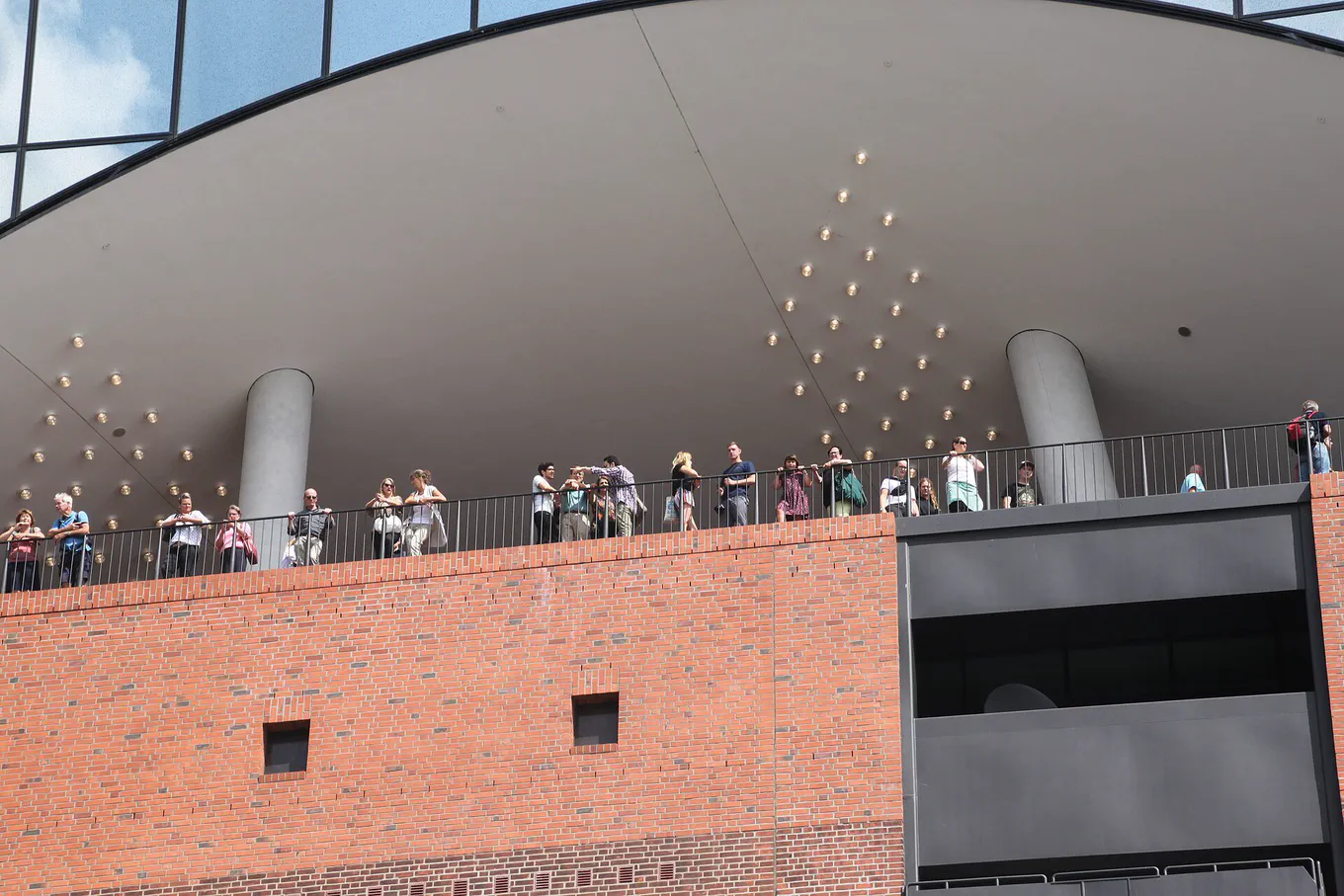
Yes. The Plaza, the hall’s public viewing platform 37 metres above the ground, is open to everyone, not just concertgoers and hotel guests.
Where is the Störtebeker statue, and is his skull real?
A two-tonne bronze of the pirate, stripped and bound before his execution, stands on the Störtebeker-Ufer in HafenCity, opposite the Maritime Museum. A skull that workers found on the Grasbrook in 1878 has been shown at the Museum for Hamburg History since 1922, but it could not be attributed to Störtebeker.
Is the hamburger named after Hamburg?
The word comes from Hamburg, but how the food connects to the city is disputed. One story says Jewish passengers sailing from Hamburg to New York ate Hamburg steak between two pieces of bread, and the shipping company gave the dish its name. It is one of several stories, and no one knows which is right.