Hangzhou is the capital of Zhejiang province in eastern China, and it is known for its West Lake. From 1132 until the Mongol invasion of 1276, it was the capital of the Southern Song dynasty. Its stories here are a snake spirit trapped under a pagoda, a general framed by a chancellor, an emperor picking tea, Richard Nixon’s communiqué in trouble, and the flat where Alibaba began.
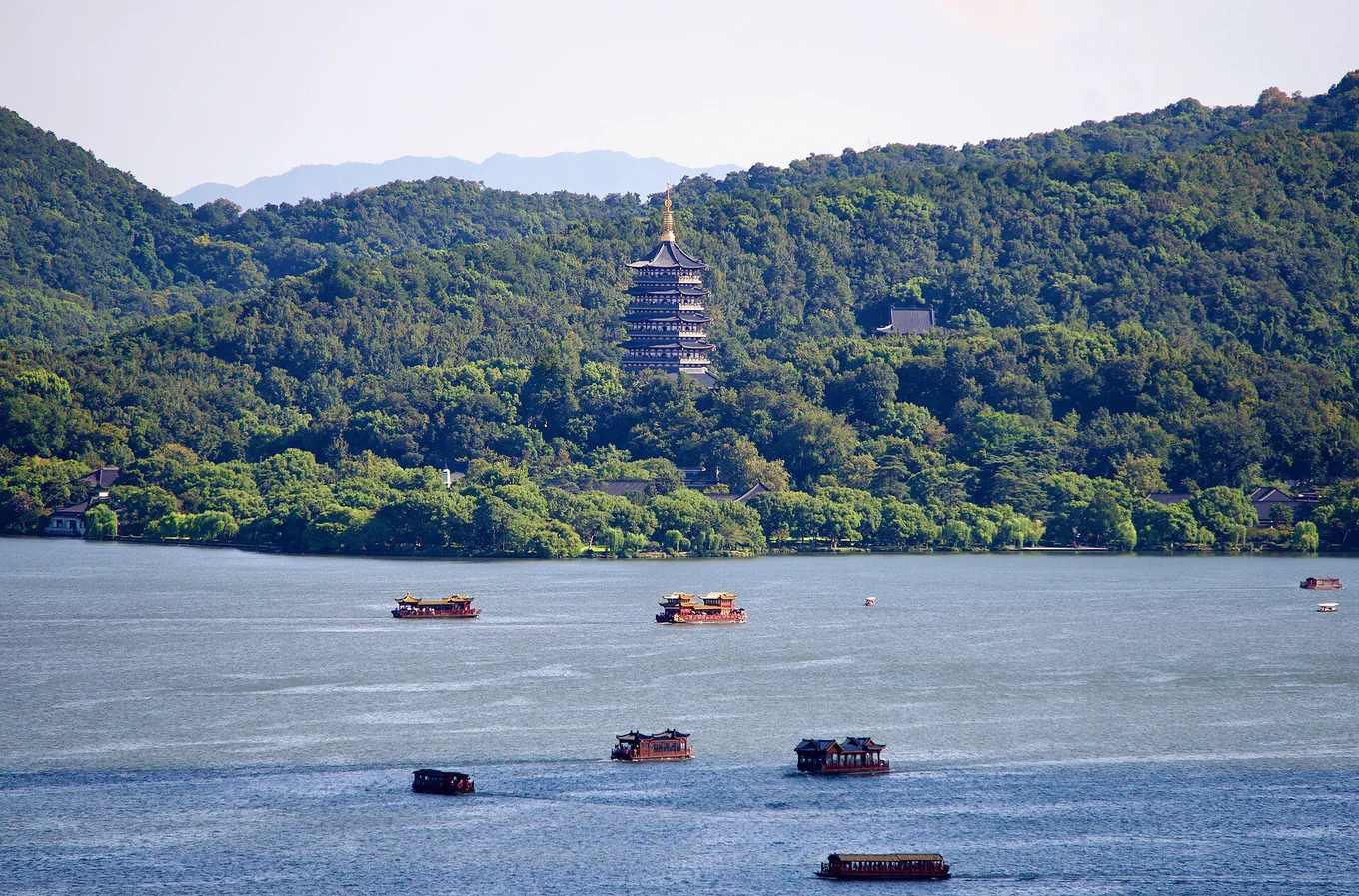
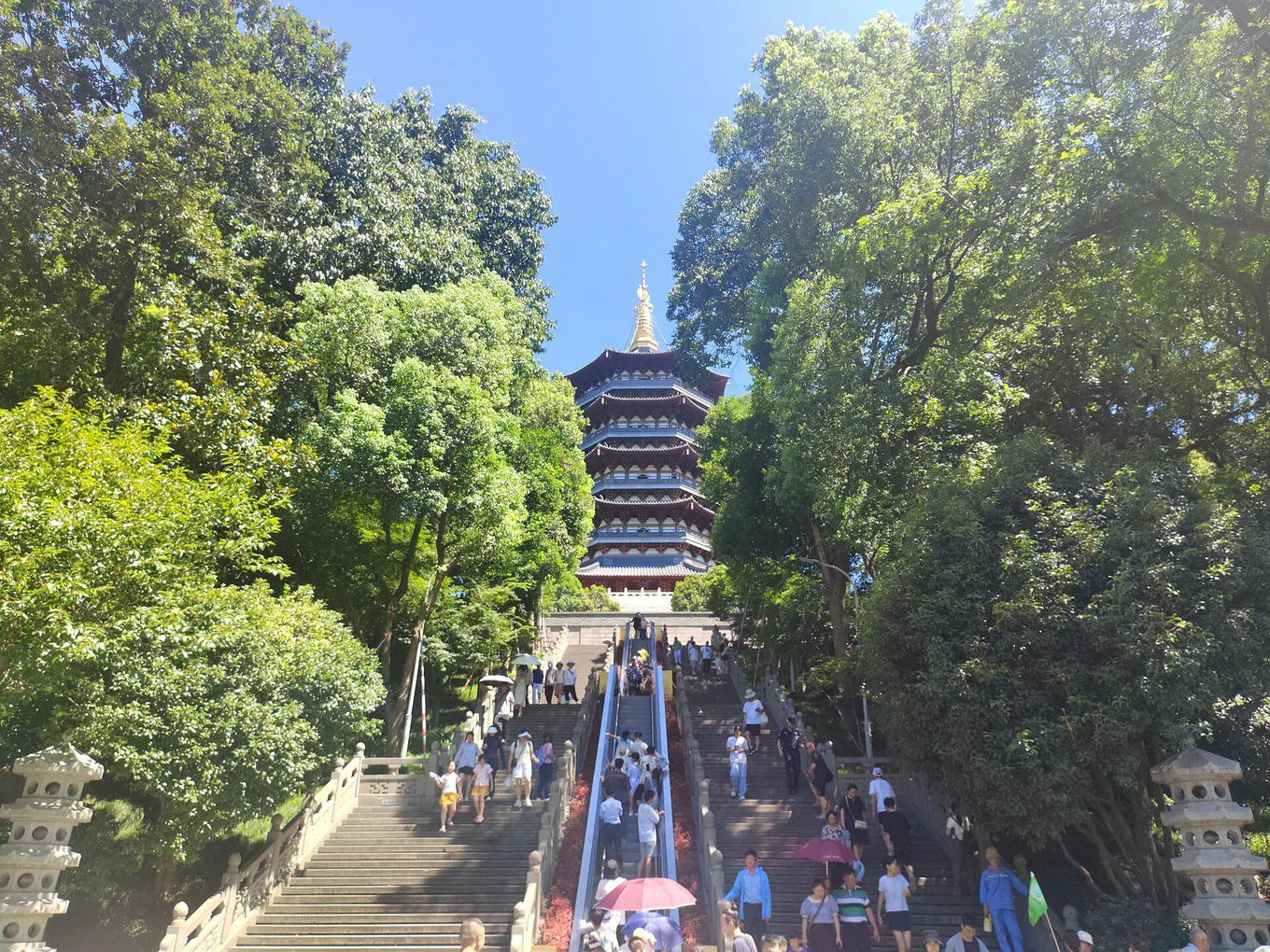
In the Legend of the White Snake, a snake spirit named Bai Suzhen takes human form, meets a young man, Xu Xian, on a ferry on West Lake, and marries him. But the abbot Fahai tells Xu Xian his wife is a snake, defeats her, and imprisons her under Leifeng Pagoda. The real pagoda fell down in 1924, because people had dug out too many of its bricks, believing they warded off illness. The writer Lu Xun welcomed it. To him, the old feudal order was falling too.
2 Yue Fei’s tomb and the kneeling statues by West Lake
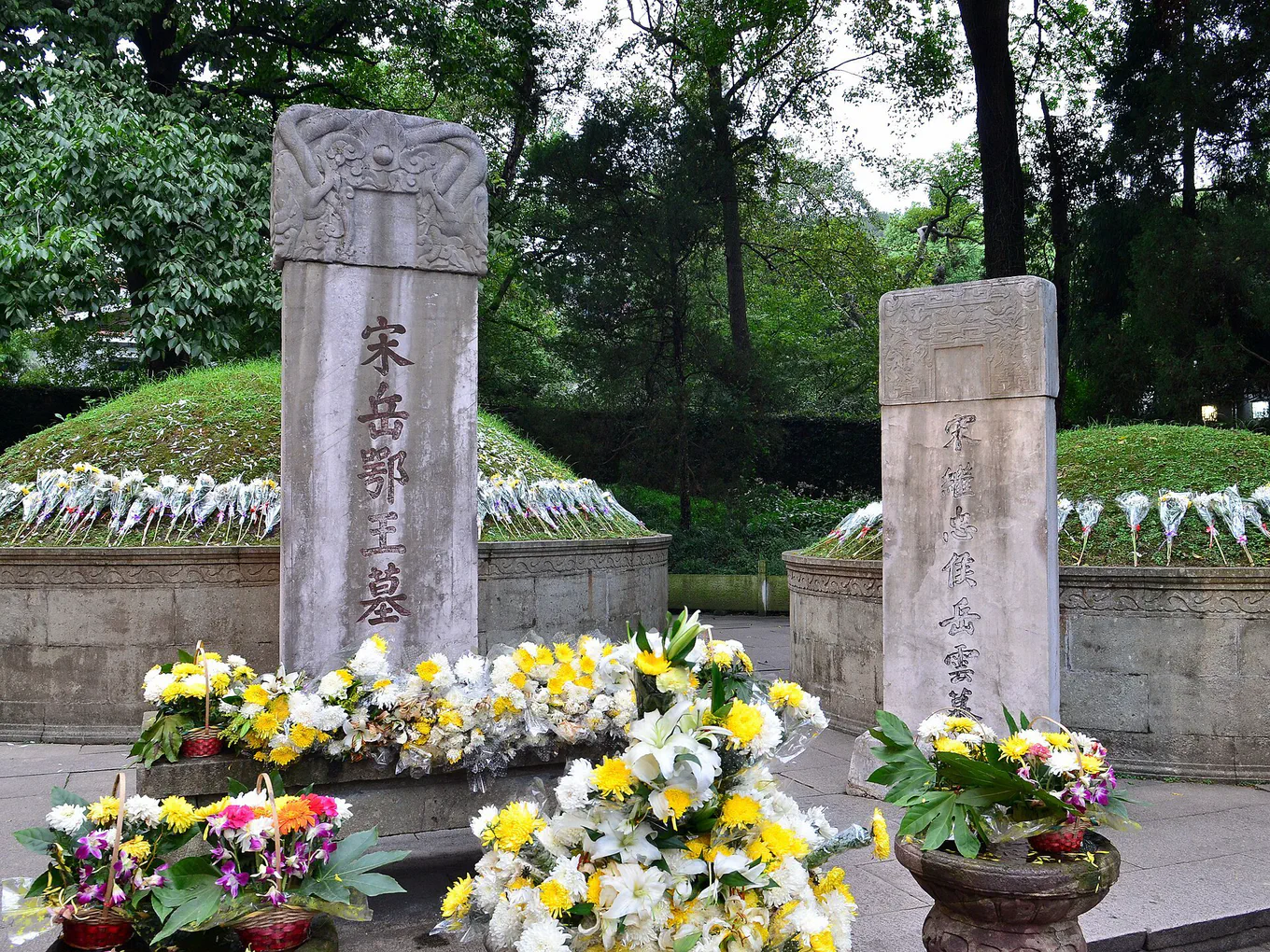
Stand here. The tomb of Yue Fei and his son, in the Yue Fei Temple near West Lake, a temple first built in 1221.
Emperor Gaozong of the Song recalled his general Yue Fei with twelve orders, sent as twelve gold plaques. Then the chancellor, Qin Hui, had him arrested, and in 1142 Yue Fei was executed in prison. Asked his crime, Qin Hui answered “perhaps there is”, and the phrase became Chinese for a trumped-up charge. Twenty years later, a new emperor cleared Yue Fei’s name. Statues of Qin Hui and his wife kneel before Yue Fei’s tomb. For centuries, people have cursed them, spat on them, and urinated on them.
3 The Qianlong Emperor and the eighteen Dragon Well tea bushes
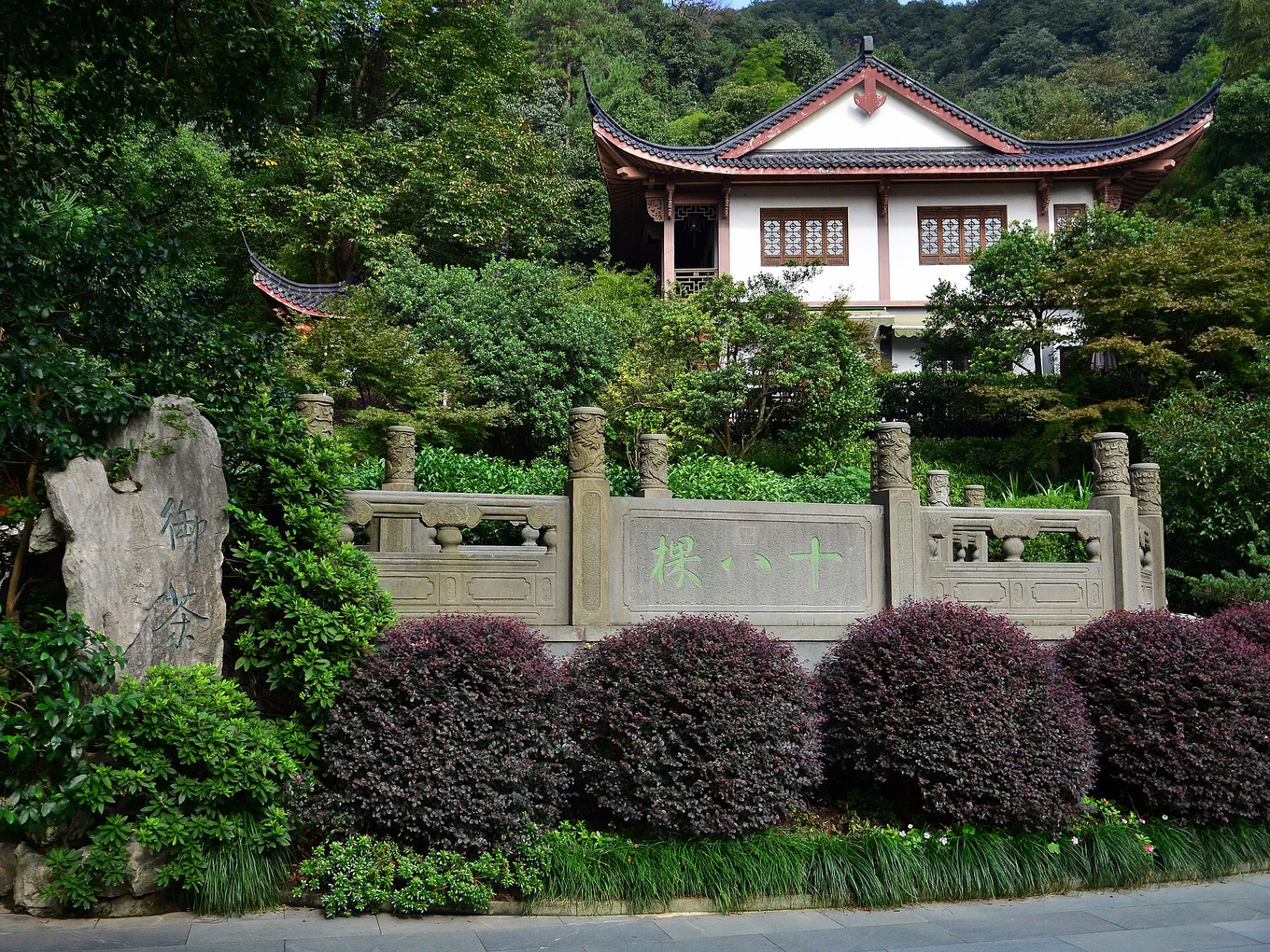
Stand here. Hu Gong Temple, below Lion Peak. The eighteen tea bushes in front of it are said to be still living.
Longjing tea, named Dragon Well after a well near Longjing village, owes its flat leaves to an emperor, the legend goes. The Qianlong Emperor came to Hu Gong Temple, gave its eighteen tea bushes imperial status, and was so taken with the pickers that he tried it himself. He pushed the leaves into his sleeve and left at once for Beijing. By the time he brewed them for his mother, they were flat, and Longjing has been shaped like them ever since.
4 Nixon in Hangzhou and the communiqué that nearly failed
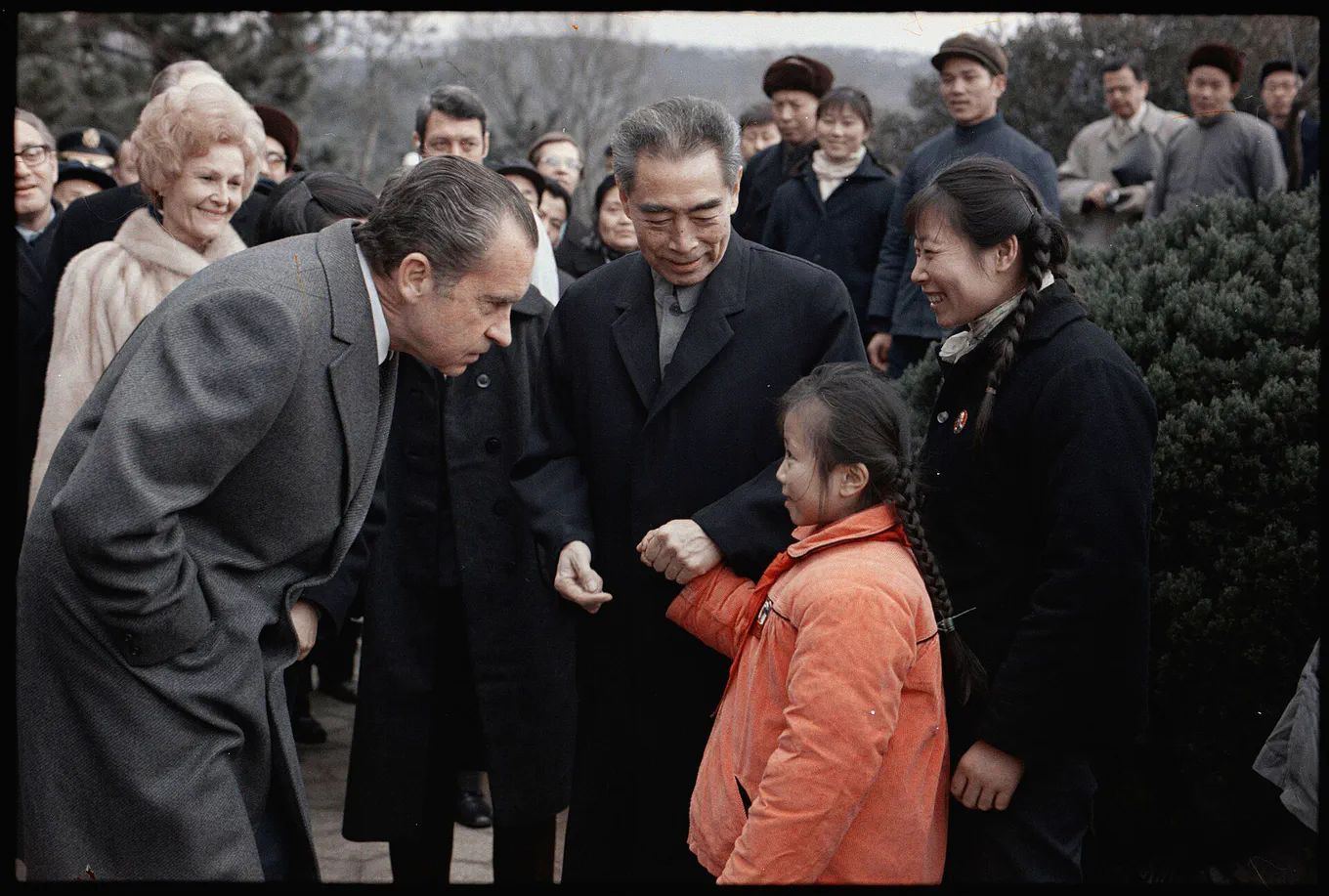
Stand here. West Lake Park, where President Nixon and Premier Zhou Enlai greeted a young girl during his visit in February 1972.
Richard Nixon’s 1972 trip to China stopped at Hangzhou for its natural beauty. He slept at the Liu Estate, Mao’s 130-acre villa, and called the stay “the most delightful interlude of the trip”. But here his Secretary of State first saw the joint communiqué meant to crown the visit, and, by one American’s account, called it a disaster, above all on Taiwan. Talks reopened that night. The communiqué was signed in Shanghai the next evening. Nixon called the trip “the week that changed the world”.
5 Jack Ma’s Lakeside Gardens flat, where Alibaba began
Stand here. Flat 16-1, Lakeside Gardens, where Alibaba began. It is a private flat, not a museum.
Jack Ma, who would found Alibaba, practised his English on visitors to a Hangzhou hotel. He failed his first university entrance exam, with one point in maths, and KFC turned him down. In 1999, he and 17 friends and students started Alibaba in a small six-room flat, where Ma told them they would eat, sleep, and work day and night. They aimed to be one of the world’s top ten websites, from somewhere around a millionth. In 2014, Alibaba’s stock market launch was the biggest in history.
Pack nothing. Leave Friday.
Every Friday, I write a free letter, Journey, that takes us on a trip through places, stories, and ideas.
The Book and the Sword(Jin Yong, 1955). A wuxia novel. Chen Jialuo and the heroes follow Wen Tailai’s trail to Hangzhou, then kidnap the emperor and hold him hostage in the Liuhe Pagoda.
Madam White Is Kept Forever Under the Thunder Peak Tower(Feng Menglong, 1624). A short story from the collection Stories to Caution the World, and the pivot point for the White Snake legend, in which Xu Xuan returns to Hangzhou.
On the Fall of the Leifeng Pagoda(Lu Xun, 1924). An essay, one of two Lu Xun wrote after the Leifeng Pagoda, on Sunset Hill south of West Lake in Hangzhou, collapsed from disrepair on 25 September 1924.
Films to watch before you visit Hangzhou
Iron & Silk(Shirley Sun, 1990). A film of Mark Salzman’s book. Mark Franklin arrives in Hangzhou to teach English; the film was shot there, though Salzman’s experiences occurred in Changsha.
Aftershock(Feng Xiaogang, 2010). A disaster-drama film. Fang Deng moves away to study in a university in Hangzhou, where her twin brother, Fang Da, becomes the boss of a travel agency.
A West Lake Moment(Yim Ho and Yang Zi, 2005). A romantic comedy-drama film. Xiao Yu is a barista and cake maker in a teahouse-café by West Lake in Hangzhou.
Questions
Can you see the pagoda where the White Snake was imprisoned?
Yes. Leifeng Pagoda stands on Sunset Hill, south of West Lake. The original, built in 975 on the orders of the King of Wuyue, fell in 1924 after people had taken too many of its bricks. A rebuilt pagoda opened in 2002 over the preserved base of the old one.
Is the Broken Bridge on West Lake really broken?
No. The Broken Bridge, at the eastern end of the Bai Causeway, is not broken. In one version of the Legend of the White Snake, it is where the lovers first meet, when Bai Suzhen makes it rain and Xu Xian lends his umbrella. Later, they are reunited on the same bridge.
Was Hangzhou ever the capital of China?
Yes. From 1132 until the Mongol invasion of 1276, Hangzhou was the capital of the Southern Song dynasty. Earlier, from 923 to 997, it was the capital of the Wuyue Kingdom, whose king ordered Leifeng Pagoda built. It is counted among the Eight Ancient Capitals of China.