John McCain broke both arms and a leg ejecting over Hanoi, nearly drowned in Trúc Bạch Lake, then turned down early release unless every man captured before him went too. Blows my mind. Also, Hanoi is the place where the French offered a cent a rat tail to put a lid on the vermin epidemic. Of course, people then bred rats.
— Nick
Hanoi, in the Red River Delta, is the capital of Vietnam. In 1010, the first Lý ruler moved his capital here and named it Thăng Long, after a dragon he said he saw rising from the river. Its stories here are a sword given back to a turtle, a bounty on rats’ tails, a pilot in a lake, a leader’s last wish, and a singer in a bomb shelter.
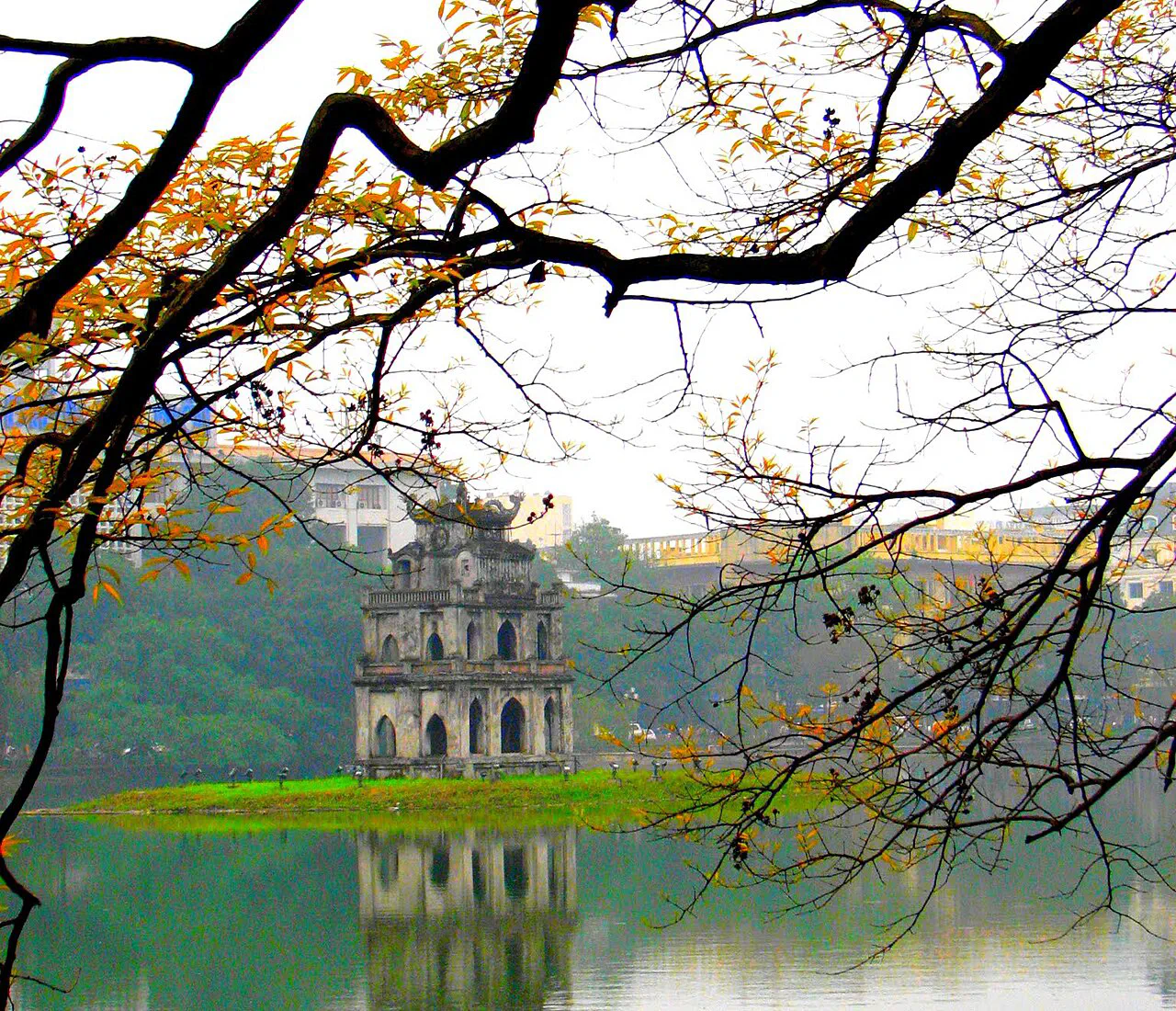
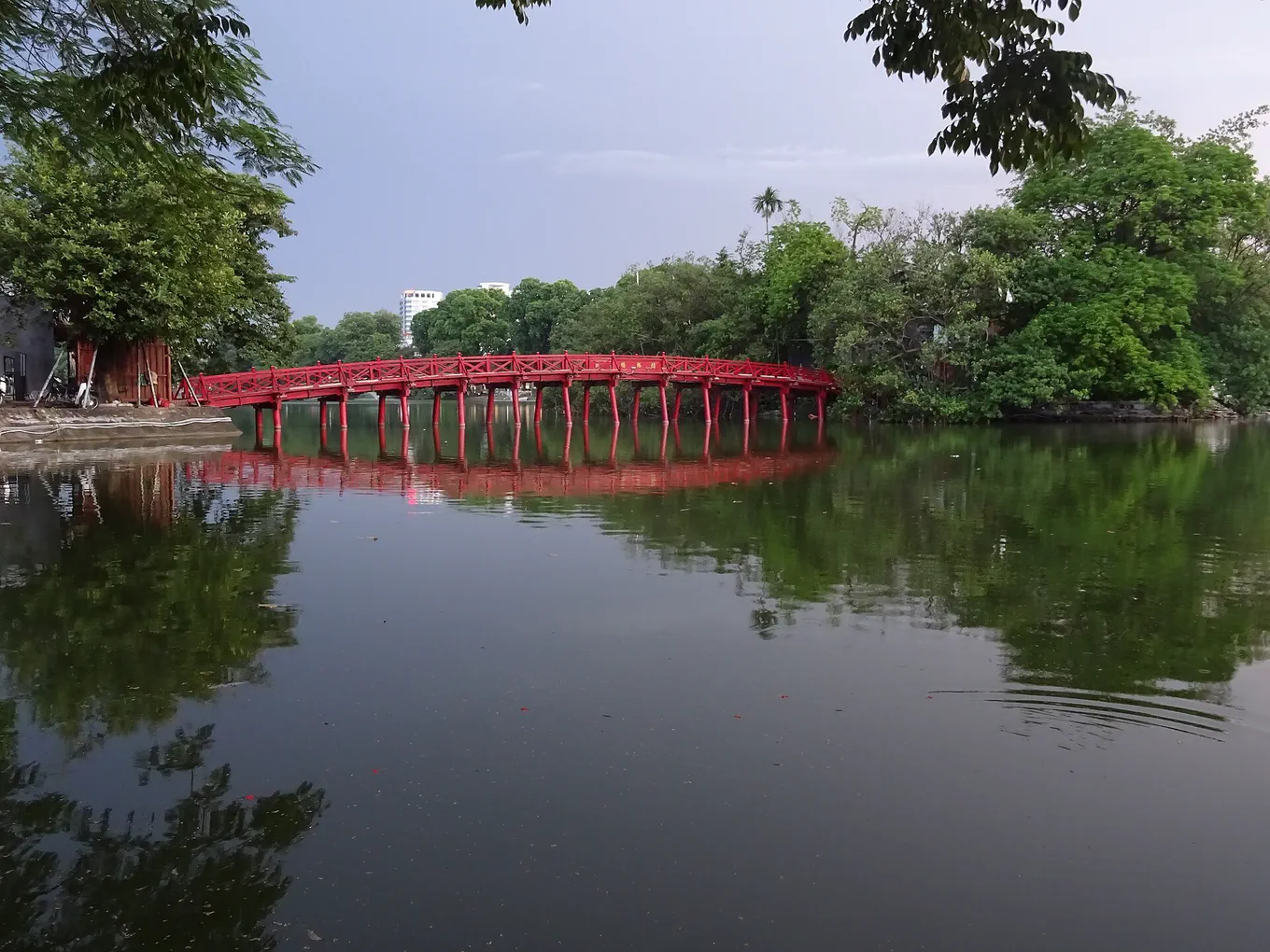
Vietnam has its own Excalibur, and this lake is where it went back. Lê Lợi, a rebel leader, drove the Ming armies out of Vietnam in 1427, and legend says he did it with a magic sword from the Dragon King, inscribed “The Will of Heaven”. As emperor, he went boating on the lake, and a golden turtle surfaced and asked in a human voice for the sword back. He drew it and threw it. The lake, once Green Water, became the Lake of the Returned Sword.
2 The Great Hanoi Rat Massacre under the French Quarter
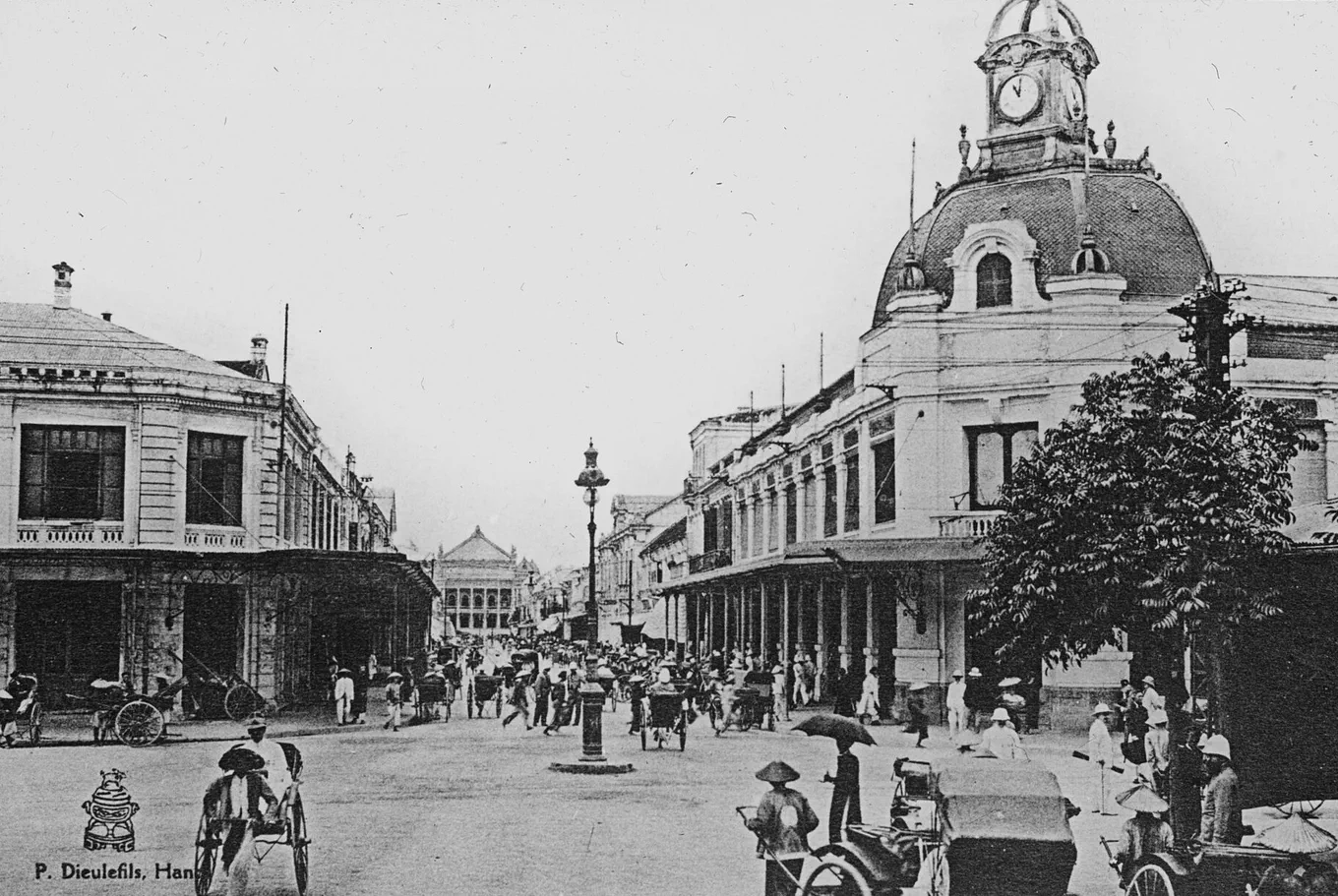
Stand here. The streets of Hanoi’s former French Quarter. The colonial sewers at the heart of this story lie beneath them.
Rue Paul Bert, later renamed Tràng Tiền Street, at the heart of Hanoi’s French Quarter around 1909.Pierre Dieulefils / Public domain.
Freakonomics Radio told this story in an episode called “The Cobra Effect”. The historian on the show, Michael Vann, prefers “the rat effect”. In 1902, the new French sewers under Hanoi were home to rats, and bubonic plague made that serious. So the colonial authorities paid a cent a rat, on proof of a severed tail. Then officials began seeing rats with no tails. The catchers were cutting them off and letting the rats go. On the city’s edge, an inspector found a farm growing rats for their tails.
3 John McCain in Trúc Bạch Lake and the Hanoi Hilton
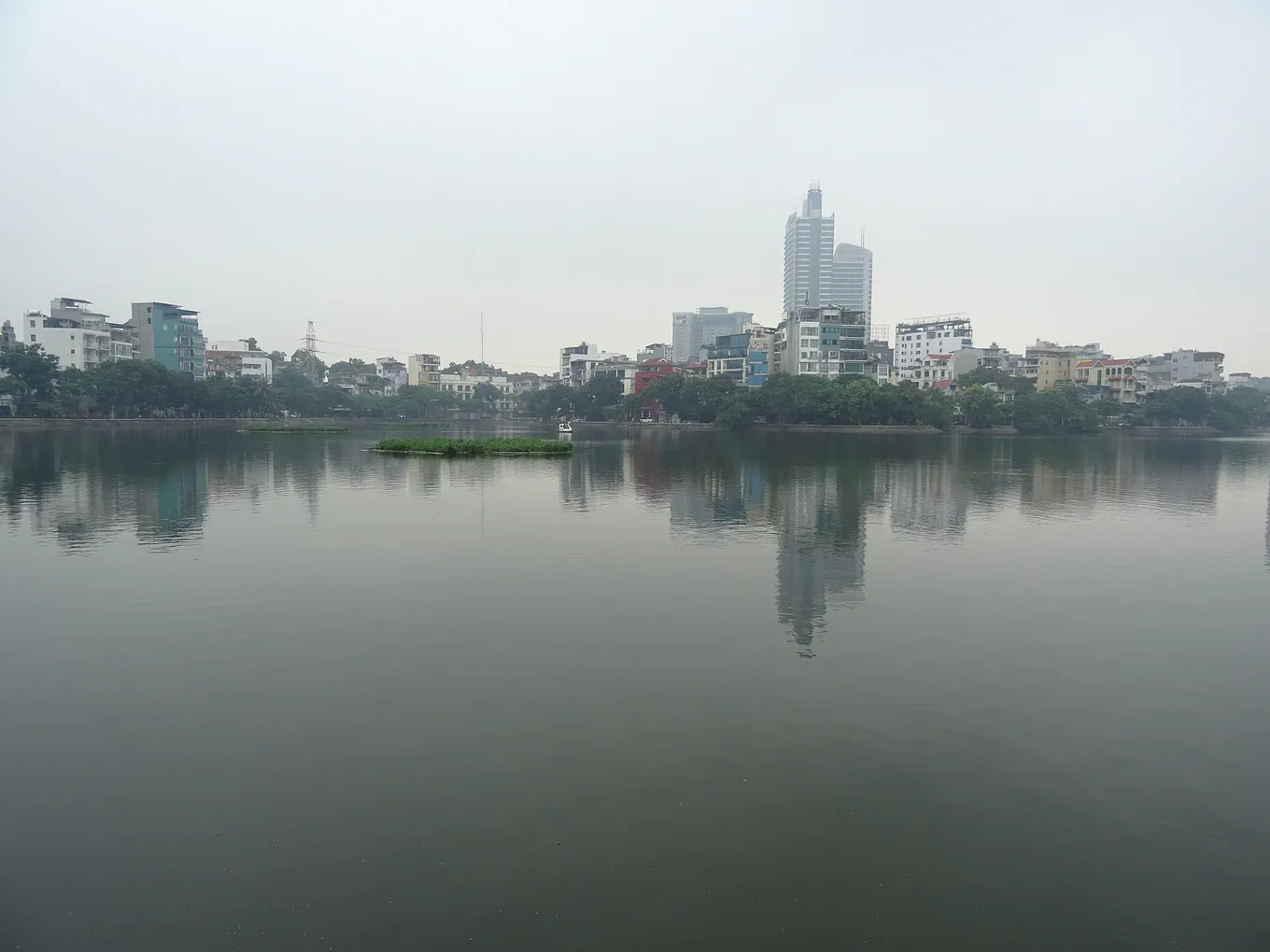
Stand here. The western shore of Trúc Bạch Lake, on Thanh Niên Road, where a monument put up in 1985 marks John McCain’s capture.
John McCain, later a US senator and presidential nominee, came down in this lake on 26 October 1967. His jet had been hit by a missile, and he broke both arms and a leg ejecting, then nearly drowned. He was taken to Hỏa Lò Prison, which American prisoners called the Hanoi Hilton. The next year his father took command of US forces in Vietnam, and the North Vietnamese offered McCain early release. He refused unless every man captured before him went too. He stayed a prisoner until March 1973.
4 Ho Chi Minh’s last wish and his Ba Đình mausoleum
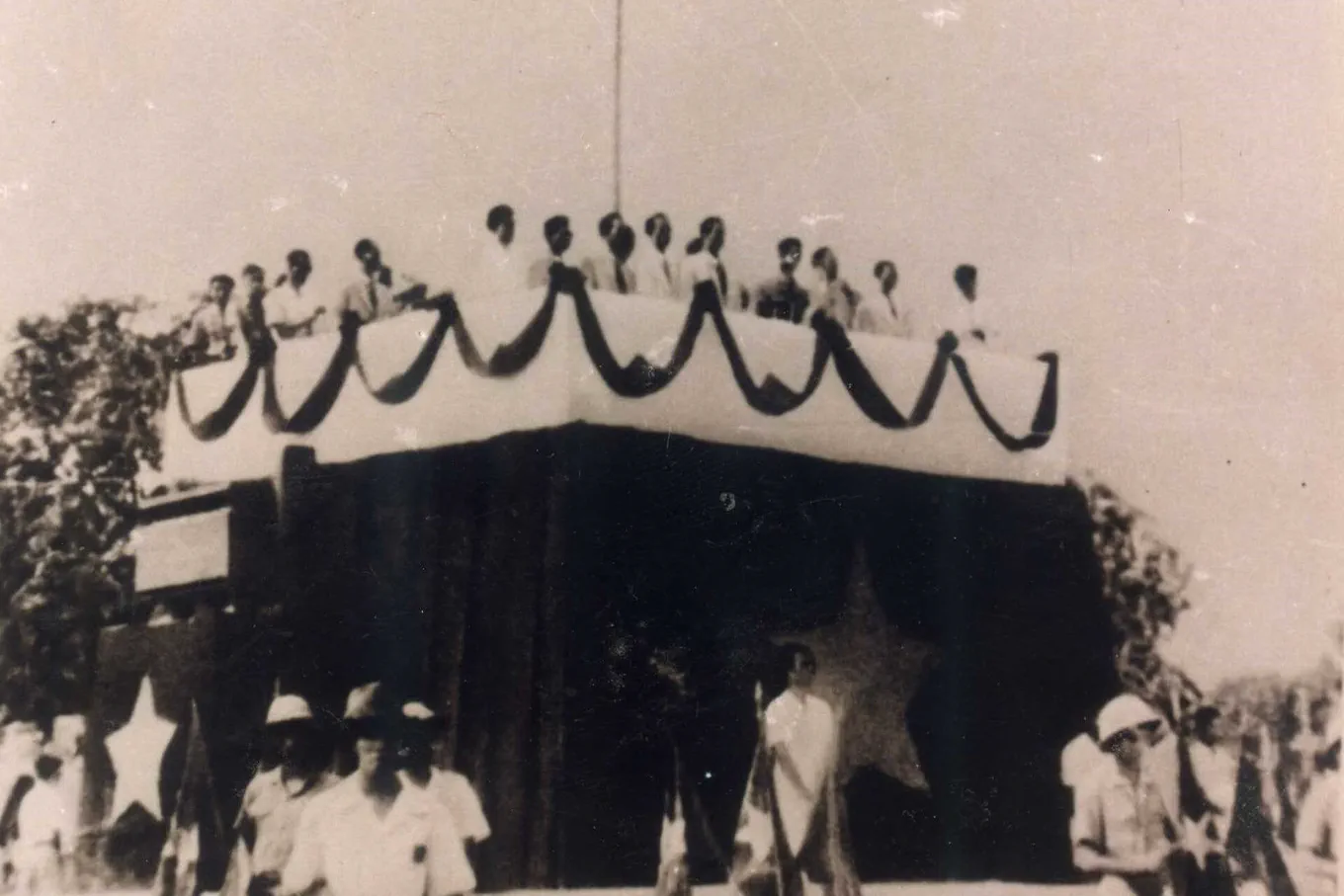
Stand here. Ba Đình Square, where the Ho Chi Minh Mausoleum stands at the centre. It opened in 1975.
The podium in Ba Đình Square where Ho Chi Minh read Vietnam’s declaration of independence.Unknown / Public domain.
Ho Chi Minh wanted to be cremated, with his ashes in three urns, one each for the north, centre, and south of Vietnam. North Vietnam’s first president died on 2 September 1969, 24 years to the day after he declared independence in this square, so his death was announced a day late. The Politburo had his body preserved instead. Twenty years later, the leadership admitted defying his wish, altering his will, and falsifying the date he died. Each week, over 15,000 people come to see him.
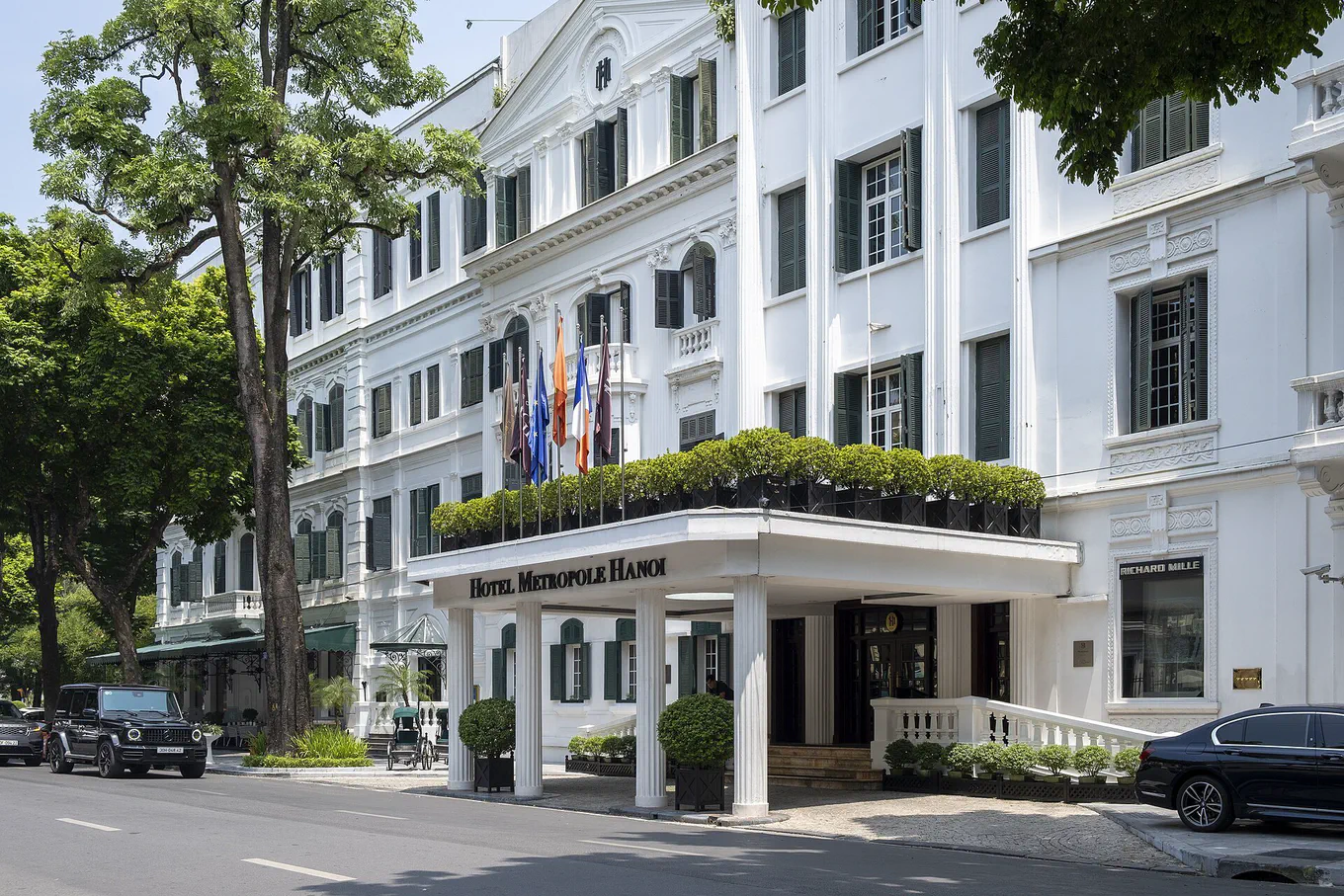
In December 1972, the folk singer Joan Baez came to Hanoi with a peace delegation, bringing Christmas mail for American prisoners of war. Then she was caught in the American Christmas bombing of the city. She sheltered in this hotel’s air-raid bunker, built in the courtyard as American raids loomed, and recorded what she heard. Explosions and anti-aircraft fire are on the tape. It became one side of her 1973 album, Where Are You Now, My Son?
Pack nothing. Leave Friday.
Every Friday, I write a free letter, Journey, that takes us on a trip through places, stories, and ideas.
Faith of My Fathers(John McCain and Mark Salter, 1999). A memoir. McCain’s family story, and his five and a half years as a prisoner of war, which began at Hỏa Lò.
The Gentleman in the Parlour(W. Somerset Maugham). A memoir. Maugham was writing it in 1923 while he stayed at the Métropole, on Ngô Quyền Street.
The Quiet American(Graham Greene, 1955). A novel. Greene stayed at the Métropole on his first visit to Hanoi in 1951. The book grew from his time in Vietnam.
Films to watch before you visit Hanoi
The Hanoi Hilton(Lionel Chetwynd, 1987). A film. American prisoners of war in Hỏa Lò Prison in the 1960s and 1970s, played as fictional characters rather than real men.
The Vertical Ray of the Sun(Trần Anh Hùng, 2000). A film. Three sisters in contemporary Hanoi meet to prepare a banquet on the anniversary of their mother’s death, in what many consider the final part of Trần’s “Vietnam trilogy”.
Girl from Hanoi(Hải Ninh, 1974). A drama film. It depicts war-time life in Hanoi during Operation Linebacker II, the bombing of December 1972, and won the Golden Lotus at the 3rd Vietnam Film Festival.
Questions
Can you visit the Hanoi Hilton?
Yes, in part. The French built Hỏa Lò Prison in 1896–1901, and most of it was demolished in 1993–94. Two high-rise towers now stand on the site, but the gatehouse survives as a museum, and its displays include John McCain’s flight suit and parachute.
Can you see Ho Chi Minh’s body?
Yes. His embalmed body lies in a glass case, under dim lights, in the mausoleum at the centre of Ba Đình Square.
What are the 36 streets of Hanoi’s Old Quarter?
The Old Quarter, beside the Red River in Hoàn Kiếm District, is known by the 36 streets, or guilds, that once made up the city. Many of its streets have names that start with hàng, meaning “wares”, as in Hàng Tre, “bamboo wares street”.