Hanover is the capital and largest city of Lower Saxony, in Germany, on the River Leine. From 1714 to 1837, its rulers were also kings of Great Britain, and bombing raids destroyed more than 90% of its centre. Its stories here are a lost crown, a vanished count, a homecoming inventor, an exiled artist, and three Nanas.
1 Electress Sophia and the crown she missed at Herrenhausen
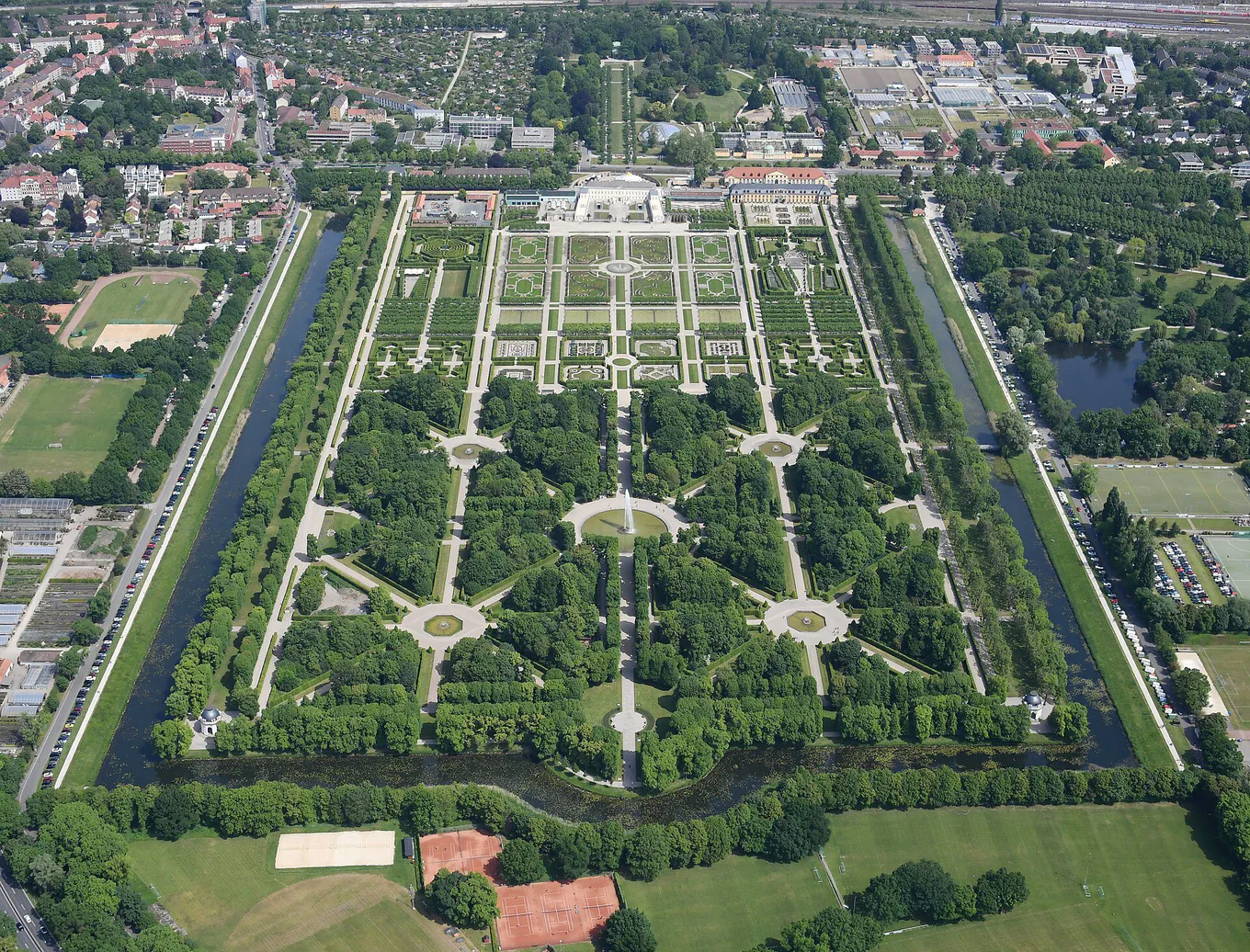
Stand here. The Great Garden at Herrenhausen, which Sophia had a French gardener enlarge in 1683. She lies in the mausoleum in the Berggarten, the Hill Garden.
Britain’s Hanoverian kings begin with a woman who never wore the crown. The Act of Settlement had named Sophia, Electress of Hanover and a granddaughter of James VI and I, heir to the British throne, and she was eager to move to London. On 8 June 1714, walking in the gardens here, she ran for shelter from a sudden downpour and died in the arms of her grandson’s wife. Queen Anne died less than two months later. The crown went to Sophia’s son, George I.
2 Count Königsmarck vanishes from Hanover’s Leine Palace
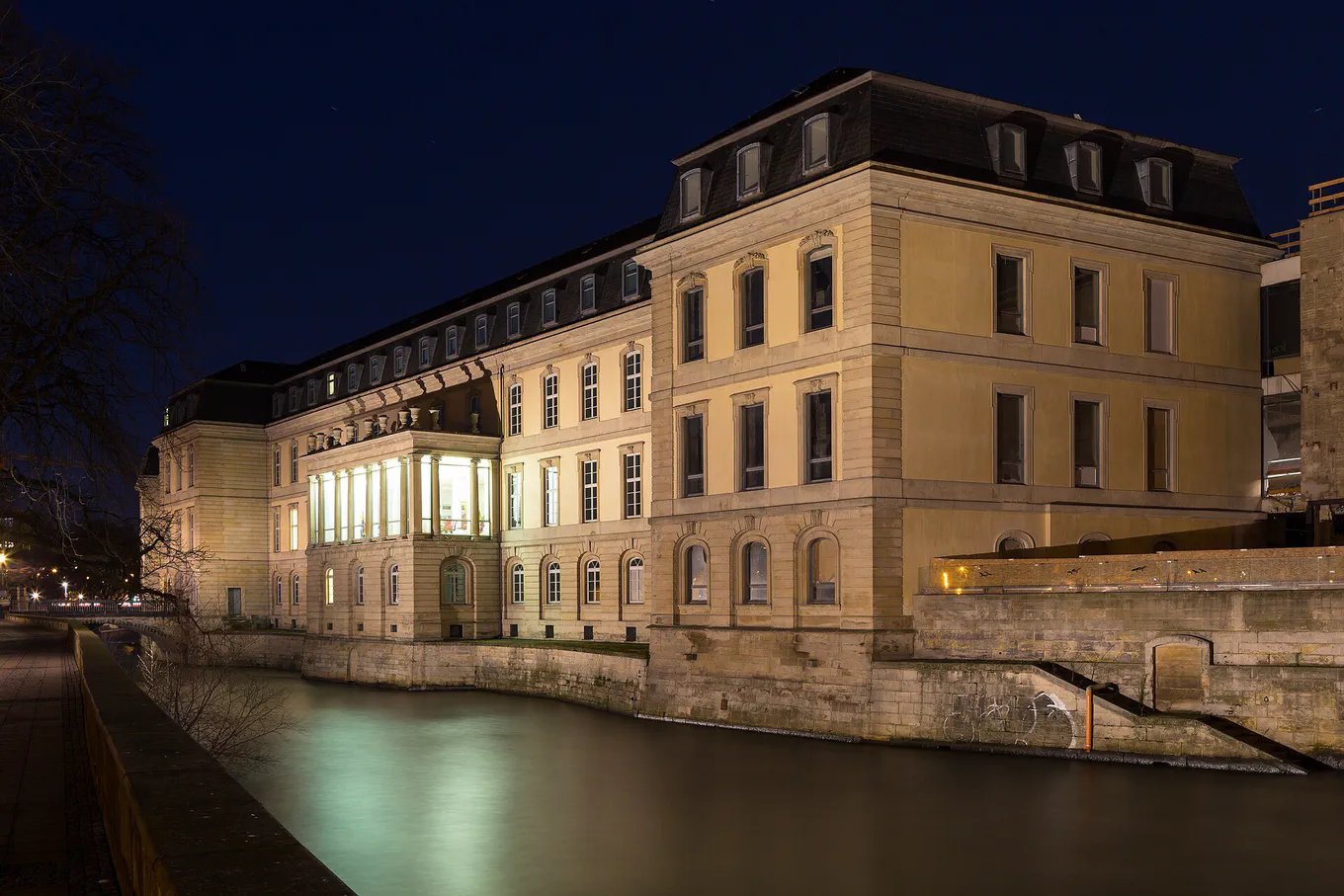
Stand here. The Leine Palace, on the River Leine. Burned out in Allied raids and rebuilt from 1957 to 1962, it now houses Lower Saxony’s parliament.
The film Saraband for Dead Lovers tells a doomed romance of the Hanover court. Philip von Königsmarck, a Swedish count, was said to be the lover of Sophia Dorothea, wife of the future George I. In July 1694, after meeting her here, he was seized and never seen again, presumed murdered at her husband’s instigation. She was divorced and shut away in Ahlden Castle for the last thirty years of her life. She was never allowed to see her children again, not even the son who became George II.
3 Emile Berliner brings the gramophone record home to Hanover
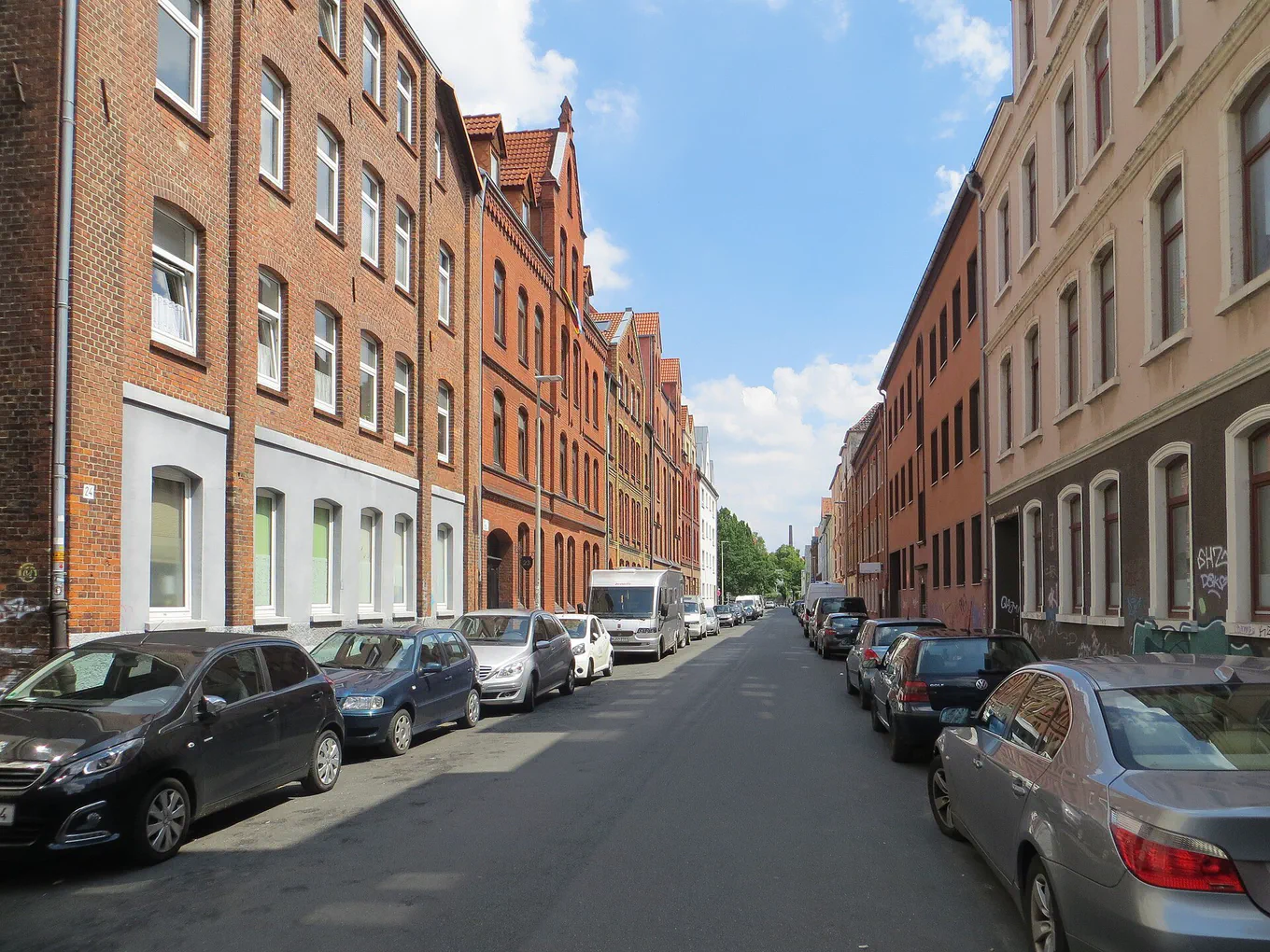
Stand here. Kniestraße, in the Nordstadt district, the street where Deutsche Grammophon first made its records.
Emile Berliner, born here to a Jewish merchant family, emigrated to America rather than be drafted into the Franco-Prussian War. There he invented the flat disc record, and the gramophone to play it. Then he came home. In 1898, Deutsche Grammophon, now the world’s oldest surviving record company, opened its first record factory on Kniestraße. Its records were first made in the city he had once fled.
4 Kurt Schwitters and the Merzbau that filled his Hanover house
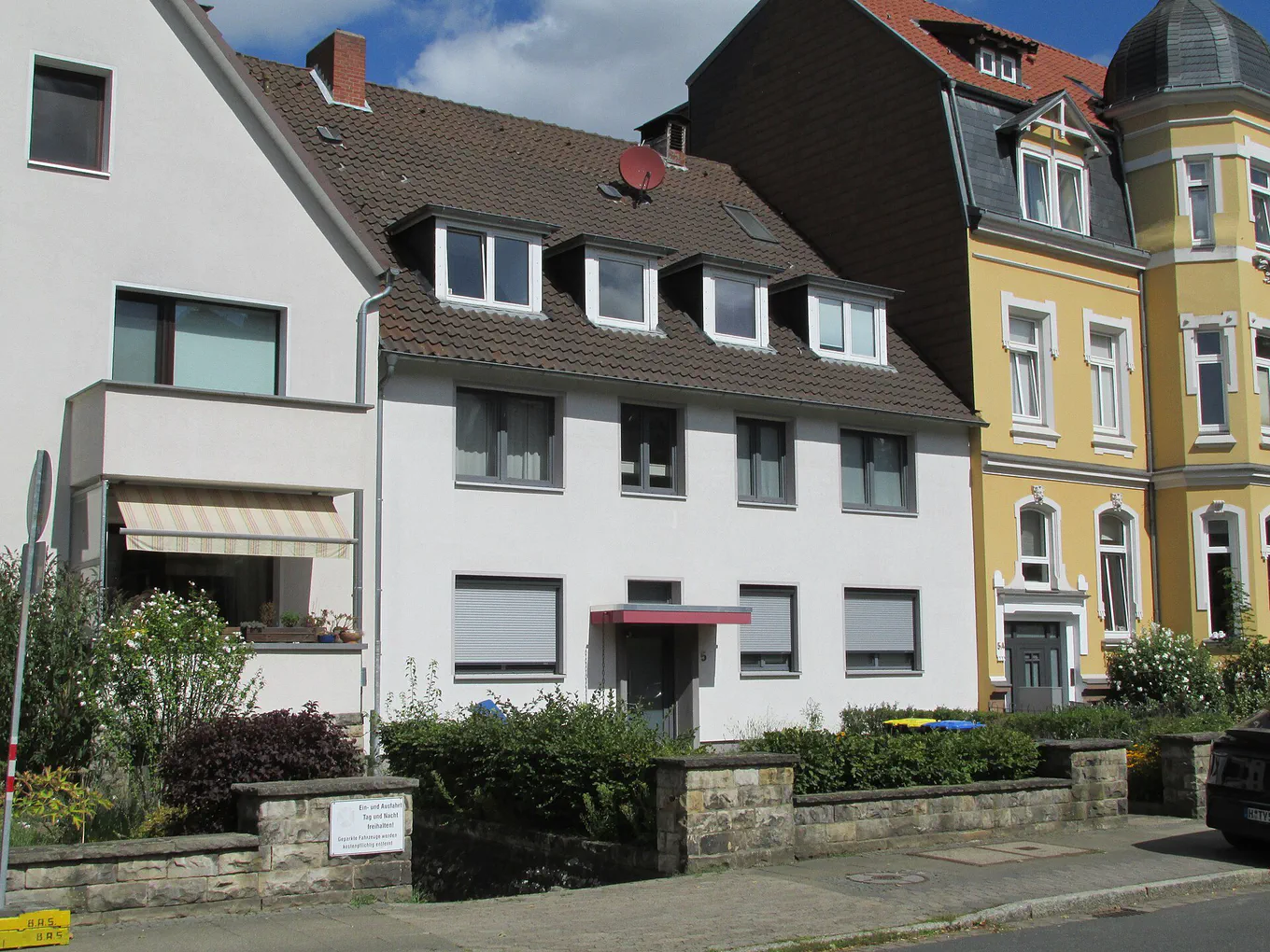
Stand here. Waldhausenstraße 5, where the Merzbau was destroyed in a bombing raid in 1943. The Sprengel Museum has a reconstruction of its first room.
Kurt Schwitters, the artist famous for his Merz collages, spent years turning at least six rooms of his family house into one artwork, the Merzbau. On 2 January 1937, wanted by the Gestapo for an “interview”, he fled to Norway to join his son. That year his Merz pictures went into the Degenerate Art exhibition in Munich, so he could never return. During the war, an Allied bombing raid destroyed the Merzbau. He began another in Norway, and a last one in Cumbria, England. He died before it was finished.
5 Niki de Saint Phalle’s Nanas on the Leine riverbank
Stand here. The Leibnizufer, on the bank of the River Leine, where the three Nanas still stand.
Before the sculptor Niki de Saint Phalle’s three huge Nanas went up beside the Leine on 14 January 1974, a citizens’ group collected thousands of signatures against them. City leaders were sent more than 20,000 letters of complaint. The city kept them. The woman whose work thousands in Hanover had fought became the city’s first honorary citizen, and she gave its Sprengel Museum more than 400 of her works.
Pack nothing. Leave Friday.
Every Friday, I write a free letter, Journey, that takes us on a trip through places, stories, and ideas.
Saraband for Dead Lovers(Helen Simpson, 1935). A novel. The book the film was based on.
The Princess of Celle(Jean Plaidy). A novel. Sophia Dorothea and Philip Königsmarck at the Hanover court, where Clara von Platen is the uncrowned ruler.
The Cuckoo’s Egg(Clifford Stoll, 1989). A memoir. Stoll’s hunt for a computer hacker, which finally ends at the hacker’s home in Hanover.
Films to watch before you visit Hanover
Saraband for Dead Lovers(Basil Dearden, 1948). A film. Set in 17th-century Hanover, it tells the romance of Königsmarck and Sophia Dorothea, which ended at the Leine Palace.
23(Hans-Christian Schmid, 1998). A film. A thriller about the Hanover hacker Karl Koch, shot at the Fanny-Block in Linden-Nord and the Lister Tor car park.
Yella(Christian Petzold, 2007). A film. The last of Petzold’s “Ghosts” trilogy, with Nina Hoss, shot on the Expo grounds at the Expo Plaza and the Czech pavilion.
Questions
Why were the kings of Great Britain from Hanover?
Because of Sophia, Electress of Hanover. The Act of Settlement 1701 named her, a granddaughter of James VI and I, heir to the throne. She died less than two months before Queen Anne in 1714, so her son became George I. From 1714 to 1837, Hanover and Britain shared their ruler in a personal union.
Can you see Kurt Schwitters’ Merzbau?
Not the original. It filled at least six rooms of his family house at Waldhausenstraße 5 and was destroyed in an Allied bombing raid in 1943. The Sprengel Museum in Hanover has a reconstruction of its first room. Schwitters later began two more, in Norway and in Cumbria.
Where is Leibniz buried in Hanover?
In the Neustädter Hof- und Stadtkirche St. Johannis, the New Town Church, in the Calenberger Neustadt. Leibniz, the court’s librarian and historian as well as a philosopher and mathematician, died in Hanover in 1716, so out of favour that neither George I nor any courtier but his secretary came to the funeral. His grave went unmarked for more than fifty years.