Harrisburg, United States, Pennsylvania, North America
Harrisburg is the capital of Pennsylvania, on the east bank of the Susquehanna River. In 1785, John Harris Jr. made plans for a town on his father’s land and named it Harrisburg. Its stories are a settler tied to a tree, a mob at the courthouse, a president-elect slipping out of a hotel, an architect on his own doors, and a film shot in a state hospital.
1 Hercules, John Harris, and the mulberry tree by the Susquehanna
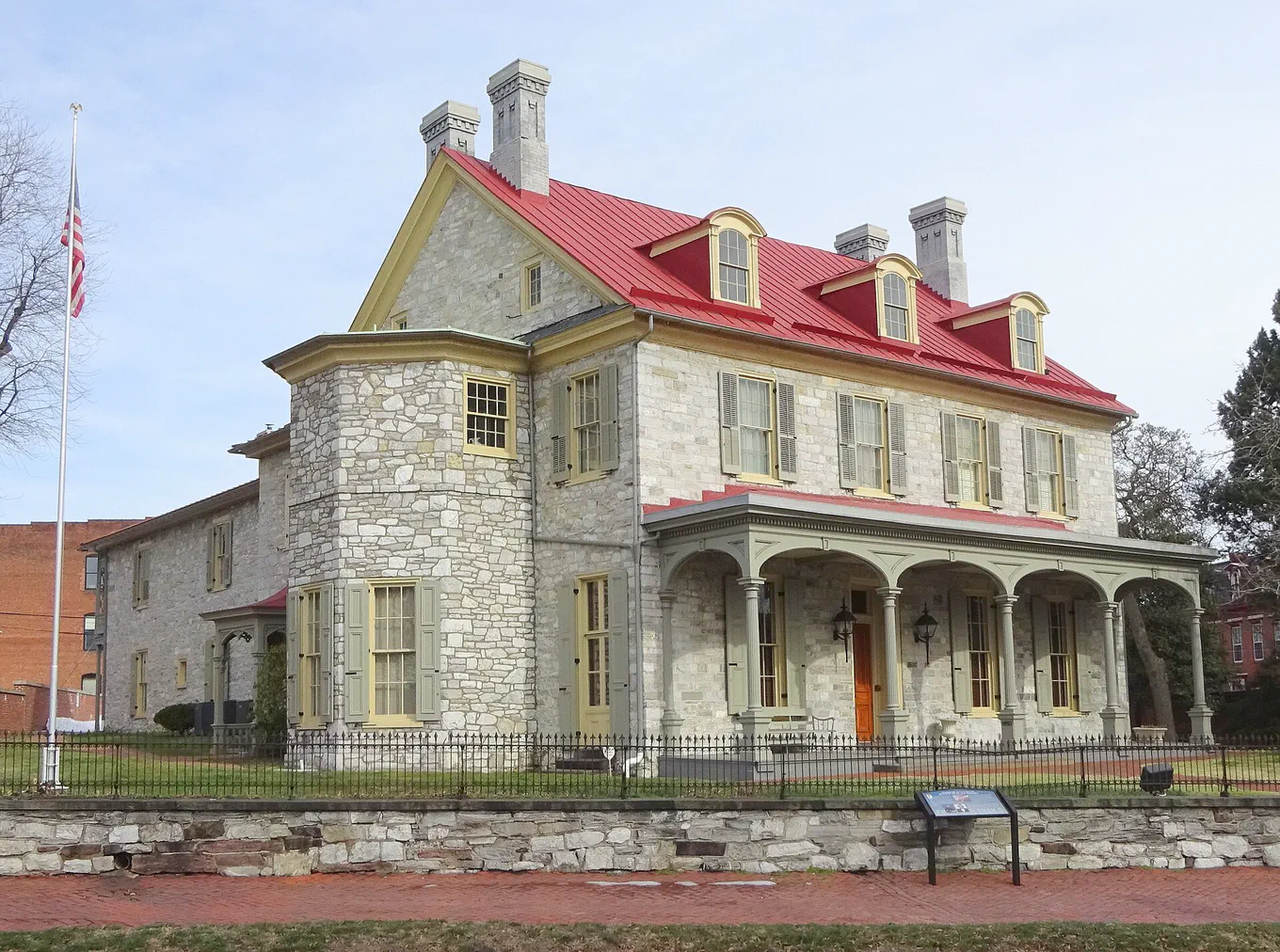
Stand here. John Harris Sr.’s grave in Riverfront Park, between Front Street and the Susquehanna. The house his son built stands at 219 South Front Street.
Harrisburg carries the family name of John Harris Sr., a trader who settled in 1719. A story gathered nearly a century later says a band of Native Americans seized him, tied him to a mulberry tree, and prepared to burn him. But Hercules, a man Harris enslaved, jumped in a canoe, raised the alarm with a friendly band, and led them to the rescue. Harris freed him, the only person he ever freed. When Harris died in 1748, he was buried at the foot of the tree.
2 Frederick Douglass faces a mob at Harrisburg’s courthouse
Stand here. Market Street, the site of the Dauphin County Court House in which Douglass rose to speak in 1847.
Frederick Douglass, who had escaped slavery to become an anti-slavery lecturer, came to Harrisburg on 7 August 1847 with the radical abolitionist William Lloyd Garrison, to speak at the courthouse. Garrison spoke, and nobody interrupted him. But when Douglass rose, eggs came through the open windows and door, then firecrackers, then a hail of stones and bricks. A stone hit him in the back, and a brick grazed his face. In a letter from Harrisburg the next day, he wrote, “The mob was now howling with fiendish rage.”
3 Lincoln slips out of the Jones House on Market Square
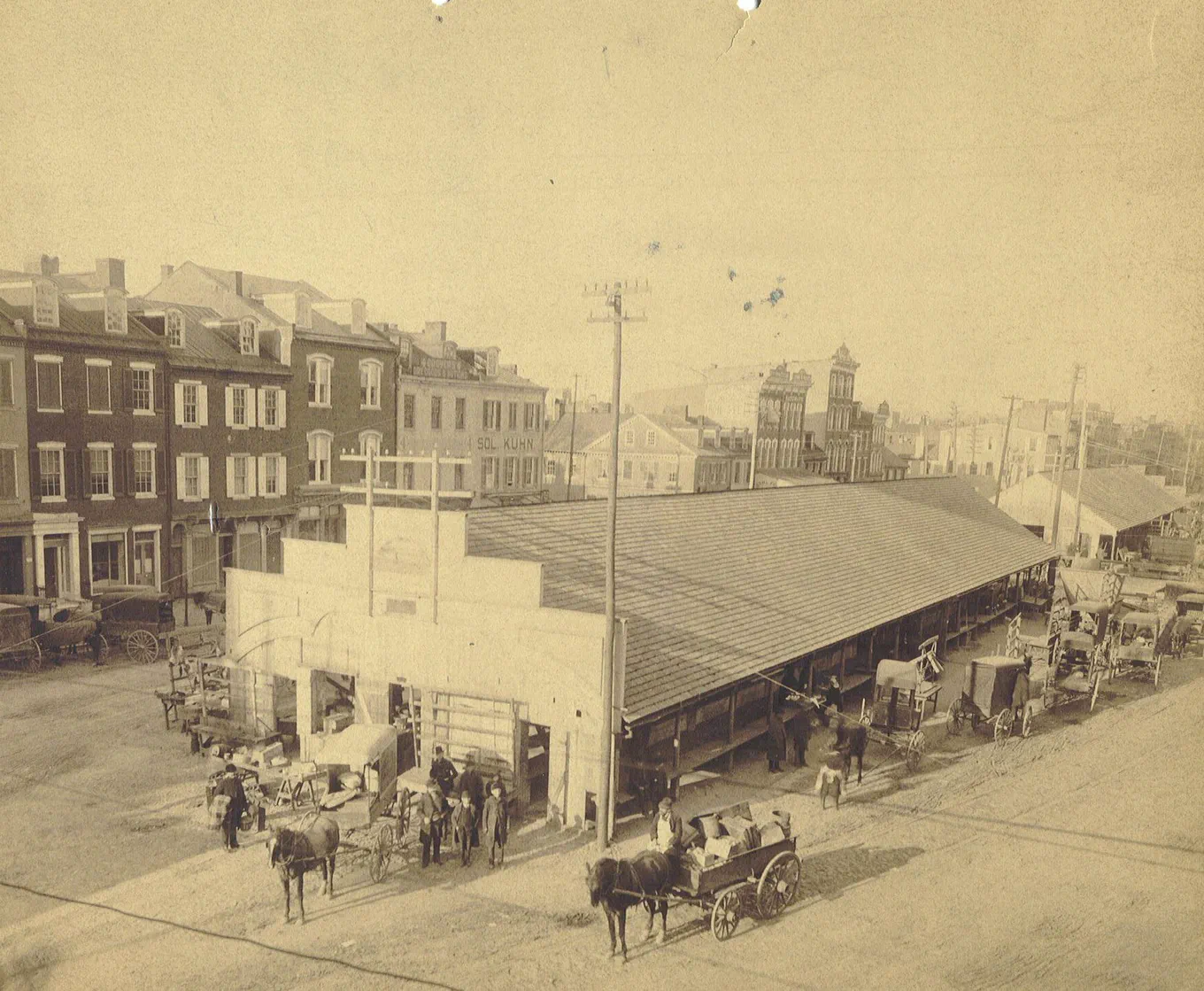
Stand here. The east side of South Market Square, where the Jones House stood. Office buildings replaced it, and a 1953 state marker records the stop.
Market sheds and carriages on Harrisburg’s Market Square, where the Jones House hotel stood, in a late 19th-century photograph.Unknown / Public domain.
On 22 February 1861, Abraham Lincoln gave a speech at the Jones House, on his way to his inauguration in Washington. But at dinner, a sign told Lincoln all was ready, and he slipped out to a carriage at a side door, without Mary and the boys. Men cut the telegraph wires, and he was carried off towards Philadelphia, where Pinkerton was waiting. A newspaper mocked Lincoln for stealing into the capital “like a thief in the night”.
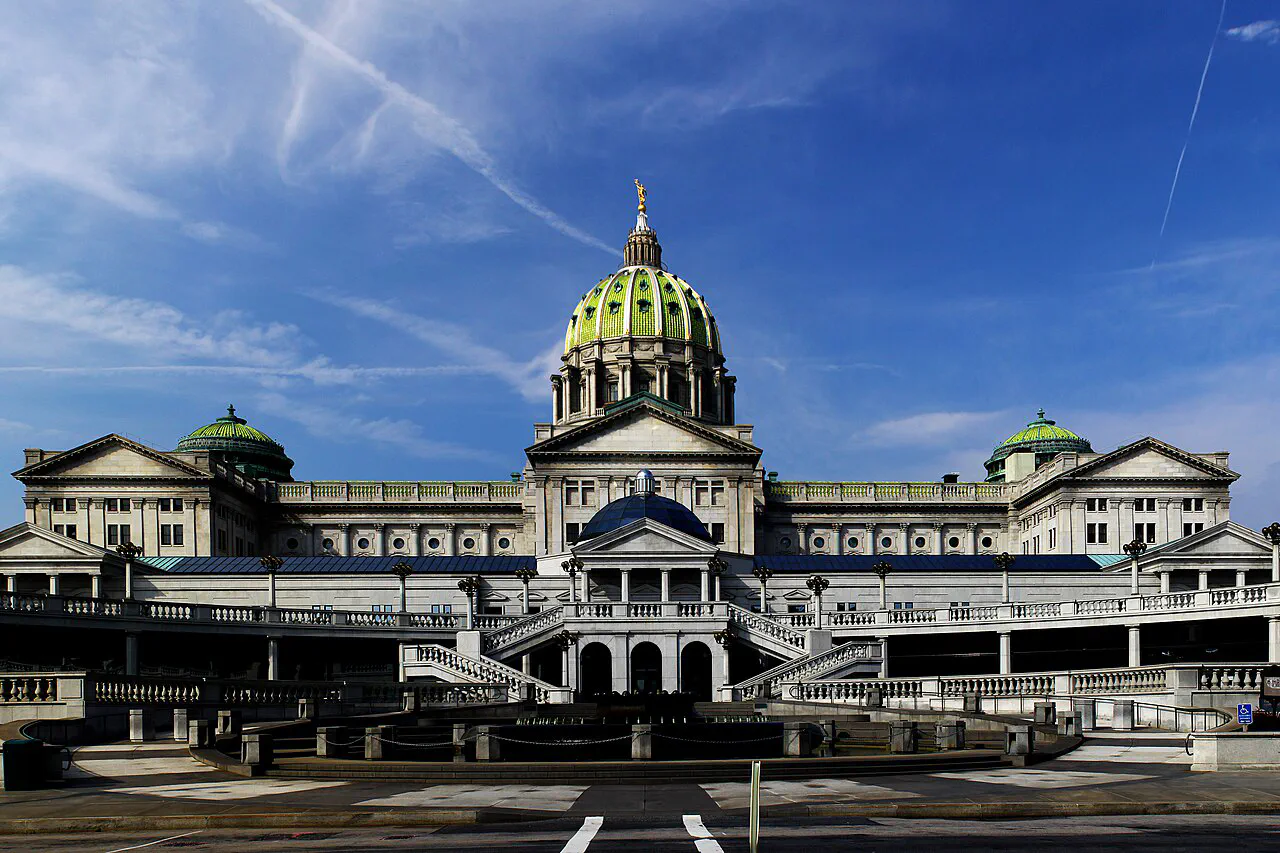
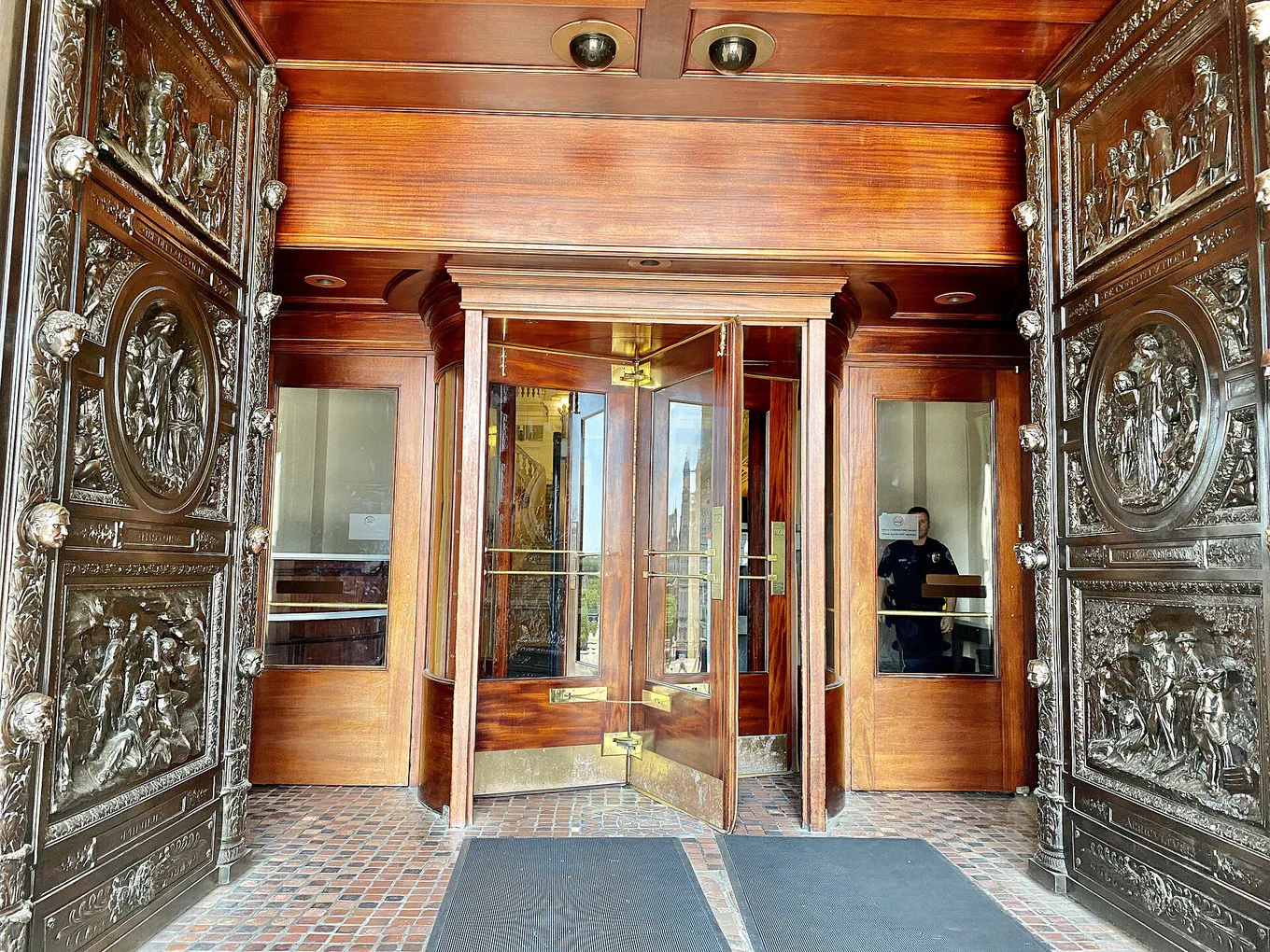
Theodore Roosevelt called the Pennsylvania State Capitol the handsomest building he had ever seen. Its architect, Joseph Huston, finished it in 1906, meaning it as a monument to a new Renaissance. But it cost three times what the legislature had voted, and it was called “the palace of graft”. Huston was convicted of graft and went to prison. He had designed the bronze doors himself. Nine of the faces cast into them had a role in the scandal, and Huston’s head flips open to reveal a hidden keyhole.
5 Winona Ryder’s Girl, Interrupted at Harrisburg State Hospital
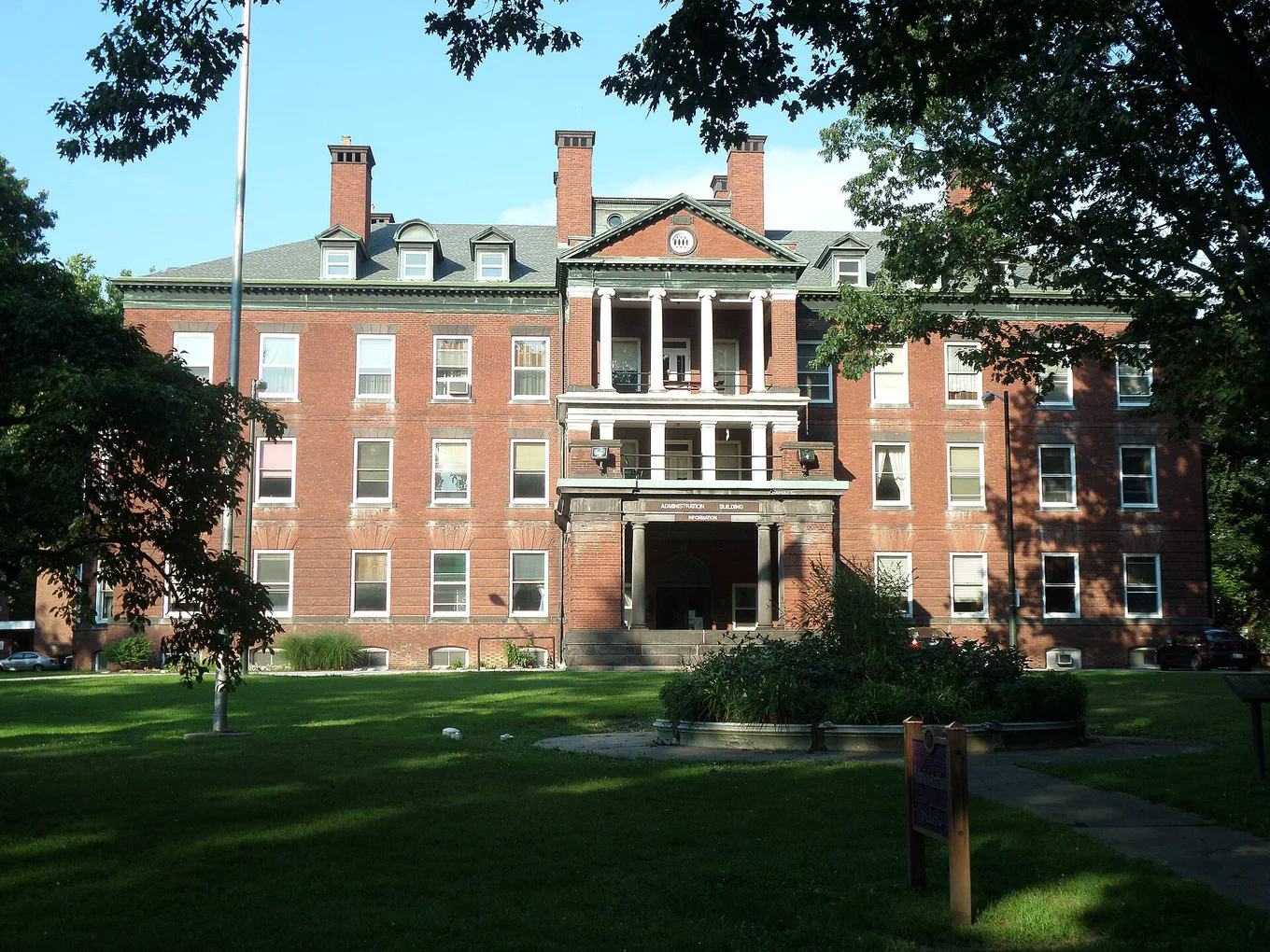
Stand here. The campus of Harrisburg State Hospital, where most of the film was shot. The hospital closed on 27 January 2006.
Girl, Interrupted, the film of Susanna Kaysen’s 1993 memoir, was shot mainly at Harrisburg State Hospital. Winona Ryder had developed it with the producer Douglas Wick as her own star vehicle, and it sat for five years in development hell, Hollywood’s limbo for stalled films. But when it came out, a Time Out critic found Ryder “too wide-eyed and cutesy”, and the Oscar for Best Supporting Actress went to Angelina Jolie, who played Lisa Rowe.
Pack nothing. Leave Friday.
Every Friday, I write a free letter, Journey, that takes us on a trip through places, stories, and ideas.
One Hundred Voices: Harrisburg’s Historic African American Community, 1850–1920(Calobe Jackson Jr., Katie Wingert McArdle, David Pettegrew, and Lenwood Sloan, 2020). A history of Harrisburg’s African American community, 1850–1920, written as a companion to the Commonwealth Monument on the South Lawn of the State Capitol grounds.
The Harrisburg 7 and the New Catholic Left(William O’Rourke, 1972). A non-fiction account of the Harrisburg trial of 1972, in which the defendants stood accused of conspiring to kidnap the presidential adviser Henry Kissinger.
Harrisburg’s Old Eighth Ward(Michael Barton and Jessica Dorman, 2002). A history of Harrisburg’s Eighth Ward at the turn of the twentieth century, when the “Old Eighth” stood in the way of the new Capitol Park.
Films to watch before you visit Harrisburg
Lucky Numbers(Nora Ephron, 2000). A black comedy film about a weatherman for a Harrisburg television station and a plan to rig the Pennsylvania Lottery, inspired by its 1980 scandal.
The Remarkable Mr. Pennypacker(Henry Levin, 1959). A comedy film set in Harrisburg at the turn of the 20th century, about a man with a wife and eight children there and nine children in Philadelphia.
Girl, Interrupted(James Mangold, 1999). A biographical drama film, from Susanna Kaysen’s memoir, about a young woman in a psychiatric hospital, filmed partly at Harrisburg State Hospital.
Questions
When did Harrisburg become the capital of Pennsylvania?
In October 1812, and it has been the capital ever since. In 1785, John Harris Jr. had made plans for a town on the land of his father, John Harris Sr., the trader who had settled there in 1719.
Where did Lincoln stop in Harrisburg?
At the Jones House, a four-storey brick hotel on Market Square, on 22 February 1861. He gave a speech there. Office buildings have since replaced the hotel, and a state marker of 1953, on the east side of South Market Square, records the stop.
What happened at Three Mile Island, near Middletown?
On 28 March 1979, the Unit 2 reactor at Three Mile Island, near Middletown, partly melted down, twelve days after the film The China Syndrome opened. A hydrogen bubble was found above the core, and more than 140,000 people fled. President Jimmy Carter, a trained nuclear engineer, visited the area on 1 April, and his visit marked the end of the crisis.