Hemingway wrote The Old Man and the Sea in his house here, and I’ve quoted his line about XXXX first drafts more times than I can count. I’ve still never finished one of his novels. That one’s short, though. Maybe soon.
— Nick
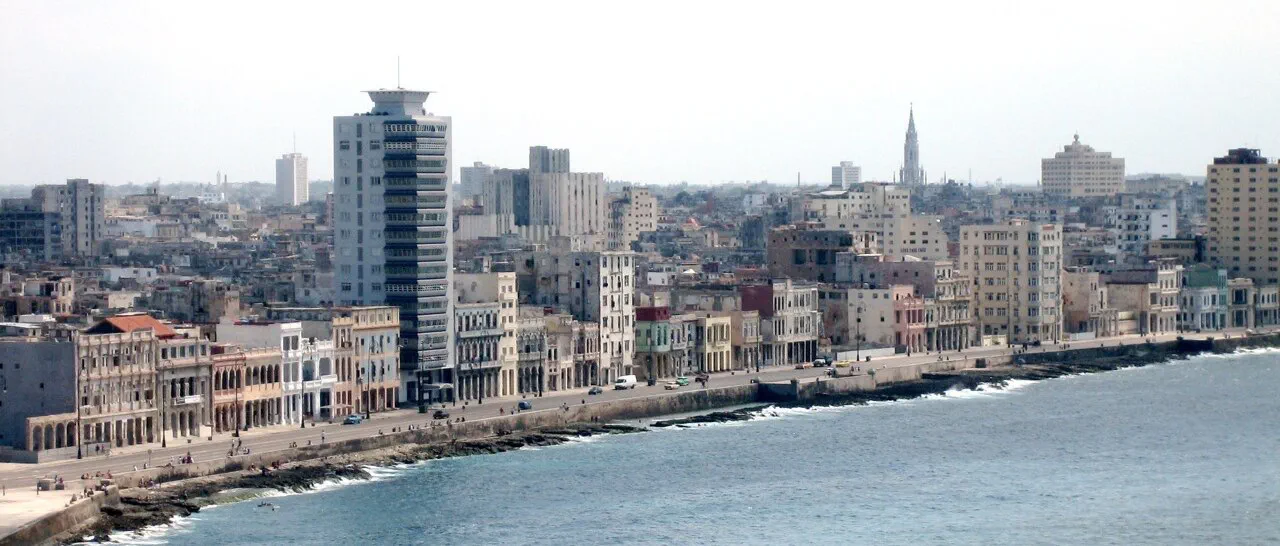
Havana is the capital and largest city of Cuba, in the Caribbean, and the country’s main port. The Spanish founded it on its present site in 1519, and Old Havana and its forts have been a World Heritage Site since 1982. Its stories here are a warship blowing up in the harbour, a mob summit, a make-believe spy, the house Hemingway left behind, and an album nobody planned.
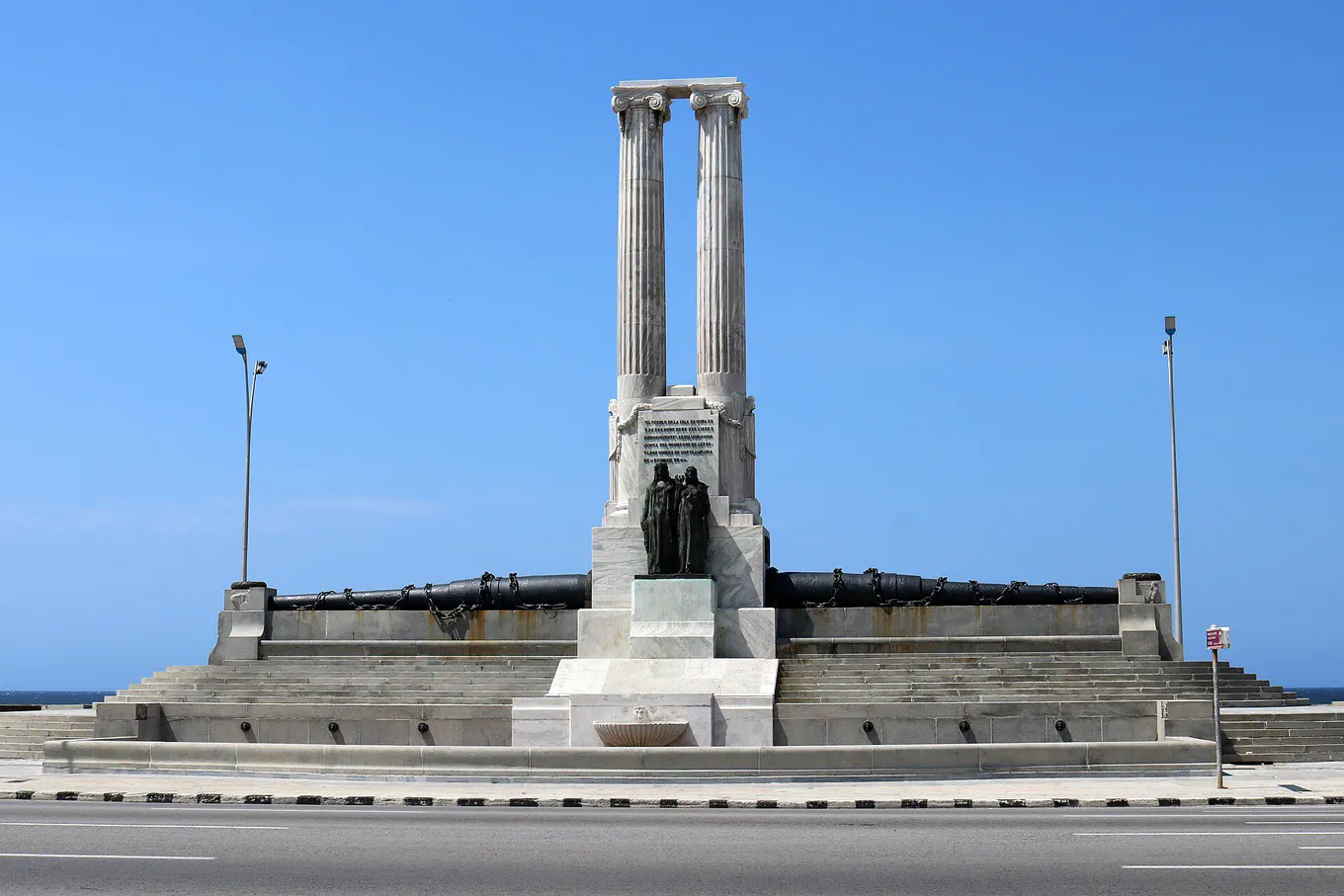
Stand here. The Maine monument on the Malecón, at the end of Línea in Vedado. Two 40-foot columns stand there, their bronze eagle gone since 1961.
The Monument to the Victims of the USS Maine, with its twin columns, on the Malecón seafront in Vedado, Havana.Maesi64 / CC0.
USS Maine, the ship behind the cry “Remember the Maine! To hell with Spain!”, sank in Havana harbour. Captain Charles Sigsbee brought her in to protect American interests during Cuba’s war of independence. At 9.40 one February night in 1898, she exploded. Sigsbee survived, but three-quarters of his crew died. A navy board blamed a mine, and by April America was at war with Spain. A 1976 study concluded it wasn’t a mine.
2 Lucky Luciano’s mob summit at the Hotel Nacional
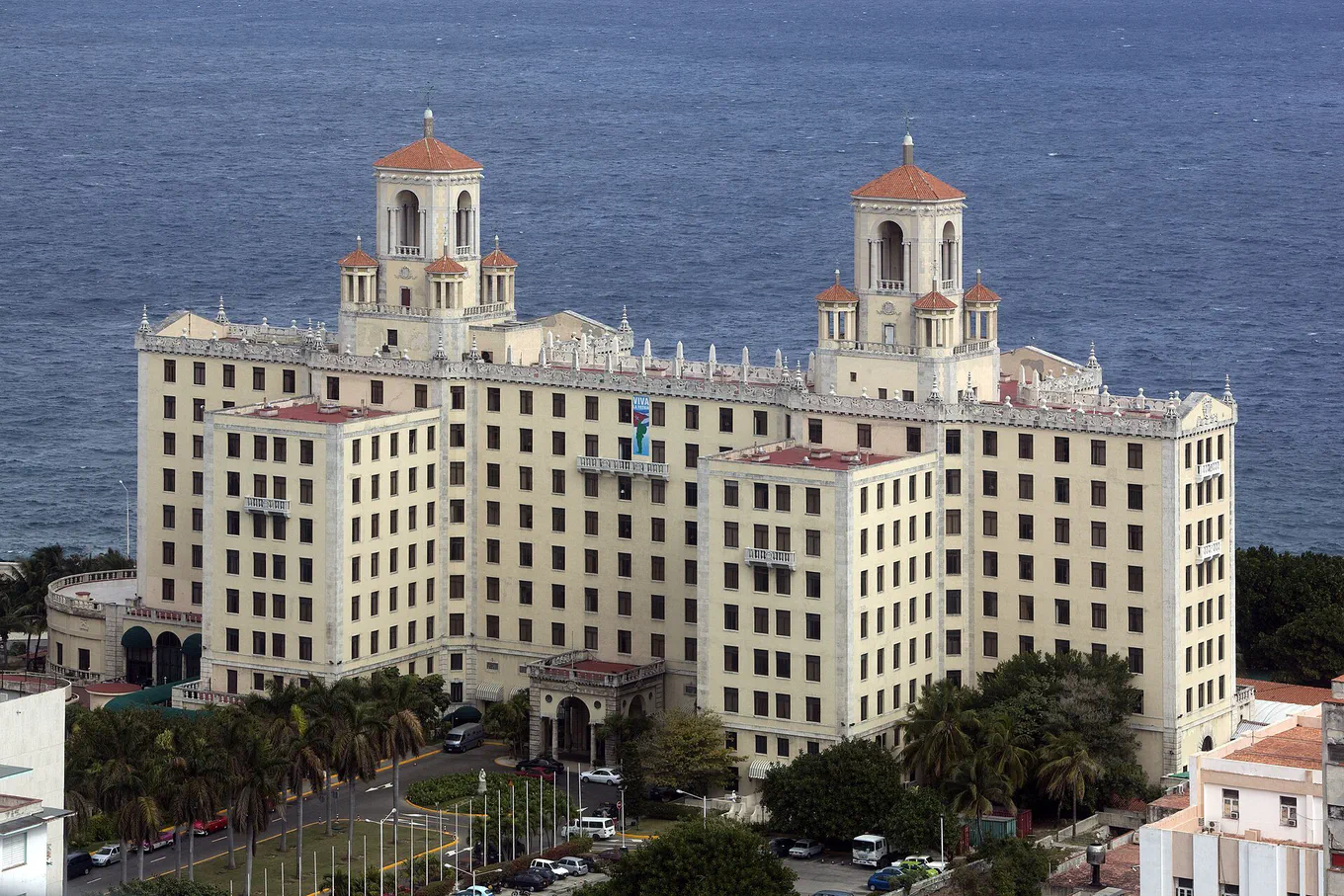
Stand here. The Hotel Nacional de Cuba, on Taganana Hill on the Vedado seafront. It opened in 1930 and is still a hotel.
The Godfather Part II dramatised a real mob summit, held here in December 1946. The mob boss Lucky Luciano had been deported from New York to Italy that year. He slipped into Havana to be near enough America to take back control. His partner Meyer Lansky called the crime bosses to the Nacional, with a Frank Sinatra show as cover. Washington found out, and threatened to block Cuba’s prescription narcotics while he stayed. Cuba arrested him. The man who wanted to be near America ended up in a Palermo jail.
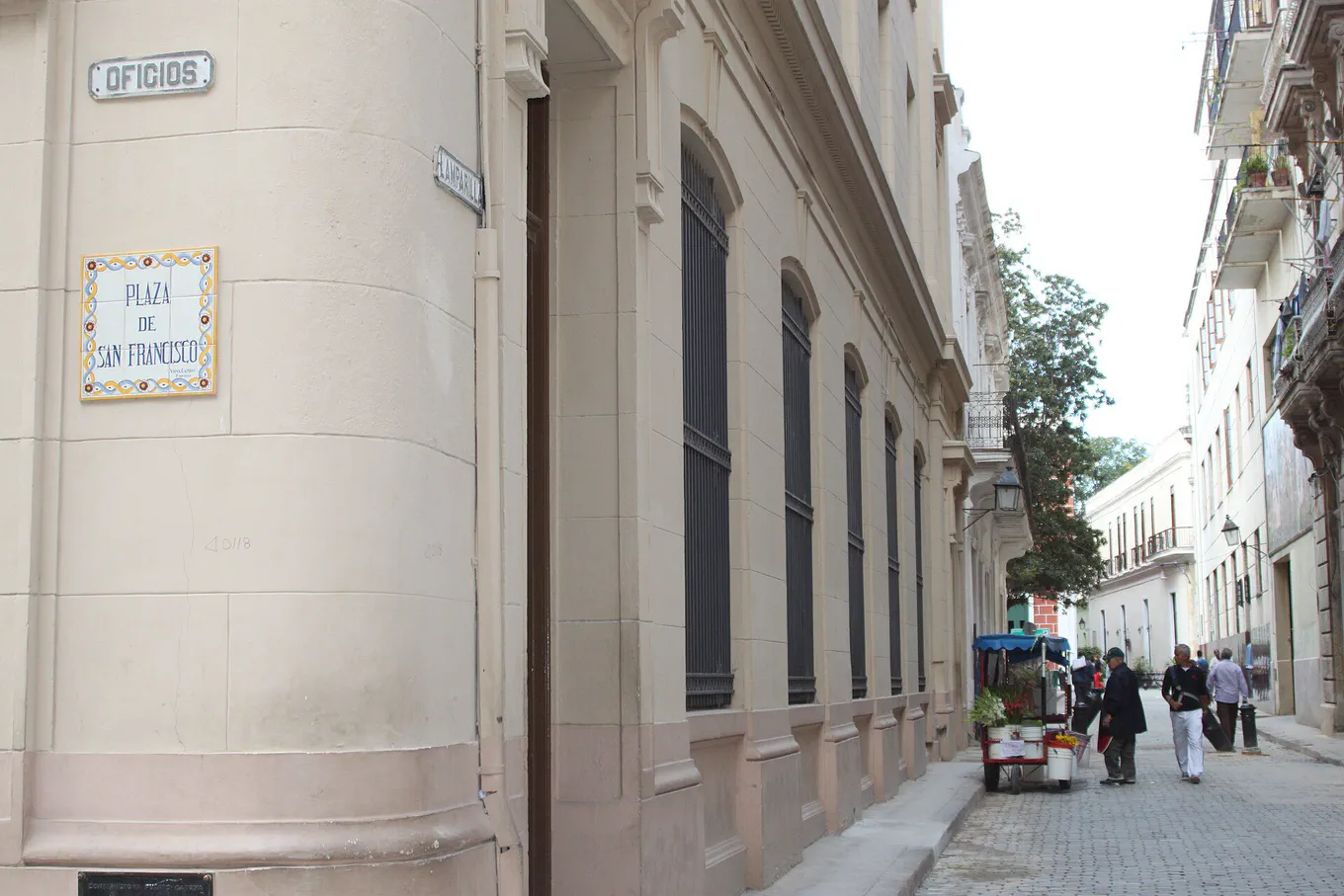
In Our Man in Havana, Graham Greene’s novel of 1958, Jim Wormold sells vacuum cleaners on this street and can’t pay for his daughter Milly’s extravagances. When MI6 recruits him, he takes the job for the money and makes everything up. He invents agents, lifts reports from the newspapers, and sends London drawings of a secret military installation that are really vacuum-cleaner parts drawn large. Then a real man with the name of one of his invented agents is killed. His made-up spy ring has started coming true.
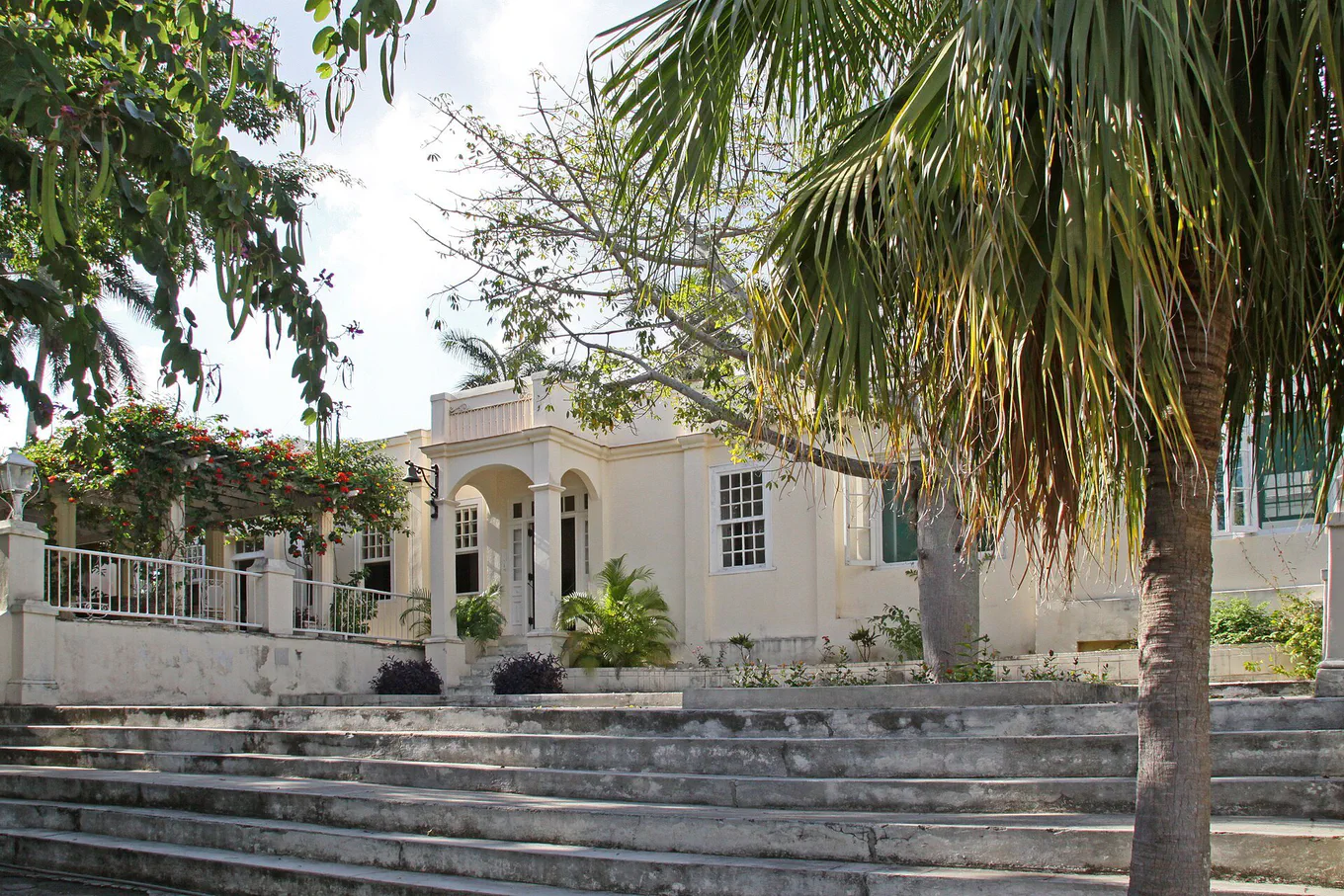
Ernest Hemingway wrote The Old Man and the Sea in this house, the story of an ageing fisherman from nearby Cojímar and his struggle with a giant marlin. It won the Pulitzer, and it was the one book named when he won the Nobel. He lived here for twenty years. Then, on 25 July 1960, he left Cuba, and that autumn the government seized the house. He never came back. The next July, he killed himself at his home in Idaho. His house here still holds his things.
5 Buena Vista Social Club, the Havana album nobody planned
Stand here. The EGREM studio on Calle San Miguel, Old Havana. It’s closed, and only a small patio is open.
Nobody planned the Buena Vista Social Club album. In March 1996, the producer Nick Gold invited Ry Cooder to Havana to record two musicians from Mali with Cuban players, but the Malians never got their visas. So Cooder and Gold recorded Cuban son music here instead, with a dozen veterans, some long retired. One of them, Ibrahim Ferrer, was shining shoes for extra money when he was signed up. It was made in six days and sold over eight million copies. Its pianist, Rubén González, didn’t own a piano.
Pack nothing. Leave Friday.
Every Friday, I write a free letter, Journey, that takes us on a trip through places, stories, and ideas.
Our Man in Havana(Graham Greene, 1958). A novel. A vacuum-cleaner seller who invents a spy ring for MI6, with his shop at Lamparilla 37 in Old Havana.
Islands in the Stream(Ernest Hemingway, 1970). A novel. Its hero, Hudson, is driven into Havana to join the regulars of La Floridita bar, at the end of Calle Obispo.
Waiting for Snow in Havana(Carlos Eire, 2003). A memoir of the author’s boyhood in Miramar, the Havana neighbourhood where his family had its home.
Films to watch before you visit Havana
Our Man in Havana(Carol Reed, 1959). A film, shot in Havana two months after Batista fell. Fidel Castro visited the crew in Cathedral Square.
I Am Cuba(Mikhail Kalatozov, 1964). A film. Students led by a character named Enrique at Havana University, in a sequence with one of the longest camera shots.
Memories of Underdevelopment(Tomás Gutiérrez Alea, 1968). A film. An idle bourgeois intellectual lives in a penthouse in the FOCSA Building.
Strawberry and Chocolate(Tomás Gutiérrez Alea and Juan Carlos Tabío, 1993). A film, with a scene at Coppelia, Havana’s ice-cream parlour, where a character chooses strawberry.
Before Night Falls(Julian Schnabel, 2000). A film. Its hero is imprisoned in El Morro Castle and abused by the guards.
Questions
Can you visit Hemingway’s house in Havana?
Yes. Finca Vigía, in Havana’s San Francisco de Paula ward, is a museum. The Cuban government restored it and reopened it to tourists in 2007, and it keeps the house, its contents, his fishing boat Pilar, and the grounds.
Where is the USS Maine monument, and what happened to its eagle?
It stands on the Malecón at the end of Línea, in Vedado, and was built in 1925. On 18 January 1961, the bronze eagle on top was taken down as a “symbol of imperialism”. Its head is now in the US Embassy in Havana, and its body and wings are in the Havana City History Museum.
What is the Malecón in Havana?
It’s an 8 km esplanade, road, and seawall along Havana’s coast. Building began in 1901, under temporary US military rule, to protect the city from the sea. In 1957 and 1958, the road was the circuit for the Cuban Grand Prix.