Heidelberg sits on the Neckar River in Baden-Württemberg, Germany, about 78 km south of Frankfurt. Its university, founded in 1386, is the oldest in Germany, and its castle looks down on the old town from 80 metres up the hillside. Its stories here are a gate for the Winter Queen, a jester’s barrel, a laboratory that read the Sun, Mark Twain’s German, and a walker kept in from the snow.
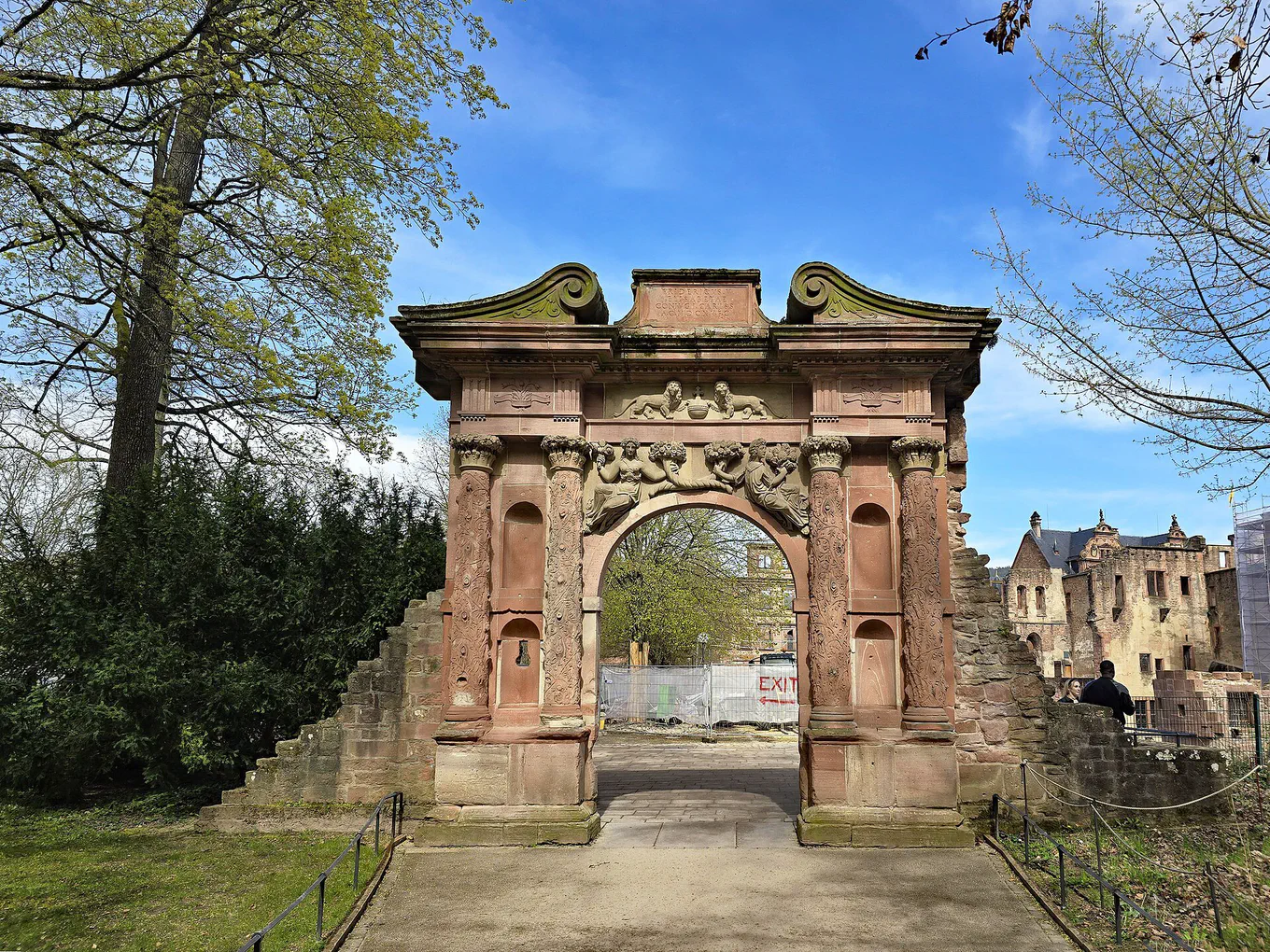
This gate was a gift to the daughter of King James VI and I. Elizabeth Stuart married Frederick V, Elector Palatine, at Whitehall in London, and in 1615 he had it built for her, overnight for her birthday, the legend says. Then he took the crown of Bohemia, and a year later lost it at the Battle of White Mountain. Remembered as the Winter King and Queen, the couple went into exile in The Hague. She stayed there even after the Palatinate was won back.
2 Perkeo, the jester who guards the Heidelberg Tun
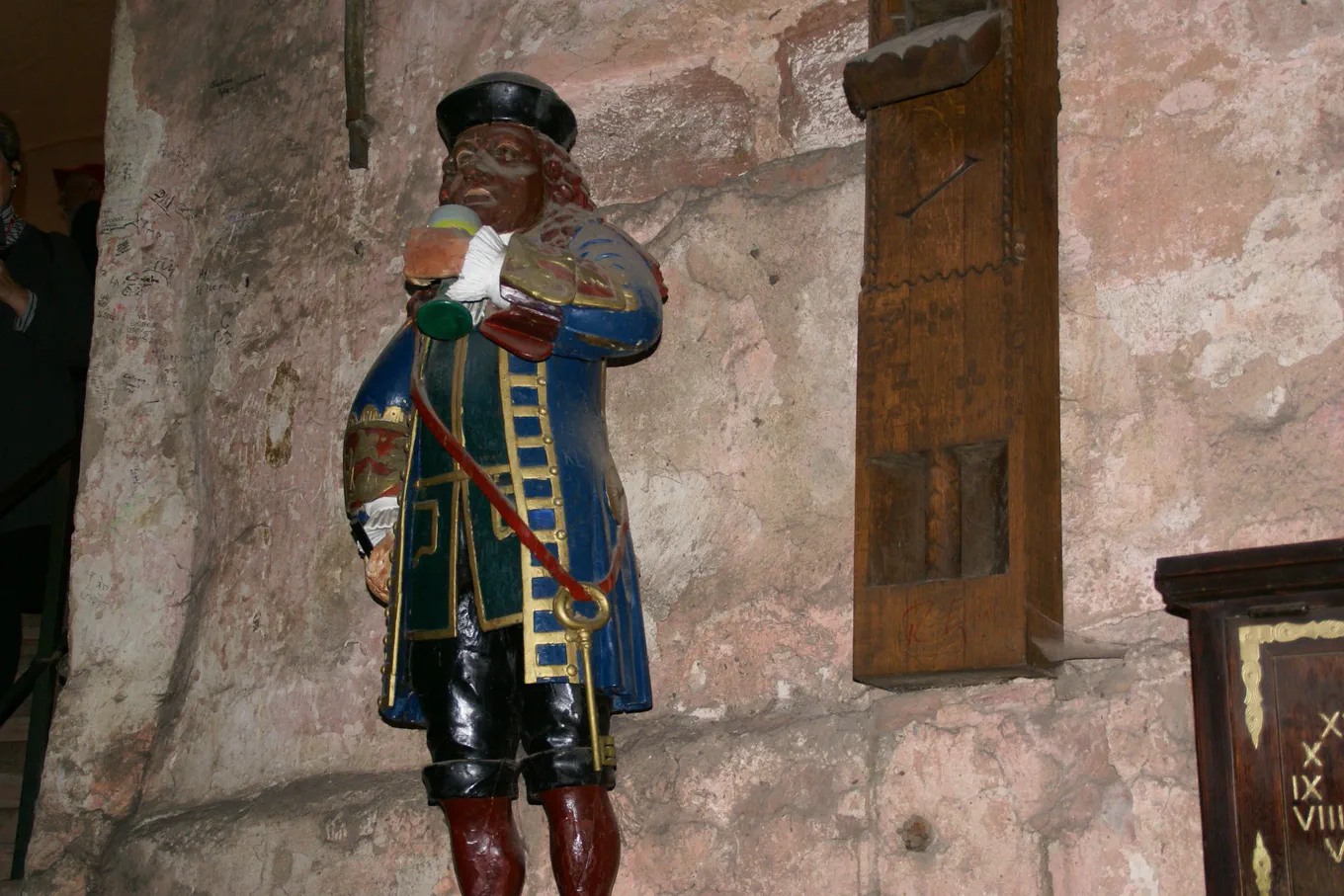
Stand here. The cellar of the Barrel Building at Heidelberg Castle, home of the Great Heidelberg Tun.
The painted wooden figure of the jester Perkeo, in the cellar of Heidelberg Castle that holds the Great Tun.Hermann Luyken / CC0.
The wooden figure guarding the Great Heidelberg Tun is a jester. In 1718, Elector Carl Philipp brought a court dwarf back from Tyrol for his quick wit and his head for drink. Put in charge of the wine stores, the man drank 18 to 30 litres a day, by contemporary accounts. Offered another cup, he always said “Perché no?”, “Why not?”, and so became Perkeo. Legend says he could drain the Tun, about 200,000 litres, in a gulp. What killed him, it says, was an accidental cup of water.
3 Bunsen, Kirchhoff, and gold from the Sun on the Hauptstraße
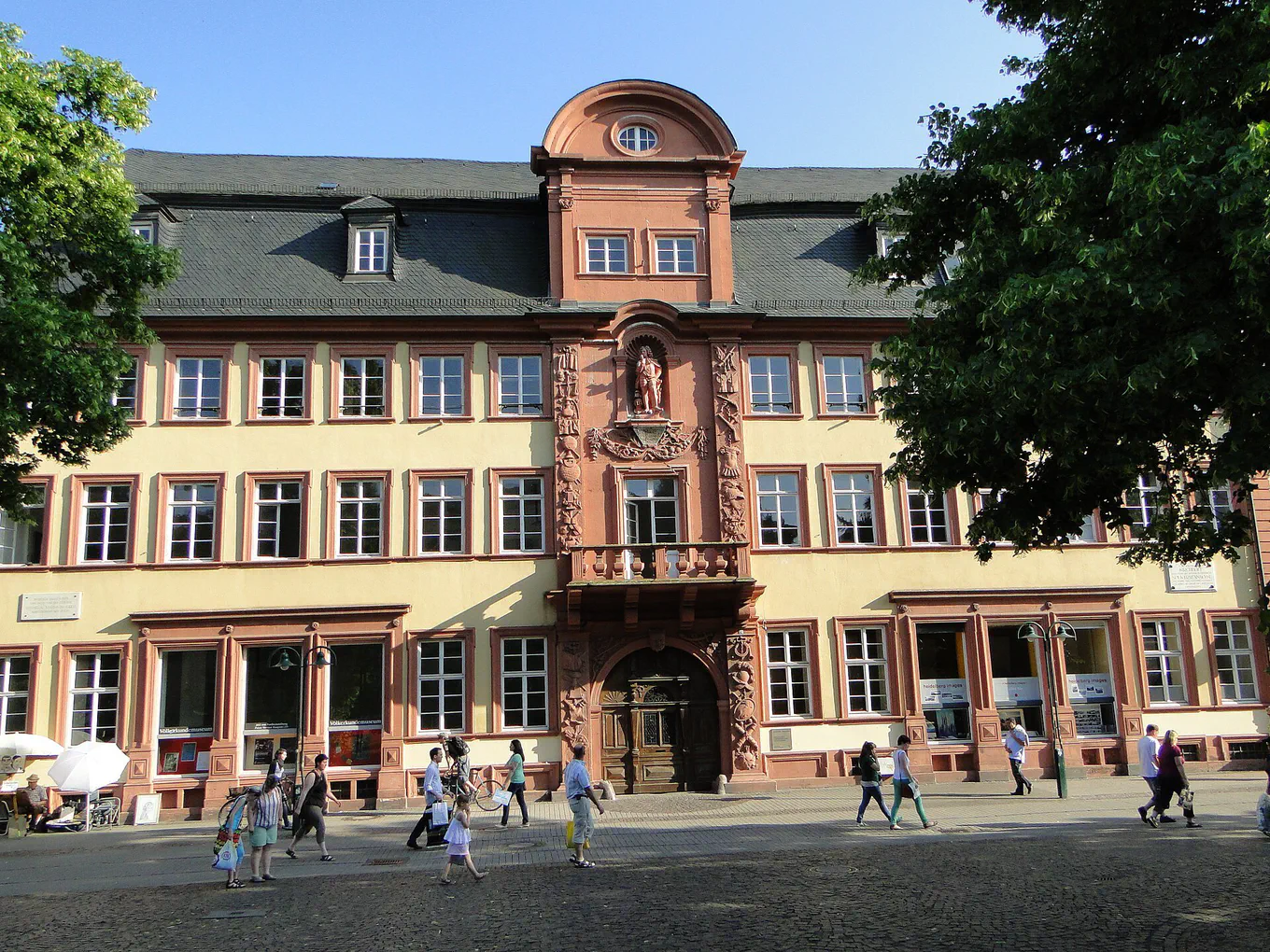
Stand here. Haus zum Riesen, Hauptstraße 52, a baroque palace built from stones of the castle’s blown-up Fat Tower. A plaque marks where spectral analysis was invented.
Every chemistry laboratory still uses the burner named after Robert Bunsen. In this building, he and the physicist Gustav Kirchhoff built the first spectral apparatus. The method, Bunsen wrote, could reveal what the Sun and the stars are made of. In 1859, Kirchhoff showed that the Sun contains sodium. The story goes that his banker asked what use gold in the Sun was if it couldn’t be brought to Earth. Kirchhoff later deposited his prize money with him, in gold sovereigns. “Here is gold from the Sun.”
4 Mark Twain tries out his German at Heidelberg Castle
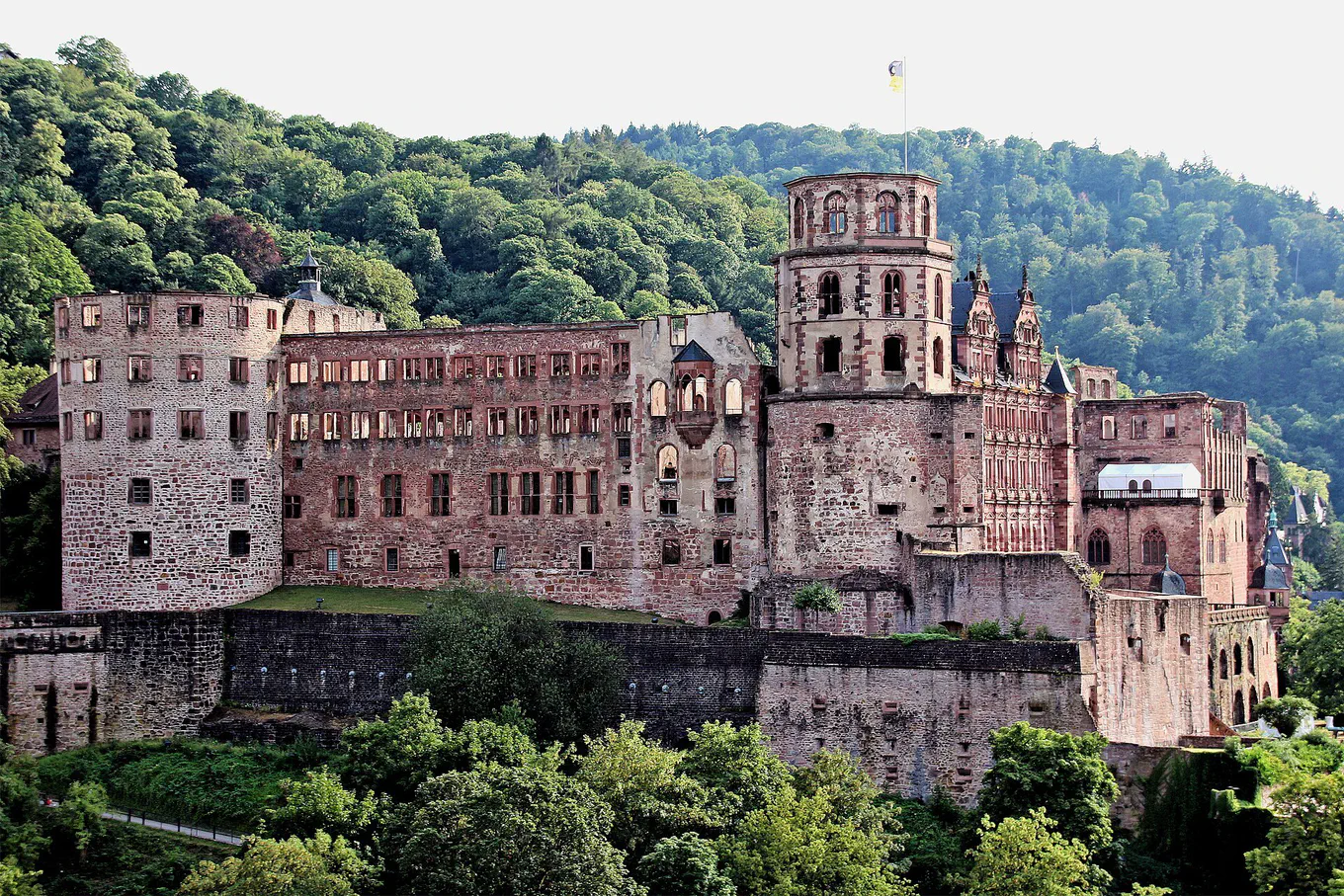
Stand here. Heidelberg Castle, the ruin that Mark Twain, lodging on the hill above it, called “the Lear of inanimate nature”.
Mark Twain spent three months in Heidelberg wanting to learn German, and A Tramp Abroad, his travel book of 1880, tells how it went. He often visited the castle’s collection of curiosities. One day, by his own account, he surprised its keeper by speaking entirely in German. Twain’s German, the keeper said, was very rare, possibly unique, and he would like to add it to his museum. English, Twain concluded, takes a gifted person 30 hours, French 30 days, and German 30 years.
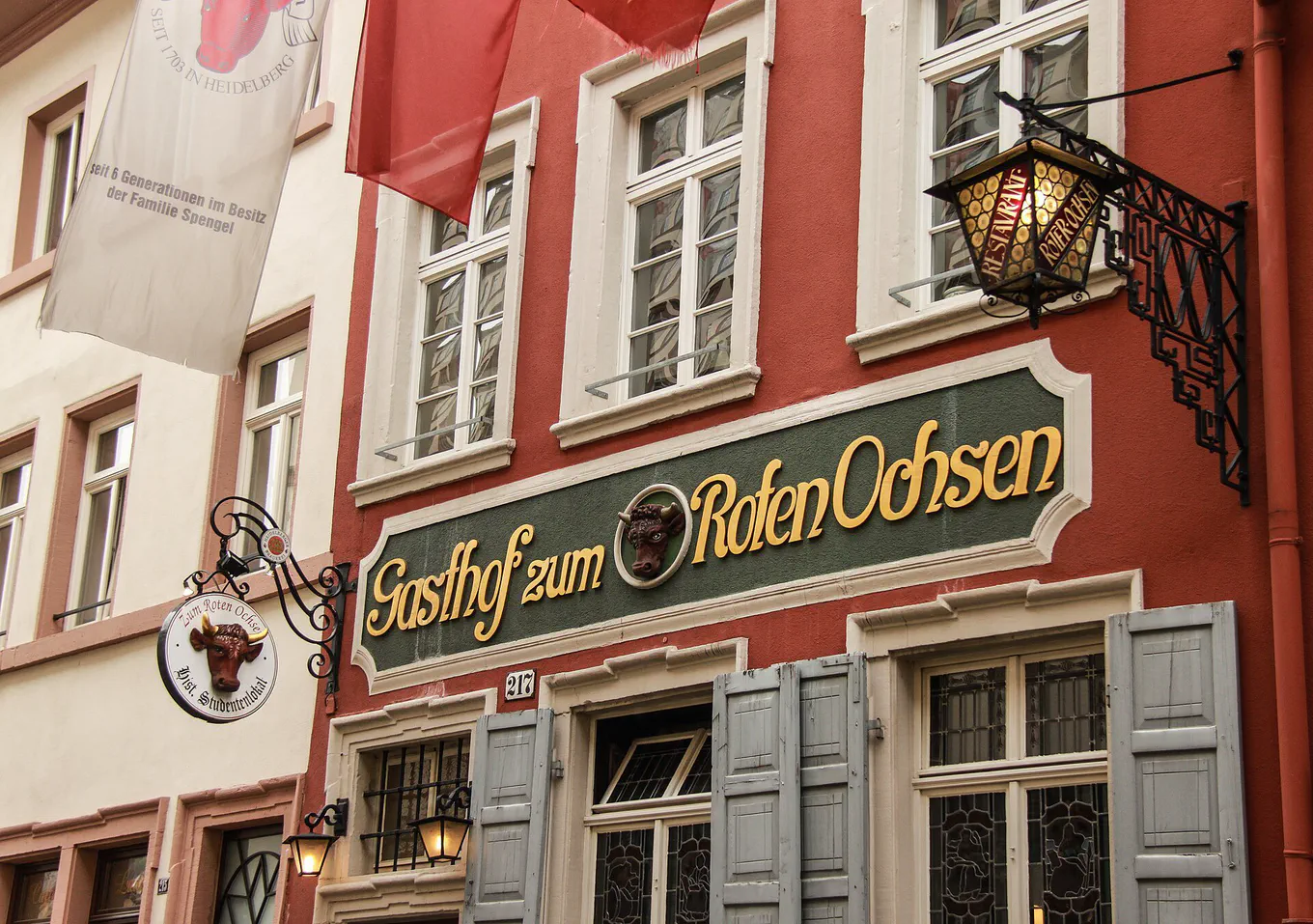
In A Time of Gifts, Patrick Leigh Fermor remembers walking from Holland to Constantinople at 18, and climbing Heidelberg’s main street in the dark of December 1933, snow caked in his hair. At the Red Ox, the innkeeper’s wife asked where he would be the next day, New Year’s Eve. “You can’t go wandering about in the snow on Sylvesterabend!” The Spengels kept him as their guest, and their son Fritz showed him round, as far as the Elizabeth Gate at the castle. In 1940, Fritz was killed serving in Norway.
Pack nothing. Leave Friday.
Every Friday, I write a free letter, Journey, that takes us on a trip through places, stories, and ideas.
A Tramp Abroad(Mark Twain, 1880). A travel book, part autobiography and part invention. Twain lodges at the Schloss Hotel, on the hill above Heidelberg Castle.
A Time of Gifts(Patrick Leigh Fermor, 1977). A memoir of walking across Europe in 1933–34, with a New Year at the Red Ox inn on Heidelberg’s main street.
Old Heidelberg(Wilhelm Meyer-Förster, 1901). A play. Prince Karl of Saxony, a student at Heidelberg University, falls in love with Käthie, an innkeeper’s daughter.
“Heidelberg”(Friedrich Hölderlin, 1801). A poem, an ode that paints a true-to-life picture of the city from the bridge now called the Old Bridge.
Films to watch before you visit Heidelberg
The Student Prince(Sigmund Romberg and Dorothy Donnelly, 1924). An operetta set at an inn in Heidelberg, staged each summer at the Heidelberg Castle Festival for decades from 1974.
Anatomy(Stefan Ruzowitzky, 2000). A German horror film. A medical student wins a place in a summer course at the University of Heidelberg. It was shot in Munich and Heidelberg.
Isi & Ossi(Oliver Kienle, 2020). A German romantic comedy film produced by Netflix. It is set in Heidelberg and Mannheim, and was shot there and in Berlin.
Questions
Can you see the Heidelberg Tun?
Yes. The Great Heidelberg Tun is in the cellar of the Barrel Building at Heidelberg Castle. A painted wooden figure of the jester Perkeo stands guard over it, and stairs lead up to a platform on top that was probably once a dance floor.
Why is Heidelberg Castle a ruin?
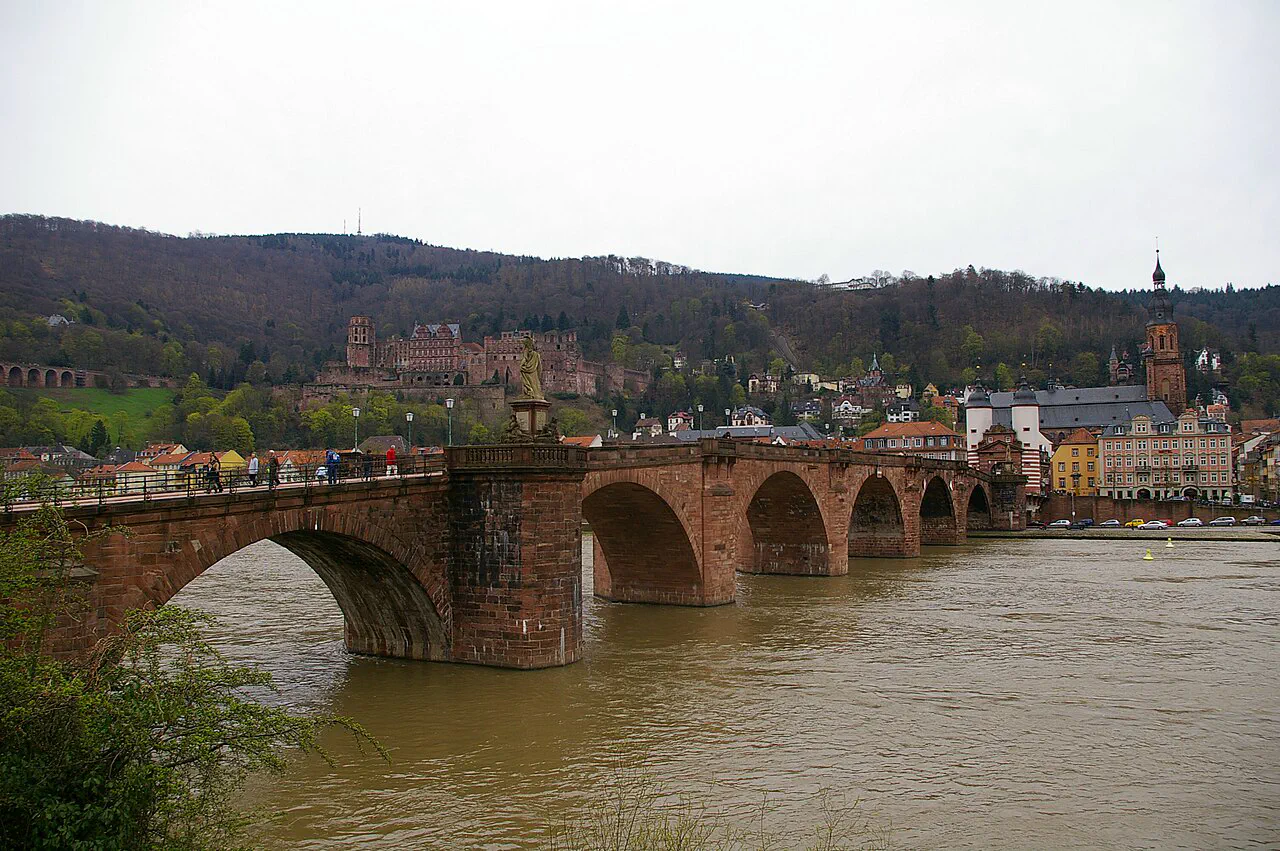
French troops set fire to it in 1689, in Louis XIV’s war over the Palatinate, and the towers and walls still standing were later blown up with mines. Lightning started another fire in 1764, and the castle stayed essentially a ruin. From 1810, a French count, Charles de Graimberg, gave the rest of his life to protecting it.
Was Heidelberg bombed in the Second World War?
No. Unlike most German cities, Heidelberg was spared Allied bombing. German troops did blow up three arches of the Old Bridge on 29 March 1945, and these were restored after the war. The city then became the headquarters of the American forces in Europe, and by 2015 all US forces had left.