Graham Greene dreamed up The Quiet American in room 214 of the Hotel Continental, and America called it anti-American. Now it’s famous for seeing the ending coming. Michael Caine plays the reporter in the film. (Read Caine’s autobiography, or better, hear him tell it. His reading of his book is fantastic.)
— Nick
Ho Chi Minh City, formerly Saigon, is the most populous city in Vietnam, in the south-east of the country. It was the capital of French Cochinchina and then of South Vietnam, and took its new name in 1976. Its stories here are a young man sailing for France, a novelist in room 214, a monk at a crossroads, a photograph with the wrong caption, and a president waiting to hand over power.
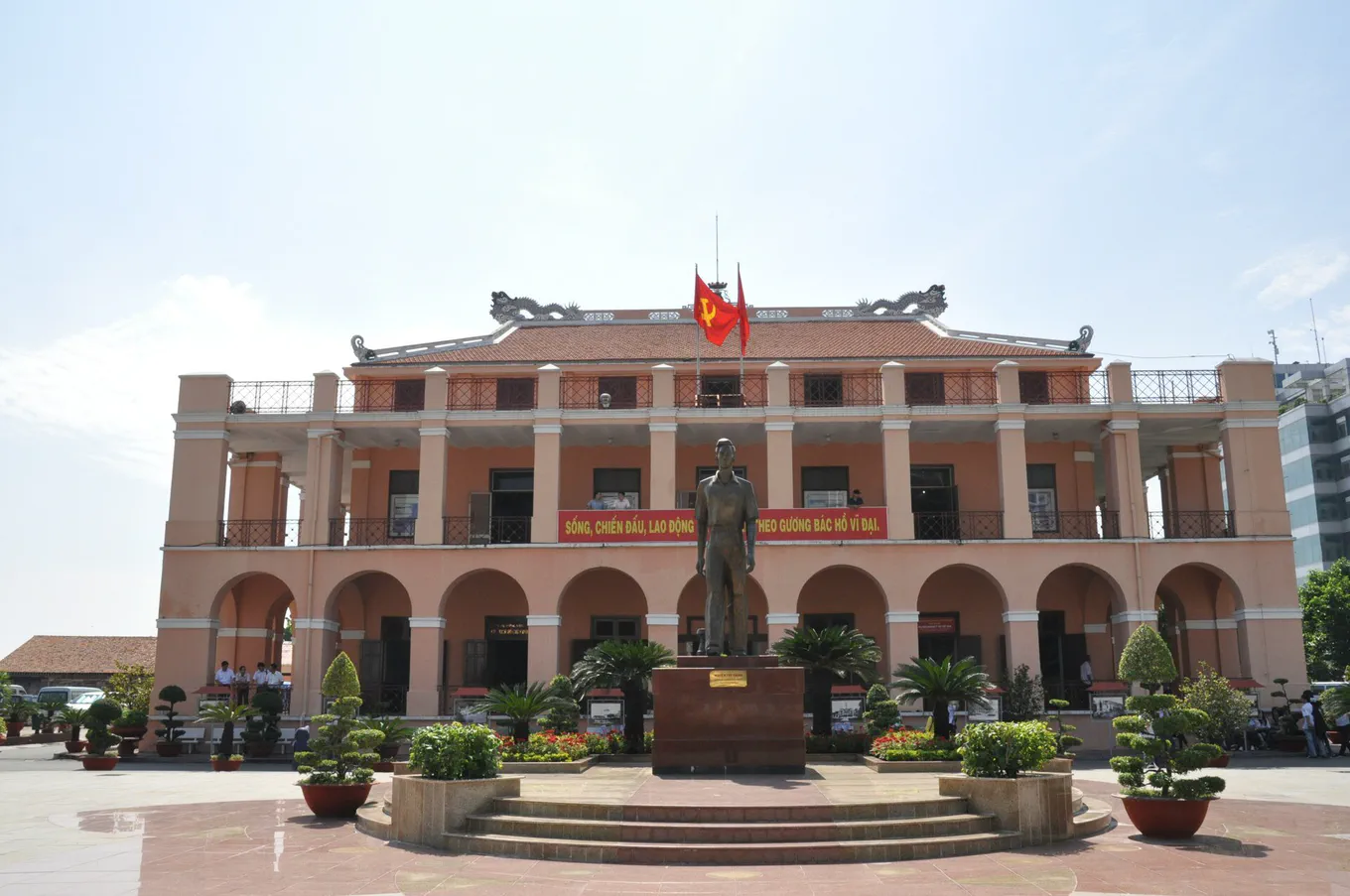
Ho Chi Minh, whose name this city carries, left it from this wharf on 5 June 1911. Then called Nguyễn Tất Thành, he had applied to work as a kitchen helper on a French steamer, under the false name Văn Ba. In France he applied to the French Colonial School and was turned down. So he worked his way round the world on ships, once as a pastry chef on the Newhaven–Dieppe ferry. He didn’t come home for thirty years, and then it was to lead the Việt Minh independence movement.
2 Graham Greene and The Quiet American at the Hotel Continental
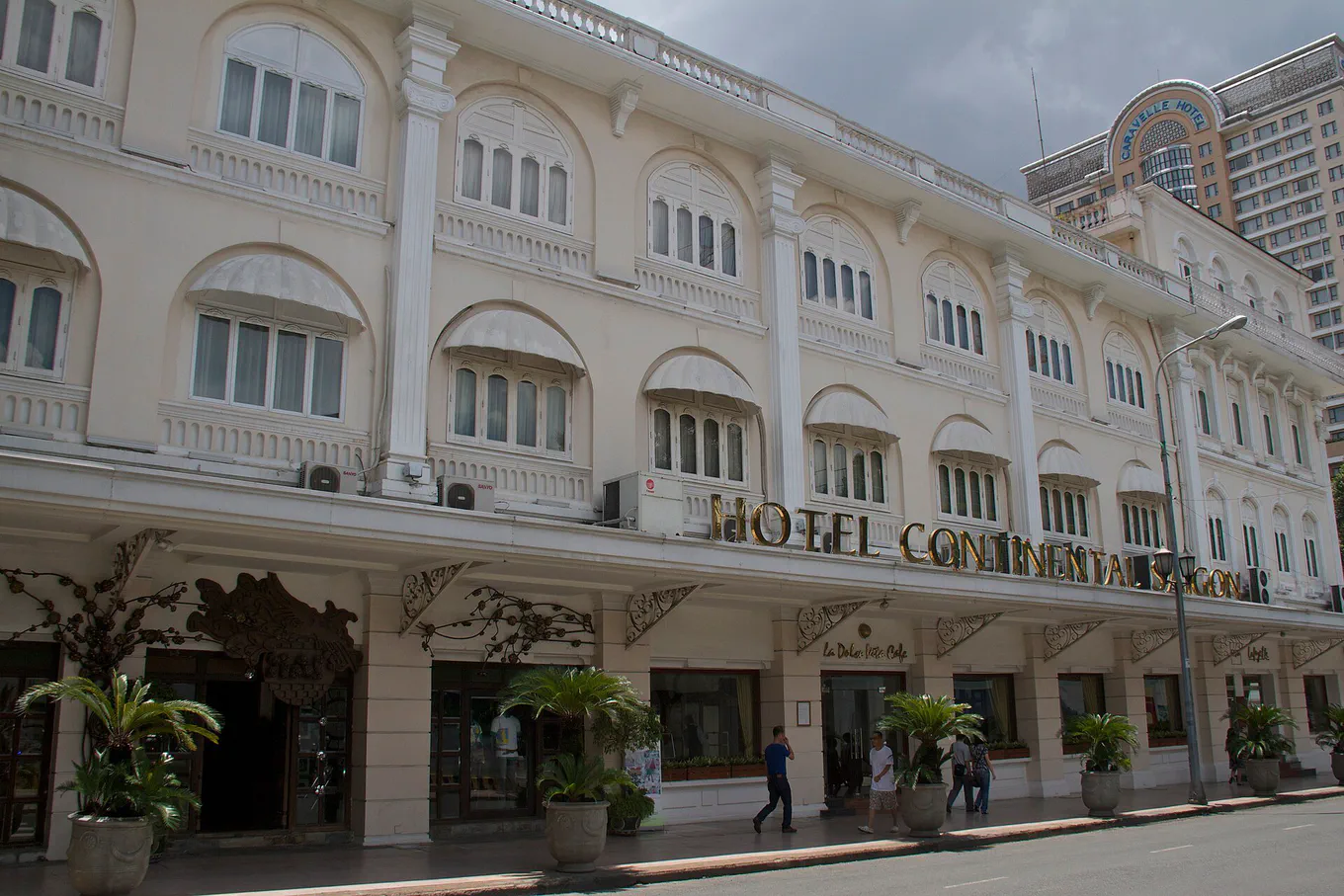
Stand here. The Hotel Continental, on Lam Sơn Square beside the Saigon Municipal Theatre. Built in 1878, it is still open, the oldest hotel in Vietnam.
Graham Greene conceived The Quiet American in room 214 of this hotel, a long-term guest while he covered the French war in Indochina. In the novel, a young American, sure that American power can put a new force in charge of a country he barely knows, takes a British reporter’s lover and turns out to be involved in a bomb that kills civilians. When the book reached the United States in 1956, it was condemned as anti-American. Now it is famous for predicting how America’s war in Vietnam would end.
Stand here. The crossroads of Nguyễn Đình Chiểu and Cách Mạng Tháng Tám streets, a few blocks south-west of the Presidential Palace. The Venerable Thích Quảng Đức Monument stands there now.
Rage Against the Machine’s first album cover was shot at this crossroads on 11 June 1963. Thích Quảng Đức, a Buddhist monk, was protesting at the persecution of Buddhists by the Catholic president, Ngô Đình Diệm. Reporters had been told something important would happen. Most ignored it, but Malcolm Browne of AP came. The monk sat in the lotus position and burned himself to death, and a reporter wrote that he never moved a muscle. Seeing the picture, Kennedy reportedly exclaimed “Jesus Christ!” Within five months, Diệm was overthrown and killed.
4 The Saigon helicopter photo that wasn’t the US Embassy
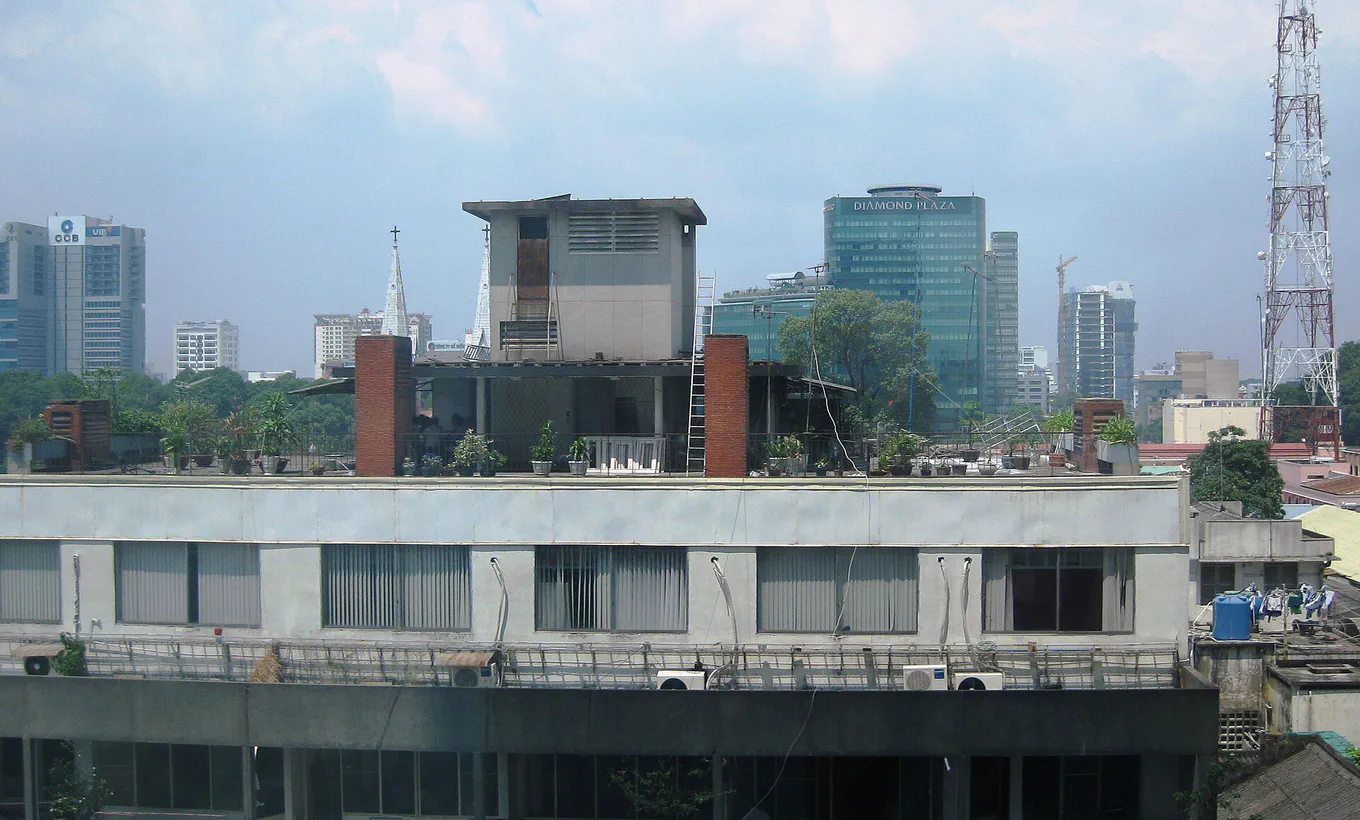
Stand here. 22 Lý Tự Trọng Street, then 22 Gia Long Street, is still an apartment building. A lift to the ninth floor takes visitors to the roof.
Miss Saigon puts a helicopter on the embassy roof, and when the show used Hubert van Es’s photograph, he considered suing. On 29 April 1975, the Dutch photographer ran to the balcony of UPI’s office with a 300mm lens and caught people on this roof climbing a ladder to a CIA helicopter. It took off with 12 or 14 aboard, in a model meant for eight. His caption never said embassy. Someone added the word. Van Es tried to have it corrected, and in the end he gave up.
5 The last president waits at Independence Palace, 1975
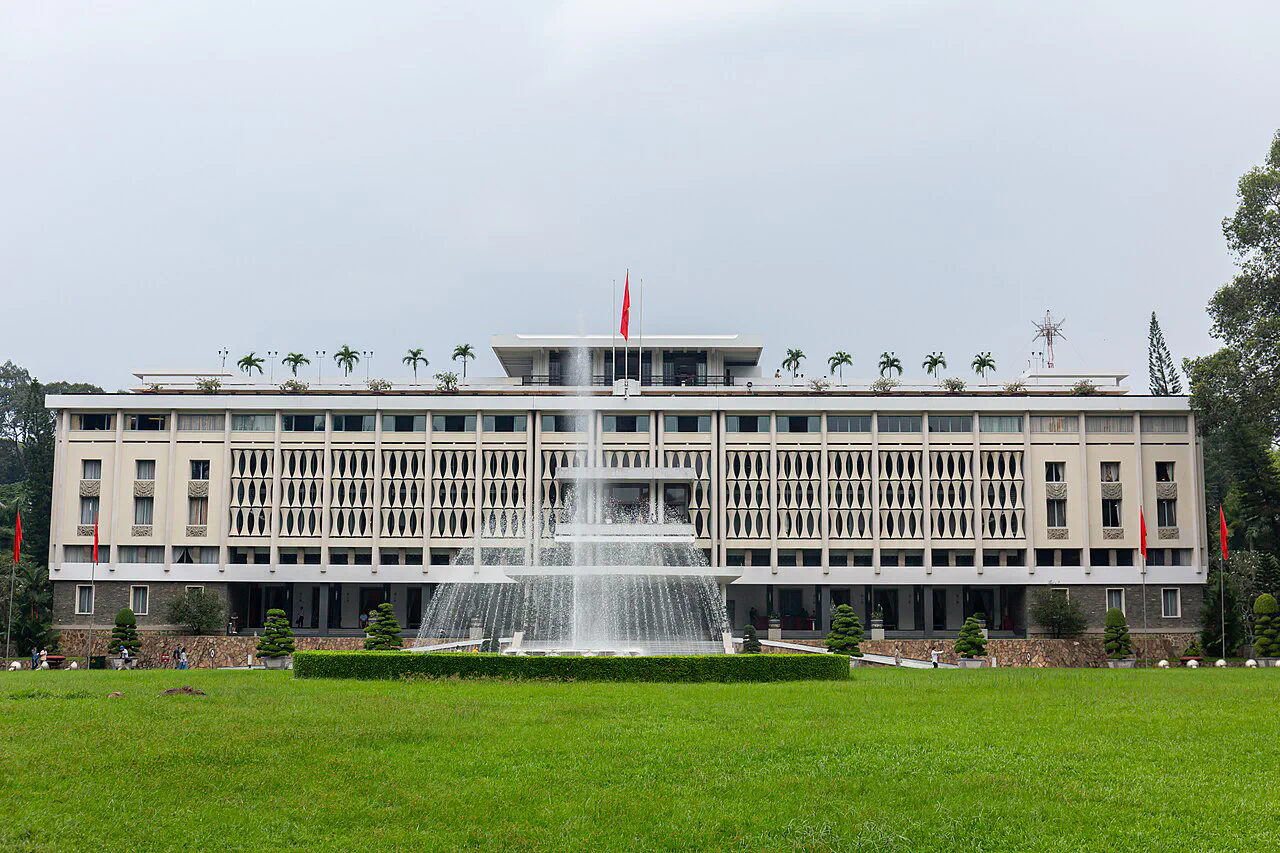
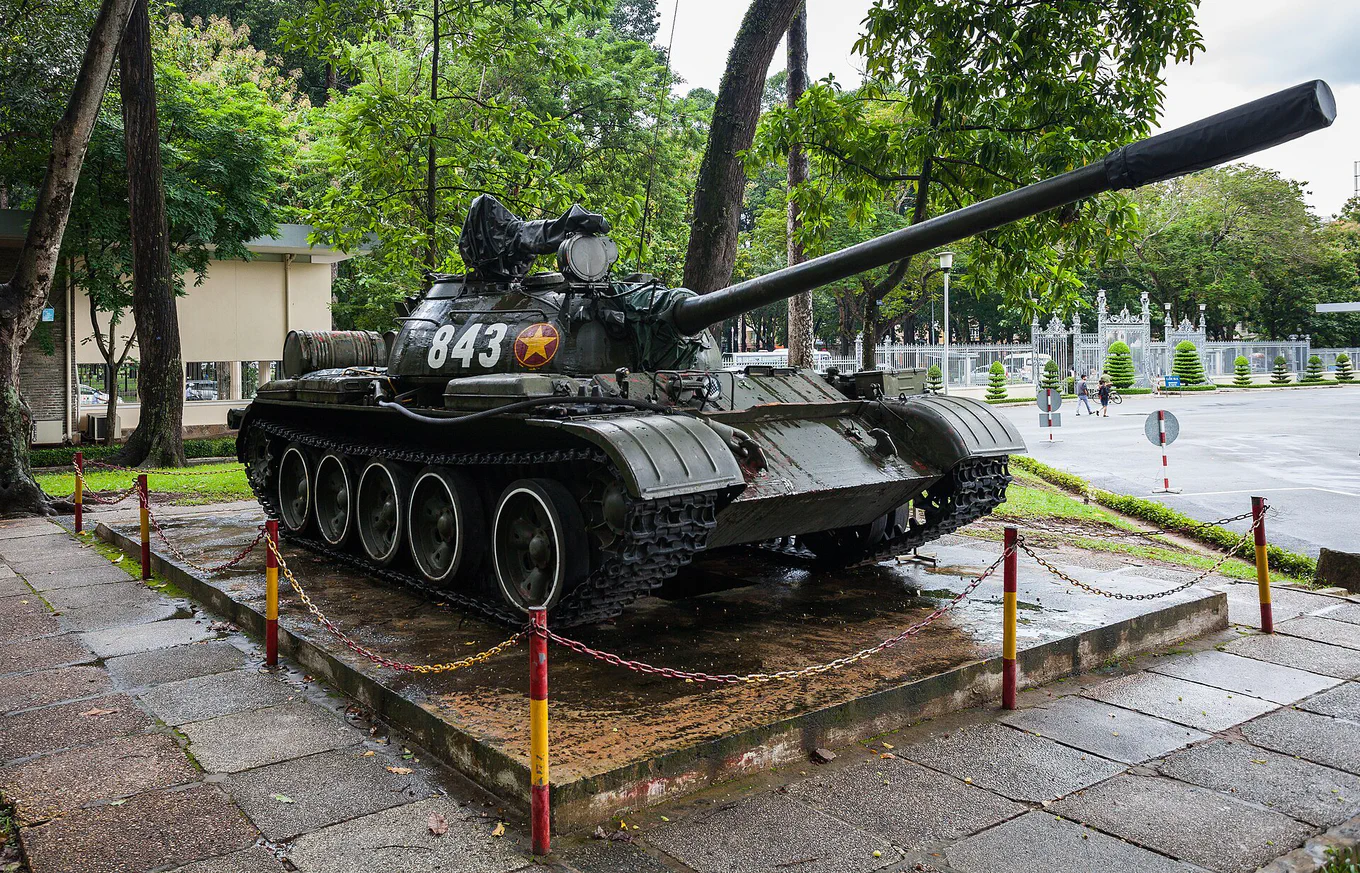
Stand here. Independence Palace, now a museum. A T-54 tank stands in the gardens by the entrance.
On 30 April 1975, at the Fall of Saigon, tanks crashed through these gates. Inside, Dương Văn Minh, president for two days, had already announced his surrender, and he sat waiting with his cabinet. “We have been waiting for you so that we could turn over the government,” he told the soldiers. Colonel Bùi Văn Tùng answered, “You cannot give up what you do not have.” Accounts differ on the words. Minh was allowed home, and spent eight years raising birds and orchids.
Pack nothing. Leave Friday.
Every Friday, I write a free letter, Journey, that takes us on a trip through places, stories, and ideas.
The Quiet American(Graham Greene, 1955). A novel. A British reporter and a young American idealist during the French war, with the Hotel Continental on Lam Sơn Square at its heart.
The Lover(Marguerite Duras, 1984). A novel. The lover’s bachelor flat is in a housing complex in Chợ Lớn, the Chinese quarter of Saigon.
The Sympathizer(Viet Thanh Nguyen, 2015). A novel. April 1975, Saigon in chaos, and a South Vietnamese general drinking whisky at his villa with his trusted captain.
From a Chinese City(Gontran de Poncins, 1957). A memoir of Chợ Lớn, the Chinese riverbank community close beside Saigon.
Films to watch before you visit Ho Chi Minh City
The Quiet American(Phillip Noyce, 2002). A film, with Michael Caine. It is set at the Hotel Continental but was shot at the Caravelle Hotel opposite.
The Lover(Jean-Jacques Annaud, 1992). A film of the Duras novel. The outside of the bachelor flat was filmed at 7 Phú Định, in District 5.
Indochine(Régis Wargnier, 1992). A film. The Hotel Continental is one of its central settings.
Questions
Can you go up to the roof in the Fall of Saigon helicopter photo?
Yes. The building, once 22 Gia Long Street and now 22 Lý Tự Trọng Street, is an apartment block, and visitors can take the lift to the ninth floor for the roof. In June 2026, entry cost 100,000 dong.
Can you see the tank at Independence Palace?
Yes. A T-54 tank stands in the gardens at the palace entrance, and the palace is a museum open to the public. The two tanks that broke through the gates on 30 April 1975, numbers 390 and 843, are national treasures, shown in two museums in Hanoi.
Why is Saigon called Ho Chi Minh City, and is it still called Saigon?
The National Assembly renamed it on 2 July 1976, the day Vietnam was formally reunified, in honour of Ho Chi Minh. People still call it Saigon informally, and since 2025 Saigon has been the official name of the city’s administrative centre.