Hobart is the capital and most populous city of Tasmania, Australia’s island state, and the southernmost capital city in the country. It was founded in 1804 as a British penal colony, and sits at the foot of kunanyi / Mount Wellington. The stories are Amundsen’s news from the South Pole, the last Tasmanian tiger, a cruise that became a race, Olivier’s plea for a theatre, and a Greek temple built as a museum.
1 Amundsen’s South Pole news at Hadley’s Orient Hotel
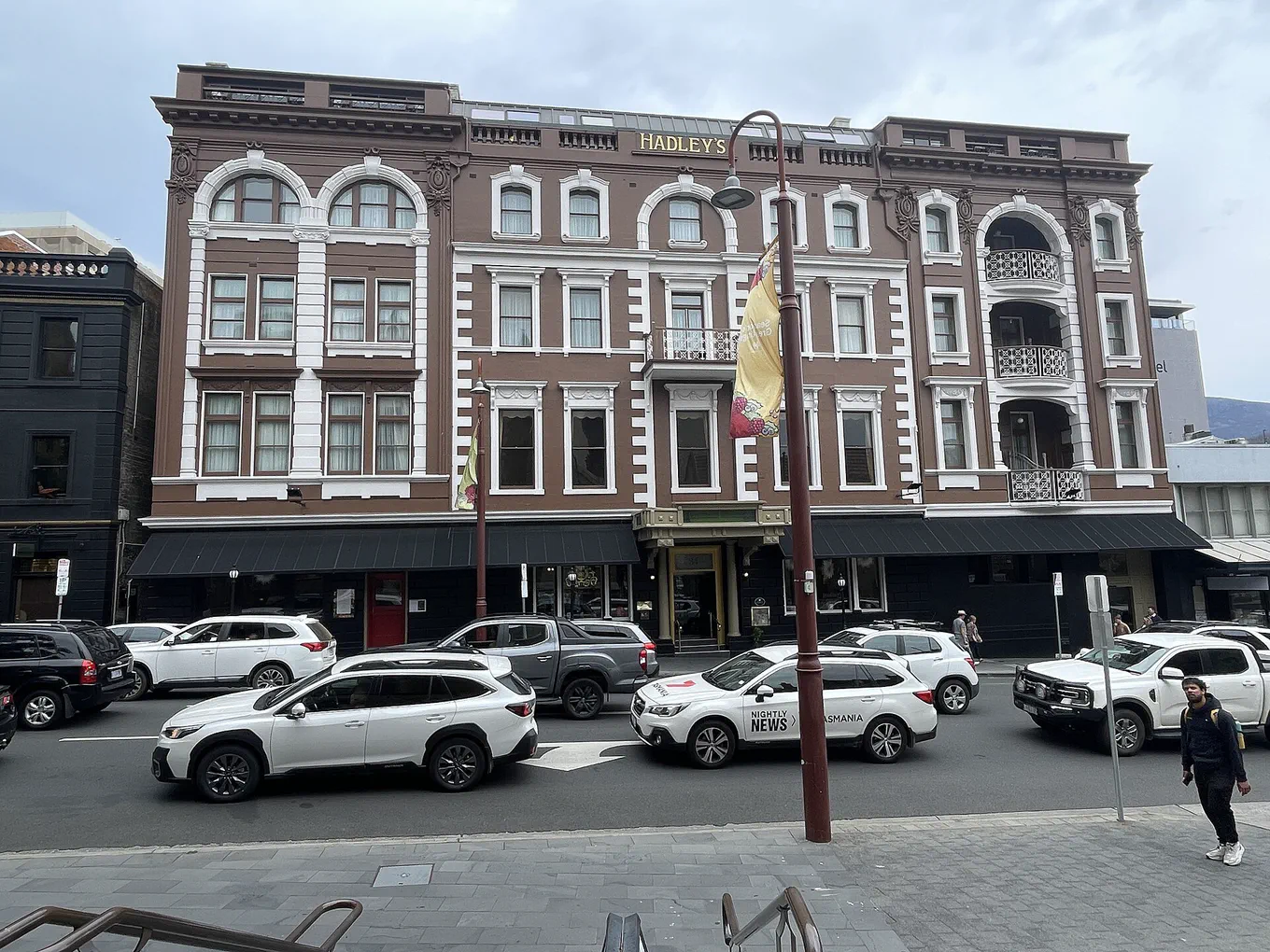
Stand here. Hadley’s Orient Hotel, 34 Murray Street, where Roald Amundsen stayed after his South Pole victory. Its history is woven with tales of convicts.
Roald Amundsen had beaten Robert Falcon Scott to the South Pole, and on 7 March 1912 he sailed into Hobart in Fram, Fridtjof Nansen’s polar ship, with the news. But the exclusive rights belonged to London’s Daily Chronicle, and to his brother, to Nansen, and to King Haakon he sent only brief telegrams. There was still no word from Scott. Nobody knew that, by 29 March, Scott and his whole party would be dead on their way home.
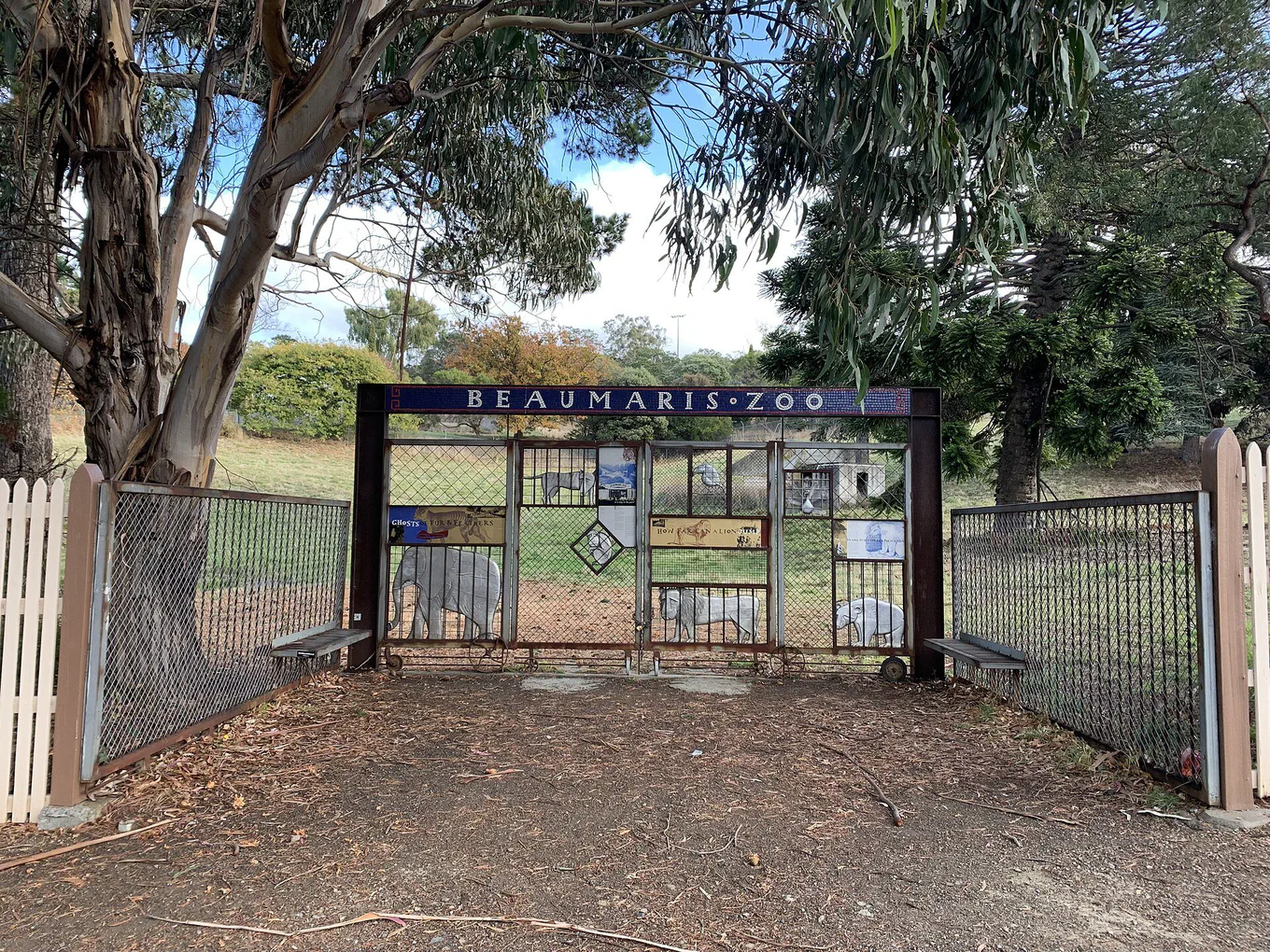
The famous 45-second black-and-white film of the presumed last Tasmanian tiger, or thylacine, shows an animal kept at Hobart’s zoo. In 1933, the biologist David Fleay came here and became the last person to photograph a captive thylacine. By his family’s account, the tiger gave two warning “yawns”, then bit him on the buttocks. On 7 September 1936, locked out of its sleeping enclosure, the zoo’s thylacine died of exposure. It was the last one anyone knew of.
3 John Illingworth and the first Sydney to Hobart race
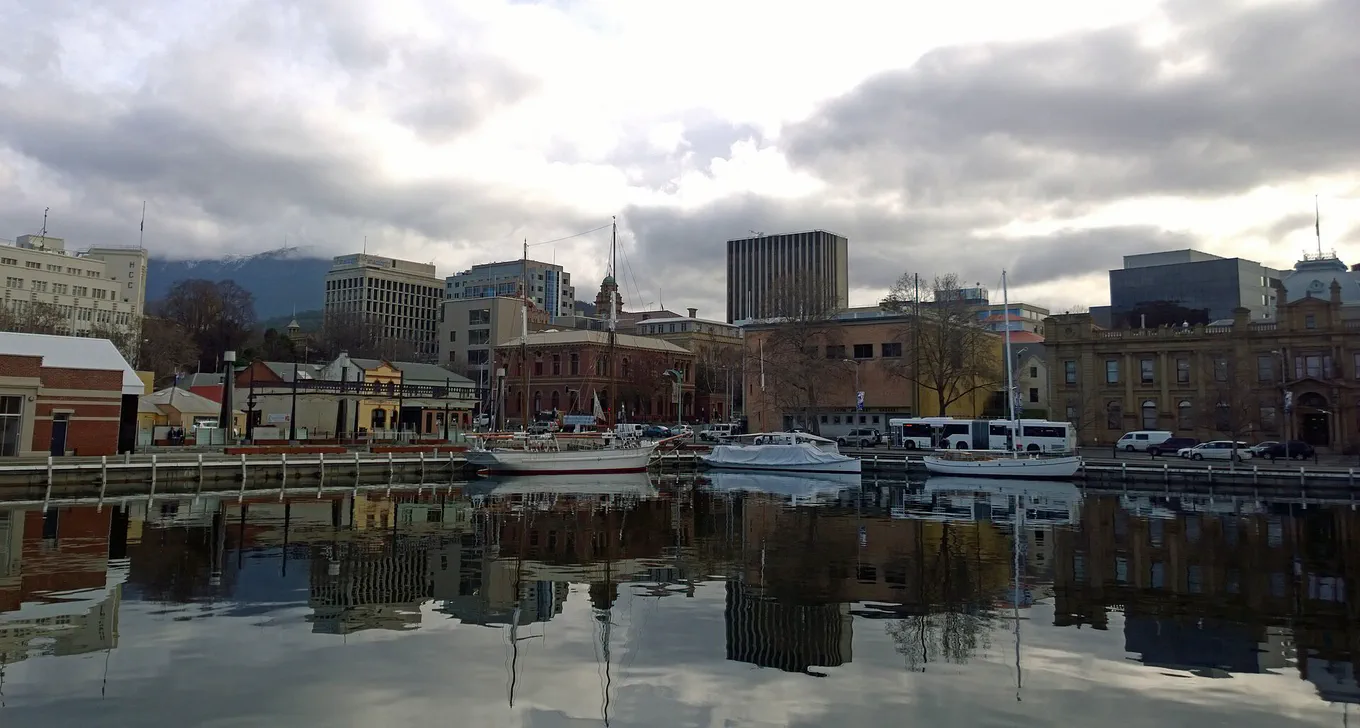
Stand here. Constitution Dock, on the Hobart waterfront. It is where the Sydney to Hobart fleet arrives at the end of the race today.
Every Boxing Day, the Sydney to Hobart Yacht Race leaves Sydney, but in 1945 it was planned as a cruise. John Illingworth, an English Royal Navy engineer and yacht racer, was invited, and asked, “Why don’t we make a race of it?” His yacht, Rani, sailed out to sea and was “lost” to the search capabilities of the time. Then, six days and fourteen hours after the start, Rani came into Hobart, flanked by a launch of New Year’s revellers, and her crew were told, “You are the first!”
4 Laurence Olivier and the Theatre Royal on Campbell Street
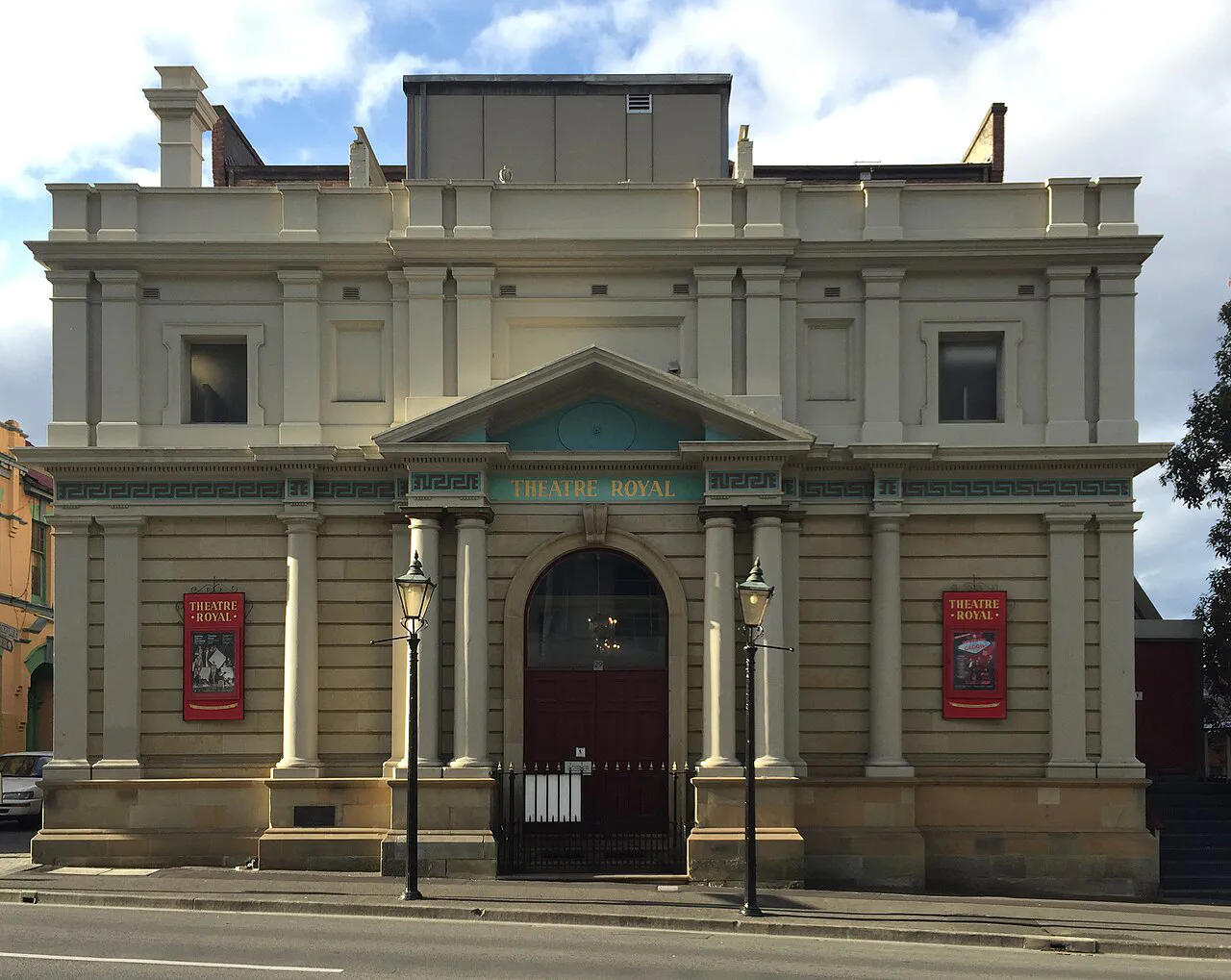
Stand here. The Theatre Royal, at 29 Campbell Street, the oldest continually operating theatre in Australia.
Laurence Olivier and Vivien Leigh came to Hobart in 1948, touring with the Old Vic company. The Theatre Royal had been staging shows since 1837, but its performers now had to beware of holes in the stage, unsafe wiring, faulty heating, and cockroaches, and demolition was planned. The couple helped rally public opinion, and the state government bought the theatre, promising to restore it if matching funds were raised. Olivier had pleaded, “Don’t let it go.”
5 Jane Franklin’s Greek temple museum in Lenah Valley
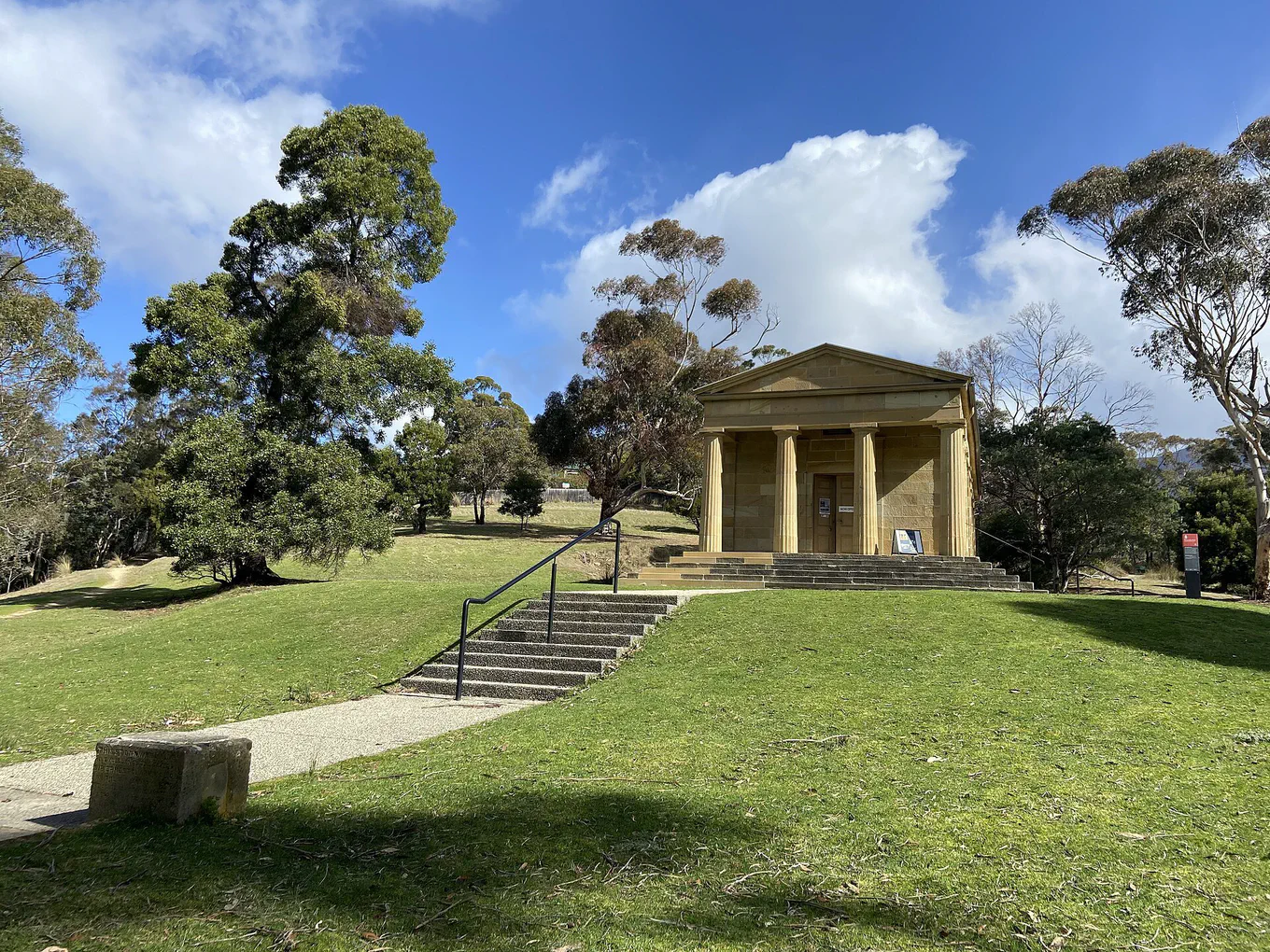
Stand here. The Lady Franklin Gallery, in Lenah Valley. The temple still stands, and the Art Society of Tasmania moved into it in 1949.
Jane Franklin, who would later send seven expeditions to find her lost husband, Sir John Franklin, first set out to give Hobart a museum. He was Lieutenant-Governor of the colony, and in 1842 she commissioned a Greek temple, built at her own expense with convict labour, and named it Ancanthe. It opened in 1843 as the first privately funded museum in Australia. But Sir John was recalled, and the couple had to leave in haste. In time, the temple became a storehouse for apples.
Pack nothing. Leave Friday.
Every Friday, I write a free letter, Journey, that takes us on a trip through places, stories, and ideas.
The Boys in the Island(Christopher Koch, 1958). A novel. A coming-of-age story about Francis Cullen, set largely in Hobart, with later chapters in Melbourne.
When the Night Comes(Favel Parrett, 2014). A novel. Running away from the mainland was meant to help, but for Isla and her brother, their mother’s sadness and Hobart’s grey stone streets seep into everything.
Hobart(Peter Timms, 2020). A non-fiction book. Timms leads a journey through his adopted city, from its convict legacy to its heritage architecture. First published in 2009, it has a new introduction.
Films to watch before you visit Hobart
Lion(Garth Davis, 2016). A film. Saroo moves to Hobart in 1987 under the care of Sue and John Brierley, and filming took in several Tasmanian locations, including Hobart.
The Hunter(Daniel Nettheim, 2011). A film. Filmed entirely in Tasmania, it used the top of Mount Wellington for a blizzard scene and Lenna of Hobart, in Battery Point, as a Paris hotel room.
The Sound of One Hand Clapping(Richard Flanagan, 1998). A film. Richard Flanagan directed this Australian drama from his 1997 novel of the same name, and shot it in Hobart, Tasmania.
Questions
Can you see where the last Tasmanian tiger lived in Hobart?
Partly. The last known thylacine died at Beaumaris Zoo, on the Queen’s Domain, on 7 September 1936. The zoo closed the next year because of severe financial problems, but some remnants and archaeological remains of the original zoo can still be seen.
Where did Roald Amundsen stay in Hobart?
At Hadley’s Orient Hotel, 34 Murray Street, after his South Pole victory. Fram reached Hobart on 7 March 1912, and he telegraphed the news to his brother, to Fridtjof Nansen, and to King Haakon.
What does kunanyi mean?
It simply means “mountain”. The mountain above Hobart carries both names, kunanyi / Mount Wellington, and rises 1,271 metres above sea level. Hobart, the southernmost capital city in Australia, sits at its foot.