I had a Greyhound change in Houston in 1993. Does that count as a visit?
— Nick
Galveston Bay and the Gulf of Mexico lie near Houston, in Southeast Texas. Founded on Buffalo Bayou in 1836, it is now the most populous city in Texas and home to NASA’s Mission Control. A guidance officer who said go comes before a stadium whose grass died, a painter’s dark chapel, a park bought for Juneteenth, and a president making the case for the Moon.
1 Apollo 11 and the Mission Control officer who said go
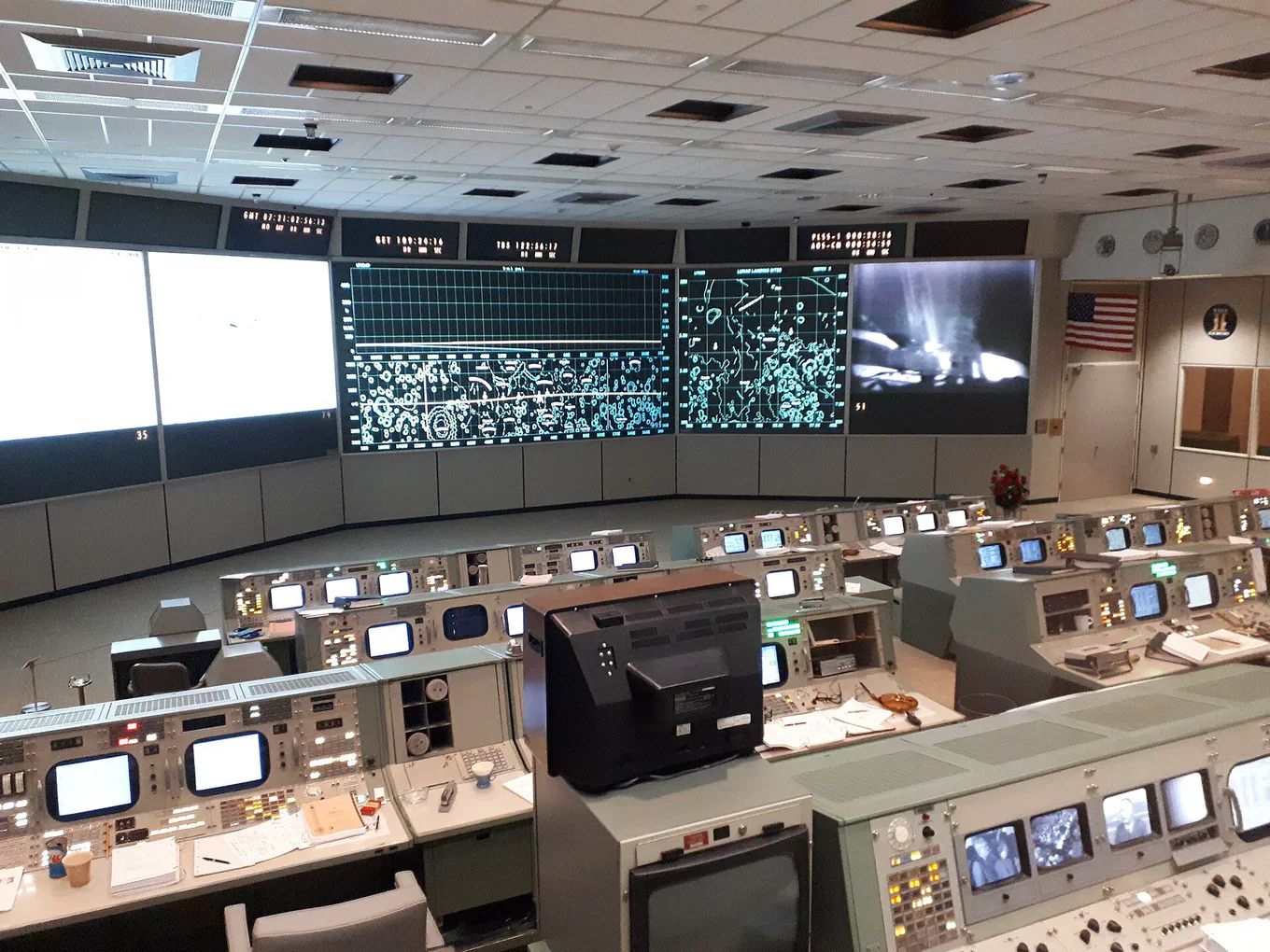
Stand here. Historic Mission Control, Building 30, Johnson Space Center. Restored in 2019, it’s seen from behind glass on the Space Center Houston tram tour.
The restored Apollo Mission Operations Control Room 2 at Johnson Space Center, Houston, the room that flew Apollo 11.Mikael Häggström / CC0.
This was the flight control room for Apollo 11. On 20 July 1969, as the lander Eagle came down towards the Moon, its computer threw alarms nobody expected. Whether to abort lay wholly with the guidance officer, Steve Bales. A 24-year-old engineer, Jack Garman, told him it was safe, and Bales said go. Eagle landed with under a minute of fuel left. “Houston, Tranquility Base here,” said Neil Armstrong. “The Eagle has landed.” Houston replied: “You got a bunch of guys about to turn blue. We’re breathing again.”
2 How the Astrodome’s dead grass gave the world AstroTurf
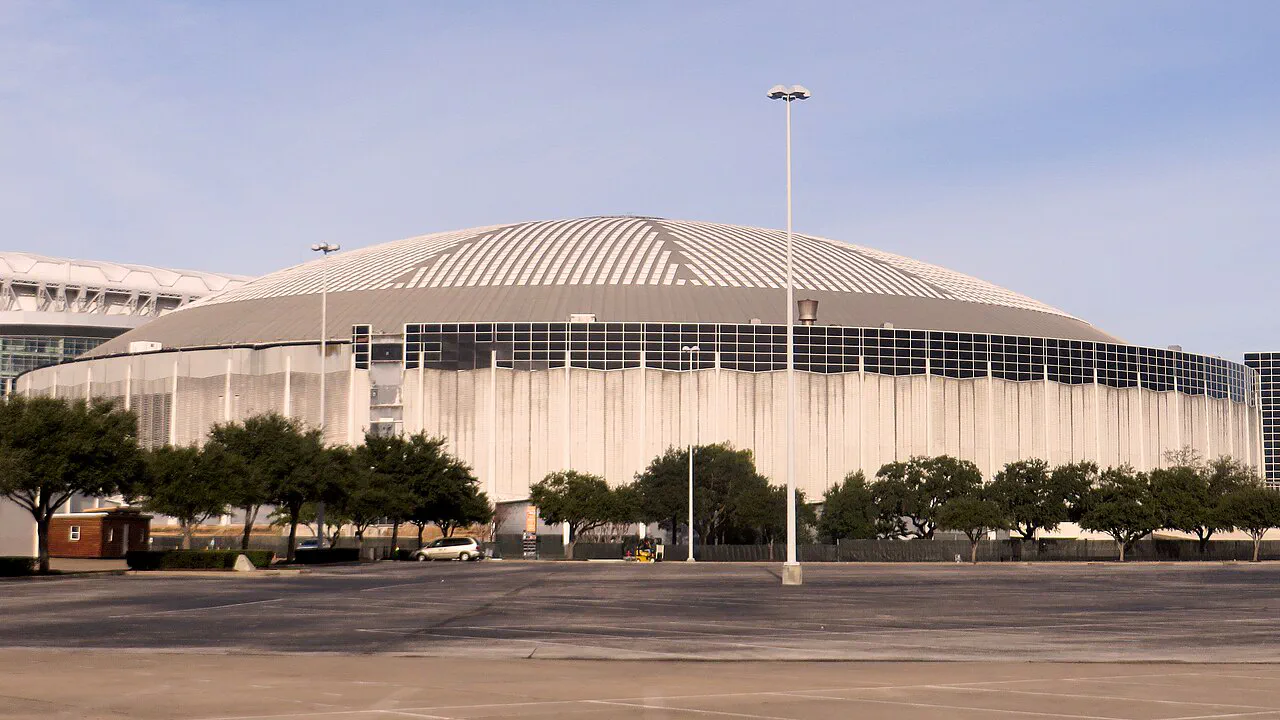
Stand here. The Astrodome, in Houston. It still stands, but has been closed to the public since 2009.
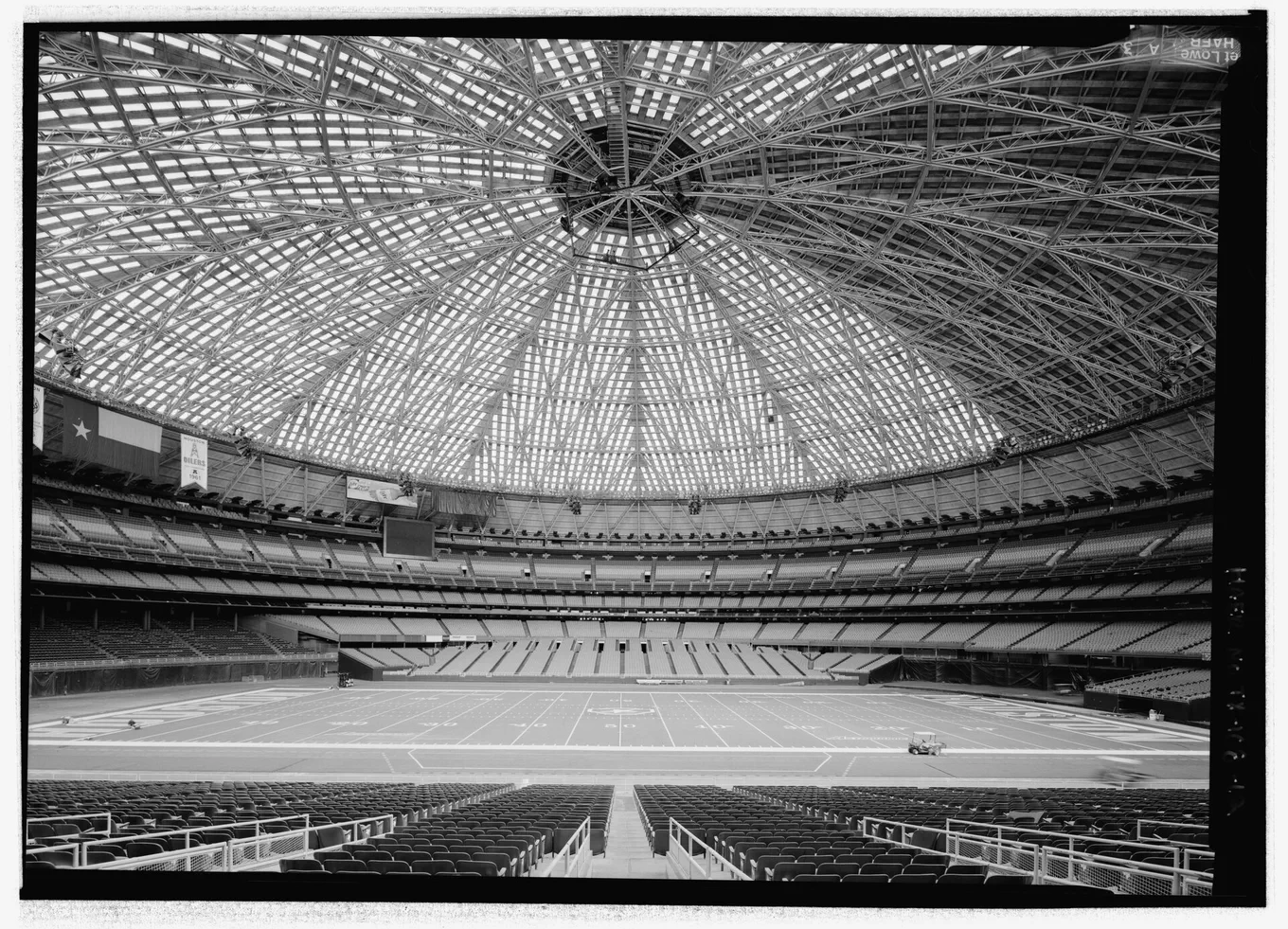
Inside the Astrodome in Houston, under the lattice roof whose skylights were painted over to cut glare for outfielders.Jet Lowe / Public domain.
Before there was AstroTurf, there was the Astrodome’s grass. Roy Hofheinz, a former mayor, won Houston a baseball team by promising a covered stadium, and the dome opened with grass bred for indoor use under thousands of semi-transparent panes. But fielders lost fly balls in the glare, so the panes were painted white, and within months the grass died. The Astros played most of the season on dead grass and green-painted dirt. In 1966, an artificial grass went down, and it was renamed after the dome: AstroTurf.
3 Mark Rothko’s dark chapel, which he never saw finished
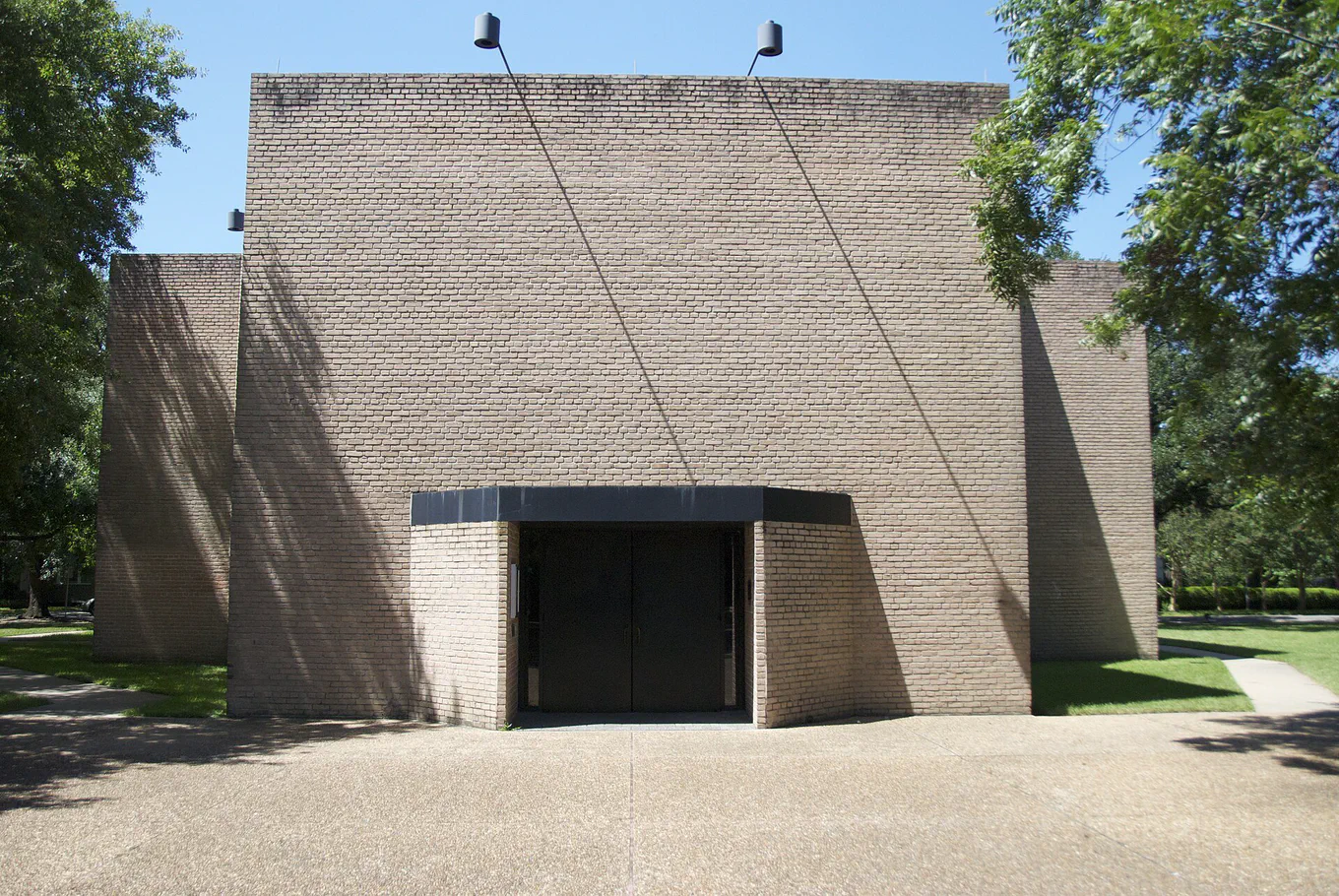
Stand here. The Rothko Chapel, a non-denominational chapel in Montrose. Barnett Newman’s sculpture Broken Obelisk rises above the reflecting pool outside.
Texas oil millionaires John and Dominique de Menil asked the painter Mark Rothko to make a sacred space for Houston. He wanted it lit from above, through a central cupola like the one in his studio. His architect couldn’t agree, and left. The chapel became a brick octagon under a skylight, its walls hung with fourteen paintings in hues of black. But in February 1970, Rothko died by suicide in his New York studio. The chapel opened a year later. He never saw it finished.
4 Jack Yates and the Houston park bought for Juneteenth
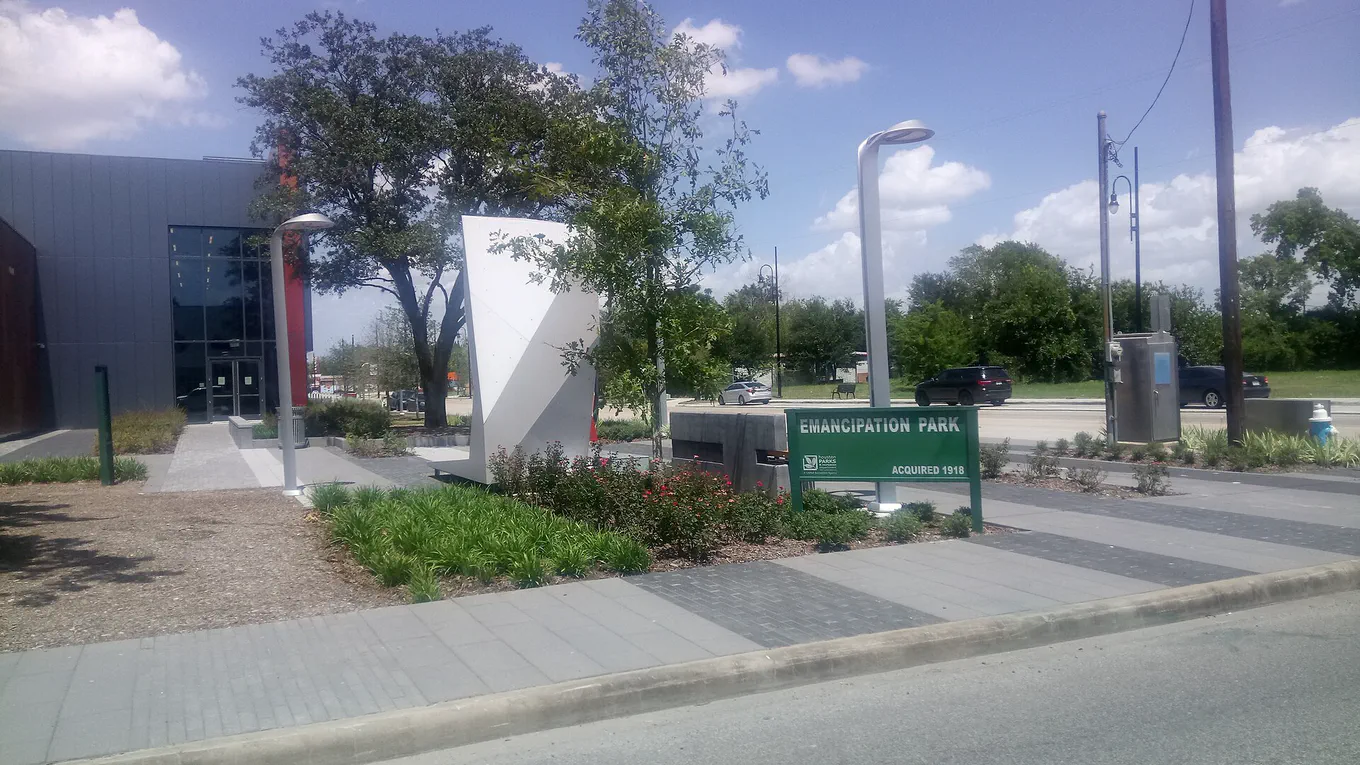
Stand here. Emancipation Park, on Emancipation Avenue in the Third Ward. Since its 2017 renovation, Juneteenth celebrations have come back to it.
Juneteenth marks the day emancipation was finally enforced in Texas, and Jack Yates, a Houston preacher born enslaved in Virginia, wanted somewhere to celebrate it. In 1872, he and three other men bought ten acres for $800. They couldn’t afford to keep the park open all year, so at first it opened only for Juneteenth. Decades later, the city took it over, and then segregated its parks. The park bought to celebrate freedom became, for eighteen years, the only one Black Houstonians could use.
5 Kennedy’s “We choose to go to the Moon” at Rice Stadium
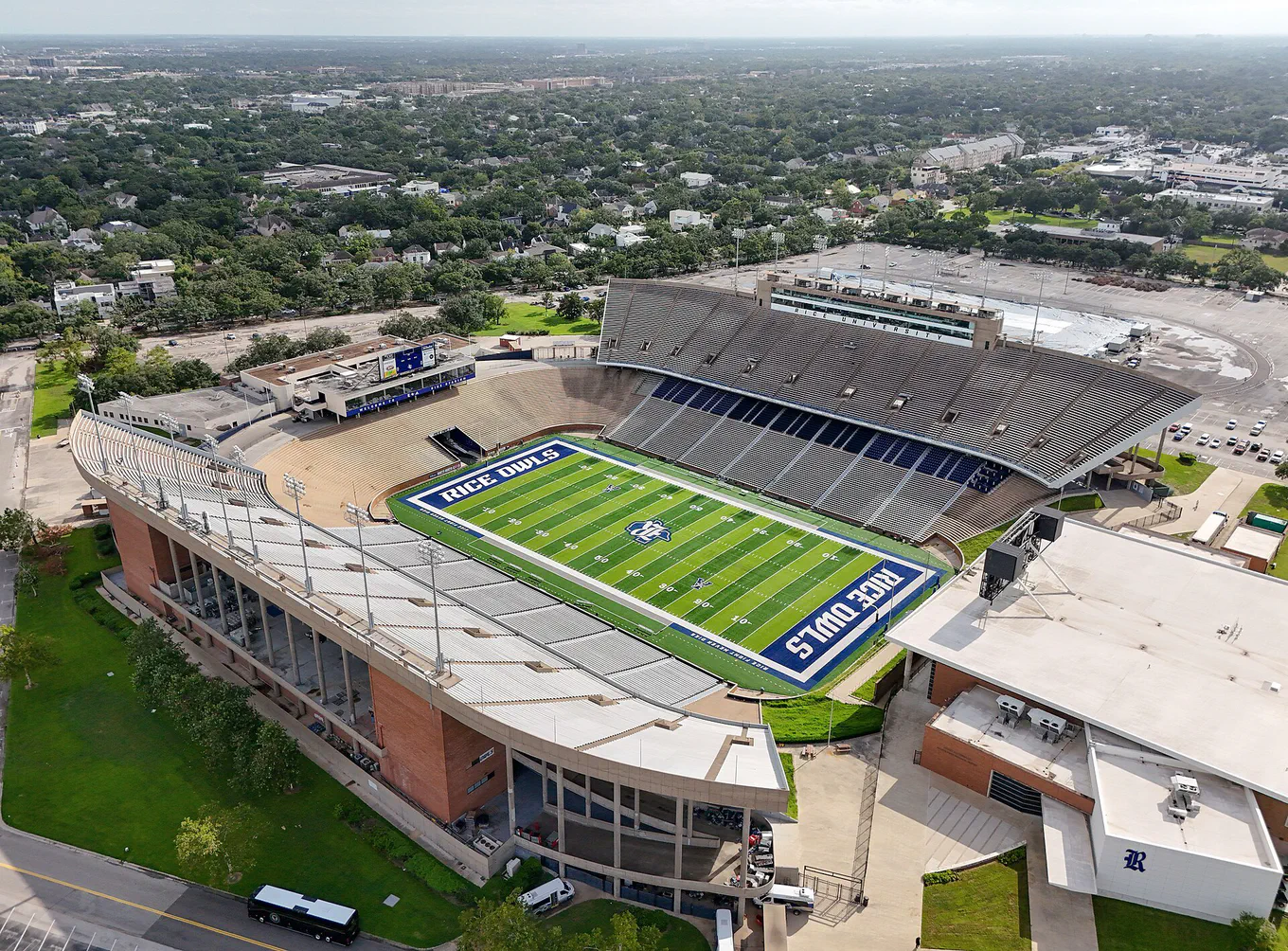
Stand here. First Community Stadium, formerly Rice Stadium, on the Rice University campus. It is still home to Rice Owls football.
John F. Kennedy gave his “We choose to go to the Moon” speech in this stadium, on a warm, sunny 12 September 1962. Houston had been chosen for NASA’s new spacecraft centre, and he wanted the public behind a Moon landing. “But why, some say, the Moon?” he asked a crowd of about 40,000. Why climb the highest mountain, he went on, or fly the Atlantic? “Why does Rice play Texas?” Kennedy didn’t live to see the landing. It came in July 1969, run from Houston.
Pack nothing. Leave Friday.
Every Friday, I write a free letter, Journey, that takes us on a trip through places, stories, and ideas.
Failure Is Not an Option(Gene Kranz, 2000). A memoir by the flight director whom Steve Bales told the landing could go on.
Terms of Endearment(Larry McMurtry, 1975). A novel set in Houston, and the book behind James L. Brooks’s 1983 film.
Films to watch before you visit Houston
Terms of Endearment(James L. Brooks, 1983). A film of Larry McMurtry’s 1975 novel. Shirley MacLaine won Best Actress as Aurora Greenway, keeping her suitors at arm’s length in River Oaks.
Apollo 13(Ron Howard, 1995). A film, with flight director Gene Kranz in Houston’s Mission Control. Its tagline, “Houston, we have a problem”, tidies up the real words, “Houston, we’ve had a problem.”
Rushmore(Wes Anderson, 1998). A film. Anderson’s old school, St. John’s, plays Rushmore Academy, and Lamar High School, across the street, plays the public school.
Reality Bites(Ben Stiller, 1994). A film set in Houston, with a scene on the roof of Two Shell Plaza and exteriors in Tranquillity Park.
Questions
Can you visit the Apollo Mission Control room in Houston?
Yes. The restored Apollo-era Mission Control at Johnson Space Center reopened to the public in July 2019, after two years’ work. You reach it on the tram tour from Space Center Houston, and see it from behind glass in the restored Visitor’s Gallery.
Can you go inside the Astrodome?
No. The Astrodome still stands, but it has been closed to the public since 2009. Its listing on the National Register of Historic Places in 2014 prevents full demolition, and a 2024 plan from the Astrodome Conservancy would turn it into a multiuse destination.
Why is Houston called Houston?
It is named after Sam Houston, the general who was president of the Republic of Texas. Two brothers from New York, the property developers Augustus Chapman and John Kirby Allen, settled the town on the banks of Buffalo Bayou in August 1836, and named it in his honour.