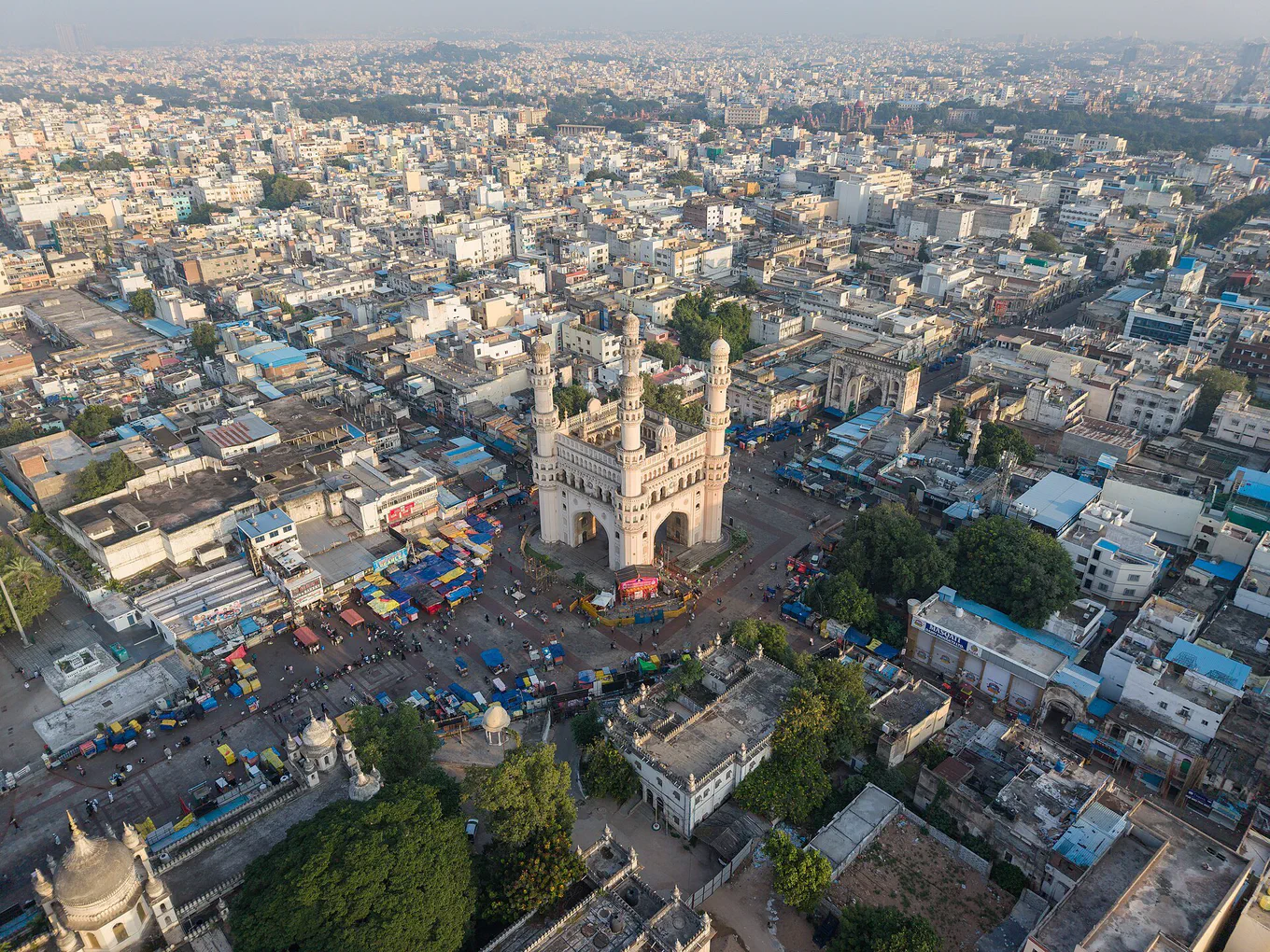
Short of water at his fortress at Golconda, a sultan founded Hyderabad in 1591 on the Deccan Plateau, beside the Musi River. It is now the capital of the Indian state of Telangana. A dancer the city may be named after gives way to a siege won by treachery, a diamond in a shoe, a doctor and a mosquito, and finally a Buddha that sank.
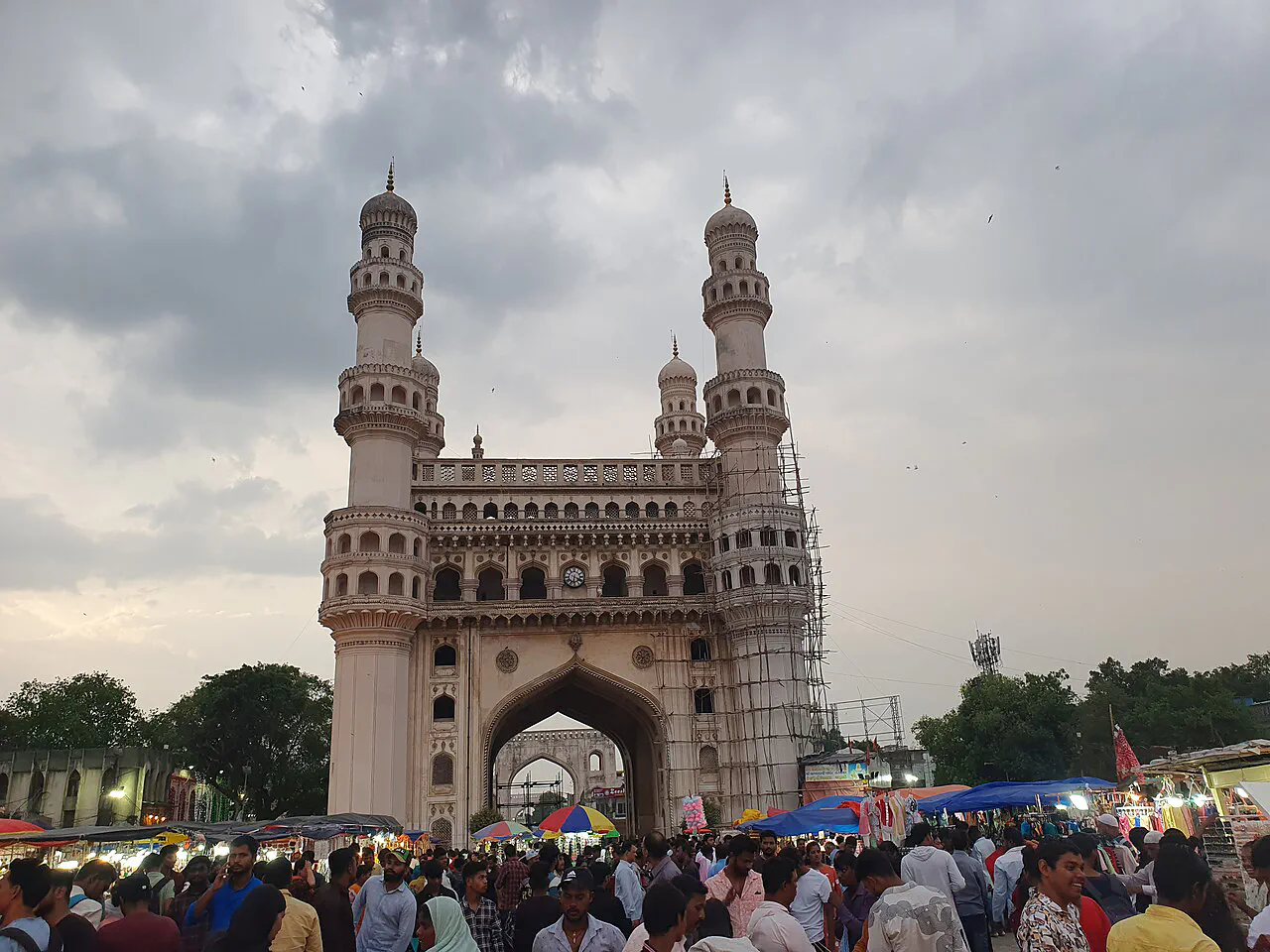
Muhammad Quli Qutb Shah founded Hyderabad in 1591 and built the Charminar at its centre, and the story goes that he named the city for a woman. She was Bhagmati, a local dancer he married. He called it Bhagya-nagar, ‘fortunate city’, and when she became a Muslim and took the title Hyder Mahal, it became Hyderabad. But she has no tomb, and no coin or inscription of the time, nor the sultan, names her. Scholars still argue whether she lived at all, or was erased from the record on purpose.
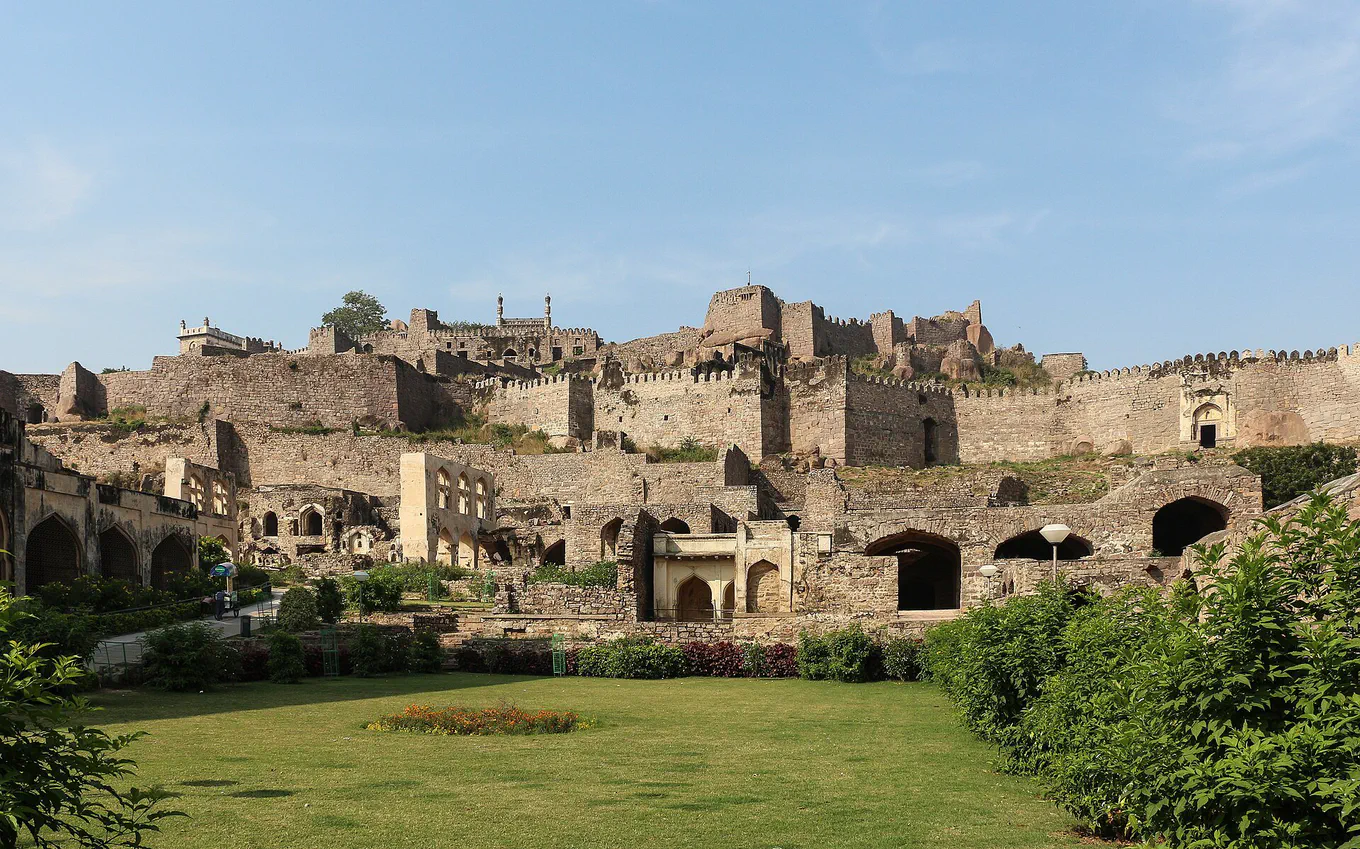
2 Aurangzeb’s eight-month siege of Golconda Fort
Stand here. Golconda Fort, a ruined citadel on the western outskirts. A clap at one spot under its entrance dome carries almost a kilometre.
Golconda’s vault once held the Koh-i-Noor and Hope diamonds, and in 1687 the Mughal emperor Aurangzeb besieged the fort in person. For eight months, the siege went wrong. Rains flooded the land, disease broke out among the soldiers, and the first of three mines under the walls blew back, killing over a thousand of his own men. The third would not even light. The fort held out. A Golconda noble did not, and one September night he let the Mughals in by a back door.
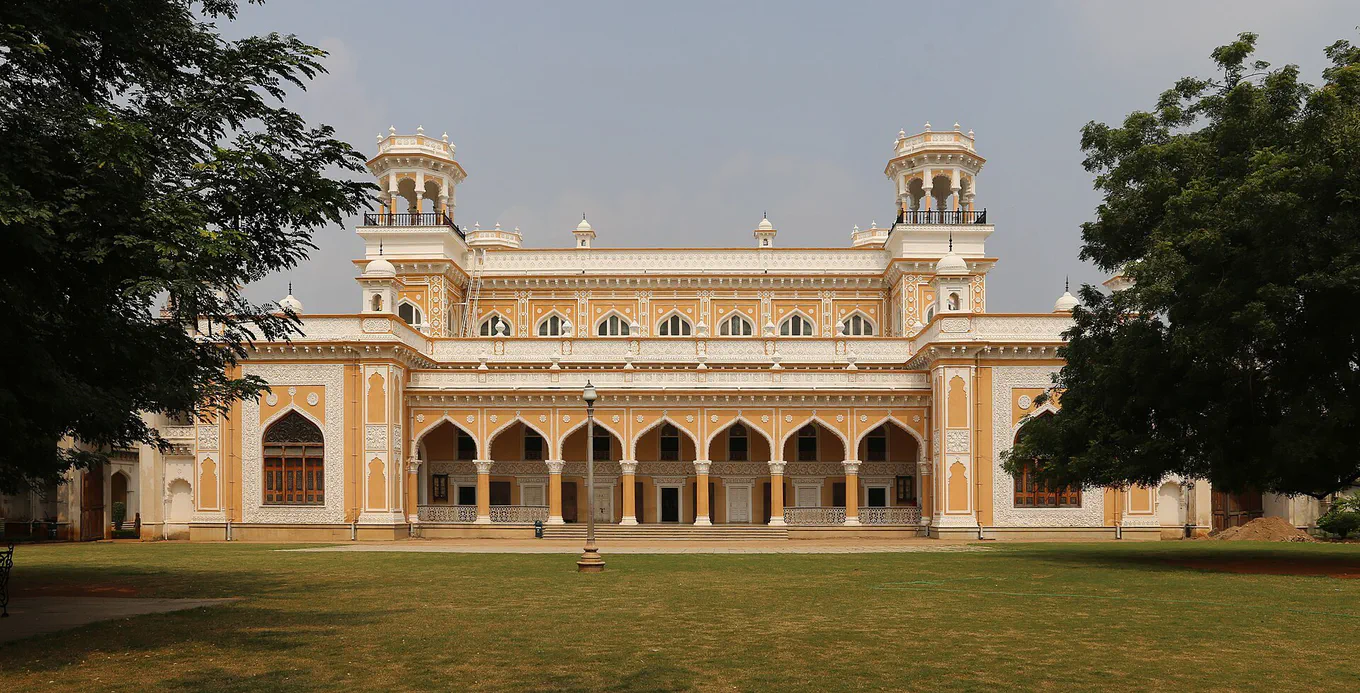
3 The last Nizam’s diamond paperweight at Chowmahalla Palace
Stand here. Chowmahalla Palace, near the Charminar, home of the Nizams, Hyderabad’s rulers. It opened as a museum in 2005, and the family still owns it.
Time once put Mir Osman Ali Khan, the last Nizam of Hyderabad, on its cover as the richest man in the world. In 1891, his father, the sixth Nizam, was offered the Jacob Diamond, now ranked the fifth-biggest polished diamond on earth. The deal ended in court. The sixth Nizam won the stone, decided it was unlucky, wrapped it in cloth, and hid it. Years after his death, Osman Ali Khan found it at Chowmahalla, in the toe of his father’s shoe. He used it as a paperweight.
4 Ronald Ross finds the malaria mosquito in Begumpet
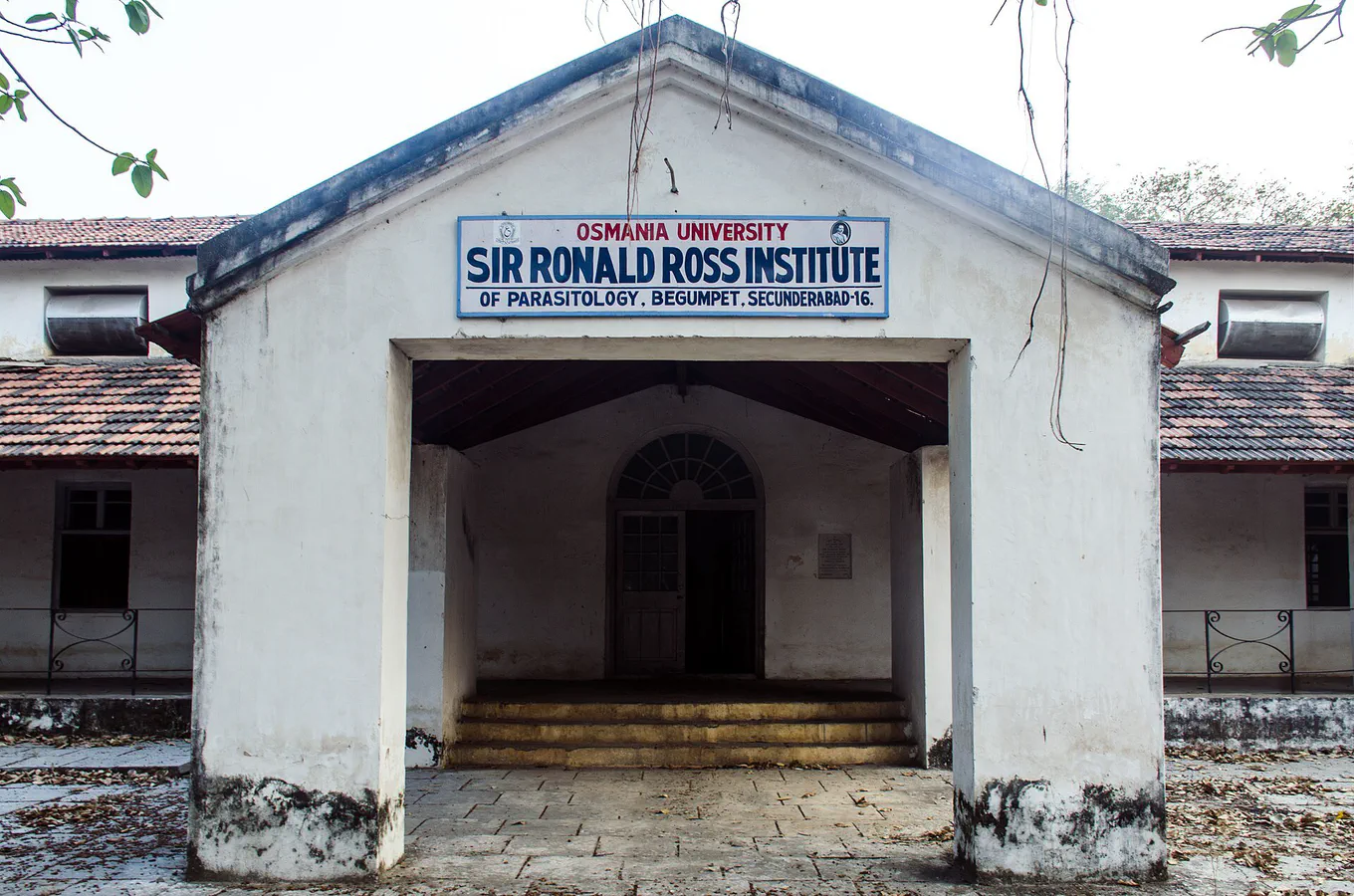
Stand here. The old Begumpet military hospital, on Sir Ronald Ross Road near Begumpet Airport. Its lab is now a small museum.
Ronald Ross won a Nobel Prize for medicine, but he had wanted to be a writer. In India, he spent two years failing to show that mosquitoes carry malaria. Then, on 20 August 1897, in his lab at the Begumpet military hospital, he found the malaria parasite inside a mosquito. That evening, he wrote a poem: “I know this little thing / A myriad men will save.” The next month, he was transferred, then sent on to a posting with no malaria at all.
5 The Buddha that sank in Hussain Sagar lake
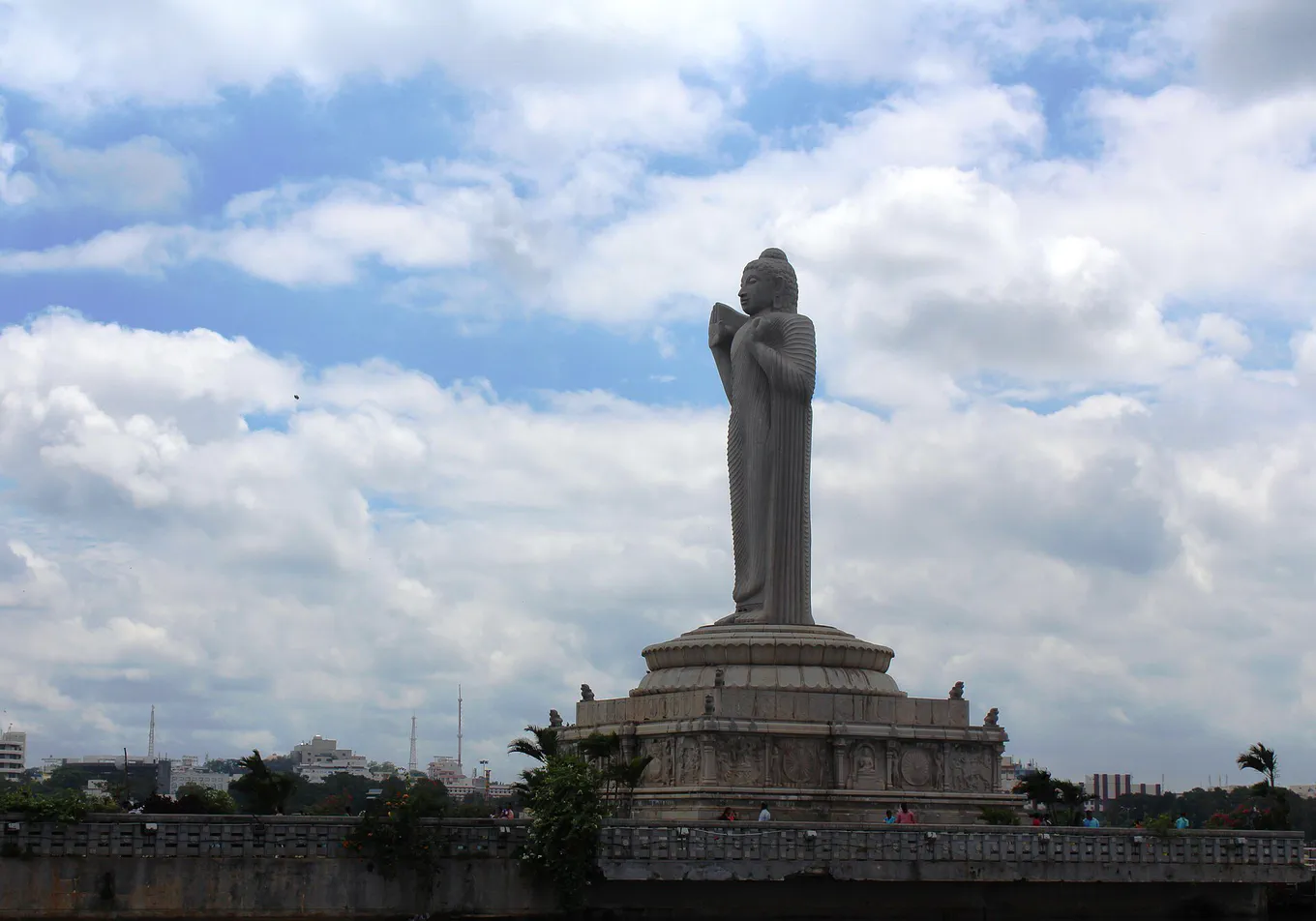
Stand here. Lumbini Park, on Hussain Sagar, where boats take about 15 minutes to reach the Buddha on its island platform.
N. T. Rama Rao, Chief Minister of Andhra Pradesh, saw the Statue of Liberty in New York and was inspired. He chose the Buddha, who, he said, “told the whole truth to the people”. Hundreds of labourers spent over a year carving one block of white granite into a statue 58 feet tall. On 10 March 1990, it was loaded onto a barge on Hussain Sagar. A hundred yards out, it tipped over and fell into the lake, and ten people died. The Buddha lay in the lake for two years.
Pack nothing. Leave Friday.
Every Friday, I write a free letter, Journey, that takes us on a trip through places, stories, and ideas.
White Mughals(William Dalrymple, 2002). A history. James Achilles Kirkpatrick and Khair-un-Nissa Begum in early nineteenth-century Hyderabad, and the Residency he built for them, now a museum.
In the Bazaars of Hyderabad(Sarojini Naidu, 1912). A poem, composed from Sarojini Naidu’s childhood reminiscence, describing the beauty of traditional Hyderabadi bazaars. It was published in her anthology The Bird of Time.
Nampally Road(Meena Alexander, 1991). A novel. Mira returns from Britain to a post at the Central University of Hyderabad and lives on Nampally Road with Durgabai, a physician to the poor.
Films to watch before you visit Hyderabad
Hyderabad Blues(Nagesh Kukunoor, 1997). A film. A drama about coming home to Hyderabad on holiday and feeling a foreigner in your own land, shot in 17 days, entirely in the city.
Okkadu(Gunasekhar, 2003). A film. It is set around the Charminar and the Old City, though the Charminar on screen is a set built at Gopannapalle, near Hyderabad.
Baahubali: The Beginning(S. S. Rajamouli, 2015). A film. Its huge sets for the kingdom of Mahishmati were built at Ramoji Film City, in Hyderabad, and visitors can still see them.
Questions
Can you see the Jacob Diamond in Hyderabad?
Not usually. The Government of India bought it from the Nizam’s trust in 1995 and keeps it in the Reserve Bank of India vaults in Mumbai. It has been shown in Hyderabad, at the Salar Jung Museum, in the Nizam’s jewellery exhibitions of 2001 and 2007.
Is Hyderabad named after Bhagmati?
So the legend says. Muhammad Quli Qutb Shah is said to have named the city Bhagya-nagar after Bhagmati, a dancer he married, and renamed it Hyderabad when she took the title Hyder Mahal. Scholars debate whether she existed, and other origins are given. The city was originally called Baghnagar, ‘city of gardens’, and Hyderabad means ‘Haydar’s City’ or ‘Lion City’.
How do you get to the Buddha statue in Hussain Sagar?
By boat. The statue stands on a platform called the Rock of Gibraltar in the middle of Hussain Sagar, the heart-shaped lake built in 1562 between central Hyderabad and Secunderabad. Boats from Lumbini Park take about 15 minutes. The Dalai Lama consecrated the statue in 2006.