Indore, the largest city in Madhya Pradesh in central India, grew up on the banks of the Kanh and Saraswati rivers. In 1766, Ahilyabai Holkar moved the headquarters of her family, the Holkar dynasty, here. Its stories here are a temple Brâncuși never built, a singer’s first stage, a cricket captain who wasn’t first choice, a maharaja undone by a murder, and a failed actor who turned to writing.
1 Brâncuși’s unbuilt temple for the Maharaja of Indore
Stand here. Manik Bagh, the palace a German architect built for the maharaja in the 1930s. It now houses a customs and excise office.
Constantin Brâncuși, sculptor of Bird in Space, arrived in Indore at the end of 1937 to build a temple. Maharaja Yeshwant Rao Holkar, whose young wife had died that year, had invited him, and three of Brâncuși’s birds were to stand round a square pool inside. But the maharaja stayed out of reach, on a tiger hunt and beginning an affair. Brâncuși went back to Paris, and the temple was never built. The bronze bird, meant to catch the midday sun once a year, ended up in a museum in Pasadena.
2 Lata Mangeshkar’s birthplace in Sikh Mohalla, Indore
Stand here. Sikh Mohalla, in the locality beside the gurdwara. In 2022, a cloth shop was trading where she was born.
The music legend Lata Mangeshkar was born in 1929 in a house in Sikh Mohalla, Indore. Her father, Deenanath Mangeshkar, was a classical singer and theatre actor, and it was in one of his plays in Indore that she first performed in public. After six years, the family moved to Maharashtra, and when she was 13, her father died. The house stayed close to her heart to the very end. When she died in 2022, fans asked for the locality to be named after her.
3 C. K. Nayudu, India’s first Test captain, and Holkar cricket
Stand here. Nehru Stadium, Indore, where a statue of Nayudu stands outside the main entrance.
India’s first Test match, in England in 1932, was captained by C. K. Nayudu, who wasn’t first choice. The Maharaja of Porbander gave up the captaincy, it passed to the Prince of Limbdi, and he was injured on the eve of the match. By then Nayudu lived in Indore, invited in 1923 by the ruler of Holkar State. He led Holkar to eight Ranji Trophy finals in nine years and won four. At 62, he played his last Ranji match, against Bombay, and made 52.
4 Lalbagh Palace and the Maharaja who gave up his throne
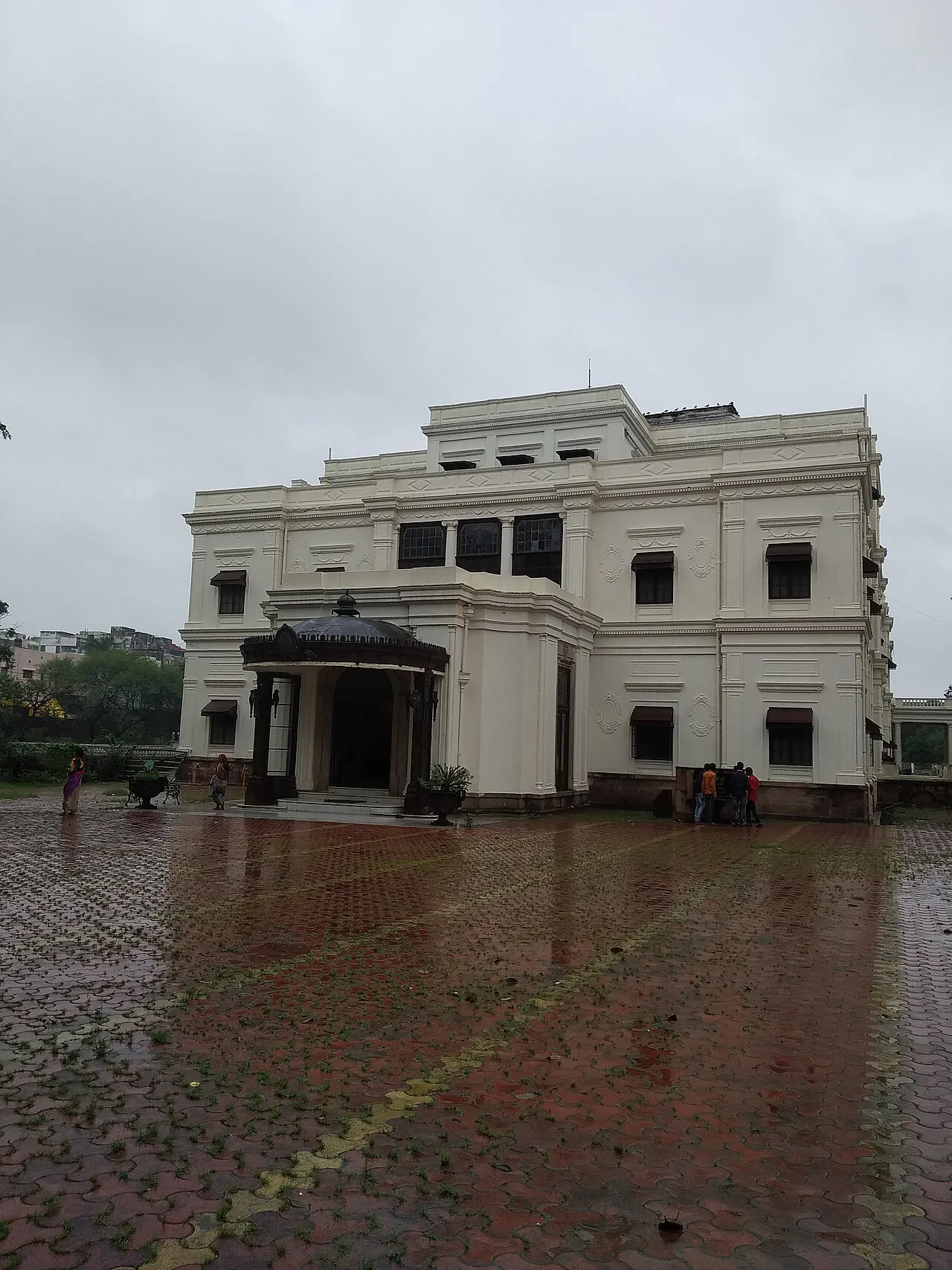
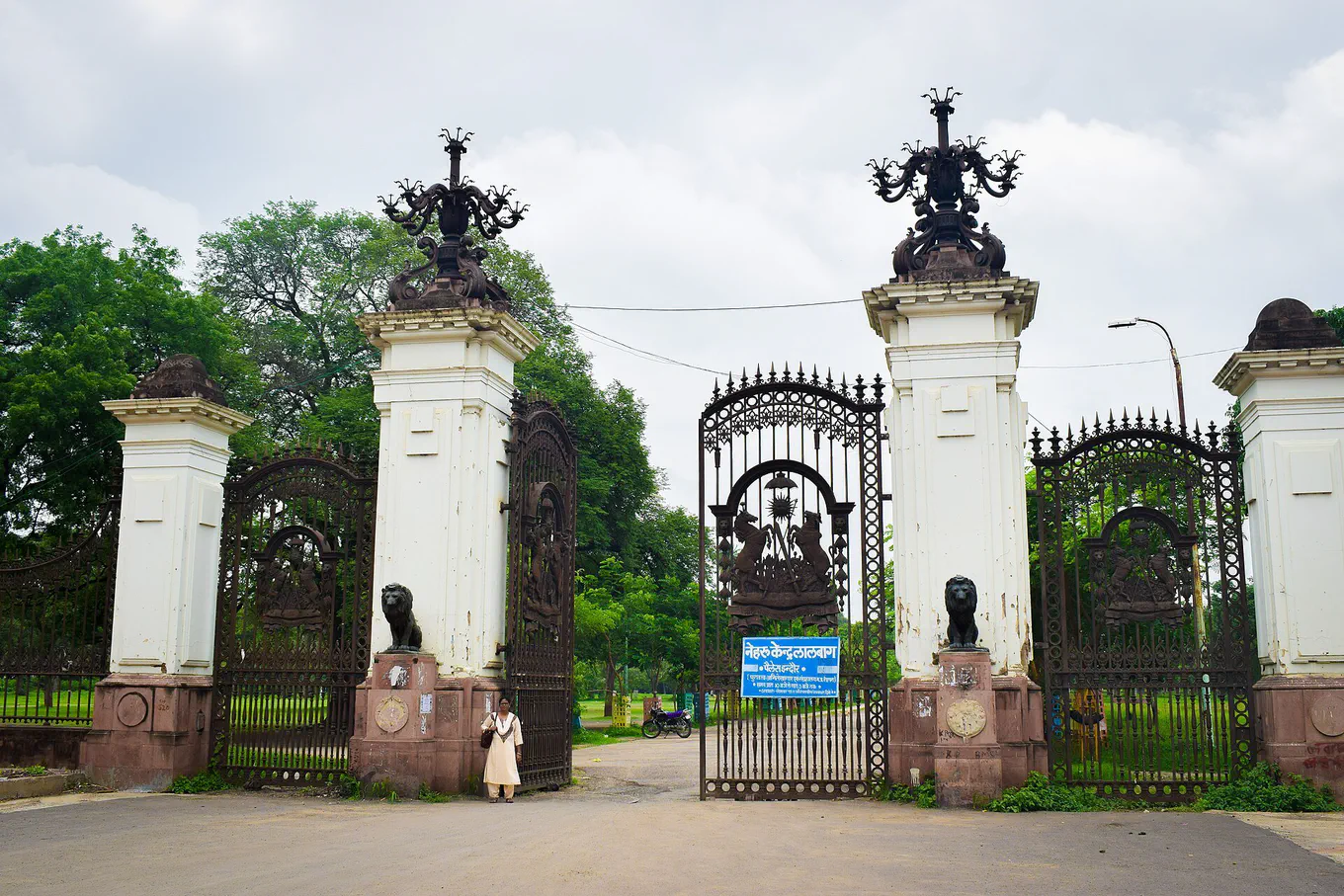
Stand here. Lalbagh Palace, enlarged by the maharaja in 1926, now a museum, its main gates modelled on Buckingham Palace’s.
In January 1925, a courtesan named Mumtaz Begum escaped from the harem of Tukoji Rao Holkar III, Maharaja of Indore. Her companion, Abdul Bawla, was threatened again and again and ordered to send her back. He refused. Then assassins attacked the couple on Malabar Hill, and Bawla was shot in the head. Mumtaz Begum survived to testify, and the accused included men of the maharaja’s own household. Rather than face the public investigation the British threatened, Tukoji gave up his throne to his only son in 1926.
5 Salim Khan, the Holkar College student who turned to writing
Stand here. Holkar Science College, in the Bhanwar Kua area of Indore, founded in 1891, where the young Salim Khan studied.
Salim Khan, one half of the script-writing team Salim–Javed, was born in Indore. At Holkar Science College, classmates told him that with his good looks he should become a film star. He took a supporting role in Baraat, but it came out in 1960 and did not do well. He wasn’t cut out to be an actor, he decided, because he “lacked the art of projection”. So he turned to writing with Javed Akhtar. The would-be star went on to help launch someone else’s career, Amitabh Bachchan’s.
Pack nothing. Leave Friday.
Every Friday, I write a free letter, Journey, that takes us on a trip through places, stories, and ideas.
The Last Maharaja of Indore(Geraldine Lenain, 2024). A biography of Yeshwant Rao Holkar II, the last maharaja of Indore, who at 22 commissioned Eckhart Muthesius to design Manik Bagh, an Art Deco and Bauhaus fantasy.
Town Planning Towards City Development(Patrick Geddes, 1918). A town-planning report to the Durbar of Indore, in two volumes. Geddes organised a pageant in Indore when he arrived in 1917.
Films to watch before you visit Indore
Zara Hatke Zara Bachke(Laxman Utekar, 2023). A romantic comedy film about Kapil and Somya, a middle-class married couple from Indore who want a house of their own through the Awas Yojna scheme.
Na Bole Tum Na Maine Kuch Kaha(Sunshine Productions, 2012). A TV series set in Indore, about the mystery of Megha’s son Aditya, lost at Indore railway station. Some initial sequences were shot at Khajrana Ganesh Temple.
Indori Ishq(Samit Kakkad, 2021). A web series, shot in Indore, with a storyline that relates to the city. Its nine episodes tell Kunal’s story of love and heartbreak at the hands of Tara.
Questions
Where was Lata Mangeshkar born in Indore?
In Sikh Mohalla, in a house then numbered 25, in a locality beside a gurdwara, on 28 September 1929. Her family moved to Maharashtra after six years in Indore. When fans gathered there after her death in 2022, a cloth shop was trading on the spot where she was born.
What is Kanch Mandir in Indore?
Kanch Mandir, the Glass Temple, was built by Sir Seth Hukumchand Jain, a leading trader and one of India’s industrial pioneers. He hired craftsmen from Jaipur, and some from Iran, and its interior is covered entirely in glass panels and mosaics. Sources disagree on the date, giving around 1903 or 1921.
Why is Indore called India’s cleanest city?
Because it has topped India’s national cleanliness survey, Swachh Survekshan, year after year. In the 2024–25 results, it kept the cleanest-city title for the eighth year in a row, in the Super Swachh League. At the time, the city collected waste from every door and separated 98 per cent of it at source.