Great sights, great food, and you can pop over to Asia for ice cream. I also had the most violent massage of my life here. I left tenderised.
— Nick
Refounded in AD 330 as Constantinople, the city now called Istanbul was the capital of four empires, and the Ottomans took it in 1453. It straddles the Bosphorus strait in north-western Turkey, a city on two continents. An empress who wouldn’t run and a sultan’s ships hauled over a hill precede a princess and a snake, Florence Nightingale’s hospital, and a key hidden, a psychic said, by Agatha Christie.
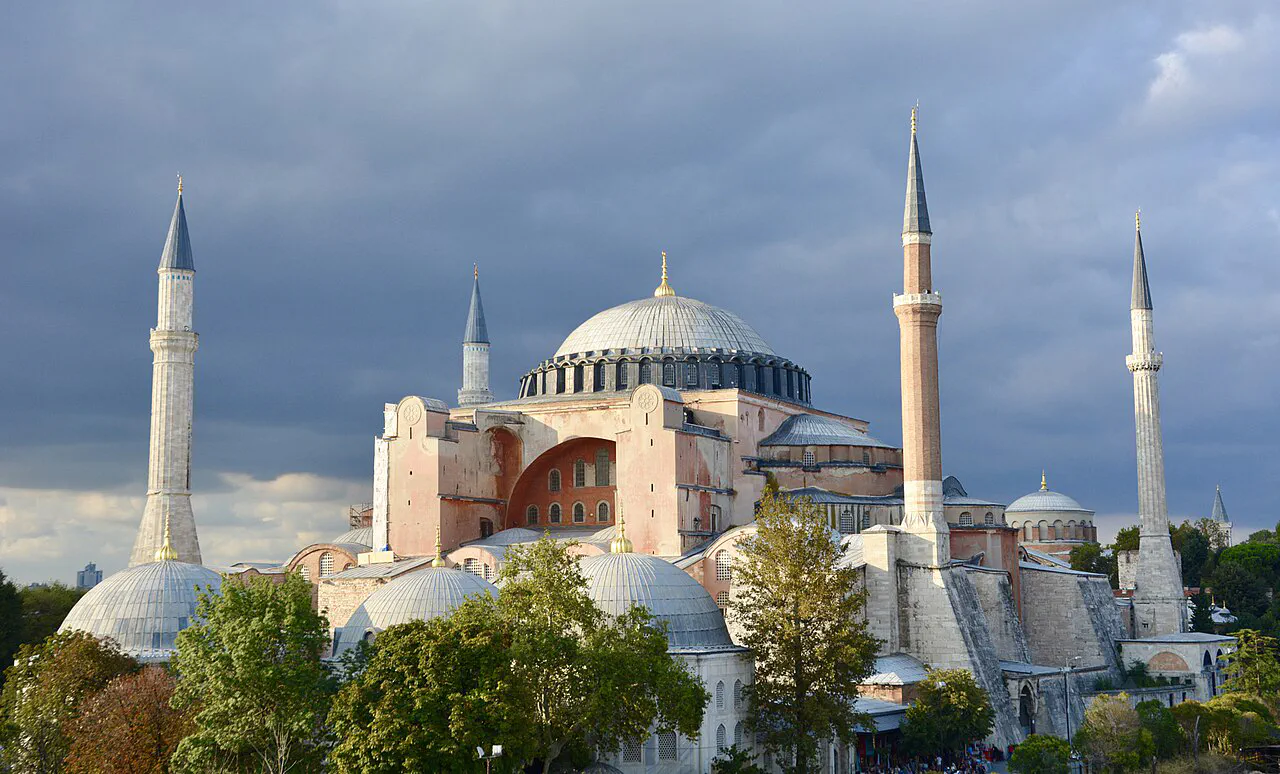
In January 532, a week of riots burned much of Constantinople, including its great church, Hagia Sophia. At the Hippodrome, the crowd had swapped its chants of “Blue” and “Green” for one cry, “Nika”, meaning “Win”. The emperor, Justinian, prepared to flee by sea. But his wife, Theodora, a bear-keeper’s daughter from that same Hippodrome, told the council that royal purple makes the noblest shroud, or so the historian Procopius tells it. Justinian stayed, and the riot was put down. Within weeks, he had begun the Hagia Sophia that stands today.
2 Mehmed’s ships over the hill and the fall of Constantinople
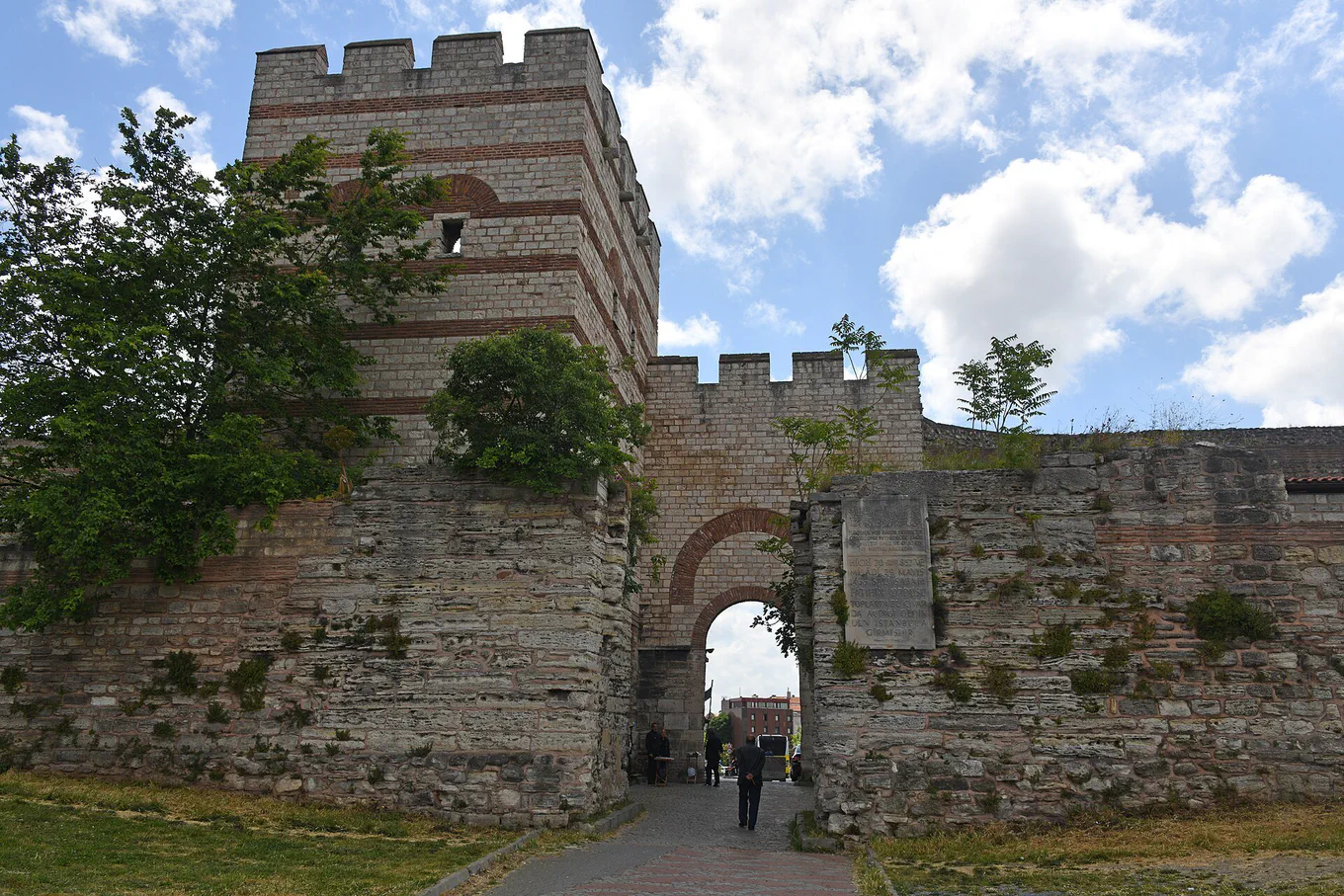
Stand here. Topkapı Gate in the old land walls, where tradition says the last emperor fell. The walls still run through the city, edged with parkland.
The Ottoman sultan Mehmed II, later called the Conqueror, was 21 when he besieged Constantinople in 1453. A chain floating on logs kept his ships out of the Golden Horn, the city’s harbour. So Mehmed had eighty galleys hauled over the hill and around Genoese Galata on a road paved with wood, into the harbour behind the chain. On 29 May, the walls fell. The last emperor, Constantine XI, is said to have thrown aside his purple regalia and led the final charge. No known eyewitness to his death survived.
3 The princess and the snake at the Maiden’s Tower
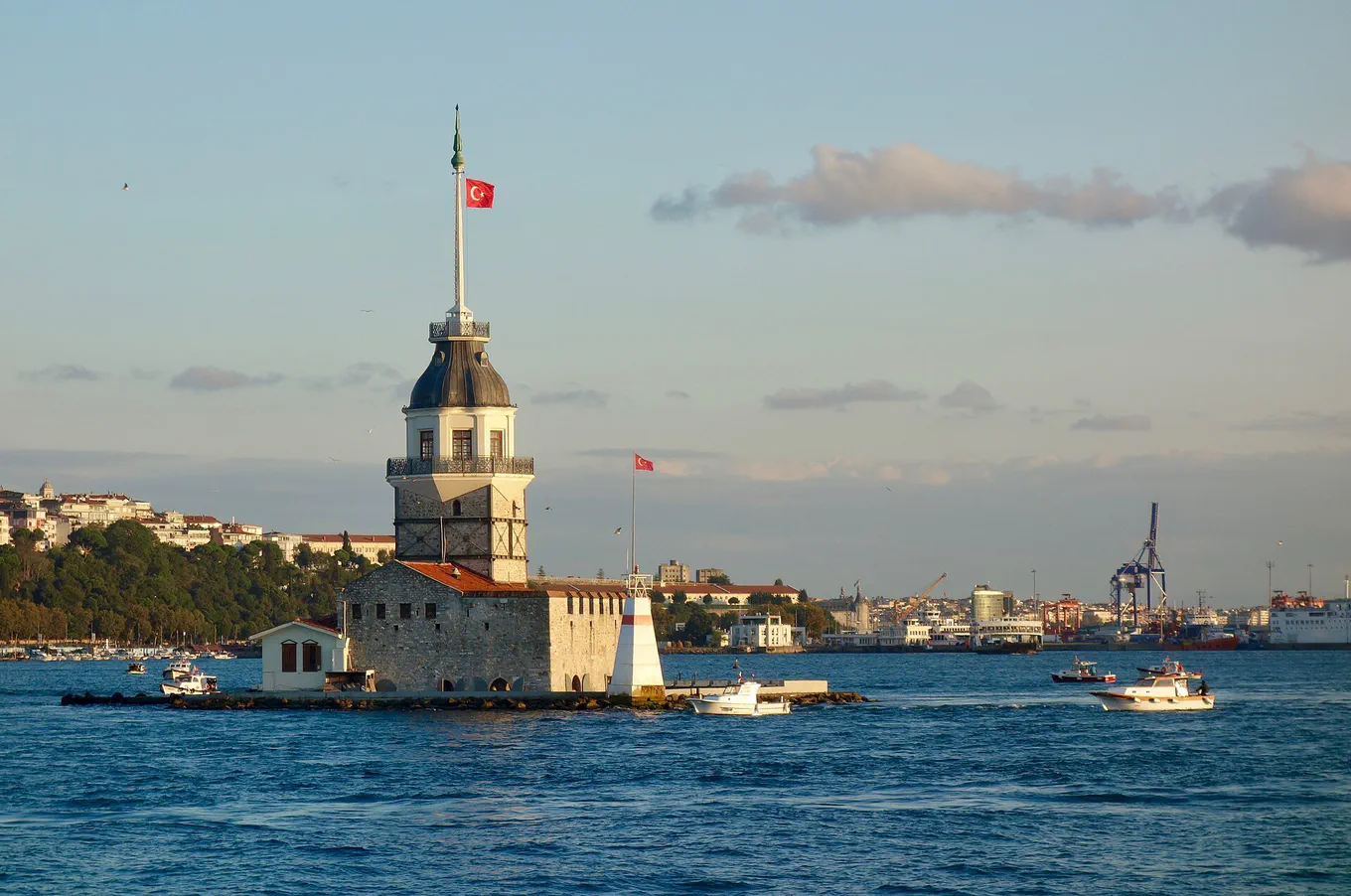
Stand here. The Maiden’s Tower, on its islet 200 m off Üsküdar at the southern end of the Bosphorus. It reopened as a museum in May 2023.
This tower plays the villain’s hideout in the Bond film The World Is Not Enough, where Bond is tortured. But it takes its name from a legend. In one telling, an oracle warned an emperor that a snake would kill his beloved daughter on her eighteenth birthday. So he built a tower here and locked her in it, away from snakes. Then a basket of fruit was brought to her. An asp was hiding in it. It bit the princess, who died in her father’s arms.
4 Florence Nightingale and the sewer under the Scutari hospital
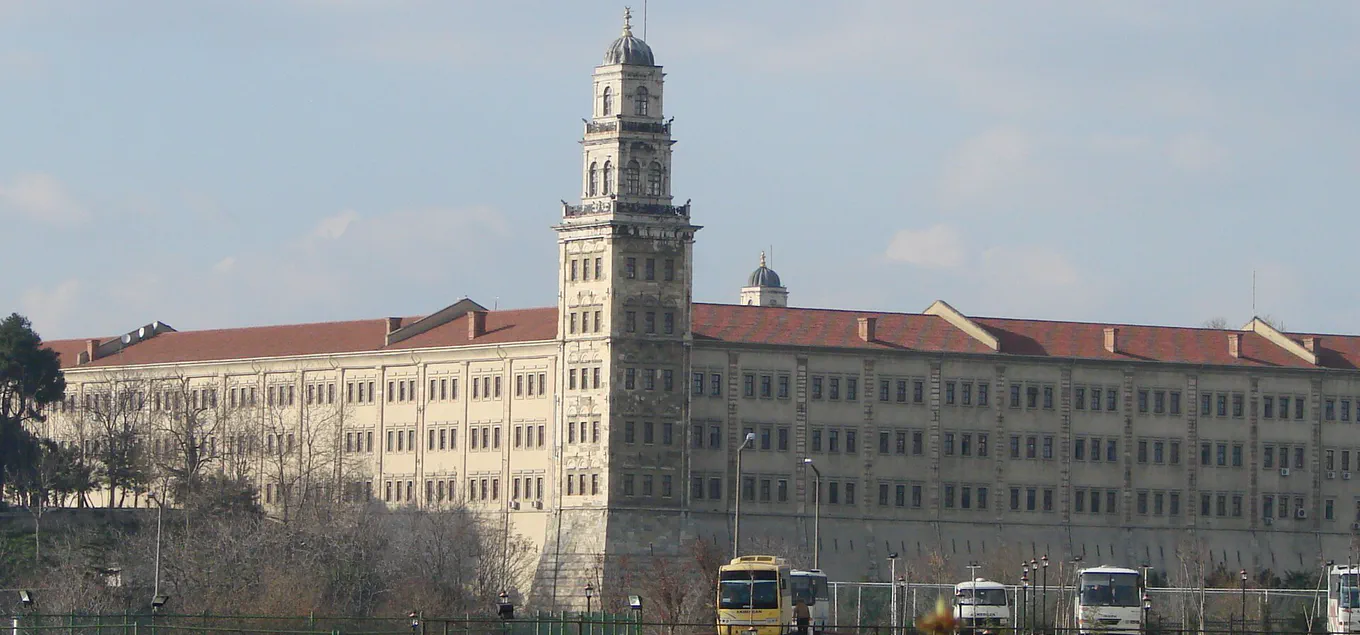
Stand here. The Selimiye Barracks in Üsküdar, once Scutari, now an army headquarters. Its northernmost tower holds a small museum partly in Nightingale’s memory.
During the Crimean War, Florence Nightingale became “the Lady with the Lamp”, after The Times described her solitary rounds with a little lamp in her hand. Yet by February 1855, the death rate in her hospital had risen to 42 per cent. She blamed poor food. In fact, the unventilated building sat on a damaged sewer. When a sanitary commission flushed out the sewers the next month, deaths fell sharply. Back in Britain, she came to believe poor living conditions had killed most of the soldiers at the hospital.
5 Agatha Christie’s lost days and the Pera Palace key
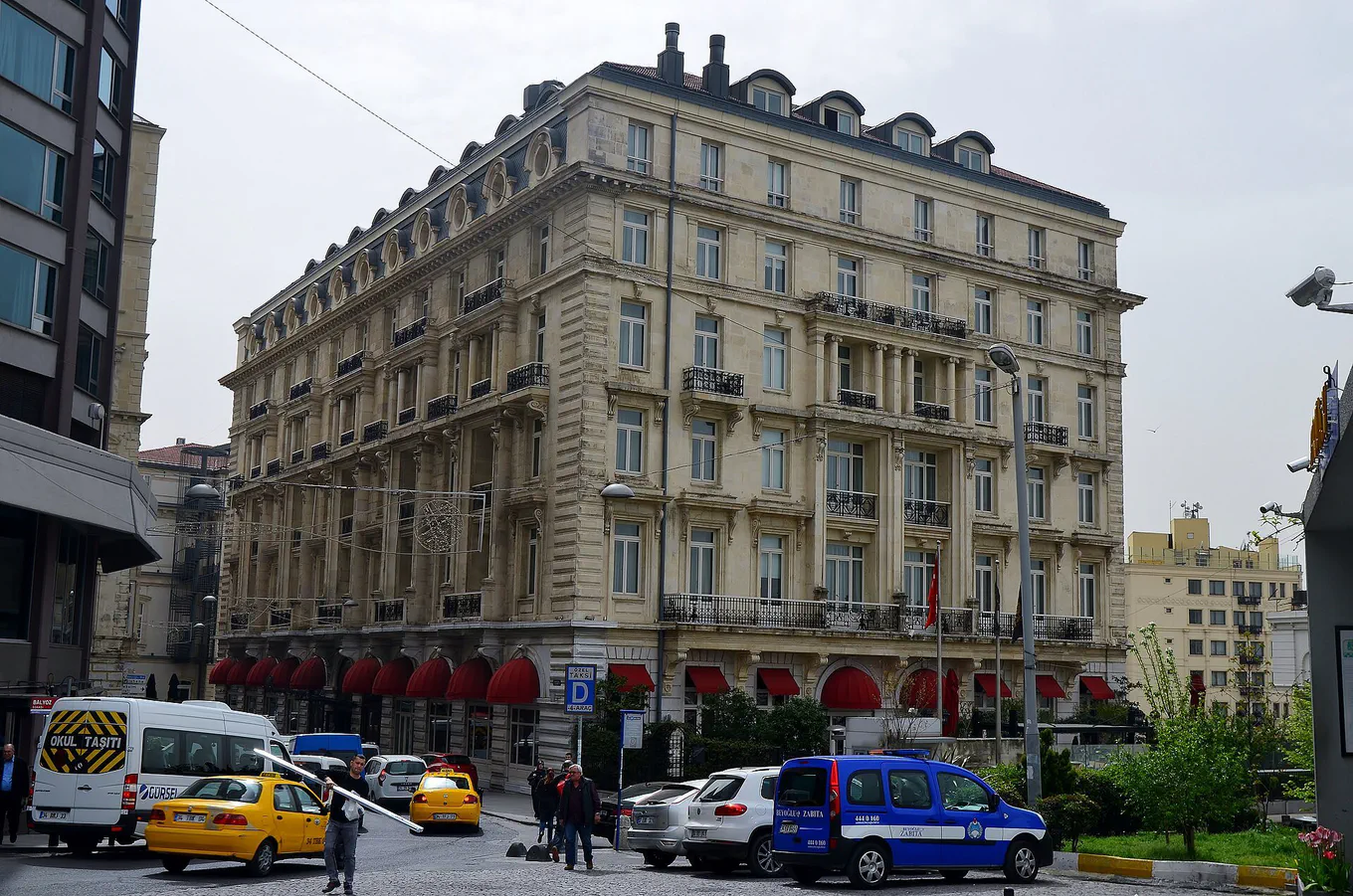
Stand here. The Pera Palace Hotel in Tepebaşı, Beyoğlu, built for Orient Express passengers. Room 411 is now the Agatha Christie Room.
For eleven days in 1926, Agatha Christie was missing, until she was found in a Harrogate hotel. After her death, says the Pera Palace, Warner Bros. wanted to film the mystery, and a psychic was brought in to call up her spirit. In a séance, the psychic said the secret of the lost days was hidden here, where she saw Christie hide a key under the floorboards. The key, the hotel says, was found where she said. But the hotel and the studio couldn’t agree a price, and the key was hidden in a bank.
Pack nothing. Leave Friday.
Every Friday, I write a free letter, Journey, that takes us on a trip through places, stories, and ideas.
Murder on the Orient Express(Agatha Christie, 1934). A novel. Poirot arrives at the Tokatlian Hotel in Istanbul before boarding. Christie took the train to Istanbul herself in 1928.
The Museum of Innocence(Orhan Pamuk, 2008). A novel of a rich businessman’s love for a poorer relative. Pamuk opened a real Museum of Innocence in Çukurcuma, Beyoğlu.
Istanbul: Memories and the City(Orhan Pamuk, 2003). A memoir by the Istanbul-born Nobel laureate, above all a book about the Bosphorus and the city’s history with it.
The Architect’s Apprentice(Elif Shafak, 2013). A novel whose story takes in the restoration of Hagia Sophia.
Films to watch before you visit Istanbul
From Russia with Love(Terence Young, 1963). A James Bond film, mostly set in Istanbul, with scenes in the Basilica Cistern, Hagia Sophia, and Sirkeci railway station.
Topkapi(Jules Dassin, 1964). A film about a plot to steal an emerald-encrusted dagger from Topkapı Palace by entering its Treasury from the roof through an upper window.
Kedi(Ceyda Torun, 2016). A documentary about Istanbul’s street cats, among them Gamsiz, a black-and-white male in the Cihangir neighbourhood.
Questions
Can you visit Hagia Sophia?
Yes, outside prayer times. It became a mosque again in 2020, and most of the ground floor is kept for worshippers, but the upper galleries reopened to visitors in 2024. Women cover their hair.
Did Agatha Christie write Murder on the Orient Express at the Pera Palace?
The hotel suggests she did, and keeps her favourite room, 411, as the Agatha Christie Room, with her books in many languages and a replica of her typewriter. But the claim isn’t in her official biography or her own Autobiography, and the Baron Hotel is named as where she wrote the first part.
Is Istanbul in Europe or Asia?
Both. Istanbul straddles the Bosphorus, the strait that joins the Black Sea to the Sea of Marmara and forms one of the boundaries between Europe and Asia. About two-thirds of its people live on the European side, and the rest in Asia.