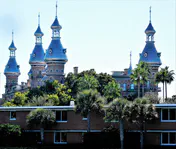
Jacksonville, United States, Florida, North America
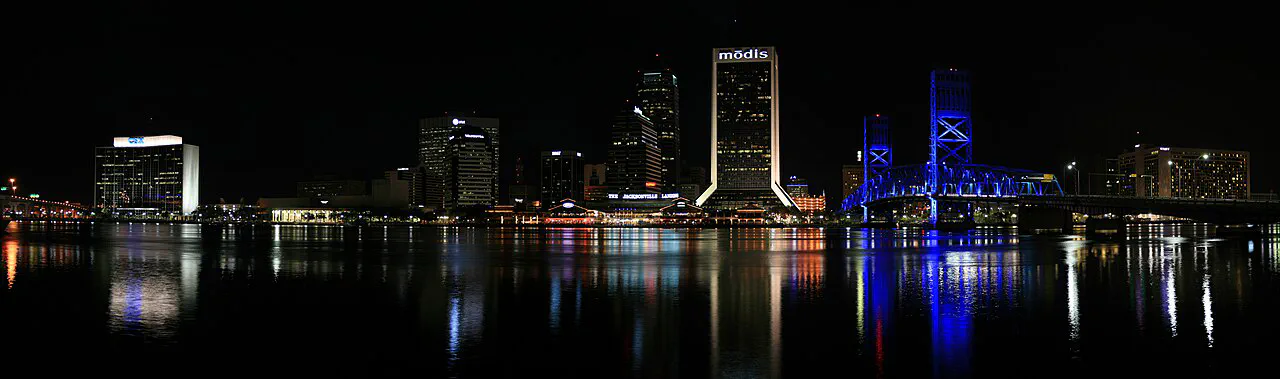
Jacksonville straddles the St. Johns River in northeast Florida, with an Atlantic coast. Named after Andrew Jackson, it is now the largest city by area in the contiguous United States. Its stories are a gym teacher who gave a band its name, a poem for a school, a shipwrecked writer, a silent film studio, and a captive from Senegal who became a slaveholder.
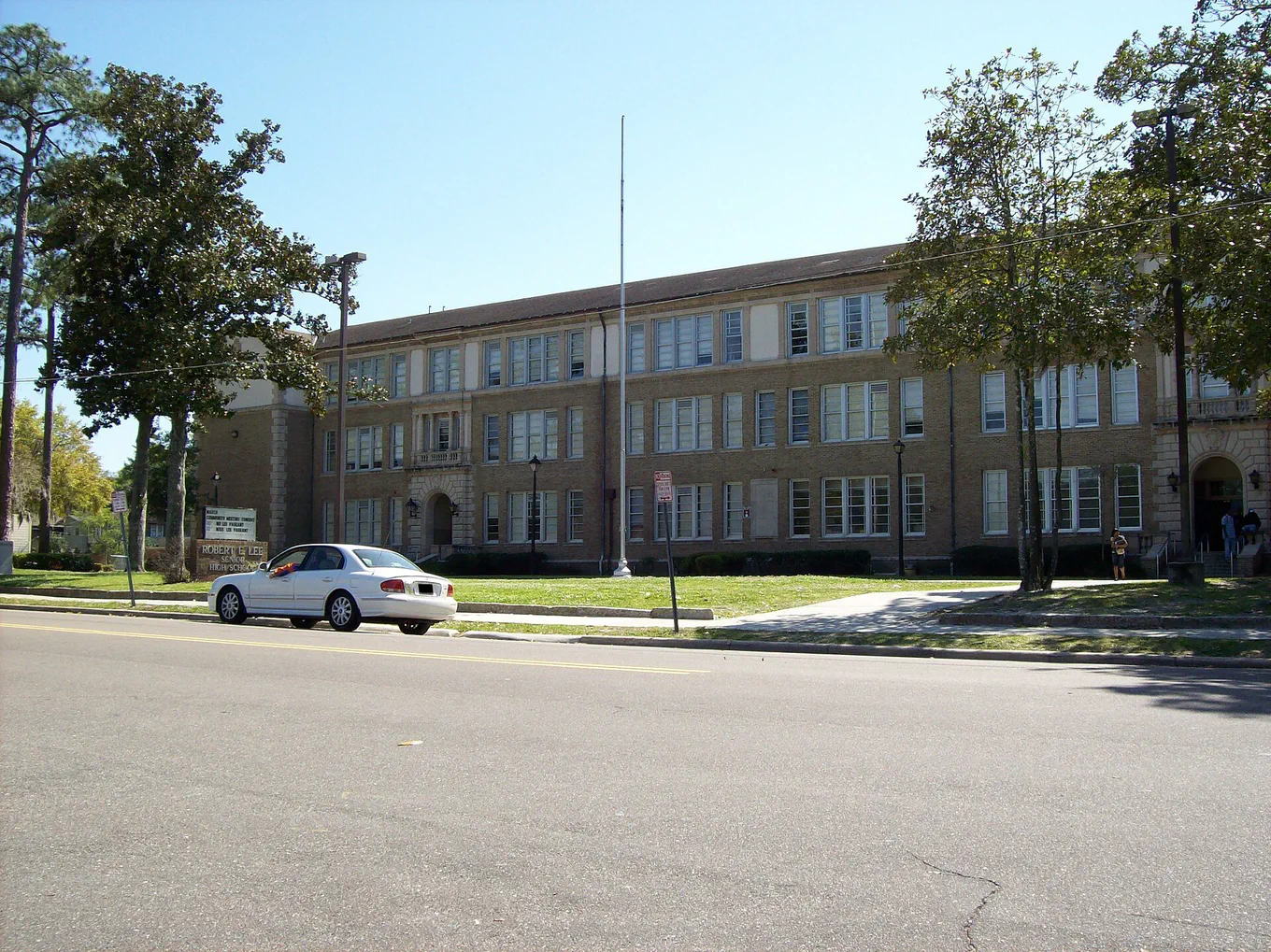
Lynyrd Skynyrd’s name is partly a mocking tribute to a gym teacher. Leonard Skinner taught PE at Robert E. Lee High School and enforced its rule against long hair. He sent the guitarist Gary Rossington to the principal’s office for his long hair, and Rossington and his bandmates named their band after him. Then the joke turned. They invited Skinner to introduce them on stage at the Jacksonville Memorial Coliseum, and in 1975 he let them put a photo of his sign, “Leonard Skinner Realty”, inside their third album.
2 Lift Every Voice and Sing at Jacksonville’s Stanton School
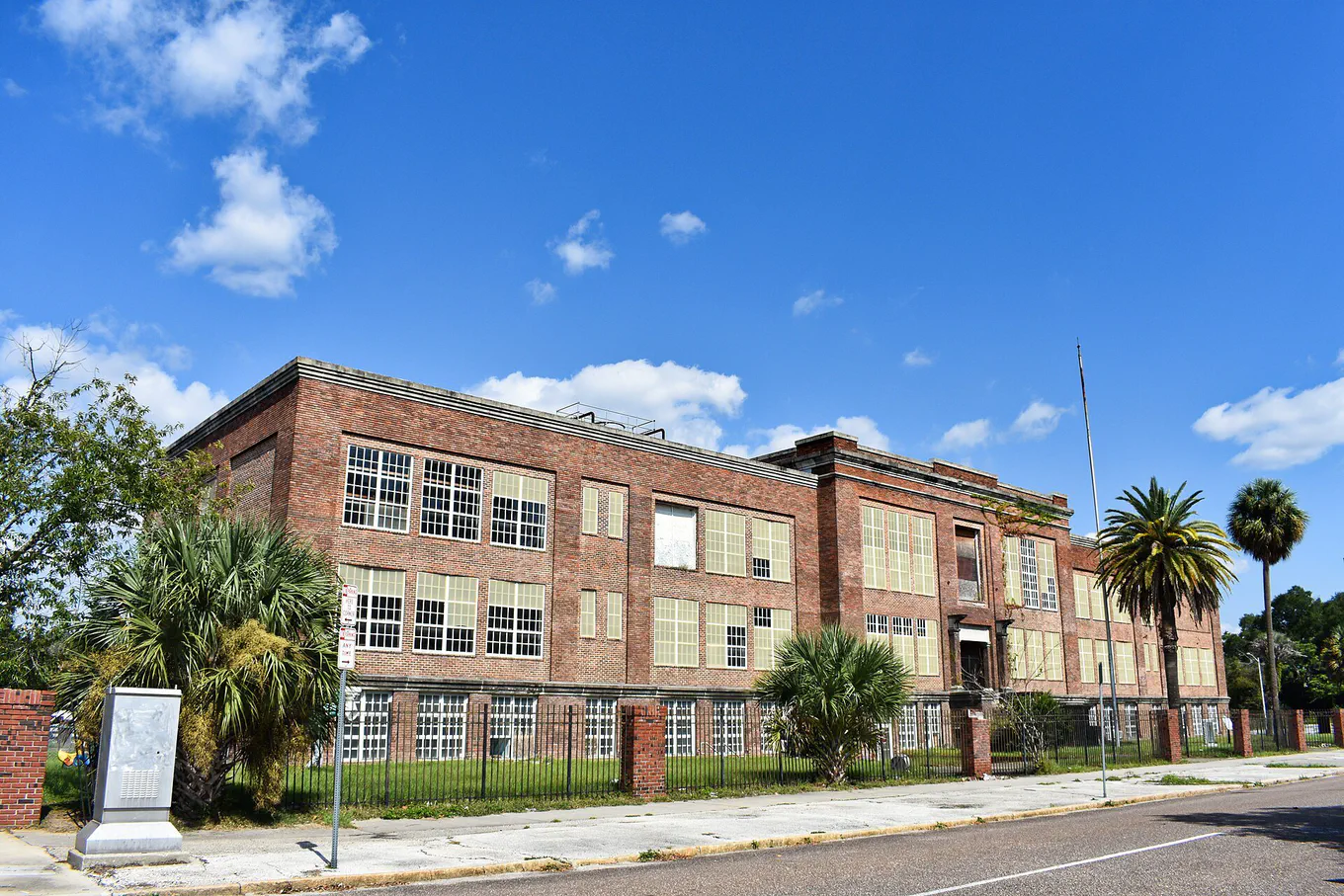
Stand here. The Old Stanton schoolhouse, 521 West Ashley Street, Downtown. Finished in 1917, it is not the building where the song was first performed.
Lift Every Voice and Sing began as a poem for a school celebration. James Weldon Johnson, born in Jacksonville, had come home to be principal of the segregated Stanton School, and he wanted a poem to mark Abraham Lincoln’s birthday on 12 February 1900. Five hundred pupils performed it, and his brother, J. Rosamond Johnson, later set it to music. The next year the brothers moved to New York, and both the song and the day slipped from their minds. But the schoolchildren of Jacksonville kept singing it.
3 Stephen Crane and the Commodore’s last voyage from Jacksonville
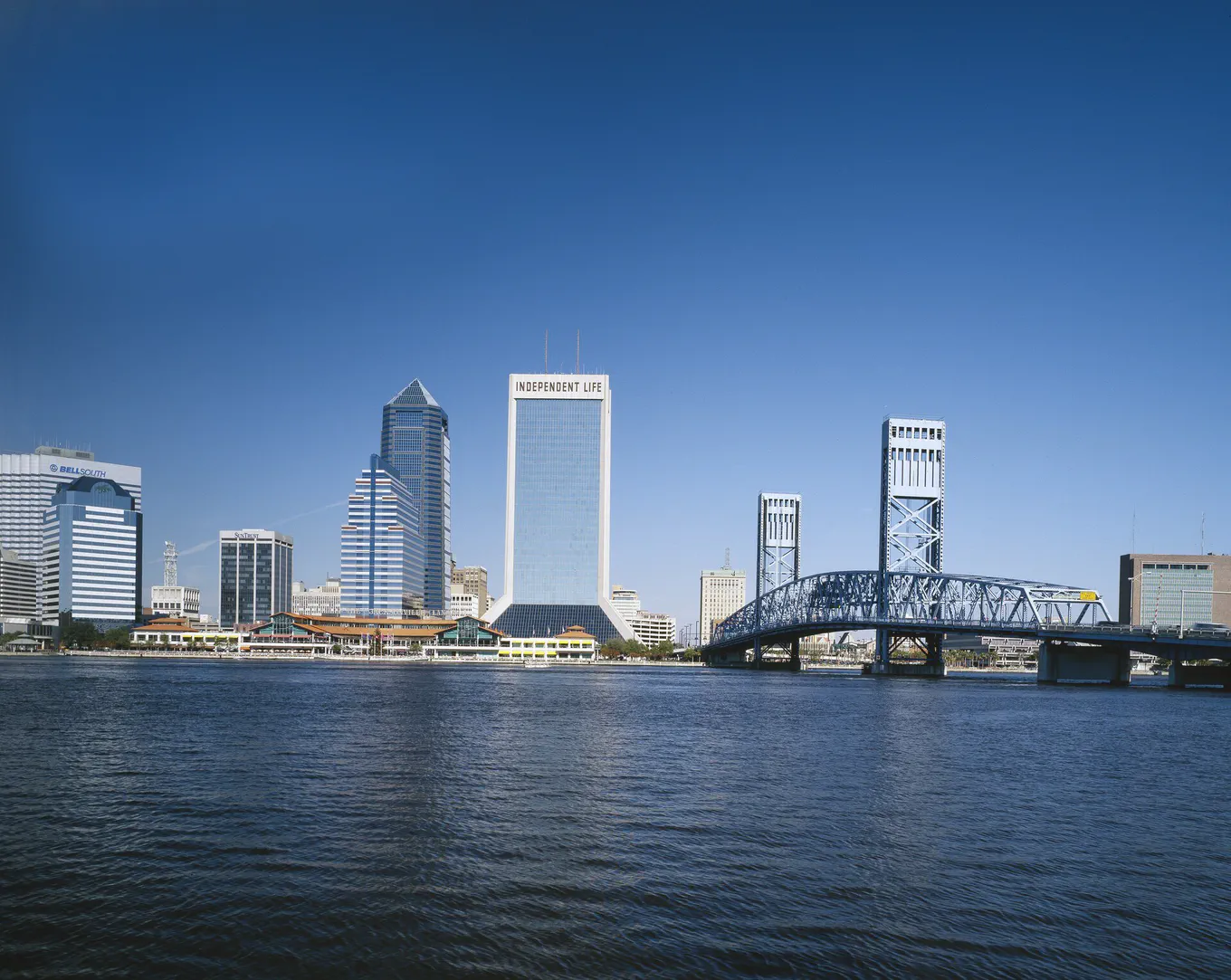
Stand here. The St. Johns River at Jacksonville, which the Commodore sailed from.
Late in 1896, Stephen Crane, famous for The Red Badge of Courage, was in Jacksonville waiting for a ship to Cuba. Within days he met Cora Taylor, who ran a downtown bawdy house called the Hotel de Dream, and they began a relationship that lasted. On New Year’s Eve he sailed on the Commodore, a ship carrying ammunition for Cuban rebels. Then she sank. Crane made it ashore in a dinghy that overturned in the surf, and he wrote the ordeal into “The Open Boat”.
4 Richard Norman’s silent film studio in Arlington, Jacksonville
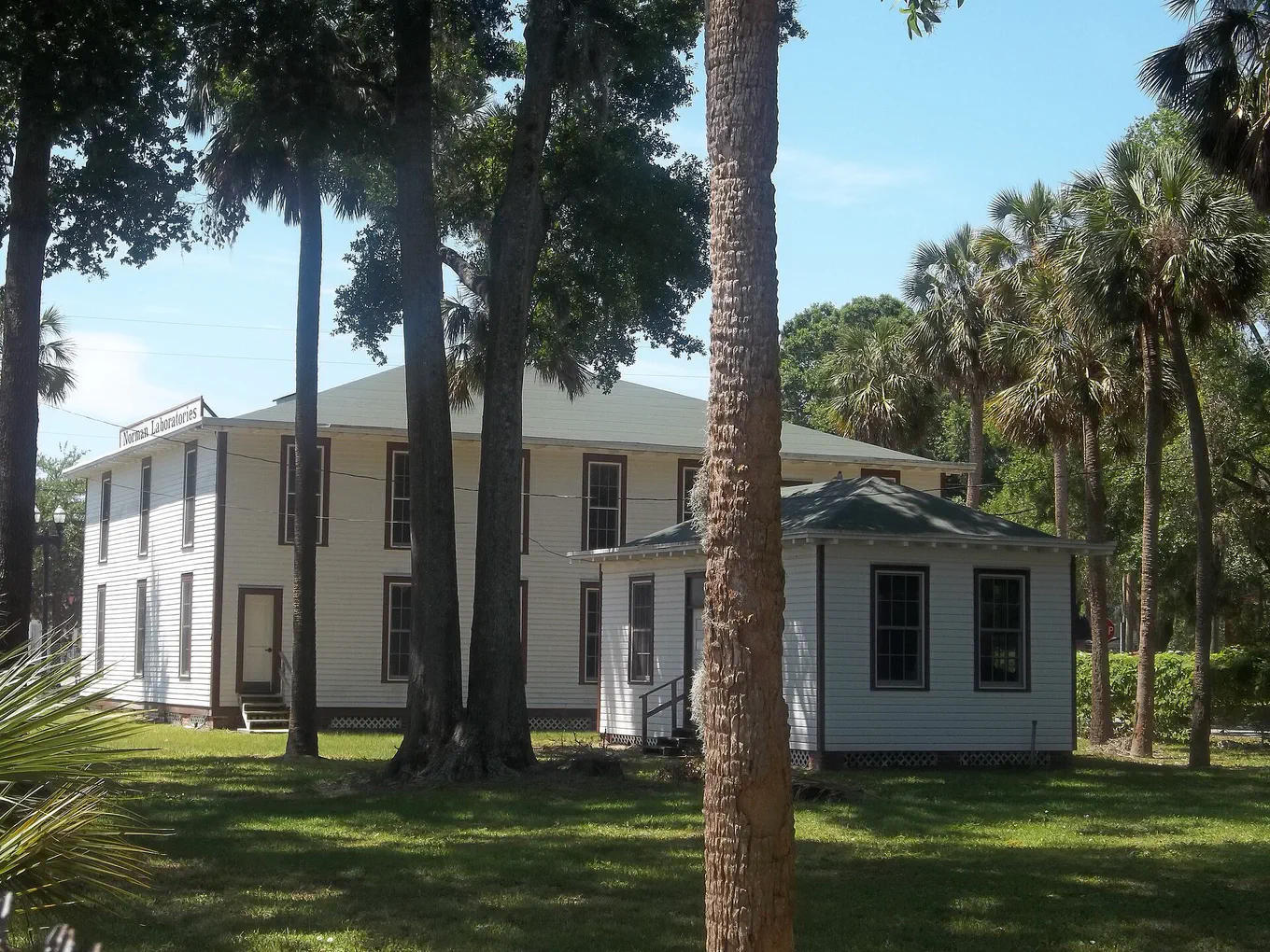
Stand here. Norman Studios, 6337 Arlington Road, in Old Arlington. Its five buildings survive as the Norman Studios Silent Film Museum.
Jacksonville once had more than thirty silent film studios and the title “Winter Film Capital of the World”. In 1920, Richard Norman, a Florida-born filmmaker, bought one of them. His films had all-Black casts, with heroes in positive roles. The aviator Bessie Coleman wrote to the studio, and fliers like her inspired The Flying Ace. Then films learned to talk. A new way of putting sound on film made Norman’s system obsolete, and of his films from that time, only The Flying Ace is known to survive.
5 Anna Kingsley, from captive to planter on Fort George Island
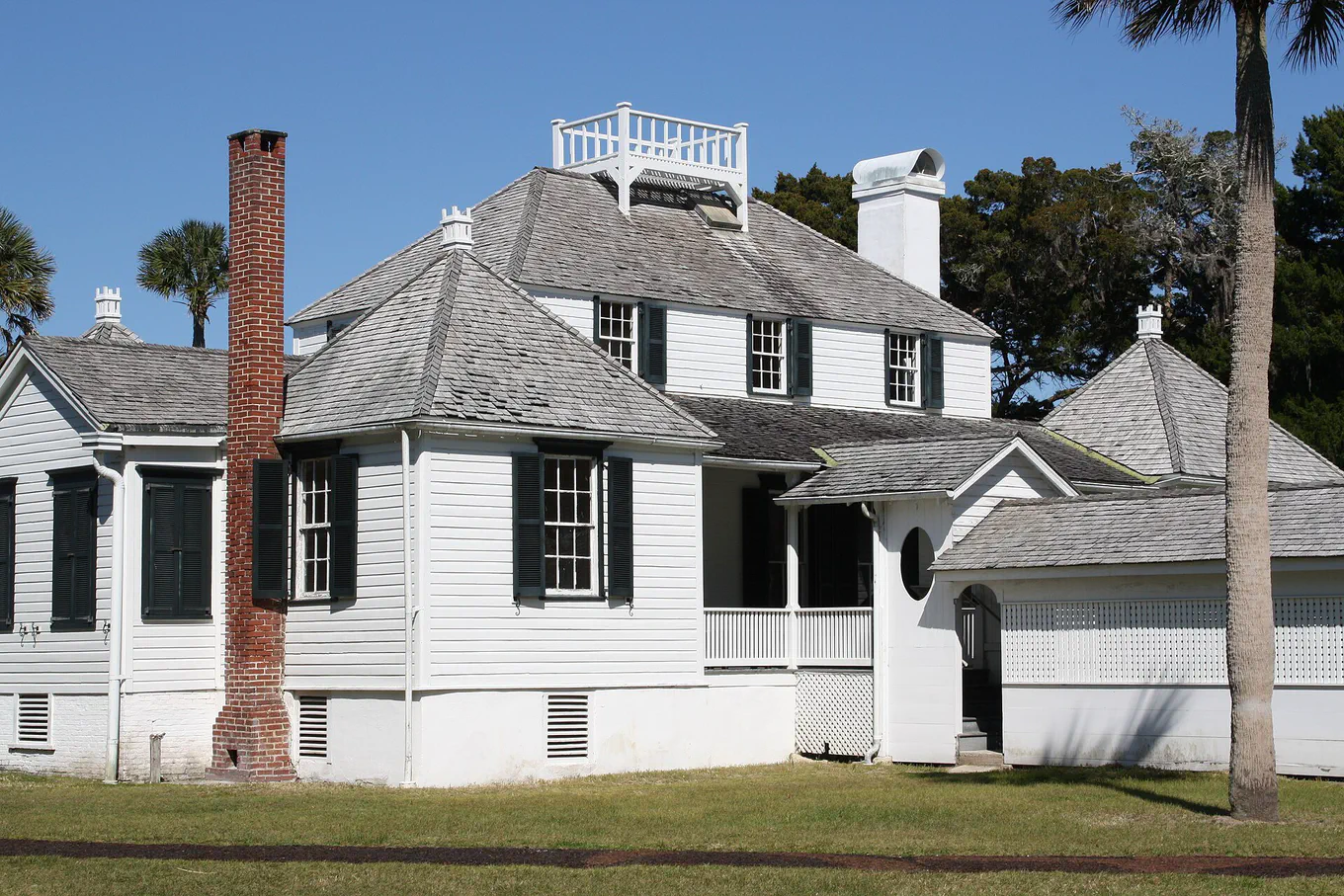
Stand here. Kingsley Plantation, on Fort George Island. The National Park Service runs the site, with the planter’s house, its kitchen, and the tabby foundations of the slave quarters.
The planter’s house at Kingsley Plantation on Fort George Island, linked by a covered breezeway to its kitchen house.NPS / Public domain.
She was born Anta Majigueen Ndiaye in Senegal, and at about thirteen she was captured. In Havana, the planter and slave trader Zephaniah Kingsley bought her as his wife, Anna. In 1811 she and her children were freed, and the captive became an owner, of land and slaves. For 25 years the family lived here on Fort George Island. Later she left for Haiti with her two sons and some former slaves, but she came back to Jacksonville and lived with her two daughters until her death in 1870.
Pack nothing. Leave Friday.
Every Friday, I write a free letter, Journey, that takes us on a trip through places, stories, and ideas.
Along This Way(James Weldon Johnson, 1933). A memoir, with several chapters on Johnson’s early life in Jacksonville, where he grew up in LaVilla, a town the city later annexed.
The Autobiography of an Ex-Colored Man(James Weldon Johnson, 1912). A novel. In one chapter the narrator comes into his own in Jacksonville, working in a Cuban-owned cigar factory.
“The Open Boat”(Stephen Crane, 1897). A short story, drawn from the wreck of the Commodore, which sailed from Jacksonville along the St. Johns River.
Films to watch before you visit Jacksonville
The Flying Ace(Richard E. Norman, 1926). A film, made by Norman Studios and shot in Jacksonville, and the only one of the studio’s films from the period known to survive.
Murder on a Sunday Morning(Jean-Xavier de Lestrade, 2001). A documentary about a fifteen-year-old wrongfully accused of murdering a tourist outside a Ramada Inn in Jacksonville. It won the Academy Award for Best Documentary Feature.
Lonely Hearts(Todd Robinson, 2006). A neo-noir film based on the true story of the “Lonely Hearts Killers”, mostly shot in Jacksonville, with portions filmed in the historic Springfield district north of downtown.
Questions
Why is Jacksonville so big?
On 1 October 1968, the city and Duval County merged their governments, creating the Consolidated City of Jacksonville. It is now the largest city by total area, land and water, in the contiguous United States, and the most populous city proper in Florida.
Can you visit Kingsley Plantation?
Yes. Kingsley Plantation is run by the National Park Service and sits along the Fort George River on Fort George Island. The site keeps the planter’s house, its kitchen, and the tabby foundations of the slave quarters.
Can you visit Norman Studios?
Yes. The surviving studio buildings in Arlington are now the Norman Studios Silent Film Museum, at 6337 Arlington Road.