Jaipur is the capital of Rajasthan, in north-western India, 268 km from New Delhi. Sawai Jai Singh II, ruler of Amer, founded it in 1727 as one of the earliest planned cities of modern India, and gave it his name. Its stories here are a stone observatory, a city painted pink for a prince, the Ganges carried to London, a maharani sent to jail, and a rubber foot.
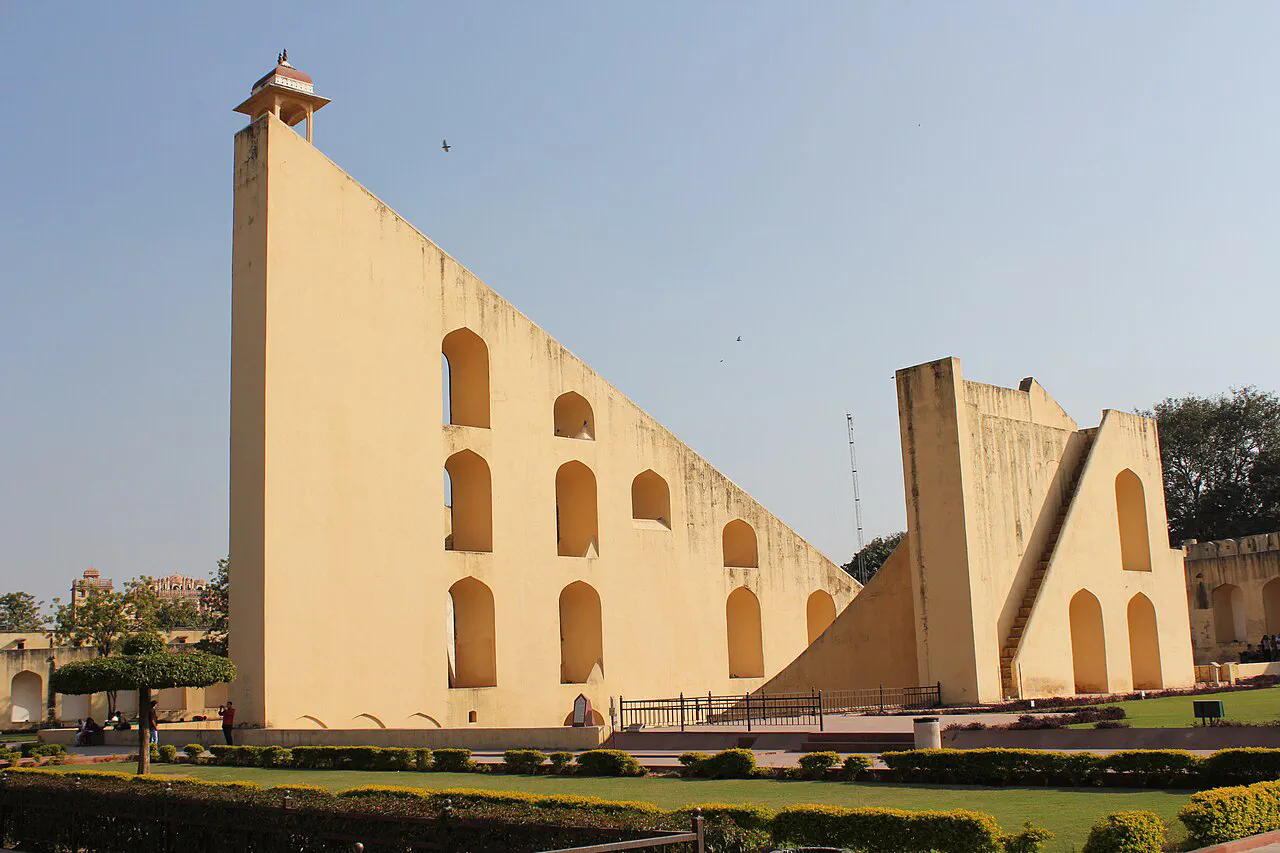
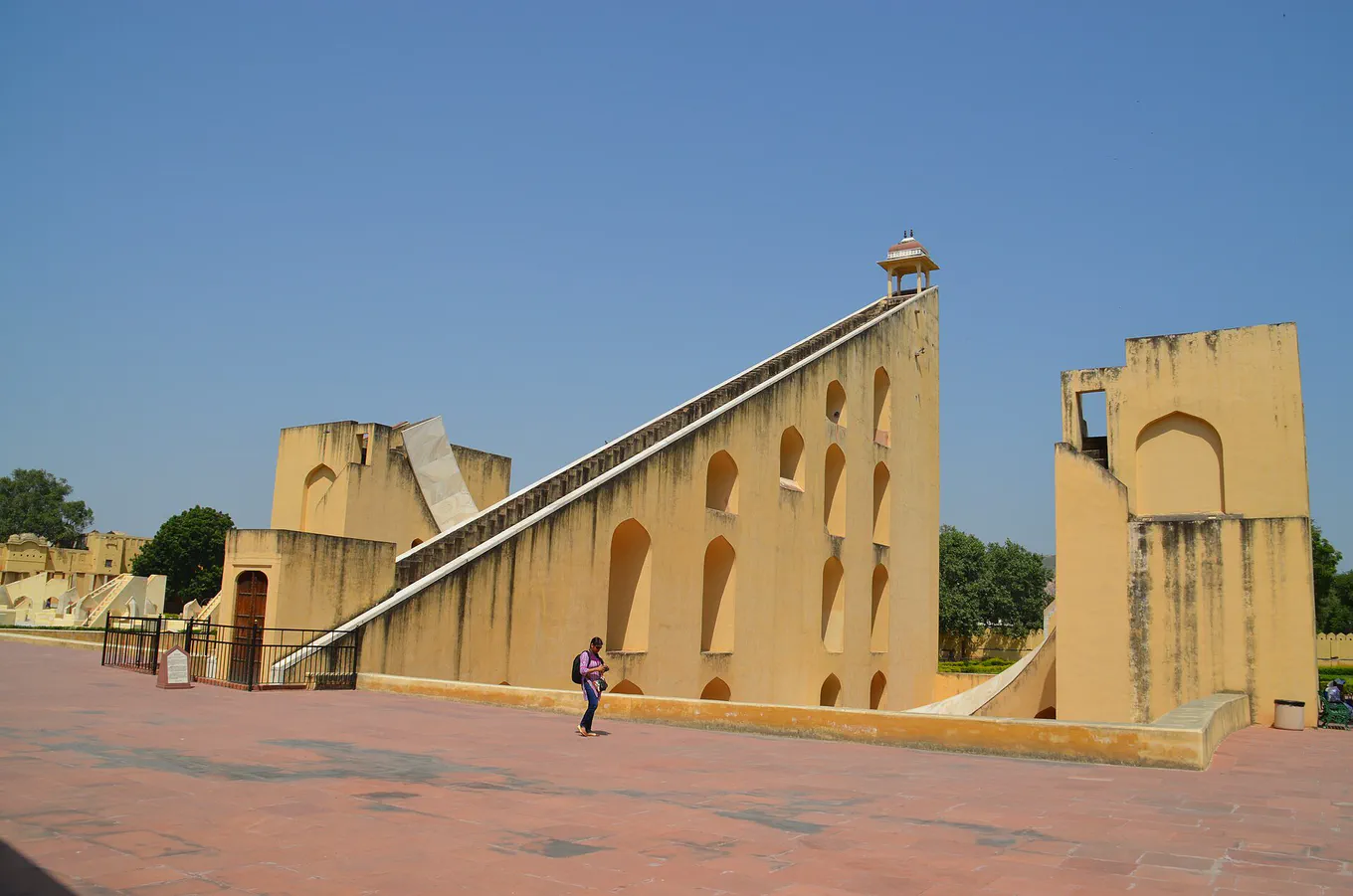
1 Jai Singh’s giant stone sundial at Jantar Mantar
Stand here. The Vrihat Samrat Yantra, the world’s largest stone sundial, at Jantar Mantar near the City Palace. The observatory is a UNESCO World Heritage Site.
The instruments seen in Tarsem Singh’s film The Fall began with a quarrel. In 1719, Sawai Jai Singh II, Jaipur’s future founder, watched a noisy row at the Mughal court over calculating a lucky day for the emperor’s journey. He found brass instruments too small to be accurate, so he built his own in stone, on a giant scale. His sundial stands 27 m high. But the soft edge of the sun’s shadow can be 30 mm wide, so its 1 mm marks are of no practical use.
2 The maharaja who painted Jaipur pink for a prince
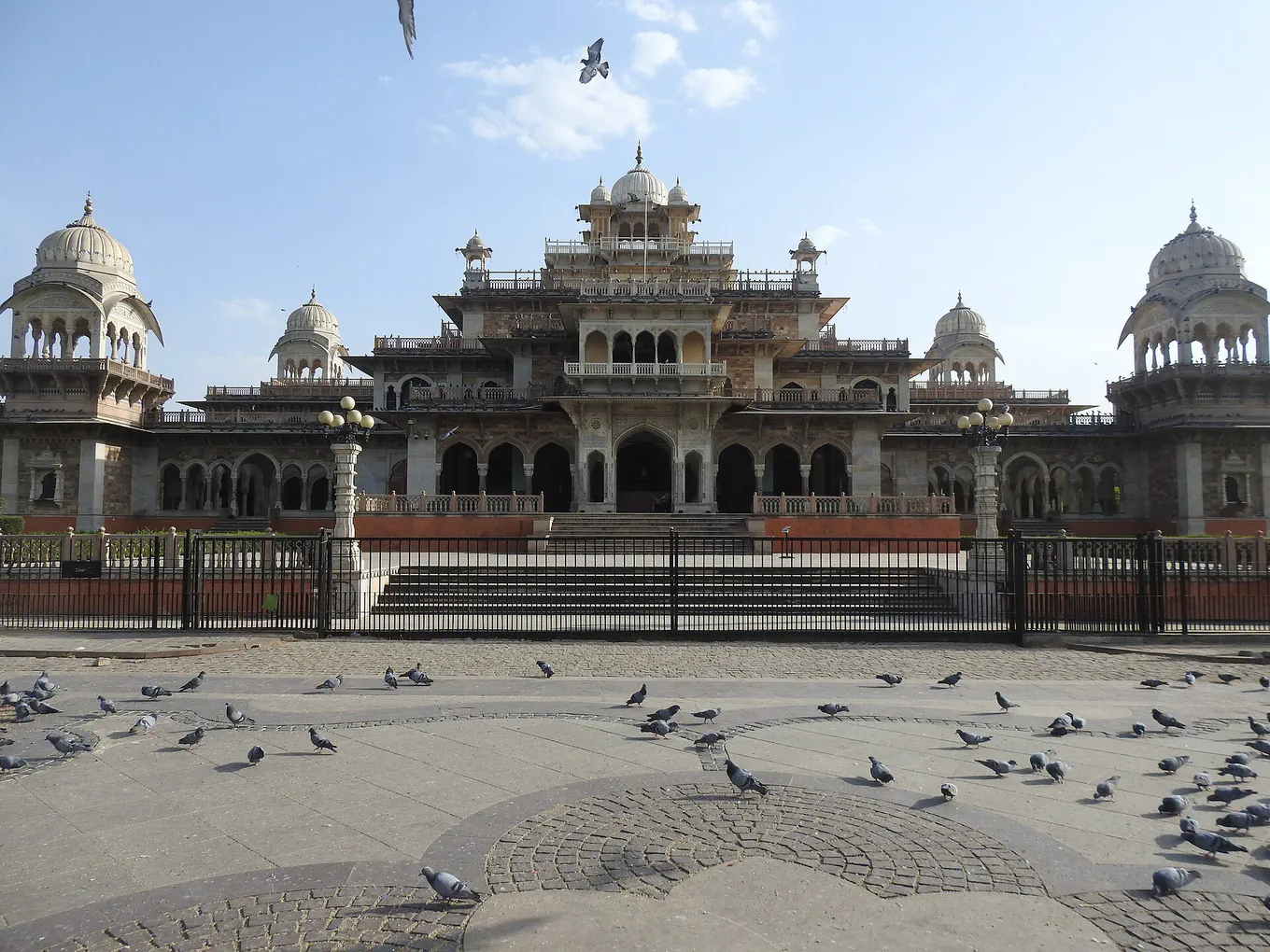
Stand here. The pink avenues of the old walled city, and the Albert Hall Museum, begun during the prince’s visit and named after him.
Jaipur’s pink, by the usual account, goes back to a royal visit. In 1876, Maharaja Ram Singh II had the whole city painted pink to welcome Albert Edward, Prince of Wales and the future Edward VII, because pink stood for hospitality. By one account, at his favourite wife’s urging, he passed a law in 1877 making any other colour illegal in the old city. One historian says the city was pink earlier and only touched up for the prince. Either way, the pink is still the law.
3 The maharaja who took the Ganges to London
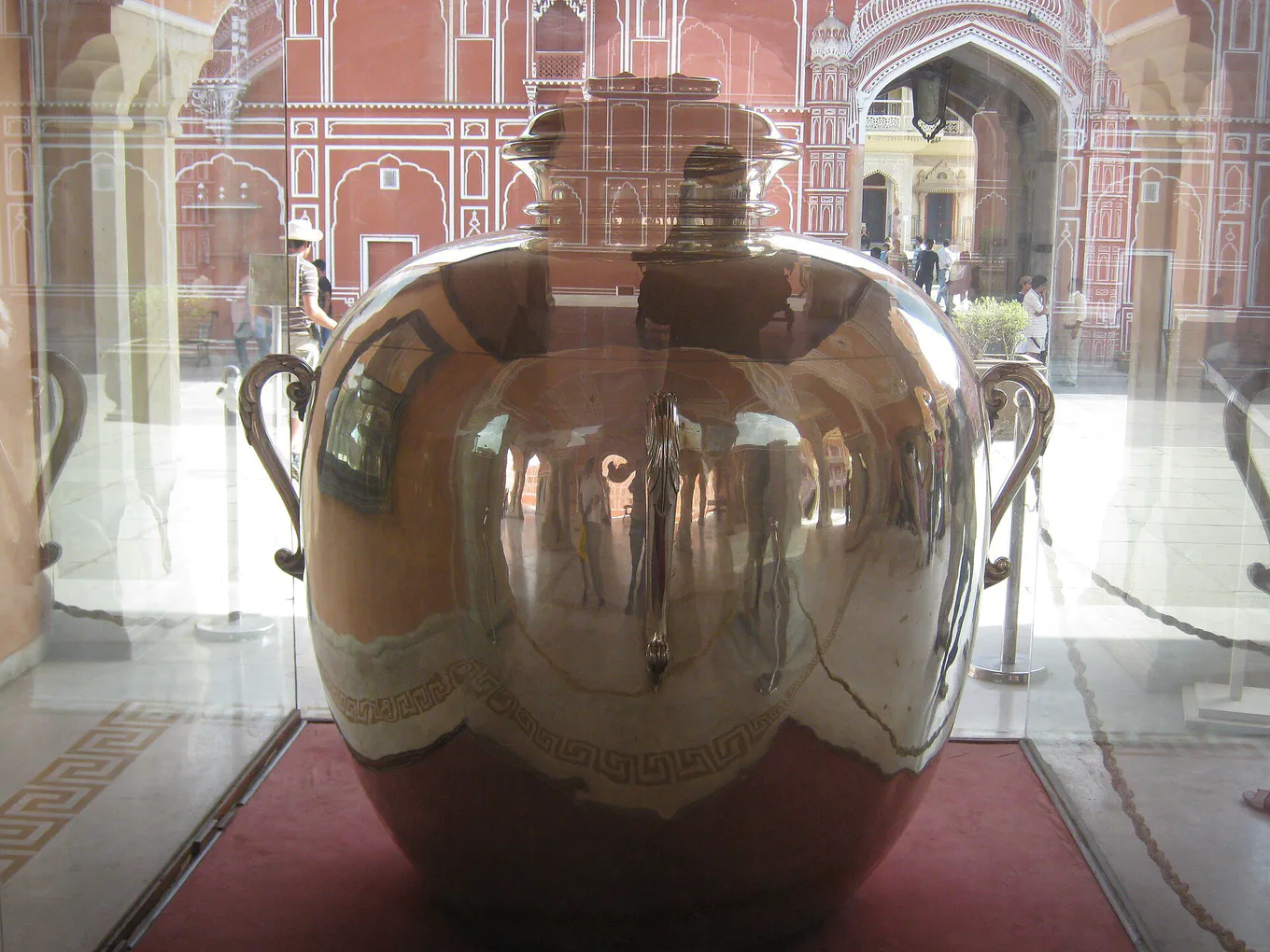
Stand here. The Sarvato Bhadra courtyard in the City Palace, once its Hall of Private Audience. Two giant silver urns are on display there.
When Edward VII was crowned in London in 1902, Maharaja Madho Singh II meant to be there. But religious leaders ruled that the scriptures banned crossing the sea, and he would drink nothing but Ganges water. So his agents found the Olympia, a ship so new that no beef had been cooked aboard, and its finest rooms went to the family deity. The Ganges came too, in giant silver urns. By one account, there were three, until a storm in the Red Sea, when the priests had one thrown overboard.
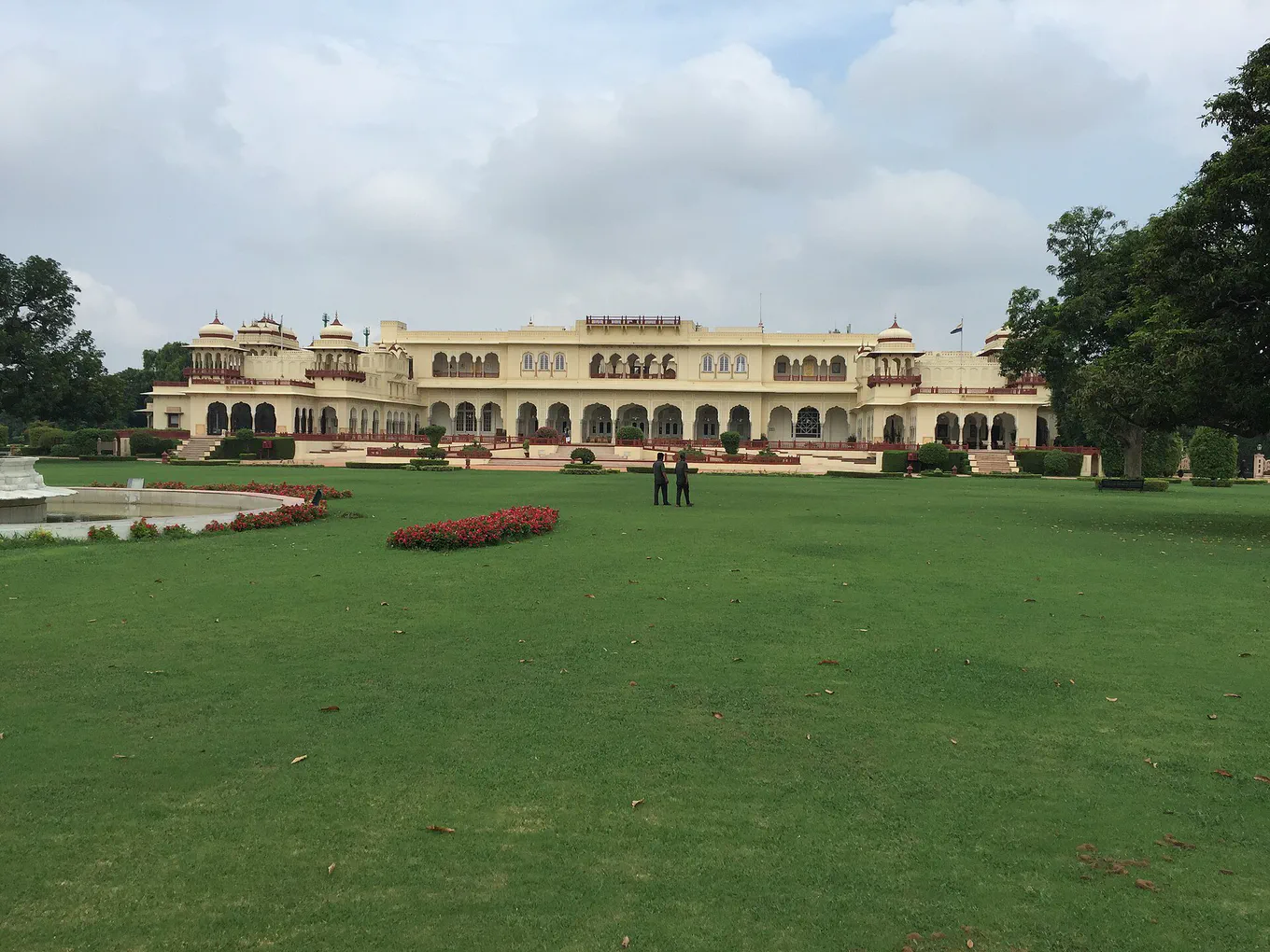
4 Gayatri Devi, from Rambagh Palace to Tihar Jail
Stand here. Rambagh Palace, where she lived with the Maharaja of Jaipur. It has been a hotel since the 1950s, run by Taj since 1972.
Cecil Beaton photographed Gayatri Devi for Vogue and called her one of the ten most beautiful women in the world. She was the third wife of Man Singh II, the last Maharaja of Jaipur to rule, and she stood for Parliament and took the Jaipur seat by a landslide. For twelve years she was a leading critic of Indira Gandhi’s government. Then Gandhi declared the Emergency. In July 1975, the maharani was arrested, accused of breaking tax laws, and she spent about five months in Tihar Jail.
5 How a craftsman and a surgeon made the Jaipur foot
Stand here. Sawai Man Singh Hospital, on Jawaharlal Nehru Marg, now Rajasthan’s largest public hospital. In Malviya Nagar, BMVSS still fits the foot free.
The Jaipur foot, designed in 1968, began with a craftsman who had left school after the fourth grade. Ram Chandra worked beside the surgeon P. K. Sethi, whose patients couldn’t squat, sit cross-legged, or go barefoot on existing artificial feet. “We sit, eat, sleep and worship on the floor,” Sethi said. Ram Chandra had a tyre repairman cast a rubber foot, but rubber alone shredded within days. Built around a hinged wooden ankle, it held. Sudha Chandran, a dancer who lost a leg, danced again on one.
Pack nothing. Leave Friday.
Every Friday, I write a free letter, Journey, that takes us on a trip through places, stories, and ideas.
A Princess Remembers(Gayatri Devi with Santha Rama Rau, 1976). A memoir. Gayatri Devi’s own story, including the years when Rambagh Palace was turned into a hotel.
Jaipur Journals(Namita Gokhale, 2020). A novel set at the Jaipur Literature Festival, where the festival grounds at Diggi Palace are a character in their own right.
The Henna Artist(Alka Joshi, 2020). A novel set in Jaipur, between the family compounds of the old Pink City and the estates beyond its walls.
Films to watch before you visit Jaipur
The Fall(Tarsem Singh, 2006). A film that uses the Jantar Mantar, Jai Singh’s stone observatory, among its locations.
The Best Exotic Marigold Hotel(John Madden, 2011). A film. Its Jaipur scenes were shot around the City Palace and the marigold market.
Jodhaa Akbar(Ashutosh Gowariker, 2008). A film. The outer parts of Amer Fort, near Jaipur, were filmed on the spot.
Questions
Why is Jaipur called the Pink City?
By the usual account, because of a royal visit. In 1876, Maharaja Ram Singh II had the city painted pink to welcome the Prince of Wales, as the colour stood for hospitality. Many avenues are still pink, and buildings are still required to be painted pink. The historian Giles Tillotson argues the city was pink earlier and only touched up for the visit.
Can you see the silver urns in Jaipur’s City Palace?
Yes. Two Gangajalis, or Ganges-water urns, are on display in the Sarvato Bhadra courtyard of the City Palace. Madho Singh II had them made to carry Ganges water on his trip to England in 1902. Each is 1.6 m high, made from melted silver coins, and they hold the Guinness World Record for the largest sterling silver vessels.
Can you visit the Jantar Mantar in Jaipur?
Yes. The observatory is a UNESCO World Heritage Site near the City Palace and Hawa Mahal, the Palace of Winds. Its 19 instruments, finished in 1734, include the world’s largest stone sundial.