I love a good metaphor. When T. E. Lawrence landed at Jeddah in 1916, he wrote that the heat ‘came out like a drawn sword’. I’ve never been here, but I can feel that heat.
— Nick
Jeddah sits on the Red Sea coast of Saudi Arabia, in the Hejaz region. In 647 CE, Caliph Uthman made it the main port for travellers to Mecca. Its stories here are Richard Burton at the tomb of Eve, Lawrence of Arabia looking for a leader, a conqueror in a coral-stone house, Malcolm X stranded at the airport, and Formula One’s drivers talking into the small hours.
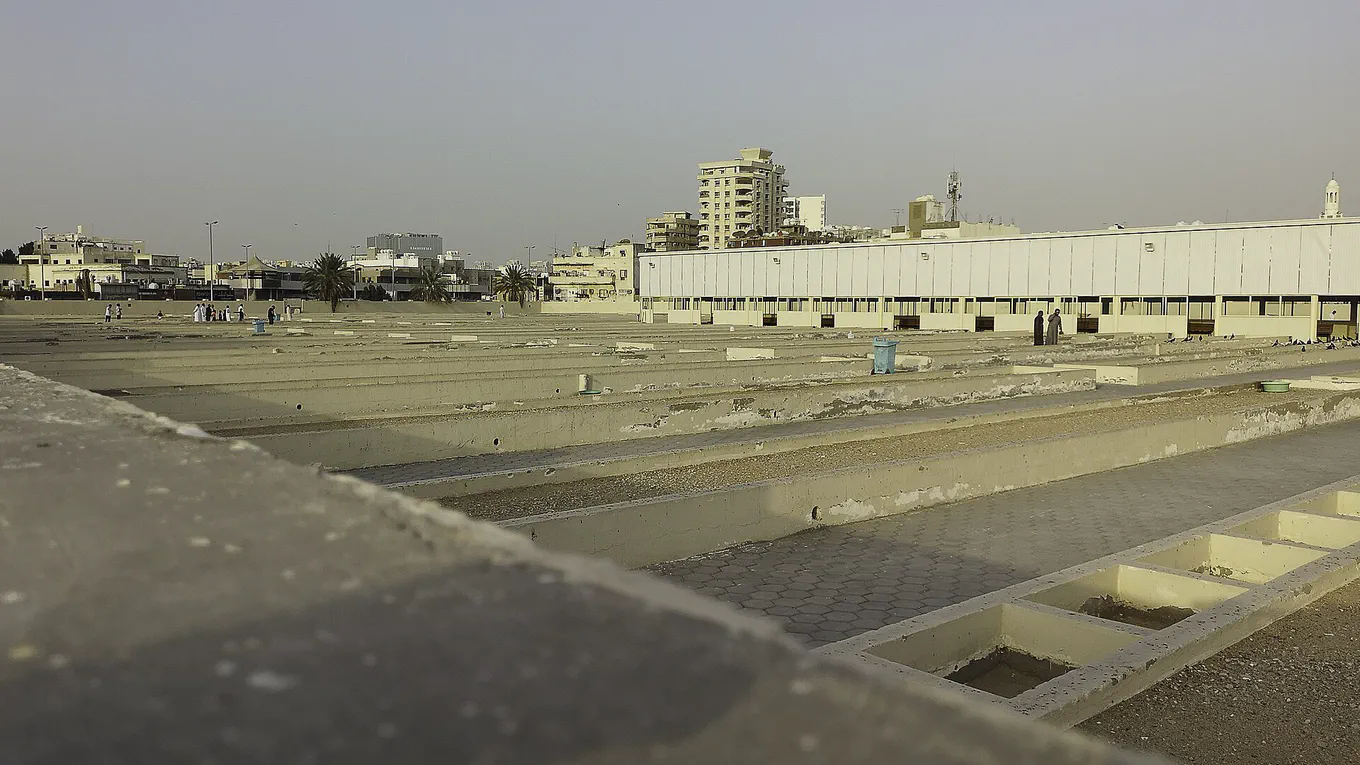
Richard Burton, the British explorer who made the Hajj to Mecca in disguise, came to the tomb of Eve in 1853. Some Muslims hold that Eve lies here, a belief tied to Jeddah’s name, which means “grandmother”. Inside a little dome over her navel stood a fancifully carved stone. He joked that if Eve measured 120 paces from head to waist and 80 from waist to heel, she must have looked like a duck. In 1928, Prince Faisal, Viceroy of Hejaz, destroyed the tomb.
2 T. E. Lawrence lands at Jeddah to find a leader
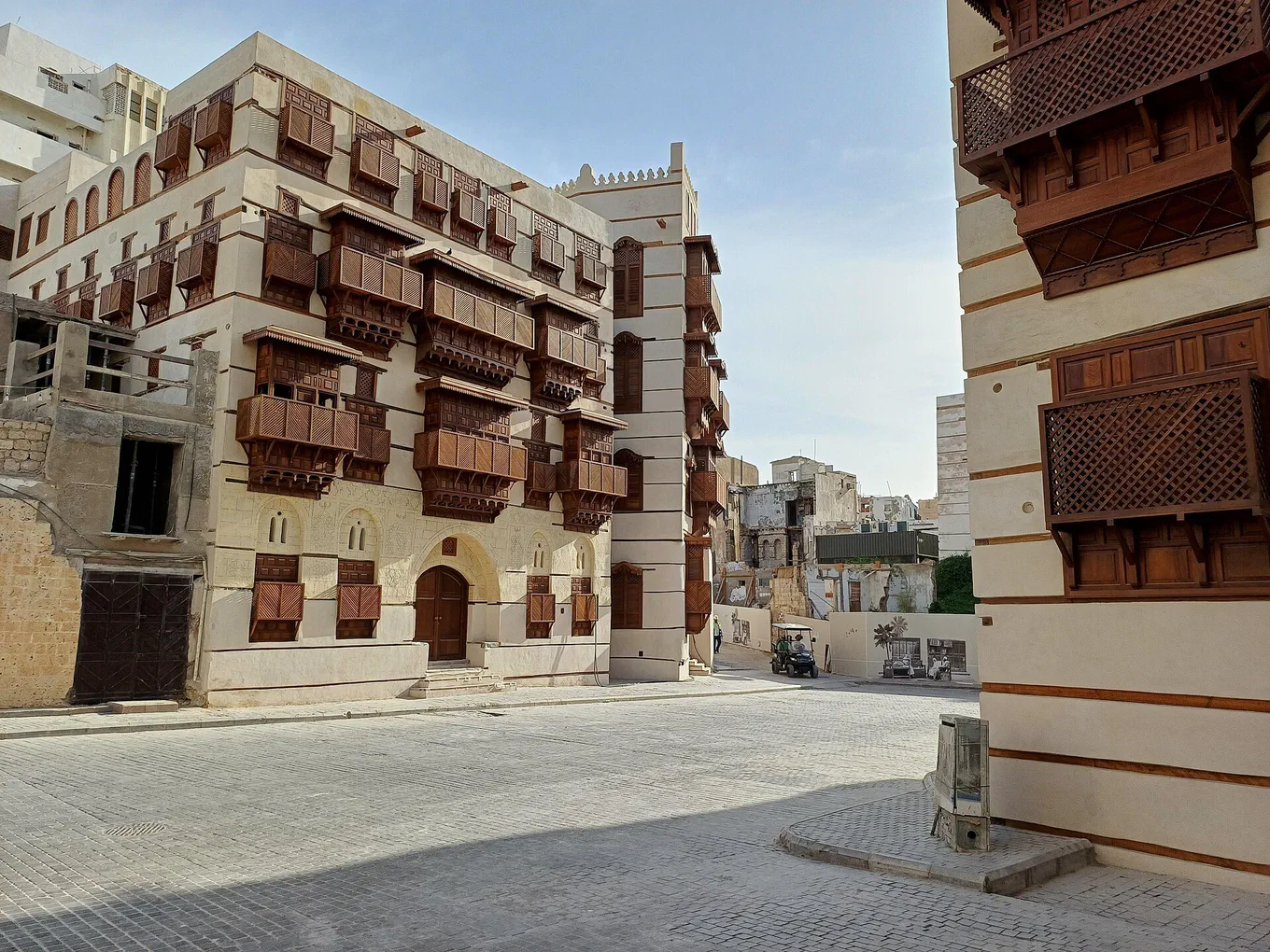
Stand here. Al-Balad, Jeddah’s historic centre. The British Consulate where Lawrence was received in 1916 hasn’t been matched to a surviving building.
Long before the 1962 film Lawrence of Arabia, T. E. Lawrence was a British officer hunting for the “yet unknown master-spirit” of the Arab Revolt. In October 1916, his ship anchored off Jeddah, and the heat, he wrote, “came out like a drawn sword”. Abdulla, a son of Sharif Hussein, came to meet the British on a white mare. The longer they talked, the surer Lawrence grew that Abdulla was “too balanced, too cool, too humorous to be a prophet”. In the end, he chose Abdulla’s brother Faisal.
3 Ibn Saud takes Jeddah and moves into Nasseef House
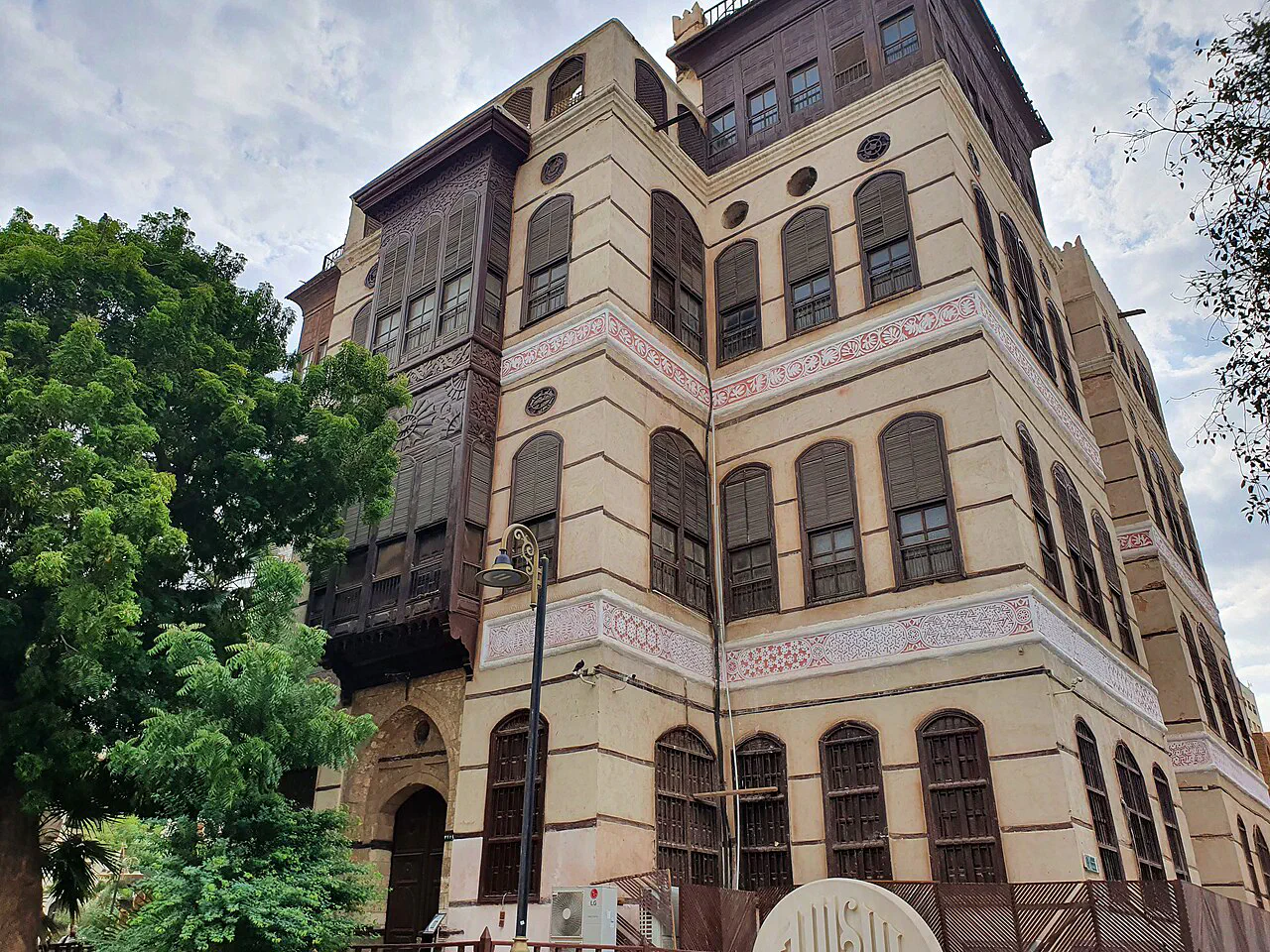
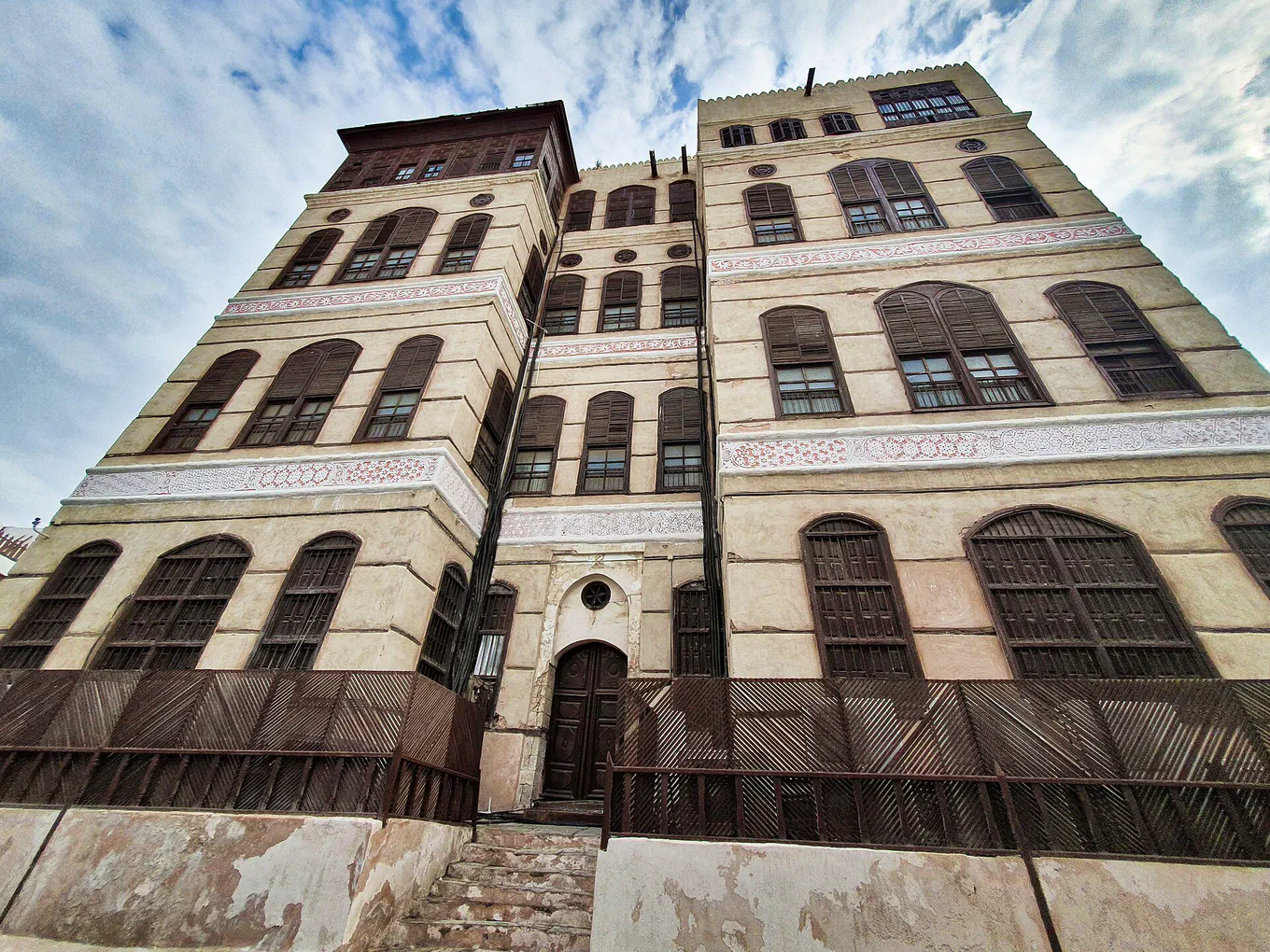
Stand here. Nasseef House, in Al-Balad, the old town. Built between 1872 and 1881, it is now a cultural centre with exhibitions and lectures.
In October 1924, Ali, another son of Sharif Hussein, became King of Hejaz when his father abdicated. Fourteen months later, Ibn Saud, the future first King of Saudi Arabia, took Jeddah by agreement with its people, and Ali fled to Iraq. The conqueror moved into a house of fragile Red Sea coral stone, built for Omar Nasseef, where ramps let camels walk up to the top terrace. He made it his home for about ten years, beside a neem tree once believed to be the only tree in Jeddah.
4 Malcolm X held at Jeddah airport on his way to Mecca
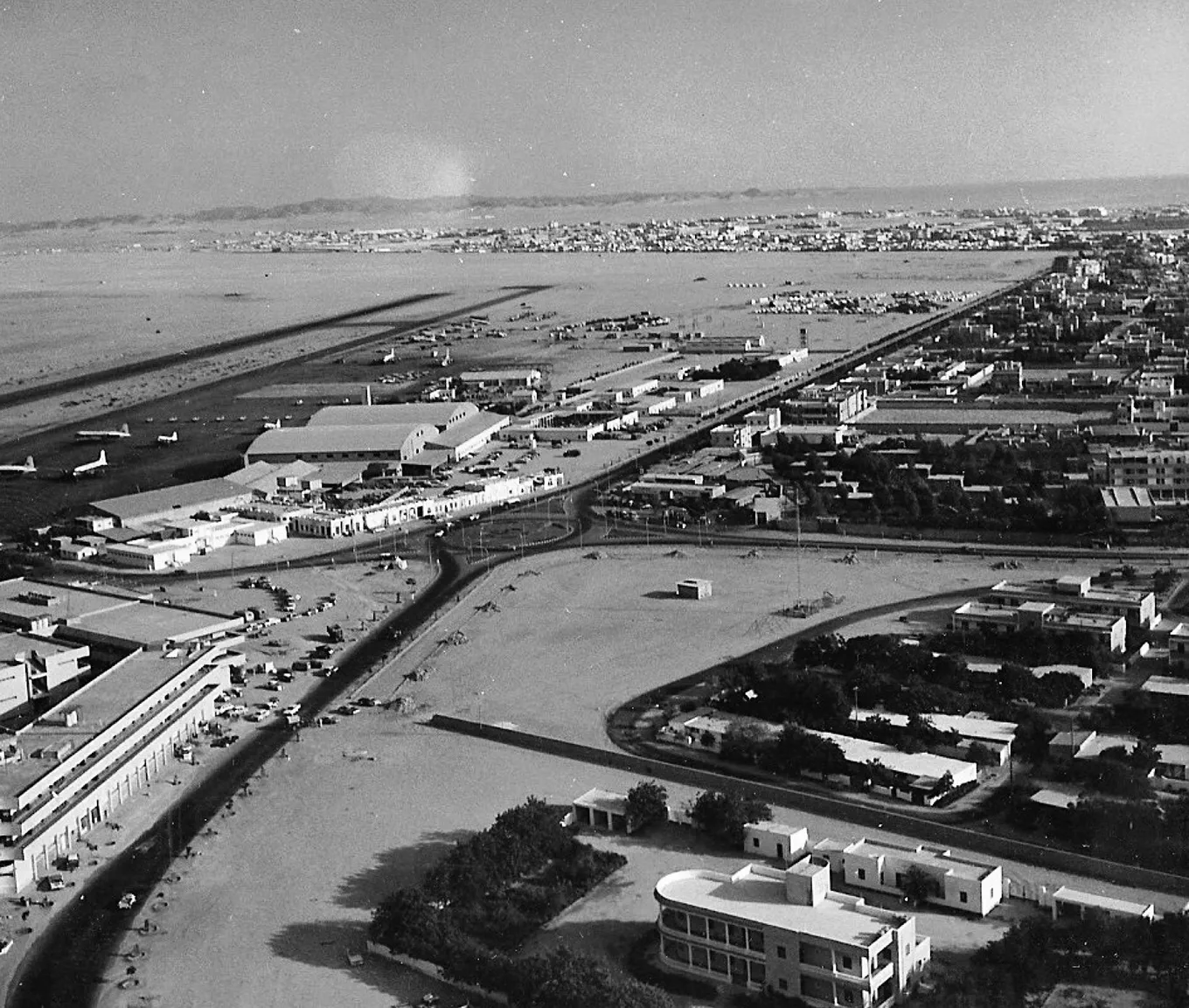
Stand here. Jeddah’s old airport, between the Al-Kandara and Al-Sharafiya neighbourhoods, where commercial flights stopped in May 1981.
Jeddah’s old airport and the neighbouring town from the air, in a mid-twentieth-century photograph.Unknown / Public domain.
When Malcolm X landed in Jeddah in April 1964 to begin his Hajj, airport officials seized his passport. They doubted that an American with no Arabic was really a Muslim, and he was stuck until a judge could hear his case. He had never felt more alone and helpless, he recalled, since he was a baby. Once he was free, he wrote, a man America would call “white” gave him “his hotel suite, his bed”. The next morning, he learned that Saudi Arabia’s Crown Prince Faisal had made him a guest of the state.
5 The F1 drivers’ night meeting after the Jeddah missile strike
Stand here. The Jeddah Corniche Circuit, a 6.174-kilometre street track beside the Red Sea, which staged its first Grand Prix in December 2021.
During first practice for Formula One’s Saudi Arabian Grand Prix in 2022, drones and missiles hit an Aramco oil depot near the circuit, and black smoke could be seen from the track. All 20 drivers met to decide whether to go on. They talked for four and a half hours, until about 2.30 in the morning, before every one of them agreed to race. It had been, their association said, “a difficult day for Formula 1 and a stressful day for us drivers”. On race day, Max Verstappen won.
Seven Pillars of Wisdom(T. E. Lawrence). A memoir. Lawrence’s ship anchors off “the white town” of Jeddah in 1916, and at the British Consulate he meets Abdulla.
Personal Narrative of a Pilgrimage to Al-Madinah and Meccah(Richard Francis Burton, 1855). A travel memoir of his Hajj in disguise, including the tomb of Eve in Jeddah.
Throwing Sparks(Abdo Khal). A novel, winner of the International Prize for Arabic Fiction, set in a marble palace by the sea and the Firepit, a suburb of north Jeddah.
Films to watch before you visit Jeddah
Barakah Meets Barakah(Mahmoud Sabbagh, 2016). A film, shot entirely in Jeddah, about a middle-class man and a girl from a wealthy family whose romance their country frowns on.
My Driver and I(Ahd Kamel, 2024). A film inspired by the director’s childhood, set in Jeddah in the 1980s and ’90s. It traces the relationship of a rebellious girl and her Sudanese chauffeur.
HWJN(Yasir Al-Yasiri, 2023). A fantasy film set in modern-day Jeddah, based on Ibraheem Abbas’s novel, in which a kindhearted jinn discovers his royal lineage and falls in love with a mortal woman.
Questions
Can you see the Tomb of Eve in Jeddah?
Not the tomb itself. Prince Faisal, Viceroy of Hejaz, destroyed it in 1928, and in 1975, religious authorities, who disapprove of pilgrims praying at tombs, sealed the site in concrete. The cemetery remains, but it is a row of unmarked graves with nothing to show where Eve’s tomb stood.
What does the name Jeddah mean?
It is usually traced to jaddah, the Arabic word for “grandmother”. Some Muslims consider a site in the city to be the burial place of Eve, and that belief influenced the name.
What is Al-Balad in Jeddah?
Al-Balad is Jeddah’s historic centre. Its traditional houses, in the style of the Hejaz, are known for their wooden windows, called roshan. In 2014, UNESCO listed it as a World Heritage Site, “Historic Jeddah, the Gate to Mecca”, and several traditional buildings have been restored since.