Johannesburg, the largest city in South Africa, sits on the mineral-rich Witwatersrand in Gauteng province. It was founded in 1886, after gold was found on farmland, and one of its names, eGoli, means “Place of Gold”. Its stories here are a prospector who sold too soon, an oath in a packed theatre, a priest’s fight for Sophiatown, a raid on a secret farm, and Mandela’s brief homecoming.
In July 1886, a prospector named George Harrison found gold on Langlaagte farm. He registered his claim with the government of the South African Republic, and the area was declared open. Then, it’s believed, he sold the claim for £10 or less and left. Within ten years, the gold rush had made Johannesburg the largest town in South Africa.
2 Gandhi, the oath, and the Empire Theatre fire
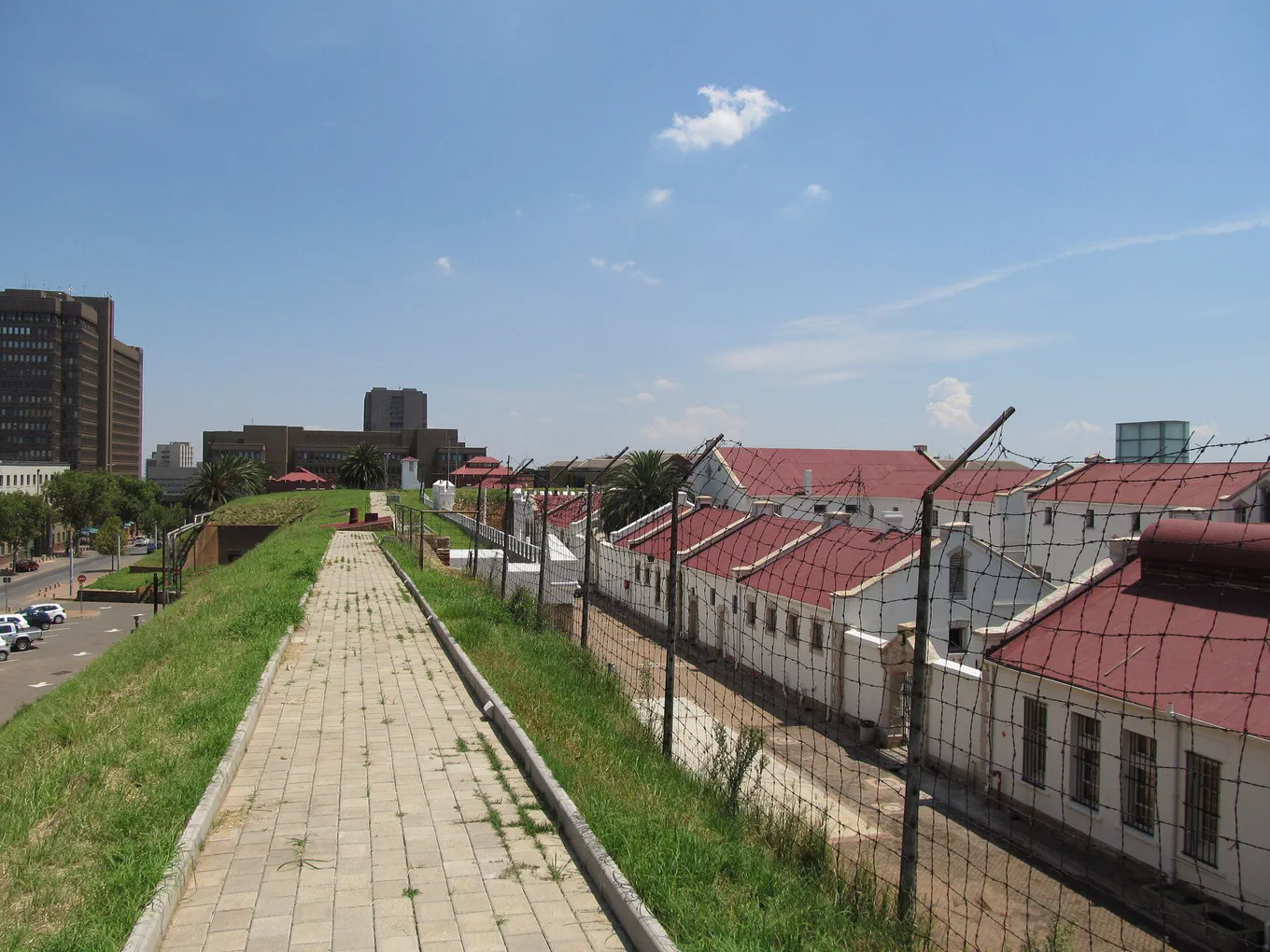
Stand here. Number Four, on Constitution Hill, was Gandhi’s first prison and is now part of the Constitution Hill museum.
Gandhi’s non-violent resistance began in a Johannesburg theatre on 11 September 1906. A new Transvaal law would make every Asian register, give fingerprints, and carry a pass, and the old Empire Theatre was packed from floor to ceiling in protest. Then one of the speakers, Sheth Haji Habib, swore before God that he would never submit. Gandhi was taken aback. The whole hall stood, raised their hands, and took the same oath. The next day, the theatre burned down. Some took it for a sign. Gandhi gave it no weight.
3 Trevor Huddleston and the bulldozing of Sophiatown
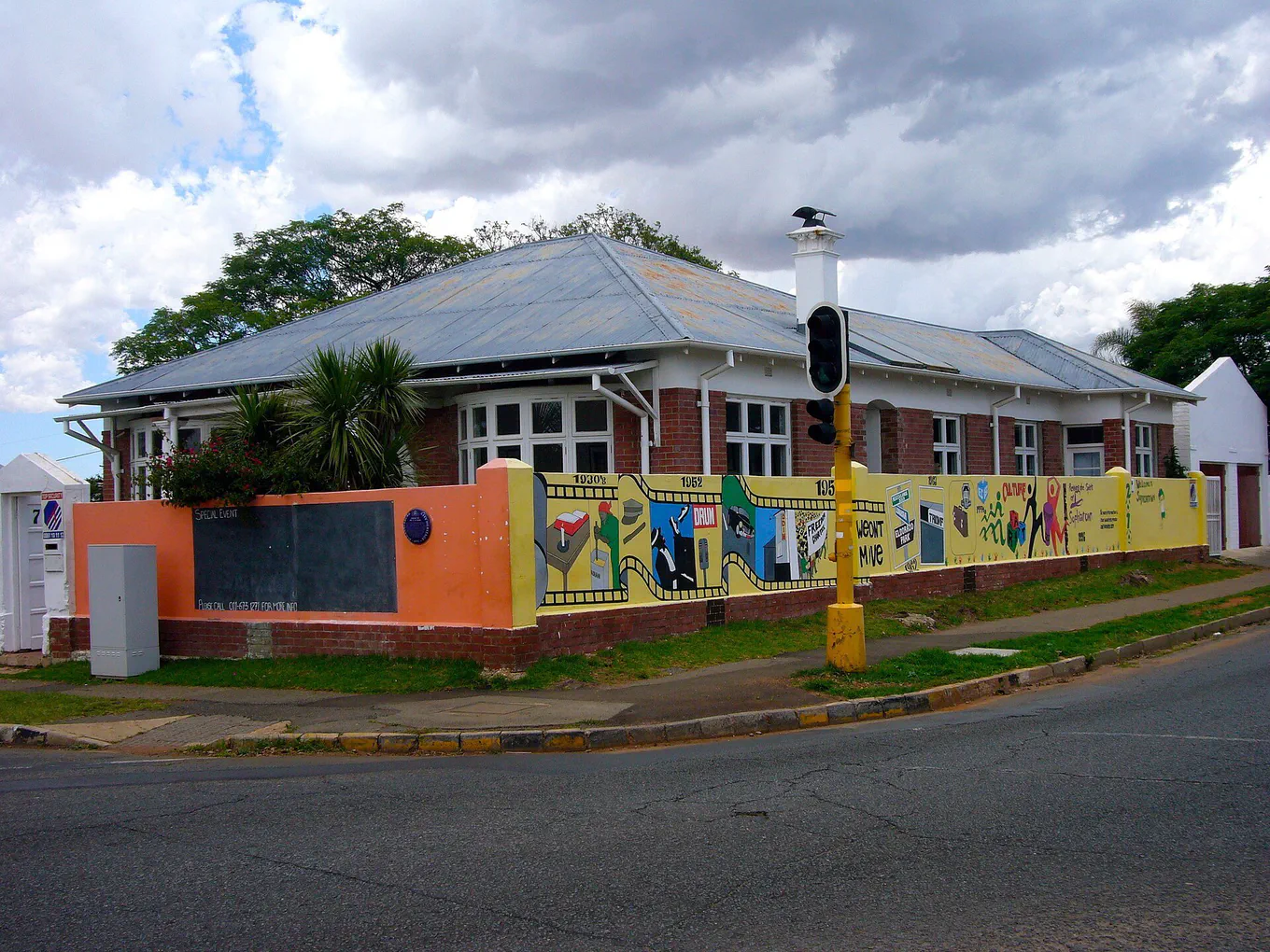
Stand here. The house of Dr Xuma, once ANC president, at 73 Toby Street, one of two to survive, now the Sophiatown Heritage and Cultural Centre.
Trevor Huddleston, the English priest who gave Hugh Masekela his first trumpet, spent thirteen years in Sophiatown, where people called him Makhalipile, “dauntless one”. It was one of the few urban areas where black people could own land, and the government meant to bulldoze it. Residents’ slogan said they wouldn’t move, and Huddleston tried to stop it. But on 9 February 1955, 2,000 armed police began moving families out. That year his religious community called him back to England. Sophiatown was flattened and rebuilt as a whites-only suburb, Triomf, “Triumph”.
4 The dry-cleaning van at Liliesleaf, Mandela’s secret farm
Stand here. Liliesleaf, at 7 George Avenue in Rivonia, now a national heritage site with exhibitions.
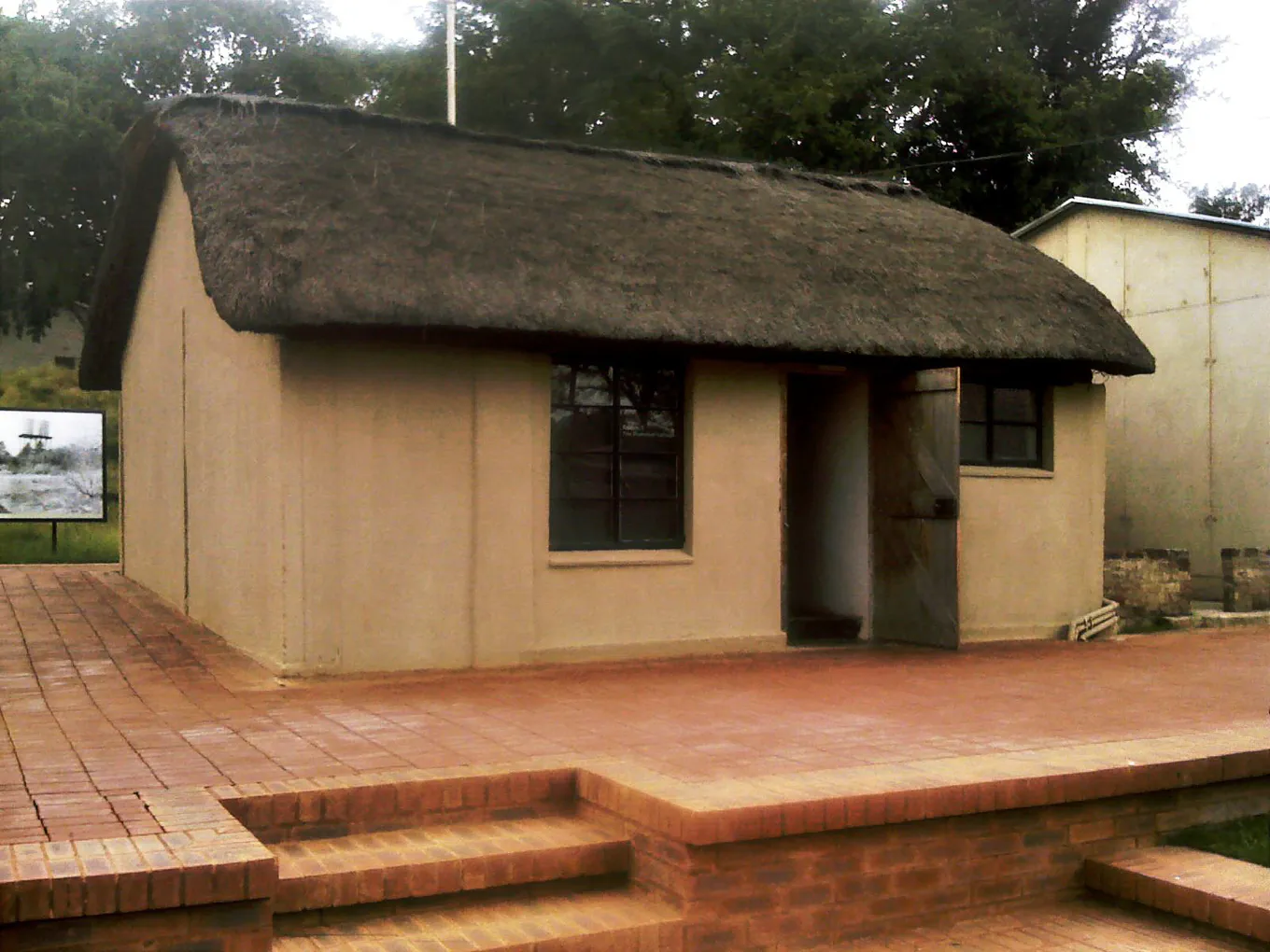
The thatched room at Liliesleaf in Rivonia, Johannesburg, where the underground’s leaders were meeting when police raided in 1963.Colinvlr / Public domain.
At Liliesleaf, Nelson Mandela lived disguised as a gardener and cook called David Motsamayi. Police caught him in 1962, but not the farm. On 11 July 1963, the underground’s leaders met there one last time. Fifteen minutes in, a van came down the drive. “It’s a dry-cleaning van,” said one. “I’ve never seen it before.” Its panel read Trade Steam Pressers. Another had seen it outside the police station. The police burst in and arrested nineteen. The papers they found put Mandela, already in prison, on trial with them.
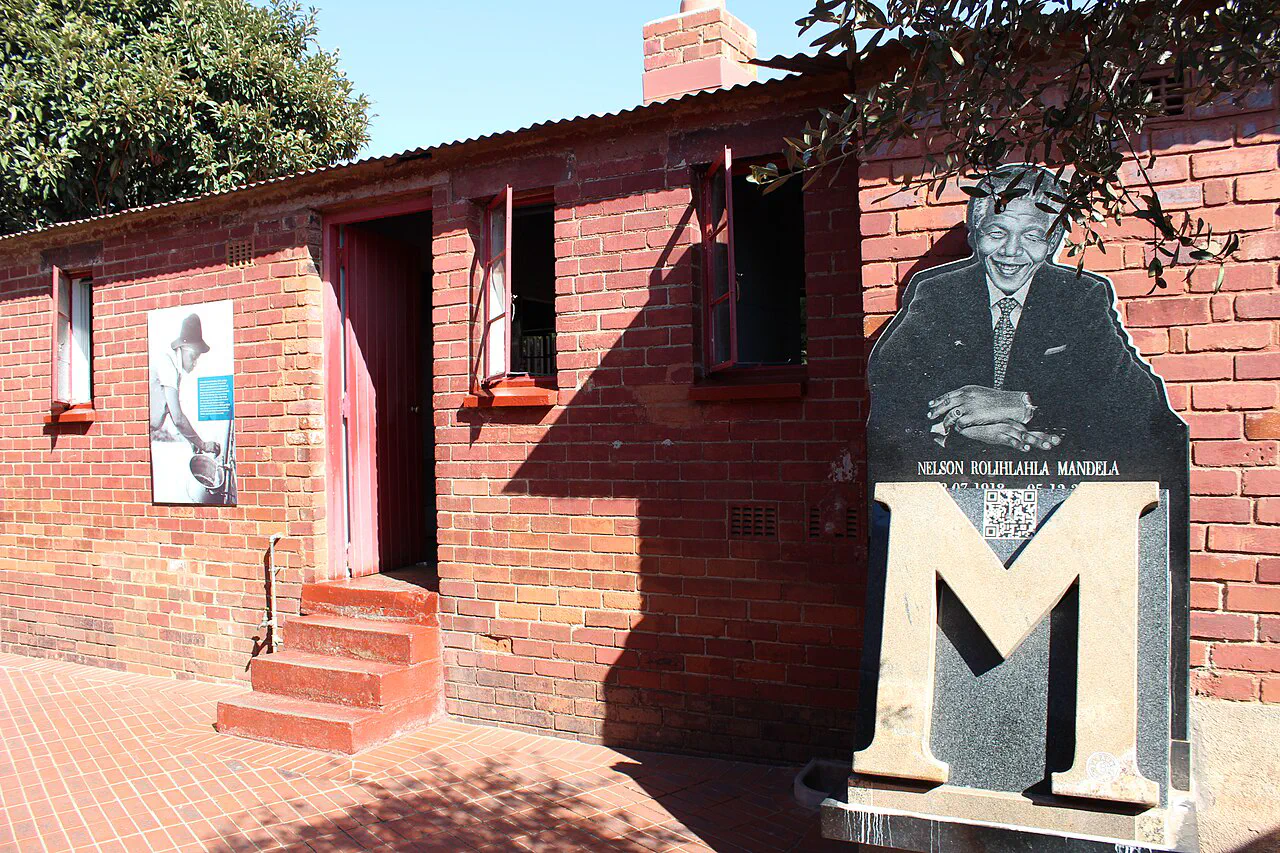
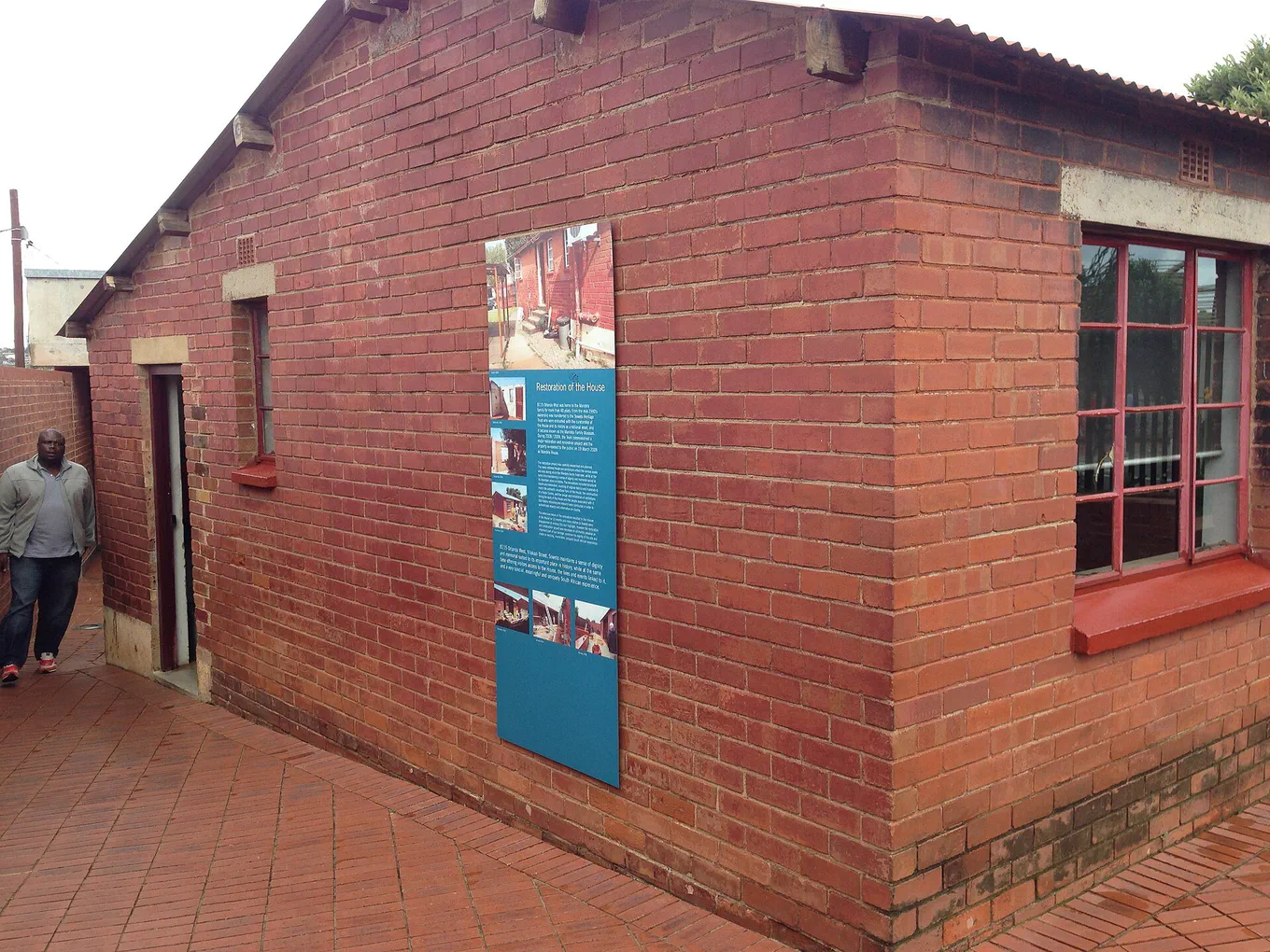
Nelson Mandela wrote that No. 8115 Vilakazi Street was “the place marked with an X in my mental geography”. He lived in the small face-brick house from 1946 until 1962. When he was freed in 1990, government officials advised against going back, but he went anyway, and told the crowd at his welcome rally, “I have come home at last.” Eleven days later, he moved out again, to a larger, more secure house in Houghton.
Born a Crime(Trevor Noah, 2016). A memoir. Noah’s childhood, raised by his mother and grandmother in Soweto, then at school and on the streets of Alexandra.
Mine Boy(Peter Abrahams, 1946). A novel. Xuma leaves his town for Malay Camp, a black area of Johannesburg, to look for work in the gold mines.
Cry, the Beloved Country(Alan Paton, 1948). A novel. Its Johannesburg suburb, Parkwold, is invented, but typical of the real suburbs of Parktown and Saxonwold.
Films to watch before you visit Johannesburg
Come Back, Africa(Lionel Rogosin, 1959). A film. A tiny crew shot it on the streets of Johannesburg and Sophiatown, and in areas closed to white people.
Tsotsi(Gavin Hood, 2005). A film. Set in Alexandra, in Johannesburg, with Presley Chweneyagae in the title role.
Gangster’s Paradise: Jerusalema(Ralph Ziman, 2008). A film. Based on the story of Lucky Kunene, an underworld figure who took over property in Hillbrow in the 1990s.
District 9(Neill Blomkamp, 2009). A film. An alien ship hangs over Johannesburg. The film was shot in Chiawelo, Soweto, while its real residents were being moved out.
Chappie(Neill Blomkamp, 2015). A film. A police robot with a mind of its own, set and shot in Johannesburg, with one scene at the Ponte building.
Questions
Is Johannesburg the capital of South Africa?
No. Johannesburg is the capital of Gauteng province and South Africa’s largest city, and it works as the country’s economic capital. It isn’t the judicial capital, which is Bloemfontein, but it is the seat of the country’s highest court, the Constitutional Court, on Constitution Hill.
Can you visit Nelson Mandela’s house in Soweto?
Yes. Mandela House, at 8115 Vilakazi Street in Orlando West, is a museum. Mandela gave it to the Soweto Heritage Trust in 1997, and it shows art, memorabilia, the family’s honorary doctorates, and photographs. Desmond Tutu’s house is a short way up the same road.
Can you see where Gandhi was imprisoned in Johannesburg?
Yes. Number Four, the prison that held Gandhi, is part of the Constitution Hill museum, on the same site as the Old Fort, where Mandela was held in 1956 and 1962.