Kansas City, United States, Missouri, North America
I talk about video games too much, but it’s my site, so I’ll mention that Kansas City is the scene of an extended sequence in The Last of Us, both game and TV show. It’s the point where Joel’s stoic archetype begins to crack. It’s like Phaedrus in Zen and the Art of Motorcycle Maintenance… when his world starts shifting. Powerful stuff.
— Nick
Missouri’s largest city, Kansas City, was founded in the 1830s as a river port where the Kansas River joins the Missouri River, on the state’s western border with Kansas. Walt Disney going bust sets off a run of tales that takes in a shooting outside Union Station, Charlie Parker sent off a stage, a song about a corner that has vanished, and barbecue scraps given away free.
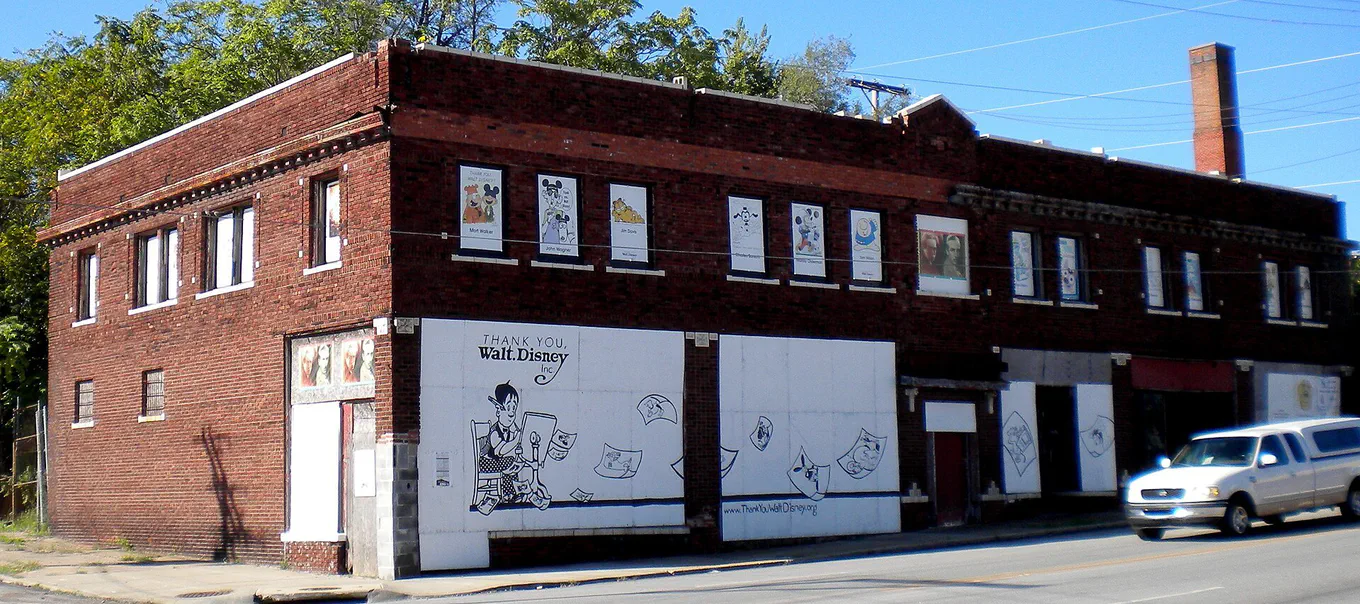
Before Mickey Mouse, there was Laugh-O-Gram, the cartoon studio Walt Disney ran on the second floor of this building, making fairy tales brought up to date. By the end of 1922, Disney was living in the office and bathing once a week at Union Station. In July 1923, the studio filed for bankruptcy. Disney sold his camera and left for Hollywood, aged 21, with an unfinished cartoon in a cardboard suitcase. He later said Mickey began here, with a tame mouse he kept at his desk.
2 The Union Station massacre and Frank “Jelly” Nash
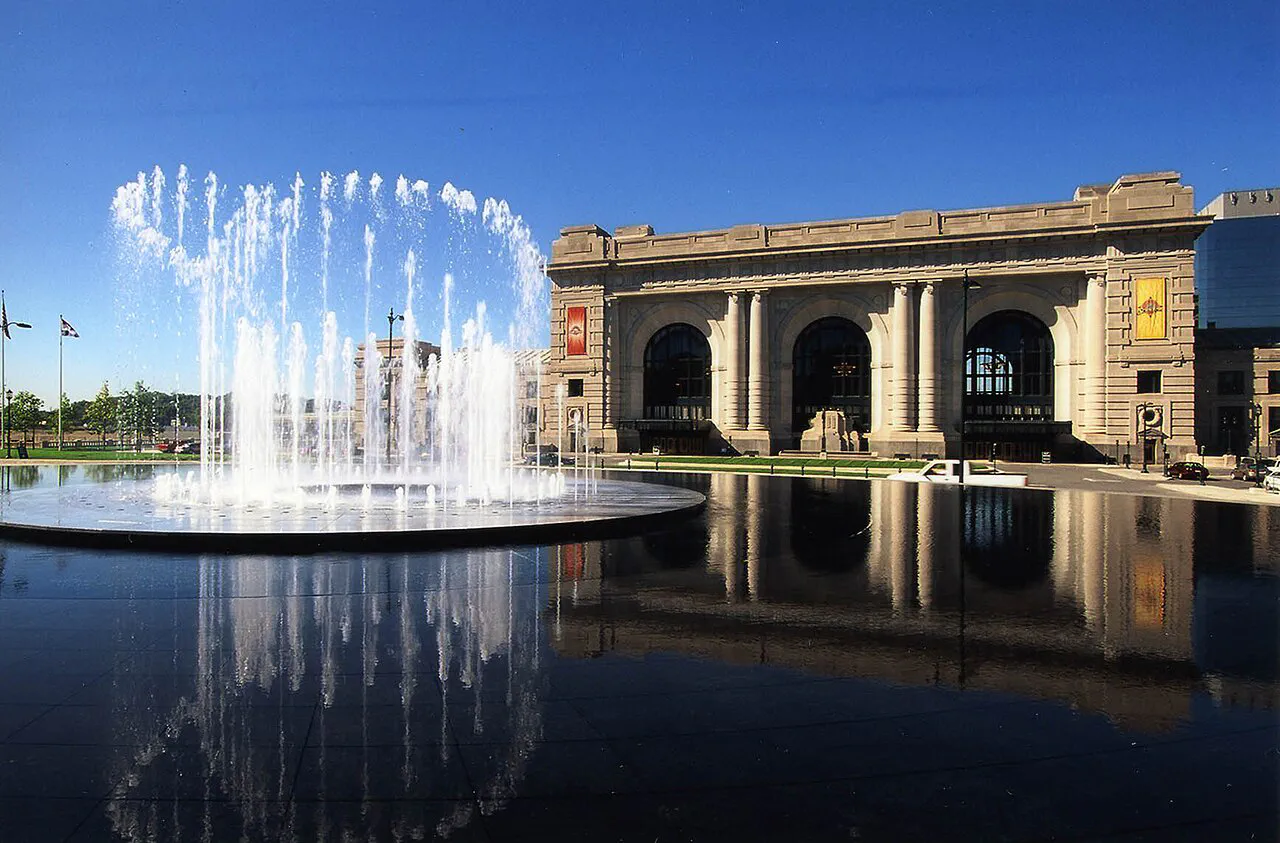
Stand here. The east entrance of Union Station, where the lawmen’s car was parked. Restored in 1999, the station now holds Science City, a planetarium, and theatres.
On 17 June 1933, there was a shooting here. The FBI named Pretty Boy Floyd a gunman, though some evidence says otherwise. Lawmen had Frank “Jelly” Nash, an escaped federal prisoner, in a car outside this entrance, taking him back to Leavenworth penitentiary. A gang had come to free him. A gunman crouched behind another car opened fire. In perhaps 30 seconds, four lawmen were dead, and so was Nash, the man the gang had come to free. A year later, Congress gave FBI agents the power to carry guns.
3 Charlie Parker’s thrown cymbal and Kansas City jazz
Stand here. A 10-foot bronze head of Parker stands at 17th Terrace and The Paseo, near the American Jazz Museum at 18th and Vine.
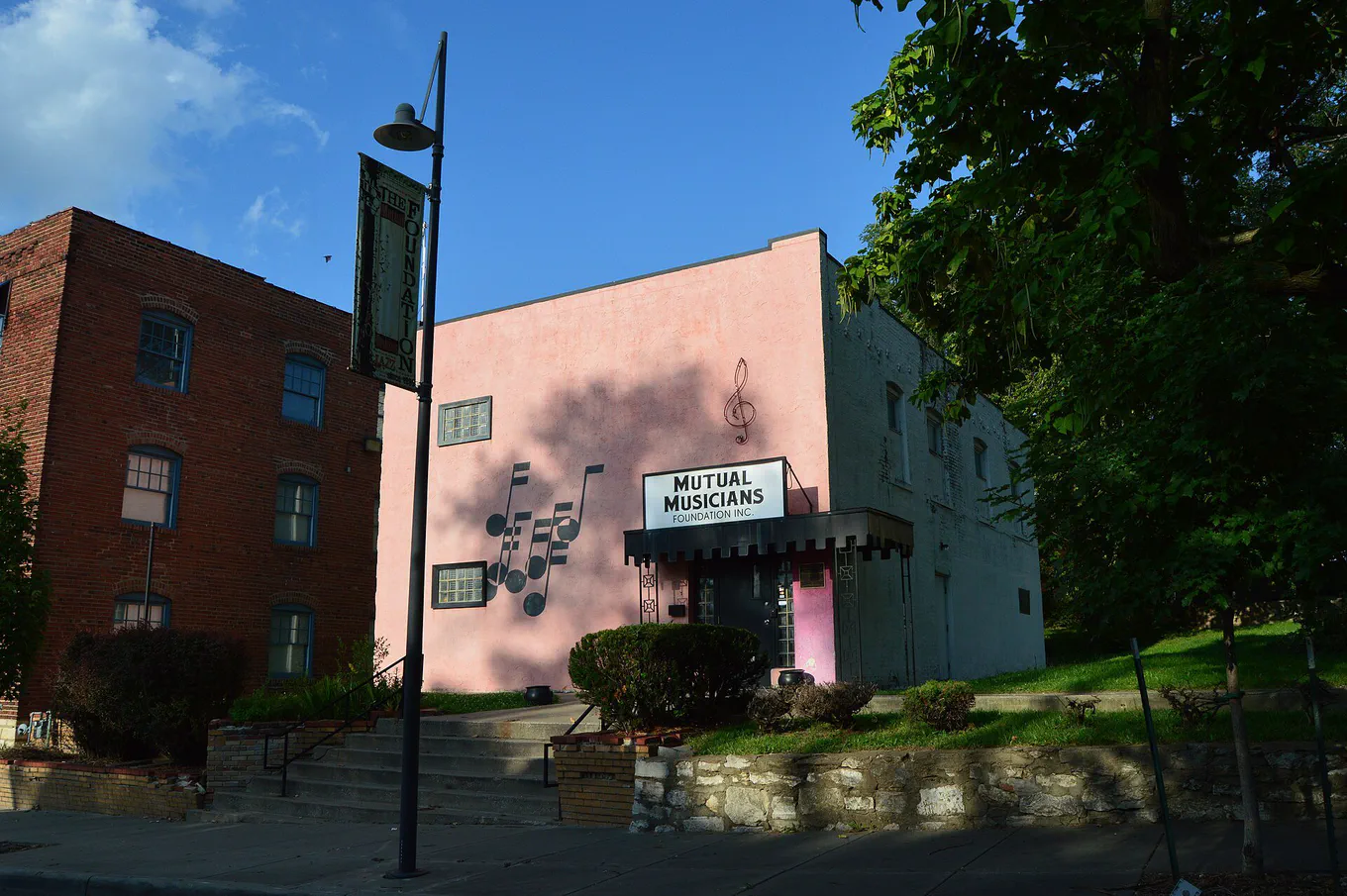
Charlie “Bird” Parker grew up in Kansas City when it ignored liquor laws and jam sessions ran past sunrise. In early 1936, the teenage saxophonist sat in with the Count Basie Orchestra and lost track of the chord changes. The drummer, Jo Jones, took a cymbal off his kit and threw it at Parker’s feet, the signal to leave the stage. Parker vowed to practise harder, up to 15 hours a day for three or four years. The boy sent off that stage became a leading figure of bebop.
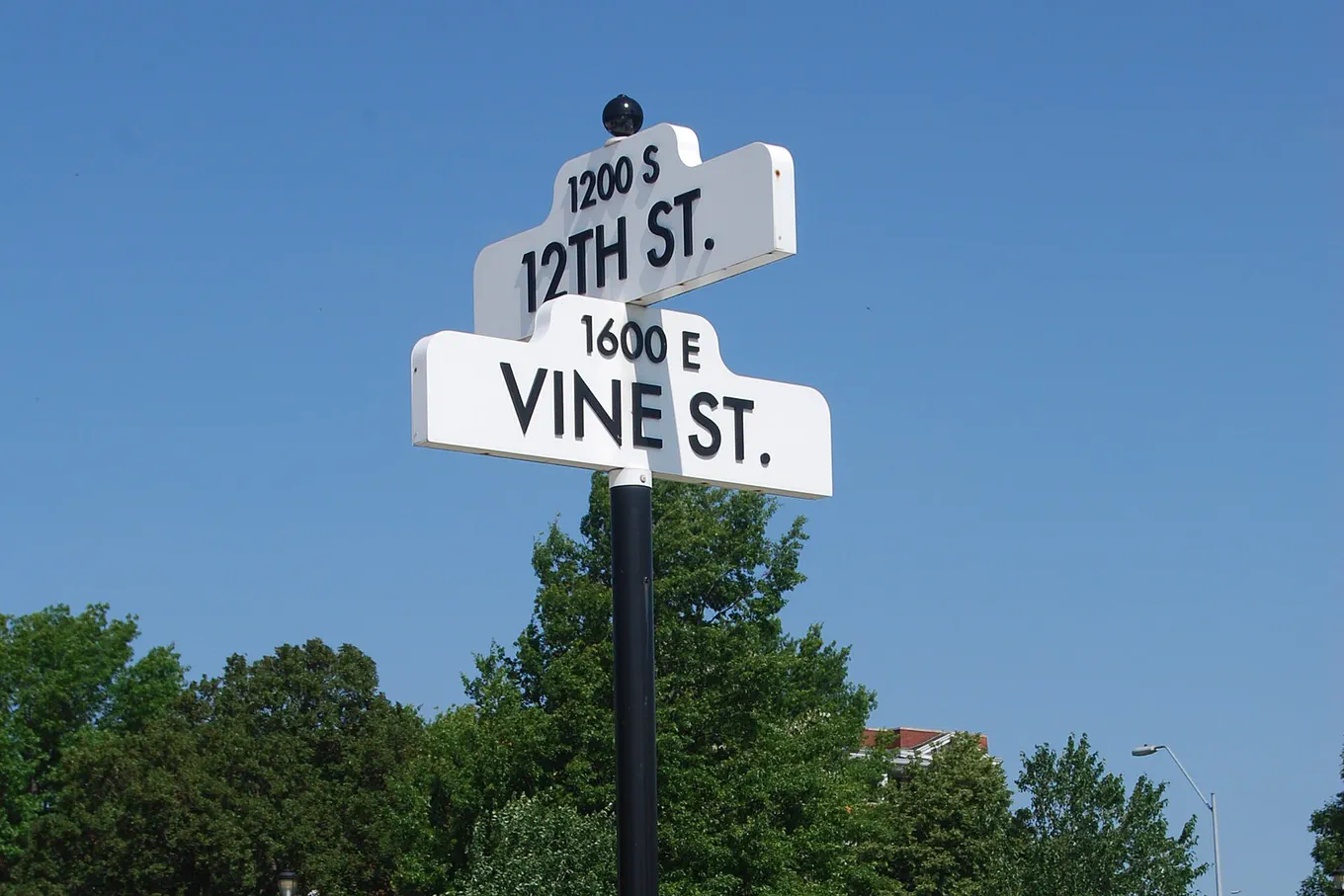
Wilbert Harrison’s “Kansas City” spent seven weeks at number one in 1959, and it names a corner, 12th Street and Vine. It was written in 1952 by Jerry Leiber and Mike Stoller, two nineteen-year-old rhythm and blues fans from Los Angeles, inspired by Big Joe Turner records. Neither had ever been to Kansas City. The city adopted it as its official song anyway. But the corner is gone, lost to redevelopment, and a park marks the spot the song still sends you to.
5 Arthur Bryant’s free scraps that became burnt ends
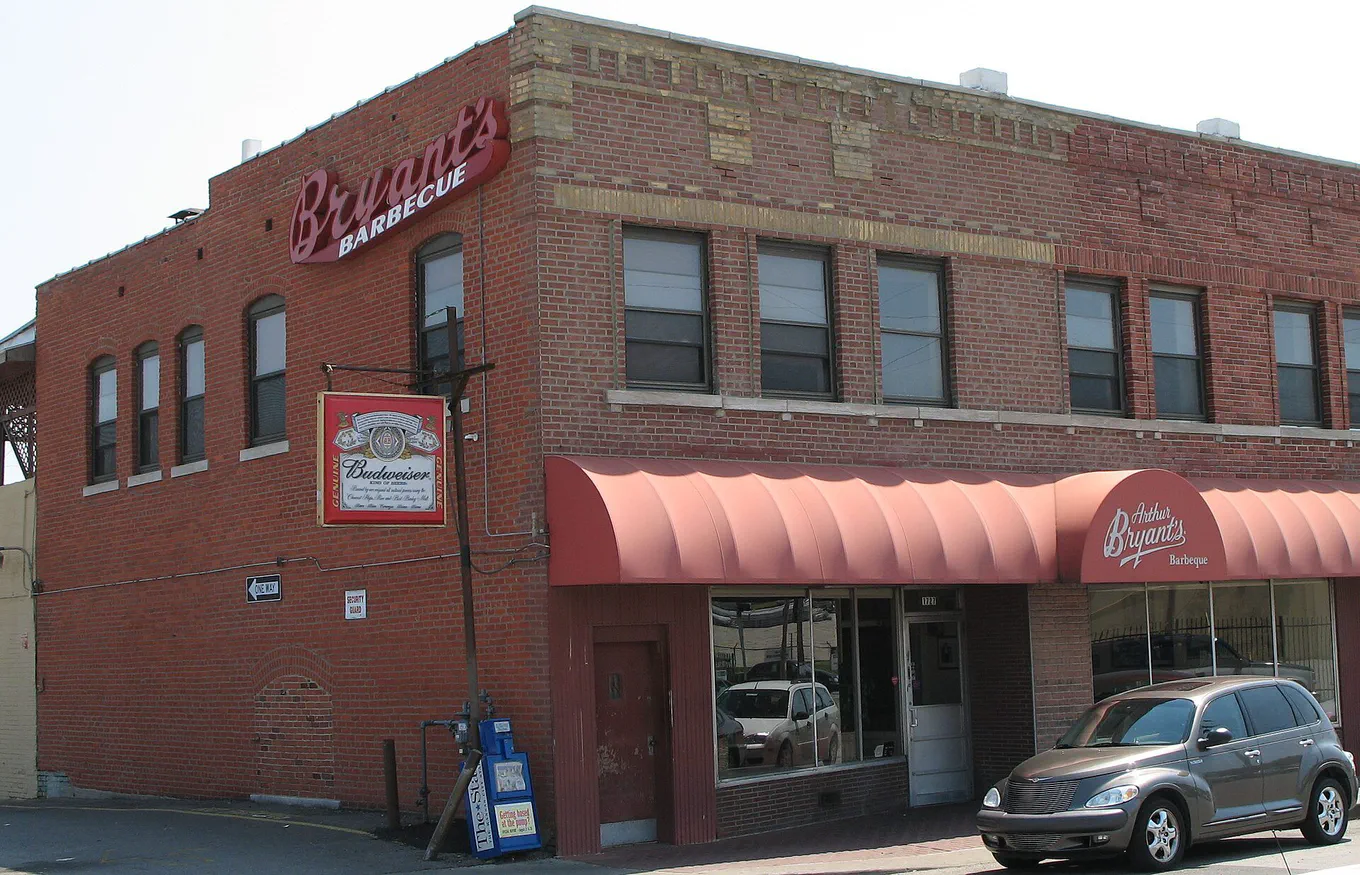
Stand here. Arthur Bryant’s restaurant, 1727 Brooklyn Avenue, near 18th and Vine. It has been here since Bryant moved it in 1958.
Kansas City barbecue goes back to Henry Perry, who sold smoked meat wrapped in newsprint for 25 cents. Arthur Bryant worked for him, took over the business, and put his name on it. The burned edges of Bryant’s brisket were scraps, handed out free with other meals. Calvin Trillin, a writer from Kansas City, wrote that the main course at Bryant’s was “something that is given away free”. “I dream of those burned edges,” he wrote. The scraps went on the menu as burnt ends.
Pack nothing. Leave Friday.
Every Friday, I write a free letter, Journey, that takes us on a trip through places, stories, and ideas.
Mrs. Bridge(Evan S. Connell, 1959). A novel. An upper-middle-class Kansas City family between the wars. Connell grew up in the Country Club District, like the family in the book.
Mr. Bridge(Evan S. Connell, 1969). A novel. A gently satirical portrait of a conventional, unimaginative upper middle-class couple living in Kansas City from the 1920s to the 1940s.
The King of Kings County(Whitney Terrell, 2005). A novel. Set in Kansas City, it traces an ambitious developer who uses racial covenants to build a segregated suburban empire.
Films to watch before you visit Kansas City
Mr. & Mrs. Bridge(James Ivory, 1990). A film. A traditionally minded family in the Country Club District. The house used as the Bridges’ home is a block west of Loose Park, on West 54th Street.
Bird(Clint Eastwood, 1988). A film. It opens in Kansas City in 1939, with the young Charlie Parker playing the Reno Club.
Kansas City(Robert Altman, 1996). A film. The city on the eve of the 1934 Democratic primary, around the Hey Hey Club, a mob boss’s jazz club and casino in the story.
Questions
Is Kansas City in Kansas or Missouri?
Missouri. Kansas City is the largest city in Missouri, on the state’s western border with Kansas. Its metro area straddles the state line, and there is a separate city of Kansas City, Kansas, where Charlie Parker was born.
Can you visit Walt Disney’s Laugh-O-Gram studio?
The building still stands. The studio was on the second floor of the building at 1127 East 31st Street. The nonprofit Thank You Walt Disney saved it from demolition and plans a historic rehabilitation.
Are there bullet holes from the 1933 massacre on Union Station?
No. Marks on the front of the station were claimed for years as bullet holes from the shooting, but Kansas City police tests showed they could not have come from bullets. The station opened in 1914, closed in 1985, and reopened after renovation in 1999.