Karachi, the capital of Sindh, is Pakistan’s largest city, on the Arabian Sea. It was founded as the fortified village of Kolachi in 1729 and was Pakistan’s capital from 1947 until the late 1950s. Its stories are the last ride of Pakistan’s founder, a van that became an ambulance network, a hangar for an airship that never came, a pink palace by the sea, and an unfinished ceiling.
Muhammad Ali Jinnah, the founder of Pakistan, was likely born in a rented flat here. From the 1930s he hid his tuberculosis, believing it would hurt him politically. His doctors urged him home to Karachi for better care, and on 11 September 1948 he was flown in. But on the road into town the ambulance broke down. He couldn’t sit up, so a car was no use, and for an hour he waited in the heat as trucks and buses passed, none knowing he was there. He died that night.
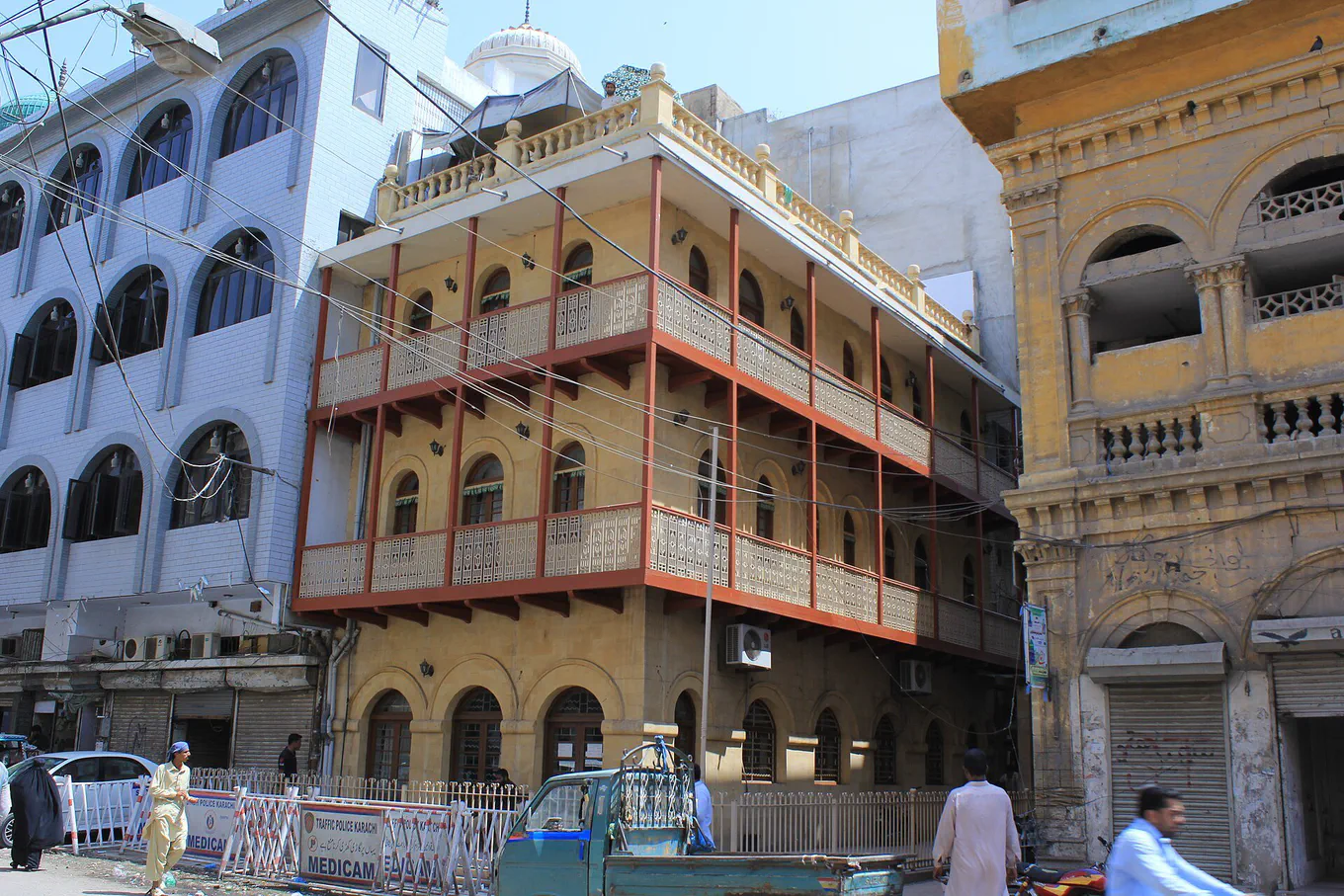
2 Abdul Sattar Edhi’s shop dispensary and old van in Mithadar
Stand here. The Edhi Foundation’s headquarters in Mithadar, where Edhi lived in one room with a kitchenette and his wife ran a free maternity home.
When his mother was paralysed, Abdul Sattar Edhi saw how the sick suffered. In 1951, he spent his savings on a shop in Mithadar and opened a dispensary for everyone. Another account puts his first dispensary a year earlier, set up with colleagues. Soon after his work in the 1957 flu epidemic, a businessman gave the dispensary 20,000 rupees. Edhi bought an old van to use as an ambulance. From that one van grew the world’s largest volunteer ambulance network, and Edhi never took a salary from it.
3 The Karachi hangar built for the airship R101
Stand here. Jinnah International Airport, on the site of the airship hangar. It was demolished in 1961, and its steel went into railway construction.
Karachi got one of only three hangars built for Britain’s passenger airships, and it was waiting for R101. The Air Ministry timed the flight to India for the Imperial Conference in London, and Lord Thomson, the Air Minister behind the airship scheme, pressed for it to go before testing was finished. In October 1930, R101 set off for Karachi. It never got past France. Near Beauvais it hit the ground and caught fire, killing 48 of the 54 on board, Thomson among them. Karachi’s mast was never used.
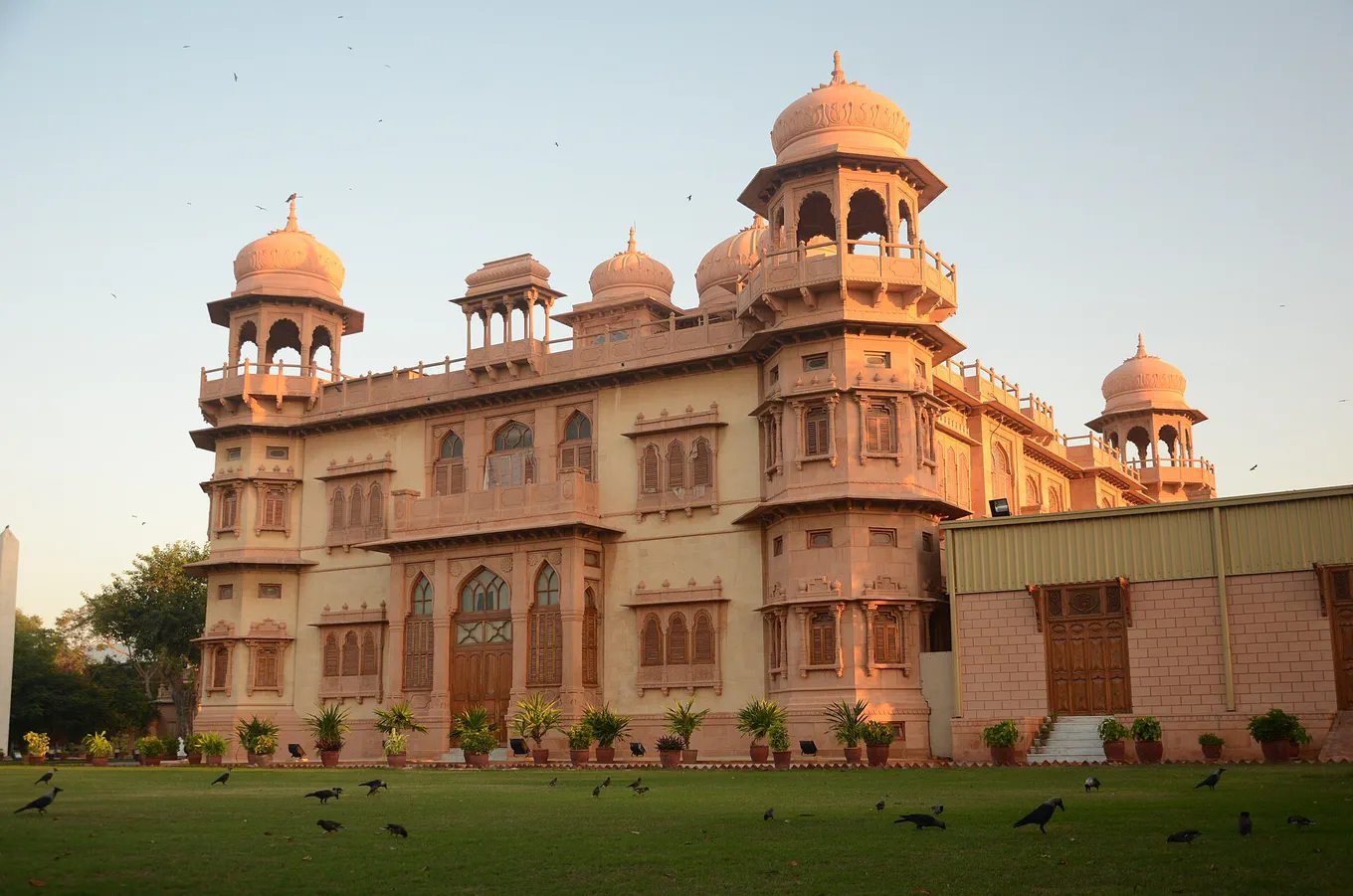
4 Mohatta Palace, built by the sea for an ailing wife
Stand here. Mohatta Palace in Clifton, a seaside palace of pink and yellow stone, now the Mohatta Palace Museum.
From this palace, Fatima Jinnah, sister of Pakistan’s founder, ran a losing campaign for president, but it was built for another woman. In 1927, Shivratan Mohatta, a Hindu businessman, had it built so his ailing wife could take the Arabian Sea breeze, and hundreds of donkey carts brought its pink stone from Jodhpur. The family left for India at Partition. Decades later, a court fight had the empty house sealed, and rumours of spirits spread. The museum’s director remembers rushing past it as a child, warned that it was a bhoot, or ghost, bungalow.
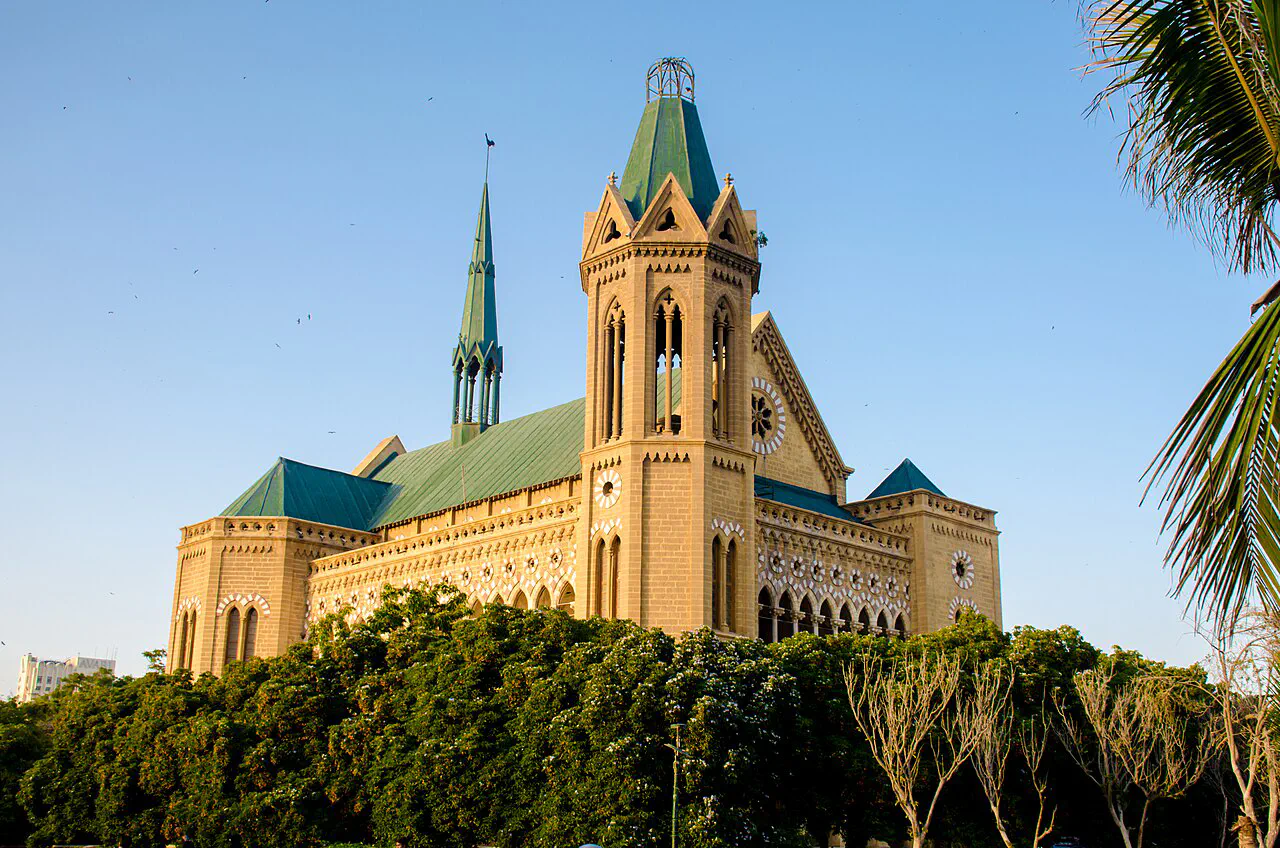
5 Sadequain’s unfinished ceiling at Frere Hall
Stand here. Frere Hall, in the Bagh-e-Jinnah gardens. Completed in 1865 to be Karachi’s town hall, it is now an exhibition space and library.
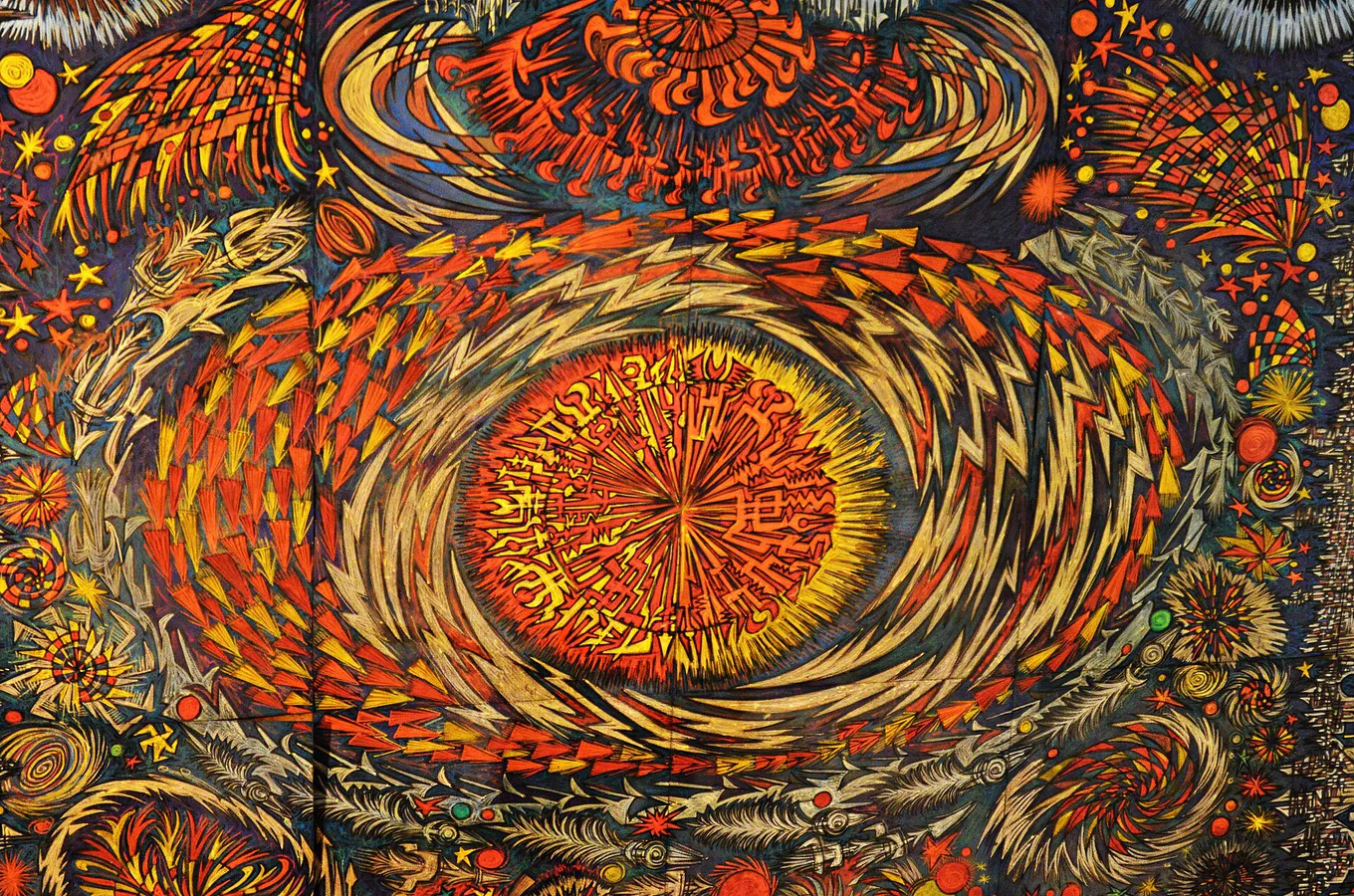
The painter and calligrapher Sadequain gave most of his paintings away. He preferred public buildings to the private ones of the rich, painted huge murals in them for nothing, and called each a gift to the people of that city. “I am not a drawing room artist,” he said, “but the artist of the gutter.” In the 1980s, he took on Frere Hall’s ceilings, lettering one with Arz-o-Samawat, Earth and the Heavens. He died in February 1987, before he could finish it. Earth and the Heavens was his last work.
Pack nothing. Leave Friday.
Every Friday, I write a free letter, Journey, that takes us on a trip through places, stories, and ideas.
The Scatter Here Is Too Great(Bilal Tanweer, 2013). A novel. Its narrative turns on a bomb blast at Cantt Station, the cantonment railway station, and runs from the beach at Sea View to the market streets.
Love in Chakiwara & Other Misadventures(Muhammad Khalid Akhtar, translated by Bilal Tanweer). A novella, set in Chakiwara, a neighbourhood of Lyari, in the early 1950s.
Karachi, You’re Killing Me!(Saba Imtiaz). A novel. Its heroine goes from interviewing gangsters in Lyari to party-hopping through the elite neighbourhood of Clifton.
The Selected Works of Abdullah the Cossack(H.M. Naqvi). A novel. Its hero shares a crumbling ancestral house with his brother and visits a jazz musician friend at the Goan Association.
Films to watch before you visit Karachi
Lyari Notes(Maheen Zia and Miriam Chandy Menacherry, 2016). A documentary film. Four young girls travel from Lyari to a music school in another part of the city.
Karachi Se Lahore(Wajahat Rauf, 2015). A road-comedy film. It follows a 36-hour journey from Karachi to Lahore in real time, including an attempt to go via Jinnah International Airport.
In Flames(Zarrar Kahn, 2023). A film. A supernatural horror drama set in contemporary Karachi, about Mariam, a young woman haunted by visions of the past, shot in the city in 2022.
Questions
Can you visit the house where Jinnah was born?
Yes. Wazir Mansion, in Kharadar, is now the Quaid-e-Azam Birthplace Museum. Jinnah’s father rented the house in 1874. The government acquired it in 1953 and opened it as his birthplace museum on 14 August that year, and it holds a national archive.
Is Mohatta Palace open to visitors?
Yes. Mohatta Palace, the seaside palace of pink stone built in Clifton in 1927, has been a museum since September 1999.
Was Karachi ever the capital of Pakistan?
Yes. Karachi was Pakistan’s federal capital from 1947 until the late 1950s. It is still the capital of Sindh province and the largest city in Pakistan, with a population of more than 20 million, on the Arabian Sea coast at the country’s southern tip.