Kazan is the capital and largest city of Tatarstan, in Russia, where the Kazanka river meets the Volga. It officially counts 1005 as its founding year, and Ivan the Terrible conquered it after a siege in 1552. Its stories here are Queen Söyembikä’s tower, a girl’s dream and a buried icon, Lobachevsky’s rejected geometry, the cook who became Maxim Gorky, and Lenin’s expulsion from Kazan University.
1 Queen Söyembikä and her tower in the Kazan Kremlin
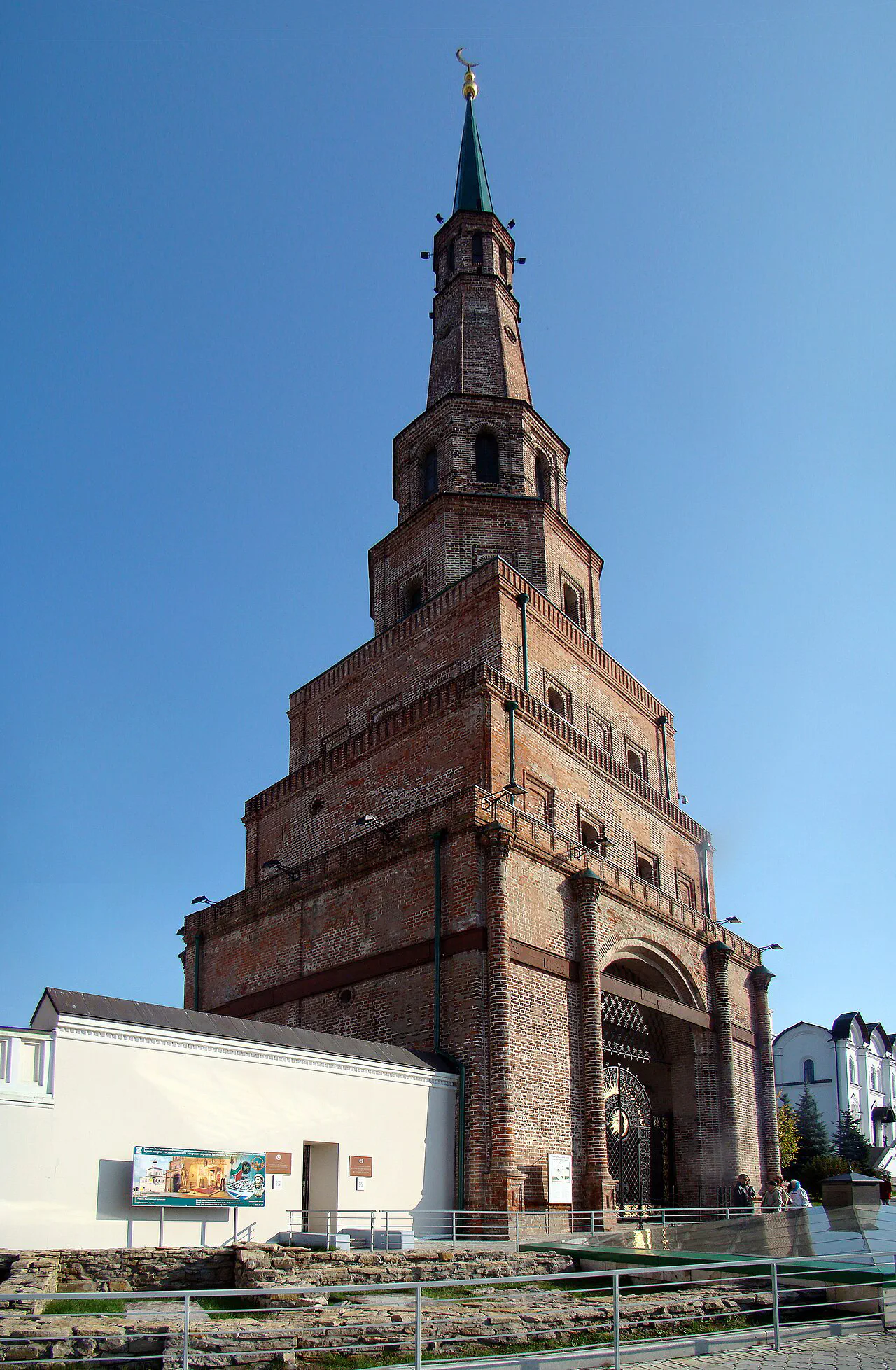
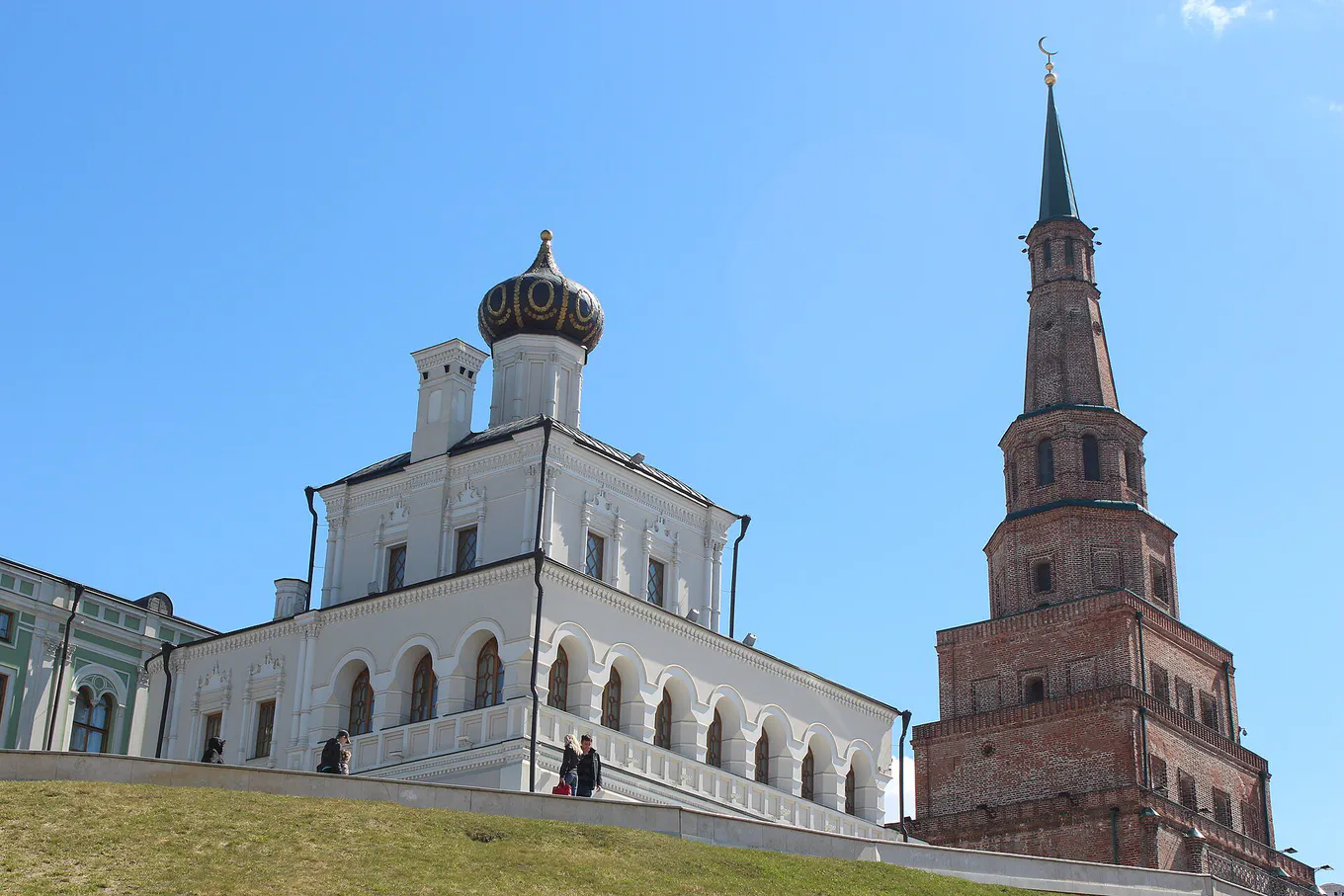
Stand here. The Söyembikä Tower, inside the Kazan Kremlin, a World Heritage Site. By the 1990s it leaned 198 centimetres, until work that decade straightened it.
Legend says Ivan the Terrible had his craftsmen build this tower, and that Söyembikä, queen of Kazan, threw herself from its top tier rather than marry him. The real Söyembikä, a Nogai nobleman’s daughter, governed Kazan as regent for her young son until 1551. But she was moved by force to Moscow with him, and later married to the khan Russia had imposed. No one knows when she died, or where she is buried. And the tower? Several scholars date it to around 1700.
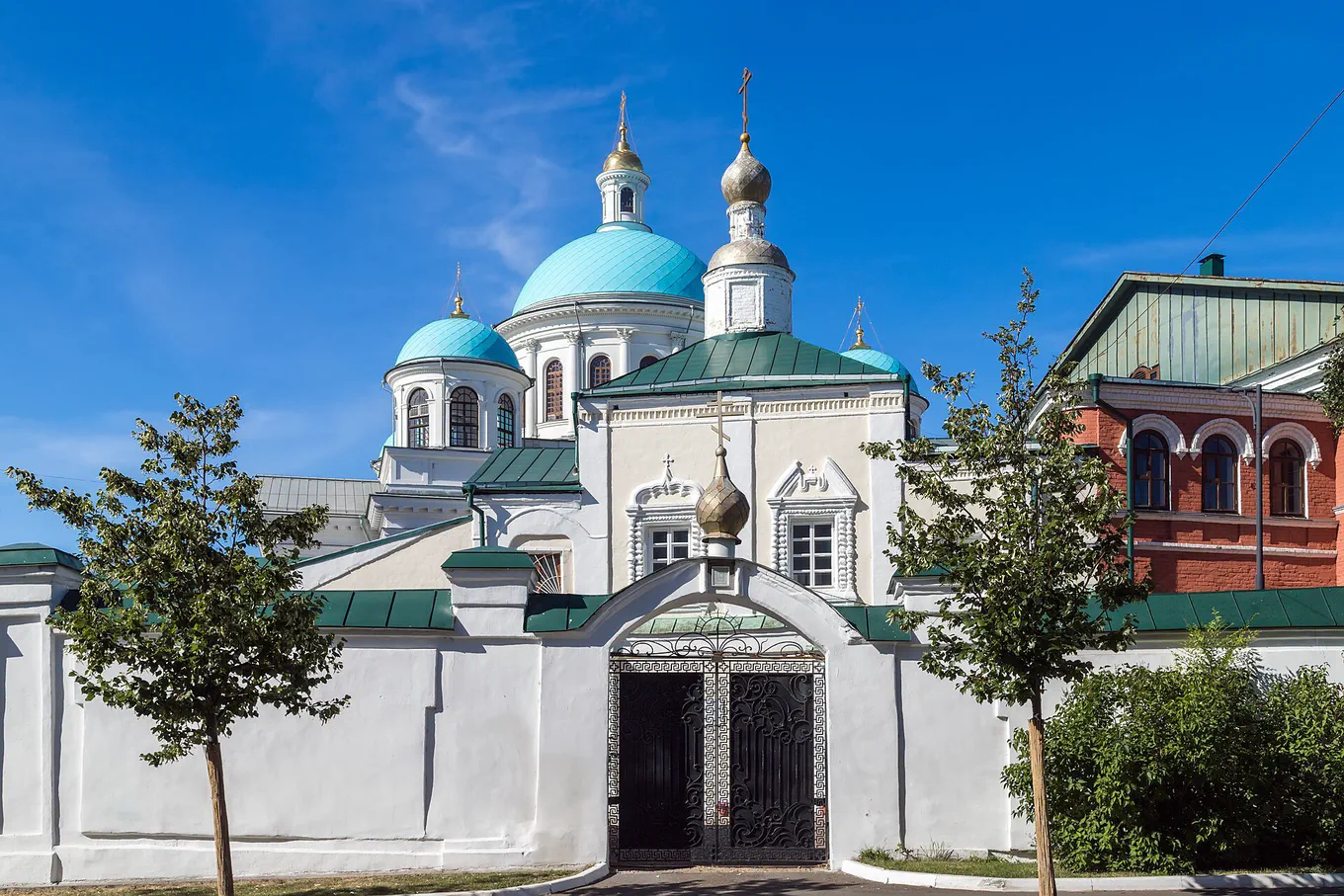
The Kazan Cathedrals in Moscow and St Petersburg are dedicated to Our Lady of Kazan, an icon found in 1579. That year, after fire destroyed Kazan, a ten-year-old girl, Matrona, dreamed the Virgin appeared to her. She told the archbishop, but wasn’t taken seriously. Yet the icon was found, buried under a destroyed house where it had been hidden from the Tatars, and Matrona became one of the first nuns here. In 1904, thieves stole it for its jewelled frame, and claimed they had cut the icon up and burnt it.
3 Lobachevsky’s rejected geometry at Kazan University
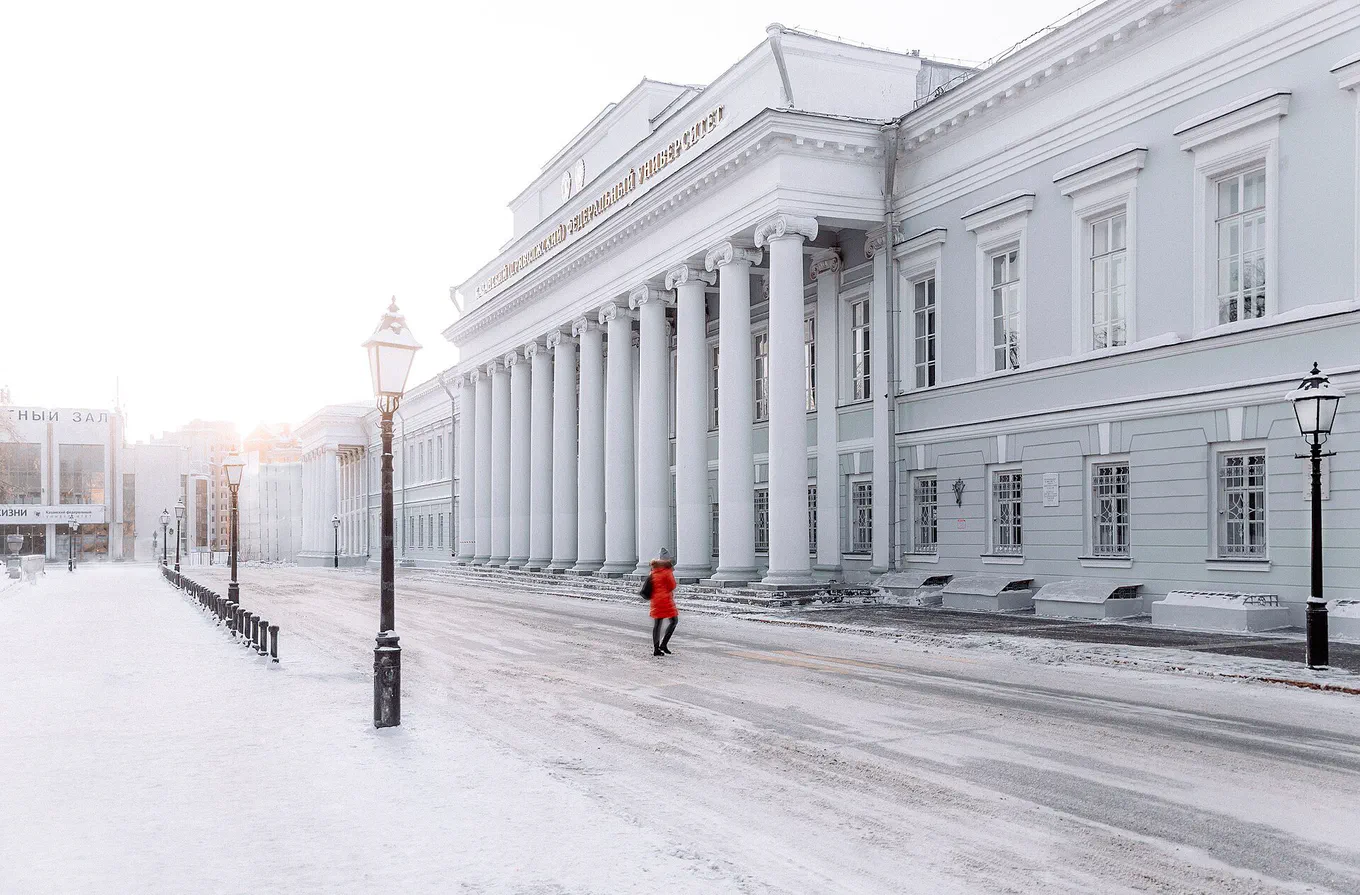
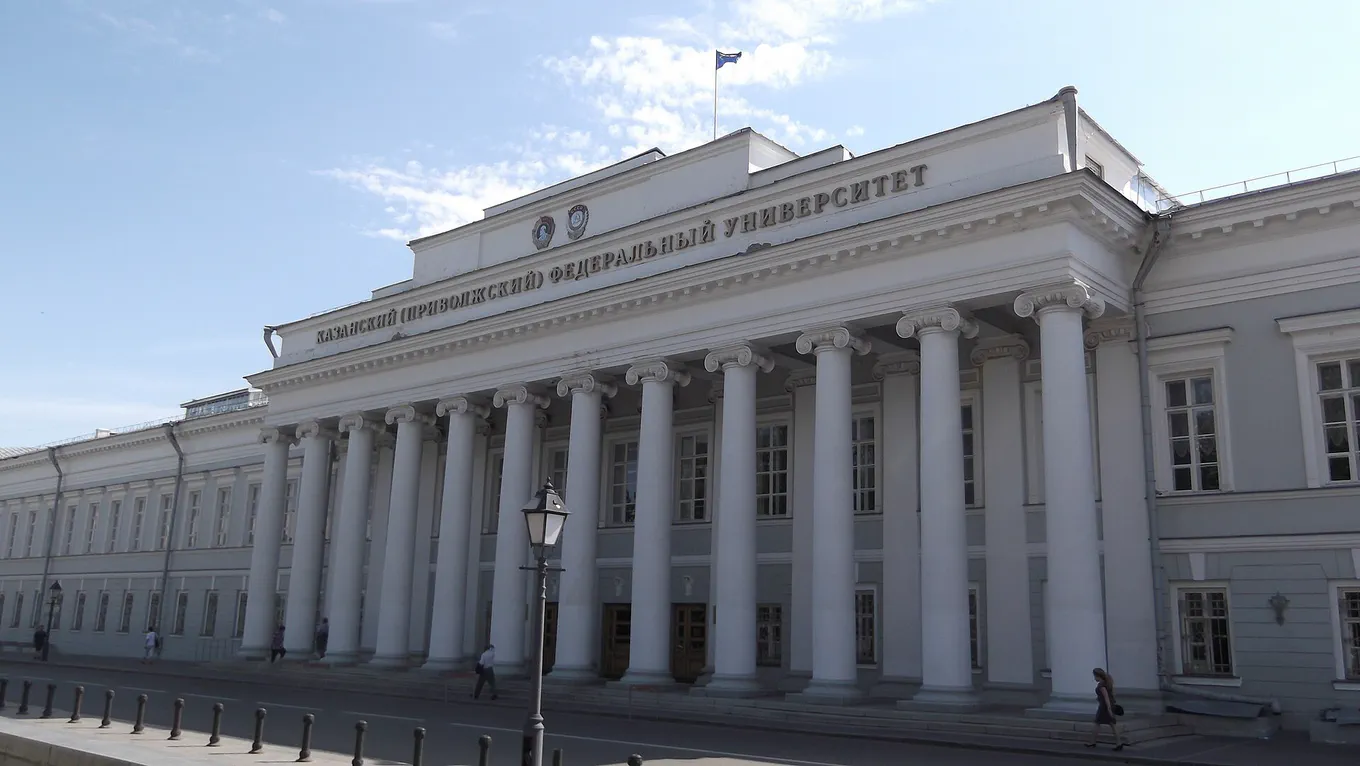
Stand here. Kazan University, which fills a whole block of Kremlyovskaya Ulitsa. Lobachevsky ran it as rector for nineteen years.
Mathematicians before Nikolai Lobachevsky had tried to deduce Euclid’s fifth postulate from the other axioms. Lobachevsky, rector of Kazan University, built a geometry in which that postulate wasn’t true. In 1829, the Kazan Messenger printed his outline, but the St Petersburg Academy of Sciences rejected it. The university later dismissed him, nominally for his health, and he died poor and nearly blind. E. T. Bell wrote, “It is no exaggeration to call Lobachevsky the Copernicus of Geometry.”
4 Maxim Gorky and the Kazan university he never entered
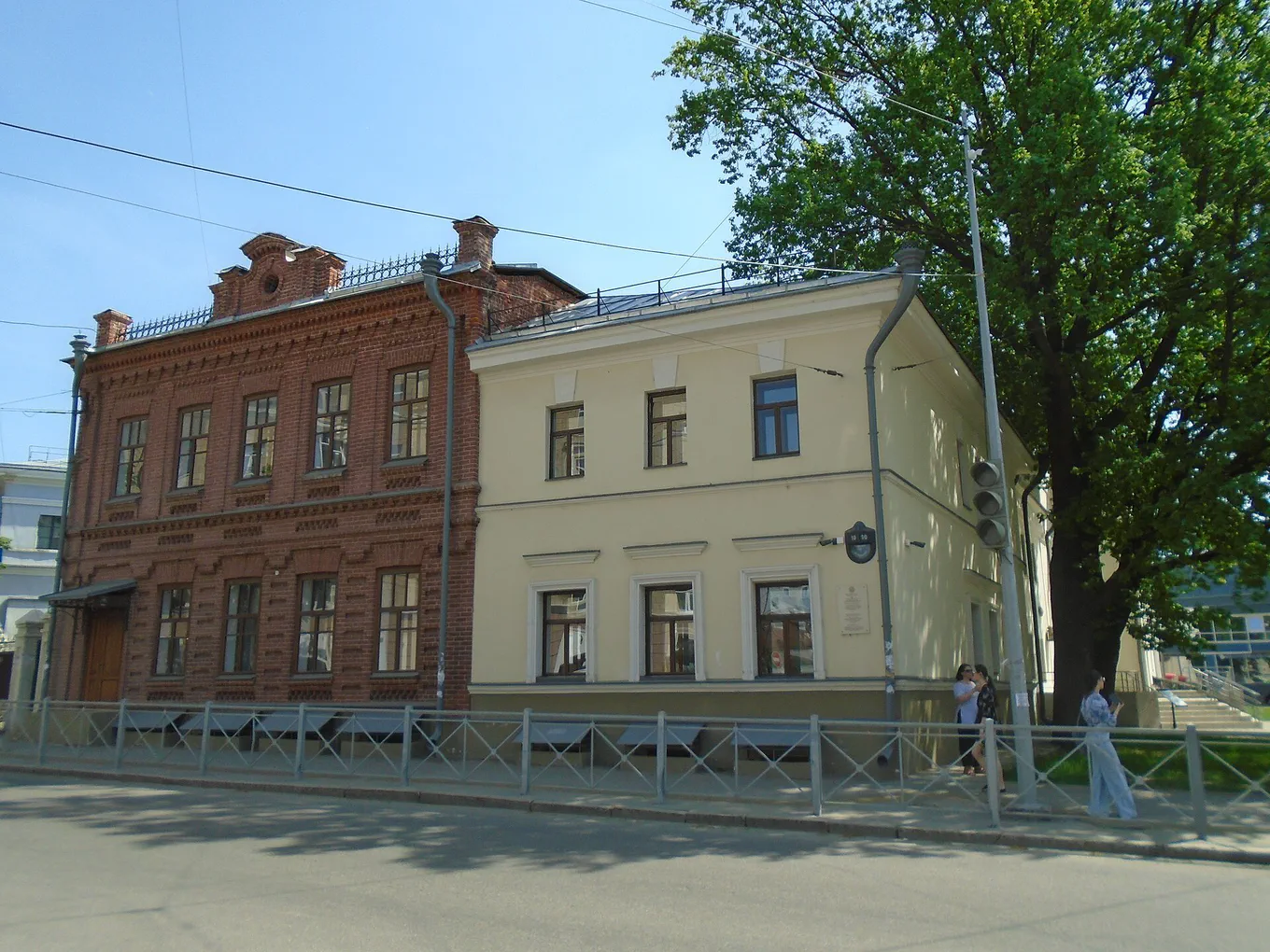
Stand here. The house at 10 Ulitsa Gorkogo, where the young Gorky worked as a cook. It opened as a museum to him in 1940.
Before he was Maxim Gorky, he was Alexei Peshkov, a young man from Nizhny Novgorod who came to Kazan to enrol at the university. When that proved impossible, he took up manual work, as a cook in this house. In December 1887, he tried to take his own life. Afterwards he set off on foot across the Russian Empire for five years, and later took the name Gorky, meaning “bitter”. In 1923, he published the third part of his autobiography, and he called it My Universities.
5 Lenin, the law student Kazan University expelled
Stand here. The main building of Kazan University, on Kremlyovskaya Ulitsa. As a student, Lenin lived in a flat nearby.
Lenin arrived at Kazan University in August 1887 as Vladimir Ulyanov, a law student. His brother was executed that year, and afterwards he embraced revolutionary politics. In December, he joined a demonstration against the government’s ban on student societies. He was expelled, and the Ministry of Internal Affairs exiled him to his family’s estate at Kokushkino. In 1925, the university that had expelled him was renamed in his honour.
Pack nothing. Leave Friday.
Every Friday, I write a free letter, Journey, that takes us on a trip through places, stories, and ideas.
My Universities(Maxim Gorky, 1923). An autobiographical novella. Young Alexei Peshkov arrives in Kazan to enrol at Kazan University, and finds his harsh school of life in the city’s slums and damp bakeries.
Journey into the Whirlwind(Eugenia Ginzburg, 1967). A memoir. It begins in December 1934, when Ginzburg, a teacher and journalist in Kazan, hears news of the murder of Sergei Kirov.
Zuleikha(Guzel Yakhina, 2015). A novel set in the Tatar part of Russia from the late 1920s. Prisoners are taken to Kazan transit prison, where Lenin had been held, then put on a train.
Films to watch before you visit Kazan
Gorky 3: My Universities(Mark Donskoy, 1940). A film. The third part of a trilogy on Gorky’s life, in which Alyosha Peshkov comes to Kazan to study and finds the university an impossible dream.
The Boy’s Word: Blood on the Asphalt(Zhora Kryzhovnikov, 2023). A TV series based on Robert Garaev’s novel about the Kazan phenomenon. In late winter 1989 in Kazan, Marat teaches 14-year-old Andrey about the city’s gang history.
Ivan the Terrible(Sergei Eisenstein, 1945). A film. In the siege of Kazan of 1552, Ivan’s army digs saps under the city and fills them with gunpowder, and Kazan falls.
Questions
Where is the icon of Our Lady of Kazan now?
The original was stolen in 1904. A copy that was housed in Fátima from 1970 to 1993, and then in Pope John Paul II’s study in the Vatican, was returned to Kazan. It is kept in the Kazan Mother of God Monastery, at 5 Ulitsa Bolshaya Krasnaya.
Where is Lobachevsky buried?
In Arskoe Cemetery, in Kazan. Nikolai Lobachevsky died in poverty in 1856, nearly blind and unable to walk. Kazan University, where he was rector from 1827 to 1846, lists him as the founder of non-Euclidean geometry, the geometry he built without Euclid’s fifth postulate.
How old is Kazan?
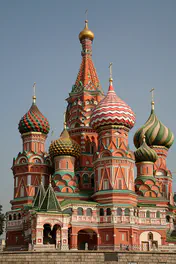
Kazan officially counts 1005 as its founding year. Ivan the Terrible conquered it in 1552, after his army of 150,000 besieged the city from 2 September to 13 October. St Basil’s Cathedral in Moscow commemorates the conquest.