Joseph Conrad’s steamer journey up the Congo, the one that became Heart of Darkness, began at Kinshasa in 1890. If you haven’t heard Kenneth Branagh read it, find it. It’s one of the best readings of a story I’ve ever heard.
— Nick
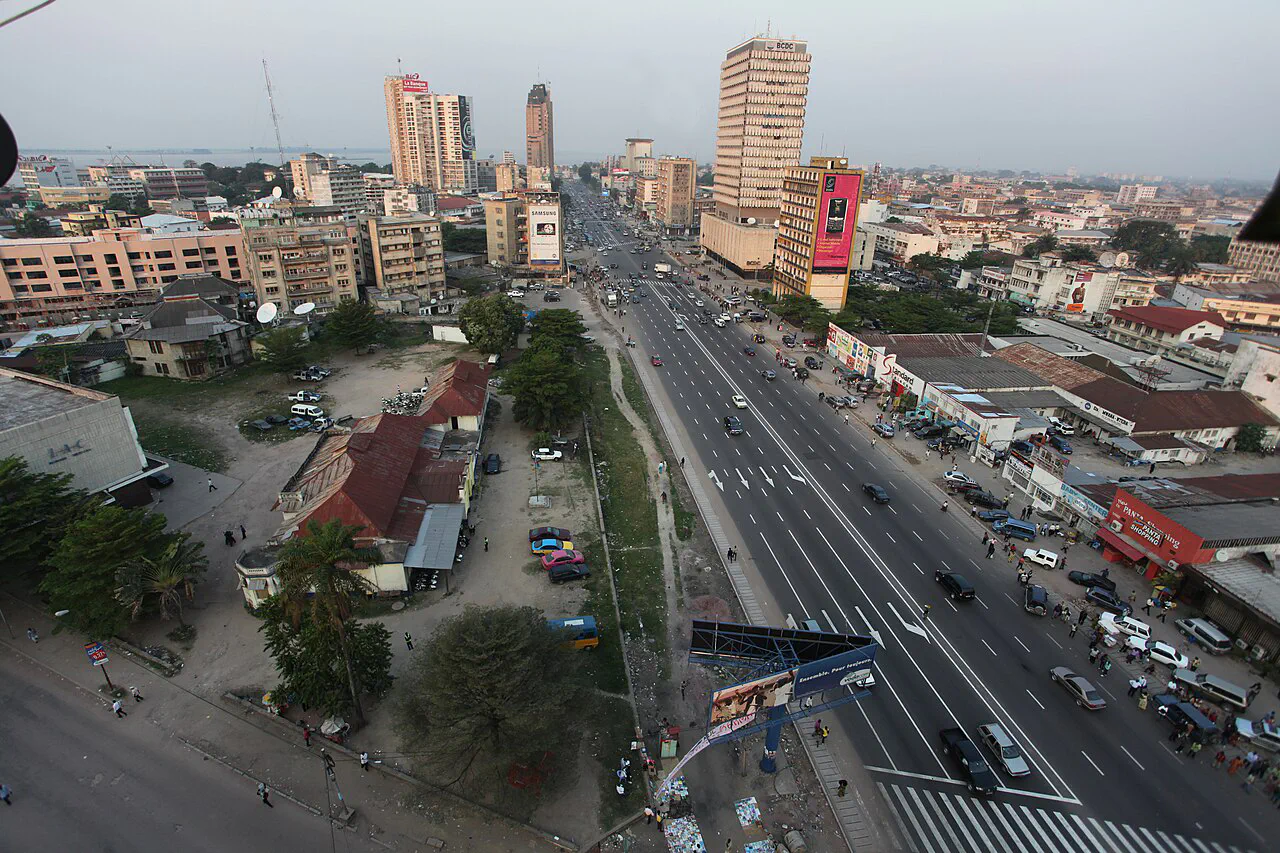
Kinshasa, the capital of the Democratic Republic of the Congo, stretches along the southern shore of Pool Malebo on the Congo River. It was founded in 1881 as Léopoldville, after King Leopold II, and renamed Kinshasa in 1966, under Mobutu Sese Seko. Its stories are Ali on the ropes, an unscheduled speech, suits of raffia, violins strung with brake cables, and a king’s statue back for a day.
1 Muhammad Ali’s rope-a-dope at the Rumble in the Jungle
Stand here. Stade Tata Raphaël, a 60,000-seat stadium that was the Stade du 20 Mai, the 20th of May Stadium, until 1997.
Muhammad Ali had been stripped of his heavyweight title seven years before the Rumble in the Jungle, fought here on 30 October 1974. He came in a 4–1 underdog against the unbeaten champion, George Foreman. The crowd chanted “Ali boma ye”, “Ali, kill him”. But from the second round, Ali leaned on the ropes and covered up, letting Foreman punch his arms and body. He later called it the rope-a-dope. In the eighth, a hard right sent Foreman stumbling to the canvas, and the title was Ali’s again.
2 Patrice Lumumba’s unscheduled speech at the Palais de la Nation
Stand here. The Palais de la Nation, beside the Congo River in Gombe. Finished in time for independence, it has housed the President since 2001.
On 30 June 1960, Independence Day, the new prime minister, Patrice Lumumba, wasn’t scheduled to speak here. King Baudouin of Belgium spoke first and praised the “genius” of his ancestor Leopold II. Lumumba answered anyway. He spoke of “the humiliating slavery which was imposed upon us by force”. The Belgian delegation found it deeply insulting, and the king left the room. Within seven months, Lumumba had been executed. His body was later dissolved in acid. In 2022, Belgium returned a gold-capped tooth. Kinshasa buried it on the speech’s anniversary.
3 Papa Wemba and the sapeurs of Matonge
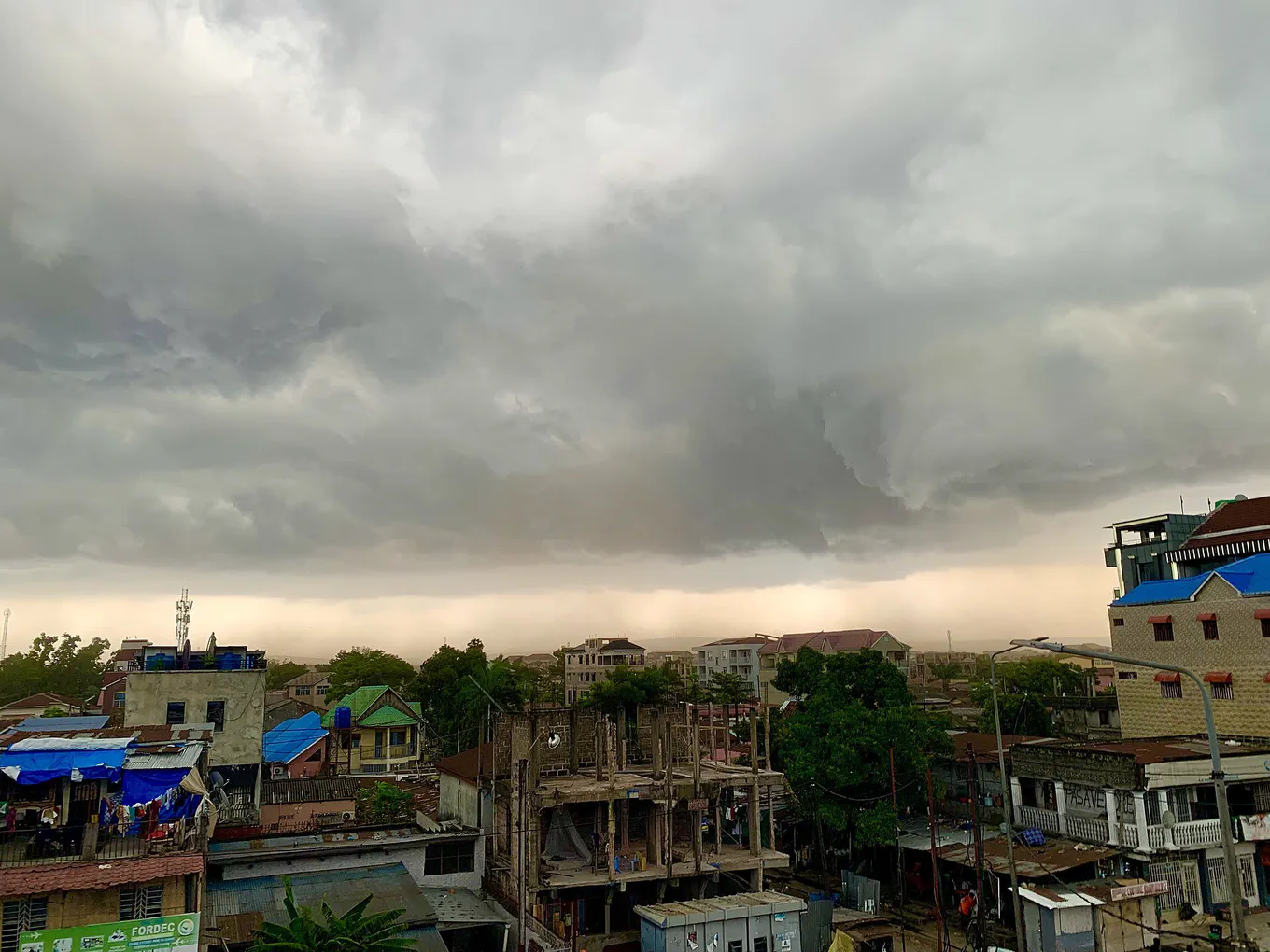
Stand here. Matonge, in the north of Kalamu commune, a centre of Congolese music, where Papa Wemba set up Village Molokai, a shared space for artists.
Low-rise rooftops of Matonge, in Kinshasa’s Kalamu commune, under heavy rain clouds.Munhwangodi gaetan / CC0.
The abacost, promoted by President Mobutu in the early 1970s, was a light jacket meant to replace the European suit and tie. Its name came from “à bas le costume”, “down with the suit”. Papa Wemba, the singer dubbed “the King of Rumba”, is credited with helping revive La Sape in Kinshasa in the same decade. La Sape, the Société des Ambianceurs et des Personnes Élégantes, turns elegance into public performance. But its followers, the sapeurs, rejected Mobutu’s dress rules or reshaped them. Some made their suits out of raffia.
4 Armand Diangienda and the Kinshasa orchestra strung with brake cables
Stand here. Ngiri-Ngiri, the Kinshasa neighbourhood where most of the orchestra’s musicians have no steady income. The orchestra’s conservatory in Kinshasa is now home to a school for young people.
The documentary Kinshasa Symphony (2010) is about the orchestra Armand Diangienda founded in Kinshasa in 1994, after he lost his job as an airline pilot. He had taught himself to read music. He gathered 12 young people who wanted to play the violin, but he had only five instruments, so each played for 20 minutes, then passed the violin on. When strings broke, they used brake cables from old bicycles. Their first concert was that December. By 1999, everyone had an instrument of their own.
5 King Leopold II’s statue returns to Kinshasa for a day
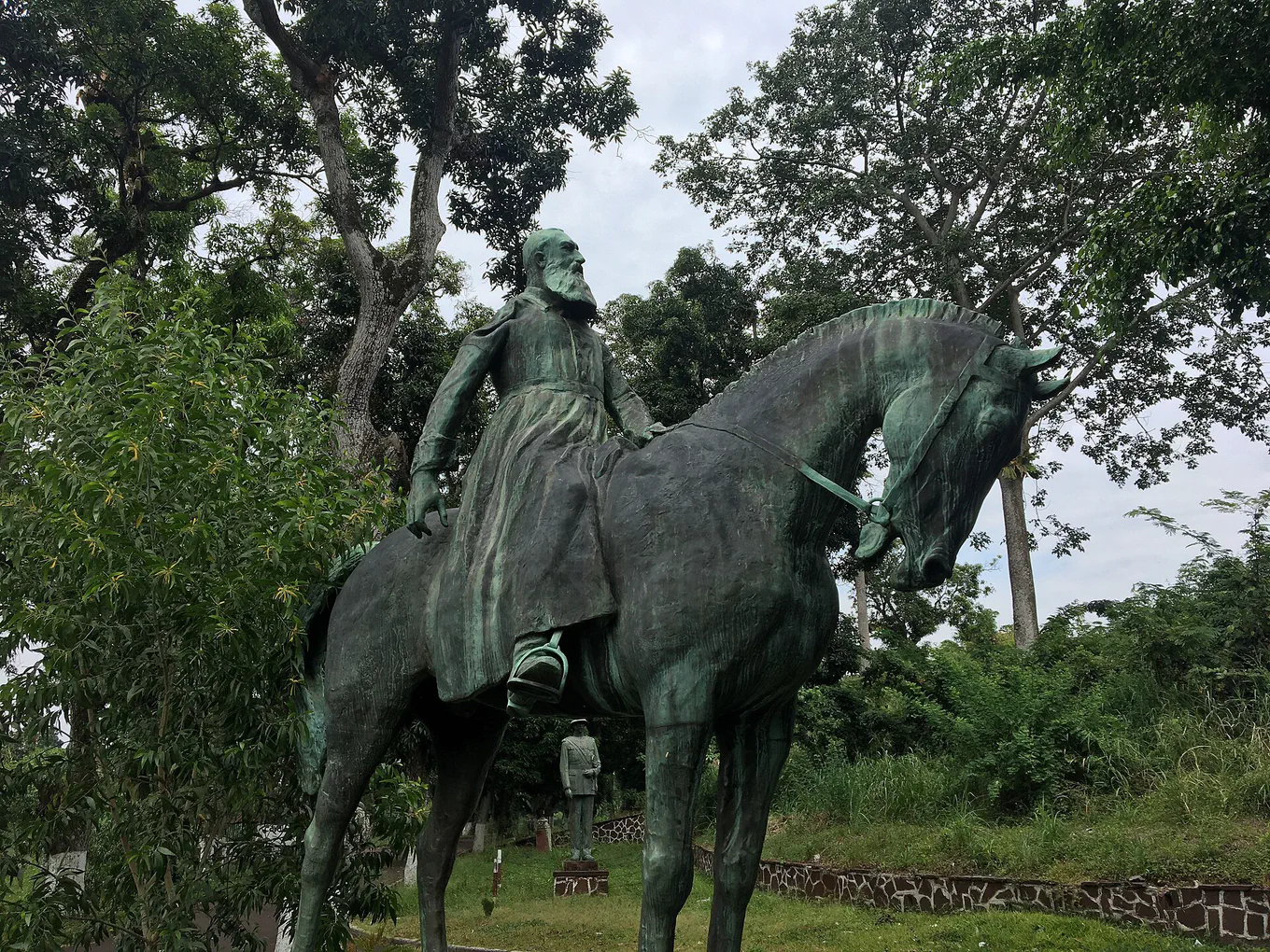
Stand here. The roundabout at the end of Boulevard du 30 Juin, near the central station. The statue stood here for less than a day.
King Leopold II never set foot in the Congo, but he ruled it as his personal colony. His agents enslaved its people to harvest rubber, and as many as 10 million may have died. Mobutu removed Leopold’s six-metre statue, and it spent nearly 40 years in a dump. In February 2005, the culture minister put it back up here. “A people without history is a people without a soul,” he said. Less than a day later, the workmen who raised it took it away. No official could explain why.
Pack nothing. Leave Friday.
Every Friday, I write a free letter, Journey, that takes us on a trip through places, stories, and ideas.
The Fight(Norman Mailer, 1975). Non-fiction reportage. Mailer stays at the Inter-Continental hotel in Kinshasa and goes to Foreman’s press meeting at the Hotel Memling.
Congo Inc.(In Koli Jean Bofane, 2014). A novel set in Kinshasa, where Isookanga arrives from his backwoods village and befriends Shasha, a leader among the shégués, the city’s street kids.
Kinshasa: Tales of the Invisible City(Filip De Boeck and Marie-Françoise Plissart, 2006). An anthropologist’s and a photographer’s analysis of Kinshasa, visible and invisible, that approaches the city from the river, past Port Baramoto, the Yacht Club, and Beach Ngobila.
Films to watch before you visit Kinshasa
When We Were Kings(Leon Gast, 1996). A documentary film, winner of the Academy Award, about Ali and Foreman before and during their fight at the Stade du 20 Mai.
Benda Bilili!(Renaud Barret and Florent de La Tullaye, 2010). A documentary film about Staff Benda Bilili, a band who rehearsed in Kinshasa zoo because it was quiet.
Kinshasa Symphony(Claus Wischmann and Martin Baer, 2010). A documentary film about Armand Diangienda’s Orchestre Symphonique Kimbanguiste and its musicians.
Questions
Where was the Rumble in the Jungle fought?
At the Stade du 20 Mai, the 20th of May Stadium, in Kinshasa, on 30 October 1974. After Mobutu’s fall in 1997, it was renamed Stade Tata Raphaël, after Raphaël de la Kethulle de Ryhove, who started it in 1952. It holds 60,000 people.
Where is Patrice Lumumba buried?
In a mausoleum at the place de l’Échangeur in Kinshasa, inaugurated in 2022. His body had been dissolved in acid after his execution in 1961, and all that was left was a single gold-capped tooth. Belgium returned it, and it was laid to rest there on 30 June 2022, the anniversary of his independence speech.
How close is Kinshasa to Brazzaville?
Brazzaville, the capital of the neighbouring Republic of the Congo, sits across the Congo River, about four kilometres away. That makes Kinshasa and Brazzaville the world’s closest pair of capital cities.