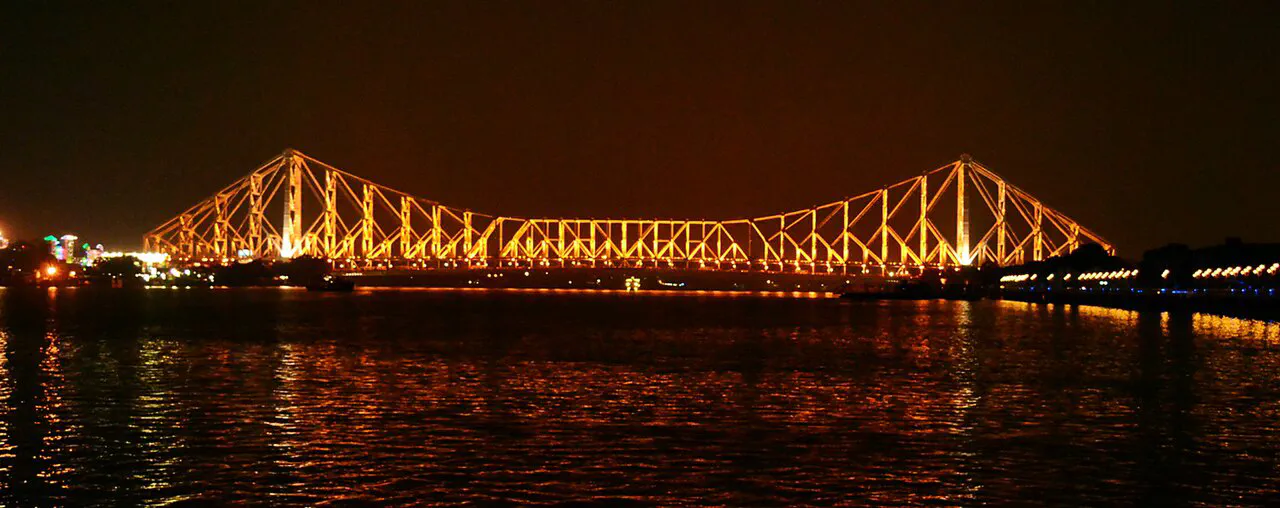
When they opened Howrah Bridge in Kolkata, they did it quietly for fear of Japanese planes. I did a similar thing with this site for a far less serious reason. I wasn’t at all sure whether anyone would share my weird mix of interests. So… thanks for being here… you weirdo ;-)
— Nick
Calcutta, Kolkata’s name until 2001, was in effect India’s capital under British rule until 1911. Today it is the capital of West Bengal, on the eastern bank of the Hooghly River in India. Tagore handing back a knighthood sits with Subhas Chandra Bose escaping in disguise, Mother Teresa’s home for the dying, a film the city tried to stop, and the tomb of the man long called its founder.
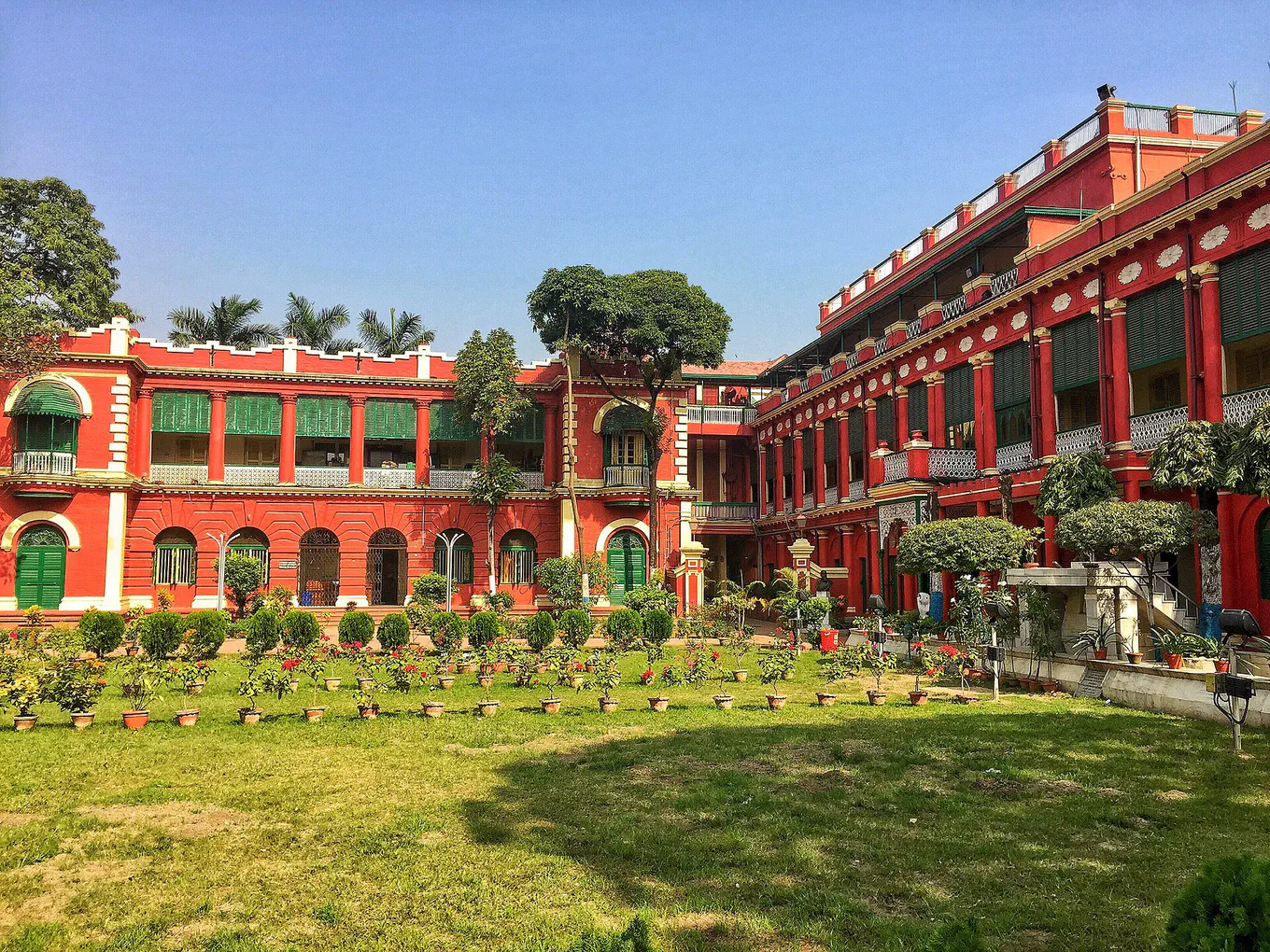
1 Rabindranath Tagore gives back his knighthood at Jorasanko
Stand here. Jorasanko Thakur Bari, 6 Dwarakanath Tagore Lane, north Kolkata. The Tagore family home, where he was born and died, is now the Tagore museum.
India and Bangladesh both take their national anthems from Rabindranath Tagore. He was the first non-European to win a Nobel Prize, and in 1915 King George V knighted him. Then came the Jallianwala Bagh massacre of 1919. Tagore wrote a letter giving the knighthood back. Badges of honour, he wrote, now made “our shame glaring”, and he wished to stand “by the side of my countrymen”. He died in an upstairs room of the Jorasanko house he was born in.
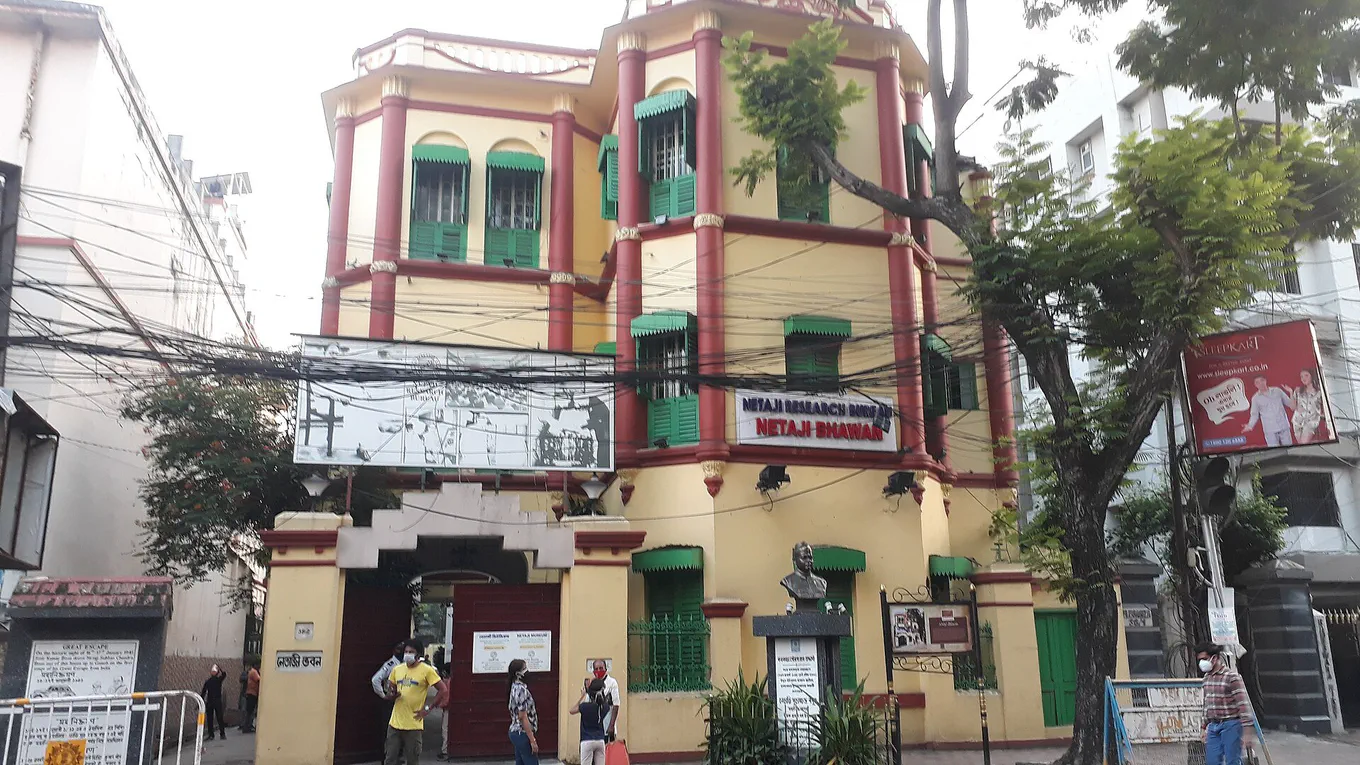
2 Subhas Chandra Bose’s great escape from Elgin Road
Stand here. Netaji Bhawan, the Bose family house on Elgin Road, now Lala Lajpat Rai Sarani, in Bhowanipore. It holds a museum, archives, and a library.
One night in January 1941, Netaji Subhas Chandra Bose escaped from this house dressed as a Pathan, in a long brown coat, a black fez-type hat, and broad pyjamas. The anti-colonial leader had been under house arrest here, watched by the police. His nephew Sisir drove him to Gomoh in a Wanderer sedan, then came back to the city alone. Bose crossed Afghanistan and reached Moscow on the passport of an Italian count. By April, the man the police had been watching in Calcutta was in Berlin.
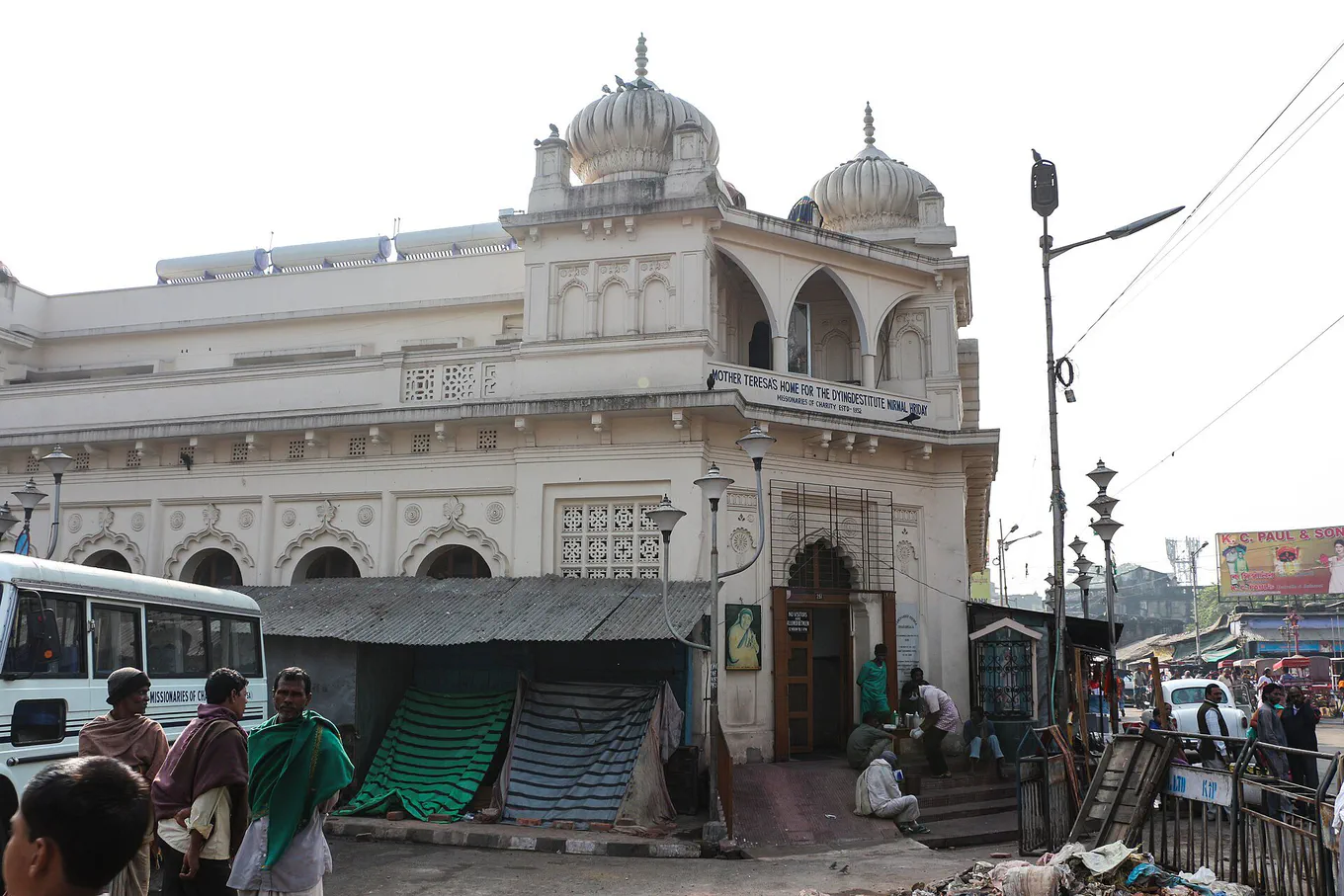
3 Mother Teresa’s home for the dying beside the Kali temple
Stand here. Nirmal Hriday, the Kalighat Home for the Dying, in the old pilgrims’ rest house beside the Kalighat Kali temple.
Mother Teresa, now Saint Teresa of Calcutta, opened her first home for the dying here in 1952, on her 42nd birthday, free for the poor. The Hindus of Kalighat were hostile to this foreign-born nun, and the Hindu priests suspected her motives. Then one day, the story goes, she picked up a dying Hindu priest from the road outside and nursed him back to health. “Ever since then she has been accepted as one of us,” a local man said.
4 City of Joy, the film Calcutta tried to stop
Stand here. Pilkhana, near Howrah Station, in Kolkata’s twin city across the Hooghly. It is the real place behind Anand Nagar in City of Joy.
Calcutta’s nickname, the City of Joy, comes from Dominique Lapierre’s novel of a slum modelled on Pilkhana. In February 1991, Roland Joffé began filming it in Calcutta and Howrah, with Patrick Swayze as a Houston surgeon. But demonstrators besieged the set. The state government opposed the film, and a state attorney argued in court that the story made Calcutta look like a city of lepers, pimps, and criminals. The court halted outdoor shooting for two weeks, then let it go on only on Sundays and holidays.
5 Job Charnock, Calcutta’s disputed founder, at St John’s Church
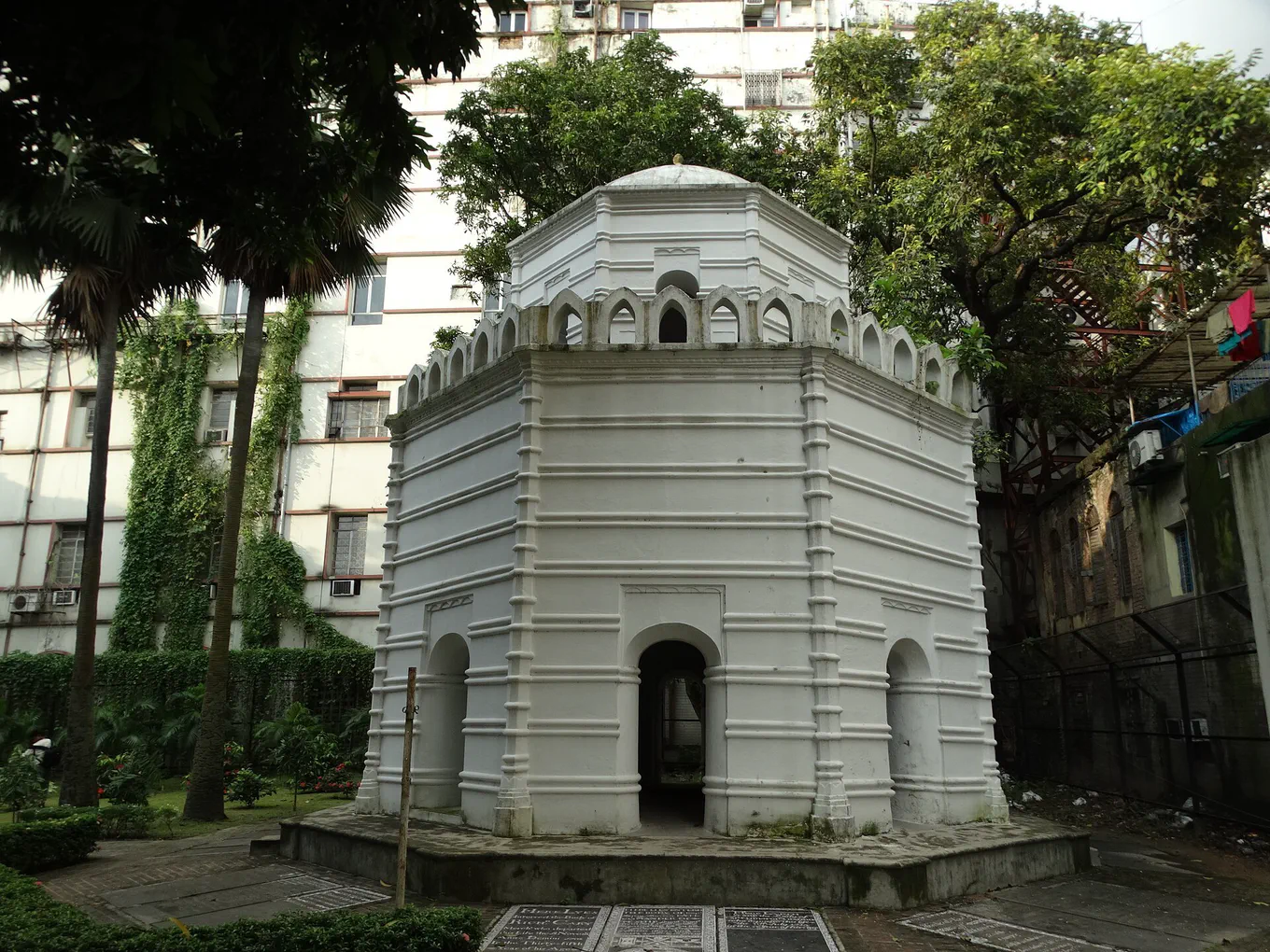
Stand here. The graveyard of St John’s Church, built in the 1780s. Charnock’s mausoleum, raised over his grave in 1695, still stands there.
The man long called Calcutta’s founder lies under this tomb. Job Charnock of the East India Company set up its headquarters at the place he called Calcutta in 1690. He had taken a Hindu wife, said to be a fifteen-year-old Rajput princess, and named her Maria. She died before him and was buried as a Christian, and the inscription here leaves her out. In 2003, the Calcutta High Court ruled that Charnock should not be regarded as the city’s sole founder, and ordered his name purged from textbooks.
Pack nothing. Leave Friday.
Every Friday, I write a free letter, Journey, that takes us on a trip through places, stories, and ideas.
City of Joy(Dominique Lapierre, 1985). A novel. Its slum, Anand Nagar, is based on Pilkhana, near Howrah Station, and the book gave Calcutta its nickname.
Chowringhee(Sankar, 1962). A novel set in the Calcutta neighbourhood of Chowringhee in the mid-1950s, where Shankar is found a job at the Shahjahan Hotel.
The Calcutta Chromosome(Amitav Ghosh, 1996). A novel. Its 1995 storyline ends at Sealdah railway station, where the characters converge and vanish from the public record.
Films to watch before you visit Kolkata
City of Joy(Roland Joffé, 1992). A film shot in Calcutta and Howrah. Patrick Swayze plays a Houston surgeon, and Om Puri a farmer new to the city.
Kahaani(Sujoy Ghosh, 2012). A film shot across Kolkata, from Kalighat Metro station and the Nonapukur tram depot to Kumartuli, Howrah Bridge, and the Victoria Memorial.
Questions
Can you see Job Charnock’s tomb?
Yes. The mausoleum that his son-in-law and successor raised over his grave in 1695 still stands in the graveyard of St John’s Church. The church was begun in 1784 and finished in 1787, with Rs 30,000 raised by a public lottery. One source says his wife Maria lies in the same grave, though the inscription doesn’t name her.
Why did Calcutta change its name to Kolkata?
Calcutta, the anglicised form of the city’s name, was the official name until 2001. That year it was changed to Kolkata, to match the Bengali pronunciation. It’s why both names appear on this page.
Is it true Howrah Bridge has no nuts and bolts?
Yes. Instead of being bolted, the whole structure was riveted together, using 26,500 tons of steel, 23,000 tons of it supplied by Tata Steel. The bridge came into service in 1943 with no formal opening, for fear of attacks by Japanese planes, and the first vehicle across was a solitary tram.