La Paz is the seat of Bolivia’s government, set in a canyon cut by the Choqueyapu River, below the triple-peaked mountain Illimani. The Spanish conquistador Alonso de Mendoza founded it on 20 October 1548. Its stories here are an Aymara siege from El Alto, a president lynched in the main square, Che Guevara in disguise, the day Brazil lost, and an inmate who sold tours of his own prison.
Túpac Katari, an Aymara coca trader, declared he would drive the Spanish out. In March 1781, his army of 10,000 to 40,000 controlled the ways into La Paz, and he and his wife, Bartolina Sisa, held court in El Alto. Inside La Paz, many died of starvation and disease. But a royal column relieved the city, a former ally betrayed him, and he was tied to four horses and torn apart. Sisa was hanged in the main square. Oral tradition says he died promising to return as thousands upon thousands.
2 President Villarroel and the lamppost in Plaza Murillo
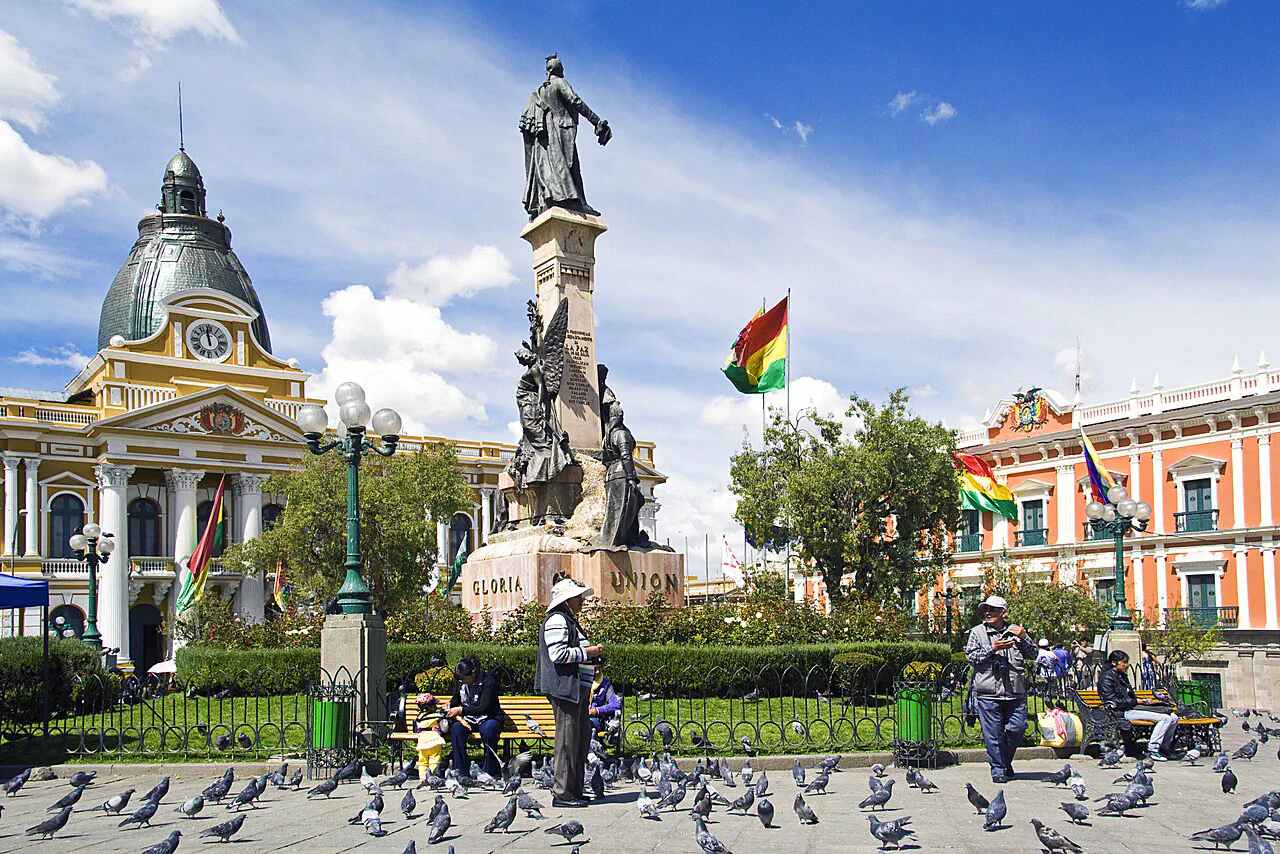
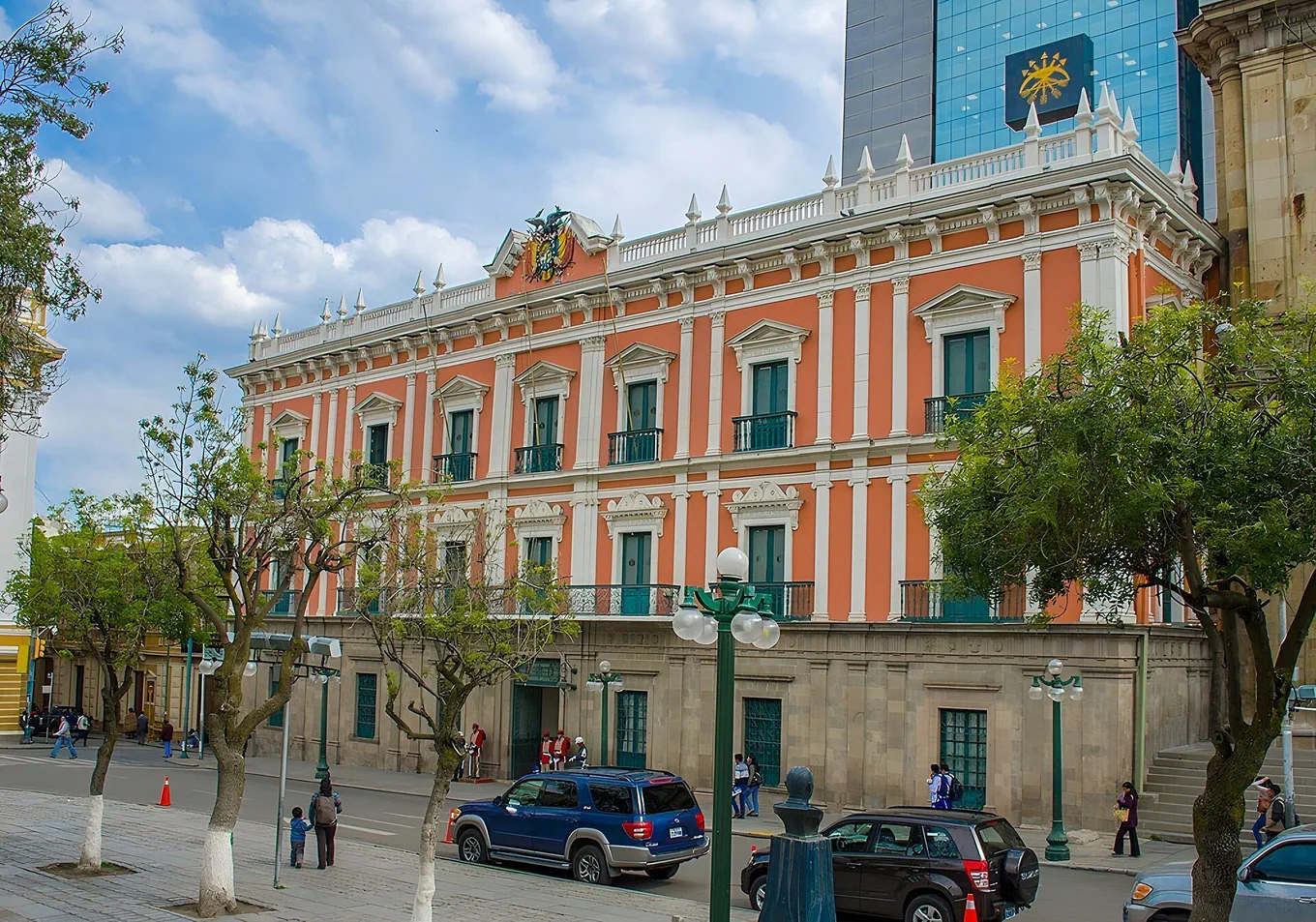
Stand here. Plaza Murillo, the square most bound up with Bolivia’s political life, in front of the Palacio Quemado.
When Gualberto Villarroel, an army officer, took power in a coup in 1943, he moved into the Palacio Quemado, the president’s palace on this square. He wanted the backing of Bolivia’s long-marginalised Indigenous people, and he abolished pongueaje, a form of unpaid servitude. On 21 July 1946, crowds against his government took Plaza Murillo and stormed the palace in search of him. He was lynched, and his body was hanged from a lamppost in the square. The crowd hadn’t known that he had already resigned.
3 Che Guevara checks into a La Paz hotel in disguise
Stand here. A Hotel Copacabana stands at Avenida 16 de Julio 1802, but no source confirms it’s the building Che stayed in.
On 3 November 1966, Che Guevara checked into the Hotel Copacabana in La Paz as somebody else. He was travelling as Adolfo Mena, a Uruguayan businessman, and he was clean-shaven and balding, with tufts of grey hair and thick glasses. Within a few months the shaggy black hair and beard had grown back and the glasses had gone. In October 1967, the Bolivian army captured the guerrilla leader, and eleven months after Adolfo Mena checked in, Che Guevara was dead.
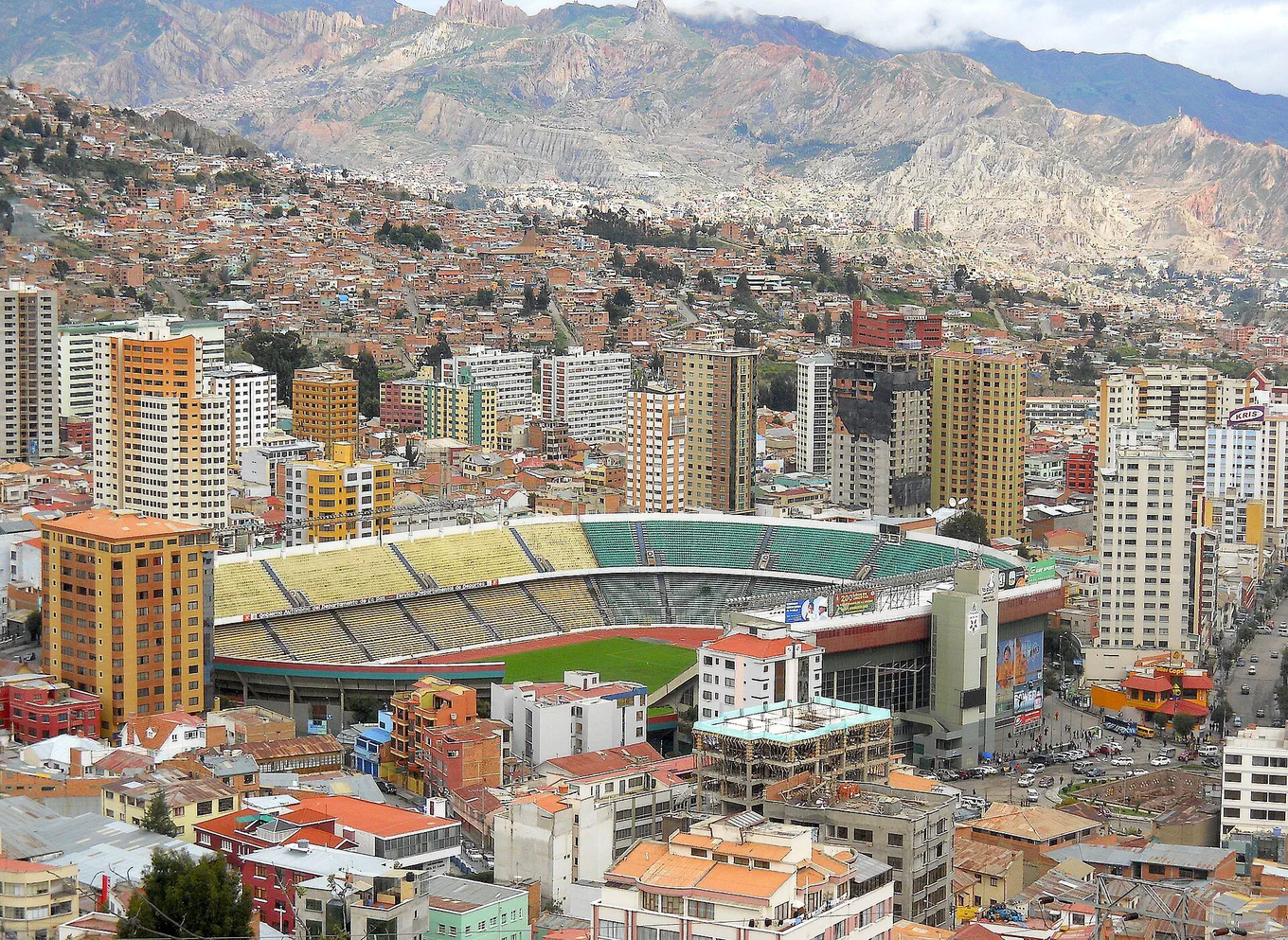
Brazil had never lost a World Cup qualifier in South America when they came here on 25 July 1993, and with two minutes left it was still goalless. Then Bolivia’s Marco Etcheverry ran onto a short pass and powered past several players, and a shot slipped between the legs of Brazil’s goalkeeper. A minute later Álvaro Peña scored a second, and Brazil had lost a qualifier for the first time in forty years of qualifying. They went on to win the 1994 World Cup. Bolivia were there too, at their first.
5 Thomas McFadden’s tours of San Pedro prison
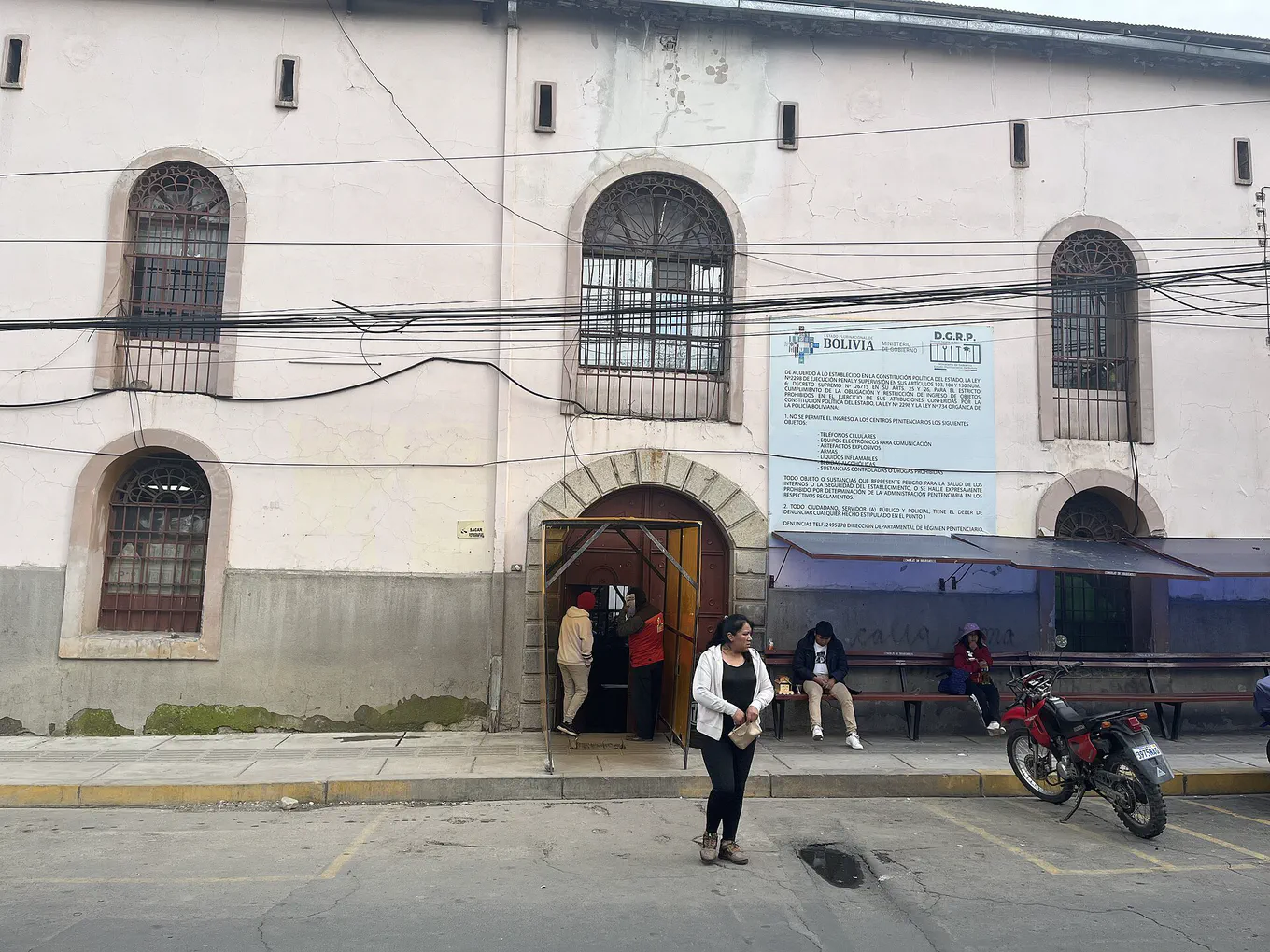
Stand here. Outside San Pedro prison, in the San Pedro neighbourhood. The Bolivian government put an end to prison tours in 2009.
If you’ve read Marching Powder, you’ve been inside this prison with Thomas McFadden. In 1996, the Liverpudlian was caught at La Paz airport with five kilos of cocaine, and he served until 2000 in San Pedro, where inmates had to buy or rent their own cells. He made his living by giving tours, and word of mouth and a Lonely Planet guide soon brought him about seventy visitors a day. One of them, an Australian backpacker called Rusty Young, stayed. He shared McFadden’s cell for three months, and wrote the book.
Pack nothing. Leave Friday.
Every Friday, I write a free letter, Journey, that takes us on a trip through places, stories, and ideas.
American Visa(Juan de Recacoechea, 1994). A novel. In this 1994 Bolivian bestseller, Mario sees the underside of La Paz, its seedy bars and bordellos, as he awaits a visa to enter the United States.
Felipe Delgado(Jaime Saenz, 1979). A novel. Set in La Paz in the 1930s, a city of railways, it is counted in several anthologies among the best novels of Bolivia.
A Young Man’s Guide to Late Capitalism(Peter Mountford, 2011). A novel set in La Paz, where a young hedge-fund analyst’s first job is to uncover the plans of Bolivia’s new president, Evo Morales.
Films to watch before you visit La Paz
Chuquiago(Antonio Eguino, 1977). A film. An “x-ray” of La Paz in four vignettes, each about a character from a different social class, beginning with a young campesino brought to the city.
The Great Movement(Kiro Russo, 2021). A film. Shot in La Paz, it follows Elder, who walks to the city with young miner friends to demand their jobs back, then falls ill.
Zona Sur(Juan Carlos Valdivia, 2009). A film. Shot in Calacoto and La Florida, in La Paz’s southern zone, it follows a divorced mother raising her three children alone.
Questions
Is La Paz the capital of Bolivia?
Not on its own. La Paz is the seat of government of Bolivia, while Sucre is the constitutional capital and keeps the judicial power. Even so, La Paz is the highest administrative capital in the world.
Why is it called Plaza Murillo?
It’s named after Pedro Domingo Murillo, who led the La Paz revolution of 16 July 1809 and demanded Upper Peru break away from the Spanish Empire. On 29 January 1810, he and the other leaders were hanged in the square, then the Plaza de Armas. He reportedly said that tyrants could not put out the torch he had lit.
How high is the Hernando Siles Stadium?
It stands 3,582 metres (11,752 feet) above sea level, in the Miraflores district of La Paz. FIFA once ruled that no World Cup qualifier could be played in a stadium above 2,500 metres, a ban it revoked in May 2008.