Lahore is the capital of Pakistan’s Punjab province and the country’s second-largest city, on the Ravi River. It became the Mughal capital in 1584, and its fort and Shalimar Gardens are UNESCO World Heritage Sites. Its stories here are a boy on a cannon in Kipling’s Kim, a prince’s lost love, a diamond surrendered by a child, a hanging brought forward, and the meeting Pakistan marks every 23 March.
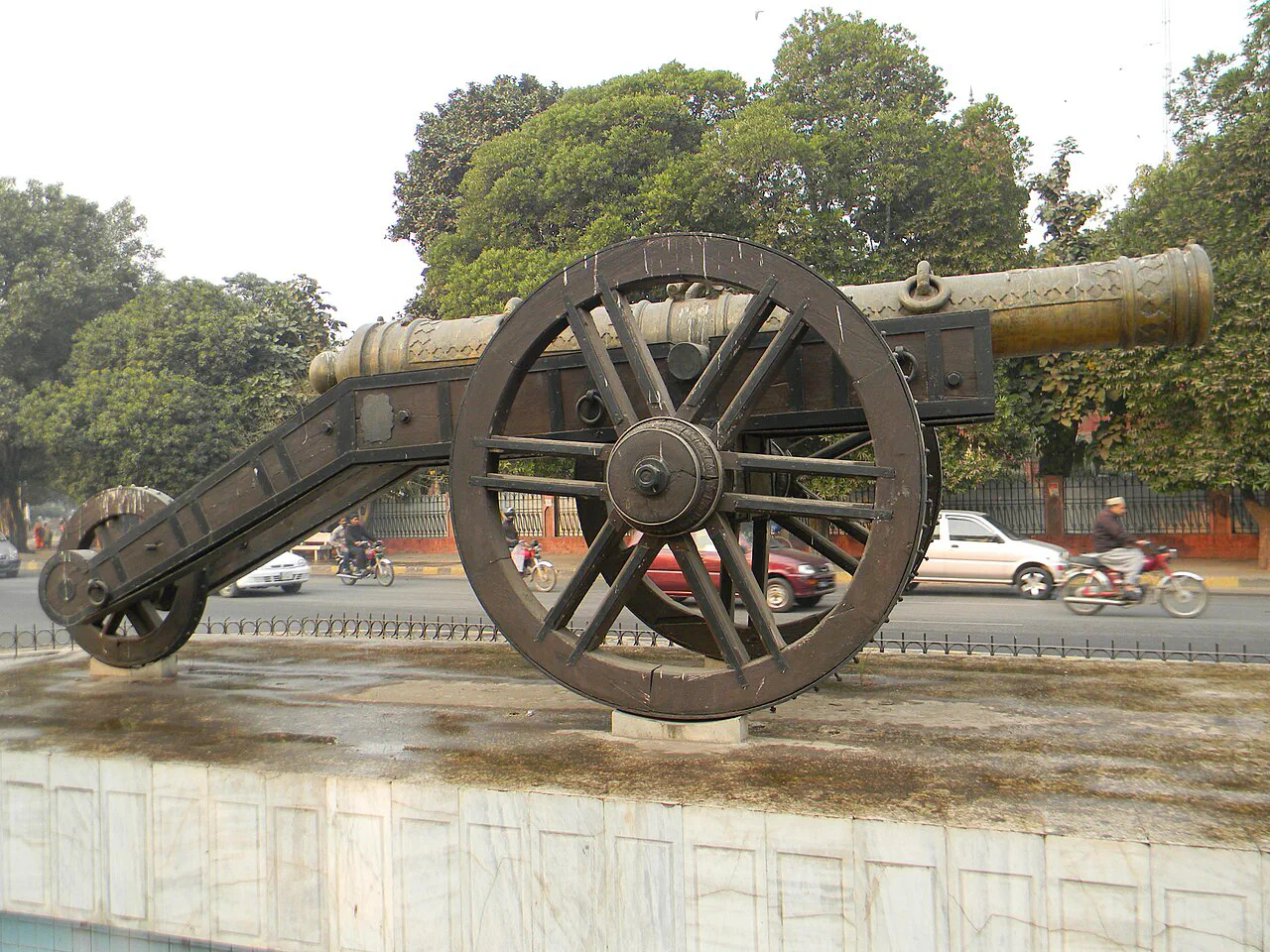
Stand here. The Zamzama gun on Mall Road, in front of the Lahore Museum. It is still known as Kim’s Gun.
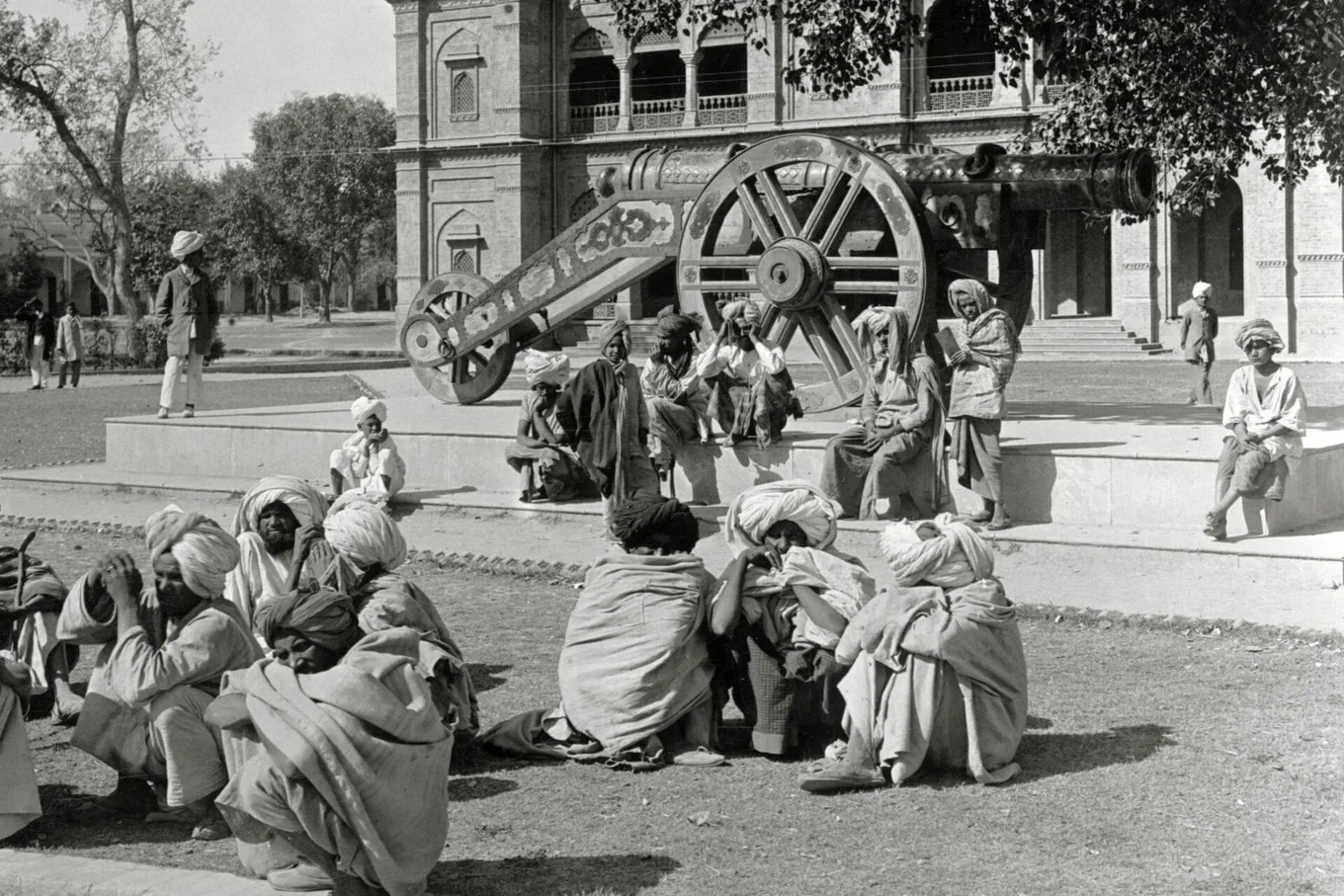
The Zamzama gun in Lahore, with onlookers gathered around it, in a late-19th-century photograph.Unknown / Public domain.
Rudyard Kipling opens his 1901 novel Kim with an orphan boy, Kim, sitting astride this gun against municipal orders, opposite the Wonder House, the old Lahore Museum. Whoever holds the gun, the novel says, holds the Punjab. An old Tibetan lama comes into the museum looking for a legendary river that frees a man from the Wheel of Things. The white-bearded Curator doesn’t know. So he gives the lama his own spectacles, and the lama presses his pen-case on him: “It is something old—even as I am.”
2 Anarkali’s tomb in Lahore and the prince who loved her
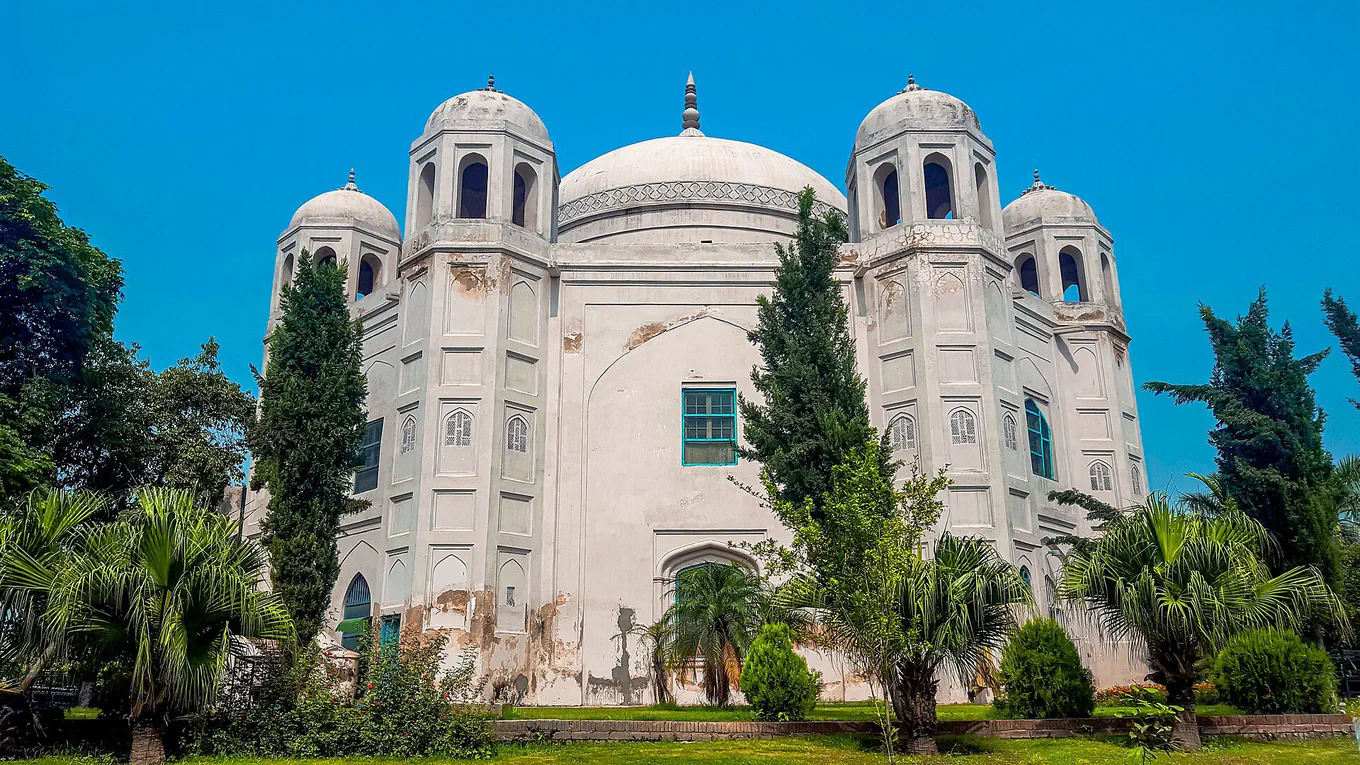
Stand here. The Tomb of Anarkali, in the Punjab Civil Secretariat grounds near the Mall. It now holds the Punjab Archives, and public access is limited.
Mughal-e-Azam, the 1960 film that stayed India’s highest-grossing for 15 years, tells of Prince Salim, the emperor Akbar’s son, and his love for Anarkali, whose name means “pomegranate blossom”. On screen, Akbar lets her escape. In the Lahore legend, he has her walled up alive. Historians doubt it, and one argues this tomb belonged to a wife of Salim. Yet the couplet on the tomb is signed with Salim’s name: “Could I behold the face of my beloved once more, I would thank God until the day of resurrection.”
3 The Koh-i-Noor and the boy who lost it in Lahore
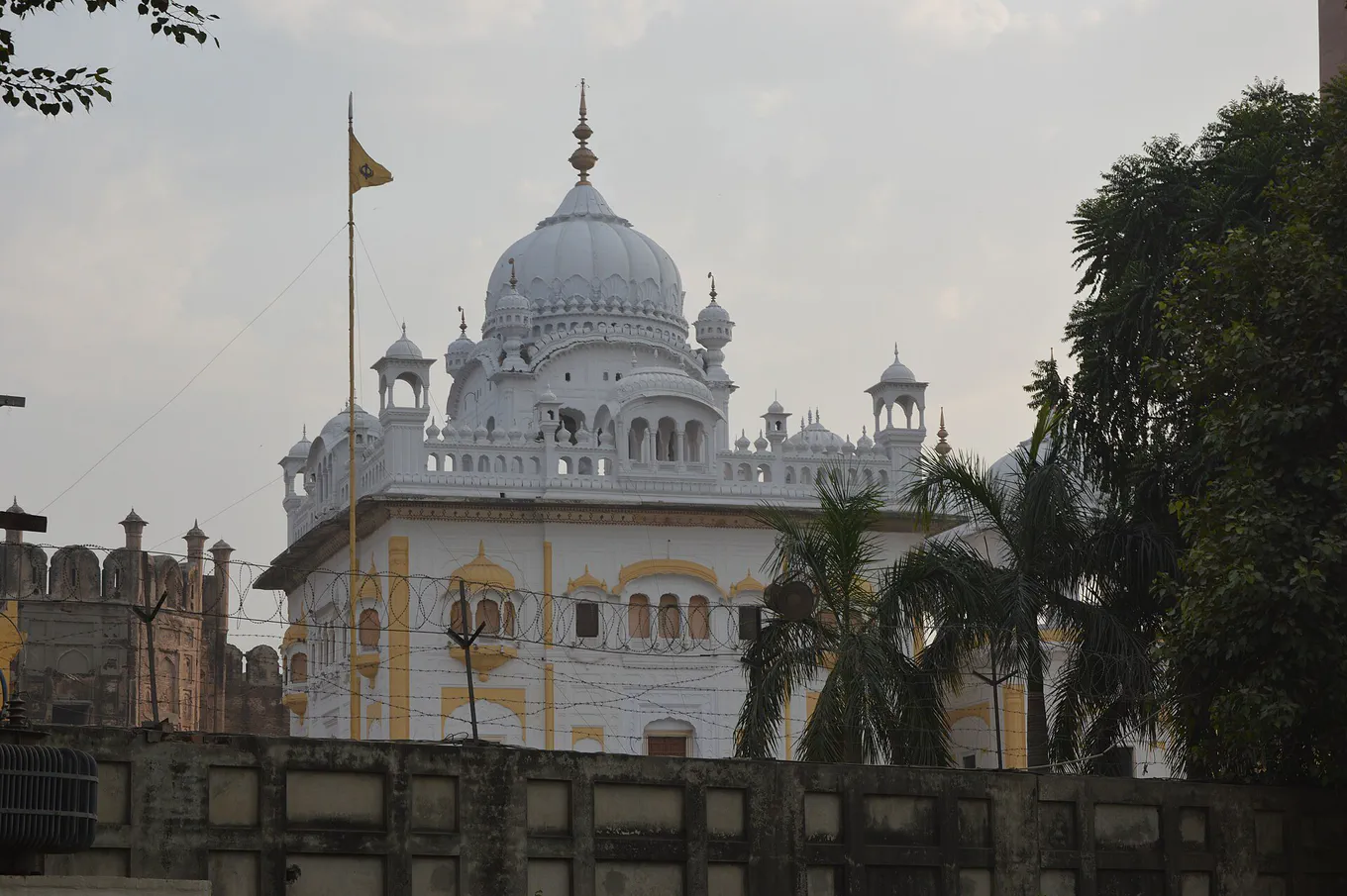
Stand here. The Samadhi of Ranjit Singh, the memorial beside the Lahore Fort and the Badshahi Mosque that holds his funerary urn.
The Koh-i-Noor sits in a crown at the Tower of London. It reached Lahore with a fugitive Afghan king, and in 1813, Maharaja Ranjit Singh took it from him. On his deathbed, Ranjit Singh seemed to agree by gestures that it should go to a temple. Instead, it went into a vault. Ten years later, a treaty made the maharaja’s youngest son, a boy of ten or eleven, surrender it to Queen Victoria. When she showed him the recut diamond, he was apparently unable to speak for several minutes.
4 Bhagat Singh’s mistaken shot and the Lahore gallows
Stand here. Shadman Chowk, the Lahore square where Bhagat Singh was hanged. A renaming after him was overturned in court, and campaigners petitioned again in 2015.
Ajay Devgn played the revolutionary Bhagat Singh in The Legend of Bhagat Singh. In Lahore, a police superintendent, James Scott, ordered a baton charge on a protest and struck its leader, Lala Lajpat Rai, himself. Rai died weeks later. Bhagat Singh and his comrades set out to kill Scott, but they shot dead the wrong man, John Saunders, a 21-year-old officer still on probation. Bhagat Singh and two others were due to hang on 24 March 1931. The hangings were brought forward eleven hours. He was 23.
5 The Lahore Resolution and the tower in Iqbal Park
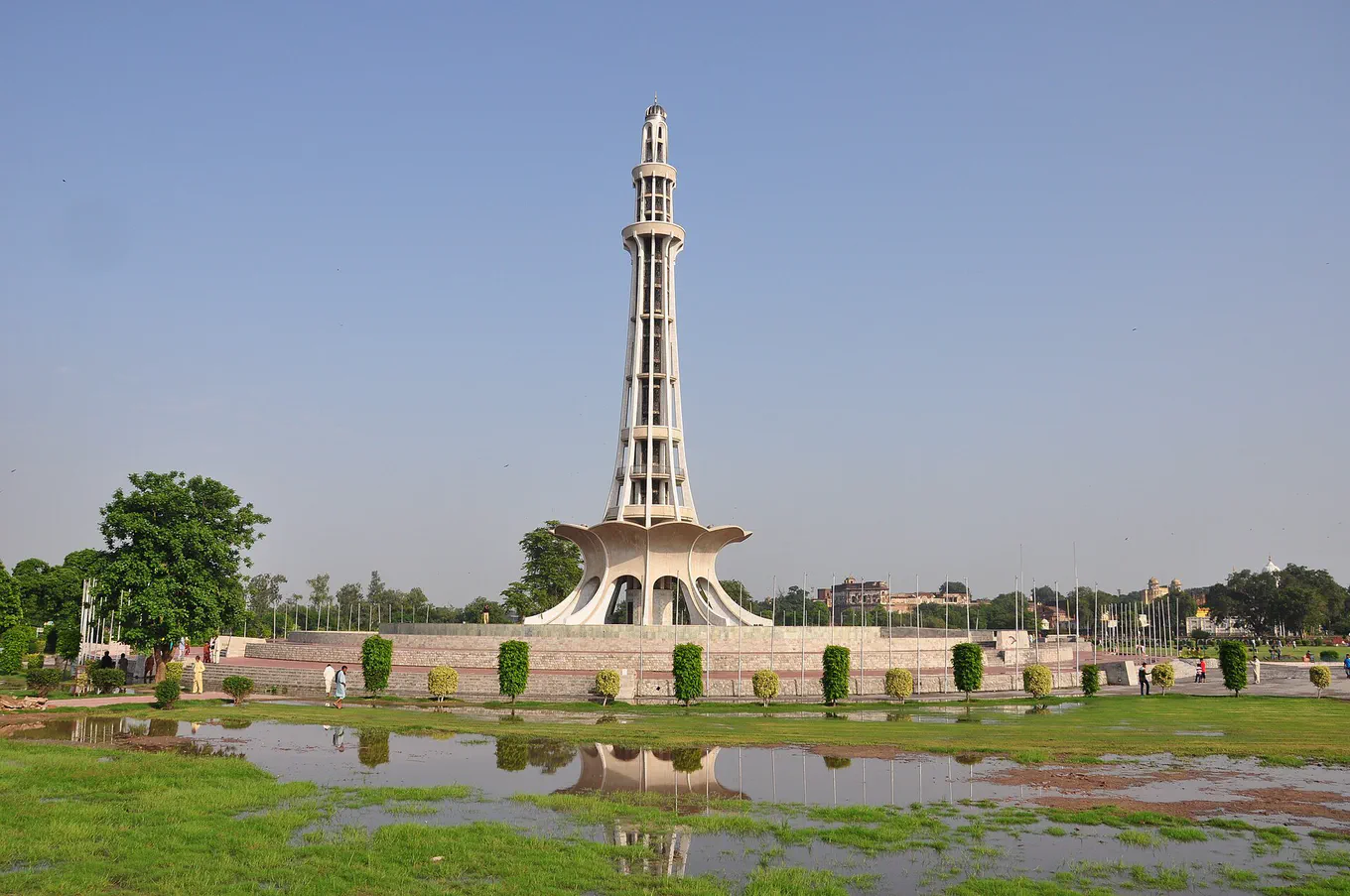
Stand here. Minar-e-Pakistan, the tower in Greater Iqbal Park, built in the 1960s on the spot where the resolution was passed.
Every 23 March, Pakistan keeps a national holiday, Pakistan Day, for what happened in this park in 1940. Muhammad Ali Jinnah led the All-India Muslim League, and the historian Stanley Wolpert calls his speech here the moment a man who had once championed Hindu-Muslim unity committed himself to an independent Pakistan. The name had been proposed years before, but few used it. Then Hindu newspapers and leaders called the League’s resolution the demand for Pakistan, and the name caught on. Seven years later, Pakistan was a country.
Kim(Rudyard Kipling, 1901). A novel. It opens with the orphan Kim astride the Zamzama gun, which still stands on Mall Road.
Ice Candy Man(Bapsi Sidhwa, 1988), Cracking India in the US. A novel. A four-year-old Parsee girl recounts her childhood memories, in a story that leads to the Kotha, the disreputable part of the old city.
Moth Smoke(Mohsin Hamid, 2000). A novel. The story of a marijuana-smoking ex-banker in Lahore after the nuclear tests.
The Reluctant Fundamentalist(Mohsin Hamid, 2007). A novel told over a single evening at an outdoor café in Lahore.
Films to watch before you visit Lahore
Earth(Deepa Mehta, 1998). A film set in Lahore just before and during the partition of India in 1947.
Joyland(Saim Sadiq, 2022). A film set in inner-city Lahore, centred on the low-income Rana family, and shot at the Joyland Lahore amusement park and the Mehfil Theatre, an erotic dance theatre.
Heeramandi: The Diamond Bazaar(Sanjay Leela Bhansali, 2024). A TV series. A period drama set in Lahore’s red-light district of Heera Mandi, exploring the lives of tawaifs under British colonial rule during the Indian independence movement.
Questions
Can you go up the Minar-e-Pakistan?
Not any more. Visitors once climbed a spiral stair or took a lift to the top for the view, but that was withdrawn after a few suicides. The tower stands in Greater Iqbal Park, near Azadi Chowk Metrobus station.
Where is the Koh-i-Noor diamond now?
It is set in the Crown of Queen Elizabeth the Queen Mother, on public display in the Jewel House at the Tower of London. Ranjit Singh took it from Shah Shuja in Lahore in 1813, and the Last Treaty of Lahore in 1849 made his young son surrender it to Queen Victoria. Britain maintains it was acquired legally.
What is Lahore famous for?
Lahore is the capital of Punjab and Pakistan’s second-largest city. It was the Mughal capital from 1584, and its Lahore Fort and Shalimar Gardens are UNESCO World Heritage Sites. The Badshahi Mosque, the largest of its Mughal monuments, dates from 1673, and Lahore is a UNESCO City of Literature.