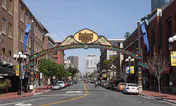
I’d love to see Vegas for myself. In my head, it’s mostly just the bad guys’ domain in Stephen King’s The Stand.
— Nick
In 1905, land beside the Union Pacific Railroad tracks was auctioned off, and Las Vegas was founded. Its name is Spanish for “the meadows”, and it sits in a basin on the Mojave Desert floor, in Nevada. A mobster’s overspent casino, a recluse who bought his hotel rather than leave and a sign its designer never copyrighted are joined by a caption that became a book and a missionary’s fort.
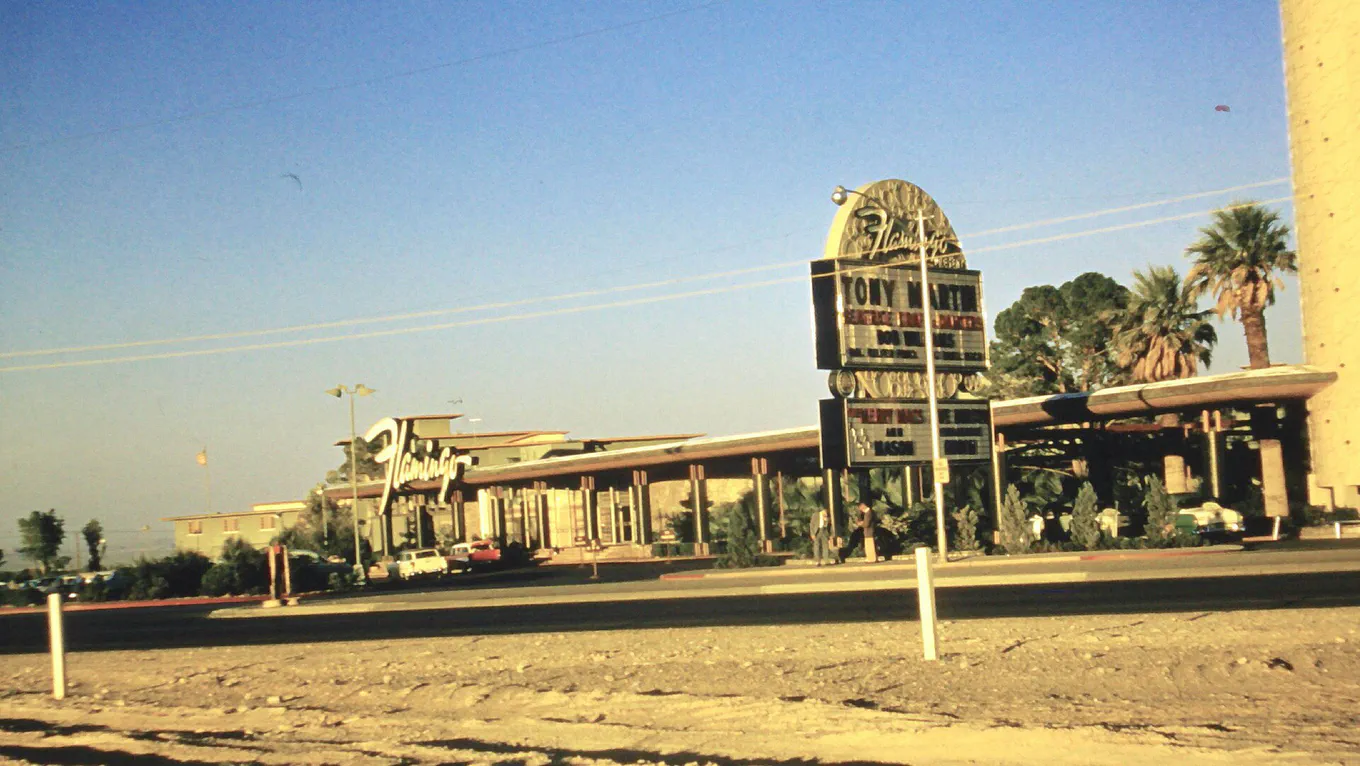
The mobster Bugsy Siegel gets the credit for the Flamingo, helped by Warren Beatty in Bugsy (1991), but the idea was a Hollywood publisher’s. Siegel, sent by his backer Meyer Lansky, forced the publisher out. Costs swelled from $1 million to $6 million, and in December 1946 the Flamingo opened unfinished, its lobby draped in drop cloths. Siegel’s partners came to believe money had been skimmed. Six months later, a sniper shot him dead in Beverly Hills. Within minutes, three of Lansky’s men walked into the Flamingo and took charge.
2 Howard Hughes buys the Desert Inn rather than leave
Stand here. The Desert Inn was imploded in 2001 and 2004. Wynn Las Vegas and Encore now stand on its site, on Las Vegas Boulevard South.
Leonardo DiCaprio plays Howard Hughes in The Aviator (2004). On Thanksgiving 1966, Hughes arrived in Las Vegas by railroad car and took the top two floors of the Desert Inn. He stayed past his ten-day booking, and the hotel asked him to leave to make room for its New Year’s Eve high rollers. Instead, Hughes bought the hotel. He lived in its penthouse for four years without leaving his bedroom. After he was carried out on a stretcher, staff found the curtains had never been opened. They had rotted through.
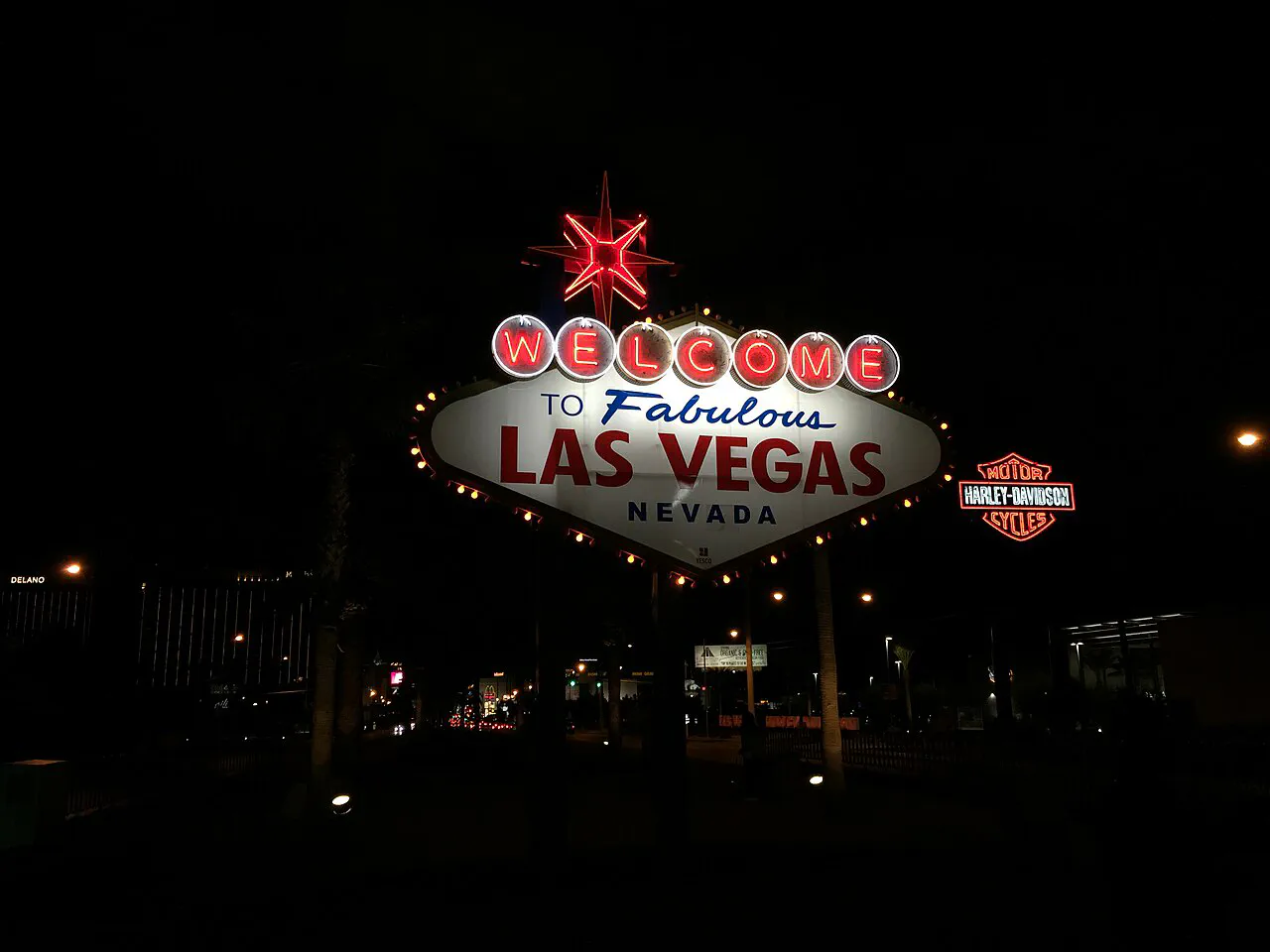
3 Betty Willis and the Welcome to Fabulous Las Vegas sign
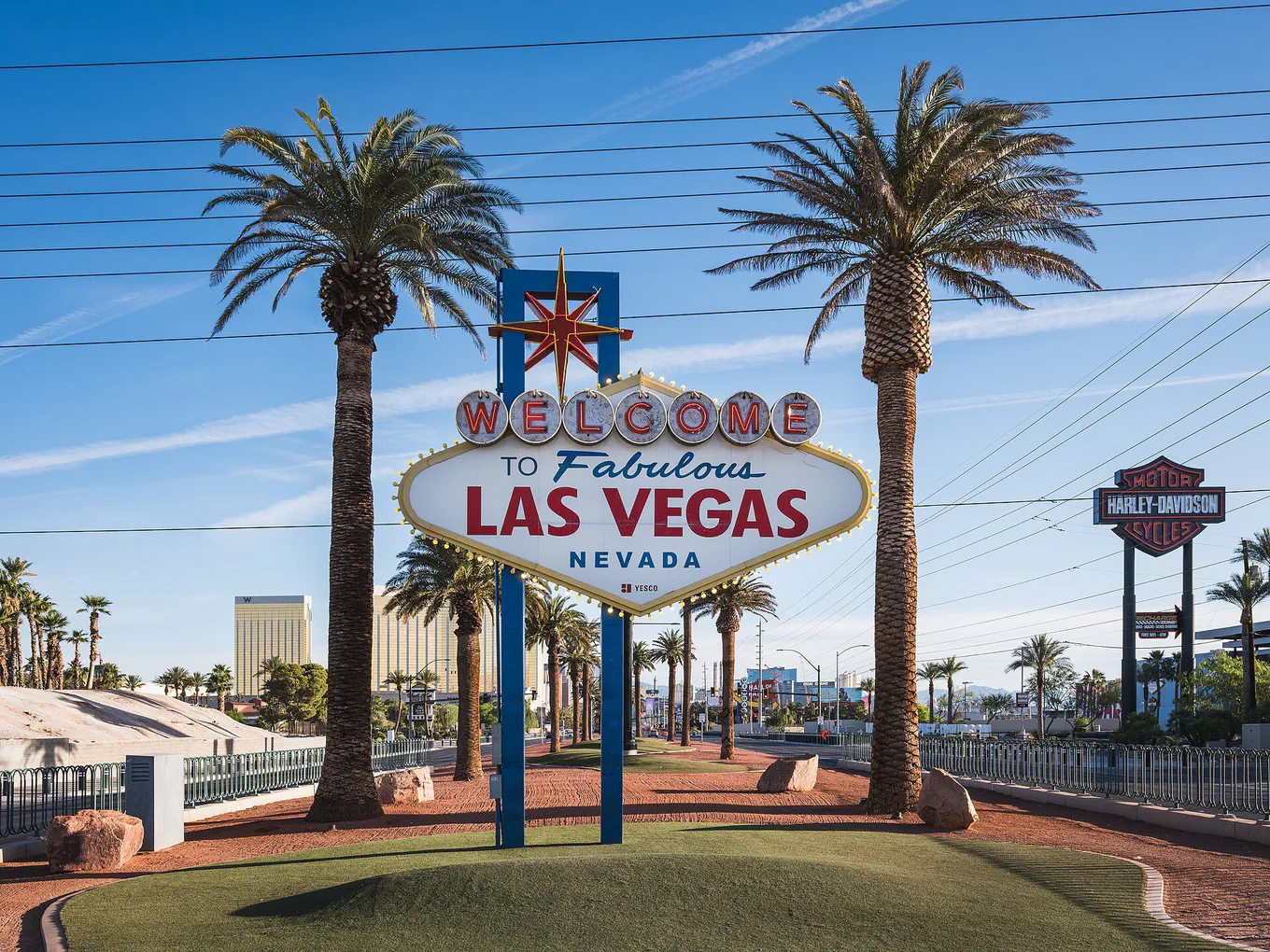
Stand here. The original sign, on the central reservation of Las Vegas Boulevard South, near the south end of the Strip. Since 2008, visitors have had official access to it for photographs.
Betty Willis, who had grown up in Las Vegas, designed the Welcome to Fabulous Las Vegas sign in 1959, while working for Western Neon. A local salesman had asked her for it, and he sold it to Clark County. It cost $4,000 to build, and became famous. But Willis never copyrighted the design, or profited from it beyond her wages. “It’s my gift to the city,” she told The New York Times, adding, “I should make a buck out of it. Everybody else is.”
4 Hunter S. Thompson’s Fear and Loathing at Circus Circus
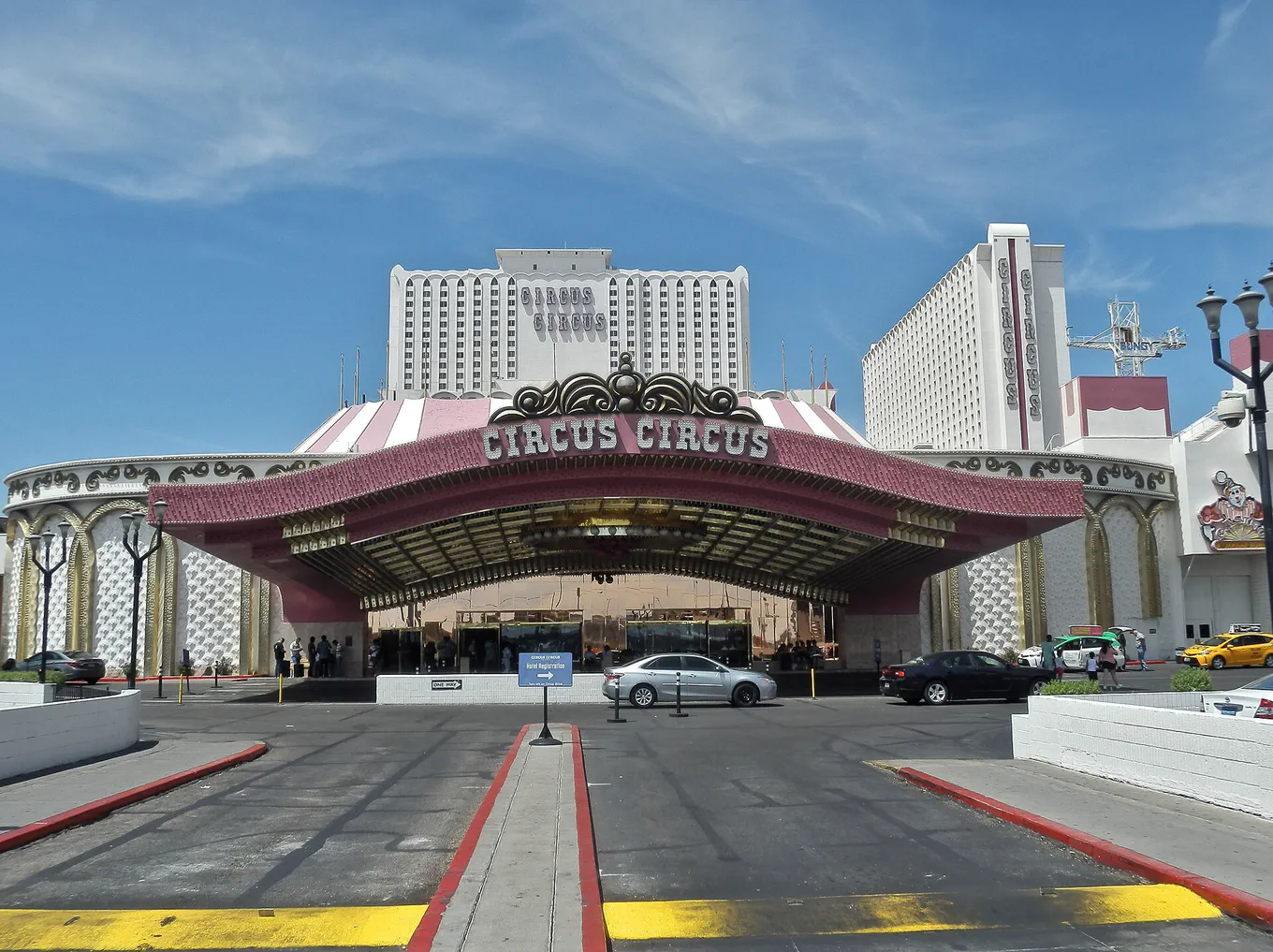
Stand here. Circus Circus, on the northern Strip, open since 1968. Trapeze and circus acts still perform at its Carnival Midway.
Fear and Loathing in Las Vegas began in March 1971, when Sports Illustrated asked Hunter S. Thompson for a 250-word caption on the Mint 400, a desert race. He went with his friend Oscar Zeta Acosta, a lawyer, and filed 2,500 words, which were “aggressively rejected”. Rolling Stone took the piece instead, and it grew into a book in which Acosta becomes Dr Gonzo, wandering Circus Circus on ether. Thompson wrote, “The Circus-Circus is what the whole hep world would be doing Saturday night if the Nazis had won the war.”
5 William Bringhurst’s Mormon fort in the Las Vegas meadows
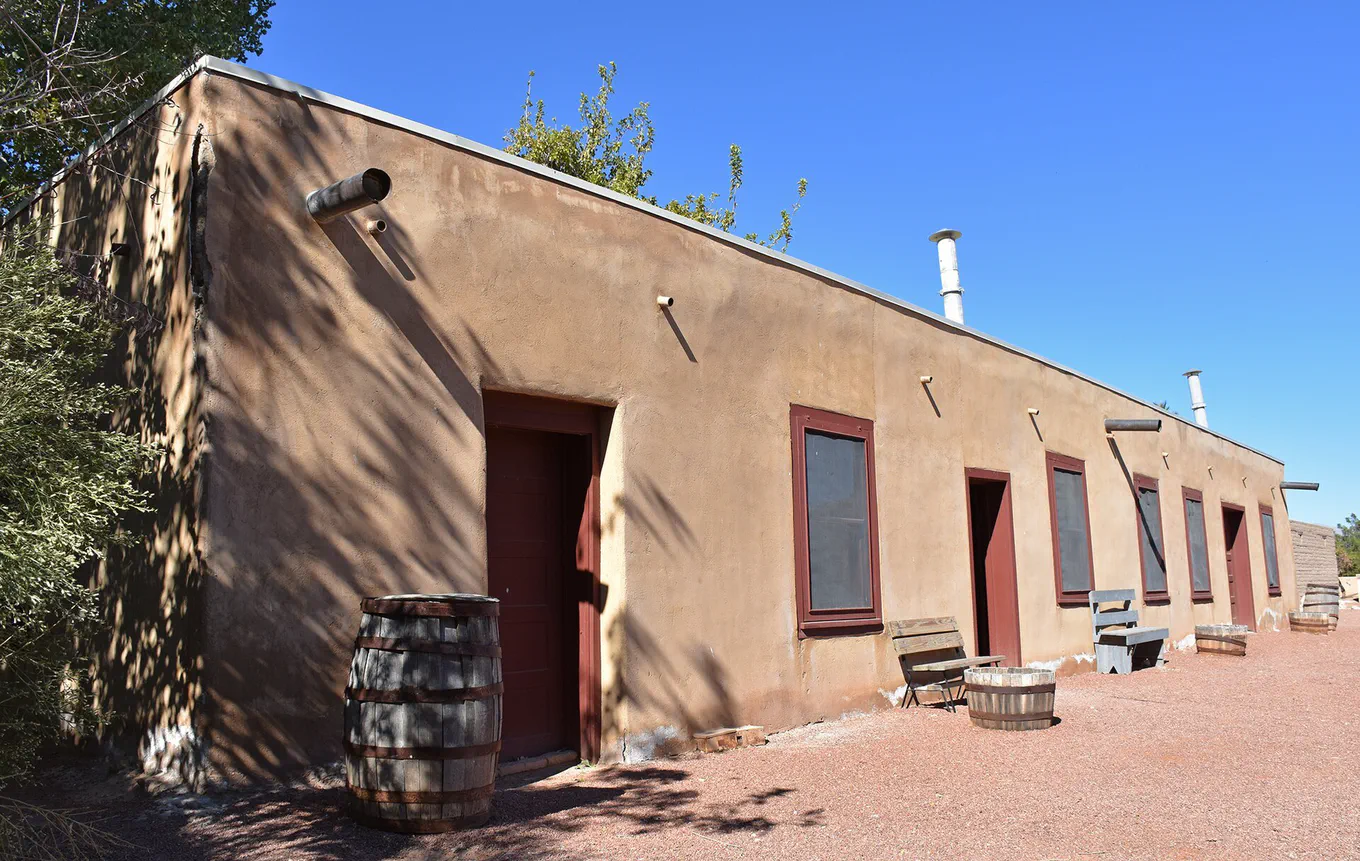
Stand here. Old Las Vegas Mormon Fort State Historic Park, at 500 East Washington Avenue, downtown. Parts of the fort’s original east wall still stand.
The adobe building at Old Las Vegas Mormon Fort State Historic Park that holds the last remnants of the 1855 fort.Beneathtimp / CC0.
In June 1855, William Bringhurst, sent by the Mormon leader Brigham Young, led missionaries into the meadows that gave Las Vegas its name. With help from the local Paiute people, they built a fort beside the creek. When Young sent for some of the missionaries to work in mines, Bringhurst refused to let them go. Young denounced him, and by 1857 the fort was abandoned. Bringhurst later regained his standing. The fort he built was the first permanent structure in what, fifty years on, became Las Vegas.
Fear and Loathing in Las Vegas(Hunter S. Thompson, 1972). A novel. Raoul Duke and Dr Gonzo huff ether and wander round Circus Circus.
Learning from Las Vegas(Robert Venturi, Denise Scott Brown, and Steven Izenour, 1972). A book on architecture, inspired by the signs and symbols on the Strip.
Films to watch before you visit Las Vegas
Diamonds Are Forever(Guy Hamilton, 1971). A Bond film. The International Hotel plays the Whyte House, and the owner of Circus Circus makes a cameo.
Casino(Martin Scorsese, 1995). A film. Its fictional Tangiers casino was shot at night inside the Riviera, with the defunct Landmark Hotel as its entrance.
Ocean’s Eleven(Steven Soderbergh, 2001). A film. A crew plans to rob the Bellagio, the Mirage, and the MGM Grand, three casinos with one owner.
Viva Las Vegas(George Sidney, 1964). A film. Its closing scene was shot at the Little Church of the West, the oldest wedding chapel in Las Vegas.
The Hangover(Todd Phillips, 2009). A film. A group of friends book a suite at Caesars Palace and sneak onto the hotel roof with Jägermeister.
Questions
Can you visit the Welcome to Fabulous Las Vegas sign?
Yes. The original 1959 sign stands on the central reservation at 5100 Las Vegas Boulevard South, which some consider the southern end of the Strip. Since December 2008, improvements to the central reservation have given visitors official access for photographs.
Is the Las Vegas Strip actually in Las Vegas?
No. The Strip lies outside the city limits, in the unincorporated towns of Paradise and Winchester. Circus Circus, for one, is in Winchester. Even the Welcome to Fabulous Las Vegas sign stands in Paradise, about four miles south of the city limits.
What was the first building in Las Vegas?
The Old Mormon Fort, finished in 1855 by Mormon missionaries, was the first permanent structure built in what became Las Vegas. Parts of its original east wall survive in Old Las Vegas Mormon Fort State Historic Park, at 500 East Washington Avenue, downtown.