Charles de Gaulle was born in Lille in 1890, in his grandparents’ house on rue Princesse. My main knowledge of him comes from Andrew Roberts’ Leadership in War, which puts him alongside Churchill, Napoleon, and Eisenhower. Like all great leaders — good and terrible — de Gaulle believed in something bigger than themselves, and became the embodiment of that thing.
— Nick
Lille, the capital of the Hauts-de-France region, sits on the Deûle river near France’s border with Belgium. Louis XIV besieged it in 1667, and it became French the next year, though some of its people still felt Flemish. Its stories are the music of The Internationale, Pasteur and a soured distillery, a spy for the British, a barber under bombardment, and a countess accused of killing her father.
1 Pierre De Geyter writes the music of The Internationale in Lille
Stand here. Avenue du Président Kennedy, where the Café La Liberté stood. The café is gone, and Lille named a square after De Geyter in Fives.
The music of The Internationale, the anthem of the socialist movement, was written in a Lille café. Pierre De Geyter, a worker, set Eugène Pottier’s poem for a workers’ choir at the request of Gustave Delory, the city’s socialist leader, and it was first sung in Lille in July 1888. Years later, Pierre’s brother Adolphe claimed the tune, Delory took Adolphe’s side, and Pierre lost in court. Then Adolphe hanged himself. He left Pierre a note confessing the fraud. Delory, he wrote, had talked him into it.
2 Louis Pasteur and a Lille distiller’s sour beet alcohol
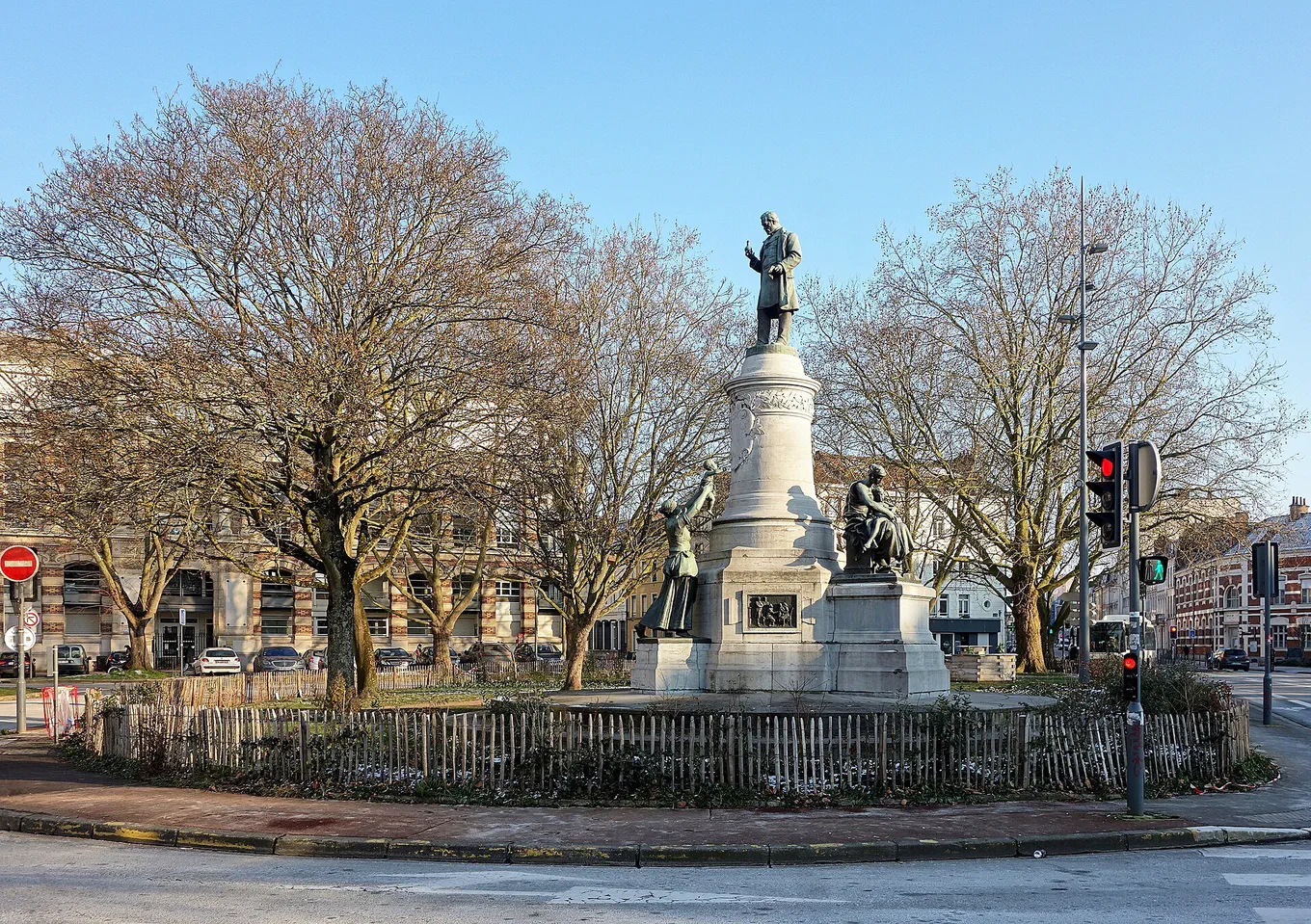
Stand here. The corner of rue des Arts and boulevard Carnot. Pasteur’s faculty is now the collège Carnot, with a monument to him in the convent garden.
Louis Pasteur, whose name lives on in pasteurisation, took up the study of fermentation in Lille. In 1856, a distiller whose son studied under Pasteur asked him why his sugar-beet alcohol kept going sour. Pasteur was dean of the city’s new science faculty. Two chemists, Berzelius and Liebig, had proposed that fermentation was caused by decomposition. But Pasteur showed that yeast did the work, and that souring came from a different micro-organism. Contaminated drinks led him on to a far bigger idea, that micro-organisms cause disease in animals and people.
3 Louise de Bettignies, the Lille spy of the Alice Network
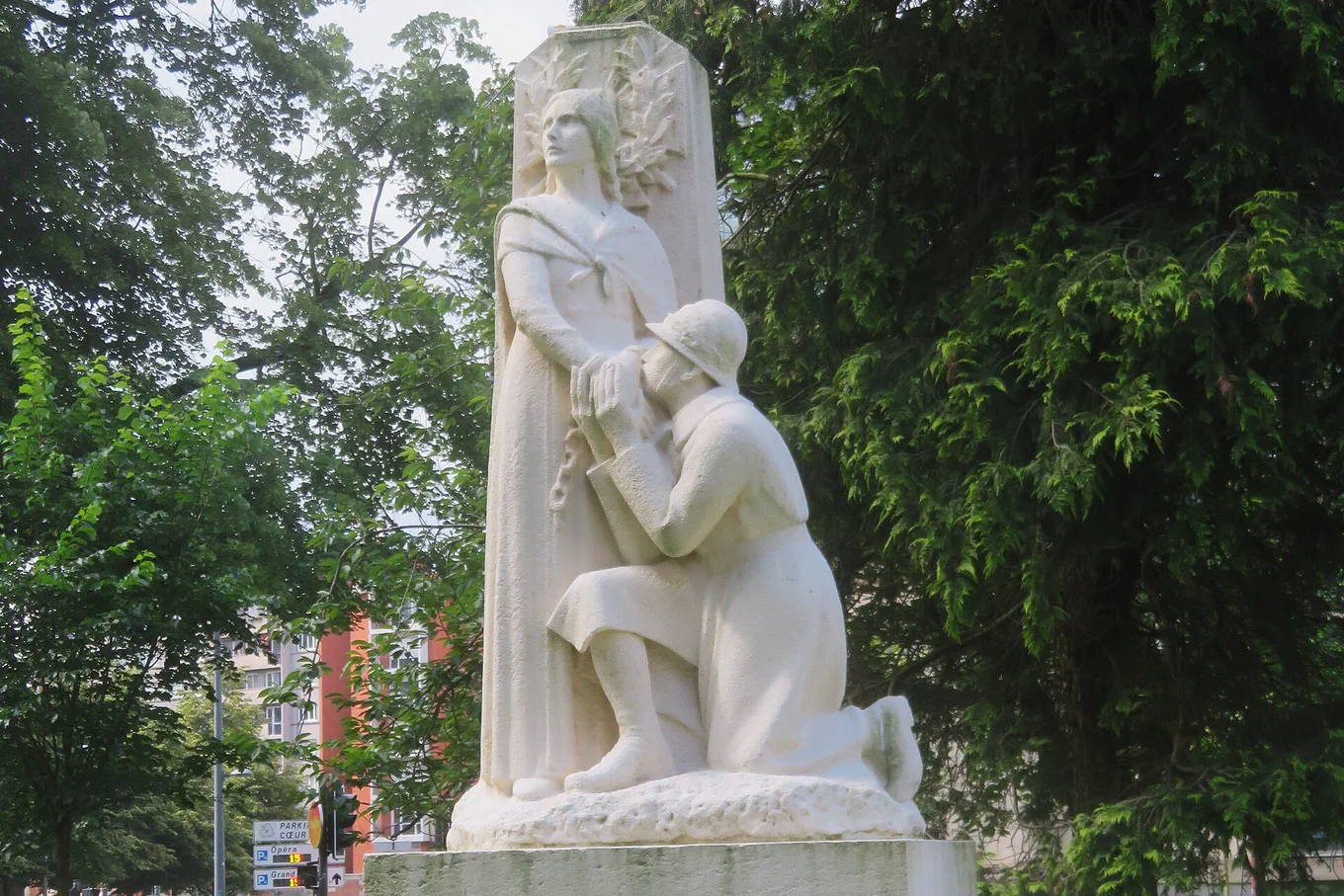
Stand here. Boulevard Carnot, at the entrance to the city, where her 1927 monument shows a grateful soldier kissing her hand as she looks into the distance.
Maxime Real del Sarte’s monument to Louise de Bettignies in Lille, with a soldier kneeling to kiss her hand.VVVCFFrance / CC0.
If you’ve read Kate Quinn’s novel The Alice Network, you’ve met Louise de Bettignies as Lili, its ringleader. The real woman was a Lille graduate who spoke perfect English. After the German army took Lille in 1914, the British named her Alice Dubois and helped her build a network of about a hundred people to watch trains and troops. It saved more than a thousand British soldiers. But she was arrested near Tournai and sentenced to death. The sentence was commuted, and she died in Cologne in 1918, still a prisoner.
4 The barber who kept shaving through the siege of Lille
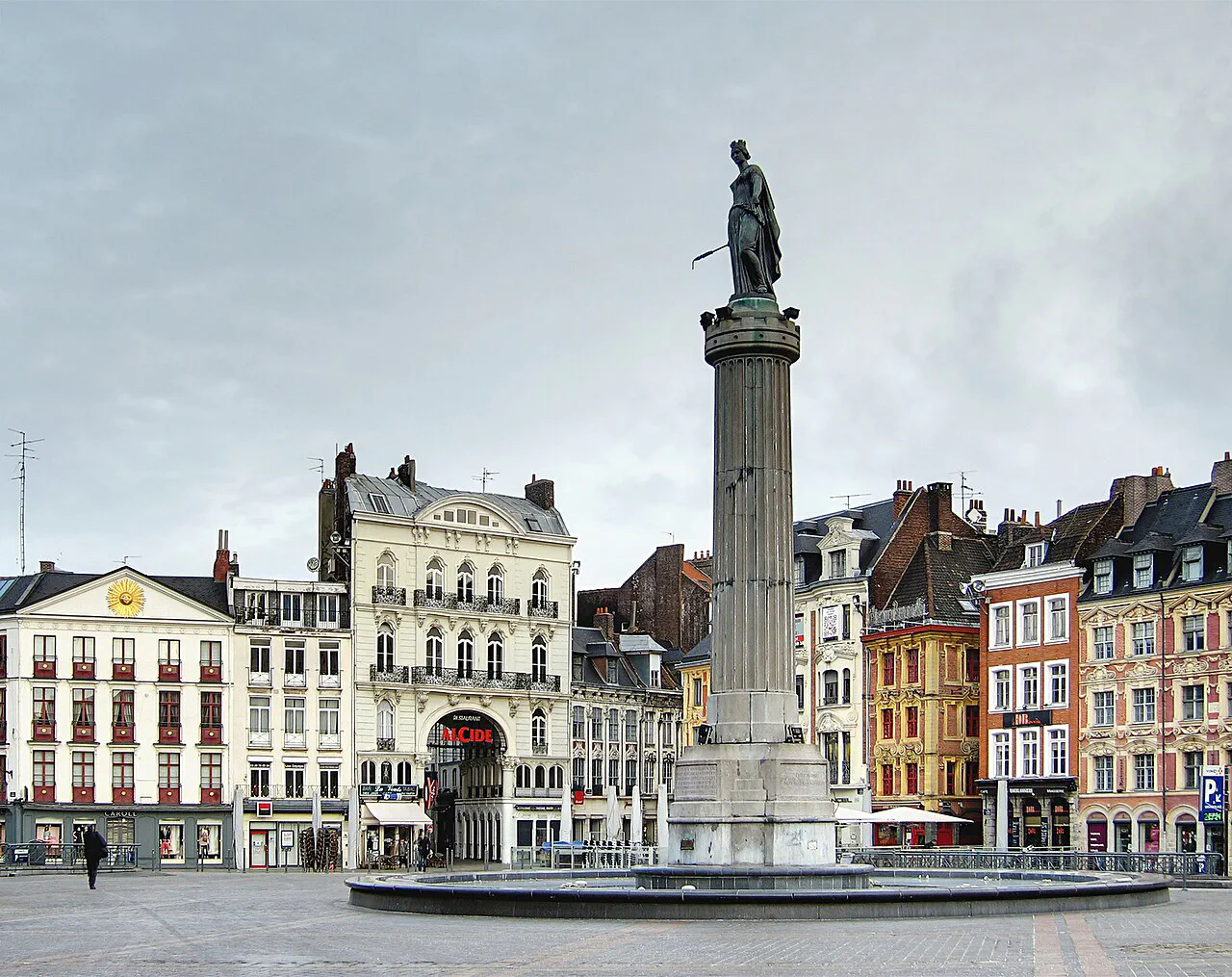
Stand here. The Grand’Place, where the Column of the Goddess, unveiled in 1845, commemorates the siege. Its goddess holds a staff for lighting cannon.
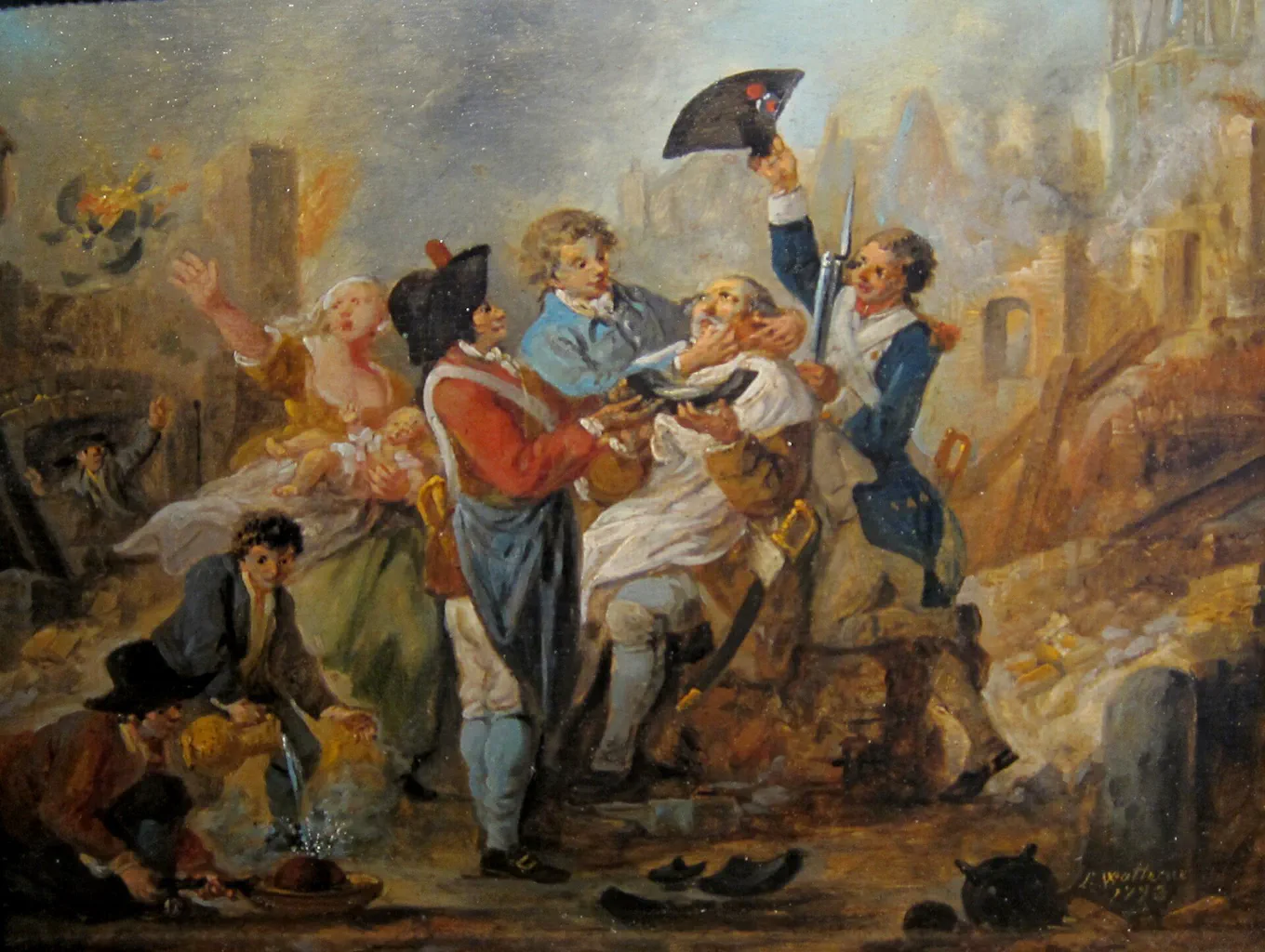
Louis Joseph Watteau’s painting of the barber Maes shaving with a shell fragment during the siege of Lille.Louis Joseph Watteau / Public domain.
In the autumn of 1792, an Austrian army besieged Lille and fired some 60,000 shot and shell into the city. One story from those weeks has passed into Lille legend. Adrien Maes, a barber, was shaving a customer in his shop when a bomb hit the house. He picked up a shell fragment, made it his shaving bowl, and shaved fourteen citizens, laughing.
5 Countess Jeanne of Flanders and the Hospice Comtesse
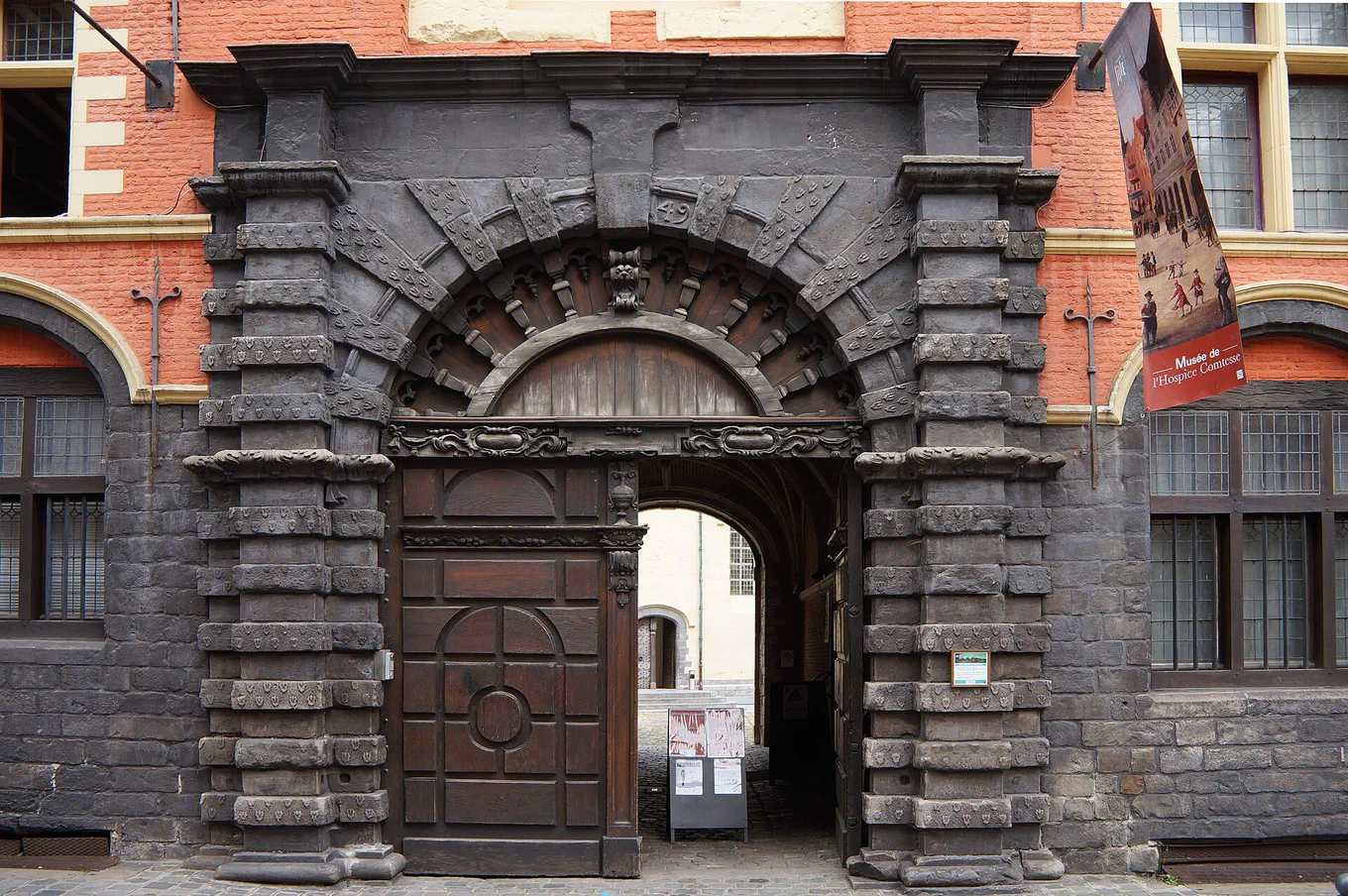
Stand here. The Hospice Comtesse, on rue de la Monnaie in Vieux-Lille. Its 17th-century buildings became a museum in 1962.
Jeanne became Countess of Flanders at six. When the French captured her husband at Bouvines in 1214, she governed alone until she paid to free him. Before he came home, a hermit claimed to be her father, Baldwin. The hermit could not remember where he was knighted, or his own wedding night. Despite a promise to spare him, he was hanged at the gates of Lille, and later chroniclers accused her of killing her father. In 1237, she gave her palace gardens for a hospital. It still bears her title.
Pack nothing. Leave Friday.
Every Friday, I write a free letter, Journey, that takes us on a trip through places, stories, and ideas.
Joyeuse vie(Victor Hugo, 1853). A poem from Les Châtiments, dated Jersey, January 1853. Its speaker goes down into the cellars of Lille, where people die beneath stone ceilings.
The Diary of a Country Priest(Georges Bernanos, 1936). A novel. Its final part is set in Lille, following the priest’s stay and death there after a medical examination.
Le Syndrome E(Franck Thilliez, 2010). A novel set in Lille, Notre-Dame-de-Gravenchon, and Marseille, featuring Lucie Henebelle, a police inspector in Lille.
Films to watch before you visit Lille
HPI(Stéphane Carrié, Alice Chegaray-Breugnot and Nicolas Jean, 2021). A TV series in which a cleaner becomes a consultant to the Lille police. The former Sciences Po Lille building in the Moulins district played the police station.
La Vie rêvée des anges(Érick Zonca, 1998). A film set in Lille. Isabelle, a young drifter there by chance, meets Marie, a young woman from the Nord.
Le Corps de mon ennemi(Henri Verneuil, 1976). A film inspired by Félicien Marceau’s novel, shot mainly around Lille. A courthouse scene was filmed at a main door of Lille town hall, Porte de Paris side.
Questions
What is the column in the middle of Lille’s Grand’Place?
It is the Column of the Goddess, unveiled in 1845 to commemorate the Austrian siege of 1792. Théophile Bra’s goddess holds a linstock, a staff for lighting cannon, and her other hand points to the mayor’s reply to the besiegers, written on the column. It ends, “We are not oath-breakers.”
Where was Charles de Gaulle born?
At 9 rue Princesse in Vieux-Lille, on 22 November 1890. By the custom of the time, he was born in the house of his mother’s parents, who were textile manufacturers, and its workshop was his grandfather’s tulle factory. An association of his friends bought the house in 1961, and it became a museum in 1983.
Who built Lille’s Citadel?
Vauban built it between 1667 and 1670, the years in which Louis XIV took Lille and it became French under the Treaty of Aix-la-Chapelle in 1668. Vauban called it the “Queen of the citadels”.