The thought of Pessoa sat rooted to that bench reminds me of Charlotte Mary Yonge, a successful Victorian novelist who is similarly confined to a bench a few miles from my home.
— Nick
The sheltered estuary of the River Tagus made a natural harbour, and on its northern shore stands Lisbon, Portugal’s most populous city, which became its capital in 1255. A minister rebuilding after an earthquake, monks selling custard tarts, a poet and his trunk, an oil magnate and his art, and a cleaner with a bouquet of carnations all turn up in Lisbon’s tales.
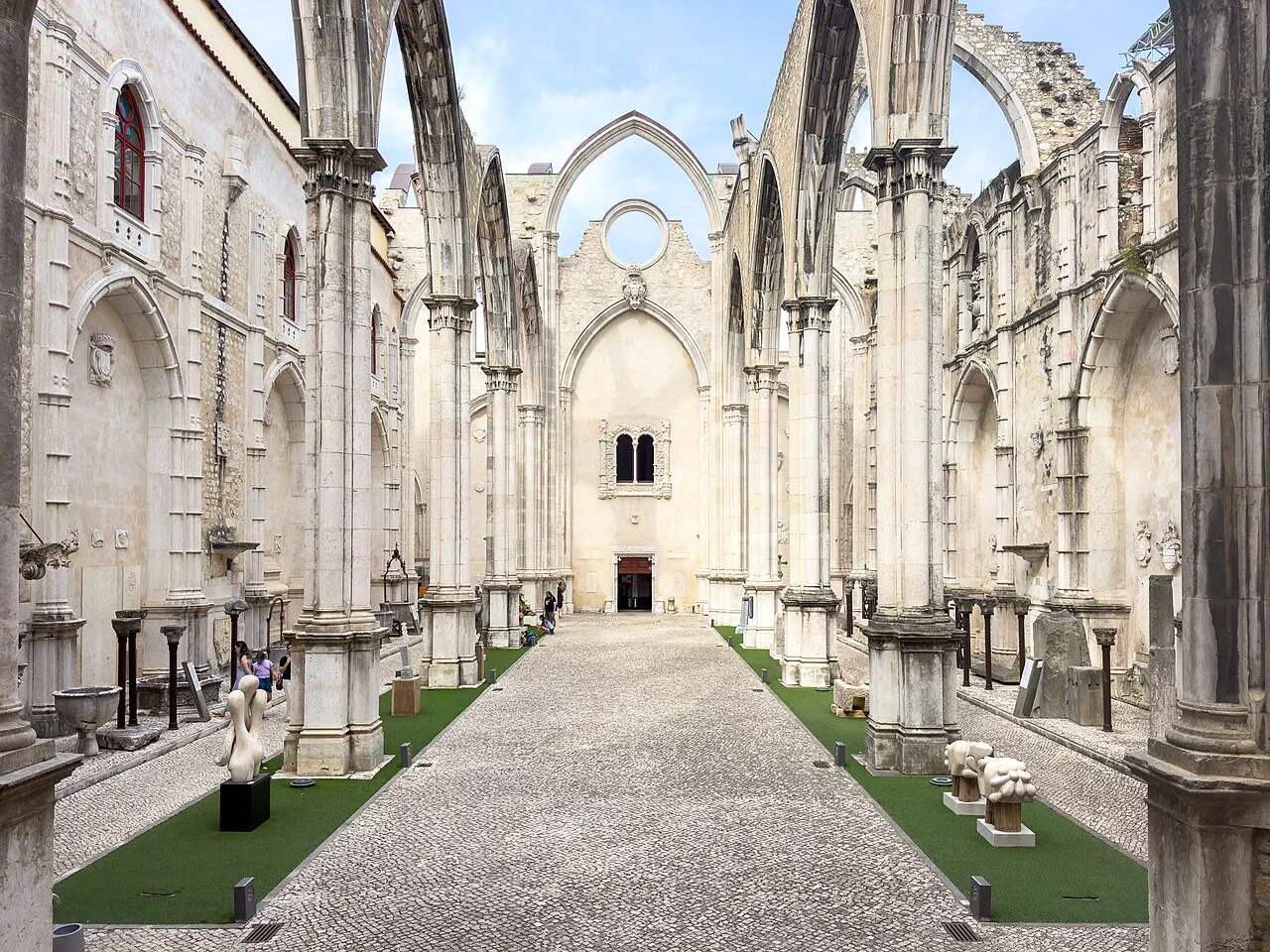
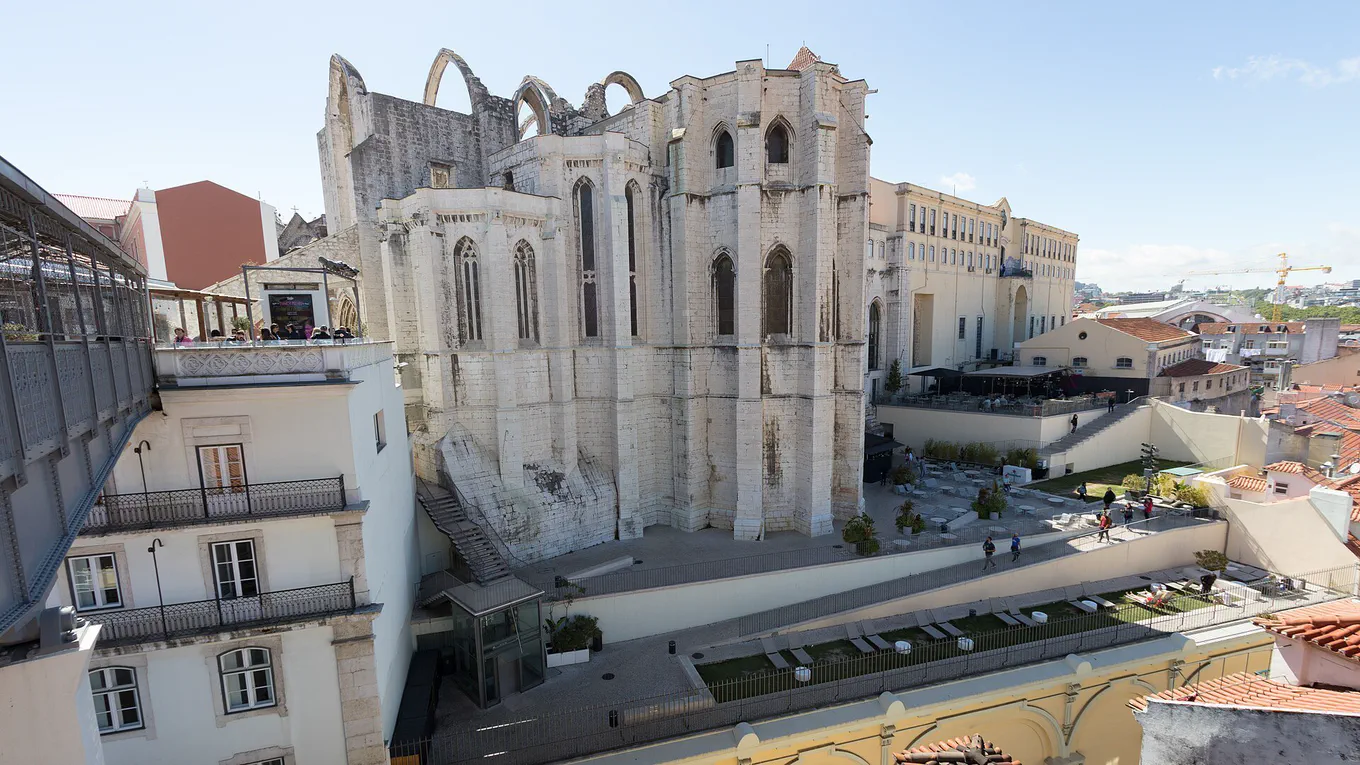
In Voltaire’s Candide, the hero reaches Lisbon just as the earth starts to tremble. The real earthquake struck on All Saints’ Day, 1 November 1755, and fire and a tsunami followed. In all, 85% of Lisbon’s buildings were destroyed. The king’s chief minister, the future Marquis of Pombal, razed the old Baixa quarter and rebuilt it as a grid, testing wooden models by marching troops round them to simulate a quake. Up the hill, the Carmo church was left as the earthquake left it, open to the sky.
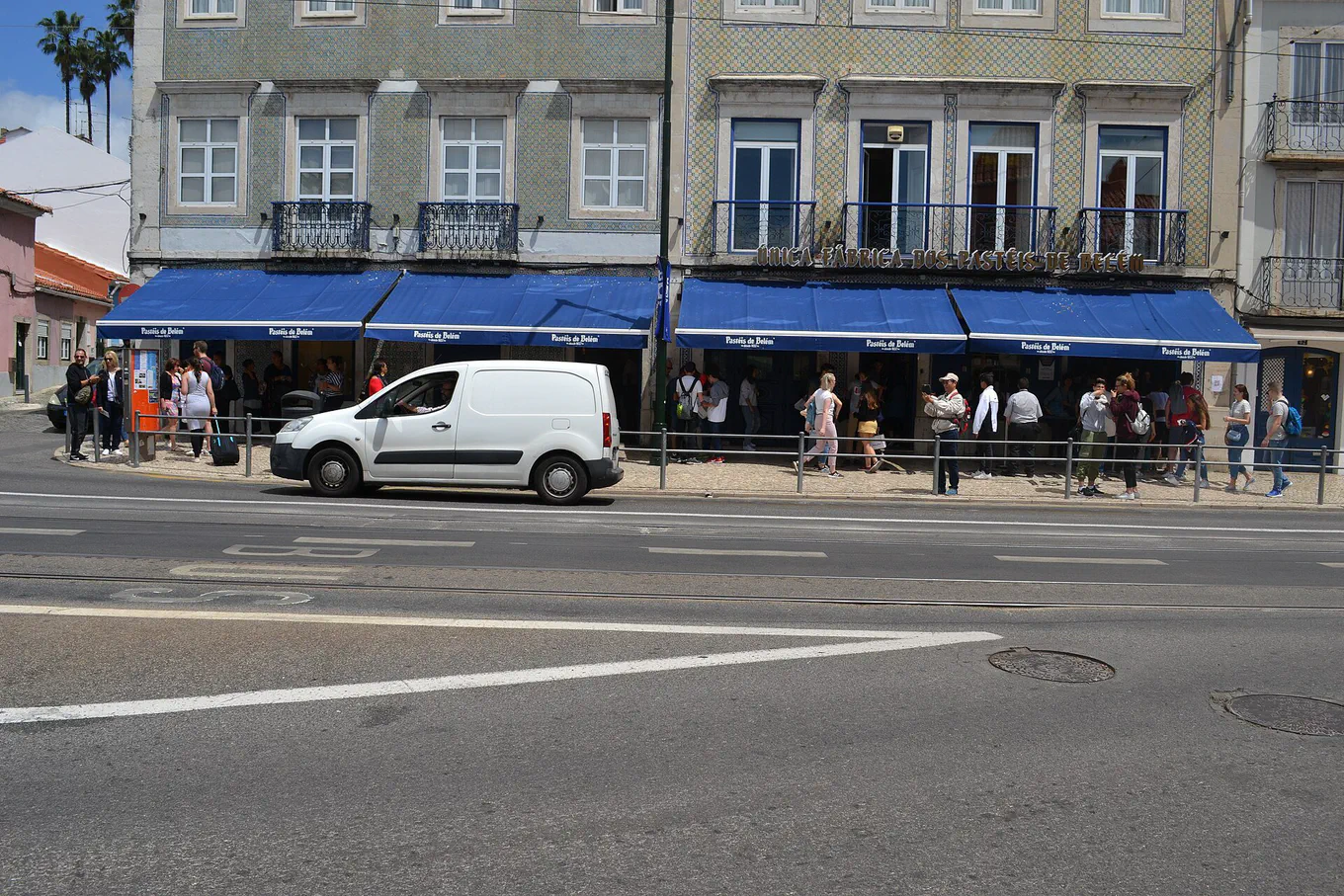
2 The monks’ custard tart recipe at Pastéis de Belém
Stand here. Pastéis de Belém, at Rua de Belém 84–92, next to the Jerónimos Monastery. The founders’ descendants still own the shop.
Portugal’s custard tart, the pastel de nata, was first made by monks at the Jerónimos Monastery in Belém. Monasteries often used leftover egg yolks for pastries. When the Liberal Revolution moved against the religious orders, the monks began selling their tarts at the sugar refinery next door to bring in money. Then, in 1834, the monastery was closed and the recipe sold to the refinery, whose owners opened a bakery. By the shop’s account, the recipe has never changed, and only the master confectioners in the “secret room” know it.
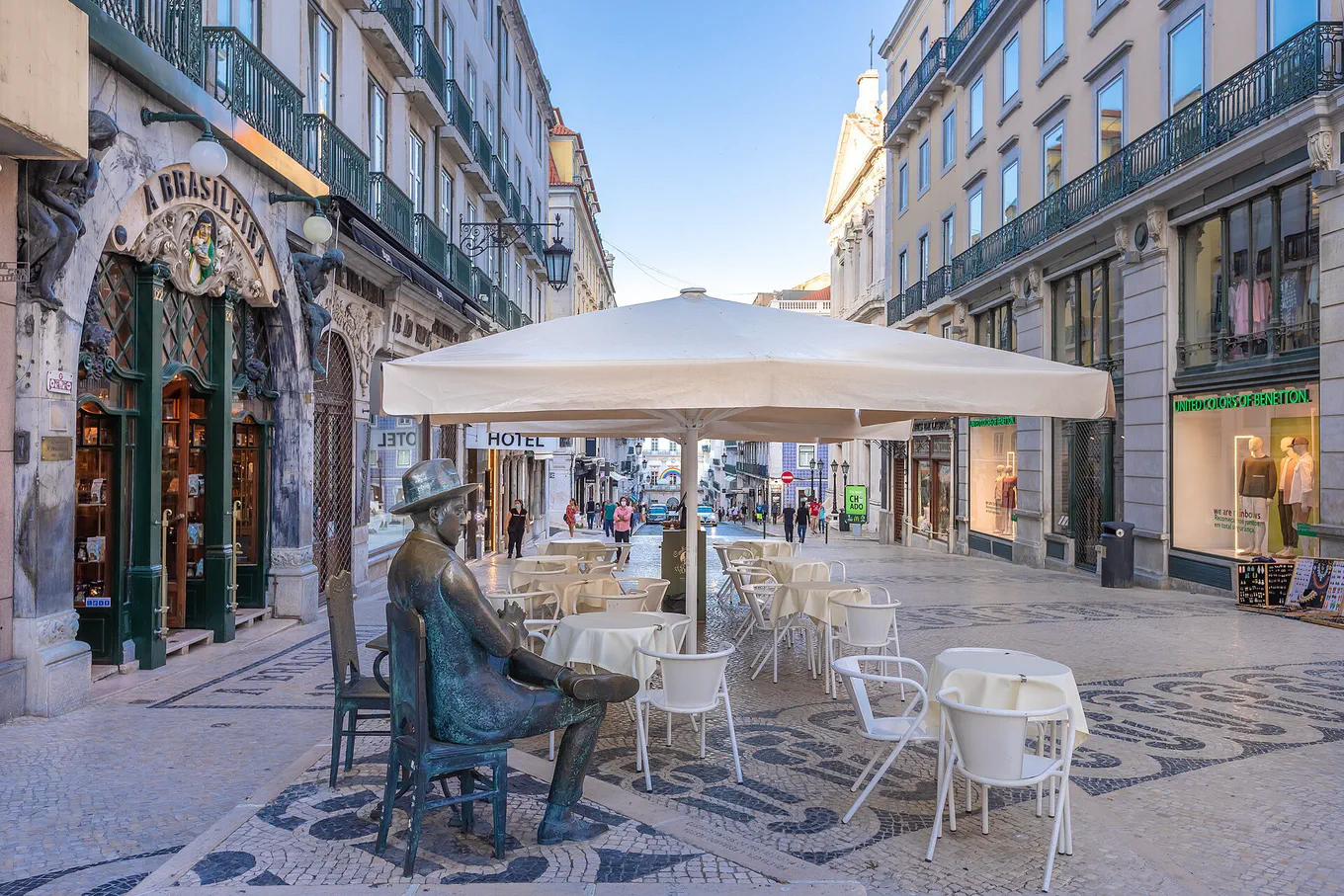
3 Fernando Pessoa, the bronze poet outside A Brasileira
Stand here. Café A Brasileira, at 120 Rua Garrett in Chiado. Pessoa has sat outside it in bronze, at a café table, since 1988.
Fernando Pessoa wrote under about seventy-five names besides his own, and he often spent time here, over absinthe and coffee, smoking, reading, or writing. By day he was a commercial translator for firms downtown. In his lifetime he published just one book in Portuguese. In November 1935, taken to hospital with a fever, he wrote his last words, in English: “I know not what tomorrow will bring.” He died the next day, aged 47. He left a domed wooden trunk, and in it were 25,574 pages.
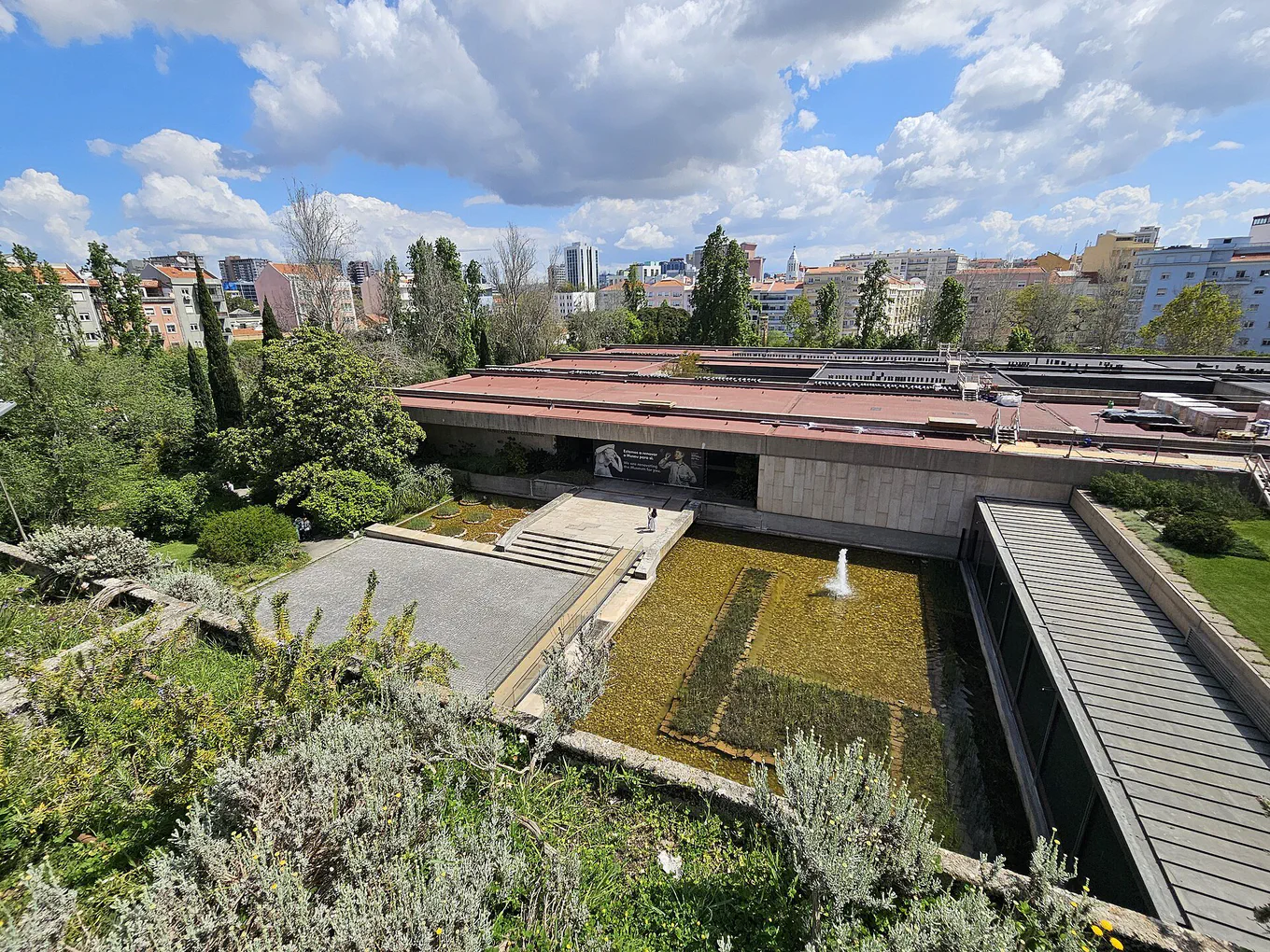
4 Calouste Gulbenkian, “Mr Five Per Cent”, and his Lisbon museum
Stand here. The Calouste Gulbenkian Museum, in its park on Avenida de Berna. It reopened in July 2026 after a renovation.
“Mr Five Per Cent” was Calouste Gulbenkian’s nickname, because he kept five per cent of the oil companies he developed. He collected more than 6,400 works of art and lent thirty paintings to London’s National Gallery. But when the French government fled to Vichy, he followed it and became Iran’s minister, and Britain, despite his links to it, declared him an enemy alien for a time. In late 1942, he moved to neutral Lisbon. He died there, in a suite at the Aviz Hotel, and his will founded this museum.
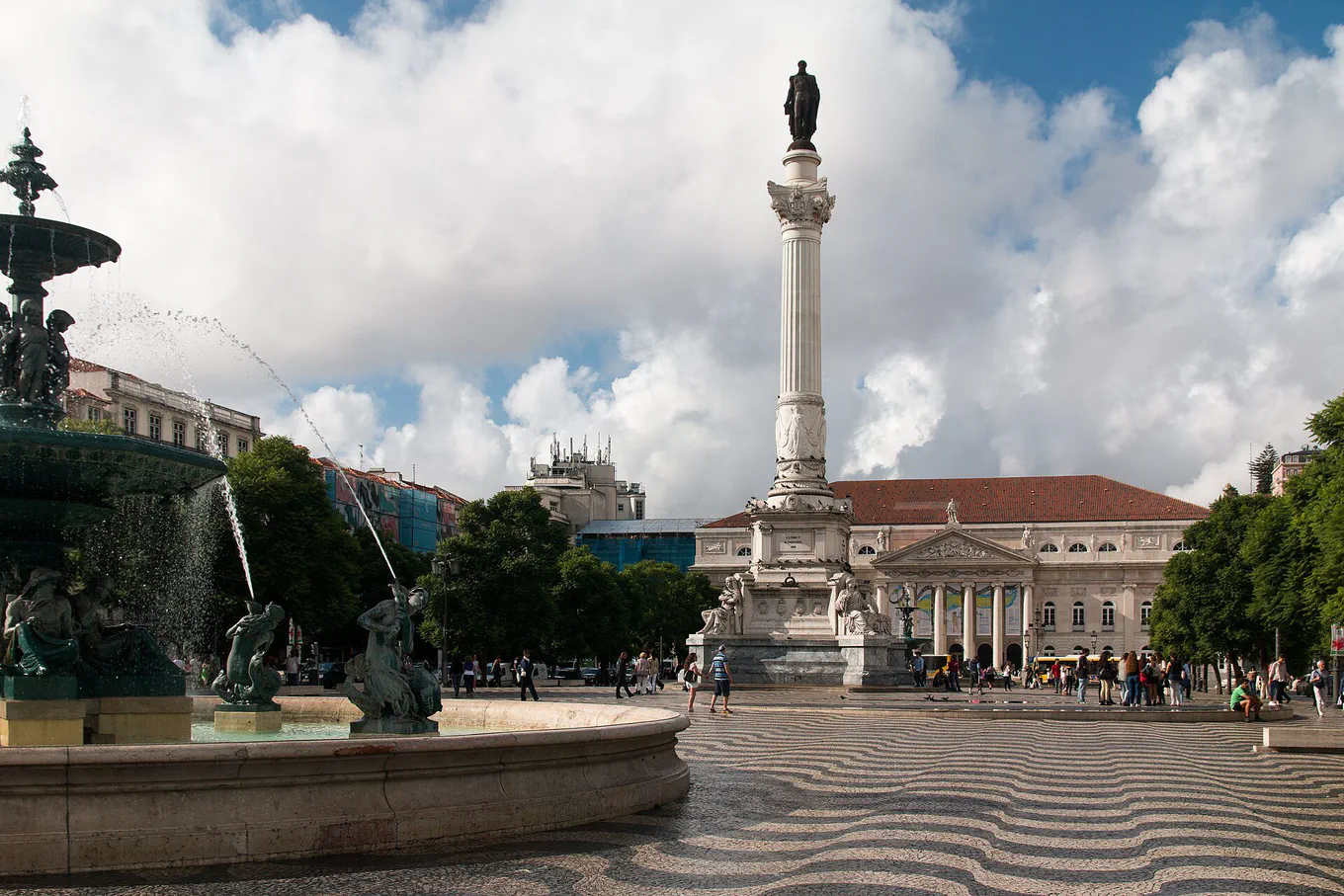
5 Celeste Caeiro and the carnation in the soldier’s gun
Stand here. Rossio square, where the rebel tanks waited. The soldiers were heading for Largo do Carmo.
The Carnation Revolution began, for Celeste Caeiro, with a bouquet she was meant to take home. On 25 April 1974, army officers staged a coup, so the restaurant she cleaned cancelled its first-anniversary party. Staff were told to take home the carnations meant for customers. At Rossio, she found the rebel tanks. A soldier asked her for a cigarette. She didn’t smoke, so she gave him a carnation, and he put it in the barrel of his gun. Others followed, and television carried carnations in gun barrels round the world.
Pack nothing. Leave Friday.
Every Friday, I write a free letter, Journey, that takes us on a trip through places, stories, and ideas.
Candide(Voltaire, 1759). A novel. Its hero reaches Lisbon just as the 1755 earthquake strikes, and the sea beats the ships in the harbour to pieces.
The Book of Disquiet(Fernando Pessoa, 1982). A novel, published after Pessoa’s death. Its narrator, an accountant, works and lives on Rua dos Douradores, in the Baixa.
The Year of the Death of Ricardo Reis(José Saramago, 1984). A novel set at the Hotel Bragança on Rua do Alecrim.
The Night in Lisbon(Erich Maria Remarque, 1962). A novel. In 1942, a man stands on a Lisbon quay, watching a ship that will soon leave for the United States.
The History of the Siege of Lisbon(José Saramago, 1989). A novel set in Lisbon’s Old City, the former Moorish city that the Christians besieged.
Films to watch before you visit Lisbon
Night Train to Lisbon(Bille August, 2013). A film. Scenes were shot at Prazeres Cemetery, the city’s largest, and at Santa Apolónia, one of Lisbon’s main railway stations.
Lisbon Story(Wim Wenders, 1994). A film set in Lisbon. Friedrich, who has moved there, sends a postcard invitation to come and record sounds of the capital city for his forthcoming film.
In Vanda’s Room(Pedro Costa, 2000). A docufiction film set in the Fontainhas district, a shanty town on the outskirts of Lisbon, which the film sees slowly being demolished.
Questions
Where is the Fernando Pessoa statue in Lisbon?
Outside Café A Brasileira, at 120 Rua Garrett in Chiado. The bronze shows Pessoa sitting at a café table. It is by the sculptor Lagoa Henriques and was placed there in 1988. Pessoa often spent time in the café, which opened in 1905 selling Brazilian coffee.
Where were pastéis de nata first sold?
In Belém. Monks at the Jerónimos Monastery made them and sold them at the sugar refinery next door. When the monastery closed in 1834, the recipe was sold to the refinery, whose owners opened Pastéis de Belém in 1837, at Rua de Belém 84–92. The recipe is still secret.
What happened in the 1755 Lisbon earthquake?
On the morning of 1 November 1755, All Saints’ Day, an earthquake of magnitude 7.7 or more struck Lisbon. Candles knocked over in homes and churches started a firestorm, and about 40 minutes after the quake a tsunami engulfed the harbour and downtown. Around 30,000 to 40,000 people died in the city, and 85% of its buildings were destroyed.