Ljubljana is Slovenia’s largest city, where Castle Hill rises over the centre and bridges cross the Ljubljanica river. The Romans built a camp here around 50 BC. When Slovenia became independent in 1991, Ljubljana was made its capital. Its stories here are a poet facing his lost love, a plane that hit a library, Jason’s monster, a preacher’s first books, and a mayor’s last protest.
1 Prešeren’s statue and his lost love on Prešeren Square
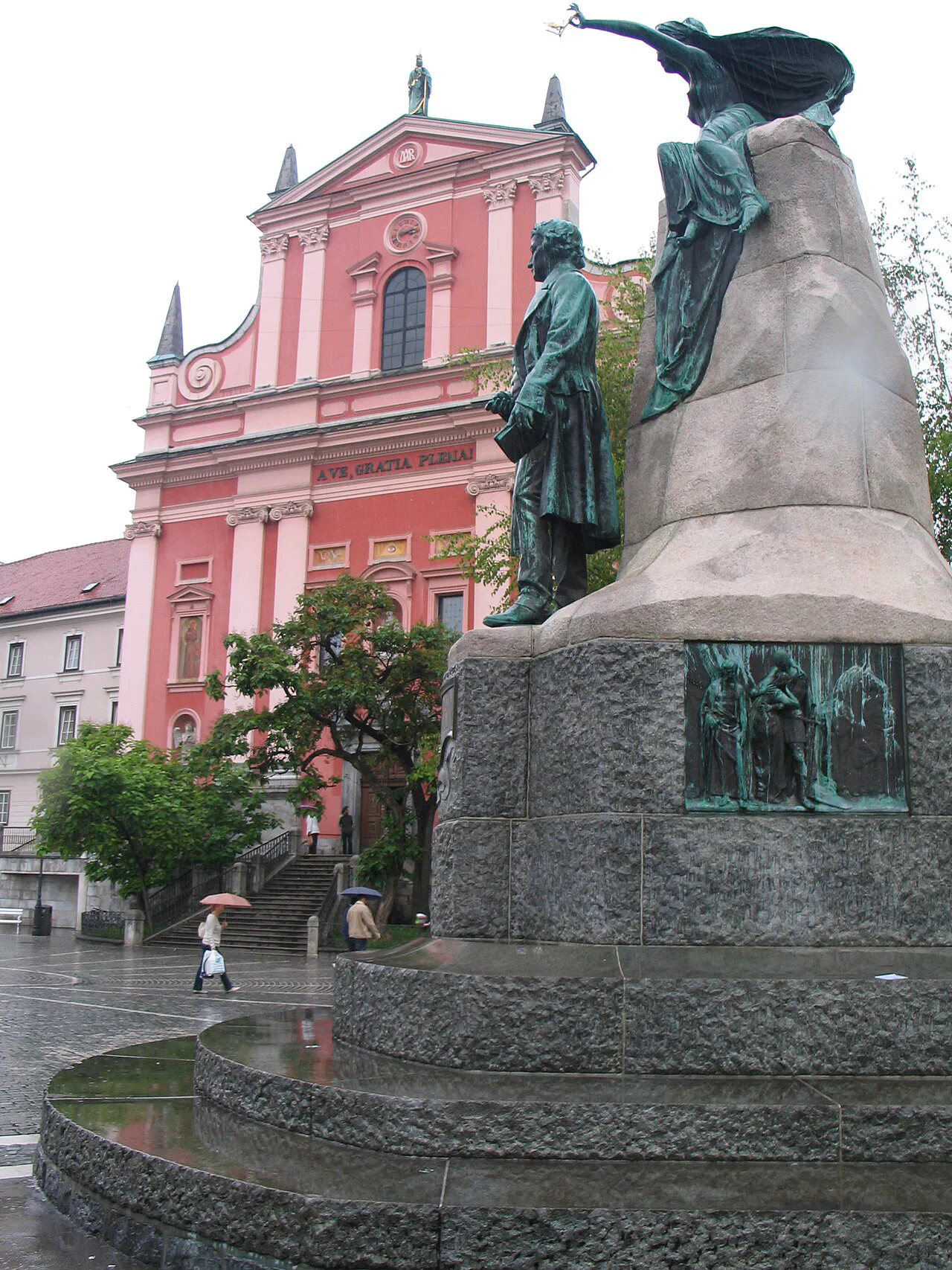
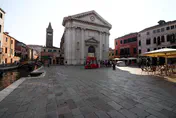
Stand here. Prešeren Square, in front of the Franciscan Church, where the bronze poet of 1905 stands with the muse of poetry holding laurel over him.
Slovenia’s national anthem comes from a poem by France Prešeren, and his face is on the Slovene two-euro coin. By tradition, he first saw Julija Primic, one of Ljubljana’s richest heiresses, at the Trnovo church on Holy Saturday 1833. He dedicated A Wreath of Sonnets to her, with her name spelled out in the first letters. Julija was unimpressed and married another man. His statue here was set facing the window where she used to live. Her statue looks back at him from across the square.
2 The plane that crashed into Plečnik’s library
Stand here. The National and University Library, between Turjaška, Gosposka, and Vegova streets. Its rebuilt reading hall reopened in 1947.
Jože Plečnik, the architect who renovated Prague Castle for President Masaryk, designed Ljubljana’s library as a temple. Its main staircase climbs towards the reading hall’s light, from the twilight of ignorance to the light of knowledge. On 29 January 1944, a mail plane flying for the Germans, its engine dead, crashed into the reading hall. More than 50,000 books burned. The hall was empty, closed five days earlier for lack of heating. But one man, returning a book, died with the four men aboard.
3 Jason’s monster and the Dragon Bridge
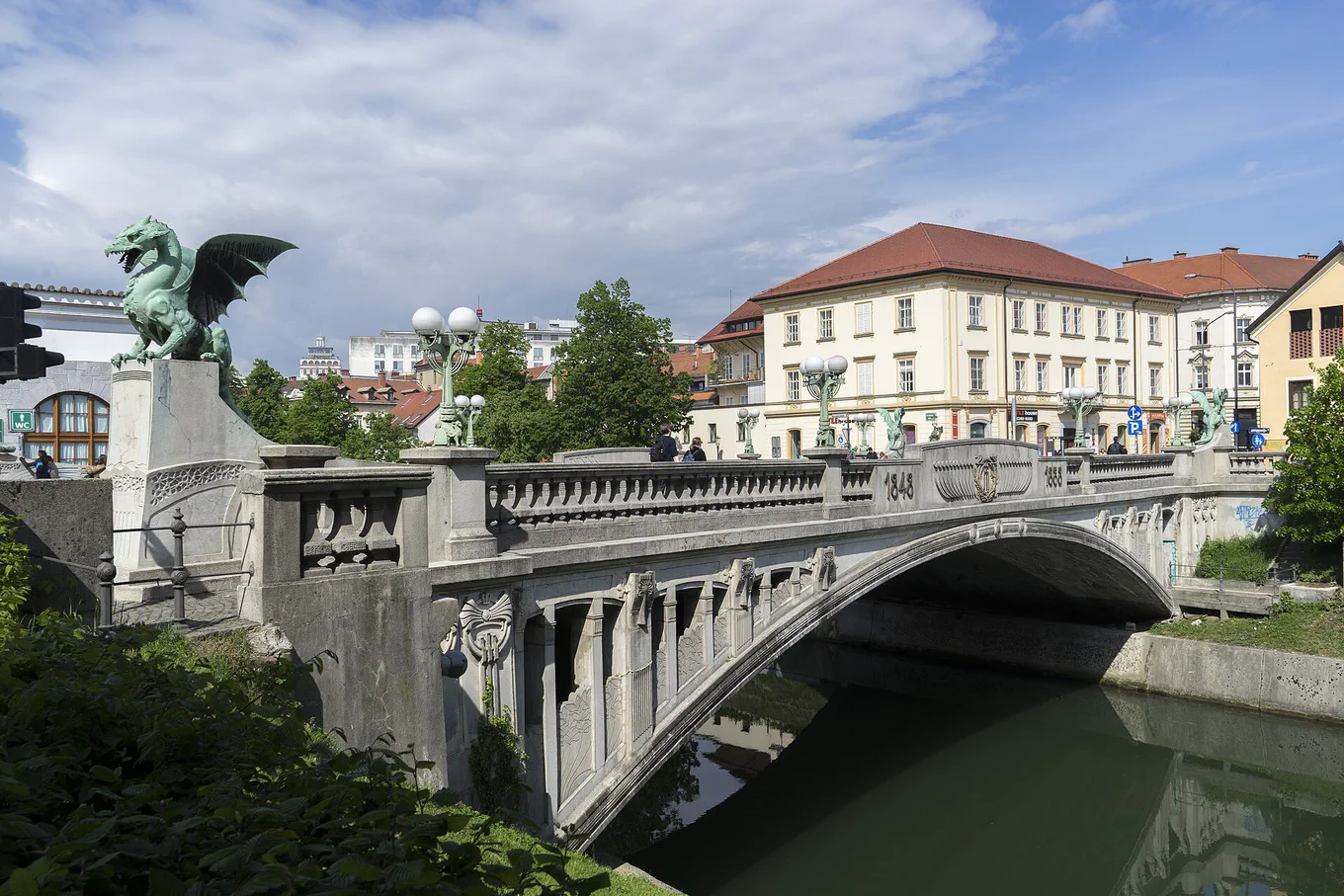
Stand here. The Dragon Bridge over the Ljubljanica, one of Europe’s earliest reinforced concrete bridges. Four large dragons and sixteen smaller ones decorate it.
Jason and the Argonauts came this way with the Golden Fleece, the story goes. At a lake in the marshes between Vrhnika and Ljubljana, Jason struck down a monster, and it became the dragon on the city’s coat of arms. When a bridge opened over the Ljubljanica in 1901, it was named for Emperor Franz Joseph’s forty years on the throne, but four dragons stood at its corners. In July 1919, it was renamed Dragon Bridge. Local legend says the dragons wag their tails when a virgin crosses.
4 Primož Trubar and the first books in Slovene
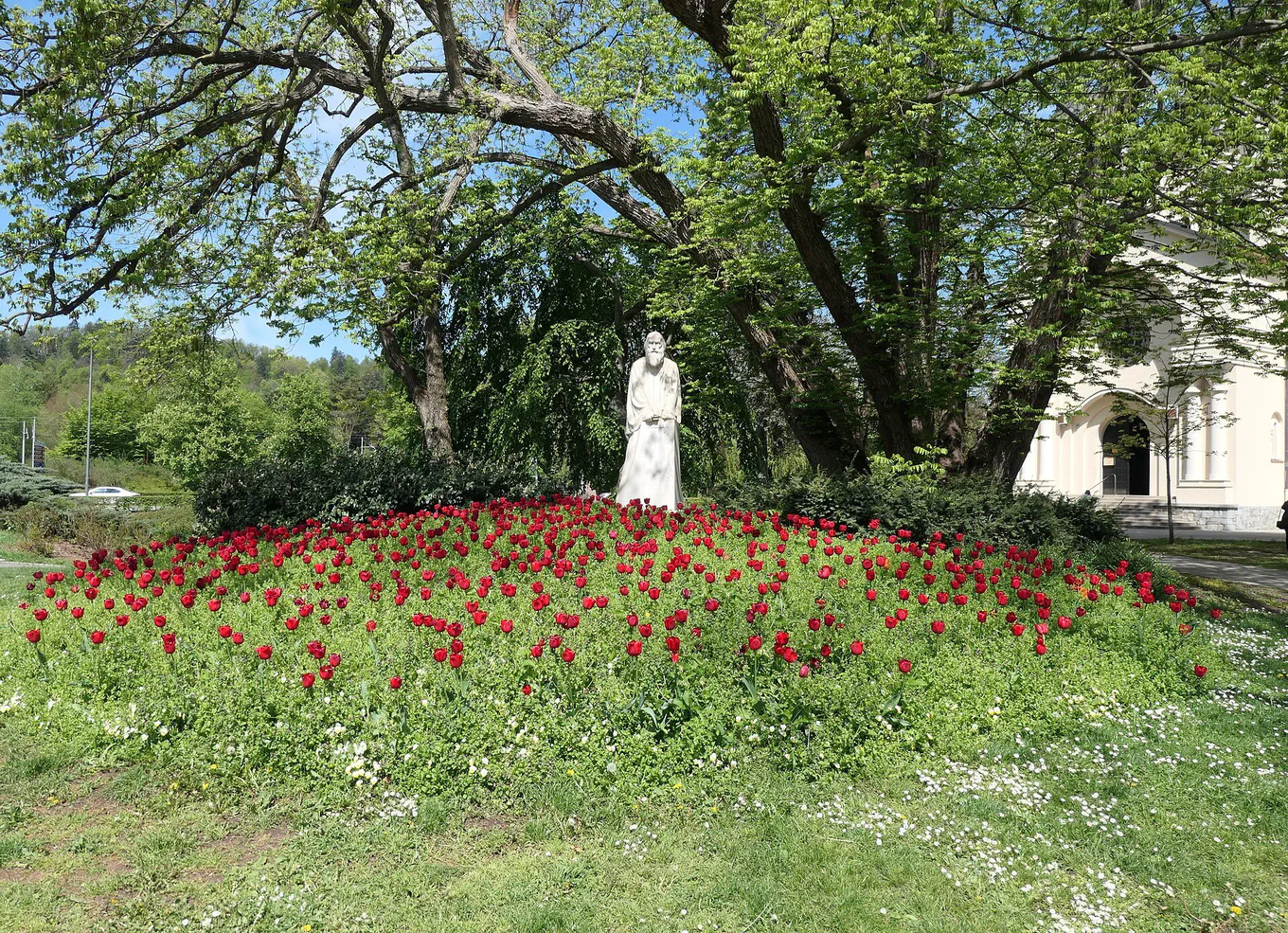
Stand here. Trubar Park, opposite the Museum of Modern Art. A white marble statue of the reformer, made in 1910, stands in it.
Primož Trubar, a preacher in Ljubljana, leaned little by little towards Protestantism, and in 1547 the city expelled him. In exile, he went on preaching, and in 1550 he wrote two books in his own language, a catechism and a primer, printed that year at Schwäbisch Hall. They were the first books ever printed in Slovene, and the catechism carried the first Slovene music in print. Trubar died in Germany and is buried there. The city that threw him out has given him a park and a street.
5 Ivan Hribar, the mayor who rebuilt Ljubljana
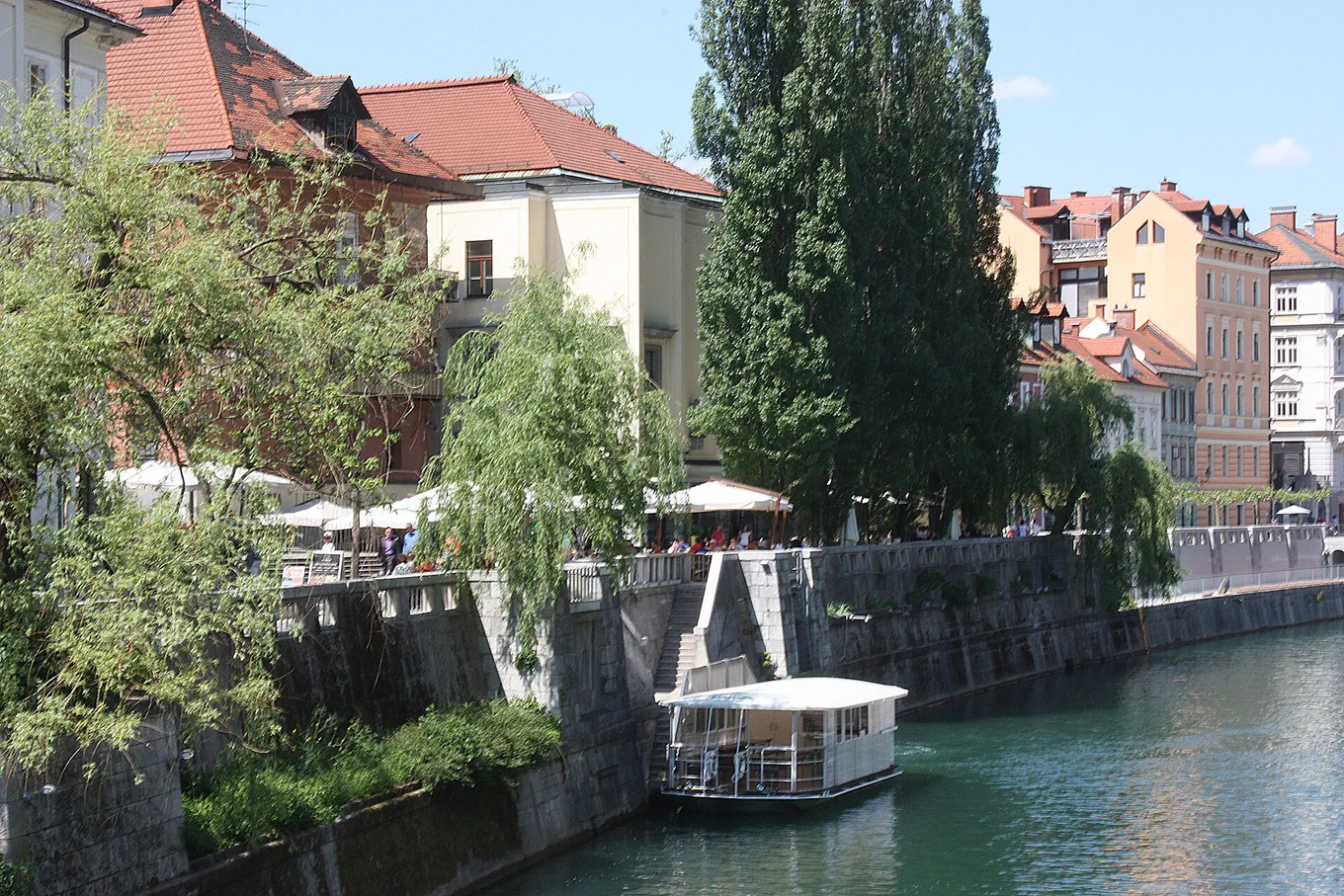
Stand here. Hribar Embankment, beside the Shoemakers’ Bridge over the Ljubljanica. A monument to him, unveiled in 2010, stands not far from where he died.
An earthquake in 1895 damaged or destroyed a tenth of Ljubljana’s buildings. Ivan Hribar, a banker who showed a gift for organising the aid, was soon elected mayor and led the rebuilding, much of it in the Vienna Secession style. On 18 April 1941, the 89-year-old came home from a meeting with Italy’s Fascist authorities, who had just offered him the mayorship again. Wrapped in the Yugoslav flag, Hribar jumped into the Ljubljanica, in protest at Italy’s annexation of his city. His note quoted Prešeren: “Less fearful the long night of life’s denial / Than living ’neath the sun in subjugation!”
Pack nothing. Leave Friday.
Every Friday, I write a free letter, Journey, that takes us on a trip through places, stories, and ideas.
I Saw Her That Night (To noč sem jo videl)(Drago Jančar, 2010). A novel set in Ljubljana and elsewhere, about the disappearance of Veronika, a young eccentric woman from Ljubljana, before and during the Second World War.
Fužine Blues (Fužinski bluz)(Andrej E. Skubic, 2001). A novel. Its story takes place on 13 June 2000 in Fužine, a block of flats in Ljubljana famous for its great national diversity.
Veronika Decides to Die(Paulo Coelho, 1998). A novel. Veronika keeps returning to the statue of the poet Prešeren on Prešeren Square in Ljubljana.
Films to watch before you visit Ljubljana
Slovenian Girl (Slovenka)(Damjan Kozole, 2009). A film set in Ljubljana in 2008, during Slovenia’s EU presidency, about a 23-year-old student who leads a double life as a call girl.
Outsider(Andrej Košak, 1997). A film beginning in autumn 1979, when a warrant officer’s son moves to Ljubljana. Tito is admitted, seriously ill, to University Medical Centre Ljubljana.
Real Pests (To so gadi)(Jože Bevc, 1977). A comedy film about a widowed bus driver who lives in Ljubljana with his five adolescent sons. It held Slovenia’s box-office record for almost 15 years.
Questions
Why does the Prešeren statue face the building across the square?
Because Julija Primic, the great unrequited love of France Prešeren’s life, used to live there. The bronze poet of 1905 faces her old window, and a statue of Julija on the facade across the square, in Wolfova ulica, faces him back.
Who designed Ljubljana’s Triple Bridge?
The middle bridge, of stone with two arches, opened in 1842. In 1929, Jože Plečnik designed two footbridges, one on each side at a slight angle, to stop the old bridge being a bottleneck. They opened in April 1932, and in 2021 the Triple Bridge joined the UNESCO World Heritage List with others of his works.
What is the Ljubljana Marshes Wheel?
It is the oldest wooden wheel yet discovered, about 5,100 to 5,350 years old. It was found in 2002 in the Ljubljana Marsh, some 20 kilometres south of the city, and it is kept at the Ljubljana City Museum.