My earliest memory of London is getting lost as a very young child. We’d gone to watch the changing of the guard at Buckingham Palace, and I’d done my usual and gone exploring. Never really appreciated the look on my Dad’s face until I (briefly) lost my own son, thirty years later. My body is clenching as I type this.
— Nick
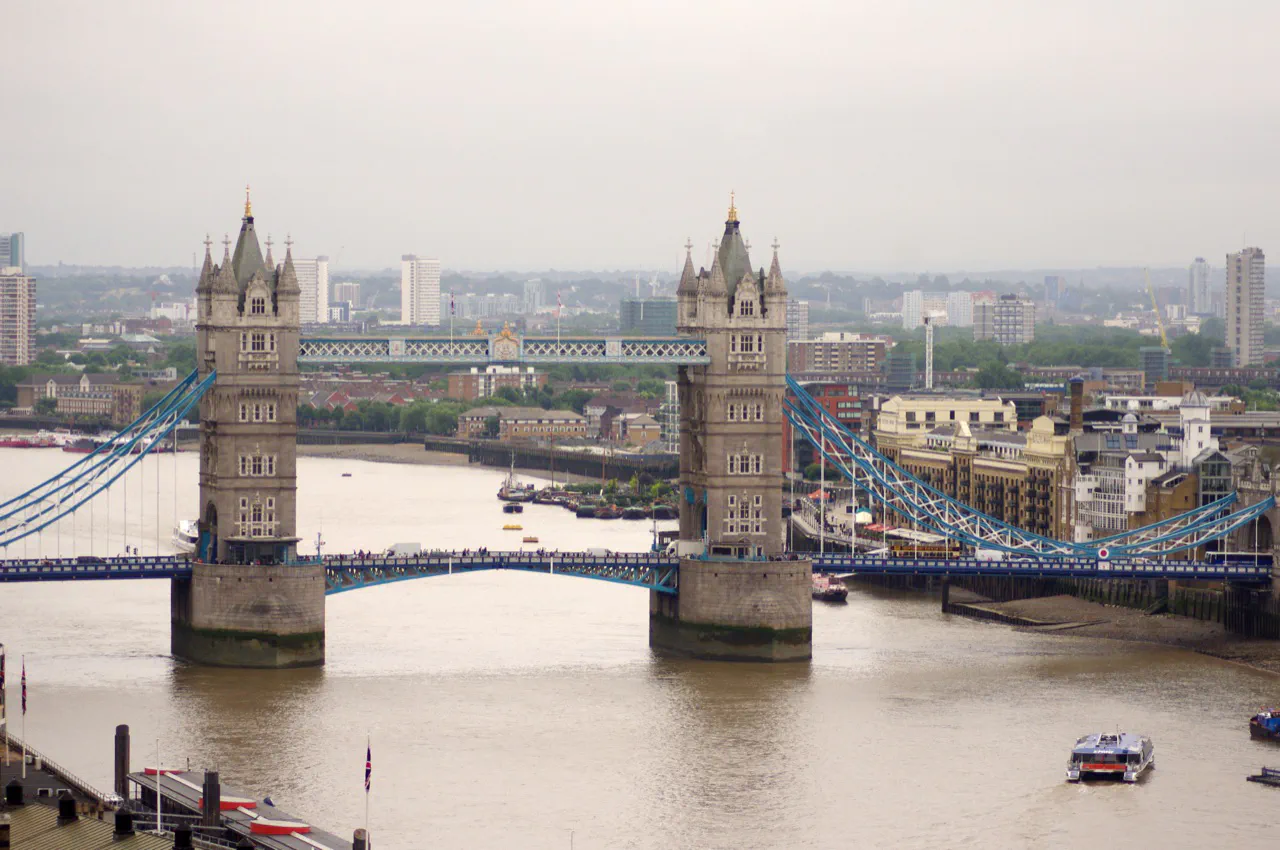
Londinium, founded by the Romans around AD 47, is now London, the capital and largest city of England and the United Kingdom. It stands on the River Thames in south-east England, at the head of a 50-mile tidal estuary that runs to the North Sea. A baker’s fire leads, then a novelist’s grief, letters to a detective who never lived, a draughtsman’s map, and a band on a roof.
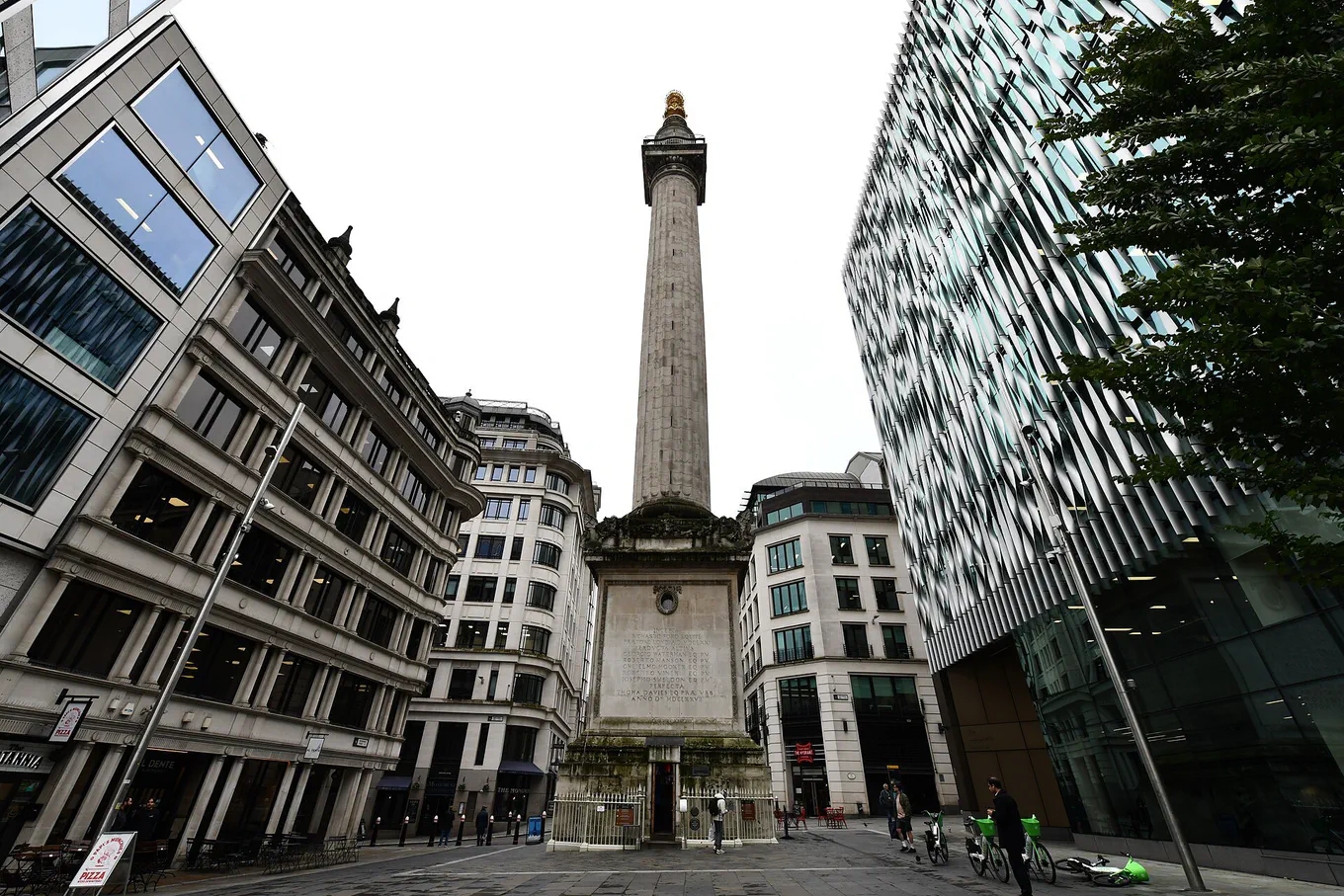
Shortly after midnight on 2 September 1666, the Great Fire of London broke out in Thomas Farriner’s bakery on Pudding Lane. A French watchmaker, Robert Hubert, confessed to throwing a fire grenade through its open window. At his trial, Farriner said he had gone through every room and found no fire, so it was set on purpose. Few of the jury believed Hubert guilty, but he was hanged. Only afterwards did it emerge that he had reached London two days after the fire began. And the bakery had no windows.
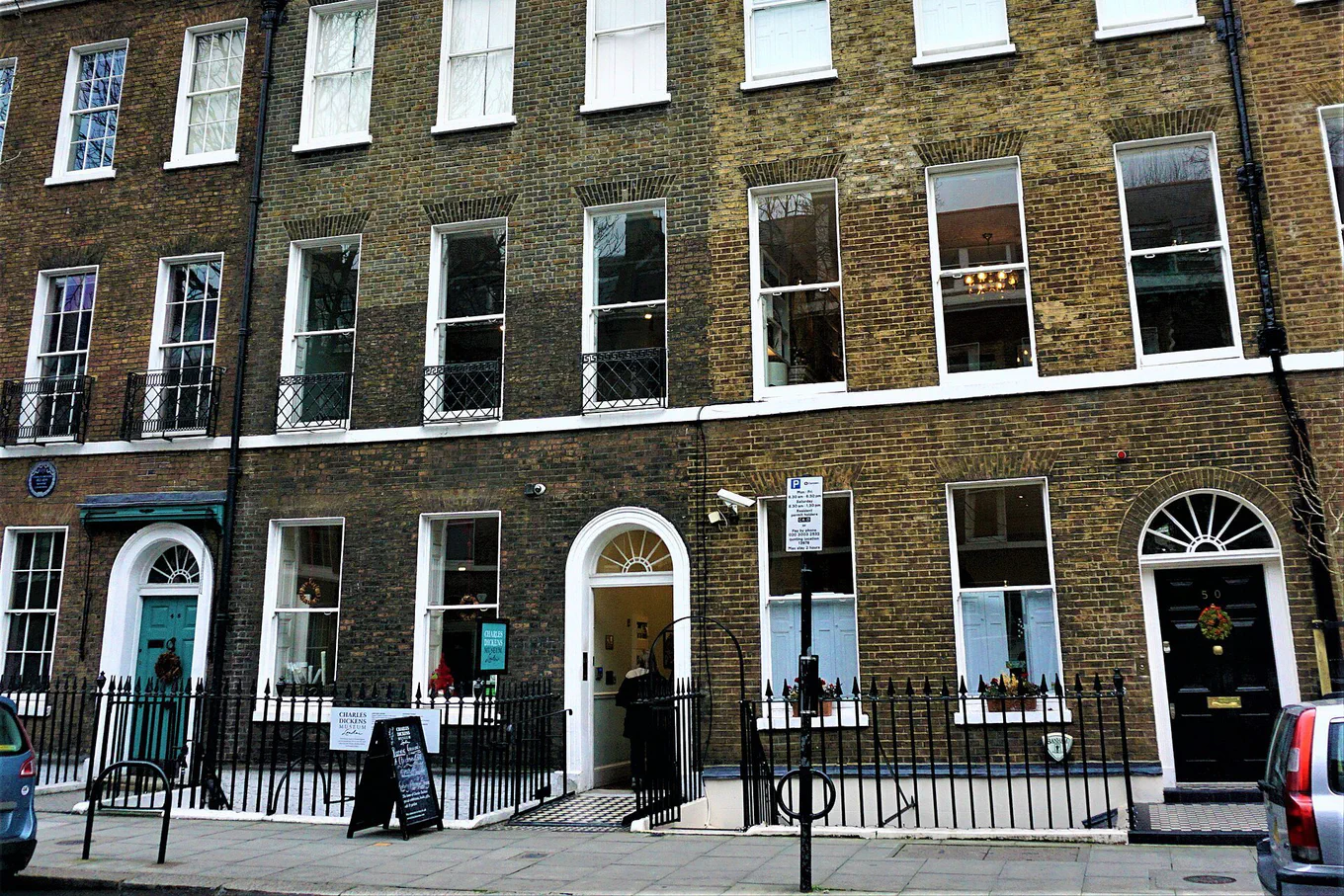
2 Dickens and Mary Hogarth at 48 Doughty Street
Stand here. 48 Doughty Street, in Bloomsbury, Dickens’s only surviving London home, is now the Charles Dickens Museum, set up as though he had just left.
Charles Dickens moved into this house in March 1837, while he was writing The Pickwick Papers and Oliver Twist in instalments. He had grown very attached to his wife’s younger sister, Mary Hogarth. Six weeks later, Mary came home from the theatre with the couple, collapsed in the early hours, and died that afternoon in Dickens’s arms. She was 17. His grief made him miss his deadlines for both books, the only time in his life he ever missed one. He wore her ring for the rest of his life.
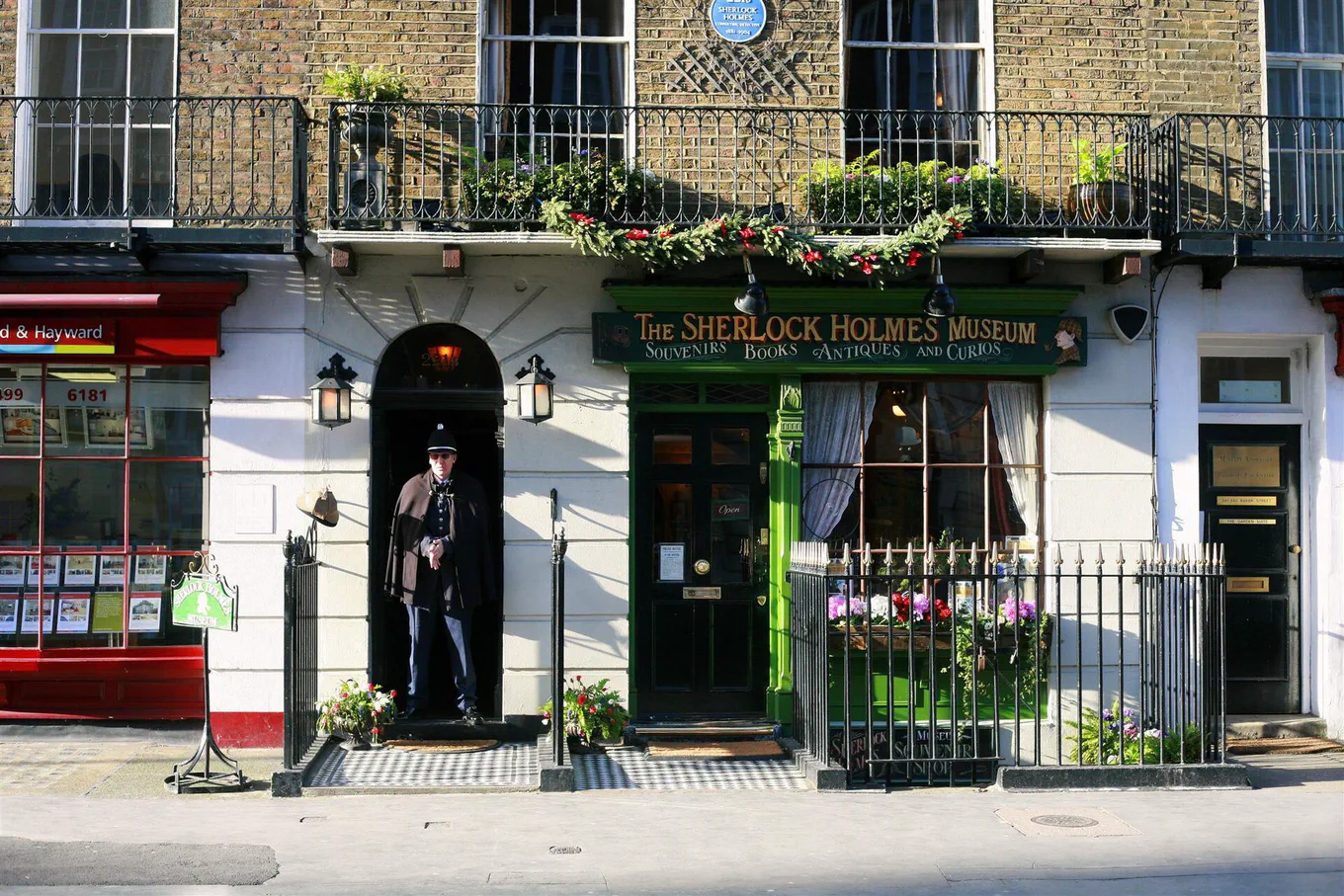
3 The letters to Sherlock Holmes at 221B Baker Street
Stand here. The Sherlock Holmes Museum, in an 1815 Georgian town house on Baker Street near Regent’s Park, carries the number 221B by permission of the City of Westminster.
When Arthur Conan Doyle gave Sherlock Holmes rooms at 221B Baker Street in A Study in Scarlet, the street’s numbers didn’t reach 221. Readers wrote to Holmes anyway. In 1932, the Abbey National Building Society moved into 219–229 Baker Street and appointed a permanent “secretary to Sherlock Holmes” to answer the letters. In 1990, the new Sherlock Holmes Museum was given the number 221B, and the two spent fifteen years fighting over who should get the post of a man who never lived.
4 Harry Beck’s Tube map, first turned down as too radical
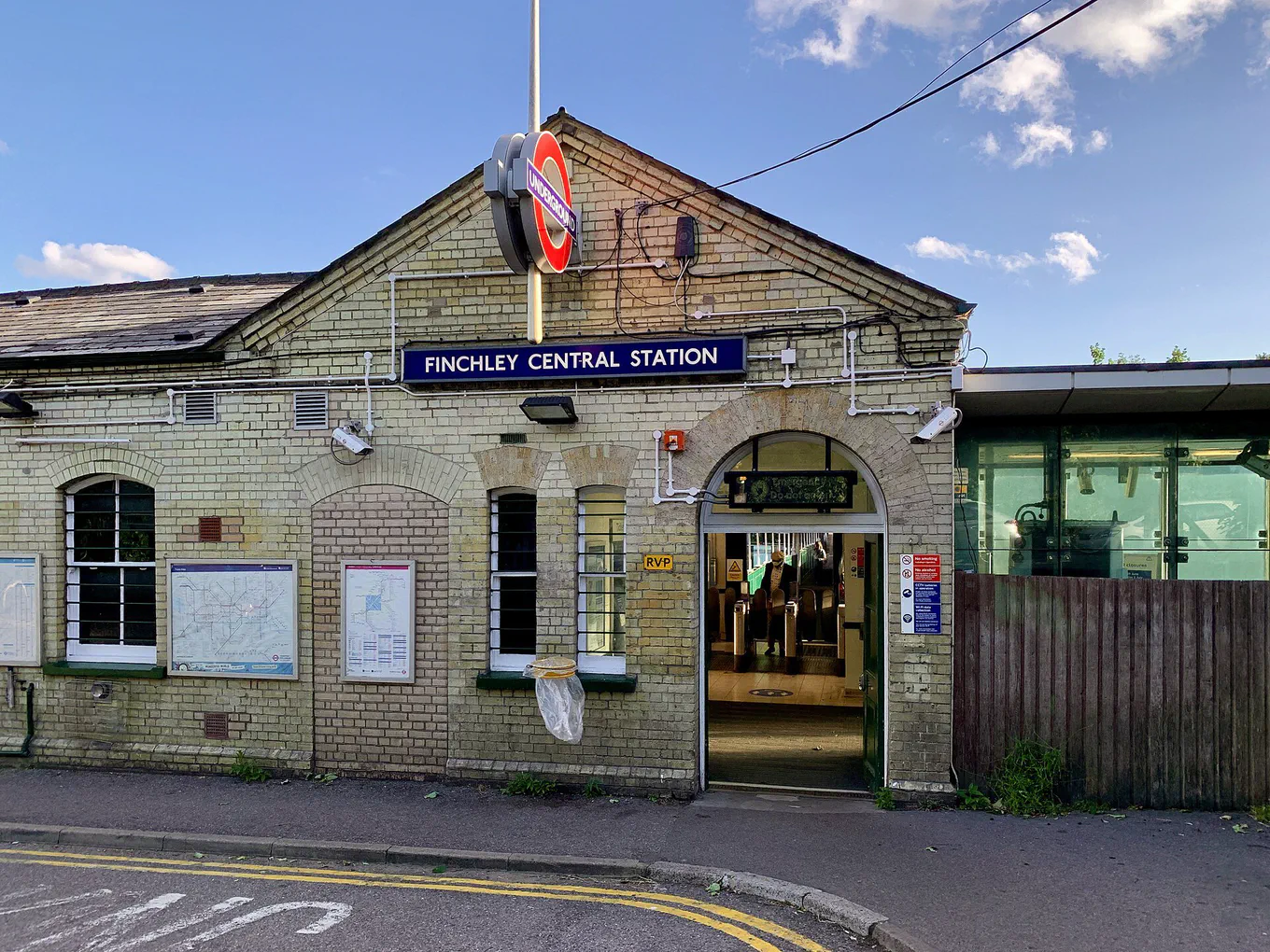
Stand here. Finchley Central Underground station. A modified version of Beck’s first map is preserved on the southbound platform, and a plaque remembers him.
The street entrance to Finchley Central Underground station, on the Northern line in north London.TheFrog001 / CC0.
The London Tube map began, by some accounts, as the idea of a draughtsman who had been laid off. Harry Beck had worked in the Underground’s signals office, and in 1931 he drew a diagram that showed how the lines connected rather than where the stations really were. The Underground turned it down as too radical. Beck sent an updated copy, a trial of 500 went well, and the pocket map of January 1933 needed a large reprint within a month. Every Tube map since has been drawn his way.
5 The Beatles’ last show, on a Savile Row roof
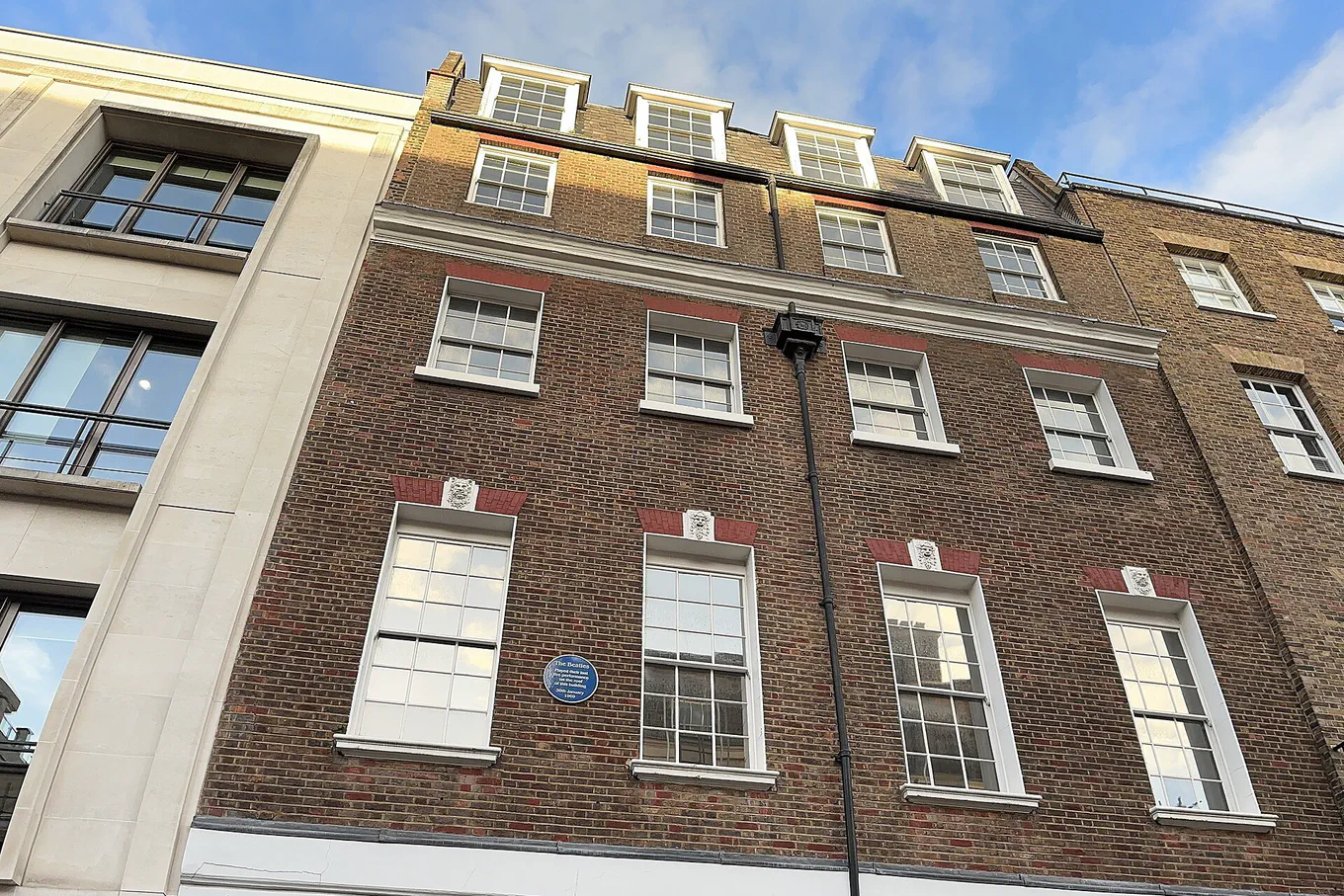
Stand here. 3 Savile Row, once the Beatles’ Apple office. The concert was on its roof.
If you’ve seen Peter Jackson’s The Beatles: Get Back, you’ve seen this roof. The sessions were meant to bring the Beatles back as a live band, but a big public show was ruled out. So on 30 January 1969, with Billy Preston on keyboards, they played on the roof of their own Apple office. Forty-two minutes in, after complaints from local businesses, the police arrived. John Lennon signed off hoping they had passed the audition. It was the last time the Beatles played in public.
A Study in Scarlet(Arthur Conan Doyle, 1887). A novel, and Holmes’s first appearance. He needs someone to share the rent at 221B Baker Street, and Watson follows him to an empty house on Brixton Road.
Oliver Twist(Charles Dickens, 1838). A novel, written at 48 Doughty Street. Fagin’s den sits where Saffron Hill meets Field Lane, in Clerkenwell.
84, Charing Cross Road(Helene Hanff, 1970). A memoir in letters, from Hanff’s twenty-year correspondence with Frank Doel of Marks & Co, the antiquarian booksellers at that address. A brass plaque marks the site.
The Lonely Londoners(Samuel Selvon, 1956). A novel by a Trinidadian writer. When “the boys” talk about “the Water” and “the Gate”, they mean Bayswater and Notting Hill.
The Ghost Map(Steven Johnson, 2006). A history of the 1854 cholera outbreak around the Broad Street pump in Soho, now Broadwick Street, told through the doctor John Snow and the curate Henry Whitehead.
Films to watch before you visit London
Notting Hill(Roger Michell, 1999). A film. Portobello Road was one of its main locations, and Will keeps his travel bookshop there.
28 Days Later(Danny Boyle, 2002). A film. To shoot an empty Westminster Bridge, the crew had about 45 minutes after dawn before people and traffic arrived.
Blowup(Michelangelo Antonioni, 1966). A film. Its park scenes were shot in Maryon Park, Charlton, which has changed little since, though Antonioni painted the grass green.
Questions
Can you visit 221B Baker Street?
Yes. The Sherlock Holmes Museum, opened in 1990, carries the number 221B by permission of the City of Westminster, though it actually sits between numbers 237 and 241, near Regent’s Park. It occupies a Georgian town house built in 1815.
Can you climb the Monument to the Great Fire of London?
Yes. The 202ft column, designed by Christopher Wren and Robert Hooke, has 311 steps to the top. It stands 202 feet from the spot in Pudding Lane where the fire began.
How old is London?
The Romans founded the first major settlement, Londinium, around AD 47, about four years after they invaded Britain in AD 43. Its ancient core is today’s City of London, the financial centre.