Los Angeles, United States, California, North America
I feel like I know Los Angeles intimately, but in my head it’s called Los Santos. (If you know, you know.)
— Nick
Most of Los Angeles lies in the Los Angeles Basin, beside the Pacific in Southern California. Founded under Spanish rule in 1781, it is the second-most populous city in the US and the oldest hub of film and television. The first Oscars sit mid-list, after a convicted millionaire’s observatory and a planchette behind the Bradbury Building, before a tile mason’s towers and a sign rebuilt a letter at a time.
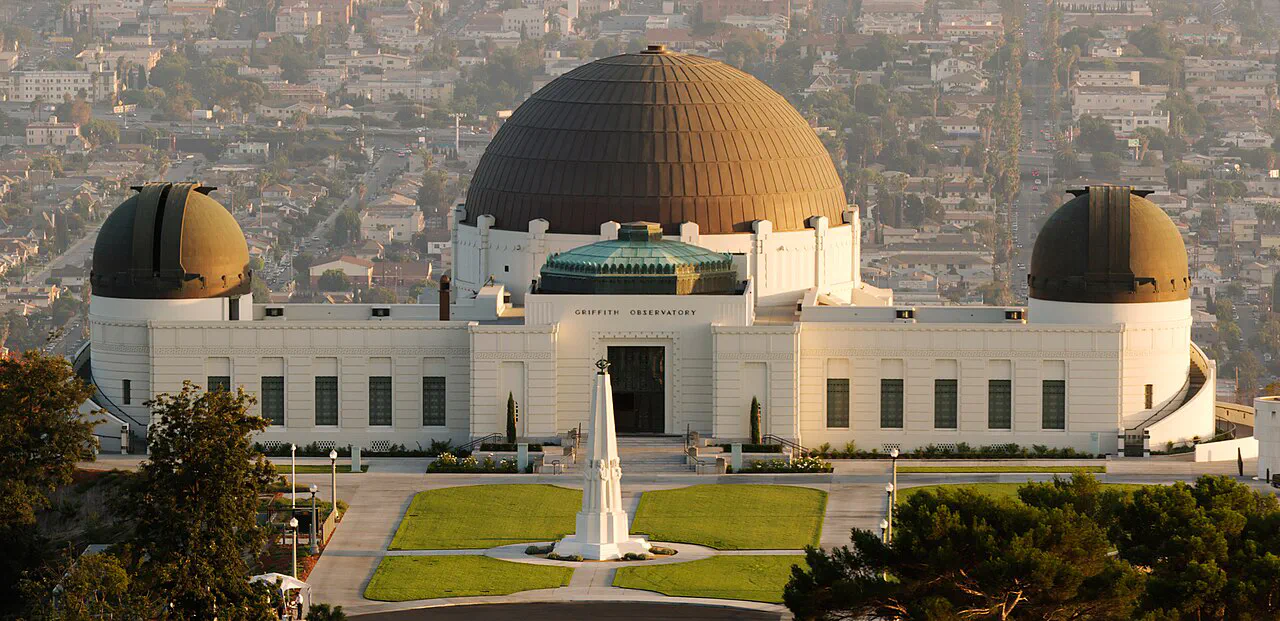
In La La Land, a broken projector sends Seb and Mia from a screening of Rebel Without a Cause up here, where they kiss. The observatory began with Griffith J. Griffith, a Welsh-born millionaire who had served nearly two years in San Quentin for shooting his wife, who survived. When he offered the city $100,000 for an observatory, the Park Commission went to court to block him. So he left the money in his will. It opened in 1935, sixteen years after his death.
2 George Wyman, a planchette, and the Bradbury Building
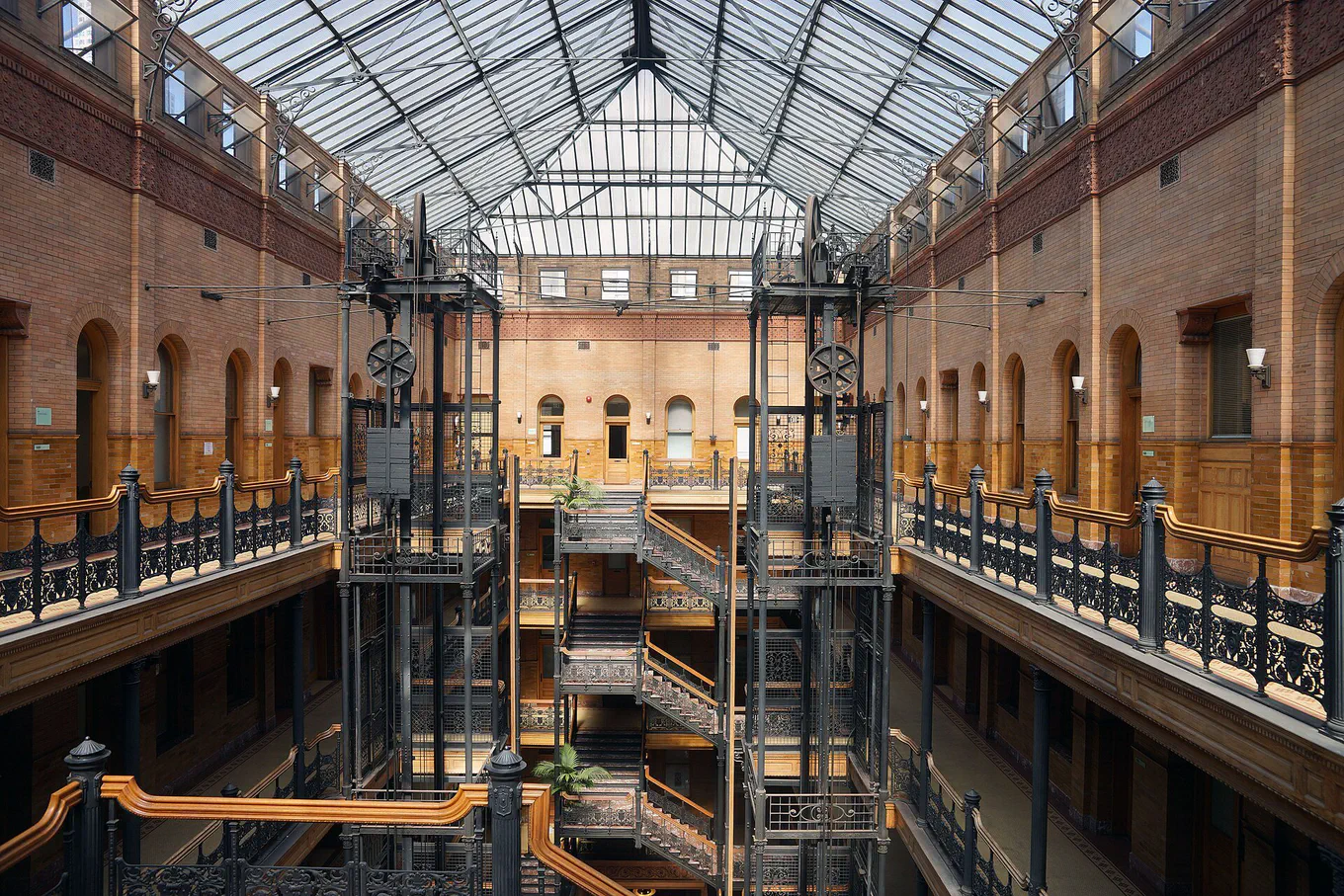
Stand here. The Bradbury Building, 304 South Broadway, downtown, where casual visitors may climb only to the first landing of its iron atrium.
J. F. Sebastian lives here in Blade Runner, and the climax plays out on the roof. In 1892, the mining millionaire Lewis Bradbury rejected his architect’s design and gave the job to a draughtsman, George Wyman, who had never designed a building. By his grandson’s account, a troubled Wyman and his wife, both Spiritualists, consulted a planchette, a Ouija-like device. It spelled out a message from his brother Mark, dead at eight, telling him to take the Bradbury building and he would be… The last word came upside down. “Successful.”
3 Emil Jannings and the first Oscars at the Hollywood Roosevelt
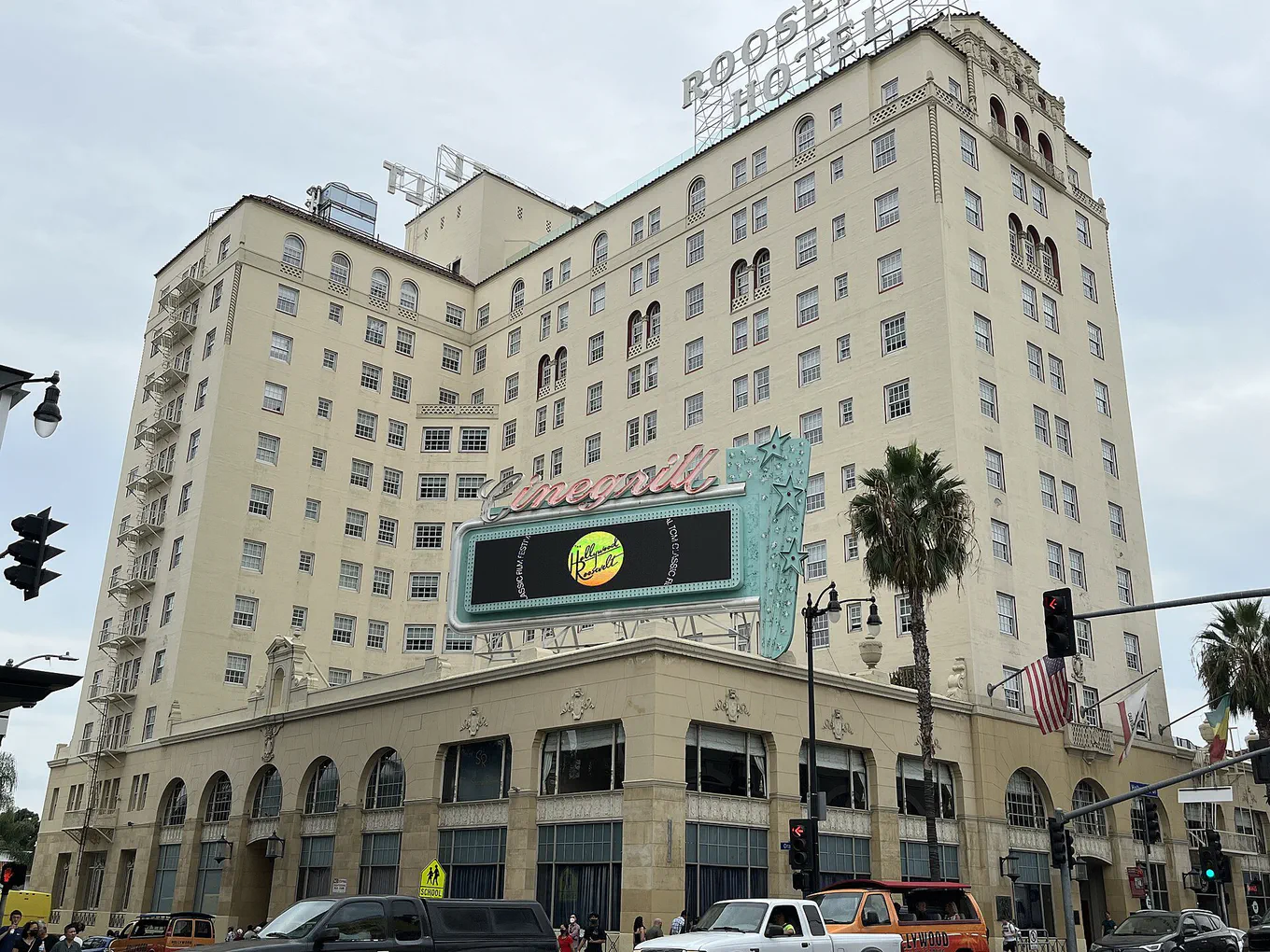
Stand here. The Hollywood Roosevelt Hotel, 7000 Hollywood Boulevard, across the street from the TCL Chinese Theatre. The first Oscars were held in its Blossom Room.
The Academy gave out its first Oscars here on 16 May 1929, at a private dinner for 270 people. The ceremony lasted fifteen minutes. The winners had been announced three months earlier. The first Best Actor, Emil Jannings, a Swiss-born star of 1920s Hollywood, posed for pictures with his statuette before leaving for Germany. There he took leading roles in films made for the Nazi state. Because of his part in Nazi propaganda, the first man ever named Best Actor never acted again.
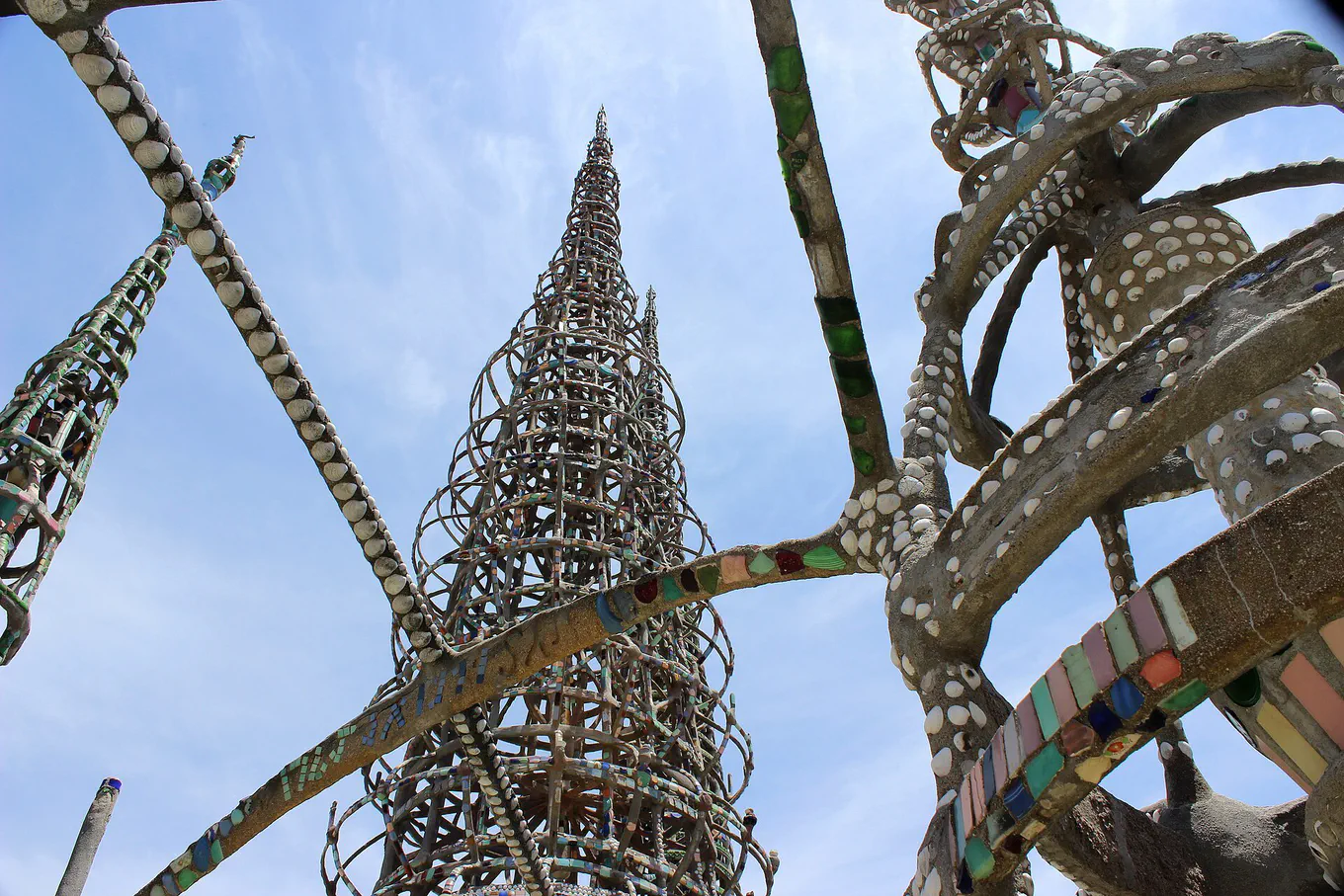
4 Sabato Rodia and the Watts Towers he built alone
Stand here. Watts Towers, 1765 East 107th Street, Watts. A National Historic Landmark, visited only on guided tours of about 30 minutes.
Sabato Rodia, an Italian tile mason, bought a triangular lot in Watts in 1921 and began building. Alone, with hand tools, he bent scrap steel against the nearby railway tracks and covered his towers in tiles, bottles, seashells, and mirrors. After 33 years, he gave the deed to a neighbour and left to live with his sister. The city ordered the towers destroyed, until an engineering test found they could withstand 10,000 pounds of sideways force. Rodia put it simply. “I wanted to do something big and I did.”
5 Alice Cooper, Hugh Hefner, and the rebuilt Hollywood Sign
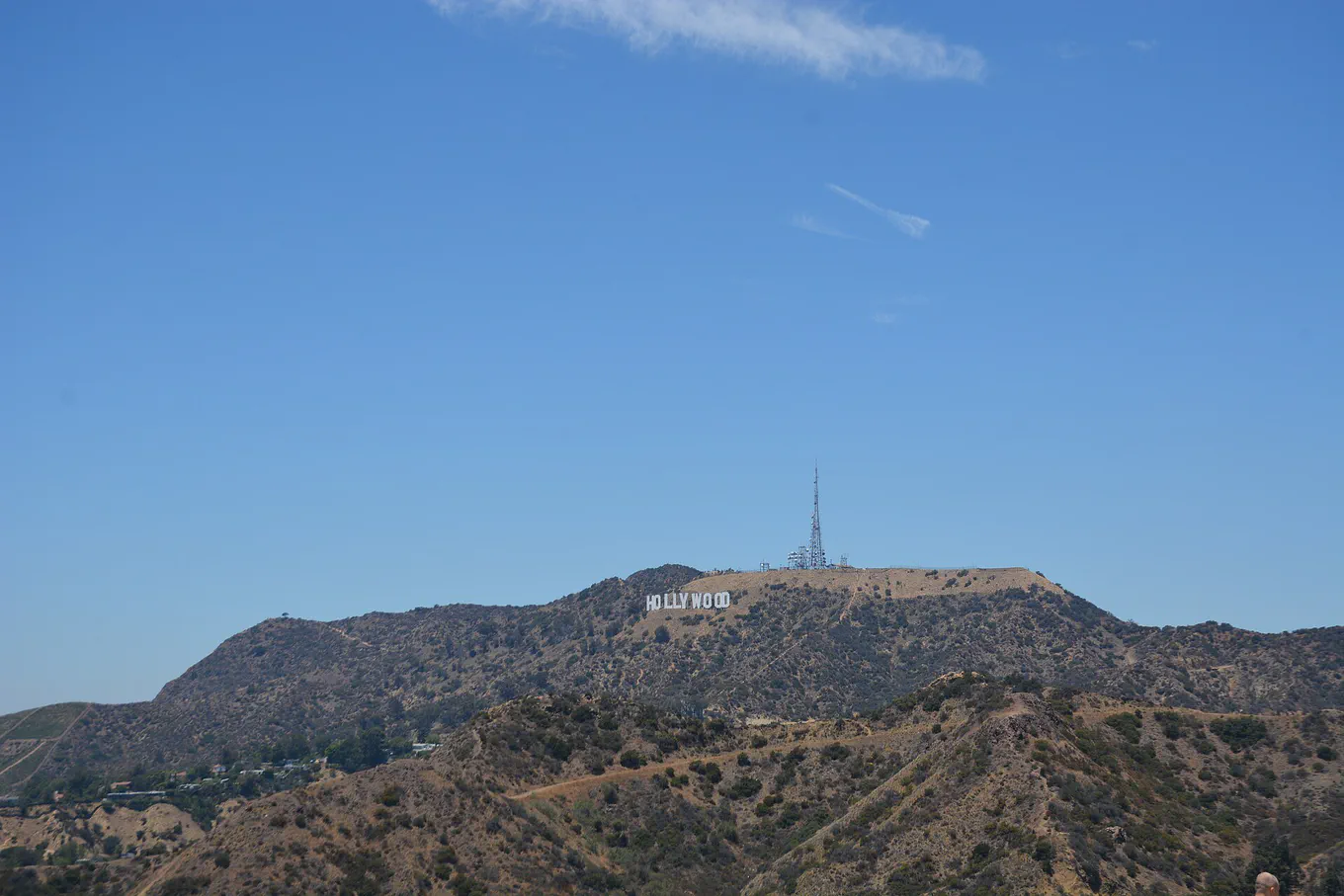
Stand here. Griffith Observatory or the Hollywood and Highland centre, the two designated viewing areas. The sign, on Mount Lee, stands in a restricted area.
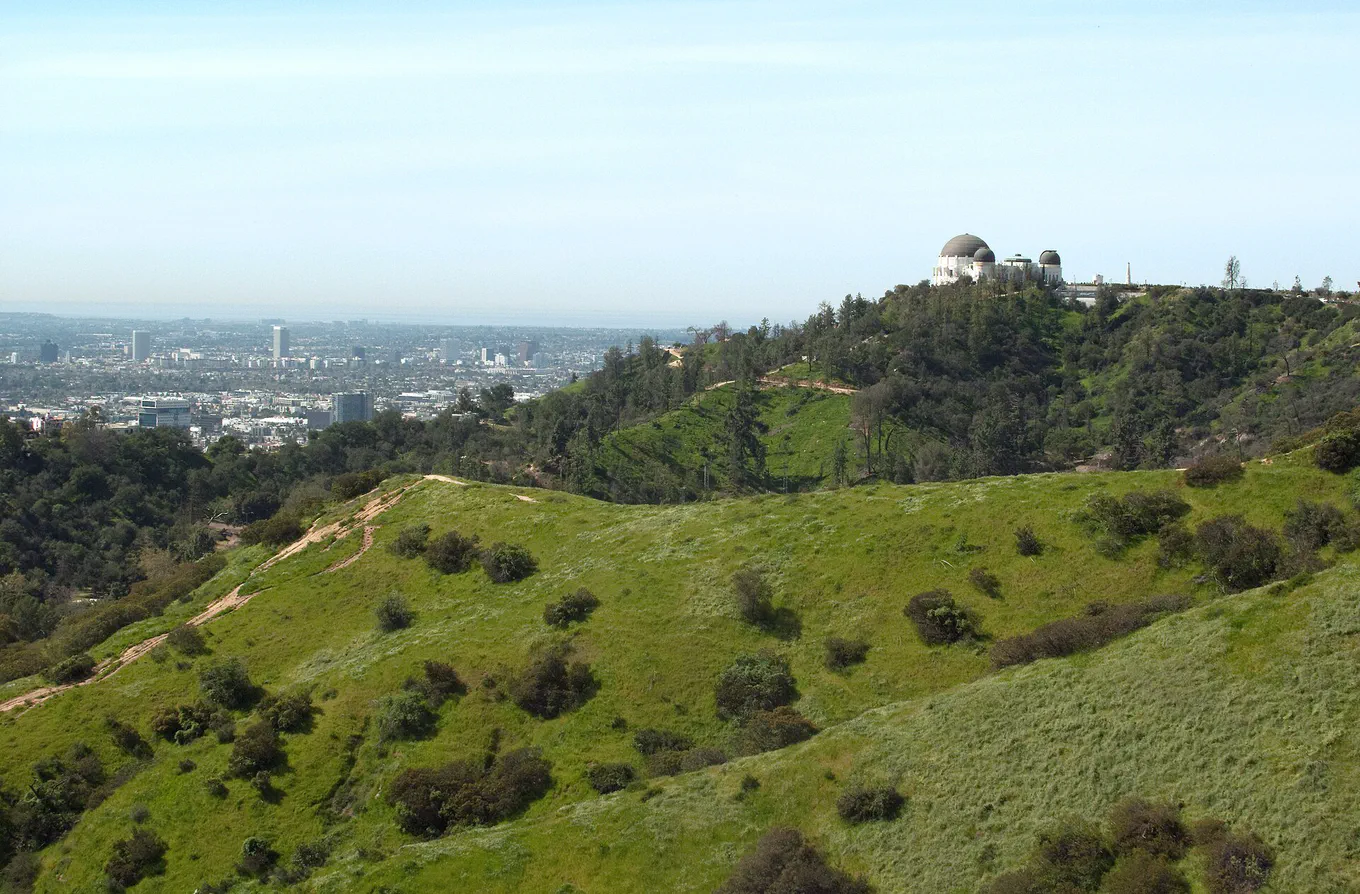
The Hollywood Sign on Mount Lee, seen across the hills of Griffith Park from Griffith Observatory.Benoît Prieur / CC0.
Alice Cooper pledged $27,700 in 1978 to rebuild the last O of the Hollywood Sign, in honour of Groucho Marx. The sign had gone up as a temporary advert for a property development called Hollywoodland, meant to last eighteen months. Cut down to HOLLYWOOD, it read “HuLLYWO D” after a windstorm in February 1978. Hugh Hefner threw a fundraising party at the Playboy Mansion, and nine donors in all took a letter each. The old sign was scrapped, and for three months Hollywood had no sign at all.
Pack nothing. Leave Friday.
Every Friday, I write a free letter, Journey, that takes us on a trip through places, stories, and ideas.
Ask the Dust(John Fante, 1939). A novel. A struggling writer lives in a residential hotel on Bunker Hill, a rundown part of Downtown.
The Big Sleep(Raymond Chandler, 1939). A novel. Marlowe’s case leads to Geiger’s bookshop, and to the pornographic lending library Geiger runs in Hollywood.
The White Album(Joan Didion, 1979). An essay. Didion recalls her large, peeling house on Franklin Avenue, in Hollywood.
Devil in a Blue Dress(Walter Mosley, 1990). A novel. Set in 1948, it opens in Watts, while Rodia was still building his towers.
Films to watch before you visit Los Angeles
Sunset Boulevard(Billy Wilder, 1950). A film. Police find a body floating face down at a mansion on Sunset Boulevard.
Rebel Without a Cause(Nicholas Ray, 1955). A film. After a field trip to Griffith Observatory, Buzz challenges Jim to a knife fight.
La La Land(Damien Chazelle, 2016). A film. Shot in more than 60 places in and around Los Angeles, including the Angels Flight trolley downtown.
Questions
Can you walk up to the Hollywood Sign?
No. The sign stands in a restricted area on Mount Lee, in Griffith Park, and police, firefighters, and park rangers watch it around the clock. Getting close to it or touching it is prohibited. The two designated viewing areas are Griffith Observatory and the Hollywood and Highland centre.
Can you go inside the Bradbury Building from Blade Runner?
Yes, as far as the first landing. The building is at 304 South Broadway in downtown Los Angeles. Casual visitors can’t go higher than the first landing of the iron atrium.
When was Los Angeles founded?
On 4 September 1781, when 44 settlers founded El Pueblo de Nuestra Señora la Reina de los Ángeles under the Spanish governor Felipe de Neve. It became part of the United States in 1848, at the end of the Mexican–American War, and was incorporated as a city on 4 April 1850.