Lucknow is the capital of Uttar Pradesh, in India, on the Gomti River. It rose to prominence in 1775, when Nawab Asaf-ud-Daula moved his court here, and it is still called the City of Nawabs. Its stories here are a hall built in a famine, a Frenchman buried under his palace, a king who lost his kingdom, a flag nailed to its pole, and a queen who refused to submit.
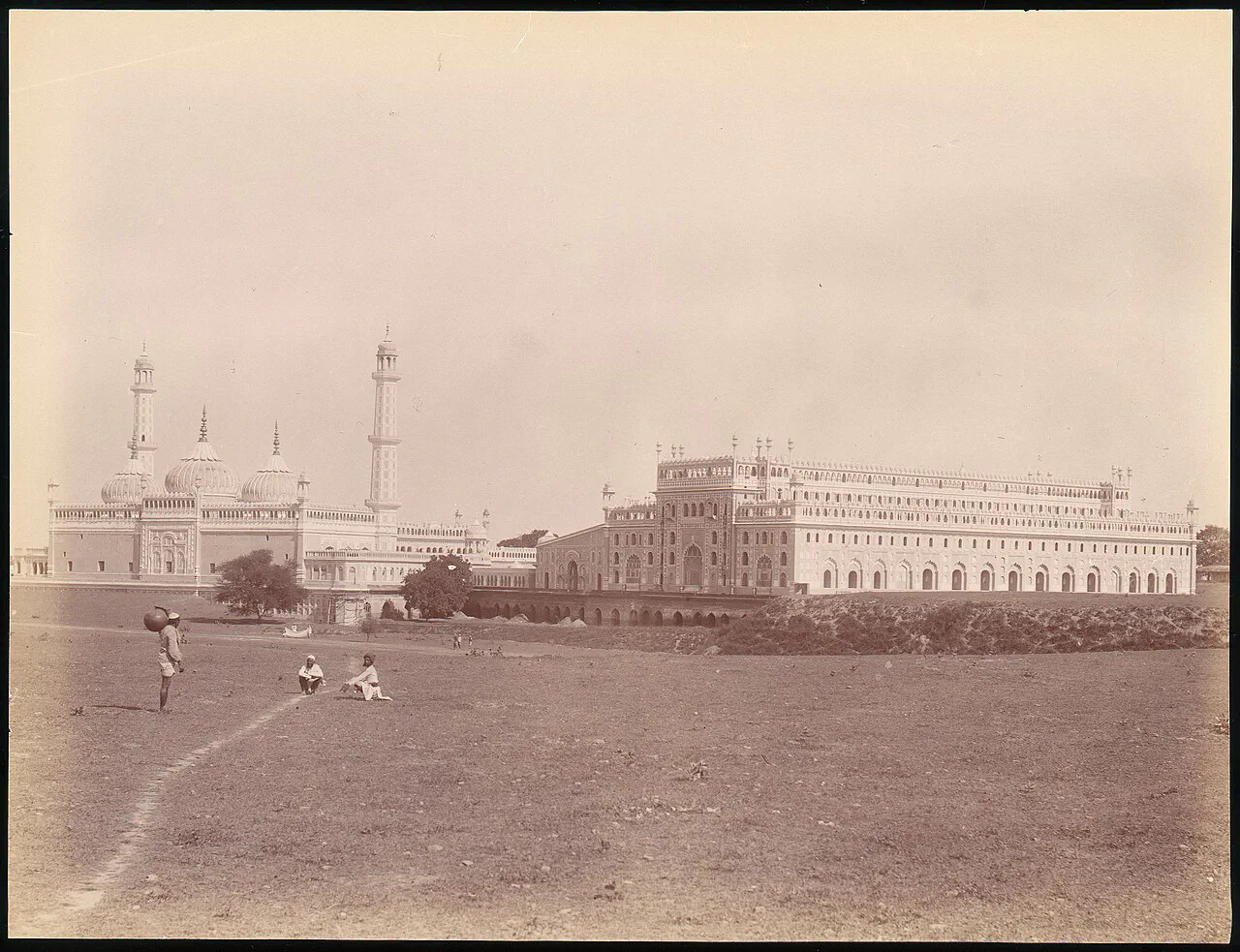
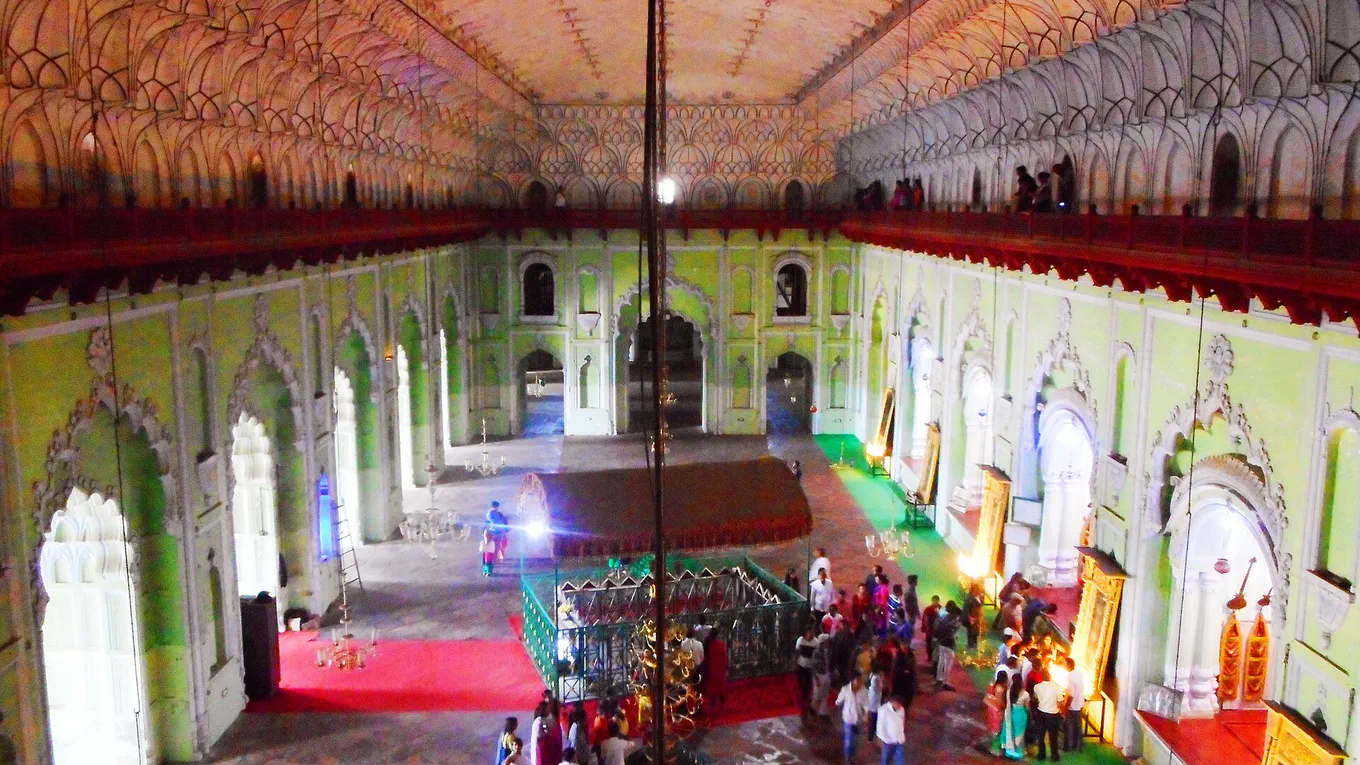
A saying about Asaf-ud-Daula, the Nawab of Awadh, runs, “To whom even God does not give, Asaf-ud-Daula gives.” In 1780, a year of devastating famine, he gave the hungry work building the Bara Imambara, a hall whose ceiling stands without a single beam. But the famine had ruined even the nobles, and they could not be seen to labour. So, the story goes, commoners built by day, and at night the nobles were paid to knock down whatever had gone up. They took their wages, and nobody saw them work.
2 Claude Martin, buried beneath his own palace in Lucknow
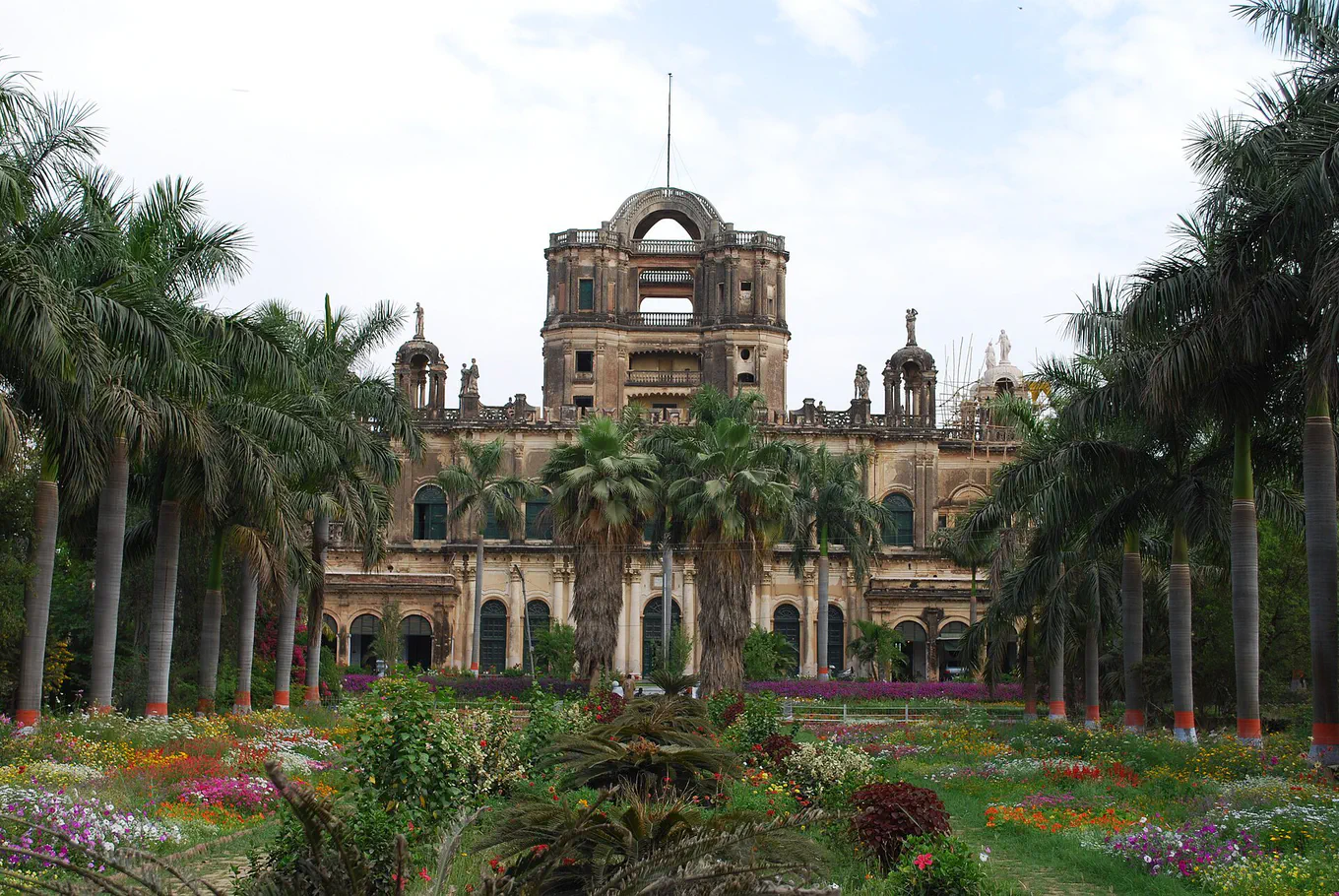
Stand here. La Martinière Boys’ College, once Claude Martin’s palace of Constantia, with his vault still in the basement.
In Kipling’s Kim, the hero’s school is believed to be modelled on this one. The building was the palace of Claude Martin, a Frenchman who arrived in India as a common soldier. It is popularly believed that he had himself buried beneath it, so that his friend the Nawab could never take the house, since a Christian grave would desecrate it in the Muslim ruler’s eyes. Others say the vault was always planned. After his death in 1800, it became a school. In 1857, sixty-seven of its boys helped defend the Residency.
3The Chess Players and the last king at Qaisar Bagh
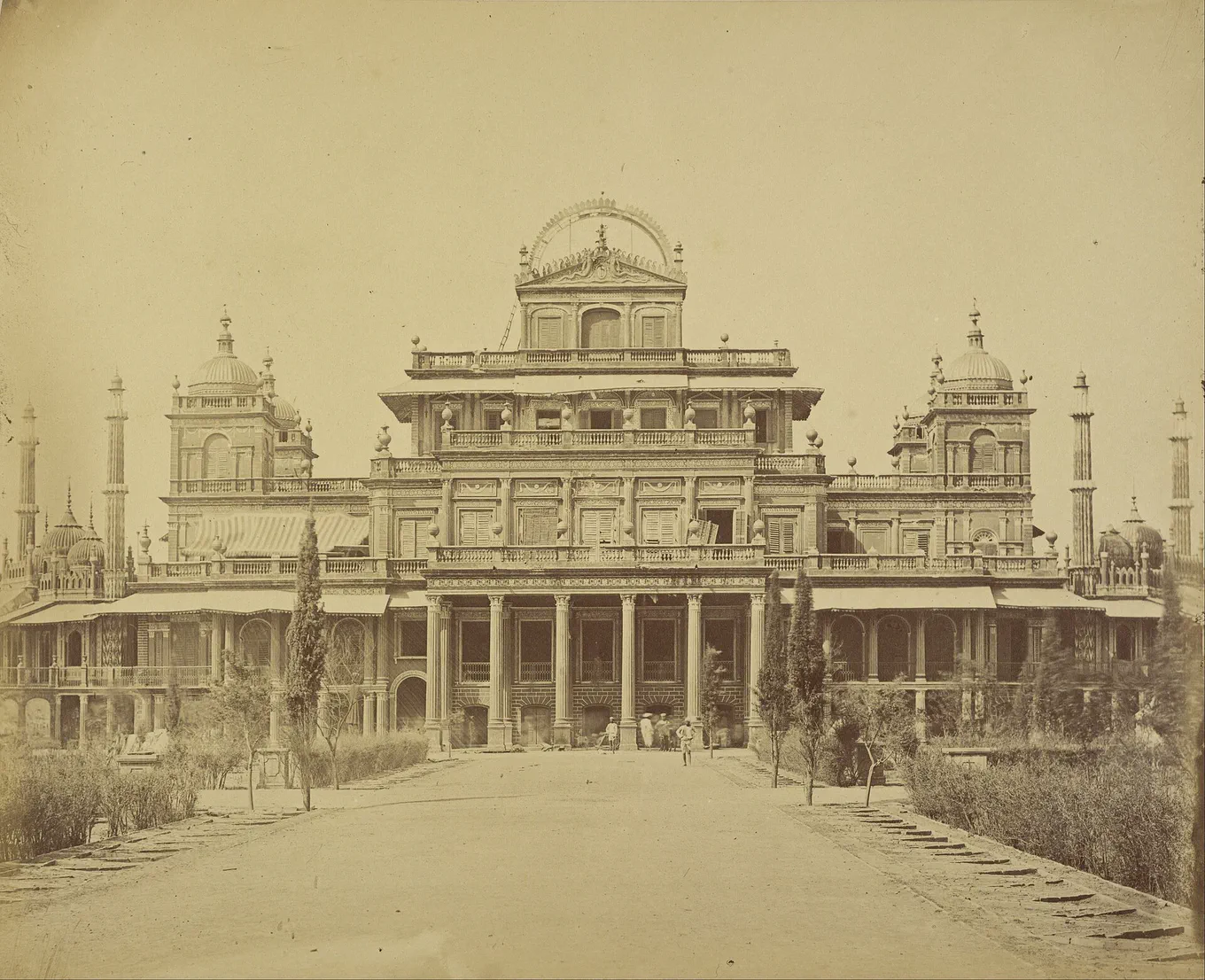
Stand here. Qaisar Bagh, the palace complex Wajid Ali Shah built. British soldiers destroyed much of it, and its ruins now draw visitors.
The King’s Palace in Qaisar Bagh, Lucknow, in an early albumen print by Felice Beato.Felice Beato / Public domain.
Satyajit Ray’s film The Chess Players is set in Lucknow in 1856, as the British prepare to take Awadh from Wajid Ali Shah, its last king. They took it, and he was shipped to Calcutta with his court. His mother sailed to England to ask Queen Victoria to restore him, and learned that the Queen had no such power. She met Victoria at Buckingham Palace anyway, on condition nobody discussed politics. She died three days after reaching Paris. Her son died in Calcutta, still carrying Lucknow in his heart.
4 Henry Lawrence and the nailed flag at the Residency
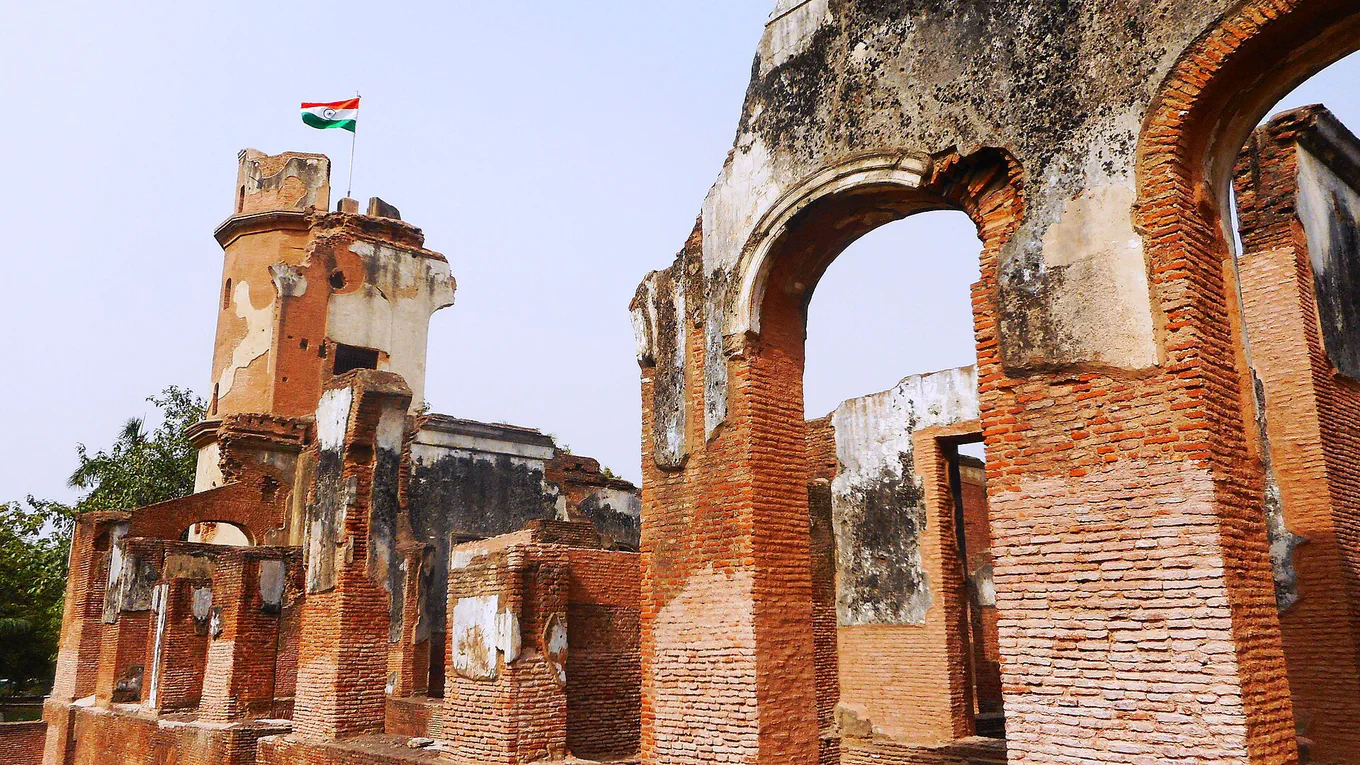
Stand here. The ruined Residency, kept as it was at the final relief of the siege, its walls still scarred by cannon shot.
This is the house in Tennyson’s poem “The Defence of Lucknow”. In 1857, Sir Henry Lawrence, the British Chief Commissioner, fortified it against the rebellion and laid in stores. But a shell killed him before he had told any of his officers about the stores. The garrison held out for 87 days, its flag nailed to the pole. The flag flew day and night until the eve of India’s independence, when the pole was cut down and its base cemented over, so that no other flag could fly there.
5 Begum Hazrat Mahal, the queen left behind in Lucknow
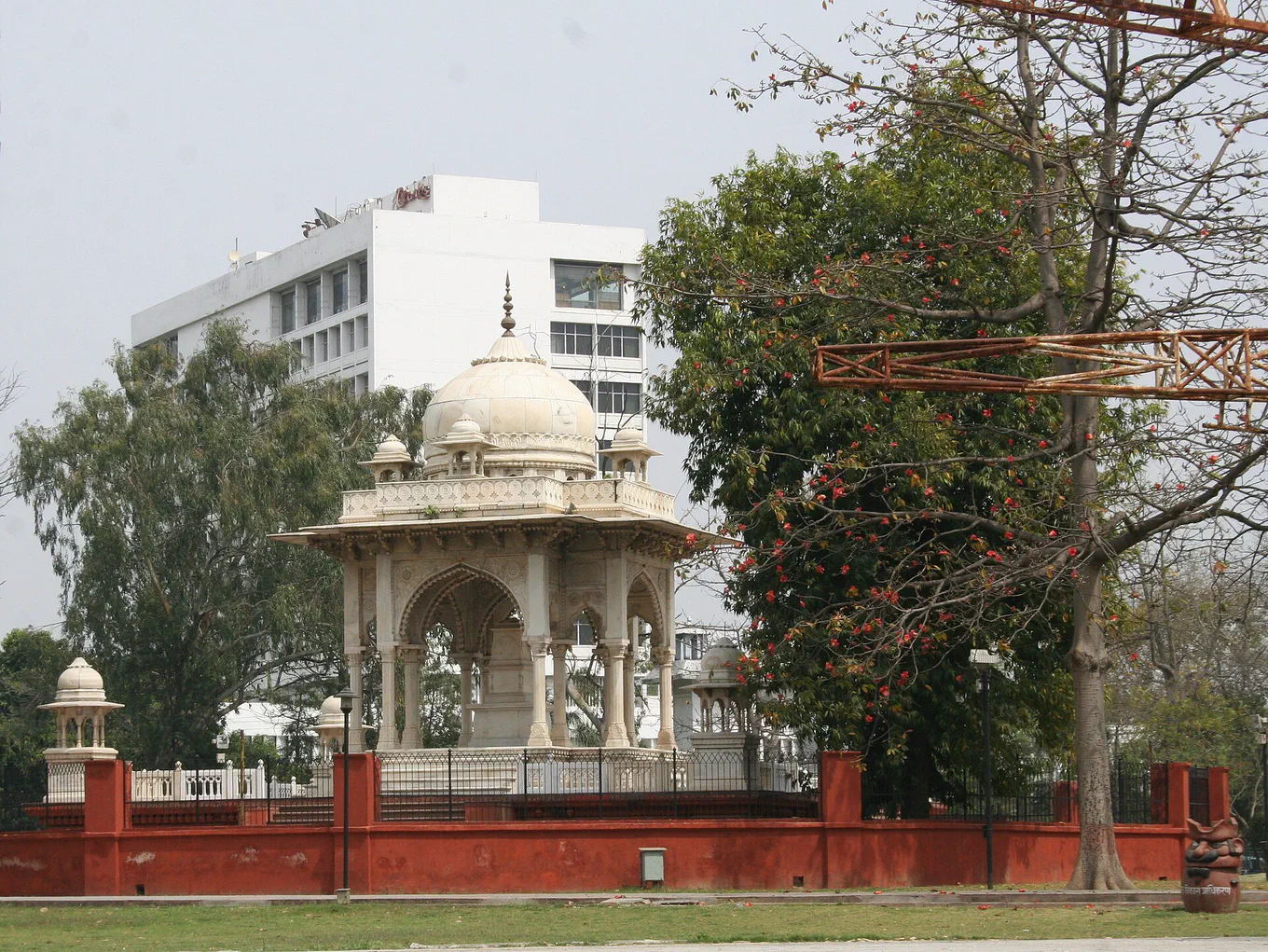
Stand here. Begum Hazrat Mahal Park in Hazratganj, with its marble memorial to her. Dussehra bonfires and the Lucknow Mahotsava festival are held here.
When Wajid Ali Shah sailed for Calcutta, he could not take all his wives, and Hazrat Mahal was left behind with their son. In the rebellion of 1857, she made the boy, only 12, ruler of Awadh, with herself as regent. Even after she fled Lucknow, she had a reply to Queen Victoria’s proclamation printed in her son’s name, taking it apart clause by clause. The British offered her a pension to submit. She refused, crossed into Nepal, and died there unpardoned. Lucknow’s Old Victoria Park now bears her name.
Pack nothing. Leave Friday.
Every Friday, I write a free letter, Journey, that takes us on a trip through places, stories, and ideas.
Kim(Rudyard Kipling, 1901). A novel. Kim is sent to St Xavier’s in Lucknow, a fictional school believed to be modelled on La Martinière College.
“The Defence of Lucknow”(Alfred Tennyson, 1879). A poem about the siege of the Residency, with the refrain “And ever upon the topmost roof our banner of England blew.”
Sunlight on a Broken Column(Attia Hosain, 1961). A novel, mainly set in Lucknow, told as an autobiographical account by a fictional character called Laila.
Films to watch before you visit Lucknow
The Chess Players(Satyajit Ray, 1977). A film, Ray’s only full-length Hindi feature, set in Lucknow in 1856, with La Martinière Boys’ College among its settings.
Gulabo Sitabo(Shoojit Sircar, 2020). A film. Mehmooda Palace, an old house in Qaisar Bagh, plays the haveli at its centre.
Shakespeare Wallah(Merchant Ivory Productions, 1965). A film, with La Martinière Boys’ College among its settings.
Mere Mehboob(Harnam Singh Rawail, 1963). A film that shows off Lucknow’s landmarks, among them the Bara Imambara and the Rumi Darwaza.
Questions
Can you visit the Residency in Lucknow?
Yes. The Residency is kept in ruins, much as it was at the final relief of the 1857 siege, its walls still scarred by cannon shot. It stands among lawns and flowerbeds, with a light and sound show each evening. Sir Henry Lawrence’s grave is in the cemetery by the ruined church.
What is the Bhul Bhulaiya in Lucknow?
It is the labyrinth inside the Bara Imambara, built by Nawab Asaf-ud-Daula and finished in 1784. Its passages connect through 489 identical doorways, and it came about by accident, to carry the weight of a building on marshy ground. It is possibly the only maze in India that still exists.
What food is Lucknow famous for?
Kebabs, biryanis, and breads above all. UNESCO names Lucknow a City of Gastronomy, and its kebabs come in many styles, from kakori and galawati to shami and seekh. The soft tunday kebab is said to have been made by a one-armed chef for a Nawab who had lost his teeth.




_-_Google_Art_Project.jpg)

