Everything I know about Macau comes from Tai-Pan, my favourite Clavell novel. That, and the fact that it makes Las Vegas look like a minnow when it comes to the volume of gambling involved.
— Nick
Leased to Portugal as a trading post in 1557, Macau stayed Portuguese until 1999. It lies across the Pearl River estuary from Hong Kong and is today a special administrative region of China, known as the world’s gambling capital. Racing drivers on a last lap and a governor’s last ride frame a doctor ousted by rivals, a poet’s cave, and a missionary with nowhere to bury his wife.
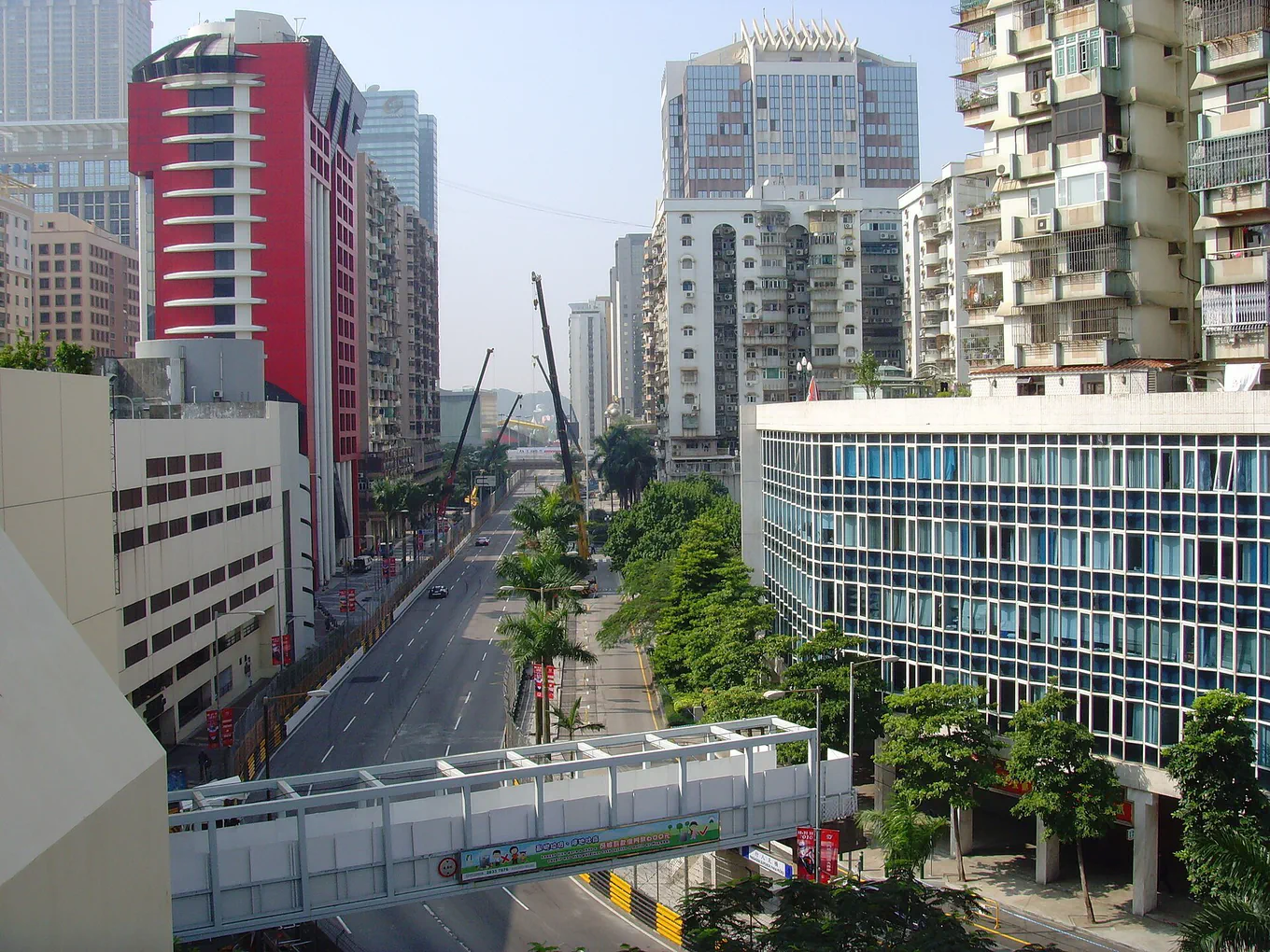
In 1990, Michael Schumacher led Mika Häkkinen into the last lap of the Macau Grand Prix. Häkkinen had won the race’s first leg. On the straight after the Mandarin Oriental Bend, he went for the pass, hit the back of Schumacher’s car, and crashed out. Schumacher drove on with a damaged rear wing and won on combined time. One account says Schumacher blocked the move on purpose. That lap began a rivalry that lasted until Häkkinen retired in 2001.
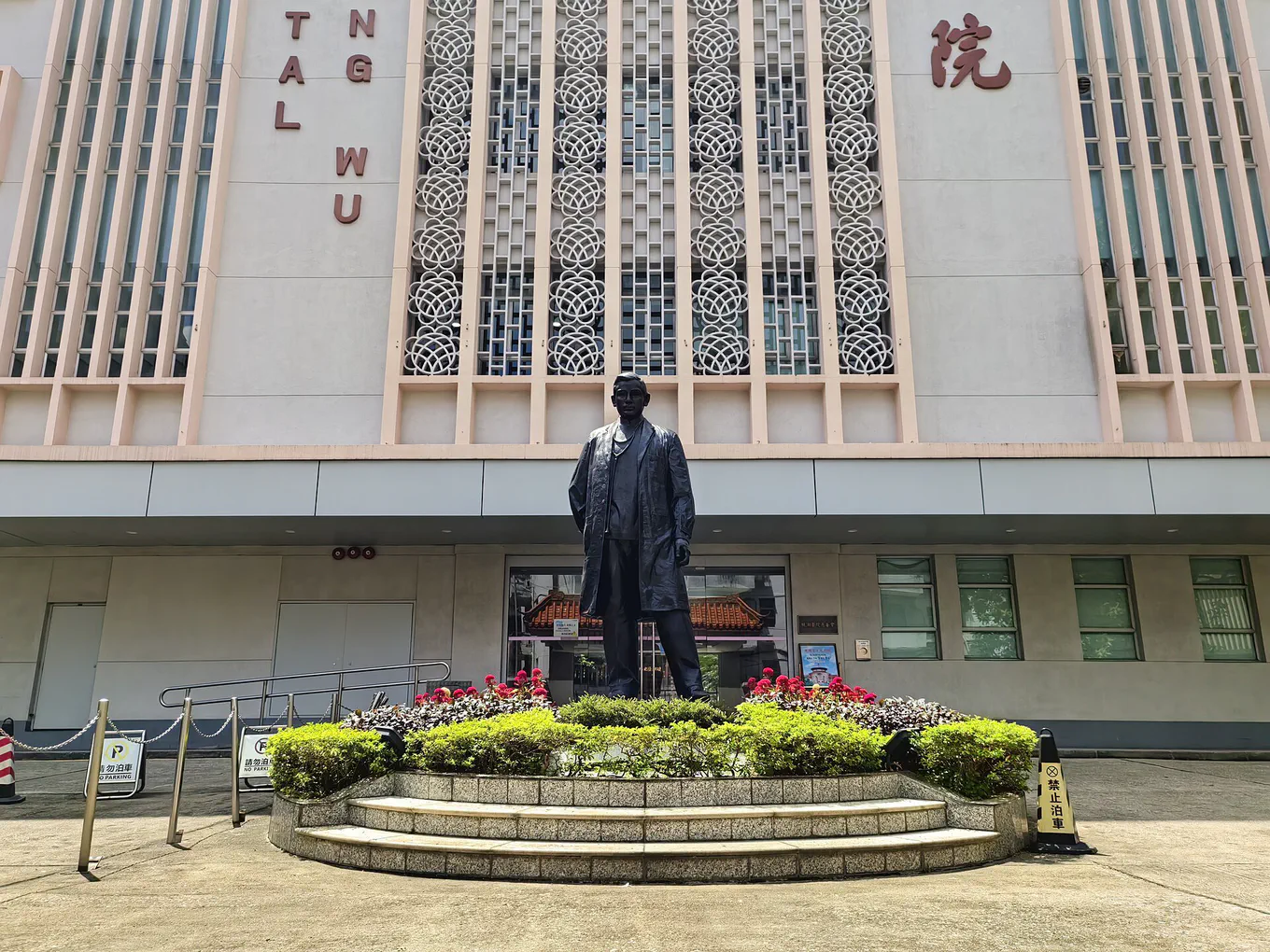
2 Sun Yat-sen, the new doctor pushed out of Macau
Stand here. Kiang Wu Hospital, still one of Macau’s three hospitals. The house built later for his first wife is now a museum.
Before he founded the Republic of China, Sun Yat-sen was a doctor. He qualified in Hong Kong in 1892, but as an ethnic Chinese he could practise there only as a herbalist, so he came to Macau. He set up Kiang Wu Hospital’s Western medicine department, opened a clinic, and became one of the most sought-after doctors in the colony. Then jealous rivals invoked a Portuguese law against practising without a Portuguese diploma. By the spring of 1893, he had left for Canton.
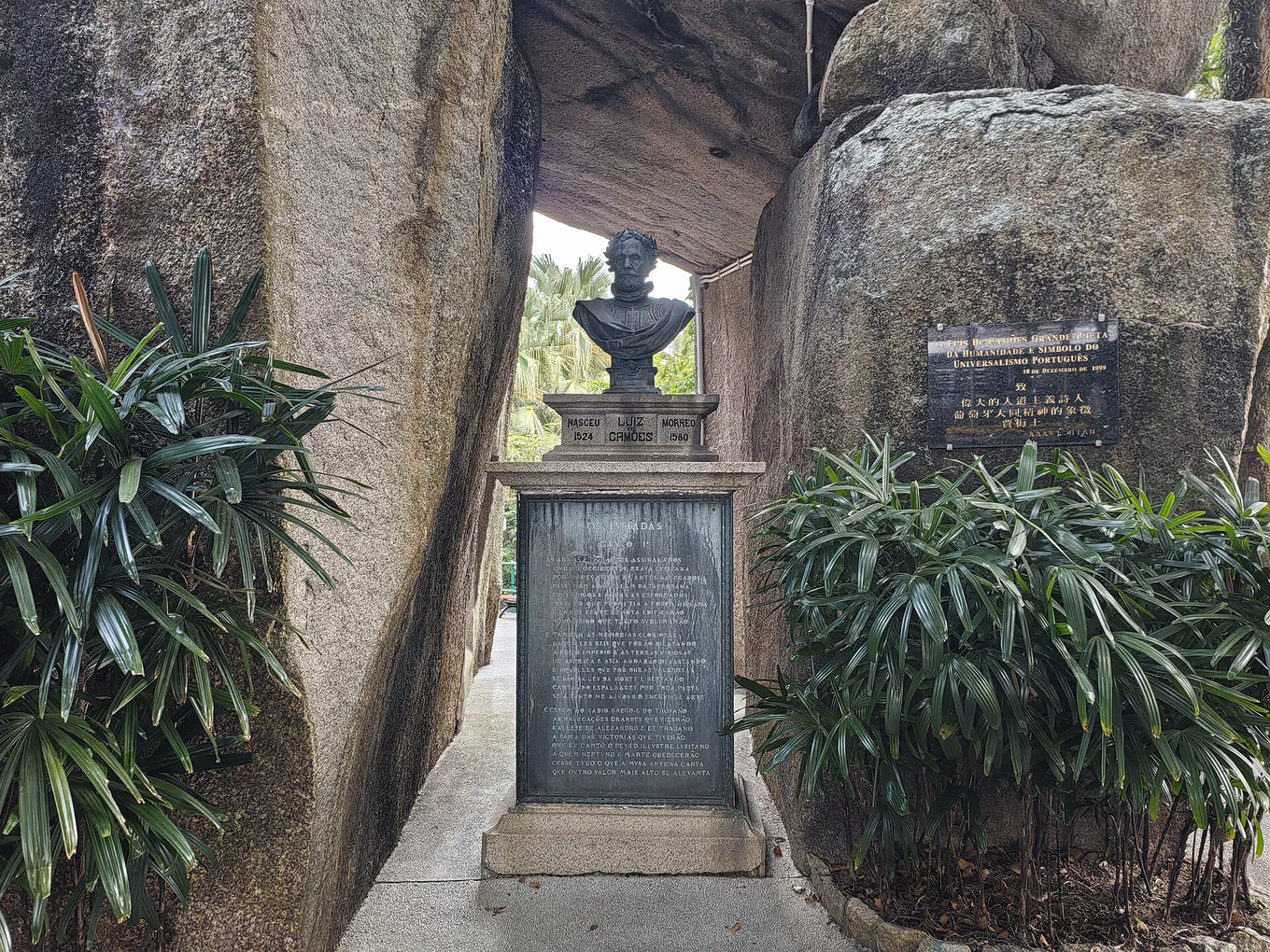
3 Camões, the Lusiads, and the grotto in Macau
Stand here. The Camões Grotto, in the Luís de Camões Garden, Santo António. It is Macau’s oldest park.
Tradition says Luís de Camões, Portugal’s greatest poet, wrote part of his epic, Os Lusíadas (The Lusiads), in a cave in Macau. He was appointed Superintendent for the Dead and Missing for Macau in 1562, trusted with dead men’s property. On the voyage back to Goa, tradition says, he was shipwrecked near the mouth of the Mekong and saved only himself and the manuscript. Then came a warrant for his arrest. The charge was misusing the property of the dead.
4 Robert Morrison and Macau’s Old Protestant Cemetery
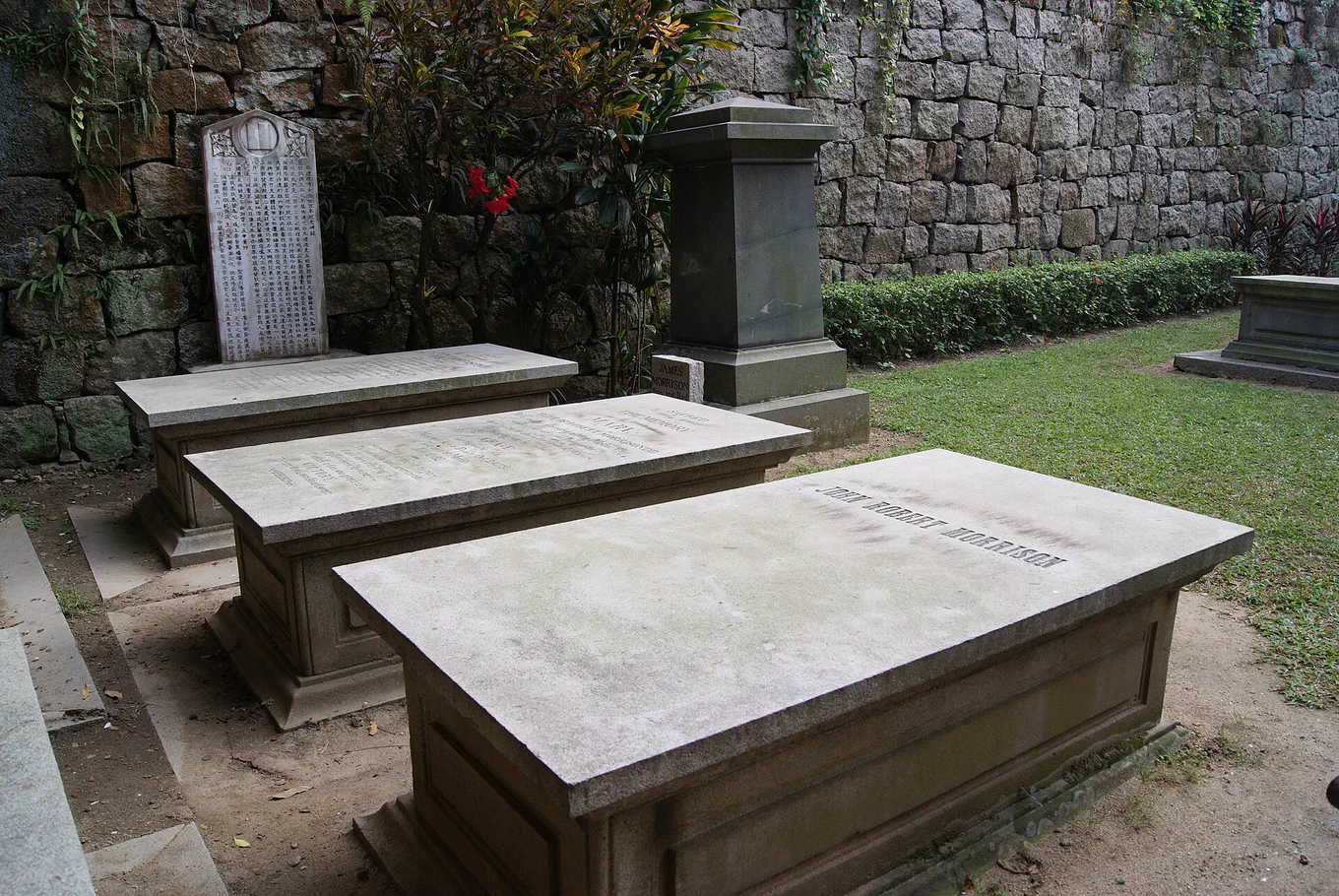
Stand here. The Old Protestant Cemetery, beside Camões Garden in Santo António. It closed in 1858, and the Morrison Chapel stands next to it.
Robert Morrison, a British Protestant missionary, reached Macau in 1807, and within three days the Catholic authorities expelled him. He spent twenty-five years translating the whole Bible into Chinese. When his wife Mary died of cholera in 1821, there was nowhere to bury her. The Portuguese allowed no Protestant graves inside the city walls, and the Chinese wanted no foreigners in their soil. So the East India Company bought land for a cemetery. After Morrison died in Canton, he was brought back and buried beside her.
5 Governor Amaral’s last ride through the Barrier Gate
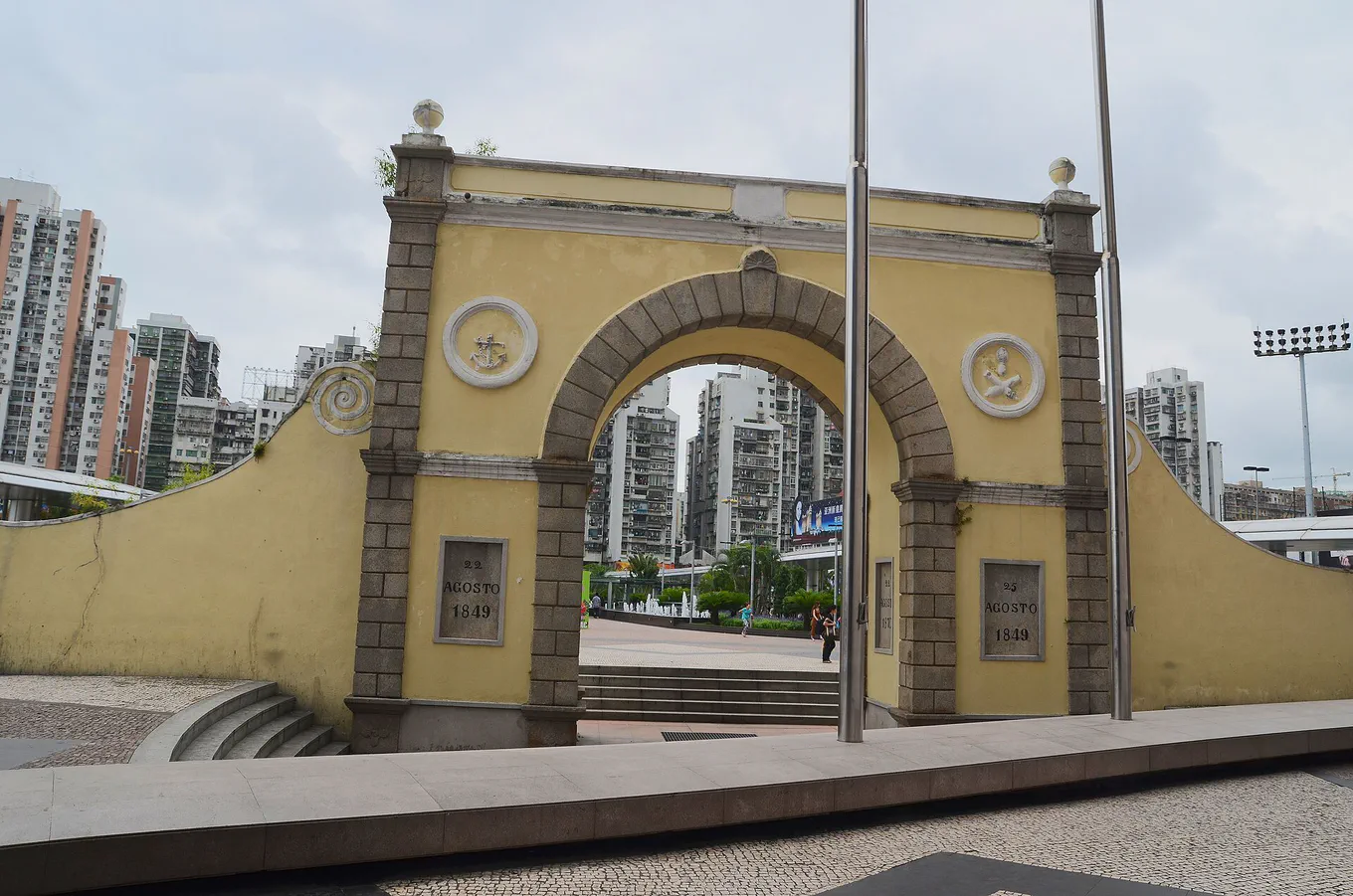
Stand here. The Portas do Cerco, or Barrier Gate, at the peninsula’s northern tip. Today’s gate dates from 1870. The border runs a few metres behind it.
The one-armed governor, João Maria Ferreira do Amaral, declared Macau a Portuguese colony and expelled the Qing officials. His road to the border meant moving Chinese graves, and placards in Canton offered a reward for his head. On 22 August 1849, he rode through the Barrier Gate to give alms to an old Chinese woman. Seven men attacked. He gripped the reins in his teeth to draw his pistol, but they dragged him from his horse. They cut off his head and his one hand, to claim the reward.
Pack nothing. Leave Friday.
Every Friday, I write a free letter, Journey, that takes us on a trip through places, stories, and ideas.
The Ballad of a Small Player(Lawrence Osborne, 2014). A novel. Accused of embezzlement, a man flees England for Macau and a tawdry life at the Hotel Lisboa.
An Insular Possession(Timothy Mo, 1986). A historical novel of the British Empire’s opium trade in southern China, in which Eastman and Chase amuse themselves with a production of Sheridan’s The Rivals in Macao.
Films to watch before you visit Macau
The Man with the Golden Gun(Guy Hamilton, 1974). A film. Bond tracks golden bullets to Macau, in scenes shot at the Floating Macau Palace casino.
The Last Time I Saw Macao(João Pedro Rodrigues and João Rui Guerra da Mata, 2012). A film. An early scene pans across the neon of Rua de Cantão.
Vengeance(Johnnie To, 2009). A film. In one scene, a man walks down Avenida de Almeida Ribeiro, gun in hand.
Hotel Império(Ivo Ferreira, 2018). A film. In one late-afternoon scene, the lights of the Macau Palace floating casino silhouette Margarida as she smokes.
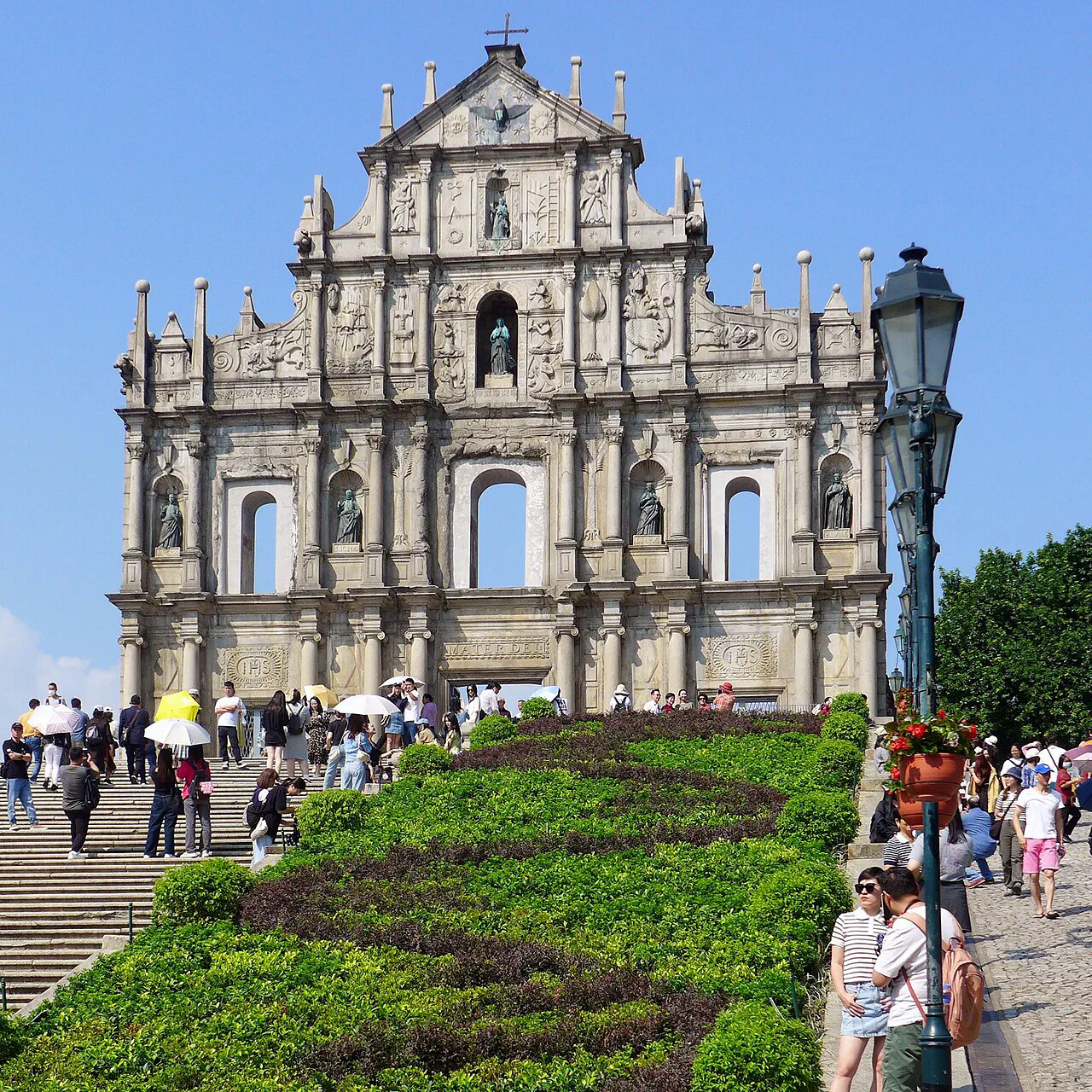
A City Called Macau(Li Shaohong, 2019). A film. Fireworks behind the Ruins of St Paul’s, and a search through Macau’s alleys for Senado Square.
Questions
Is Macau part of China?
Yes. Macau is a special administrative region of China. Ming China leased it to Portugal as a trading post in 1557, and it stayed under Portuguese rule until it was handed over to China on 20 December 1999.
Where is the Macau Grand Prix held?
On the Guia Circuit, a street circuit 6.12 kilometres long, on the southeast of the Macau Peninsula. It is narrow and bumpy, only 7 metres wide at the Melco Hairpin. A young Ayrton Senna won its first Formula Three race, in 1983.
Can you go inside the Ruins of St Paul’s?
Not the church itself, because only its stone façade survives, at the top of 68 steps. The Jesuits built the church between 1602 and 1640, and a fire during a typhoon destroyed it in 1835. Behind the façade, the crypt and foundations have been uncovered, and the Sacred Art Museum and Crypt is there now.