One of the best shows ever, Cracker, was set in Manchester. Robbie Coltrane’s “Fitz” was a big influence on my hero, Jon Kaine. The writing for that show crackled.
— Nick
At the centre of Greater Manchester, in North West England, lies the city of Manchester. During the Industrial Revolution, a boom in textile manufacture made it the world’s first industrialised city. Alongside a widow who founded the suffragettes come the hotel where Rolls is said to have met Royce, particles that bounced back off gold foil, a codebreaker on a bench, and a punk gig for a few dozen people.
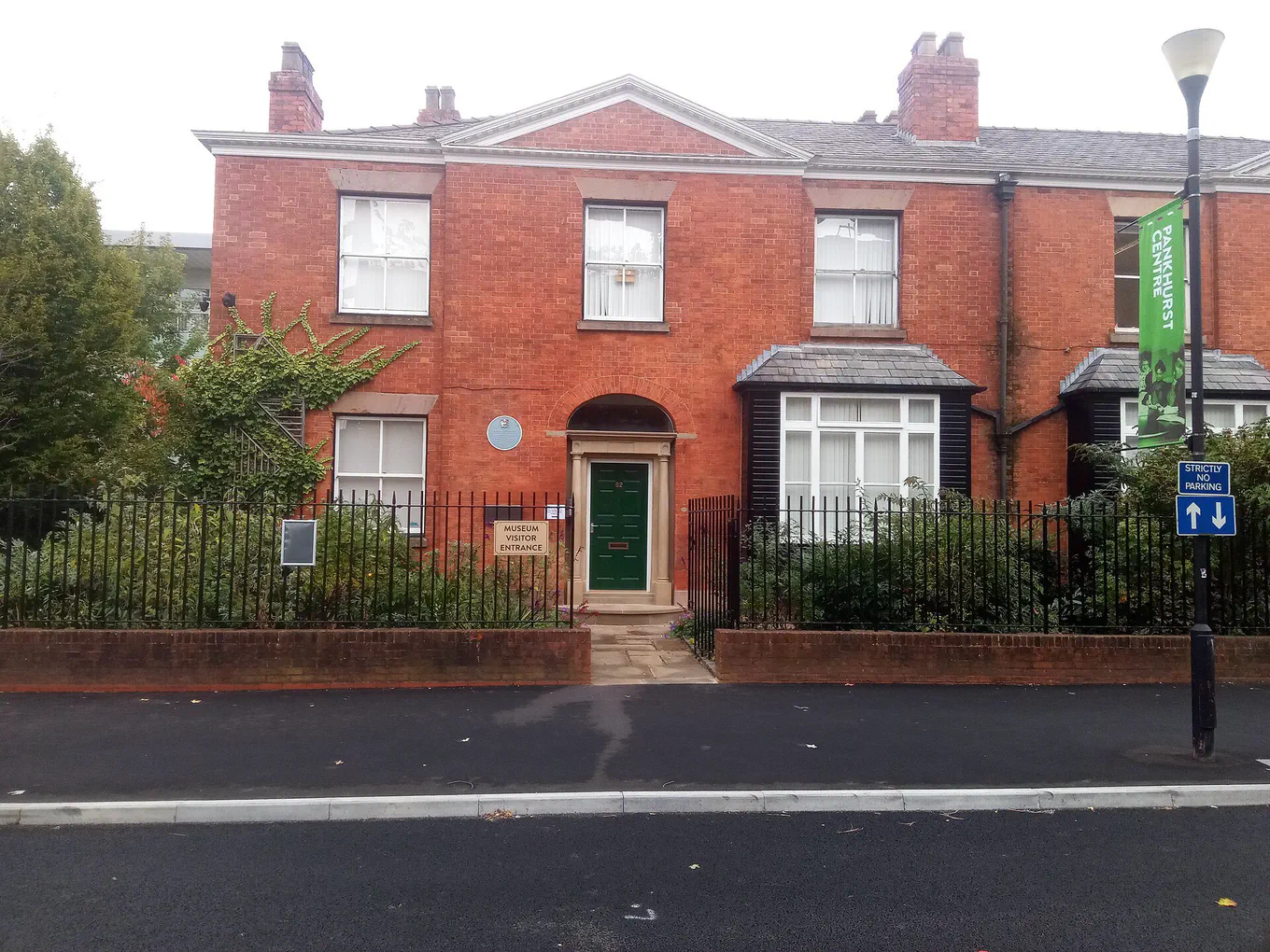
Emmeline Pankhurst, the suffragette leader, moved into this house with her daughters after her husband died. She wanted votes for women, but the local branch of the Independent Labour Party refused her because she was a woman. “Women, we must do the work ourselves,” she said. So, on 10 October 1903, she invited a small group of friends here and founded the Women’s Social and Political Union. Its motto was “Deeds, not words”. She died in June 1928, weeks before all women over 21 won the vote.
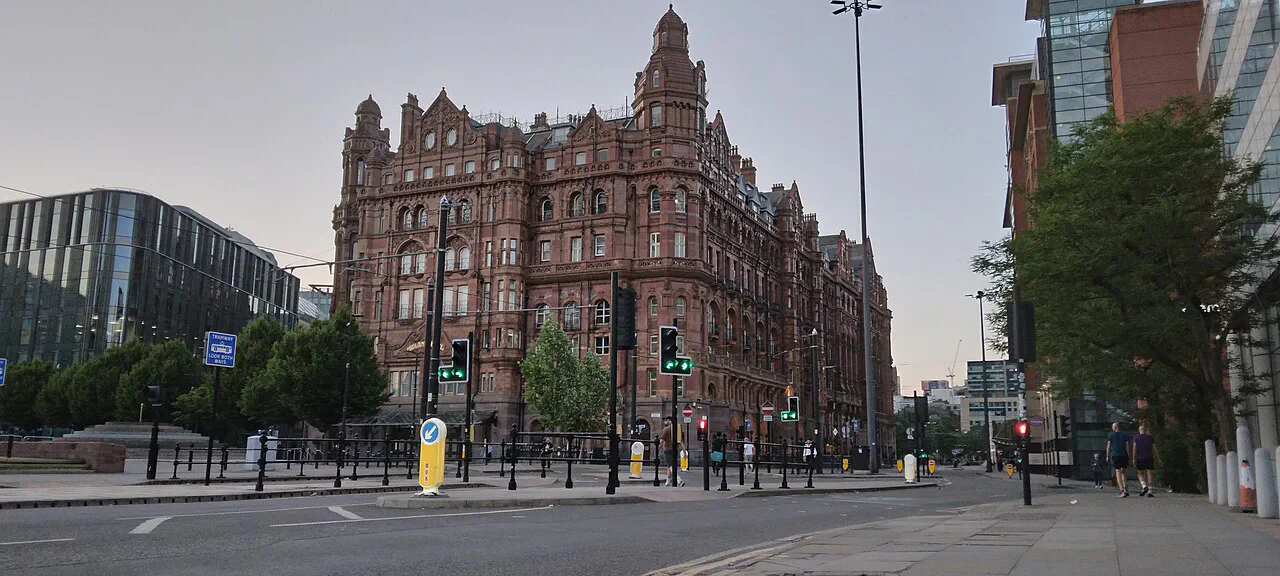
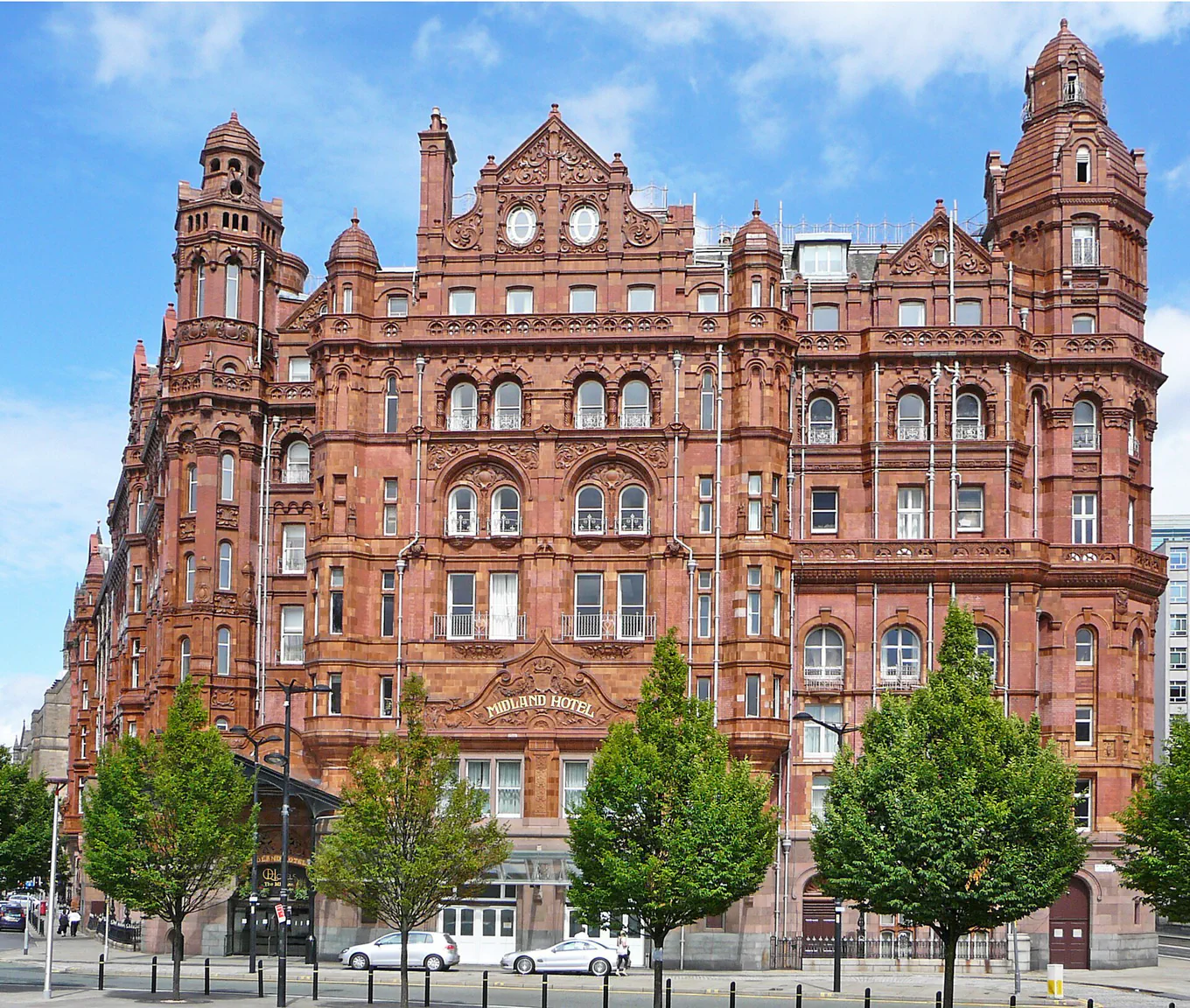
2 Rolls meets Royce at Manchester’s Midland Hotel
Stand here. The Midland Hotel, facing St Peter’s Square. Opened in 1903, it is still a hotel.
Rolls-Royce began, by most accounts, with a meeting here on 4 May 1904. Charles Rolls, a lord’s son, sold imported cars in London. Henry Royce, a Manchester electrical engineer who had sold newspapers at ten, had built his own car, because his Decauville fell short of his standards. Rolls preferred three or four cylinders, and Royce’s car had two. But it impressed him, and by December he had agreed to take every car Royce could make. Six years later, Rolls became the first Briton killed in a powered aircraft crash.
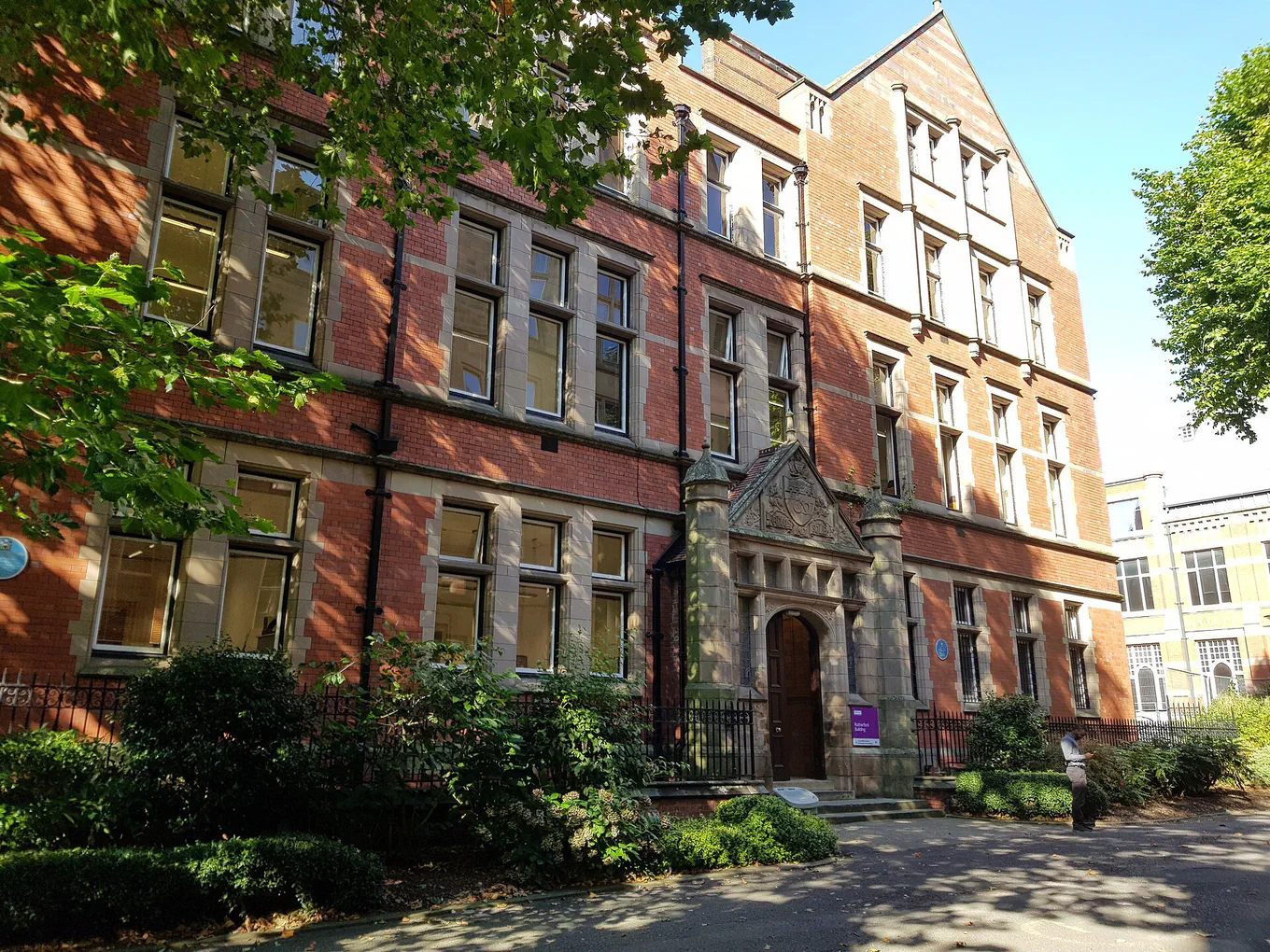
3 Ernest Rutherford discovers the atom’s nucleus in Manchester
Stand here. The Rutherford Building, at the University of Manchester, opened in 1900 as the Physics Laboratory. It now houses part of the university’s administration.
In 1909, in this building, two researchers working under Ernest Rutherford, the New Zealander called the father of nuclear physics, fired alpha particles at thin gold foil. Under the accepted model of the atom, every particle should have gone straight through. But some bounced back. From that, Rutherford worked out that an atom’s charge is concentrated in a tiny nucleus. Years later, he said the result was “almost as incredible as if you fired a 15-inch shell at a piece of tissue paper and it came back and hit you”.
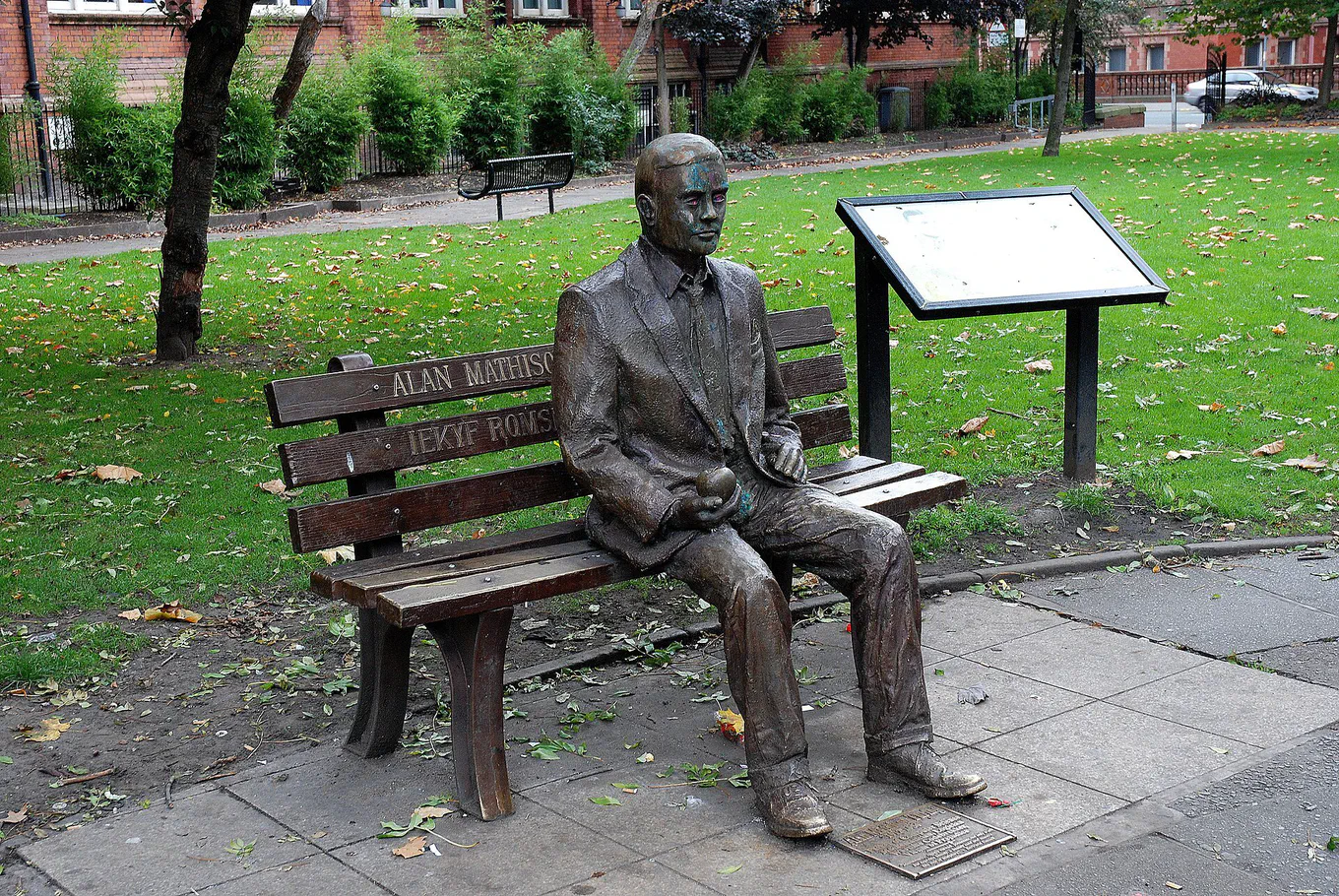
4 Alan Turing on his bench in Sackville Gardens
Stand here. Sackville Gardens, beside Canal Street, Manchester’s gay village. The memorial shows Turing on a bench, holding an apple.
Bletchley Park’s Enigma codebreaker, Alan Turing, came to the University of Manchester after the war to work on its computers. In 1952, his house was burgled, and he reported it to the police. But during the investigation he acknowledged a relationship with a 19-year-old man, and both were charged with gross indecency. Turing pleaded guilty and was given probation on condition of chemical castration. He died of cyanide poisoning two years later, aged 41. The memorial’s plaque calls him a “Victim of Prejudice”.
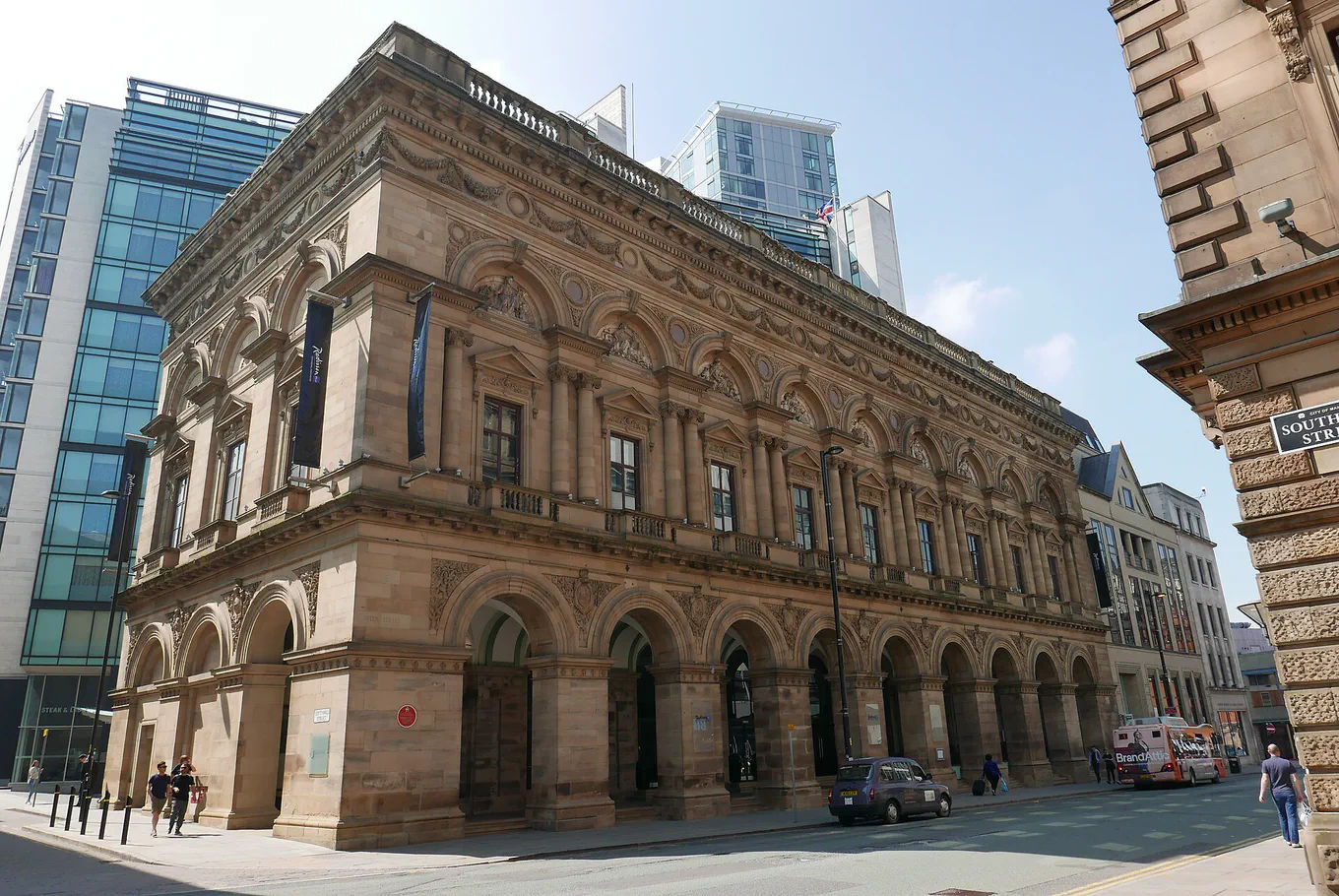
5 The Sex Pistols play the Lesser Free Trade Hall
Stand here. The Free Trade Hall. Its original façade now fronts a Radisson hotel, opened in 2004.
The film 24 Hour Party People opens with this gig. Two local punk fans, Howard Devoto and Pete Shelley, had gone to London to find the Sex Pistols, and Devoto said his life changed the moment he saw them. So they booked the band into the Lesser Free Trade Hall, a room for 150 upstairs, for its first show outside London. Only 30 to 50 people came. But in that crowd were future members of Joy Division and New Order, the Smiths, and Simply Red.
Pack nothing. Leave Friday.
Every Friday, I write a free letter, Journey, that takes us on a trip through places, stories, and ideas.
Mary Barton(Elizabeth Gaskell, 1848). A novel, her first, subtitled A Tale of Manchester Life. One character gives her address as Nicholas Street, in Angel Meadow.
The Condition of the Working Class in England(Friedrich Engels). Non-fiction. Engels calls Little Ireland, south of Oxford Road station by the River Medlock, a “horrid little slum”.
Films to watch before you visit Manchester
24 Hour Party People(Michael Winterbottom, 2002). A film. The story of the Haçienda club, 11–13 Whitworth Street West. It opens with the Sex Pistols’ gig.
Cracker(Jimmy McGovern, ITV, 1993). A TV series. Robbie Coltrane as Fitz, a criminal psychologist. It was filmed mainly in south Manchester, including Didsbury and the police station at Longsight.
Questions
Can you visit the house where the suffragettes began?
Yes. The Pankhurst family home at 60–62 Nelson Street, where Emmeline Pankhurst founded the Women’s Social and Political Union in 1903, is now the Pankhurst Museum.
Can you see the Manchester Baby computer?
Yes. The Baby, built at the University of Manchester, was the first electronic stored-program computer, and it ran its first program on 21 June 1948. A working replica, built in 1998, is on display at the Science and Industry Museum in Castlefield, which holds regular demonstrations.
Why is Manchester called Cottonopolis?
Because of textiles. A boom in textile manufacture during the Industrial Revolution made Manchester the world’s first industrialised city, and in the Victorian era it was dubbed Cottonopolis, and Warehouse City as well.