Manila, capital of the Philippines, sits on the eastern shore of Manila Bay, on Luzon, with the Pasig River through its middle. On 24 June 1571, a Spanish conquistador declared it a territory of New Spain. Its stories here are a heavyweight fight in the morning heat, the Beatles kicked at the airport, a general’s home in ashes, a poem hidden in a stove, and the conqueror who died broke.
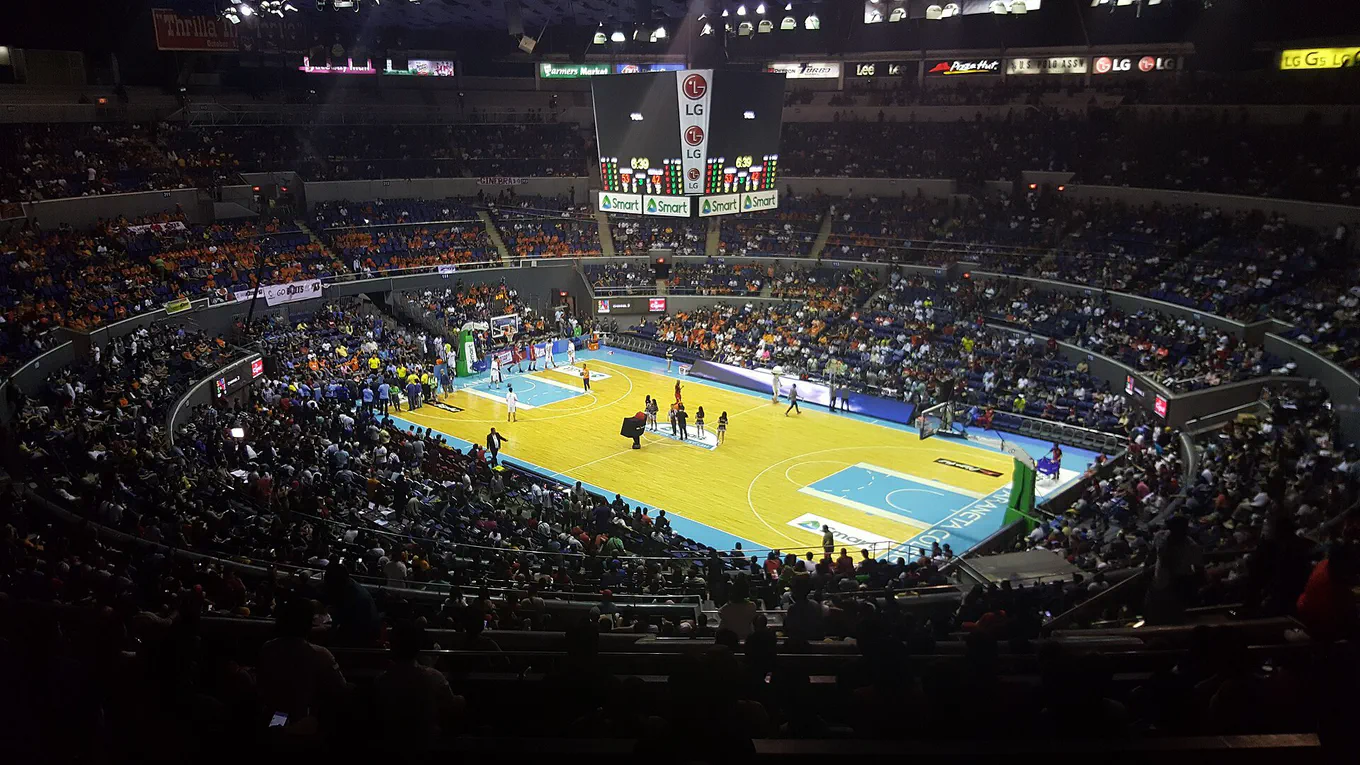
The Thrilla in Manila was the third and last fight between Joe Frazier, the first man to beat Muhammad Ali, and Ali himself. Ali had called Frazier “the gorilla”. On 1 October 1975, they started at ten in the morning, and Frazier reckoned the ring was over 120°F (49°C) under the TV lights. By the thirteenth round he could barely see. His trainer stopped it before the fifteenth. “I want him, boss,” Frazier said. Ali said later, “Frazier quit just before I did.”
On 4 July 1966, the Beatles played twice here to 80,000 people, the biggest crowd they ever drew in a day. That morning, the First Lady, Imelda Marcos, had expected them at a party at Malacañang Palace. Their manager had already said no in Tokyo, but The Manila Times had announced it, and television showed four empty seats. Next day their protection vanished, and at the airport men beat and kicked them. The airport manager said, “That’s what happens when you insult the First Lady.”
3 General MacArthur’s penthouse at the Manila Hotel
Stand here. The Manila Hotel, at the north-western end of Rizal Park on Manila Bay. The MacArthur Suite, on the fifth floor, recreates his penthouse.
“I shall return” was General Douglas MacArthur’s promise, and this hotel was his home. From 1935 he lived in its penthouse as military adviser to the Philippine Commonwealth, and his son Arthur was born in Manila. On the night of 12 March 1942, the family left Corregidor, and in Australia he made his promise. Japanese troops occupied the hotel, and in the battle to retake Manila they set it on fire. On 22 February 1945, the hotel was freed. MacArthur found his penthouse in ashes.
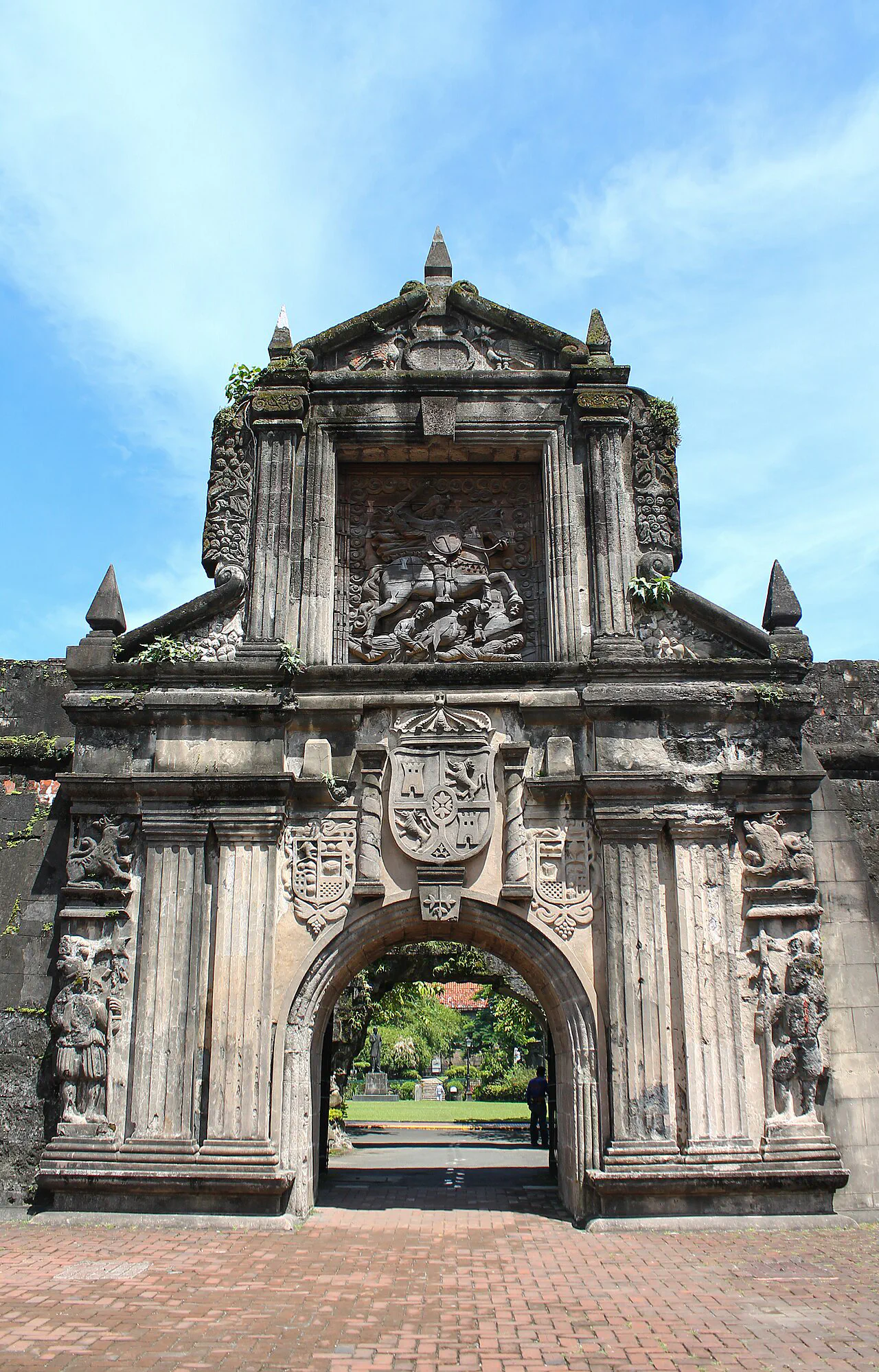
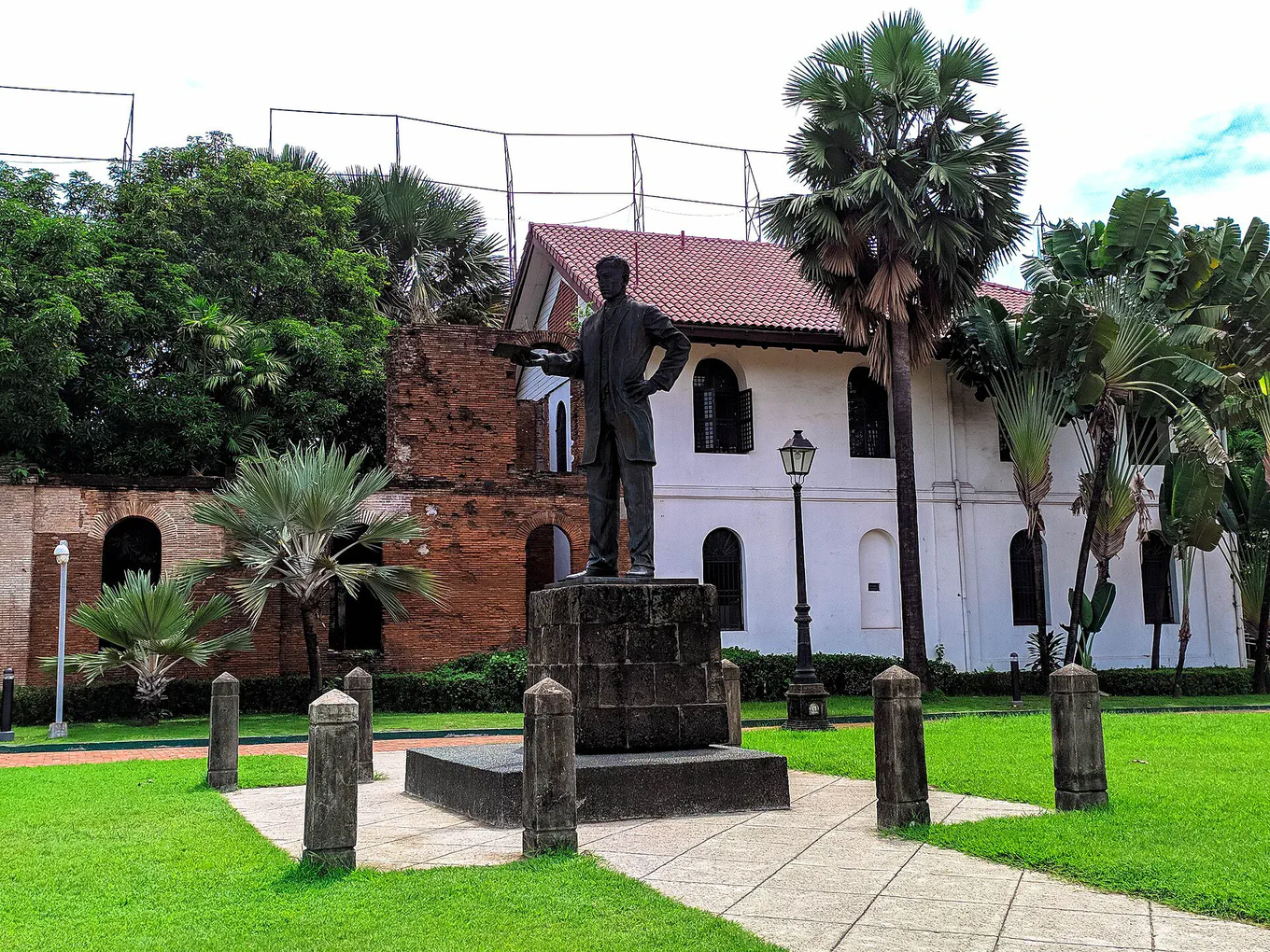
José Rizal, the national hero of the Philippines, wanted reform without violence. His writings inspired the 1896 revolution, and though he condemned it, Spain held him here and convicted him of rebellion. The day before his execution, he told his sister that there was something in the alcohol stove. Inside was a poem, unsigned and untitled. Next day he walked from this fort to Bagumbayan field, now Rizal Park. Refused his wish to face the firing squad, he twisted as they fired, and fell face up.
5 Legazpi, founder of Spanish Manila, in San Agustin Church
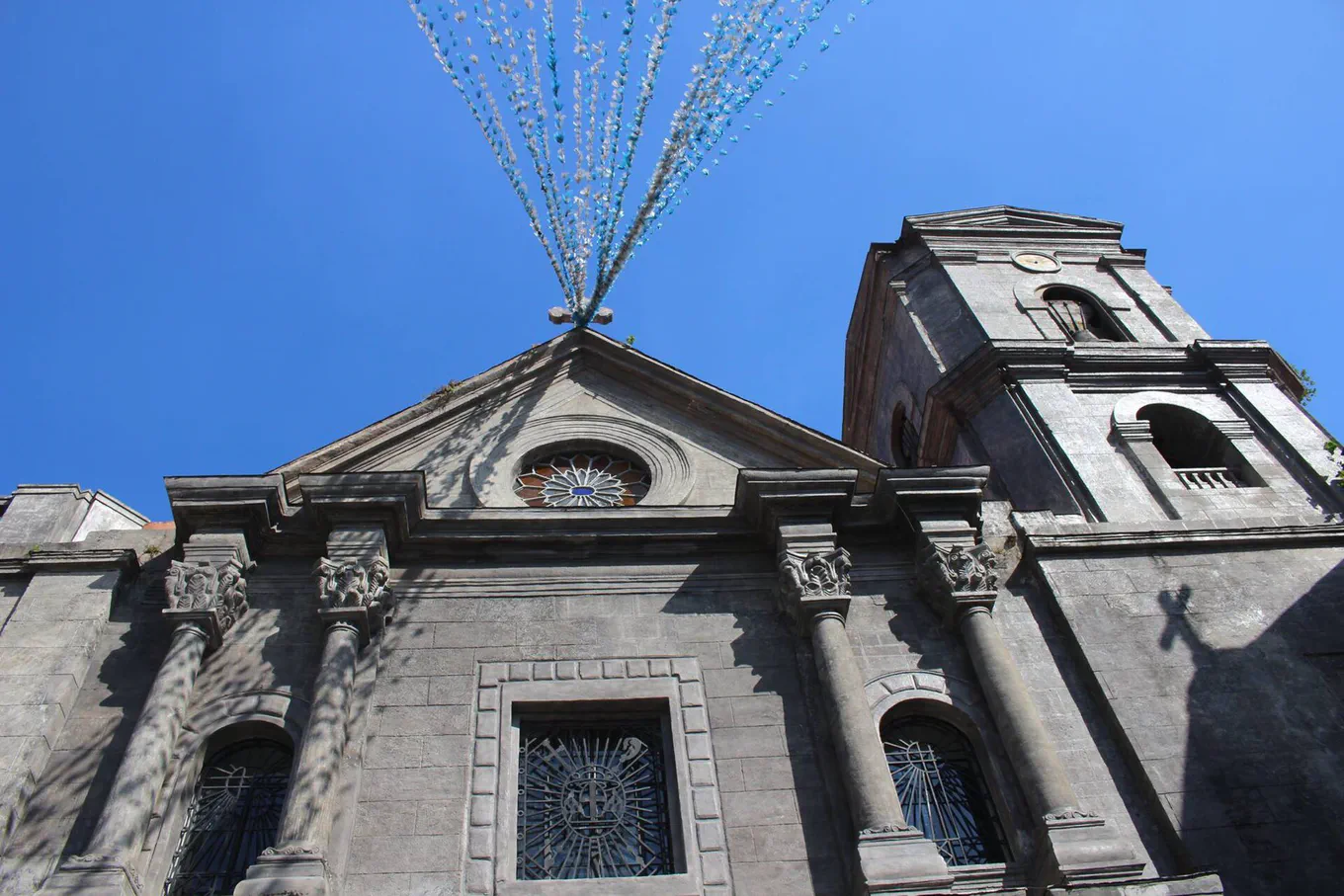
Stand here. San Agustin Church, in Intramuros, the oldest stone church in the country. Legazpi’s bones lie in a shared vault near the main altar.
Spanish Manila began with a fire. In 1571, as the conquistador Miguel López de Legazpi approached Maynila, its people set the town alight and fled to Tondo. On 24 June, he established a settlement there and proclaimed it the island’s capital, and he became the first Spanish governor-general. He had paid for the expedition himself. Fourteen months later, after scolding an aide, he died suddenly of a stroke. His fortune had gone on the conquest, and he left a few pesos.
Pack nothing. Leave Friday.
Every Friday, I write a free letter, Journey, that takes us on a trip through places, stories, and ideas.
Smaller and Smaller Circles(F. H. Batacan, 2002). A mystery novel by a Filipino writer, about the murders of young boys in a poor part of Payatas.
A Portrait of the Artist as Filipino(Nick Joaquin, 1950). A play set in Old Manila’s Intramuros in October 1941, telling the story of the Marasigan sisters, Candida and Paula, and their painter father, Don Lorenzo Marasigan.
Dogeaters(Jessica Hagedorn, 1990). A novel set in Manila in the late 1950s, addressing social, political, and cultural issues in the Philippines of that decade.
Films to watch before you visit Manila
Manila in the Claws of Light(Lino Brocka, 1975). A neo-noir film. Its hero keeps passing the corner of Ongpin and Misericordia, staring at a building from a distance.
Insiang(Lino Brocka, 1976). A drama film, set in the slums of Tondo, with Hilda Koronel in the title role.
The Bourne Legacy(Tony Gilroy, 2012). A film. The police chase its leads by motorcycle through the streets of Manila, and more scenes were shot in Marikina.
Metro Manila(Sean Ellis, 2013). A British crime drama in Filipino. A family moves into a vacant shanty in the slums of Tondo, rife with crime.
Questions
Where was the Thrilla in Manila fought, and can you see it?
At the Araneta Coliseum in Cubao, Quezon City, which is a separate city from Manila. It still stands as the Smart Araneta Coliseum, mostly used for basketball, and a banner there commemorates the 1975 fight.
Where exactly was José Rizal executed?
In what is now Rizal Park, then the field of Bagumbayan. The Rizal Monument in the park holds his remains, but it isn’t the spot where he was shot. A separate set of statues of the execution marks that.
What is the oldest church in Manila?
San Agustin Church in Intramuros, completed in 1607, is the oldest stone church in the Philippines. It was the only one of the walled city’s seven churches to survive the levelling by American and Filipino ground forces.