Marrakesh, Morocco’s fourth-largest city, lies west of the foothills of the Atlas Mountains. It was founded around 1070 as the capital of the Almoravid dynasty, and in 1985 UNESCO made its old town, the medina, a World Heritage Site. Its stories here are a sultan’s palace stripped bare, Churchill’s painting, Hitchcock’s dying spy, Saint Laurent’s garden, and a novelist who took the main square’s storytellers to UNESCO.
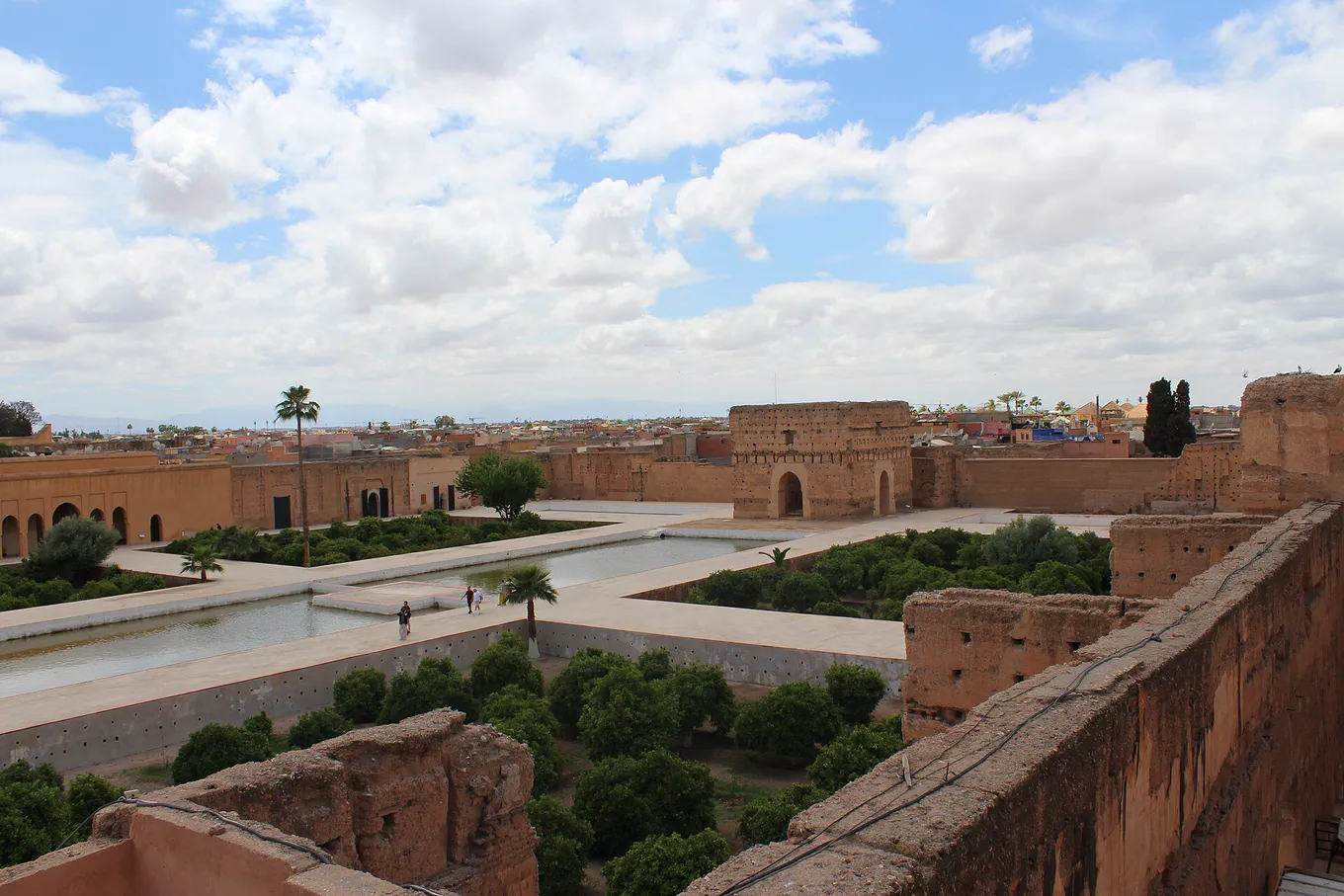
Ahmad al-Mansur became sultan in 1578, and a few months later, after the Saadian victory at the Battle of the Three Kings, he began a palace. He called it el-Badi’, usually translated as “the Incomparable”, and built it with gold, onyx, and Italian marble bought for its weight in sugar. A chronicler says it took fifteen years. In 1707–08, a later sultan, Moulay Ismail, ordered it demolished and stripped of its contents. The Incomparable was left a ruin.
2 Churchill paints the Koutoubia minaret from Villa Taylor
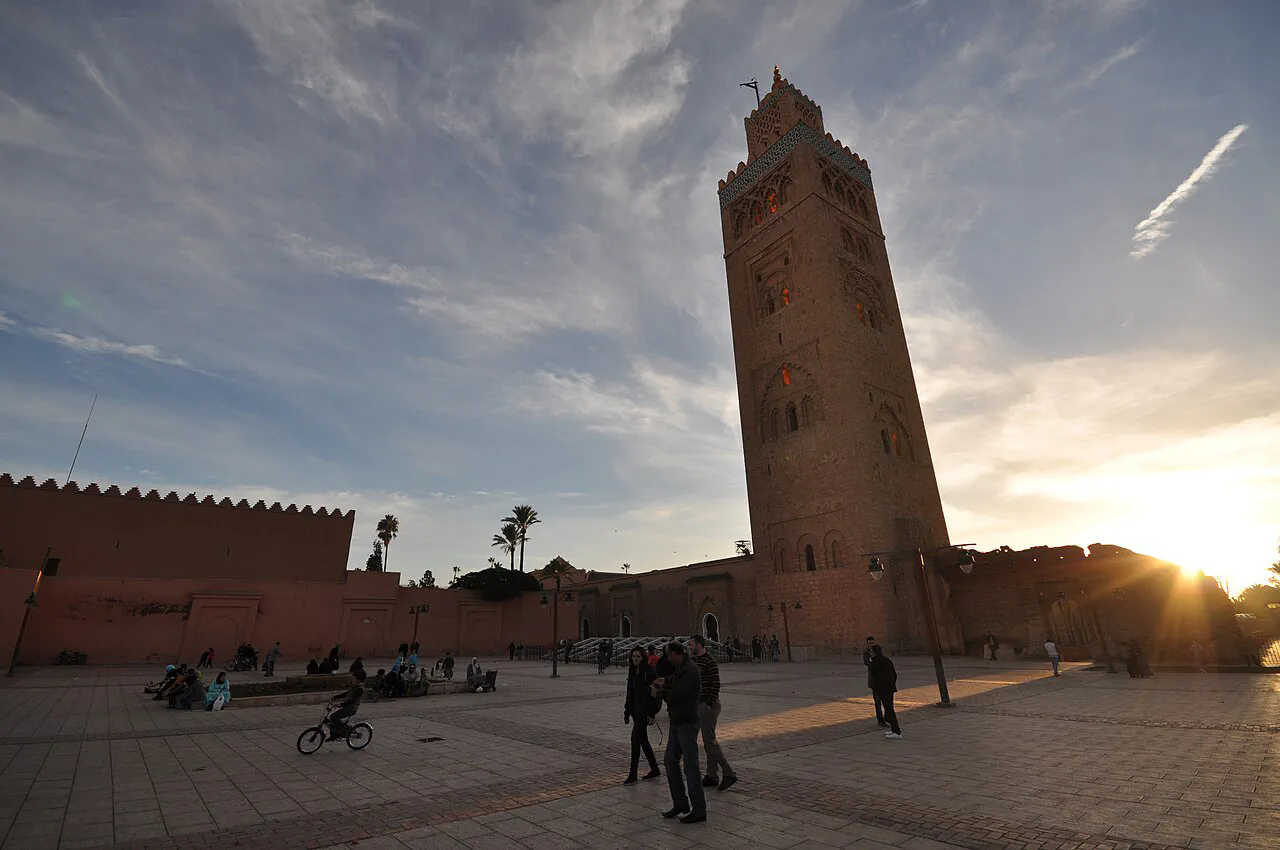
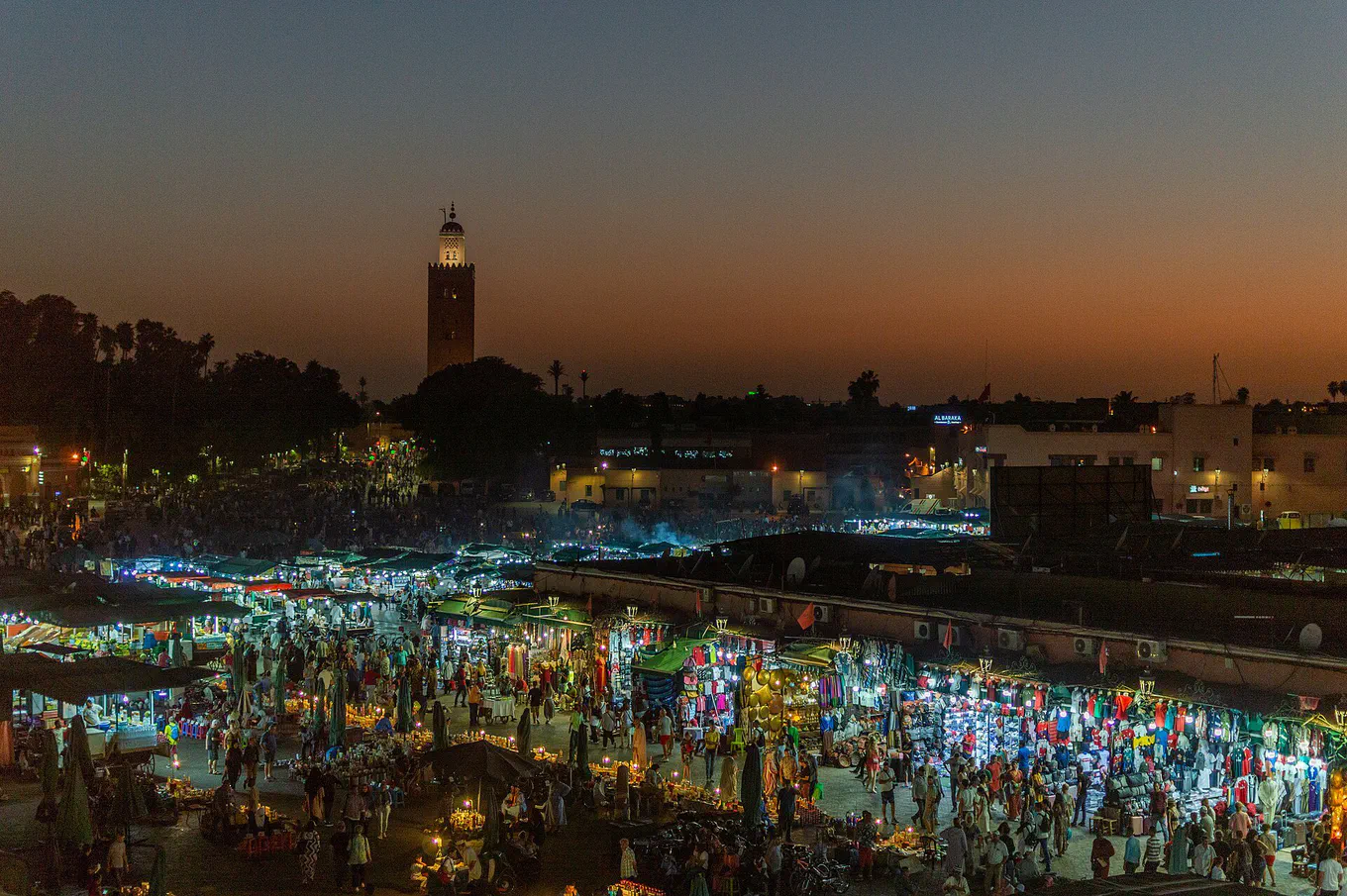
Stand here. The minaret he painted, the Koutoubia, stands about 200 metres west of Jemaa el-Fnaa.
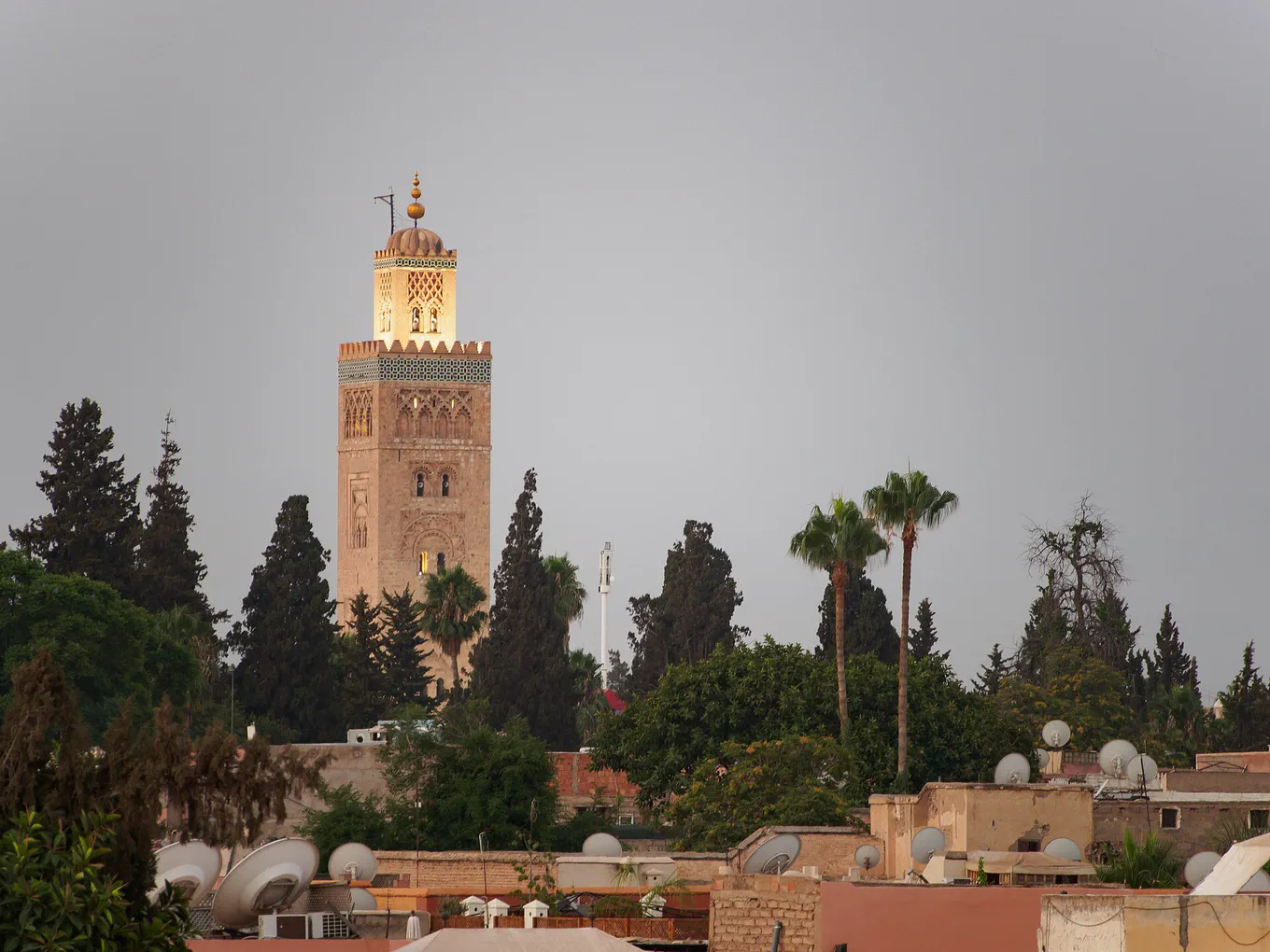
Winston Churchill talked a reluctant Franklin D. Roosevelt into a trip to Marrakesh after their conference at Casablanca, in January 1943. The two leaders stayed at Villa Taylor, watched the sunset from its tower, and spent the evening over dinner and songs. Then the president left. “My friend has gone,” Churchill telegraphed his wife. He stayed on and painted the Koutoubia minaret from the villa, the only picture he attempted in the whole war. When it was finished, he gave it to the friend who had gone.
In Alfred Hitchcock’s The Man Who Knew Too Much (1956), the film in which Doris Day sings “Que Sera, Sera”, a man stabbed in the back comes up to James Stewart in this square. He is a Frenchman in disguise, and before he dies he whispers that a foreign statesman will be killed in London. Off camera, the danger was real. During the shoot, riots broke out against the French protectorate that ruled Morocco, and the production barely got out before the French administrator was assassinated.
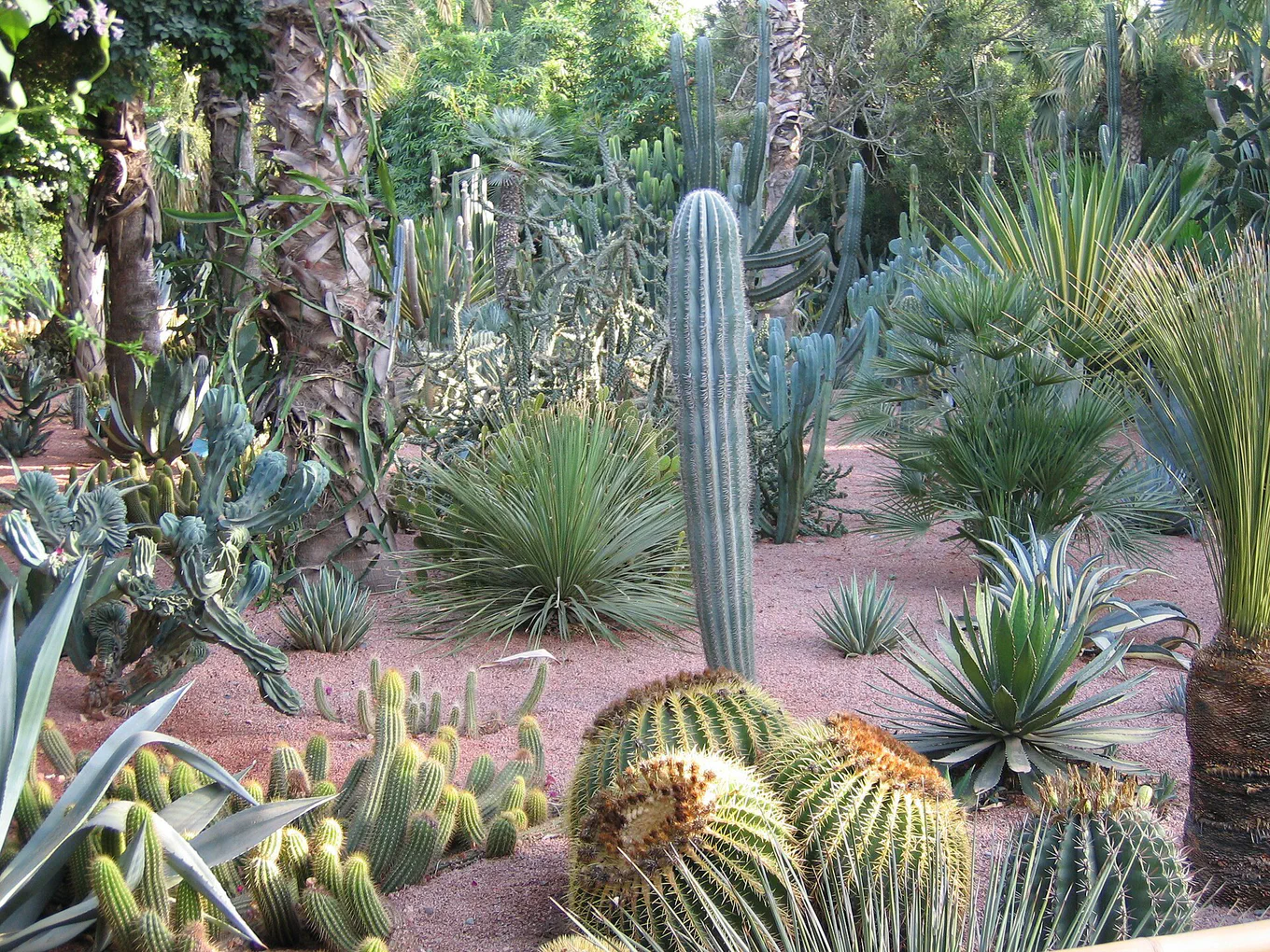
“Marrakech taught me colour,” Yves Saint Laurent said. “Before Marrakech everything was black.” The French painter Jacques Majorelle filled the Jardin Majorelle with plants from around the world, and gave it a bold cobalt blue inspired by the city’s coloured tiles. After his divorce, Majorelle was forced to sell. In 1980, Saint Laurent and his business manager, Pierre Bergé, bought the garden to save it from hotel developers. When Saint Laurent died, his ashes were scattered in the garden he had saved.
5 Juan Goytisolo and the storytellers of Jemaa el-Fnaa
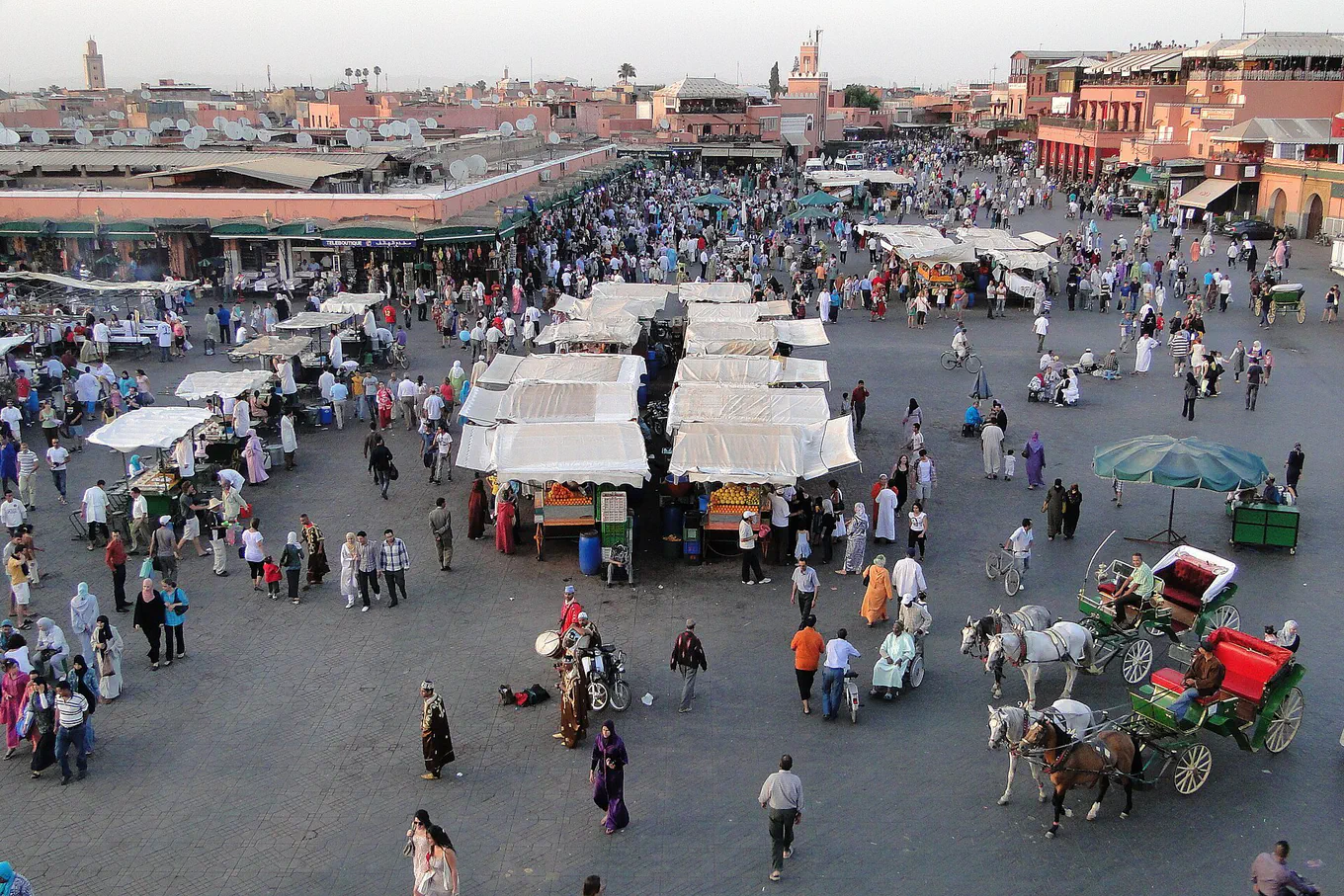
Stand here. Jemaa el-Fnaa once more, the triangular square where storytellers, poets, and snake-charmers perform.
From 1997, Marrakesh was home to Juan Goytisolo, a Spanish novelist whose opposition to Franco had driven him into exile in Paris. He campaigned to have UNESCO recognise the square and its storytellers, poets, and performers. In 1997, he persuaded UNESCO to create a new programme, and in 2001 it proclaimed the square Oral and Intangible Heritage of Humanity. In his speech that week, Goytisolo said the square’s spectacle is repeated daily, and each day it is different. Yet UNESCO names property speculation and road building as serious threats.
Pack nothing. Leave Friday.
Every Friday, I write a free letter, Journey, that takes us on a trip through places, stories, and ideas.
Marrakech(George Orwell, 1939). An essay set in Marrakech. Orwell wrote it in 1939, the first year of the Second World War, and it references the expanding conflict in Europe.
Hideous Kinky(Esther Freud, 1992). An autobiographical novel. A young mother and her two daughters travel to Marrakesh in the 1960s and live in a low-rent hotel, sewing dresses to make a living.
Marrakech Noir(Yassin Adnan (ed.), 2018). A collection of new dark stories, translated from Arabic, French, and Dutch, each set in a distinct neighbourhood or location within Marrakech.
Films to watch before you visit Marrakesh
Much Loved(Nabil Ayouch, 2015). A film about the prostitution scene in Marrakesh. It follows four female sex workers and was banned in Morocco for alleged “contempt for moral values and the Moroccan woman”.
The Man Who Knew Too Much(Alfred Hitchcock, 1956). A film. A mystery thriller in which an American family travel from Casablanca to Marrakesh, then see a man chased by police at the Jemaa el-Fnaa.
The Night Manager(Susanne Bier, 2016). A TV series. A spy thriller from John le Carré’s novel. Production moved to Marrakesh, where the Es Saadi Resort played the fictional Nefertiti Hotel in Cairo.
Questions
Where was The Man Who Knew Too Much filmed in Marrakesh?
Alfred Hitchcock shot the opening scenes of the 1956 film in the souks and in Jemaa el-Fnaa, the main square, where the Frenchman is murdered. La Mamounia, the hotel on Avenue Bab Jdid opposite the Koutoubia Mosque, was also a location, and it is where the characters played by James Stewart and Doris Day stay.
What is the Koutoubia Mosque?
It is a mosque founded in 1147 by the Almohad caliph Abd al-Mu’min, right after he took Marrakesh from the Almoravids. The name means the Booksellers’ Mosque, after the book trade in the nearby souk. Its minaret, about 77 metres tall and possibly finished around 1195, stands about 200 metres west of Jemaa el-Fnaa.
What is Jemaa el-Fnaa?
It is the triangular square at the entrance to the medina, where storytellers, poets, and snake-charmers perform. In 2001, after a campaign led by the novelist Juan Goytisolo, UNESCO proclaimed it Oral and Intangible Heritage of Humanity, and in 2008 it was inscribed on UNESCO’s intangible heritage list.