Marseille, France, Provence-Alpes-Côte d’Azur, Europe
The closest I’ve been to Marseille is that Jamie/Aurélia sequence near the end of Love Actually. “I’ve come here with a view to asking you to marriage me.” Classic.
— Nick
Greek settlers founded Marseille as Massalia around 600 BC, and it is France’s oldest city. It lies on the Mediterranean coast, in Provence, and the Old Port is still its heart. A sailor in a burial sack and a war song that marched to Paris come before a rhinoceros bound for the Pope, an American with a list of 200 names, and an architect’s ‘madman’s house’.
1 Edmond Dantès and the burial sack at the Château d’If
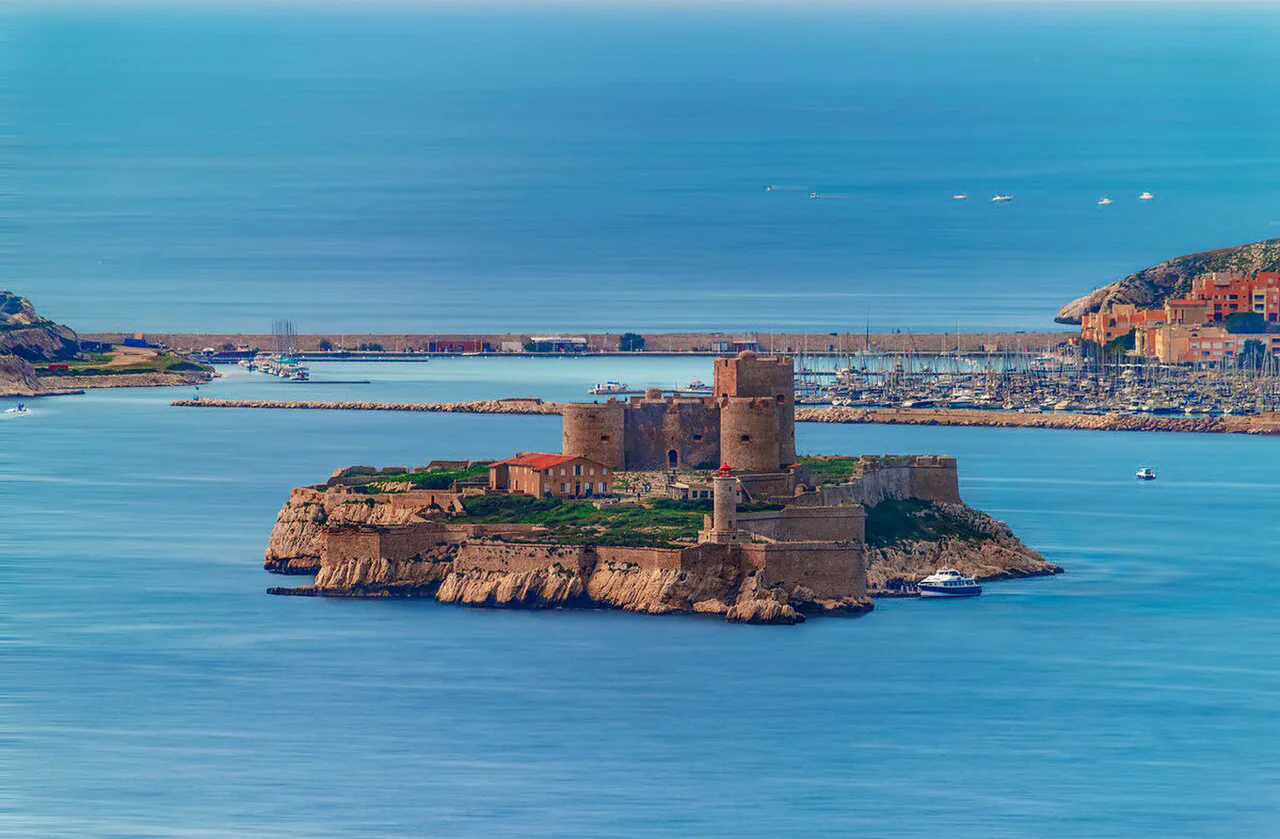
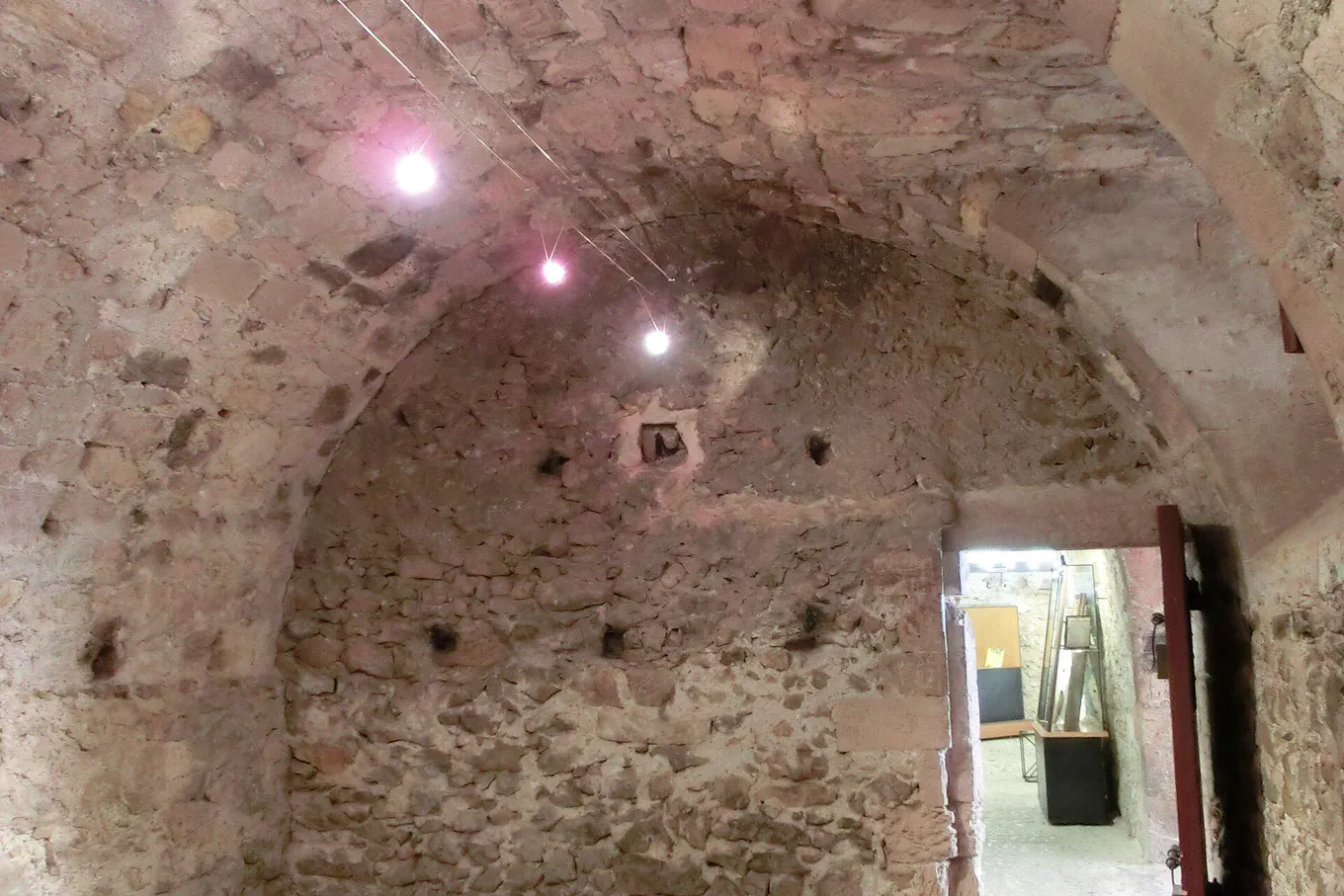
Stand here. The Château d’If, on its island a boat ride from the Old Port. It keeps a roughly hewn dungeon in Dantès’s honour.
The cell dedicated to Edmond Dantès inside the Château d’If, on its island off Marseille.Ask Nine / CC0.
In Alexandre Dumas’s The Count of Monte Cristo, serialised from 1844, Edmond Dantès is a Marseille sailor about to be made captain and marry Mercédès. Jealous friends betray him. He is arrested at his engagement party and locked in the Château d’If without trial. There, a priest tunnels into his cell by mistake. When the priest dies, Dantès takes his place in the burial sack, the guards throw it into the sea, and he cuts his way out. No real prisoner is known to have escaped the Château d’If.
2 How a Strasbourg war song became La Marseillaise
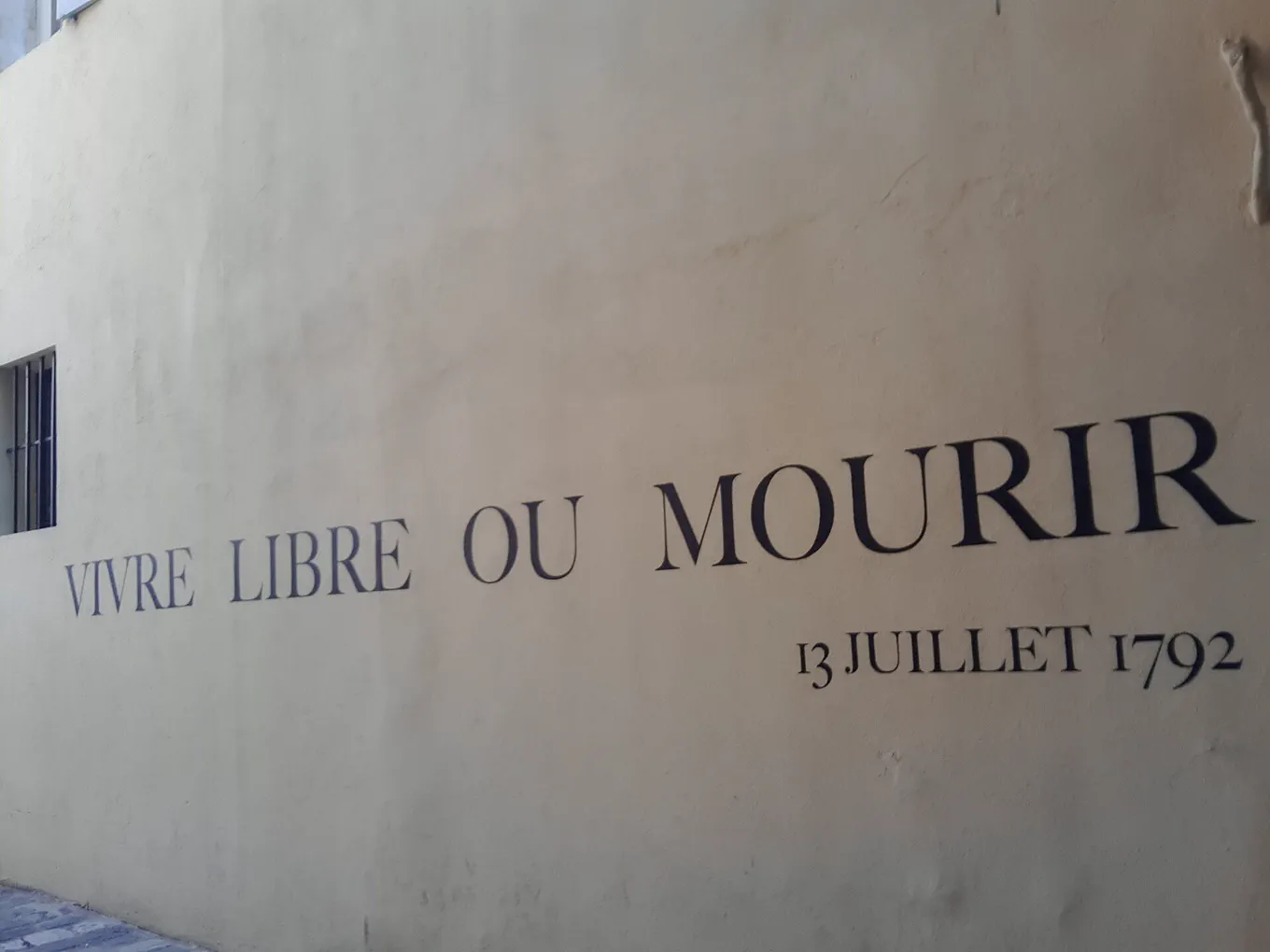
Stand here. Rue Thubaneau. The banquet was at no. 11. The Mémorial de la Marseillaise is at no. 25, in the hall where the revolutionary club met.
La Marseillaise, France’s national anthem, began in Strasbourg in 1792 as a war song for the Army of the Rhine. That June, a young doctor from Montpellier, François Mireur, was guest of honour at a republican banquet here. Asked for another speech, he sang the new war song instead, and Marseille’s patriots took to it at once. In July, the city’s volunteers sang it through all twenty-seven days of their march to Paris. When they arrived, the Paris crowd named the song after them on the spot.
3 The rhinoceros Francis I saw on the island of If
Stand here. The Île d’If, a boat ride from the Old Port. The fortress Francis I ordered after his visit stands there now.
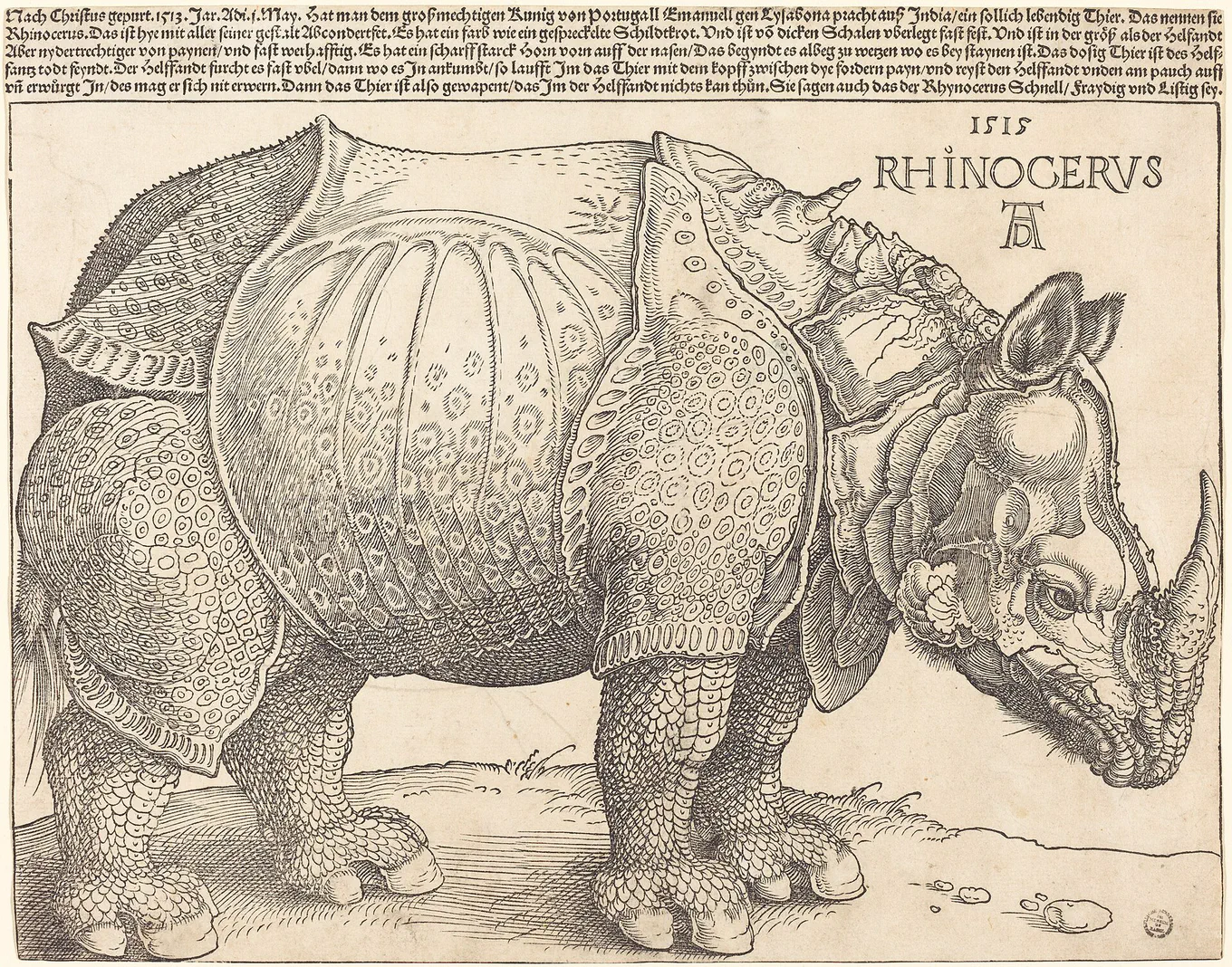
Albrecht Dürer’s woodcut of the rhinoceros that stopped at the Île d’If on its way to the Pope.Albrecht Dürer / CC0.
Albrecht Dürer’s Rhinoceros, the woodcut Europe copied for three centuries, shows an animal he never saw. It had reached Lisbon, the first living rhinoceros in Europe since Roman times, and King Manuel I of Portugal sent it on as a gift for the Pope. On the way, in January 1516, its ship stopped at If, and Francis I of France, visiting Marseille, came out to see it. Off Porto Venere, a sudden storm wrecked the ship, and the rhinoceros, chained to the deck, drowned.
4 Varian Fry’s thirteen months in wartime Marseille
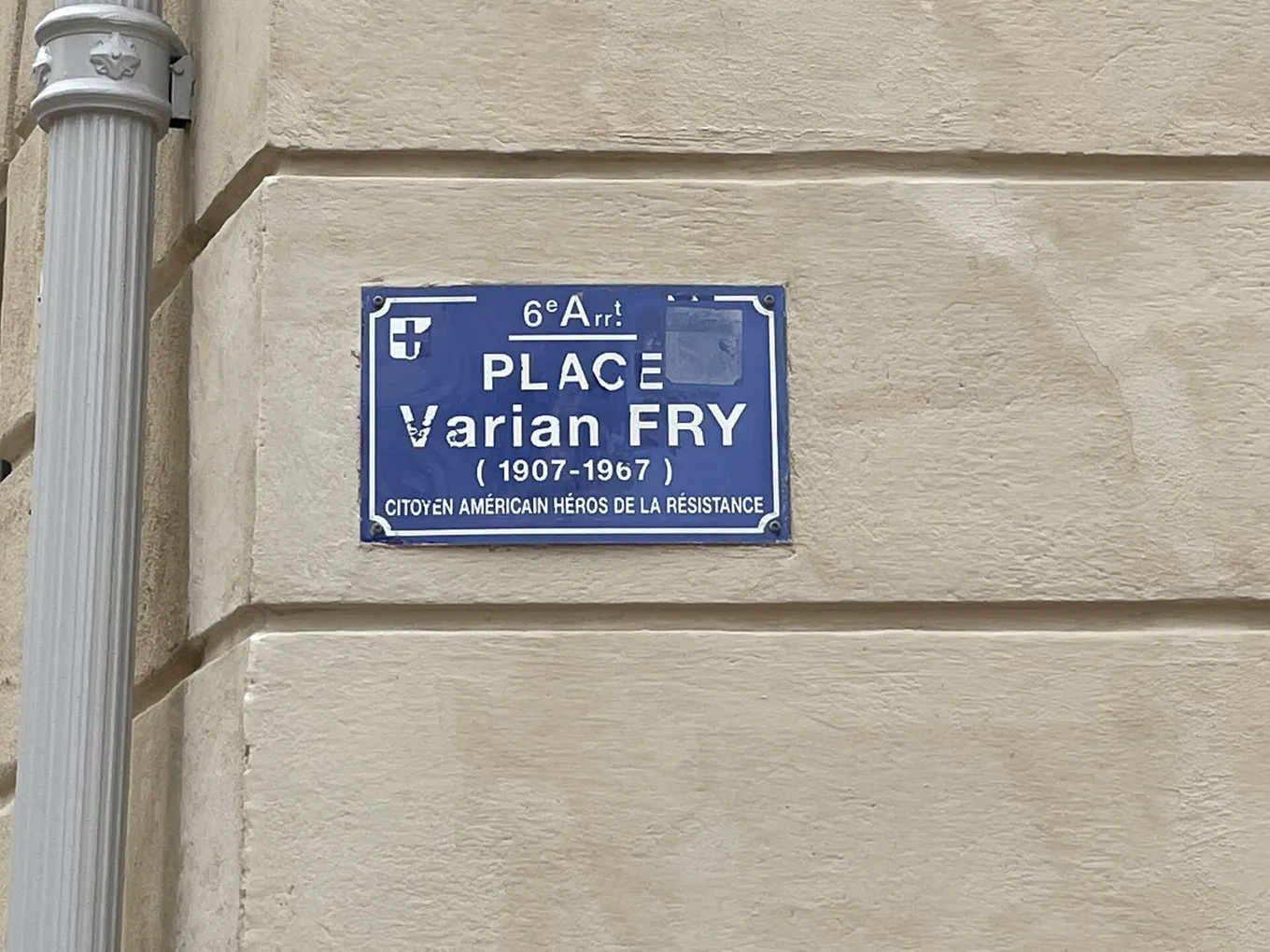
Stand here. Place Varian Fry, the square in front of the US consulate, renamed in his honour.
Marc Chagall, Max Ernst, and Hannah Arendt escaped France with help from Varian Fry, an American journalist. A rescue committee sent him to Marseille in August 1940 with $3,000 taped to his leg and a list of 200 artists and intellectuals. The visit was meant to last a few weeks. He stayed thirteen months and helped about 2,000 people out, by routes including smugglers’ trails across the Pyrenees. Vichy France and his own State Department objected. French police gave him two hours to pack and escorted him to the Spanish border.
5 Le Corbusier’s ‘madman’s house’ on the Boulevard Michelet
Stand here. The Cité radieuse, 280 boulevard Michelet. People still live here, and its inside street has a hotel, a restaurant, and a bookshop.
When France needed homes after the Second World War, its Minister of Reconstruction asked Le Corbusier, a pioneer of modern architecture, to build a housing block in Marseille. He saw it as a vertical city, with flats on large pillars, shopping streets inside, and a nursery school with a paddling pool on the roof. It broke so far with tradition that some locals soon called it la maison du fada, the madman’s house. In 2016, the madman’s house joined UNESCO’s World Heritage List.
Pack nothing. Leave Friday.
Every Friday, I write a free letter, Journey, that takes us on a trip through places, stories, and ideas.
The Count of Monte Cristo(Alexandre Dumas, 1844–1846). A novel. A young Marseille sailor, falsely accused of treason, escapes the Château d’If after fourteen years.
Marius(Marcel Pagnol, 1929). A play. In a café in Marseille, a young man named Marius dreams of going to sea.
Transit(Anna Seghers, 1944). A novel. Its narrator spends his days in Marseille’s cafés, among people from across Europe desperate to escape the Nazis.
Total Chaos(Total Khéops, Jean-Claude Izzo, 1995). A crime novel. Izzo’s detective novels name many of the bars and cafés around the Old Port.
Films to watch before you visit Marseille
Borsalino(Jacques Deray, 1970). A film, shot in and around Marseille, in which two men are urged to seize control of the city’s fish market.
French Connection II(John Frankenheimer, 1975). A film starring Gene Hackman, and one of two French Connection films to put the Old Port on screen.
Questions
How do you get to the Château d’If?
By boat from the Old Port, the Vieux-Port, boarding at the lower end of La Canebière. The Frioul If boat runs all year. Entry to the château is €7, not including the crossing, and the château doesn’t open in bad weather.
Can you visit Le Corbusier’s Cité radieuse?
Yes. It is still a lived-in apartment block, but its internal street has a hotel open to the public, a restaurant, an architecture bookshop, and a gallery. The rooftop gymnasium has been the MaMo contemporary art centre since 2013, and the city’s Tourist Office shows visitors apartment 643.
Is Marseille the oldest city in France?
Yes. Greek settlers from Phocaea founded it around 600 BC as Massalia, landing in the cove of the Lacydon, which is now the Old Port. The story goes that a Greek sailor, Protis, won a local chief’s daughter when she handed him a cup at a feast. Ancient versions differ even on the names.