Most of what I know about Medellín comes from Narcos, and Pedro Pascal chasing Escobar. Years later, of course, Pascal became Joel in The Last of Us. So in a roundabout way, Escobar’s city is a stepping stone to my favourite video game story.
— Nick
Medellín is the capital of Antioquia and the second-largest city in Colombia after Bogotá, set in the Aburrá Valley in the central Andes. The town was founded in 1675. Its stories here are a tango star’s last take-off, a Belgian architect’s unfinished palace, a painter accused of indecency, a drug lord on a roof, and a library reached by cable car.
1 Carlos Gardel’s last take-off from Medellín’s airfield
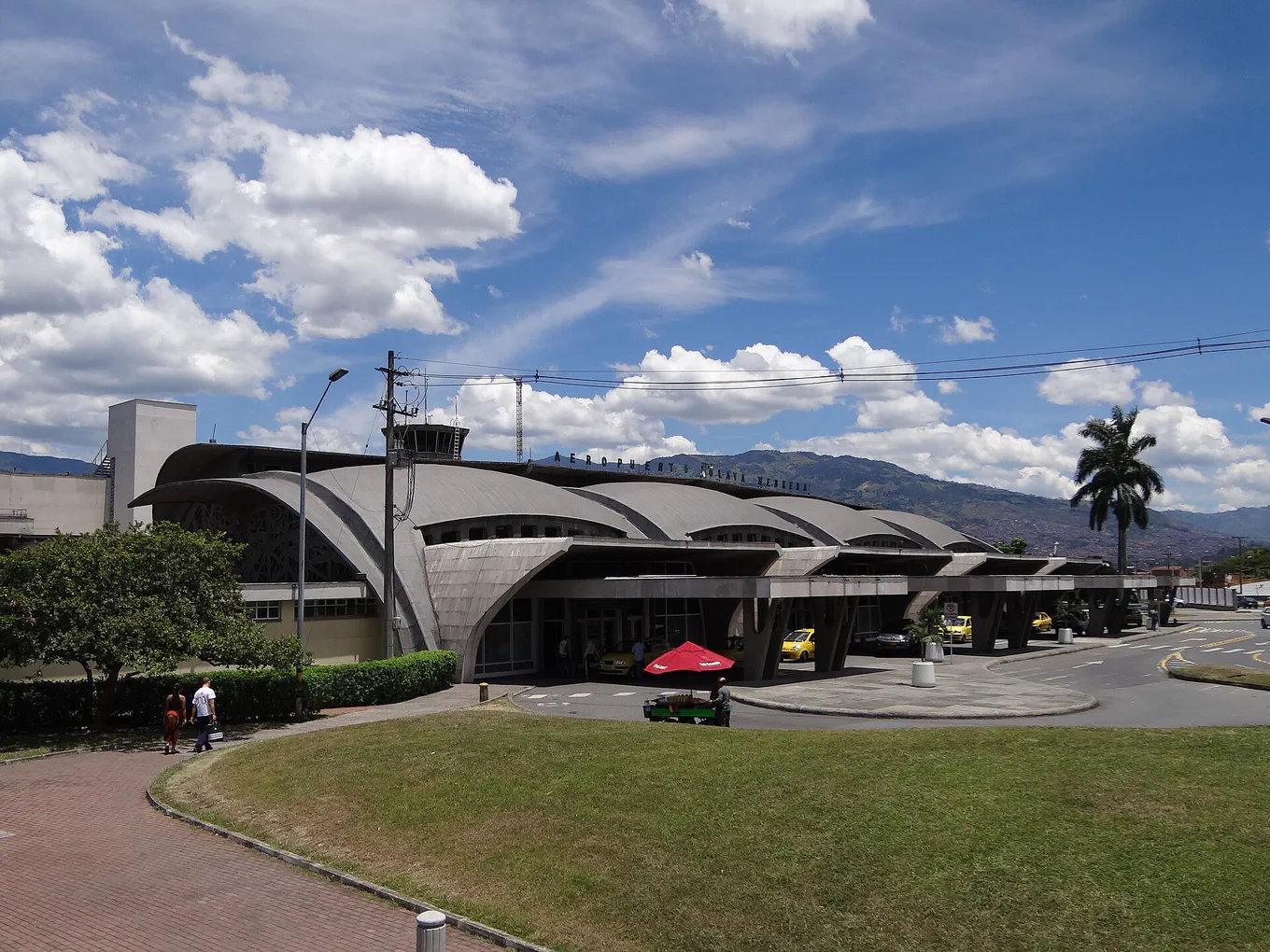
Stand here. Olaya Herrera Airport, once the Las Playas airfield, which still runs regional and domestic flights and has been a national monument since 1995.
Carlos Gardel, the most prominent figure in the history of tango, was flying from Bogotá to Cali by way of Medellín. On 24 June 1935, his plane and another were about to take off from this airfield when they collided. Seventeen people died, among them Gardel and Alfredo Le Pera, the lyricist who had written several classic tangos with him. Gardel was buried in Buenos Aires. Medellín kept him anyway, with a statue on Calle 45, a monument that rises among those who love him.
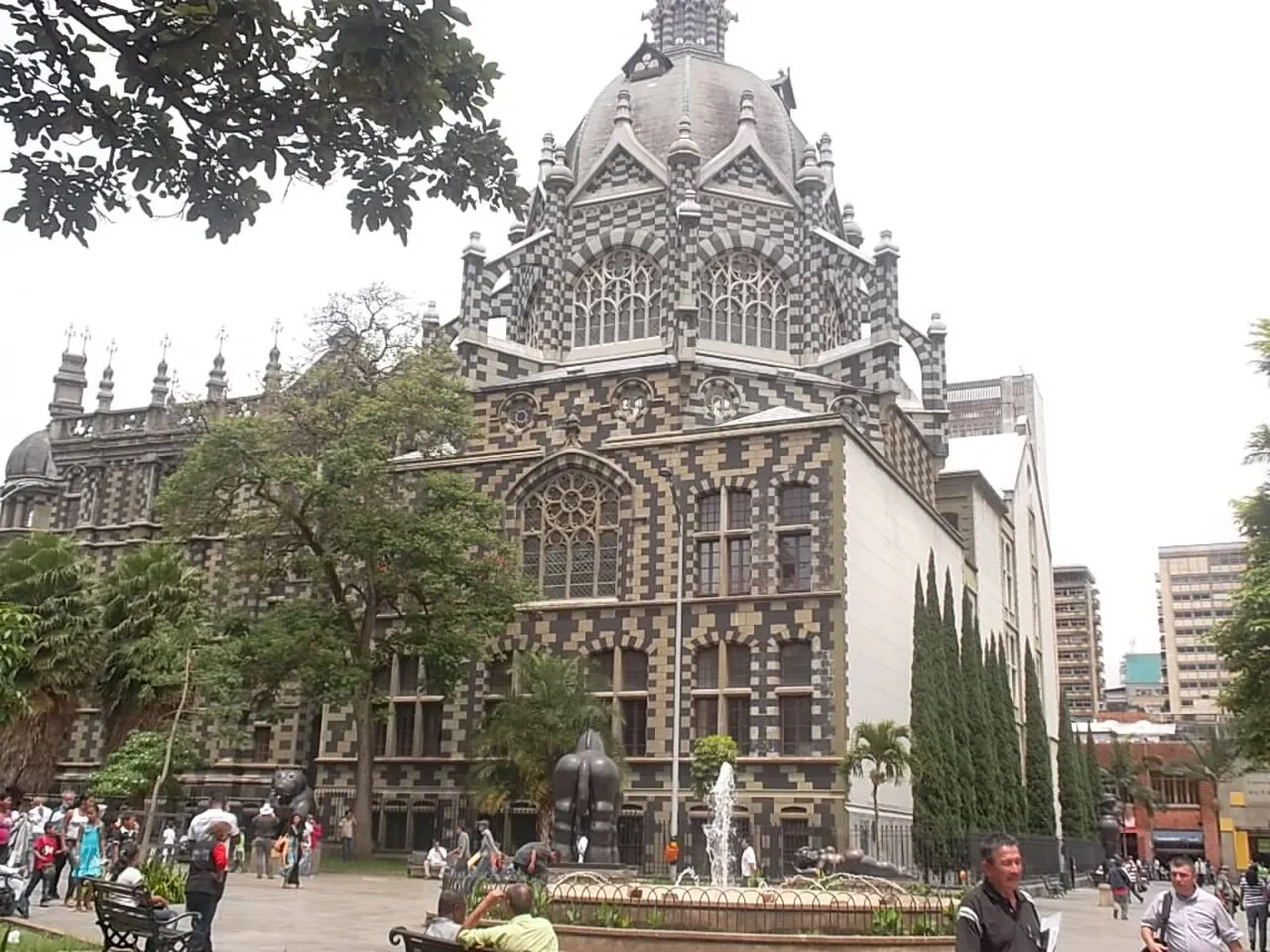
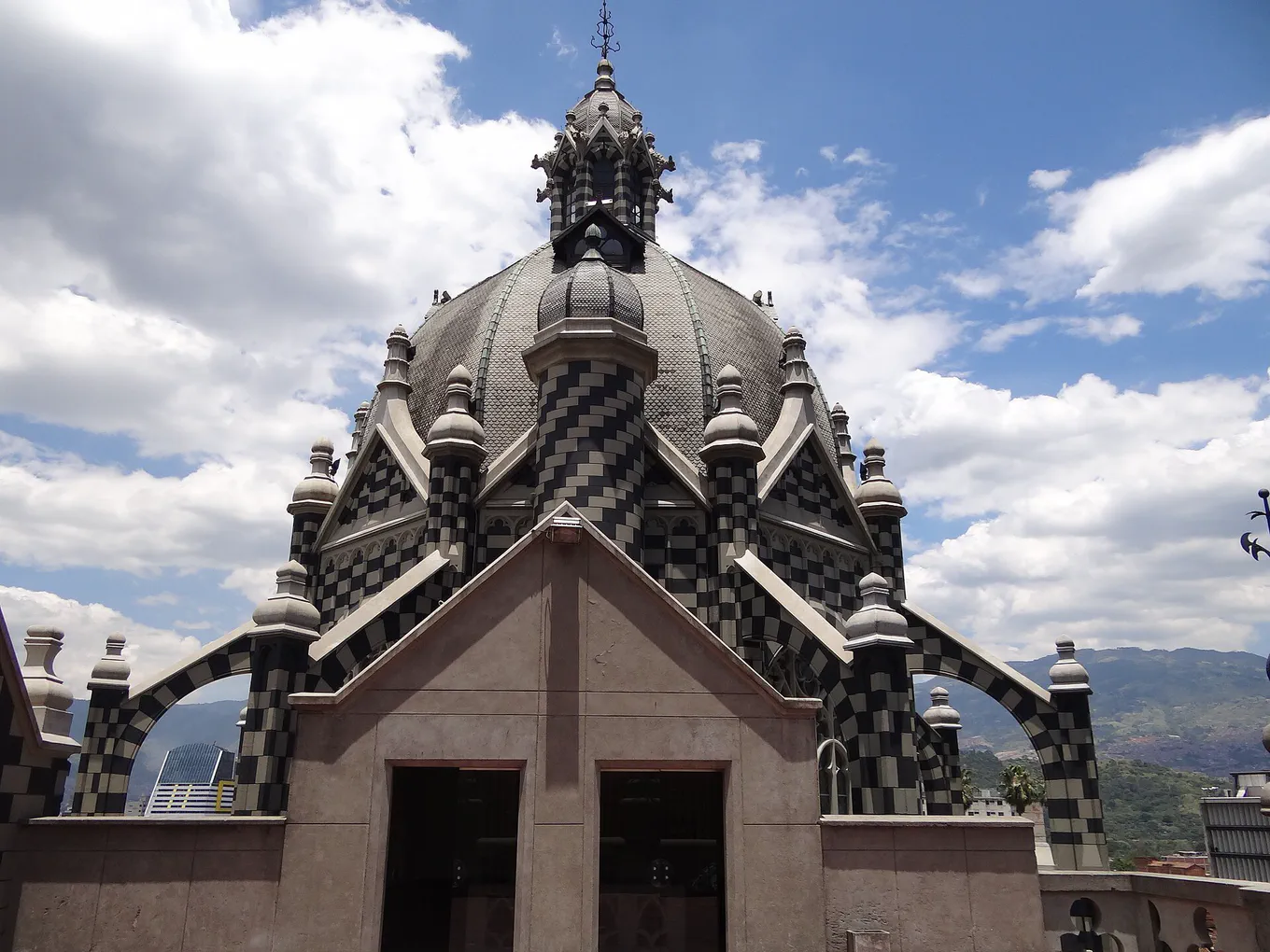
In the 1920s, the Belgian architect Agustín Goovaerts began a government palace for Antioquia, designed in the Gothic Revival style. But his plans were disputed, and a deficit in the treasury held up the work for four years. In 1928, Goovaerts and his family left for Brussels. The palace went on without him. Three architects were brought in to finish it, his guidelines were not followed, and it took its final form only in 1970. By one count, only a quarter of his design was ever built.
3 Débora Arango, the Medellín painter accused of indecency
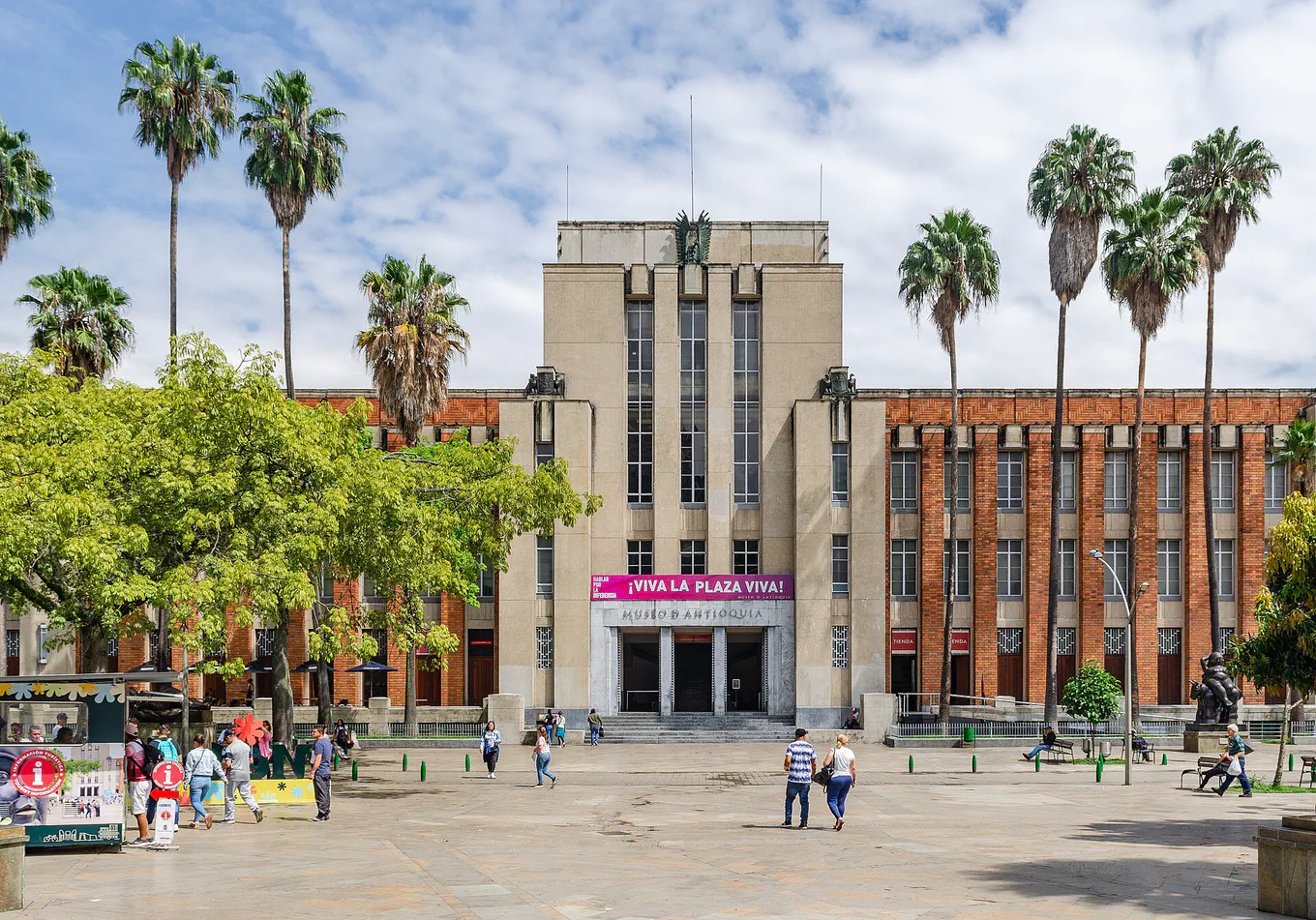
Stand here. The Museo de Antioquia, on Plaza Botero, where a permanent room shows 118 of her paintings, lent by her family.
Débora Arango was the first Colombian woman to paint a nude, at a time when it was forbidden for women. In 1939, her paintings at Medellín’s Club Unión set off a huge press controversy. She was accused of immodest and indecent work, and one of her works was called “an impudent work that not even a man should exhibit”. She replied that art has nothing to do with moral codes. Since 2016, her face has been on Colombia’s 2,000-peso note.
4 Pablo Escobar’s last run across a Los Olivos roof
Stand here. Carrera 79B #45D-94, in Los Olivos. It is now a three-storey building, and its clay-tile roof is gone.
Netflix’s Narcos told the story of Pablo Escobar, who founded the Medellín Cartel. In 1992, he escaped custody, and the whole country hunted him. He was located through a phone call to his family. On 2 December 1993, a day after his 44th birthday, he called them again, and special forces found him in this house. He was shot dead trying to escape across the roof, though his family says he shot himself. Six years later, Fernando Botero, born in Medellín, painted him enormous on a rooftop.
5 Biblioteca España, the Medellín library built for the poorest
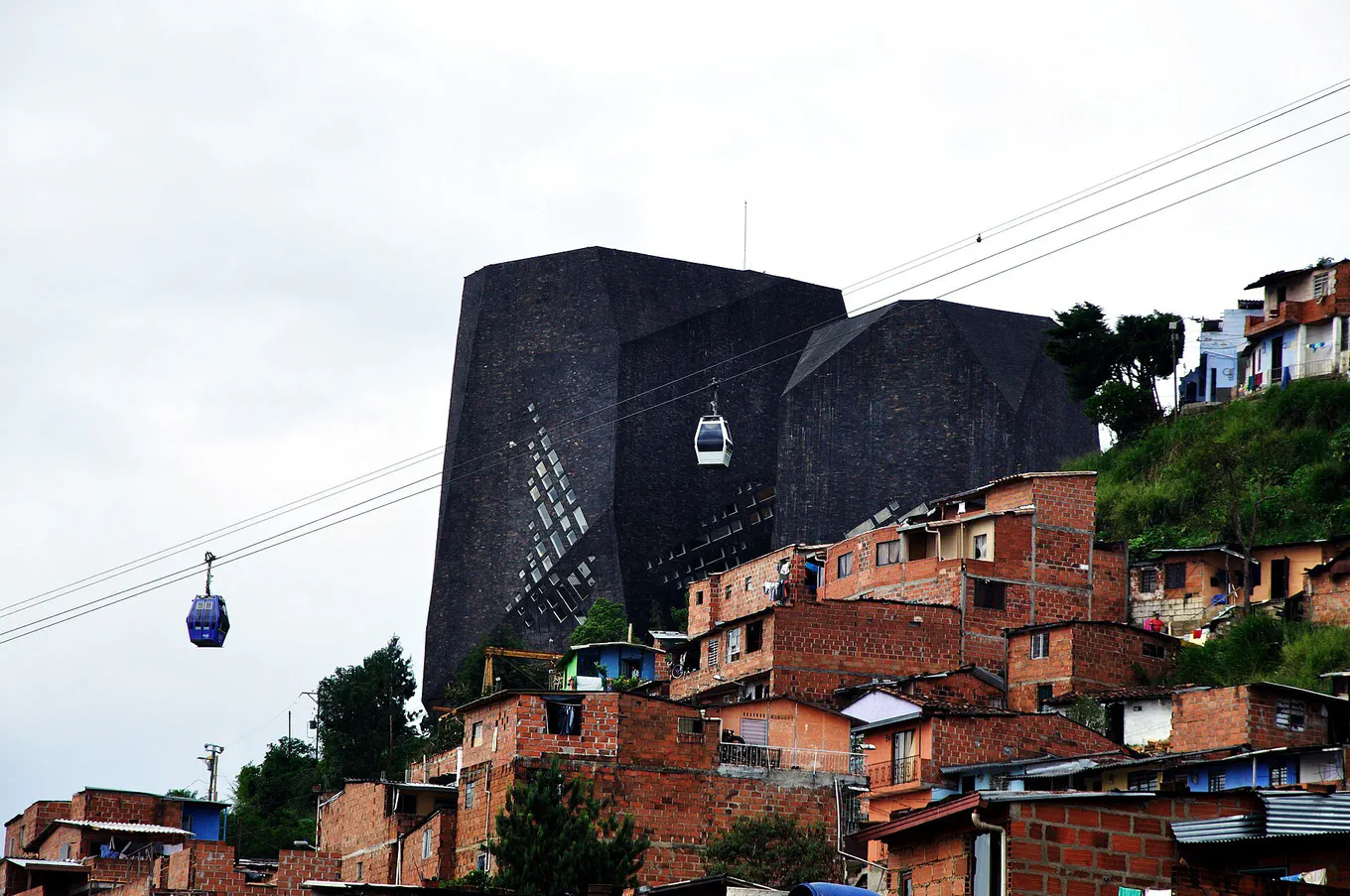
Stand here. Parque Biblioteca Santo Domingo Savio, once Parque Biblioteca España, at the Santo Domingo stop on Metrocable Line K. Its restoration finished in October 2026.
The King and Queen of Spain came up by cable car to open this library on 24 March 2007. Before Metrocable, people in Santo Domingo Savio had spent upwards of two and a half hours getting to work. The library was Mayor Sergio Fajardo’s idea, on the premise of “the most beautiful for the poorest”, and it won a prize for the best architecture of the year. But from the day it opened, its cladding kept falling off. In 2015, it was closed, and it stayed shut for eleven years.
Pack nothing. Leave Friday.
Every Friday, I write a free letter, Journey, that takes us on a trip through places, stories, and ideas.
La virgen de los sicarios(Our Lady of the Assassins, Fernando Vallejo, 1994). A novel. One of its characters comes from Santo Domingo Savio, the barrio of the library.
El olvido que seremos(Oblivion: A Memoir, Héctor Abad Faciolince, 2006). A memoir of the author’s father, Héctor Abad Gómez, who walked to the Casa del Maestro for a wake.
Killing Pablo(Mark Bowden, 2001). History. How Escobar came to be killed on a Los Olivos roof in 1993, and how his cartel was dismantled.
Films to watch before you visit Medellín
La vendedora de rosas(The Rose Seller, Víctor Gaviria, 1998). A film. Andrea, a girl from Miramar, a poor barrio, sells roses in the city centre.
Rodrigo D. No Futuro(Víctor Gaviria, 1990). A film. Shot in Medellín’s El Diamante and Robledo barrios between 1986 and 1988, it follows Rodrigo, not yet 20, who lives in the city’s suburbs.
The Kings of the World(Laura Mora Ortega, 2022). A film set in Medellín, about five teenage friends who live on the streets and leave the city for the Colombian interior.
Questions
Can you visit the house where Pablo Escobar died?
The building still stands in Los Olivos, a middle-class neighbourhood of Medellín, but it is now three storeys high and no longer has the clay-tile roof Escobar died on.
Why is Medellín called the City of Eternal Spring?
Its weather is warm all year round, with few extremes. Temperatures range from about 17 to 28 °C (63 to 82 °F). The city lies in the Aburrá Valley, in the central Andes, and in Spanish the nickname is La Ciudad de la Eterna Primavera.
Is Medellín still dangerous?
Far less than it was. Medellín was once considered one of the most dangerous cities in the world, with 7,273 murders in 1991. After Escobar’s death in 1993, crime fell dramatically, and the homicide rate has dropped by 95%. In 2013, The Wall Street Journal named it Innovative City of the Year, ahead of New York and Tel Aviv.