Famous (in my head) because two Melbourne scientists coined the word “Petrichor”, which is that wonderful smell you get when rain falls on long-dry earth. I love that smell.
— Nick
Free settlers from Van Diemen’s Land, now Tasmania, founded Melbourne on Port Phillip Bay in 1835. Victoria’s capital and Australia’s second most populous city, it stands on land whose traditional custodians are the Boonwurrung, Woiwurrung, and Wurundjeri peoples. A doomed expedition, an outlaw’s last morning, a chained leap into a river, a racehorse shot at and missed, and the man who turned down Mad Max make up its stories.
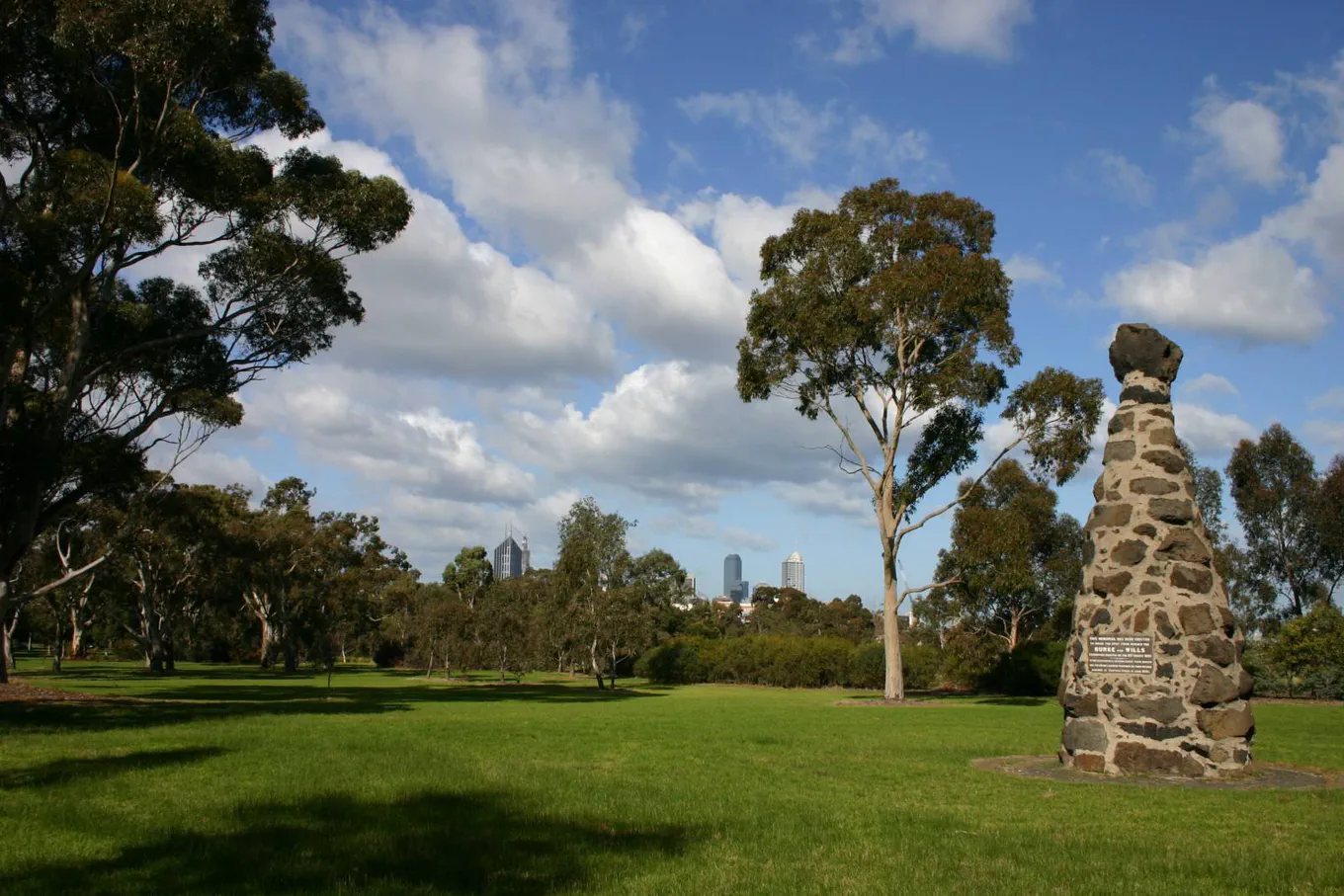
Around 15,000 people watched the Burke and Wills expedition leave Royal Park on 20 August 1860, with 23 horses and 26 camels, to cross Australia to the Gulf of Carpentaria. Its leader, Robert O’Hara Burke, had never explored before. The following April, Burke, his surveyor William Wills, and a soldier, John King, reached their depot at Cooper Creek and found it empty. The depot party had left nine hours earlier. Burke and Wills died beside the creek. Only King lived, fed and sheltered by the Yandruwandha people.
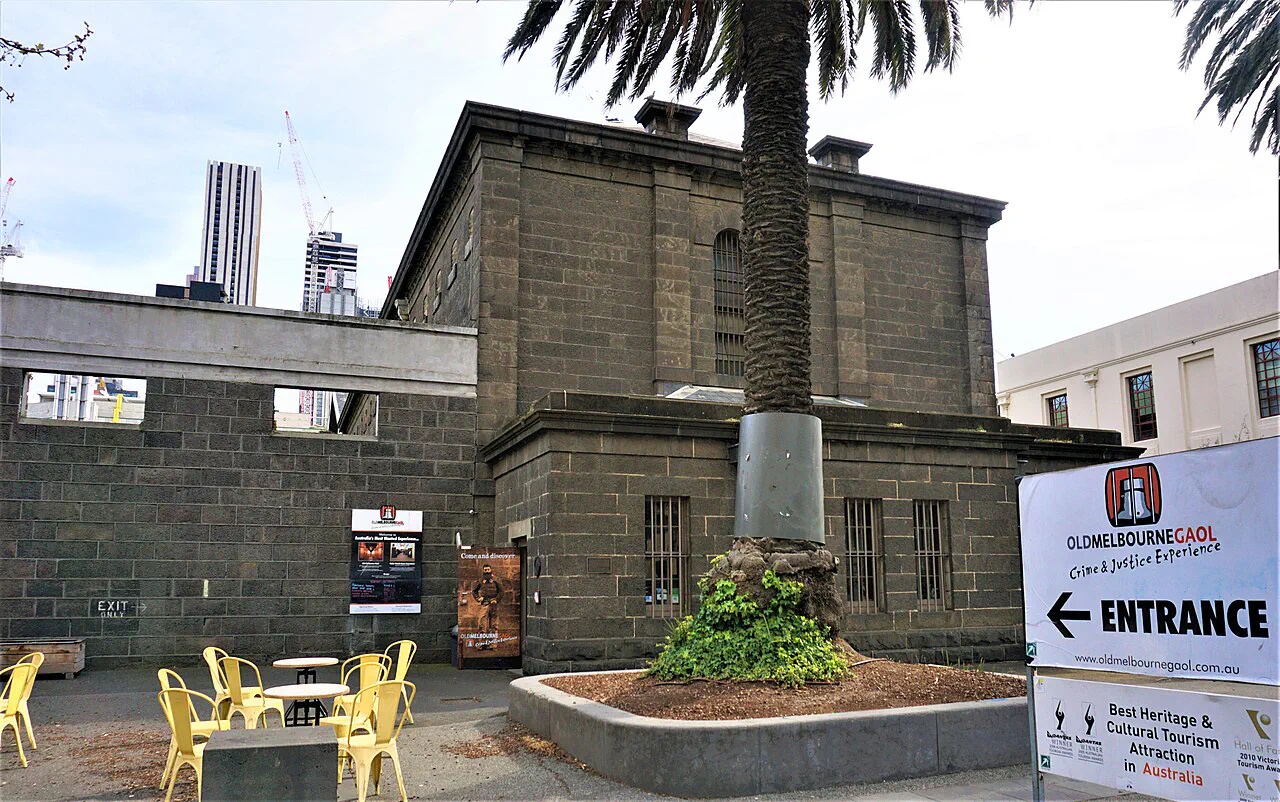
2 Ned Kelly’s last morning at Old Melbourne Gaol
Stand here. The Old Melbourne Gaol, on Russell Street, a museum since 1972. It shows Kelly’s death mask, his pistol and a replica of his armour.
Ned Kelly, the bushranger in homemade armour, was tried before Sir Redmond Barry, the judge who had sentenced his mother. Barry sentenced him to hang, ending with “May God have mercy on your soul.” Kelly replied, “I will see you there where I go.” A petition for mercy gathered over 32,000 signatures and failed. His mother, still serving her sentence in Melbourne Gaol, was allowed to visit him. Kelly was hanged there at 10 am on 11 November 1880. Twelve days later, Barry was dead.
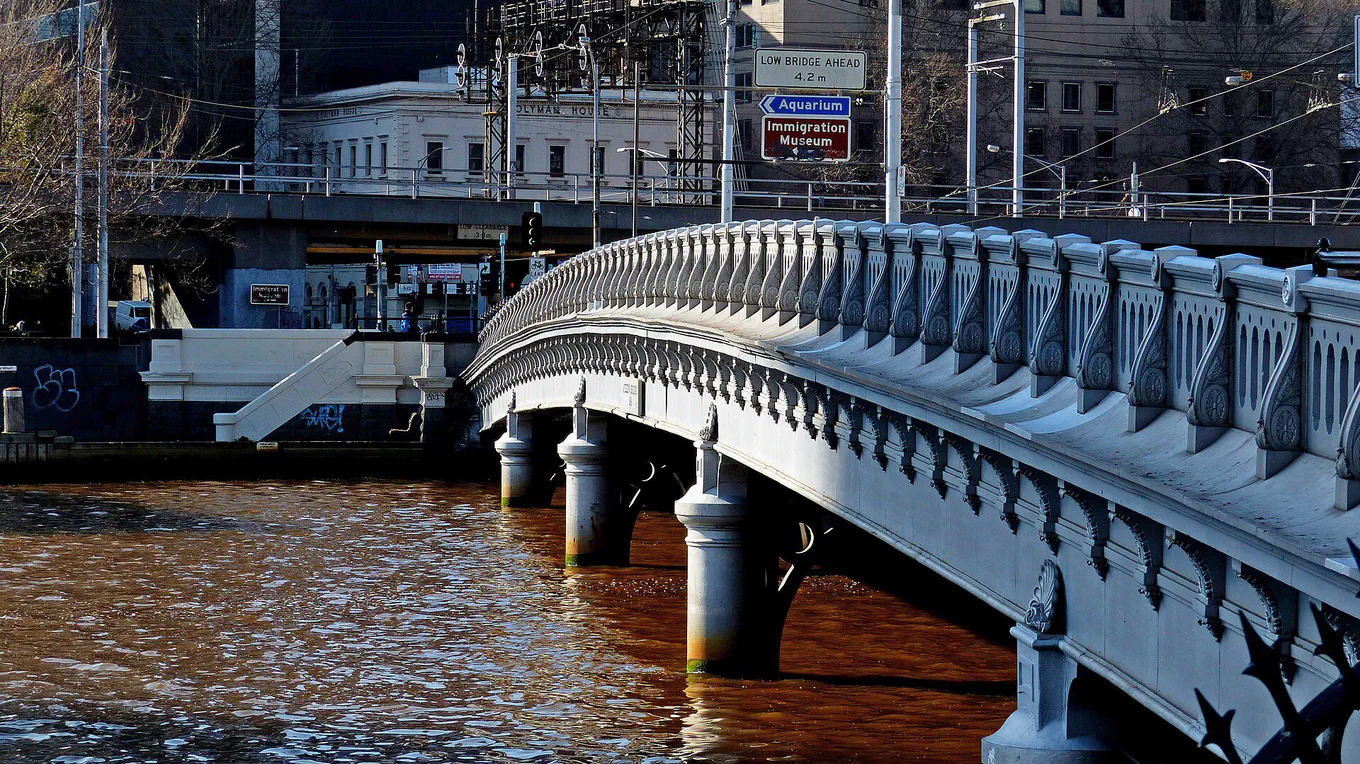
3 Houdini’s chained leap from Queens Bridge into the Yarra
Stand here. Queens Bridge, linking Market and William Streets to Queensbridge Street across the Yarra. The same bridge still carries route 58 trams.
Queens Bridge, the low iron bridge across the Yarra River at the foot of Market Street in central Melbourne.Bernard Spragg / CC0.
The world’s most famous entertainer, Harry Houdini, “the Handcuff King”, reached Melbourne in 1910 with a biplane, meaning to make Australia’s first controlled powered flight. On 17 February, before about 20,000 people, he jumped from Queens Bridge into the Yarra chained, handcuffed, and padlocked. Factories upstream fed the river their waste, but he came up free in less than a minute. After more than a month of bad weather, he flew at Diggers Rest, outside Melbourne. He promised to leap from the plane in handcuffs. He never flew again.
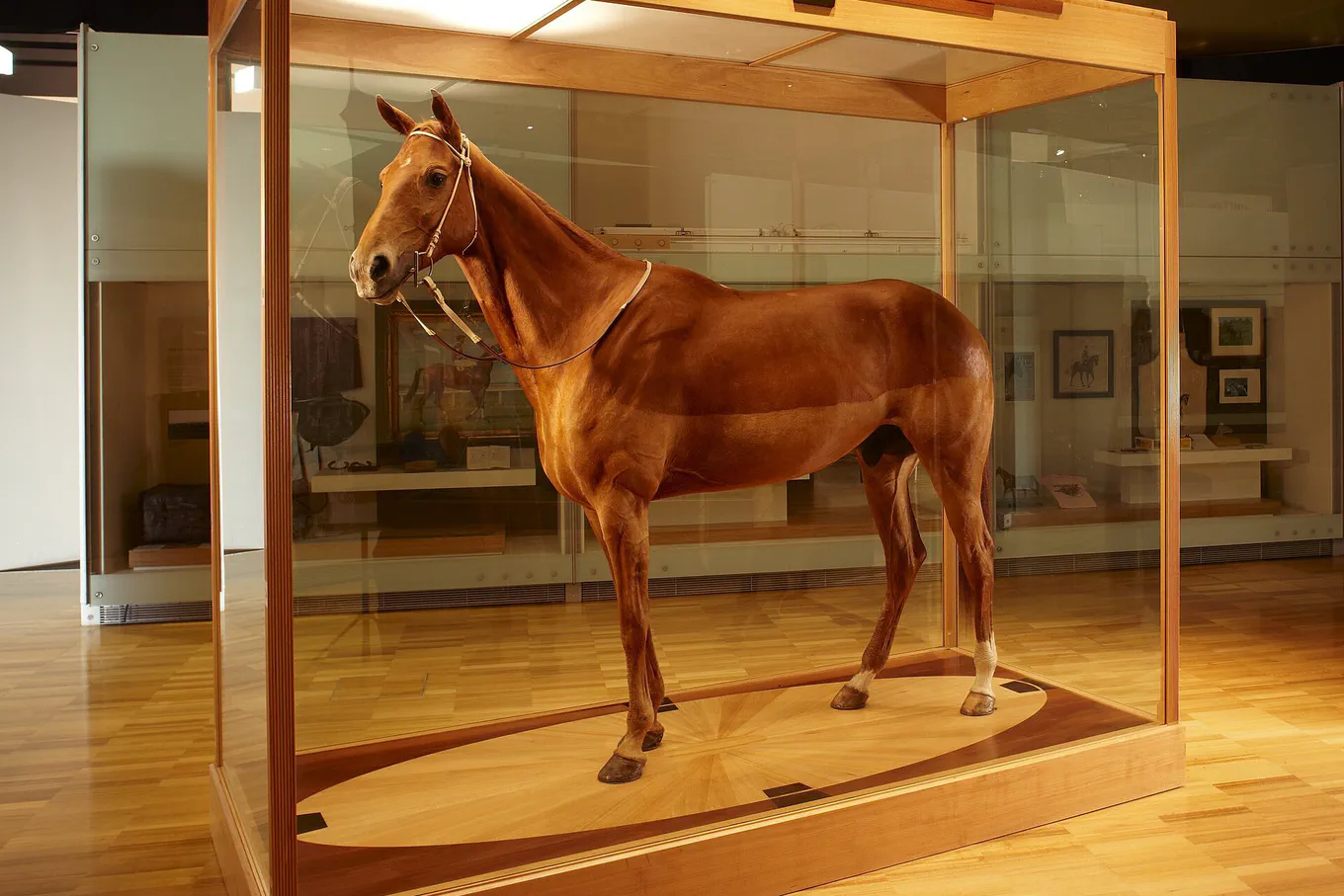
In 1930, the favourite for the Melbourne Cup, “the race that stops a nation”, was Phar Lap, a New Zealand-born champion his strapper called Bobby. On the morning of 1 November, after track work, criminals tried to shoot him. They missed. Later that day he won the Melbourne Stakes, and three days later, carrying 63 kilograms, he won the Cup. When he died suddenly in 1932, his heart weighed 6.2 kilograms, almost twice a normal horse’s. “A heart as big as Phar Lap” became an idiom for courage.
5 George Miller’s Mad Max and the Spotswood Pumping Station
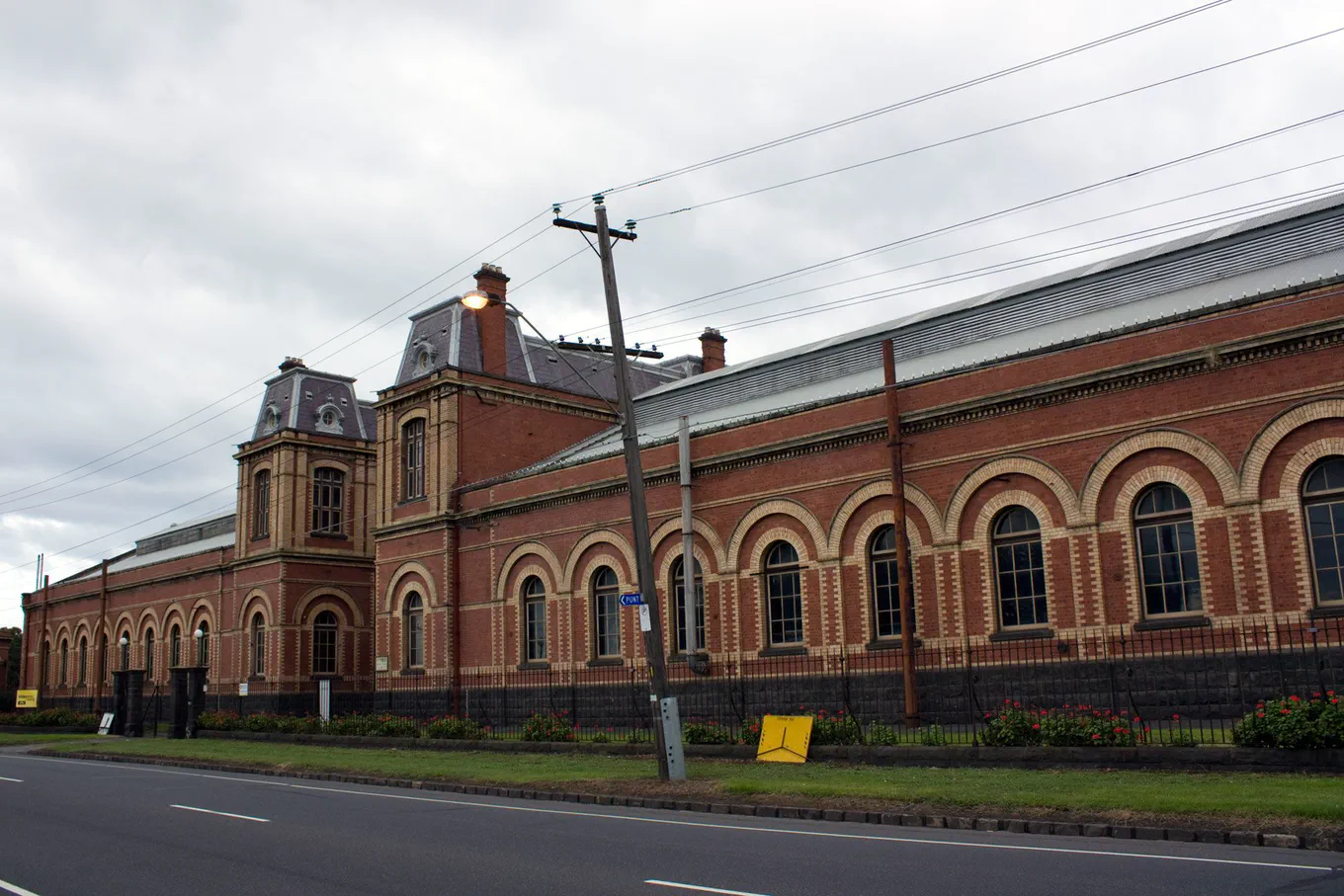
Stand here. Spotswood Pumping Station, on Douglas Parade, built in 1897 and now part of the Scienceworks museum. You can tour inside.
For Mad Max, George Miller, a Sydney doctor, first wanted James Healey, an Irish-born worker at a Melbourne abattoir. Healey read the script, found the dialogue too terse, and said no. The part went instead to a recent drama graduate, Mel Gibson. Filming ran for six weeks in and around Melbourne in late 1977, with the pumping station as the Main Force Patrol’s headquarters. Healey had turned down a film that, until The Blair Witch Project in 1999, held the record for earning the most against its budget.
Pack nothing. Leave Friday.
Every Friday, I write a free letter, Journey, that takes us on a trip through places, stories, and ideas.
The Mystery of a Hansom Cab(Fergus Hume, 1886). A novel, called the best-selling detective novel of the 19th century, which Hume researched over many nights in Little Bourke Street.
Monkey Grip(Helen Garner, 1977). A novel drawn from Garner’s own life in share houses in Fitzroy and Carlton in the mid-1970s. Its characters spend summers at the Fitzroy baths.
Cocaine Blues(Kerry Greenwood, 1989). A novel. Its heroine, Phryne Fisher, stays at the Windsor Hotel from start to finish.
Films to watch before you visit Melbourne
On the Beach(Stanley Kramer, 1959). A film in which Melbourne will be the last major city on Earth to perish, with scenes at Flinders Street Station.
Mad Max(George Miller, 1979). A film. Spotswood Pumping Station, now part of Scienceworks, plays the headquarters of the Main Force Patrol.
Romper Stomper(Geoffrey Wright, 1992). A film about a gang of violent neo-Nazi skinheads from Footscray, with a scene in a tunnel at Footscray Station.
The Castle(Rob Sitch, 1997). A film. The Kerrigans’ home is in Coolaroo, and its outside shots were filmed at 3 Dagonet Street, Strathmore.
Questions
Where is Ned Kelly’s real armour?
At State Library Victoria. The helmet, breastplate, backplate, and shoulder plates he wore at Glenrowan carry 18 bullet marks. The Old Melbourne Gaol shows a replica, with his death mask and pistol.
Is Ramsay Street from Neighbours a real street?
Yes. Ramsay Street is Pin Oak Court, a real cul-de-sac in Vermont South. While the show ran, its residents let it film outdoor scenes in their front and back yards, and sometimes in their garages. Tours run there all year. Neighbours first aired in 1985, and its final episode went out in December 2025.
Why is Melbourne called Melbourne?
The settlement, founded in 1835, was named on 10 April 1837 after the British Prime Minister, William Lamb, 2nd Viscount Melbourne. In the Boonwurrung and Woiwurrung languages, the Port Phillip area was known as Narrm or Naarm.