I washed up in Miami after that whole shipwreck-in-the-Turks-and-Caicos-Islands thing. Tried walking (!) out of the airport to find the nearest Greyhound terminal. Nearly died. Went back. Got a bus.
— Nick
In 1896, Miami became a city, and it remains the only major US city founded by a woman. It lies on the coast of southeast Florida, between the Everglades and Biscayne Bay. That woman’s fight for a railway sits among a lighthouse keeper’s gunpowder keg, a Bond film without its star, a boxer who shook up the world, and a gangster film Miami refused.
1 The keeper and the gunpowder keg at Cape Florida
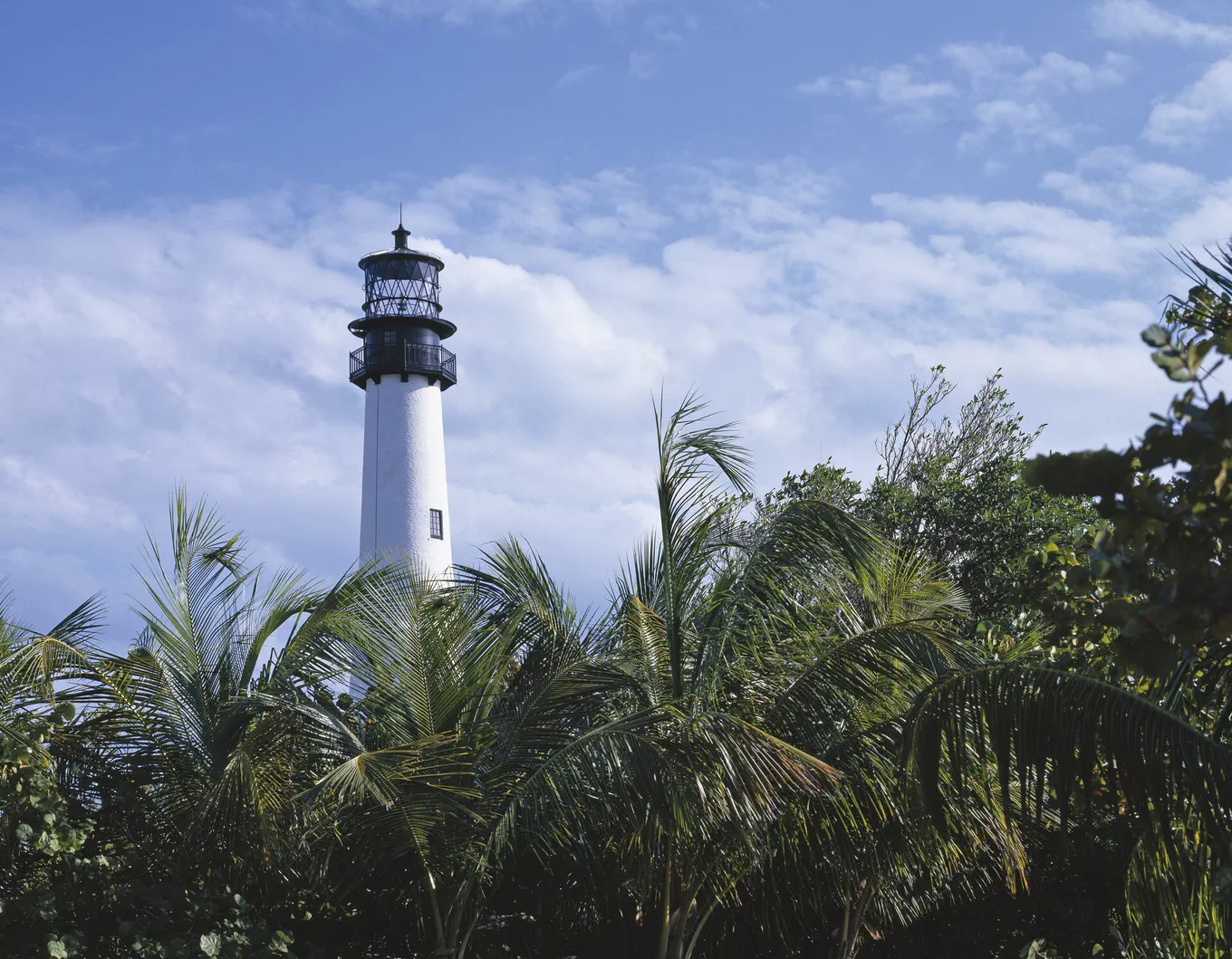
Stand here. The Cape Florida Light, at the south end of Key Biscayne. Relit in 1847, it is the oldest standing structure in Greater Miami.
The Cape Florida Light, the brick lighthouse at the south end of Key Biscayne in Bill Baggs Cape Florida State Park.Carol M. Highsmith / Public domain.
On 23 July 1836, Seminole raiders attacked the lighthouse, held by the assistant keeper, John Thompson, and his helper, Aaron Carter. They set fire to the door, and the lamp oil went up. Both men were shot. Thompson’s clothes were burning. Sure he would die, and wanting a quick end, he threw the gunpowder keg down the tower. It exploded, but the tower stood. Carter died. A Navy schooner twelve miles away had heard the blast. The keg Thompson threw to end his life brought the men who saved it.
2 Julia Tuttle, Henry Flagler, and the freeze that made Miami
Stand here. Bayfront Park, in downtown Miami, where a sculpture of Julia Tuttle by Daub and Firmin stands.
Julia Tuttle owned the land Miami stands on, and she wanted Henry Flagler to bring his Florida East Coast Railway to it. Her letters got nowhere. So did a visit. Then the Great Freeze of 1894–95 wiped out the orange groves further north. Tuttle wired Flagler that Biscayne Bay was untouched. Some say she sent orange blossoms instead. His men brought back citrus, and he wired her, “Madam, what is it that you propose?” The new town wanted to call itself Flagler. He talked it into keeping the name Miami.
3 Goldfinger at the Fontainebleau, filmed without Sean Connery
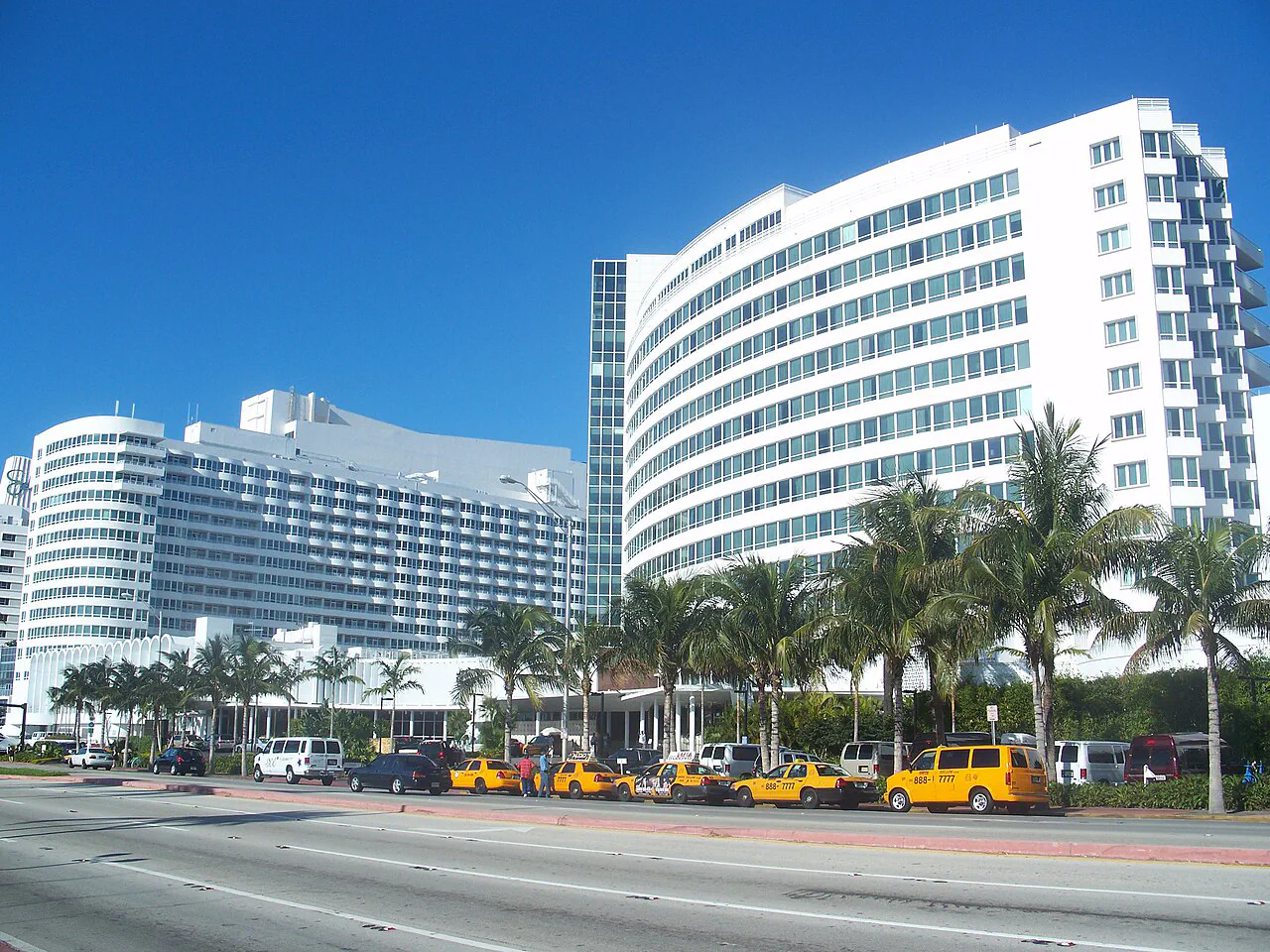
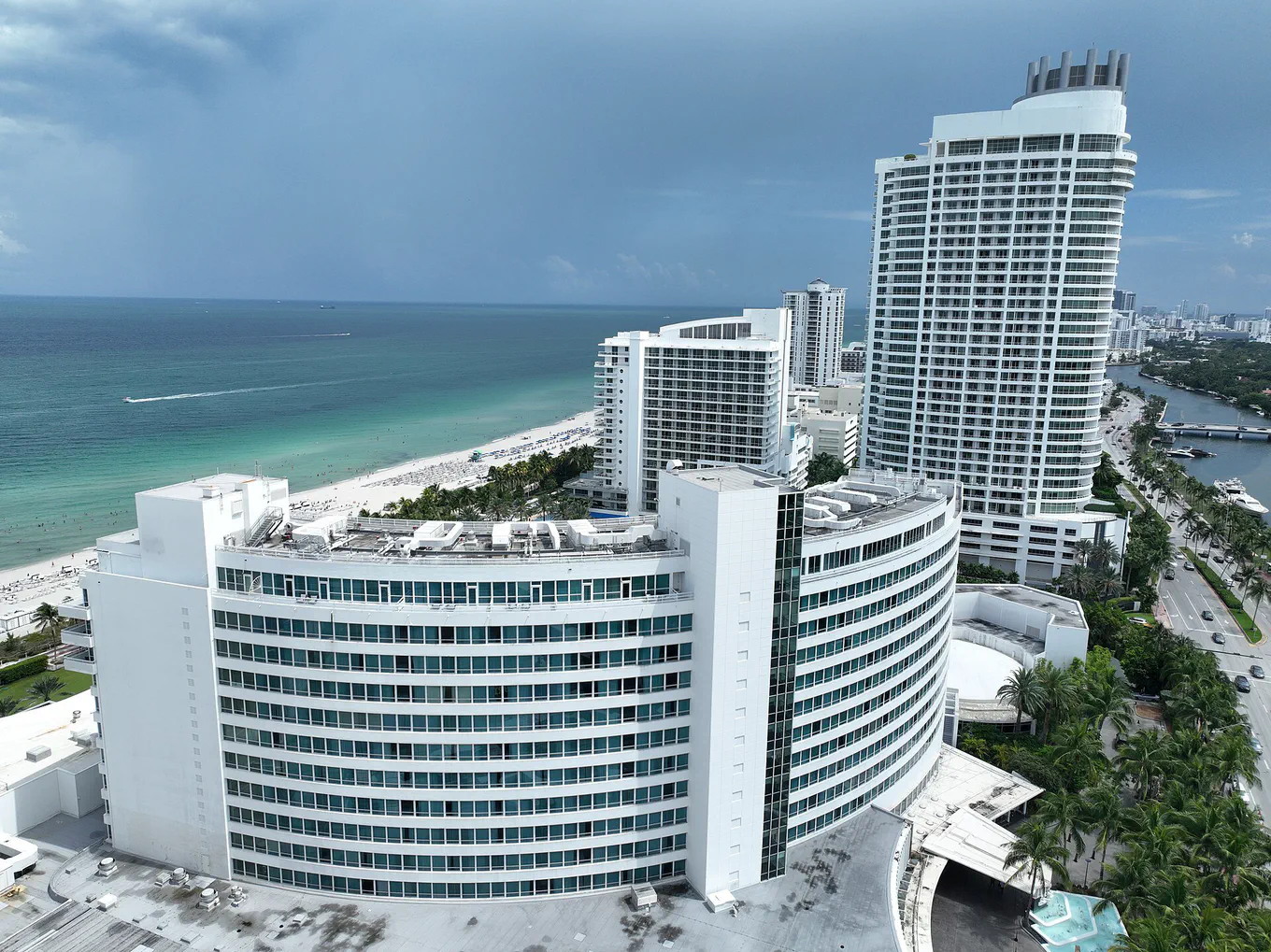
Stand here. The Fontainebleau, 4441 Collins Avenue, Miami Beach. Designed by Morris Lapidus and opened in 1954, it is still a hotel.
In Goldfinger, the third James Bond film, the camera sweeps over this hotel after the opening credits, and in its story Bond catches Goldfinger cheating at gin rummy at a Miami Beach hotel. On 20 January 1964, a crew of just four began filming here. Sean Connery wasn’t among them. He was making Marnie elsewhere in the United States and never travelled to Florida. After five days, the crew went back to England, and Connery played his Miami scenes there, on a copy of the Fontainebleau built at Pinewood Studios.
Before he was Muhammad Ali, he was Cassius Clay, a fast-talking 22-year-old who came here on 25 February 1964 to take the world heavyweight title from Sonny Liston, one of the most intimidating men in boxing. Clay was an 8-to-1 underdog, and 43 of the 46 sportswriters at ringside picked Liston to knock him out. But Liston, his shoulder inflamed, didn’t answer the bell for the seventh round. Clay ran to the ropes and shouted at the writers, “Eat your words!” And, over and over, “I shook up the world.”
5 Scarface’s chainsaw scene on Ocean Drive, Miami Beach
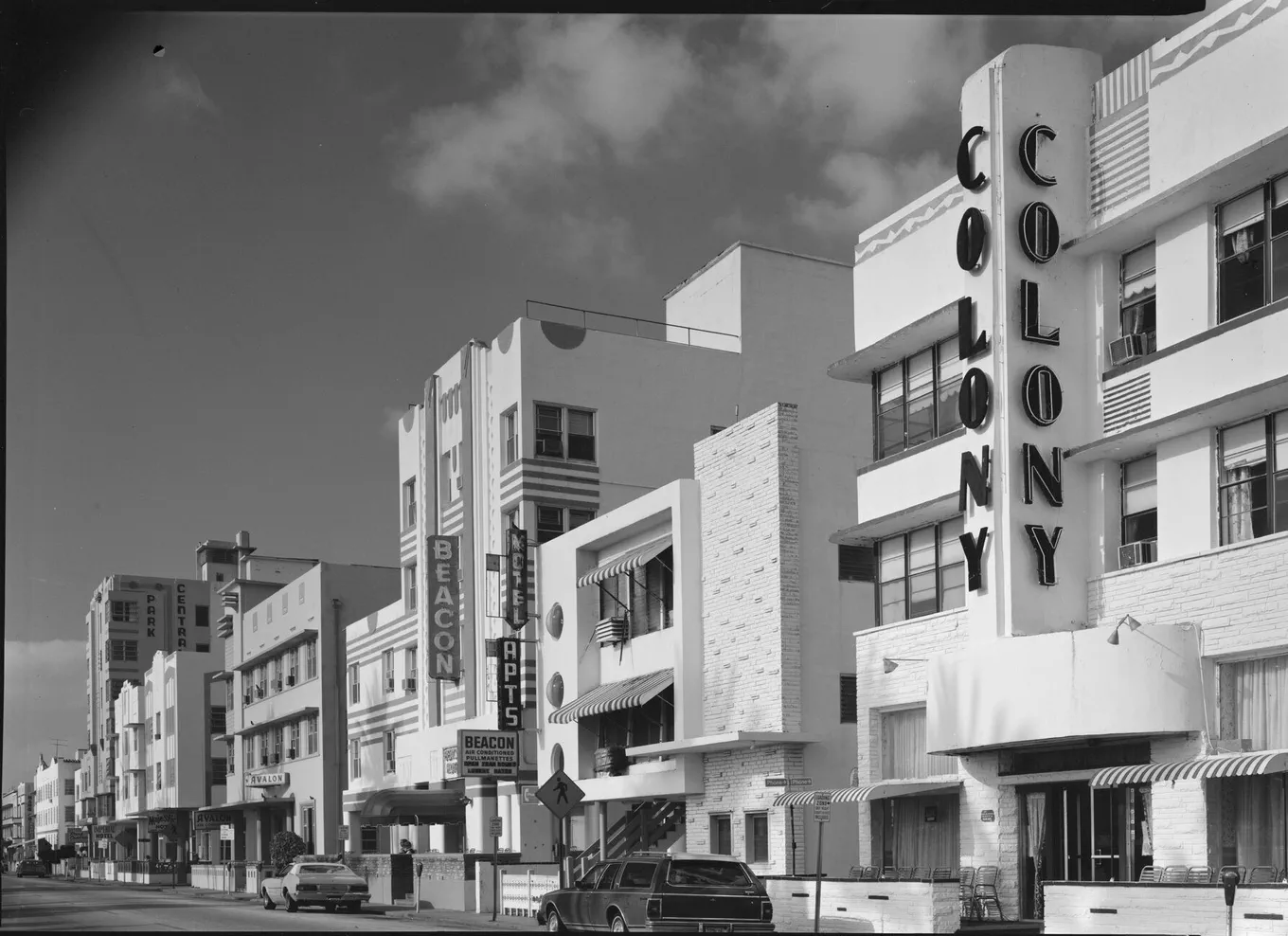
Stand here. Ocean Drive, South Beach, the centre of the Art Deco District. The Sunray Apartments on this street appear in Scarface.
The art deco hotels of the 700 block of Ocean Drive, in the Miami Beach Architectural District of South Beach.Walter Smalling Jr. / Public domain.
Scarface, the 1983 film with Al Pacino as the Cuban refugee Tony Montana, was meant to be shot entirely in Miami. But Miami said no. The Cuban community felt the script showed them in a bad light, and the tourist board feared its drugs and gangsters would scare visitors away. So the film was made mostly in Los Angeles, with just two weeks in Miami. In those two weeks, on Ocean Drive, the crew shot the scene in which Tony is made to watch his partner killed with a chainsaw.
Pack nothing. Leave Friday.
Every Friday, I write a free letter, Journey, that takes us on a trip through places, stories, and ideas.
Tourist Season(Carl Hiaasen, 1986). A novel. A group’s first victim is the head of Miami’s Chamber of Commerce, and it plans to kidnap the Orange Bowl Queen.
Miami(Joan Didion, 1987). Non-fiction. A report on the generation of Cubans who landed in exile in Miami after Batista fell in 1959.
Back to Blood(Tom Wolfe, 2012). A novel set in Miami, about Cuban immigrants.
Films to watch before you visit Miami
Moonlight(Barry Jenkins, 2016). A film that won Best Picture. Set in Liberty City during the crack epidemic, and shot partly at the Liberty Square housing project.
Goldfinger(Guy Hamilton, 1964). A film, the third in the Bond series. Its aerial shot after the opening credits sweeps over the Fontainebleau on Collins Avenue.
The Birdcage(Mike Nichols, 1996). A film. Armand Goldman owns a drag club in South Beach, and the Carlyle Hotel on Ocean Drive stands in for its exterior.
Scarface(Brian De Palma, 1983). A film. Al Pacino as the Cuban refugee Tony Montana. Its chainsaw scene was shot on Ocean Drive.
Miami Vice(Michael Mann, 2006). A film. Crockett, Tubbs, and their team face off against their enemies in a shipyard at the port of Miami.
Questions
Can you stay at the Goldfinger hotel in Miami Beach?
Yes. The Fontainebleau, at 4441 Collins Avenue, is still a hotel. Morris Lapidus designed it, and it opened in 1954. It is the hotel in the aerial shot after Goldfinger’s opening credits, though Sean Connery never filmed there. His scenes were shot on a copy of it at Pinewood Studios, in England.
Can you visit the Cape Florida lighthouse?
Yes. It stands at the south end of Key Biscayne, inside Bill Baggs Cape Florida State Park, which runs tours of the lighthouse and the keeper’s quarters. First built in 1825, it is the oldest standing structure in Greater Miami.
Why is Miami called the Magic City?
Because it grew so fast. Miami became a city only in 1896, with just over 300 people, and winter visitors said it grew so much from one year to the next that it was like magic.