If you’ve never read Leonardo’s letter to the Duke of Milan, do yourself a favour and search it out. When I ran the agency, I had the letter on the website as an example for prospective applicants.
— Nick
Mediolanum was the Romans’ name for Milan after they conquered it in 222 BC. Today, in northern Italy, it is the capital of Lombardy, the country’s second-largest city after Rome, a global fashion capital and Italy’s economic capital. From Leonardo’s flaking Last Supper to Michelangelo’s last sculpture, the stories go by way of Verdi’s comeback at La Scala, an architect’s fall in the Galleria, and Hemingway’s Red Cross nurse.
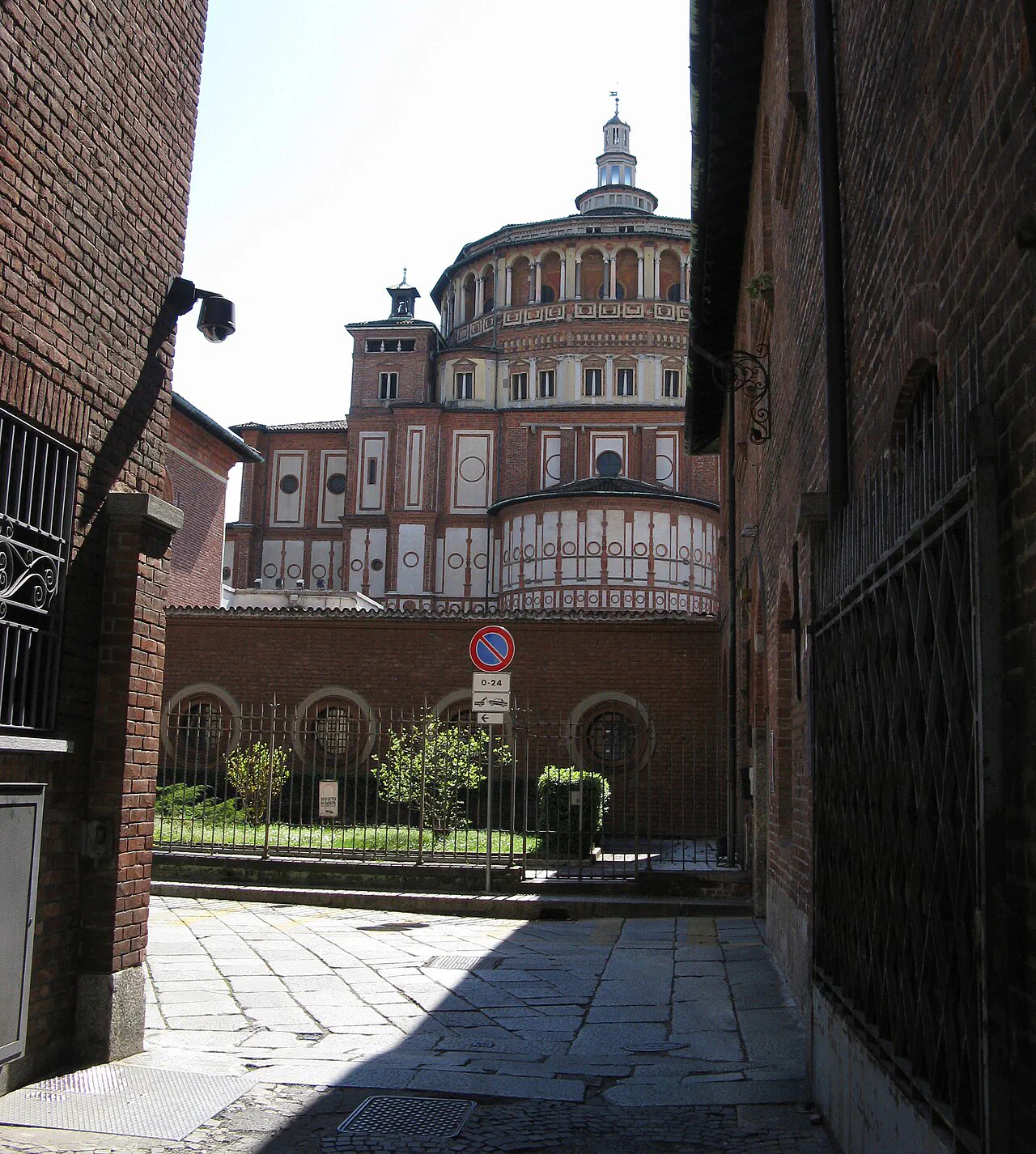
1 Leonardo’s Last Supper at Santa Maria delle Grazie
Stand here. The refectory of the convent of Santa Maria delle Grazie, now the Last Supper Museum. Visits last 15 minutes and must be booked.
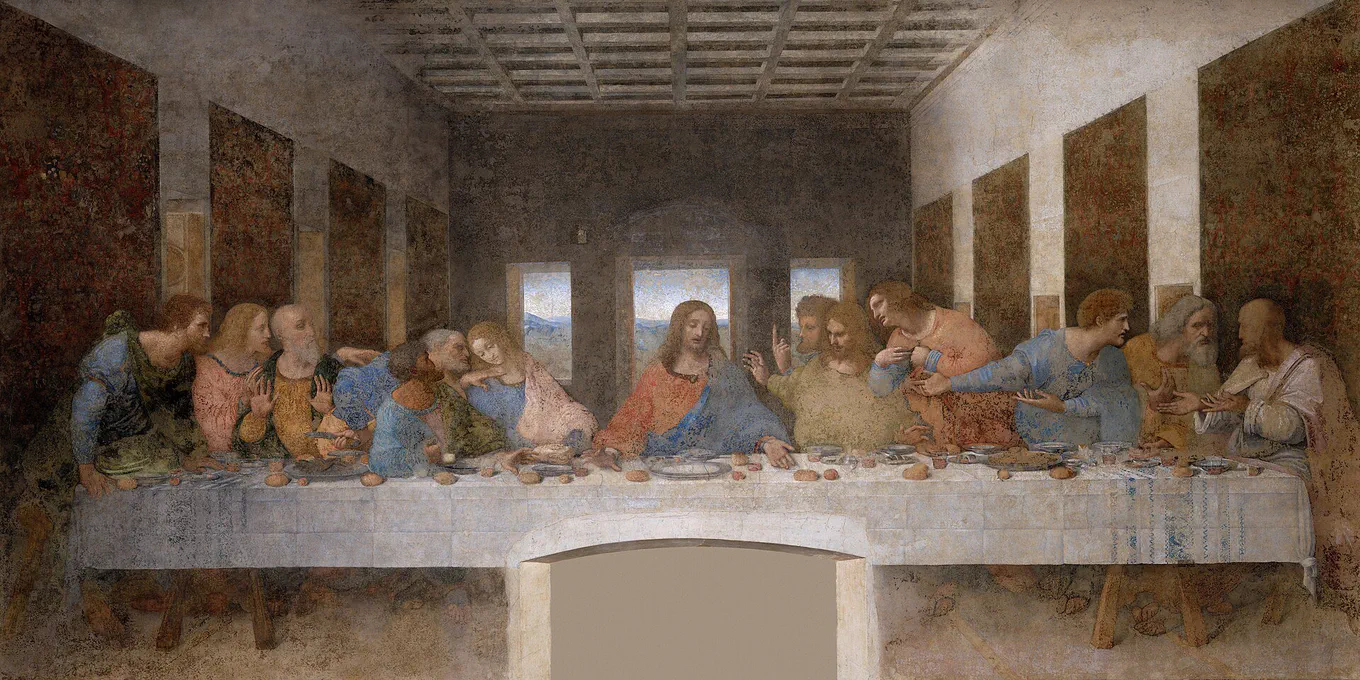
Leonardo da Vinci’s Last Supper on the refectory wall of the convent of Santa Maria delle Grazie, Milan.Leonardo da Vinci / Public domain.
When Ludovico Sforza, Duke of Milan, commissioned The Last Supper, Leonardo da Vinci wanted to take his time. He passed over traditional fresco and painted in tempera on dry plaster, so he could work slowly and keep making changes. The convent’s prior complained to the duke about his slowness, and Leonardo replied that, if he found no one else, the prior would make a suitable model. He finished on 9 February 1498. The paint soon began to deteriorate, and by 1517, with Leonardo still alive, it was flaking.
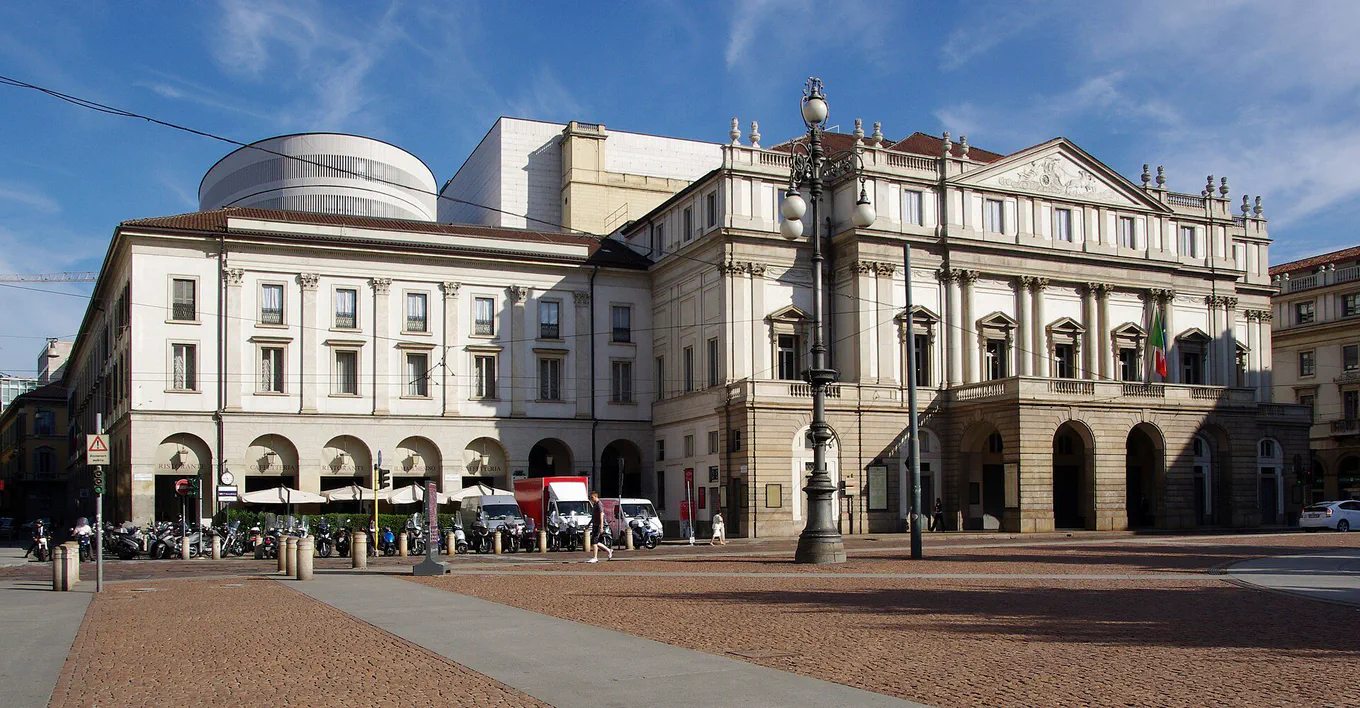
Stand here. Teatro alla Scala, on Piazza della Scala, still Milan’s opera house. It was rebuilt after bombing in 1943, and its museum is off the foyer.
“Va, pensiero”, the chorus of the Hebrew slaves, is still regularly encored, and it nearly went unwritten. Within two years, Giuseppe Verdi lost his infant children and then his wife, at 26, and his second opera was given only once. He vowed never to compose again. Then La Scala’s impresario handed him a rejected libretto. By Verdi’s own account, it fell open at one line, “Va, pensiero”. Nabucco opened here on 9 March 1842, and Verdi later called it “the opera with which my artistic career really begins”.
3 Giuseppe Mengoni and the arch of the Galleria
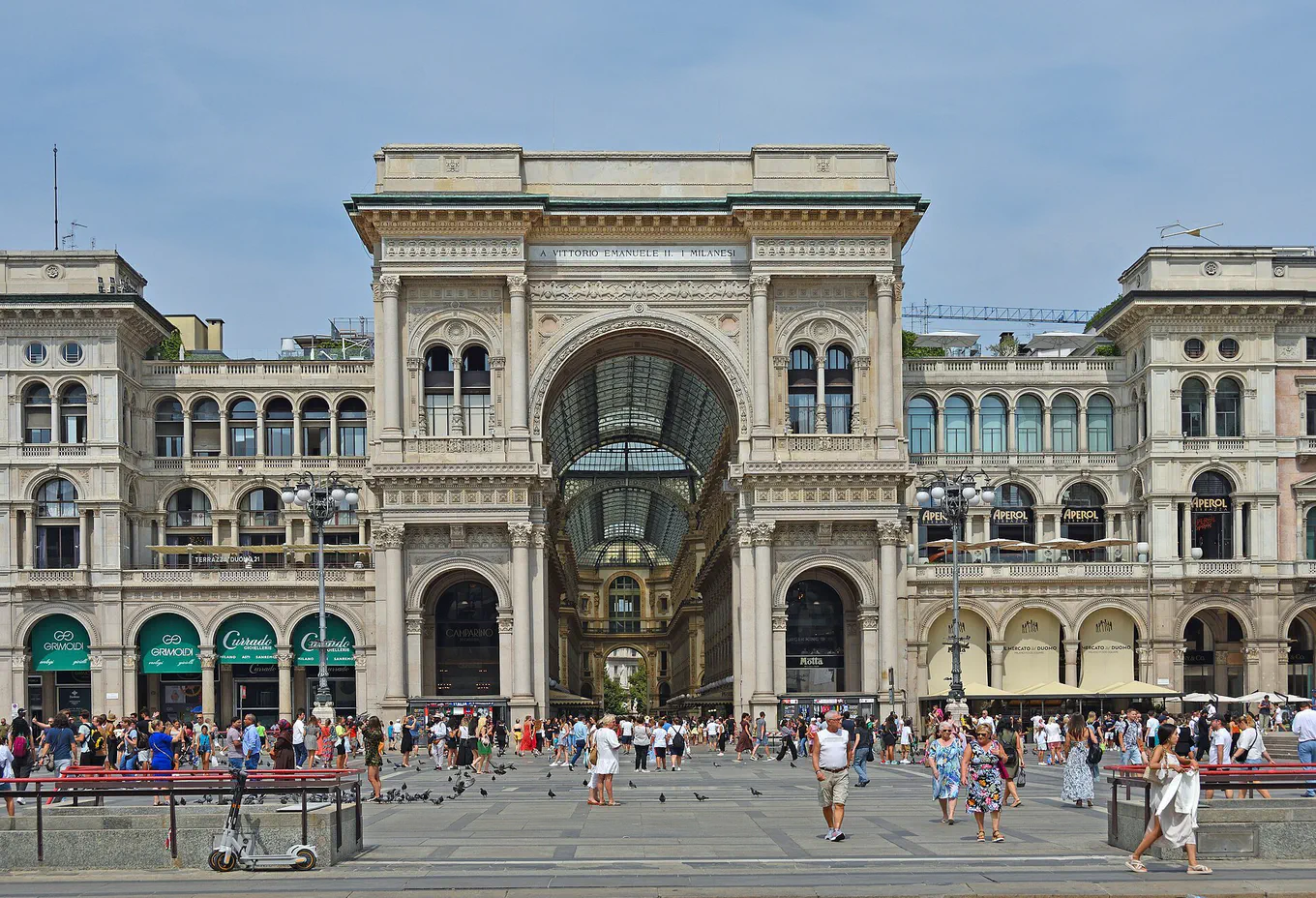
Stand here. The Galleria Vittorio Emanuele II, still a shopping arcade, between Piazza del Duomo and Piazza della Scala. Mengoni’s plaque is inside.
Milan’s Galleria Vittorio Emanuele II, the glass-roofed arcade between the cathedral square and La Scala, was Giuseppe Mengoni’s design. The English builders went bankrupt and the city took over the work. Mengoni took on the Galleria’s monumental arch himself, as contractor. On 30 December 1877, one day ahead of the handover, he made a last inspection of the finished arch, fell from the scaffolding, and died. He was 48 and just becoming known in Europe. His plaque in the Galleria calls that day “the eve of the deserved triumph”.
4 Hemingway’s Milan nurse and A Farewell to Arms
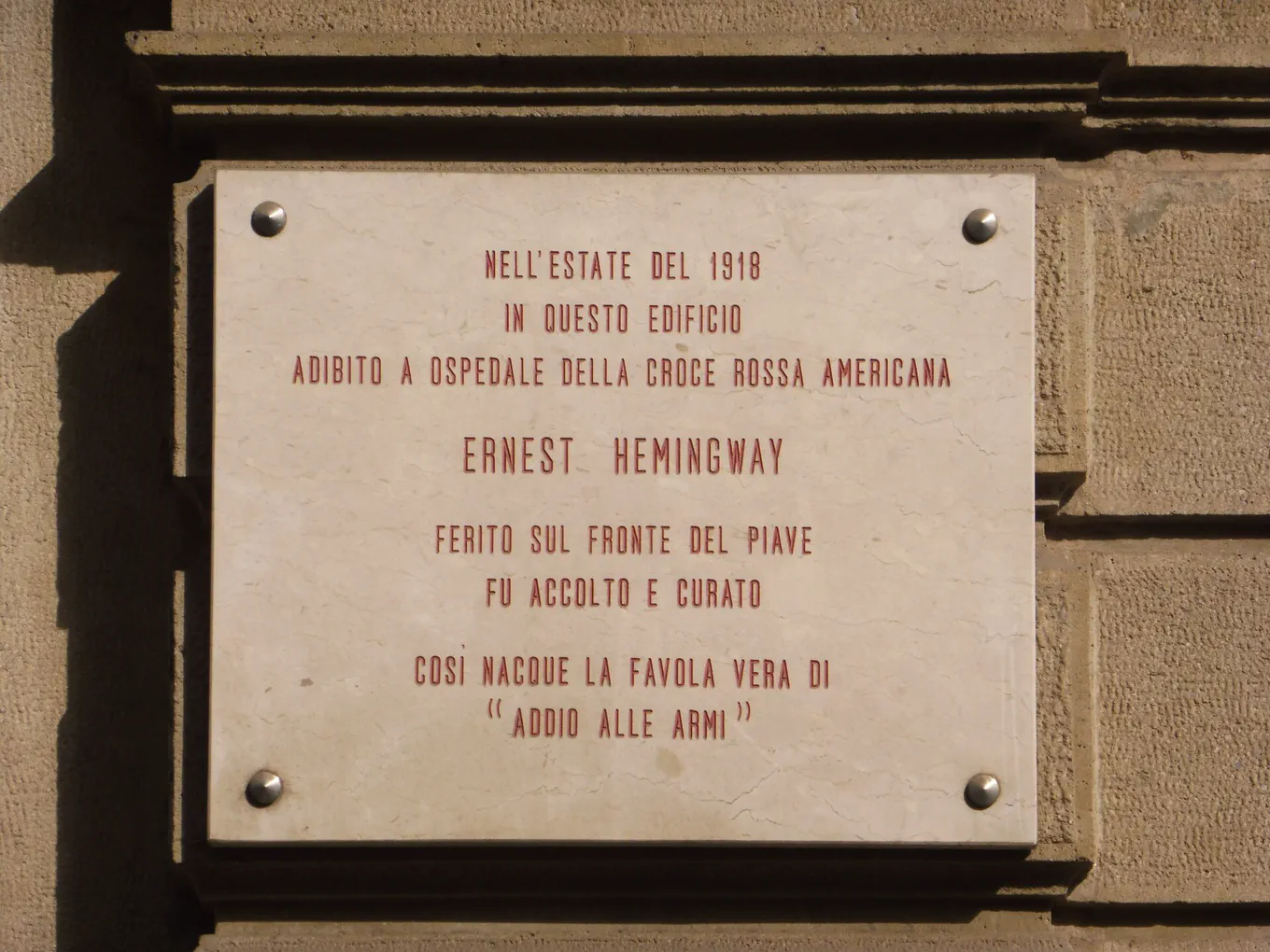
Stand here. The building in via Armorari that housed the Red Cross hospital. A plaque says “the true fable of A Farewell to Arms was born” there.
The heroine of Ernest Hemingway’s A Farewell to Arms began in this building. In 1918, Hemingway was an 18-year-old Red Cross ambulance driver, badly wounded by mortar fire at the front, and he was brought here to recover. He fell in love with his nurse, Agnes von Kurowsky, who was seven years older, and went home to Illinois believing she would follow within months and marry him. Then her letter came. She was engaged to an Italian officer, whom she never married either. Ten years later, she was Catherine Barkley.
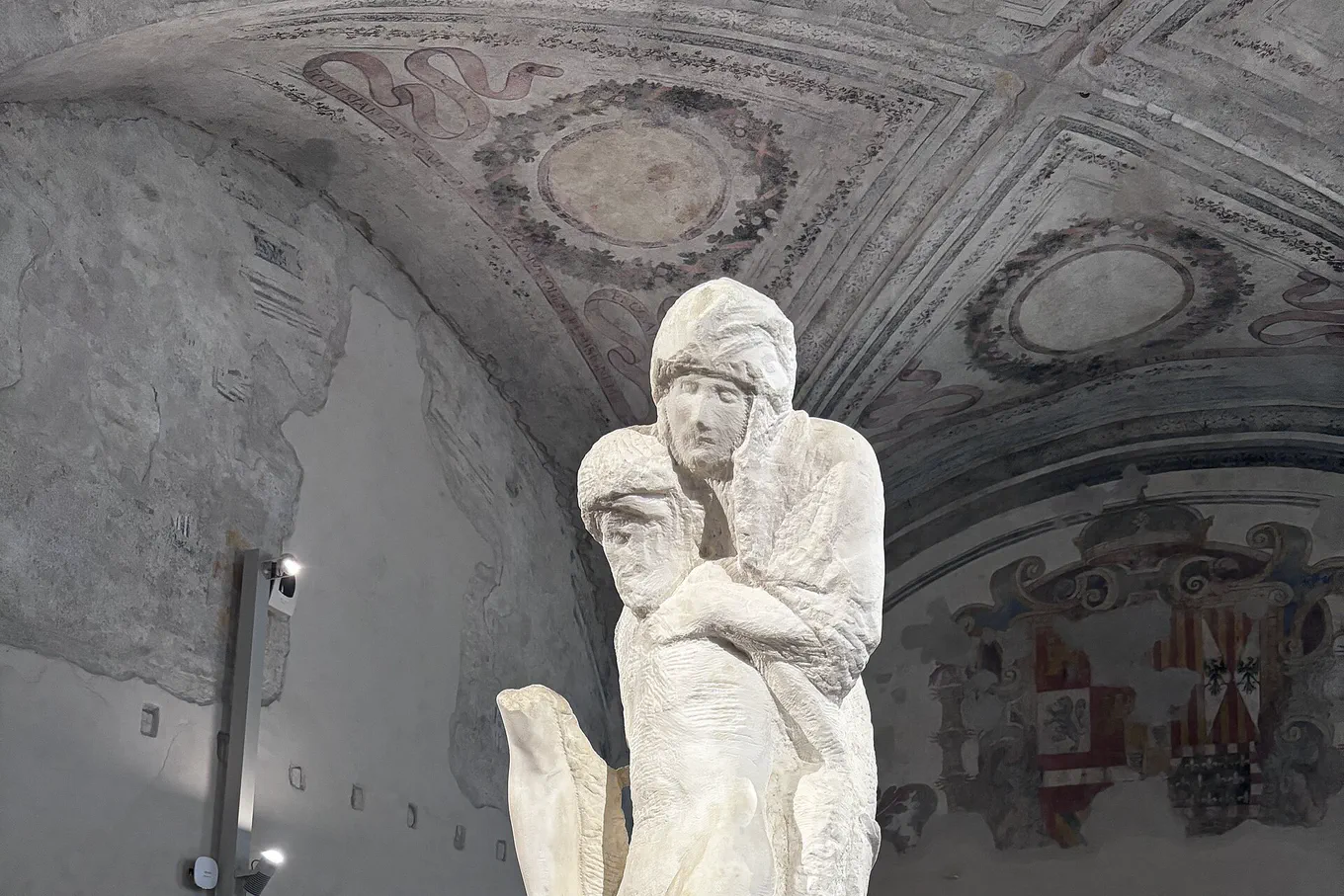
This is the last sculpture Michelangelo worked on, a Pietà he kept reworking for twelve years. He carved it back until there was no longer enough stone to finish it. A detached arm and the legs survive from an earlier version. In February 1564, six days before he died in Rome at 88, he worked on it all day. It was later listed as a statue begun for a Christ and another figure above, joined together, roughed out, and unfinished.
Pack nothing. Leave Friday.
Every Friday, I write a free letter, Journey, that takes us on a trip through places, stories, and ideas.
The Betrothed(Alessandro Manzoni, 1827). A novel. Renzo, a young silk-weaver, searches for his Lucia in Milan’s plague lazzaretto, where the church of San Carlo al Lazzaretto stands today.
A Farewell to Arms(Ernest Hemingway, 1929). A novel. Its hero, Frederic, reaches an American hospital in Milan, and its heroine was drawn from the nurse who cared for Hemingway in via Armorari.
Films to watch before you visit Milan
Miracle in Milan(Vittorio De Sica, 1951). A film. Shot mainly on a wasteland near Lambrate railway station, with Milan Cathedral as the setting for its finale.
Rocco and His Brothers(Luchino Visconti, 1960). A film. A family expects to stay with the eldest brother in Lambrate. Shot on Piazza del Duomo and at Milano Centrale station.
La Notte(Michelangelo Antonioni, 1961). A film. Shot on location in Milan, with the hospital at Via Lanzone 4 and the couple’s apartment at Via Gustavo Fara 20.
I Am Love(Luca Guadagnino, 2009). A film. A drama set in Milan around 2000, with many scenes shot at Villa Necchi Campiglio, a 1930s mansion in the city’s heart.
Questions
Can you see Leonardo’s Last Supper in Milan?
Yes. It is still on the refectory wall of Santa Maria delle Grazie, now the Last Supper Museum. For conservation reasons, visitors see it in small groups, for a few minutes at a time.
Why do people spin on the bull in the Galleria Vittorio Emanuele II?
For luck. The Galleria’s floor has mosaics of the coats of arms of Turin, Florence, Rome, and Milan. Tradition says that spinning around three times with a heel on the testicles of Turin’s bull brings good luck, and a hole has worn into the floor there.
How long did Milan Cathedral take to build, and can you go on the roof?
Nearly six centuries. Work began in 1386, and the final details were finished in 1965. The roof is open to visitors for a fee, reached on foot or by lift, and it gives close-up views of sculpture that would otherwise go unnoticed.