Mombasa is a coastal city in south-eastern Kenya, on the Indian Ocean, centred on Mombasa Island. Dating from about AD 900, it is Kenya’s oldest city, and it was the first capital of British East Africa until 1907. Its stories here are tusks for a princess, a sultan who turned on Fort Jesus, a siege that came down to eleven defenders, a one-man protectorate, and a lonely grave.
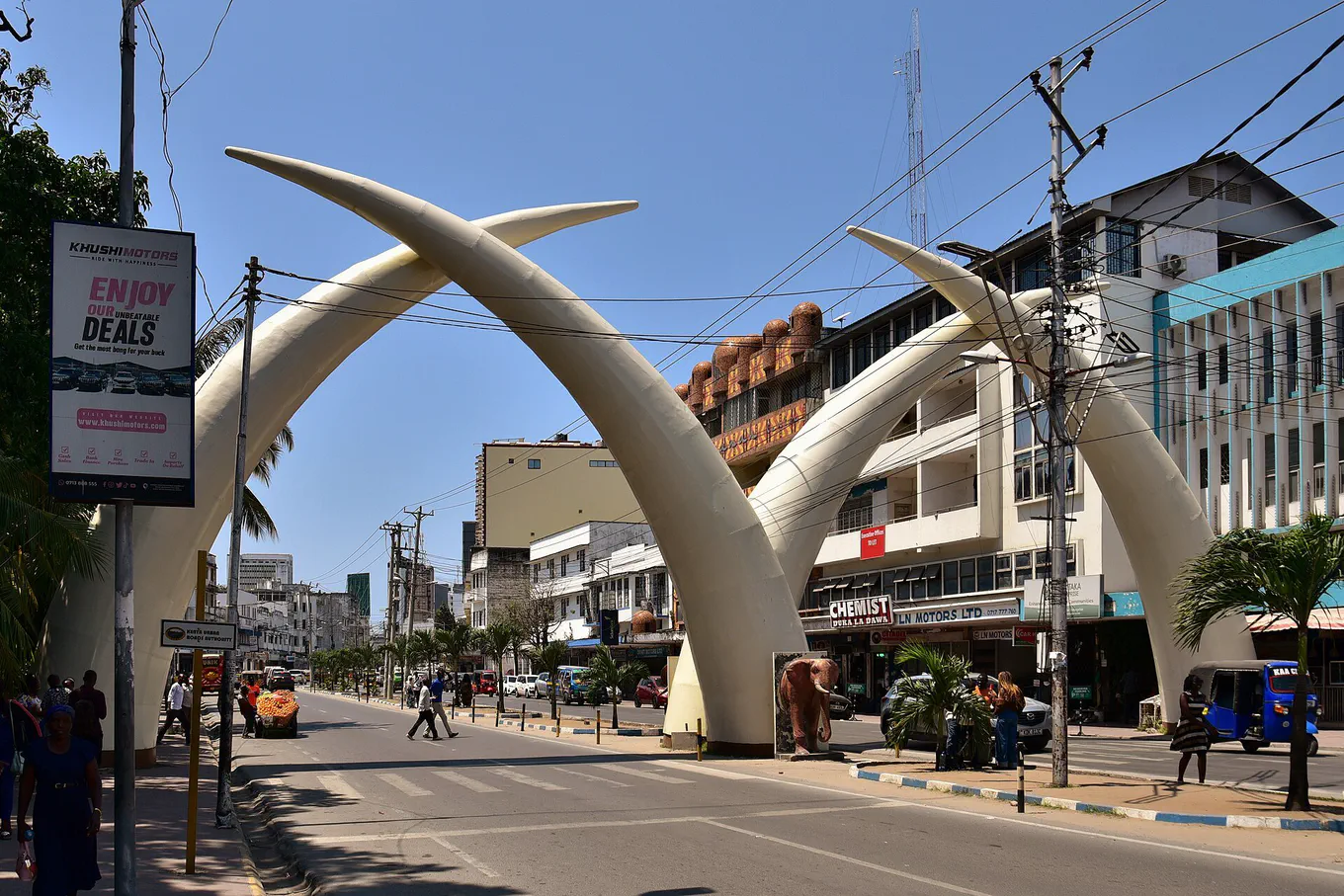
Mombasa’s tusks began in 1952 as a welcome for Princess Elizabeth, who became Queen Elizabeth II that year. The municipal council heard she would pass from the airport to the yachting club, and tusks of wood and canvas went up over Kilindini Road, meant to be temporary. In 1956, the council had a new set made, partly for her sister Margaret’s visit. A welcome built to come down became Mombasa’s M.
Schooled by the Augustinians in Goa, Yusuf ibn al-Hasan was crowned King of Mombasa, Malindi, and Pemba there, in a special ceremony. But on 15 August 1631, he gathered about 300 followers. The captain received him without suspicion. Yusuf killed him, his followers attacked the Portuguese in the fort, and more than 150 Portuguese men, women, and children died. When the Portuguese sent a fleet, he turned pirate. Seven years later, pirates robbed and murdered him in the Red Sea.
3 The last eleven defenders of Fort Jesus
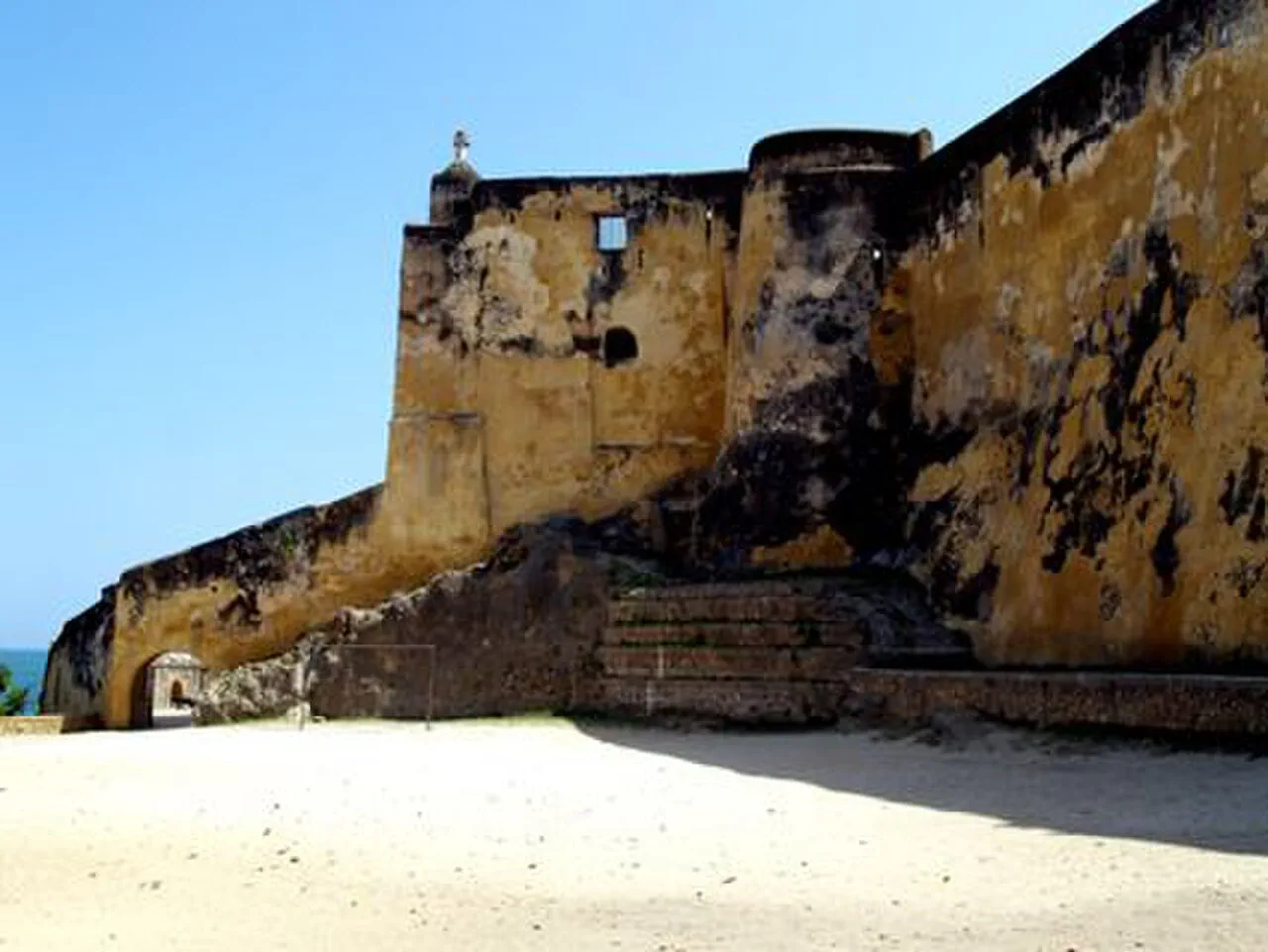
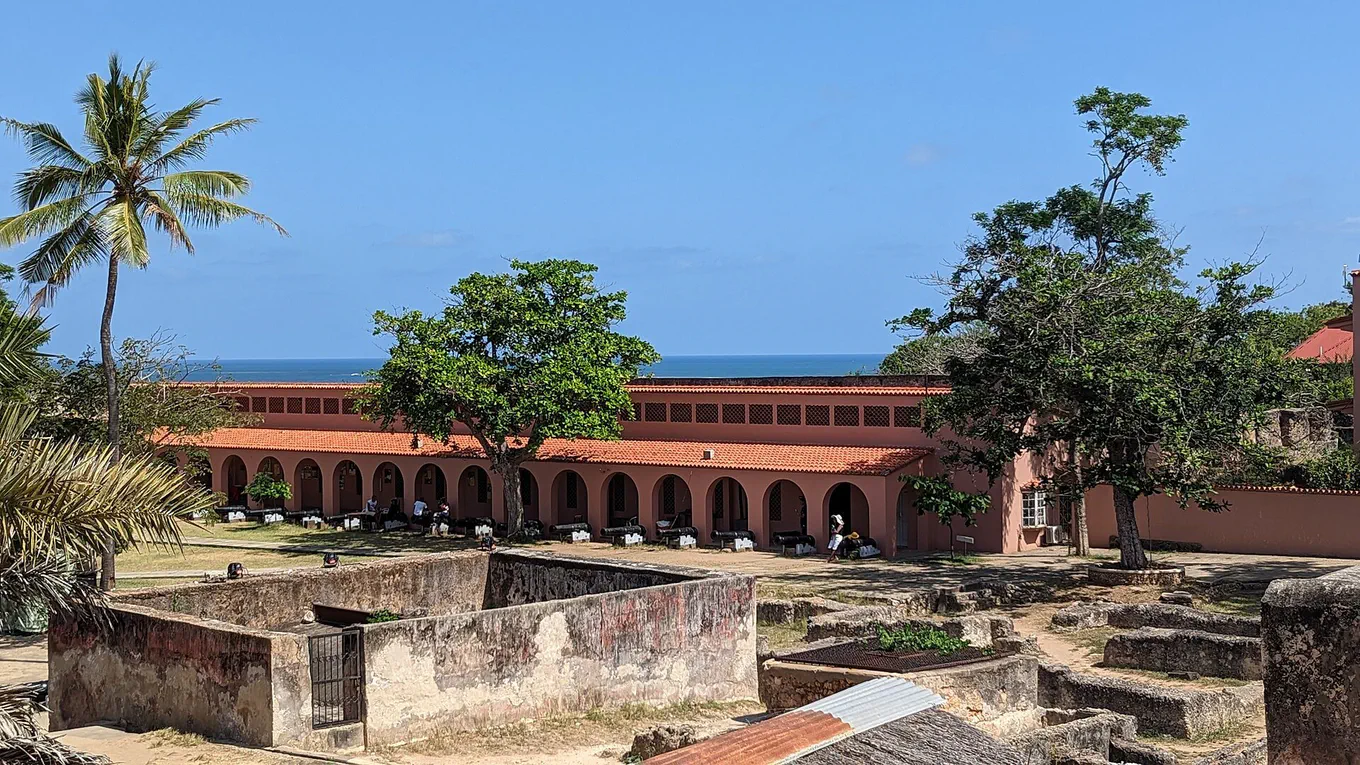
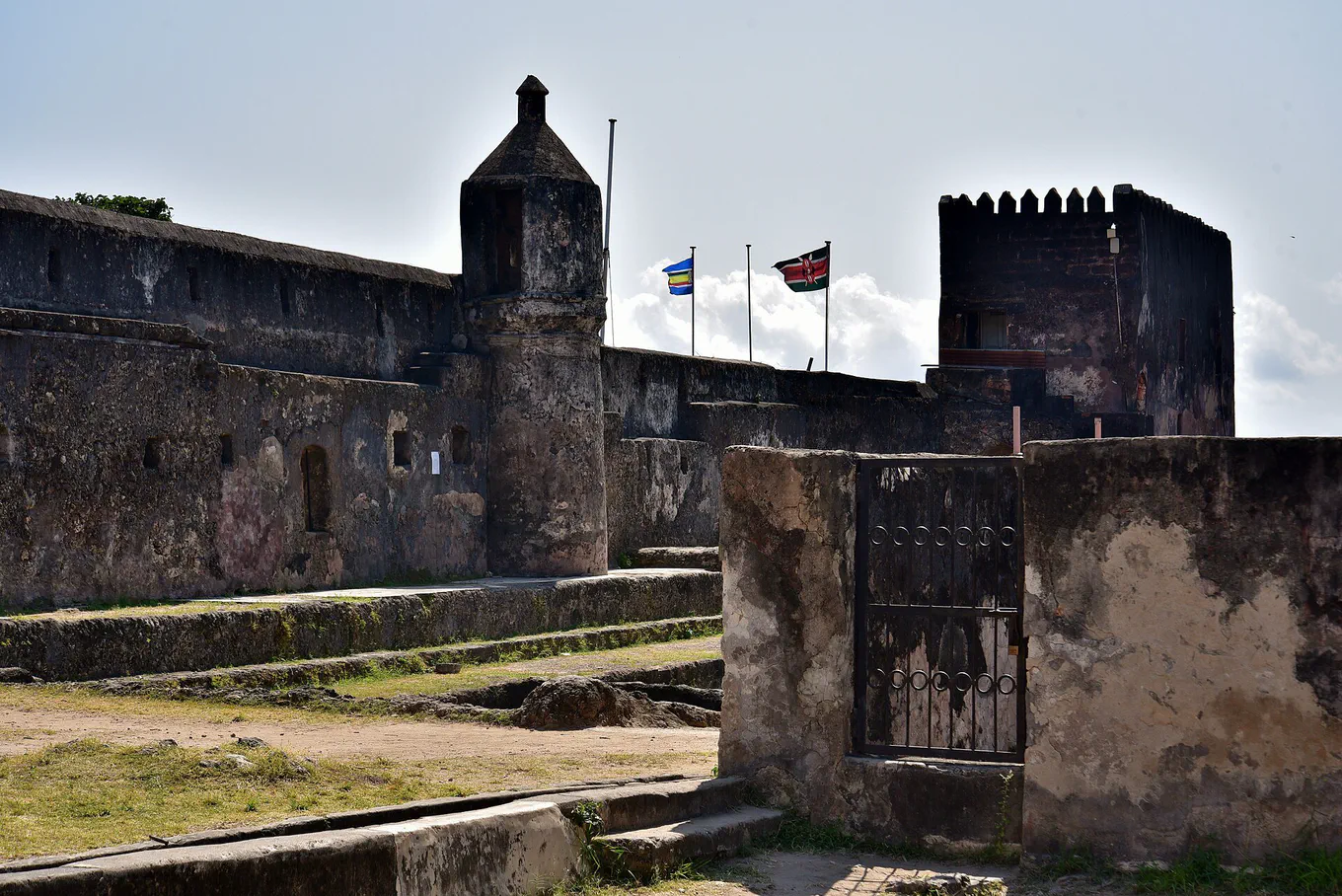
Stand here. Fort Jesus, a UNESCO World Heritage Site since 2011. A relief frigate wrecked at Mombasa in 1697 was excavated in 1977–1979.
In March 1696, an Omani army besieged Fort Jesus, held by 50 to 70 Portuguese soldiers and several hundred African slaves. Hunger and disease thinned them, and the defence fell to Sheikh Daud of Faza, with seventeen of his family, eight African men, and fifty African women. By December 1698, only the fort’s captain, nine men, and a priest were left. On 13 December, the Omanis took the fort. Seven days later, by one account, a Portuguese relief fleet arrived to find it lost.
4 Captain Owen’s one-man protectorate at Leven House
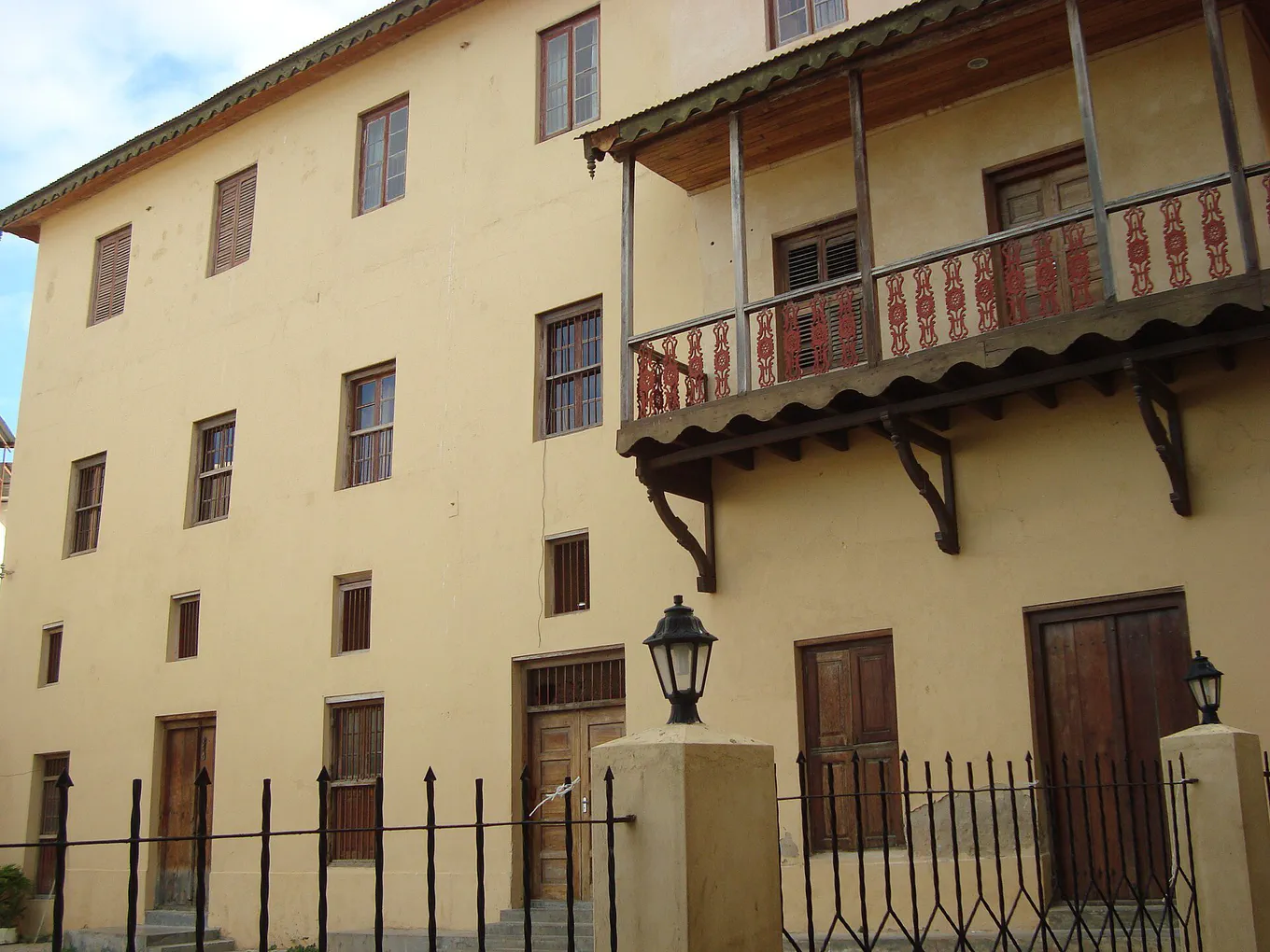
Stand here. Leven House, beside the Old Port in the Old Town. A larger building replaced the house Owen’s officers rented, and is a national monument.
Captain William Fitzwilliam Owen spent five years mapping the east African coast in the survey sloop Leven, and in 1824 the ship docked on this coast. Owen wanted to disrupt the slave trade, so he made Mombasa a one-man protectorate. His officers ran the town from a house they rented by the Old Port, and one of them built a tunnel from it to the jetty. But after about three years, the Crown ordered Owen to shut the protectorate down. Leven House still bears his ship’s name.
5 Rosine Krapf’s lonely grave in Mombasa
Stand here. The Krapf Memorial at Mkomani, on the mainland, where Rosine Krapf and her daughter are buried. The National Museums of Kenya restored it.
Within months of reaching Mombasa in 1844, the German missionary Ludwig Krapf had lost his wife, Rosine, and their newborn daughter, who both died in Leven House by the Old Port. Dying, Rosine asked to be buried on the mainland, beside a road the Wanika people often passed, so that her grave would remind them why she and her husband had come. Krapf stayed, and wrote to the Church Missionary Society that a lonely grave on the East African coast was a sign the struggle had begun.
Pack nothing. Leave Friday.
Every Friday, I write a free letter, Journey, that takes us on a trip through places, stories, and ideas.
The House of Rust(Khadija Abdalla Bajaber, 2021). A novel. A fabulist coming-of-age story set in Mombasa, with glimpses of Sparki, where the hero lives, and a crow flying over Old Town.
The Idol of Mombasa(Annamaria Alfieri, 2016). A mystery novel set in 1912, when newlyweds Vera and Justin Tolliver return to East Africa and Justin is posted to the port of Mombasa.
Son of Woman in Mombasa(Charles Mangua, 1986). A novel, the sequel to the bestselling Son of Woman. In it, the Son of Woman comes out of jail and moves to Mombasa to start afresh.
Films to watch before you visit Mombasa
Paradise: Love(Ulrich Seidl, 2012). A film about a 50-year-old Austrian woman who travels to Kenya as a sex tourist. Its hotel is the Flamingo Beach Resort & Spa Mombasa.
Watatu(Nick Reding, 2015). A film set in Mombasa about extremism on the Kenyan coast. It becomes a documentary, and its ending was written entirely by the citizens of Mombasa.
Mizani(Daudi Anguka, 2026). A TV crime drama set and filmed in Mombasa. A struggling journalist’s young daughter is kidnapped by an organ trafficking syndicate operating in the city.
Questions
Who built Fort Jesus in Mombasa?
The Portuguese built it between 1593 and 1596 to protect the port of Mombasa, to a design by Giovanni Battista Cairati. They lost it to Yusuf ibn al-Hasan in 1631, and to an Omani army in 1698. It was declared a national museum in 1958, and a UNESCO World Heritage Site in 2011.
Where is Rosine Krapf buried?
At the Krapf Memorial in Mkomani, Mombasa, on the mainland, as she wished. She died in 1844, soon after she and her husband, the missionary Ludwig Krapf, reached Mombasa. Their second daughter, who died a few days after birth, is buried there too. The National Museums of Kenya has restored the memorial.
Was Mombasa ever the capital of Kenya?
It was the first capital of British East Africa, before Nairobi was made the capital in 1907. Mombasa is also Kenya’s oldest city, dating from about AD 900, and it was where construction of the Uganda Railway began, in 1896.