Monrovia, the capital and largest city of Liberia, lies on the Cape Mesurado peninsula, between the Atlantic Ocean and the Mesurado River. It was founded in 1822 by the American Colonization Society as a settlement for freed Black Americans. Its stories are a pistol that, by one account, was held at a king’s head, a settler’s legendary pipe, a preacher’s church, women in white at a fish market, and a footballer who became president.
1 Robert Stockton’s pistol and Providence Island, Monrovia
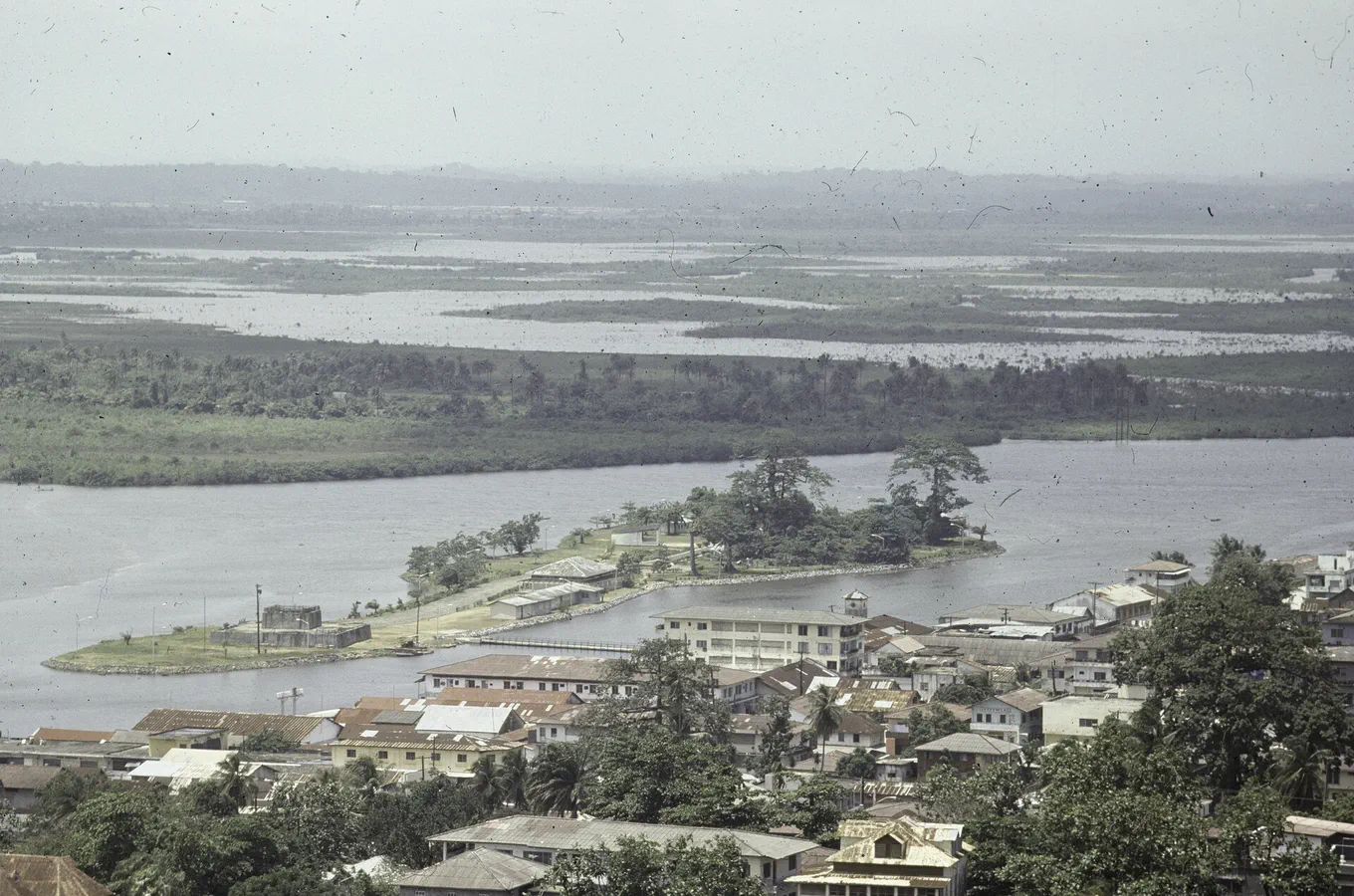
Stand here. Providence Island, between the Mesurado River and Stockton Creek in the heart of Monrovia. Excavations there recovered thousands of artefacts.
Monrovia began on this island, where freed Black Americans landed in 1822, on land a United States Navy officer, Robert Stockton, had secured for them. The American Colonization Society sent him after disease on Sherbro Island killed many settlers and all three agents. By one account, Stockton persuaded King Peter to sell by levelling a pistol at the king’s head. Others say the guns were only present. But the chiefs believed they had only lent the land, and conflict followed.
2 Matilda Newport’s pipe and the cannon at Cape Mesurado
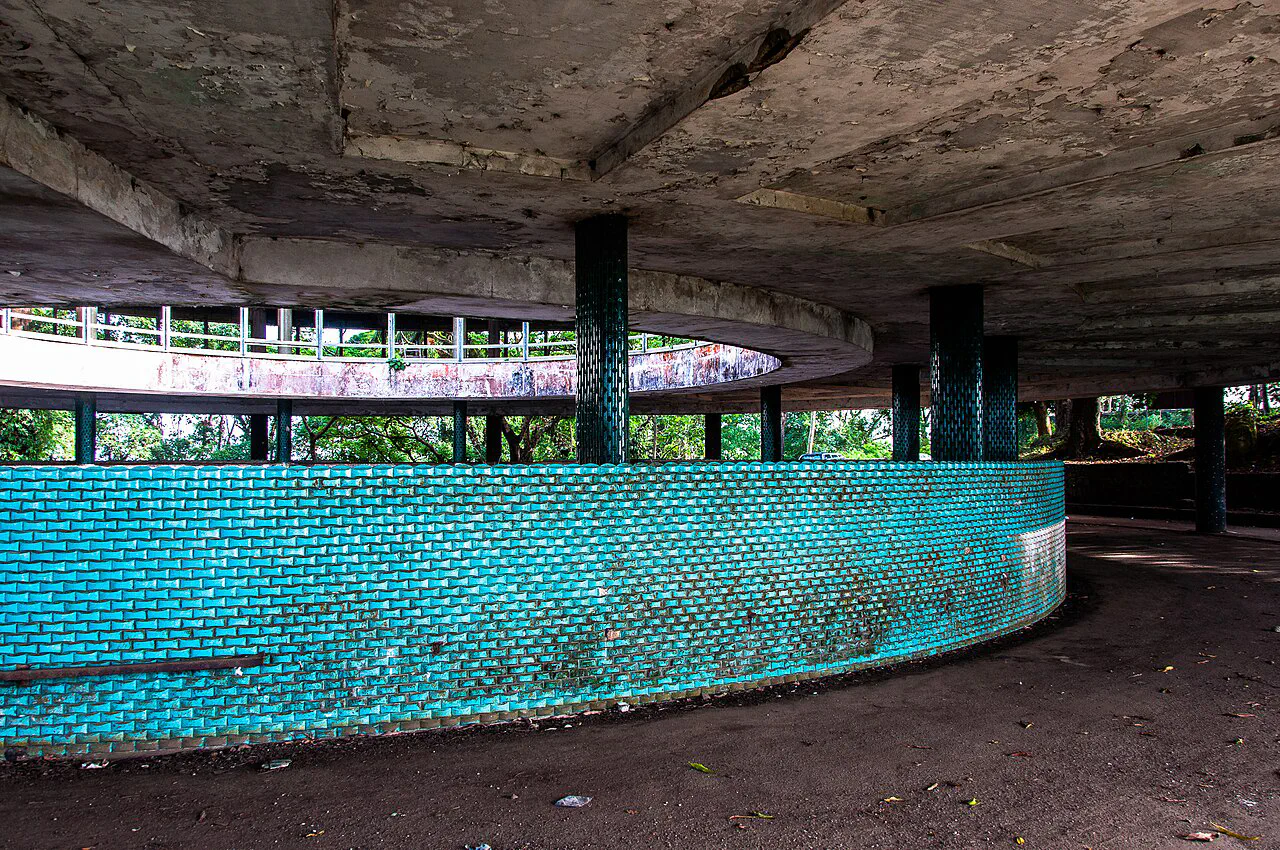
Stand here. The Centennial Pavilion in Monrovia. A bronze plaque there shows Matilda Newport, a settler from the United States, with the cannon.
The story goes that on 1 December 1822, as the Dei, Bassa, and Gola attacked, Matilda Newport saw the settlement’s gunners were dead or wounded. She lit a cannon with a hot coal from her pipe, and the blast turned the battle. No account of the battle mentions women defending the colony, and her part first appears in 1854. Even so, from 1916 Liberia kept 1 December as Matilda Newport Day. Then criticism of settler rule grew, and the soldier Samuel Doe, after his 1980 coup, abolished her day.
3 Lott Cary and Providence Baptist Church, Monrovia
Stand here. Providence Baptist Church, at Broad, Center, and Ashmun Streets. Its 1839 building is Liberia’s oldest permanent building, a national shrine since 1975.
Liberia’s Declaration of Independence was signed in this church in 1847, but Lott Cary, who founded the church, was long dead. Born enslaved in Virginia, he saved at least $850 to free himself and his two children. He wanted to go, he said, “to a country where I shall be estimated by my merits, not by my complexion.” He sailed for Africa in 1821. In 1828, he took charge of the colony. That November, gunpowder exploded as he prepared munitions. He died two days later and was buried in an unmarked grave.
4 Leymah Gbowee’s women in white at Monrovia’s fish market
Stand here. The fish market lawn beside Tubman Boulevard, which President Charles Taylor’s motorcade passed twice a day in 2003, to and from Capitol Hill.
Leymah Gbowee, whose peace movement the documentary Pray the Devil Back to Hell follows, says she dreamed God told her, “Gather the women and pray for peace!” In 2003, Christian and Muslim women in white began praying and singing here every day, within sight of President Charles Taylor’s residence. On 23 April, Taylor gave them a hearing and promised to attend peace talks in Ghana. There, the women sat linking arms at the doors of the talks, refusing to let delegates leave. That August, Taylor resigned and went into exile.
5 George Weah, from Clara Town to Liberia’s presidency
Stand here. Clara Town, a neighbourhood on Bushrod Island, north of central Monrovia, where George Weah grew up and began playing for Young Survivors.
George Weah was the first African player to win the Ballon d’Or, and he grew up here, raised largely by his grandmother. Arsène Wenger signed him for Monaco in 1988, and he joined AC Milan in 1995. In 2005, he ran for president and lost the run-off to Ellen Johnson Sirleaf. In 2017, he won the run-off, and in January 2018 he was sworn in at a stadium near the city. It was Liberia’s first peaceful handover between elected presidents since 1944.
Pack nothing. Leave Friday.
Every Friday, I write a free letter, Journey, that takes us on a trip through places, stories, and ideas.
The Dragons, the Giant, the Women(Wayétu Moore, 2020). A memoir. Moore was five years old in 1990, when the civil war forced her family to suddenly evacuate their home in Monrovia, walking for three weeks.
The Darling(Russell Banks, 2004). A historical novel. In 1975, Hannah moves to Monrovia, where she meets and eventually marries the Minister of Public Health, Woodrow Sundiata.
Mighty Be Our Powers(Leymah Gbowee, 2011). A memoir by the woman who led thousands of Christian and Muslim women to gather in Monrovia for months, finally occupying a field beside Tubman Boulevard.
Films to watch before you visit Monrovia
Pray the Devil Back to Hell(Gini Reticker, 2008). A documentary film about how Leymah Gbowee organised the Christian and Muslim women of Monrovia to pray for peace and to organise nonviolent protests.
Liberia: An Uncivil War(Jonathan Stack and James Brabazon, 2004). A documentary film. In the summer of 2003, as rebels close in on Monrovia, Jonathan Stack interviews Charles Taylor in the city while James Brabazon travels with the rebels.
Questions
Why is Monrovia called Monrovia?
It is named after James Monroe, who was president of the United States in 1824, when the city was renamed. Members of the American Colonization Society founded the settlement in April 1822, and for its first two years it was called Christopolis.
Where was Liberia’s Declaration of Independence signed?
At Providence Baptist Church, at Broad, Center, and Ashmun Streets in Monrovia, in 1847. The building, put up in 1839, is Liberia’s oldest permanent building and the oldest Baptist church building in Africa.
Where did the first settlers land in Monrovia?
On Providence Island, between the Mesurado River and Stockton Creek, in the heart of the city. Freed Black Americans landed there in 1822, and the settlement grew into Monrovia. Robert Stockton, a United States Navy officer, negotiated the treaty for the land in December 1821. Excavation on the island recovered thousands of artefacts.