Shout out to Ubisoft Montreal for Assassin’s Creed, although I feel shallow that I’ve got nothing better in my head to put here.
— Nick
Founded in 1642 as Ville-Marie, Montreal covers most of an island where the Saint Lawrence and Ottawa rivers meet, in Quebec, Canada. It is the largest mainly French-speaking city in the Americas. John Lennon in bed for peace shares the city with a scoreboard that couldn’t show a 10, Leonard Cohen’s walks past the Sailors’ Church, a student’s thesis that became homes, and the first recorded indoor hockey game.
1 John Lennon’s bed-in at the Queen Elizabeth Hotel
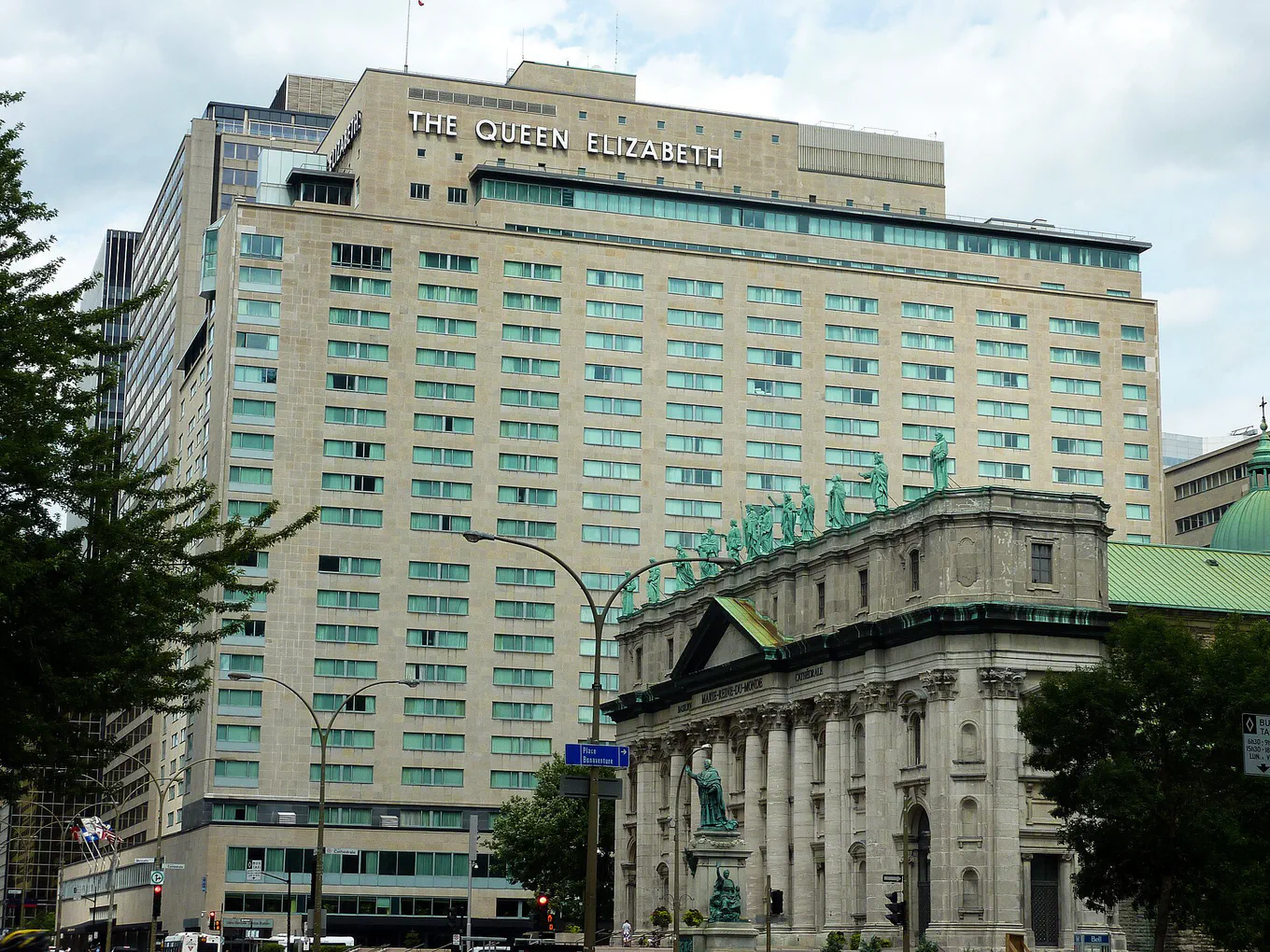
Stand here. Room 1742 of the Queen Elizabeth Hotel, 900 René-Lévesque Boulevard West. Reopened in 2017 after a renovation, with relics of 1969, it’s still a hotel room.
“Give Peace a Chance” was recorded in this room on 1 June 1969. John Lennon and Yoko Ono had spent their honeymoon in bed in Amsterdam, with the press invited in, and planned a second bed-in for New York. But Lennon’s cannabis conviction kept him out of the United States, and one hot night in the Bahamas was enough. So they flew to Montreal, close to the New York press. Lennon kept telling reporters, “Just give peace a chance.” Everyone there sang it, except one hostile guest.
2 Nadia Comăneci’s perfect 10 at the Montreal Forum
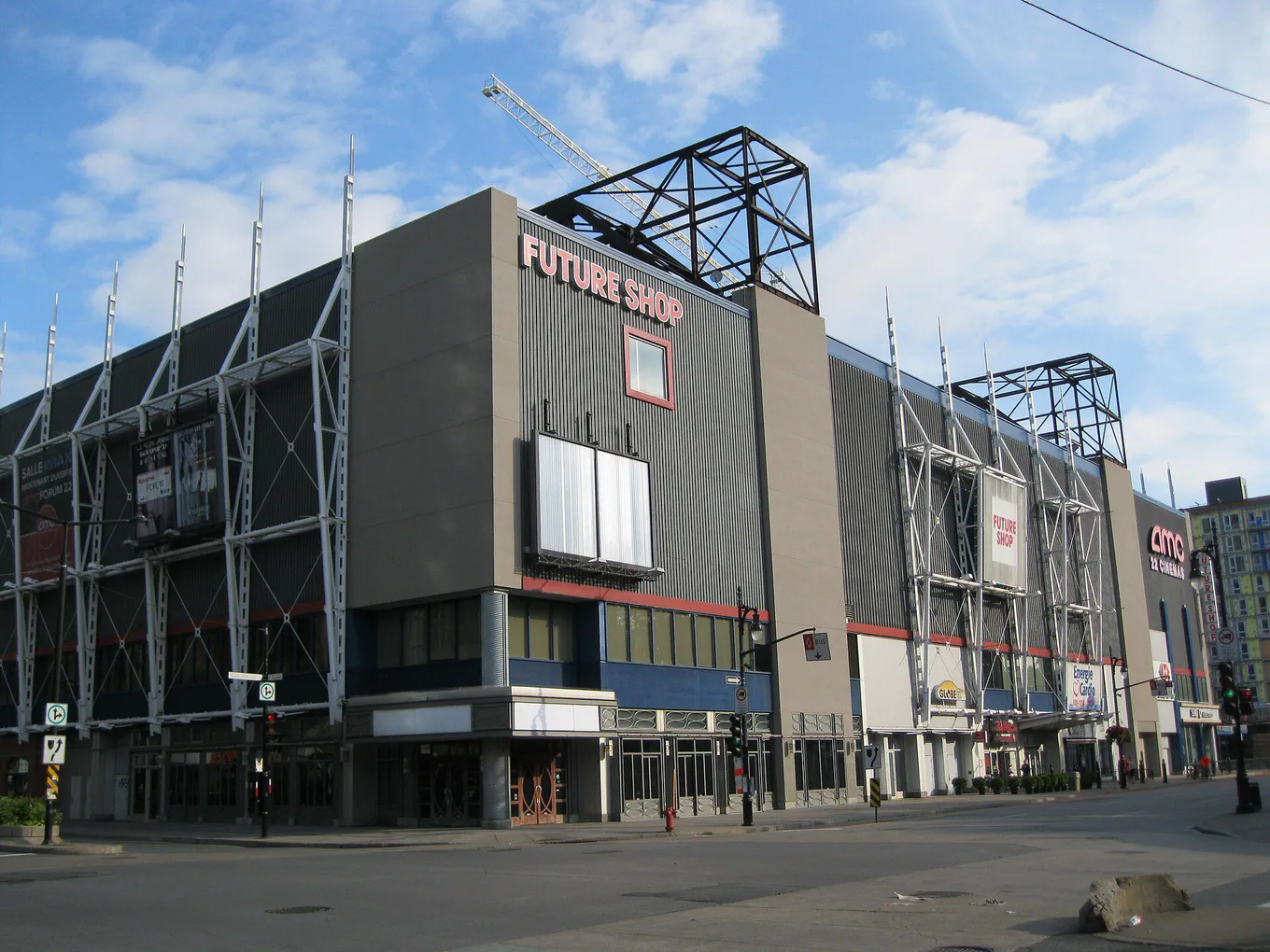
Stand here. The Montreal Forum, at Atwater and Sainte-Catherine Street West. Once the Canadiens’ hockey arena, it’s now mostly a cinema, and a National Historic Site.
In 1976, Nadia Comăneci, a 14-year-old Romanian gymnast, scored the first perfect 10 in Olympic gymnastics, on the uneven bars in this arena. By the end of the Games she had six more 10s and three gold medals. But Omega, which made the scoreboard, had been led to believe no gymnast could ever score 10, and hadn’t programmed the board to show one. So the first perfect 10 in Olympic history went up on the board as 1.00.
3 Leonard Cohen’s Suzanne and the Sailors’ Church in Old Montreal
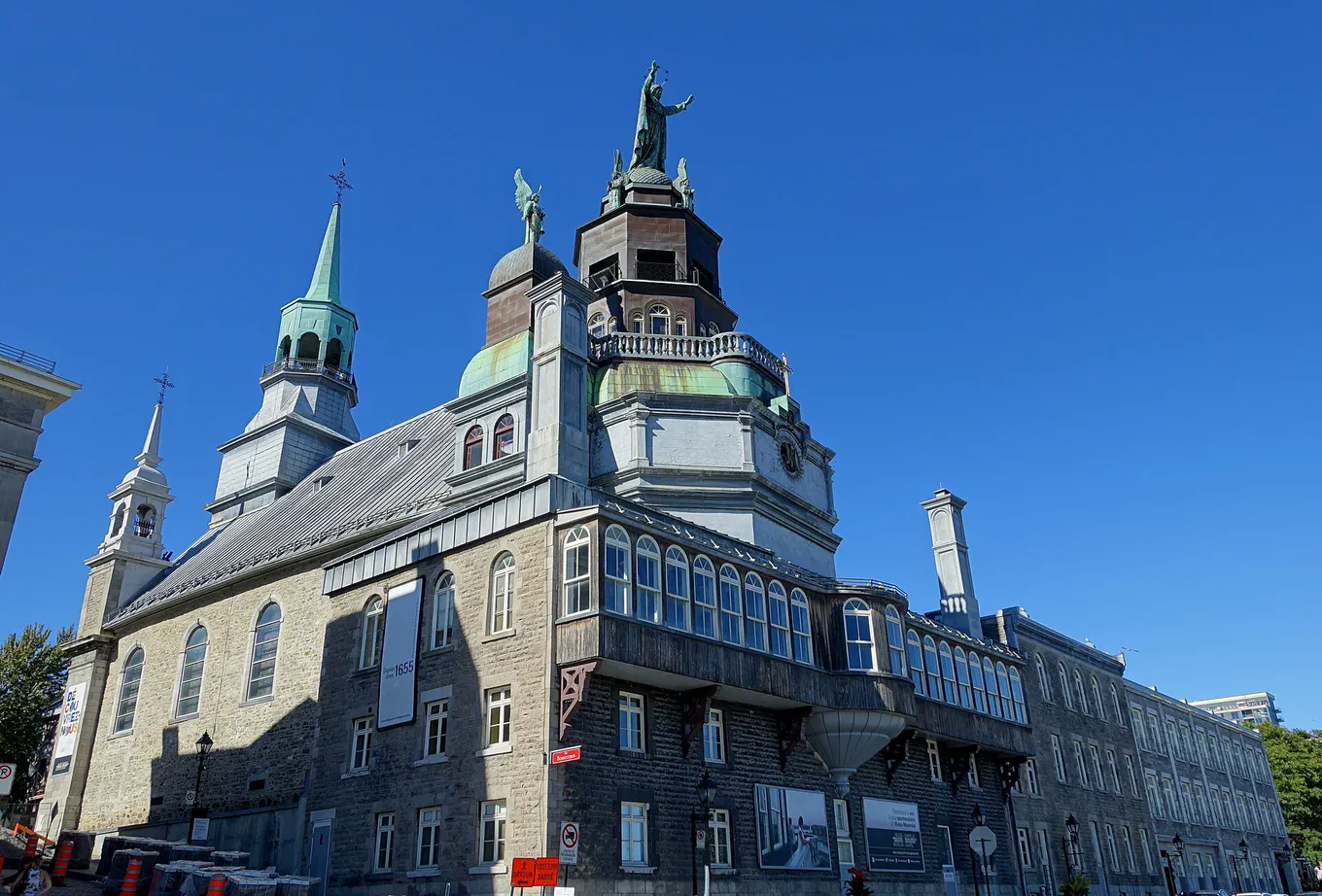
Stand here. Notre-Dame-de-Bon-Secours Chapel, the Sailors’ Church, on rue Saint-Paul Est in Old Montreal. A statue of the Virgin on its roof overlooks the harbour.
The harbour side of Notre-Dame-de-Bon-Secours Chapel in Old Montreal, crowned by its statue of the Virgin.Daderot / Public domain.
Leonard Cohen’s “Suzanne” grew out of his friendship with a dancer, Suzanne Verdal, who walked with him around Old Montreal, past this chapel. She served him Constant Comment tea at her place by the harbour, and Cohen said its orange rind gave him the song’s “tea and oranges”. Judy Collins recorded the song in 1966. Cohen said he was duped out of the rights, and was glad, because a song so loved shouldn’t make him rich. Verdal never made money from it. She says they were never lovers. Cohen said he imagined the affair.
4 Moshe Safdie’s student thesis that became Habitat 67
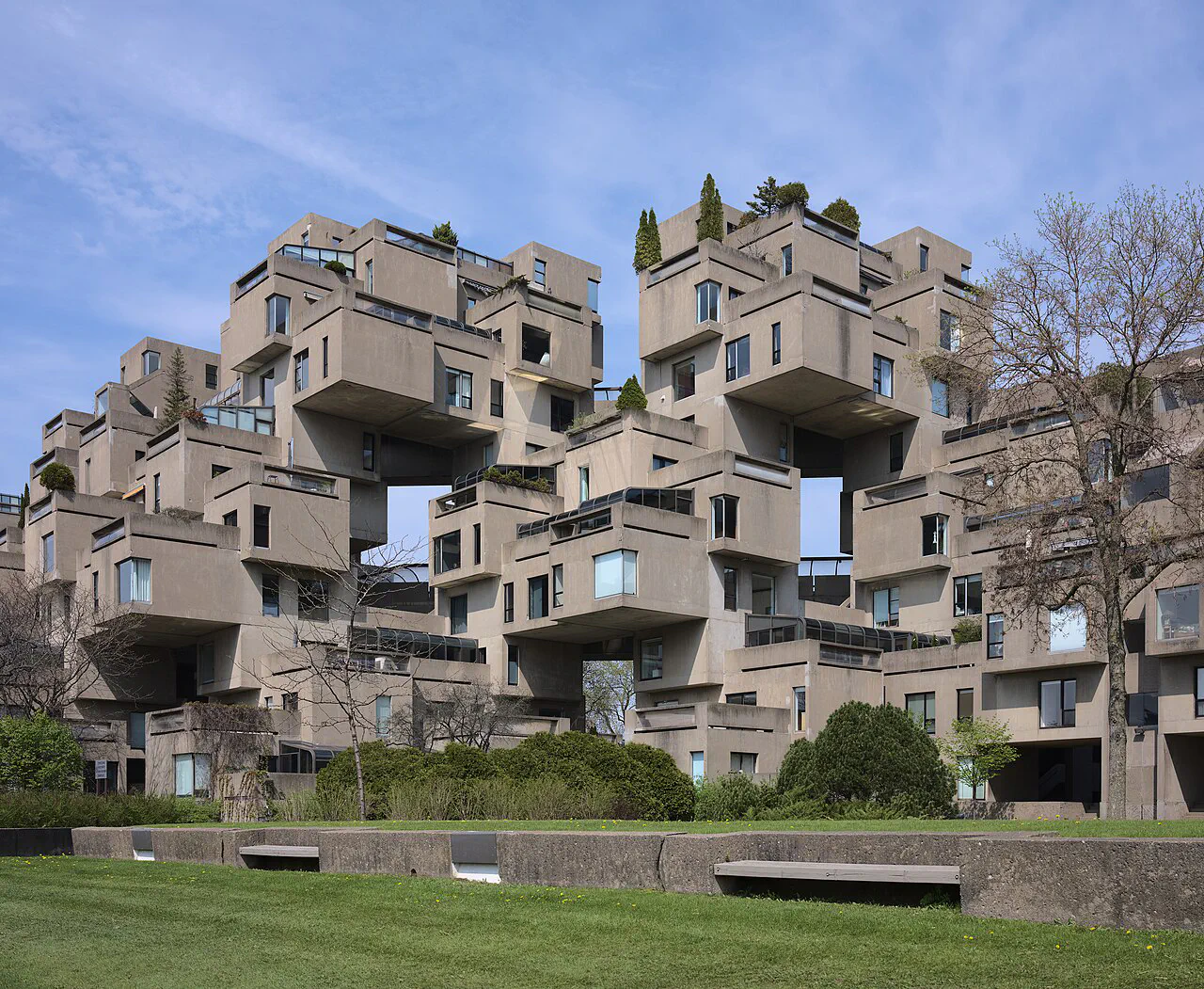
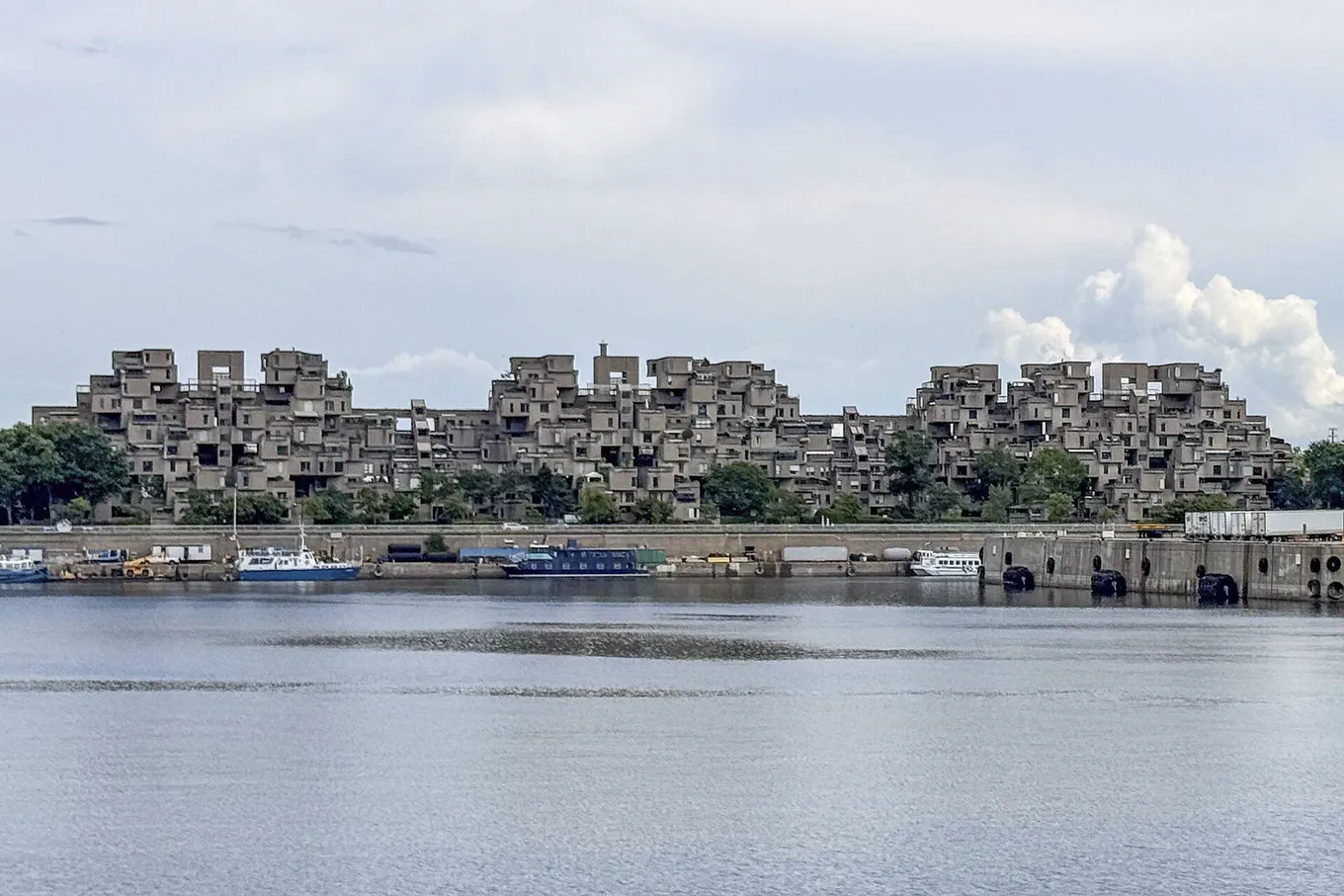
Stand here. Habitat 67, on Avenue Pierre-Dupuy beside the Saint Lawrence. Still private homes, with 90-minute guided tours that include Safdie’s own unit.
Habitat 67 began as Moshe Safdie’s student thesis at McGill and was built for Expo 67, the 1967 World’s Fair. Safdie wanted to give city dwellers the garden, fresh air, and privacy of a suburban house at the density of an apartment block. He won the job despite his youth and inexperience, and planned 1,200 homes. But he could only raise money for 158, stacked from identical concrete forms, each with its own garden terrace. Just before it opened, Safdie moved in with his young family.
5 James Creighton’s first recorded indoor hockey game at the Victoria Rink
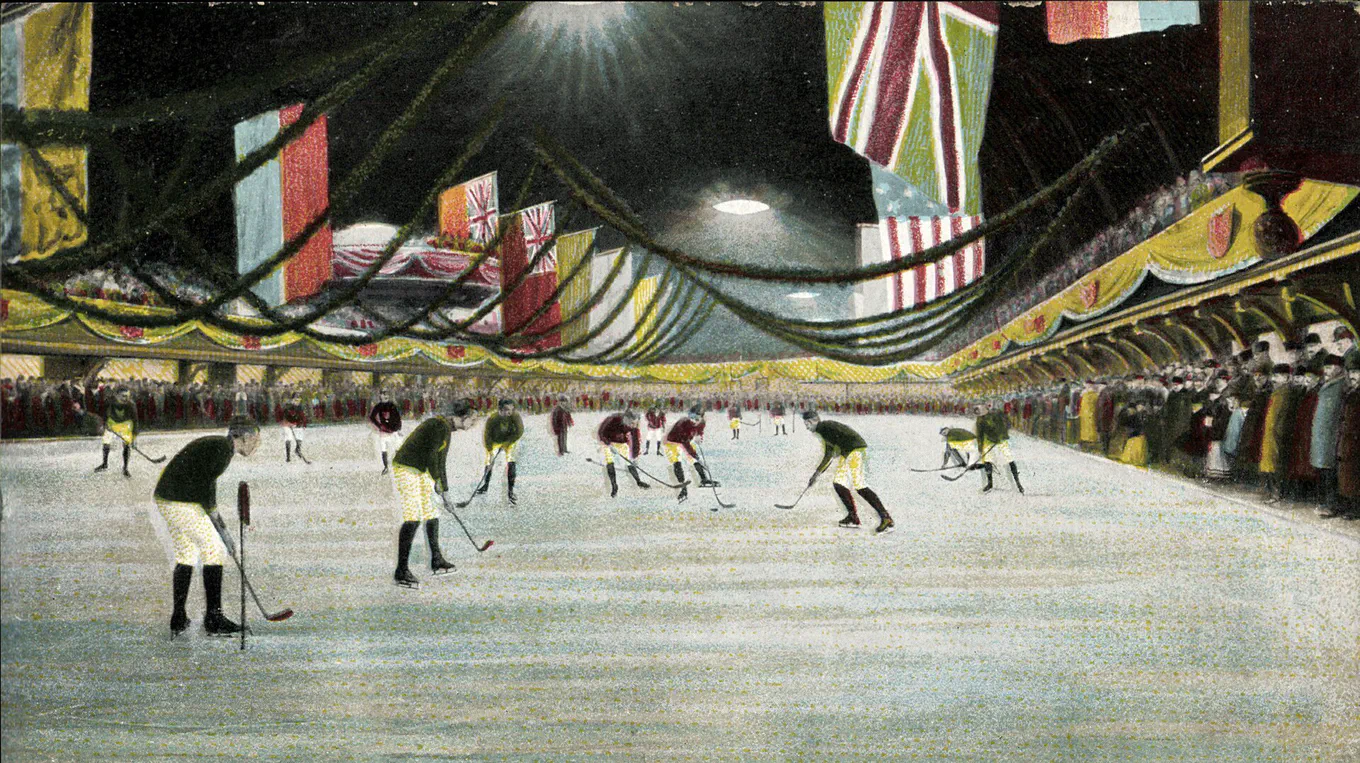
Stand here. The rink was demolished in 1925, and a car park stands on its site on Drummond Street. Plaques are at the nearby Centre Bell.
The first recorded indoor ice hockey game was played here, on 3 March 1875, and it may have been the first with a puck. James Creighton, an engineer and figure-skating judge from Halifax, organised it. A flying ball would endanger the onlookers, so they played with a flat, round piece of wood. After the game, a fight was reported between players, spectators, and skating-club members, who wanted the ice for skating. A Kingston paper said “shins and heads were battered, benches smashed and the lady spectators fled in confusion”.
Pack nothing. Leave Friday.
Every Friday, I write a free letter, Journey, that takes us on a trip through places, stories, and ideas.
The Apprenticeship of Duddy Kravitz(Mordecai Richler, 1959). A novel, set mostly in poor districts of Montreal such as St. Urbain Street.
The Tin Flute(Gabrielle Roy, 1945). A novel set mainly in the poor Montreal neighbourhood of Saint-Henri, from February to May 1940.
Beautiful Losers(Leonard Cohen, 1966). A novel. Its narrator and F. go to a demonstration in Parc Lafontaine.
Films to watch before you visit Montreal
Jesus of Montreal(Denys Arcand, 1989). A film about a group of Montreal actors who stage a passion play in a Quebec church.
Polytechnique(Denis Villeneuve, 2009). A film. It re-enacts the 1989 École Polytechnique massacre, in which a young man enters a classroom at Polytechnique Montreal, an engineering school.
Léolo(Jean-Claude Lauzon, 1992). A film. A coming-of-age comedy-drama about Léo Lauzon, a young boy living in a tenement with his dysfunctional family in Mile End, Montreal.
Questions
Can you stay in the room where John Lennon and Yoko Ono held their bed-in?
Yes. Room 1742 at the Queen Elizabeth Hotel is still a hotel room, not a museum. The hotel reopened it in 2017 after a renovation, with relics from 1969, among them a TV that shows old footage and a phone that plays Lennon’s voice.
Where was the first indoor ice hockey game played?
At the Victoria Skating Rink, at what is now 1187 Drummond Street, on 3 March 1875. The rink was demolished in 1925, and the Autoparc Stanley car park stands on the site. Plaques for the rink and for James Creighton, who organised the game, were unveiled at the nearby Centre Bell in 2008.
Why is Montreal called Montreal?
It’s named after Mount Royal, the three-peaked mountain the early settlement was built around. Jacques Cartier, the first European to climb it, was guided up in 1535 by local people and named it in honour of his patron, Francis I of France. The settlement itself was founded in 1642 as Ville-Marie, “City of Mary”.