The chronicles first mention Moscow in 1147. Today, on the Moskva River in Central Russia, it is the country’s capital and largest city, home to more than 13 million people. Napoleon in a burning city takes its place beside a novelist’s Devil at a pond, an architect’s legend on Red Square, a bell that cracked before it rang, and a cathedral that gave way to a swimming pool.
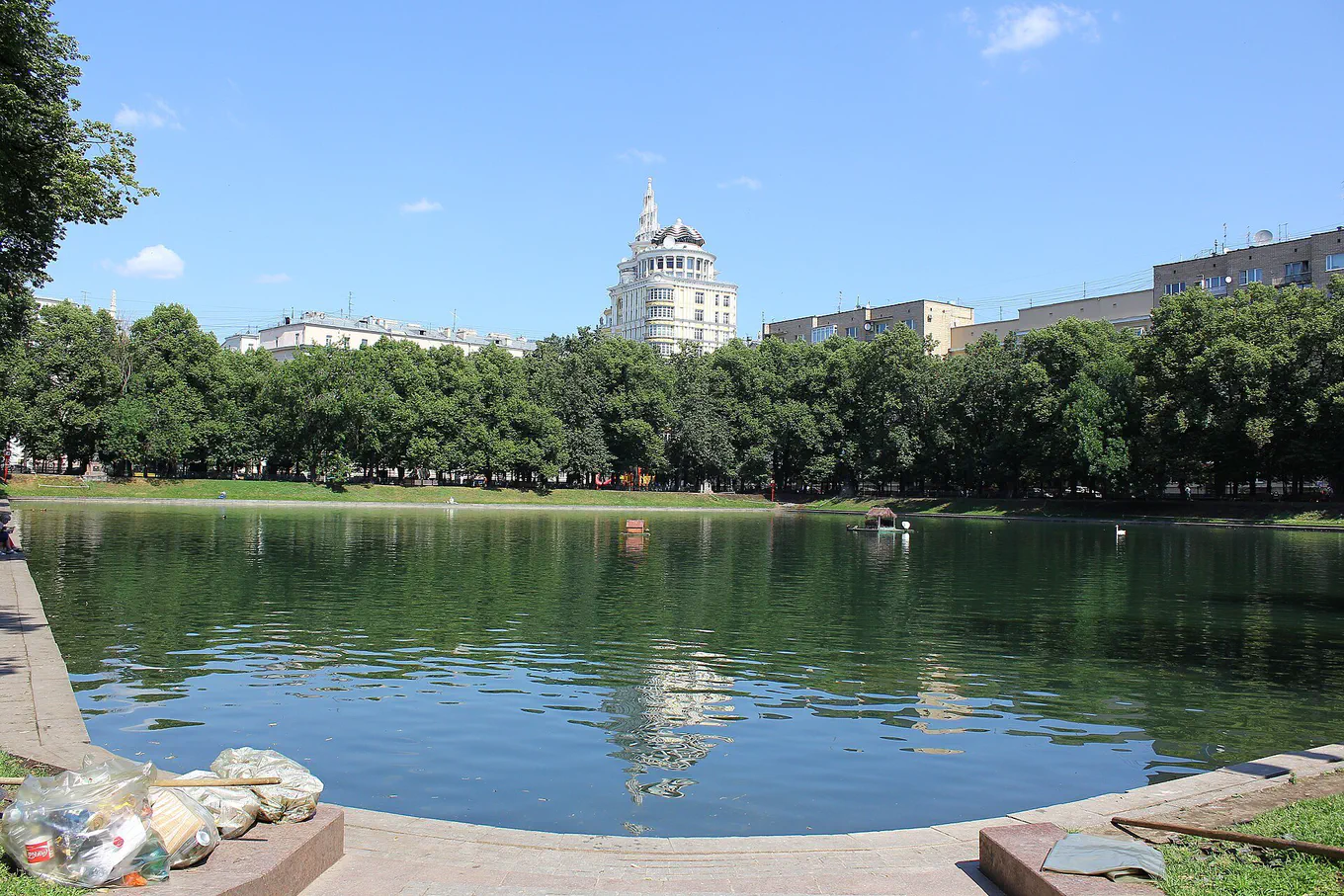
Mikhail Bulgakov’s The Master and Margarita opens beside this pond. The Devil, as the mysterious Woland, interrupts an atheist named Berlioz, who slips on spilled sunflower oil and is beheaded by a tram. Bulgakov spent twelve years on the novel. Seeing no future as a writer in the Soviet Union, he burned the first manuscript, as his hero the Master does, and began again. When he died in 1940, the book was still unpublished, with some sentences unfinished. His widow got it into print twenty-six years later.
Ivan the Terrible and the architect of St Basil’s
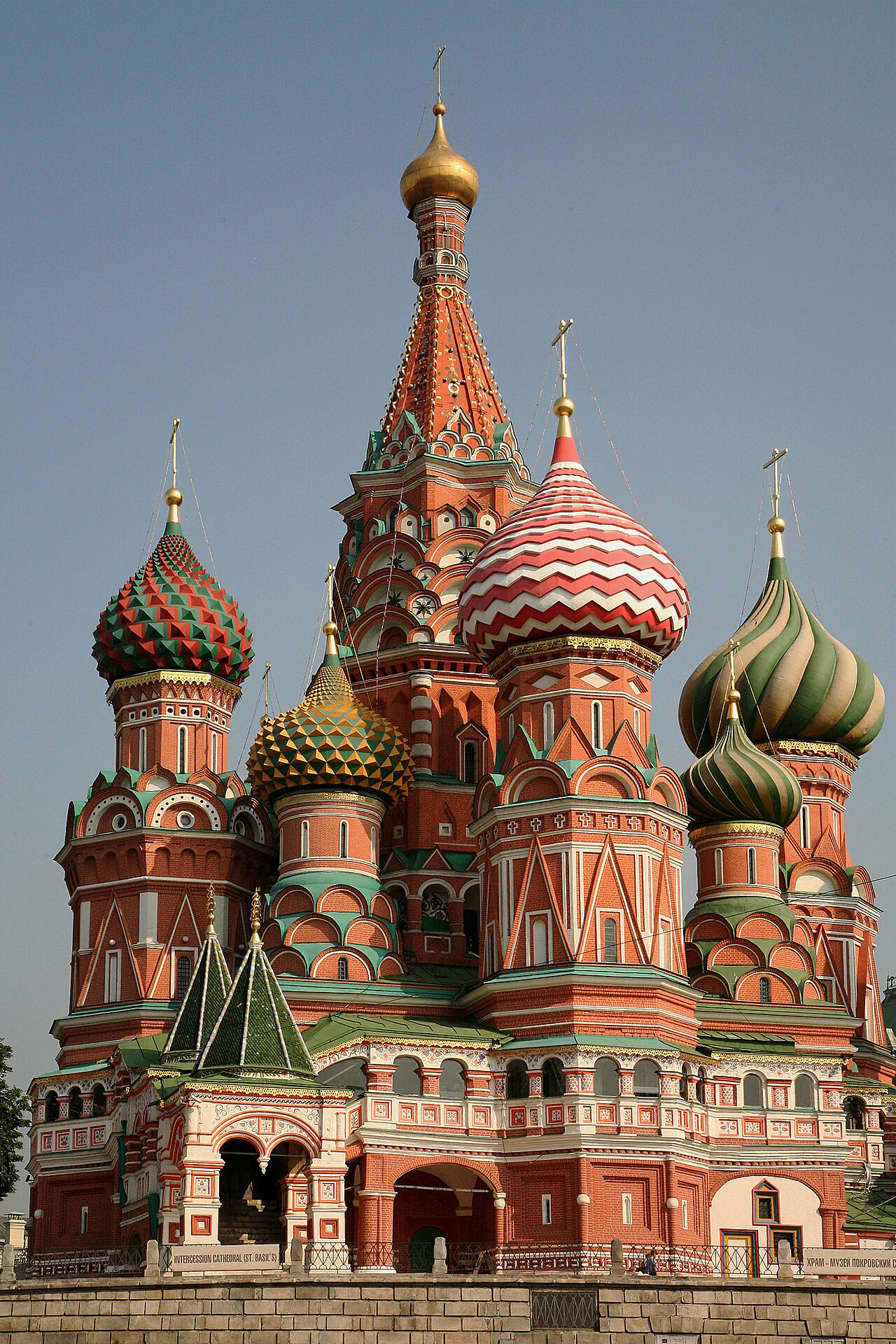
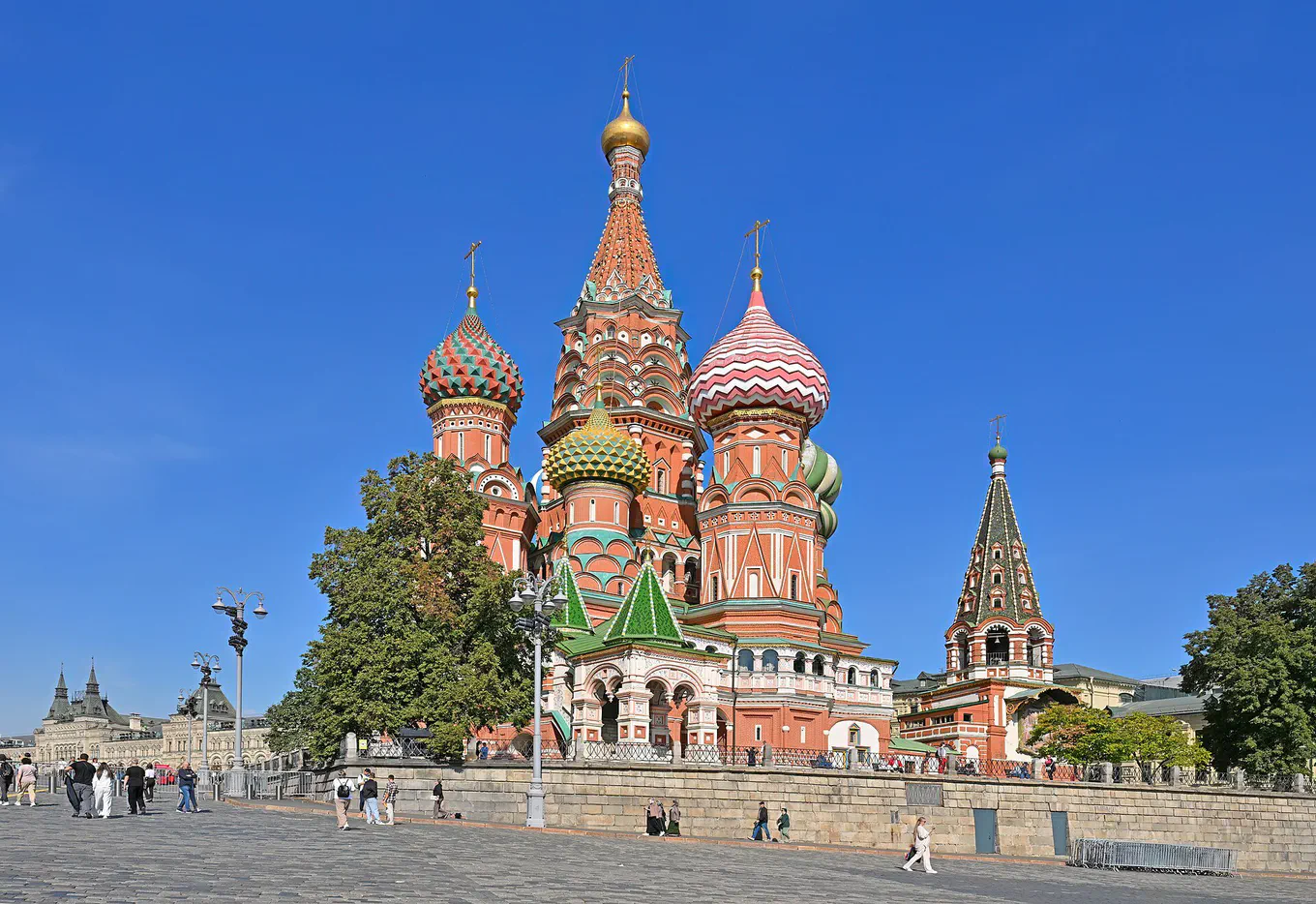
Stand here. St Basil’s Cathedral, on Red Square, which has been run as part of the State Historical Museum since 1928.
St Basil’s went up between 1555 and 1561 on the orders of Ivan the Terrible, to mark the capture of Kazan. Tradition names its architects as Barma and Postnik, perhaps one man. Legend says Ivan had the architect blinded, so that he could never repeat the masterpiece anywhere else. Many historians call that a myth, probably borrowed from a tale about another Ivan. Their evidence is simple. The architect went on to help build the walls and towers of the Kremlin in Kazan, the very city his church celebrated.
The Tsar Bell that cracked before it rang
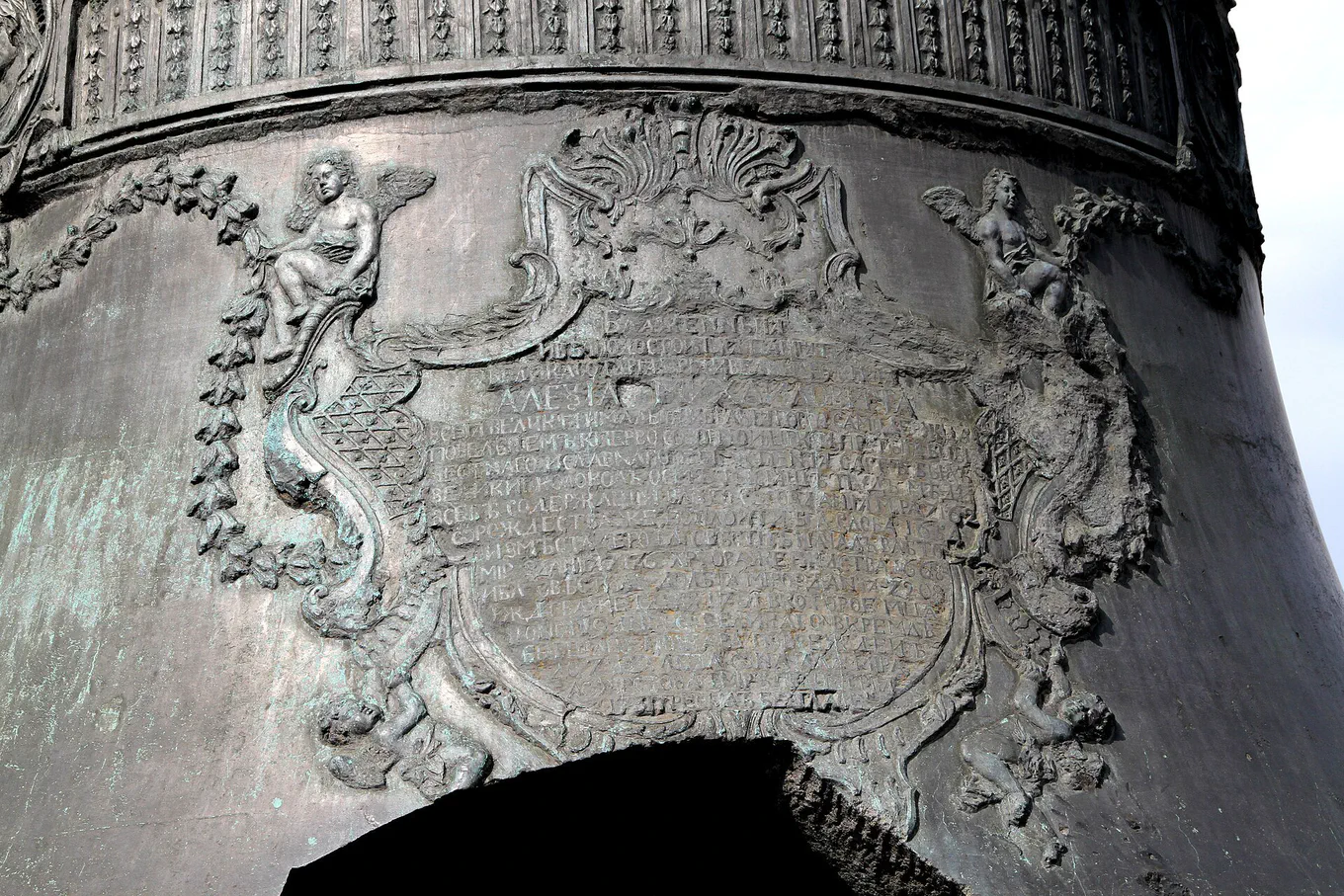
Stand here. In the Kremlin, between the Ivan the Great Bell Tower and the Kremlin Wall. The bell has sat on a stone pedestal since 1836.
The largest bell in the world, almost 202 tonnes, was cast for the Kremlin. Empress Anna ordered it, and a Moscow foundry master, Ivan Motorin, began the work with his son, Mikhail. Ivan died before it was finished, and in 1735 Mikhail cast it. Two years later, fire broke out in the Kremlin and spread to the bell’s wooden support. Guards threw cold water on the hot bell. It cracked in eleven places, and a slab of more than ten tonnes broke away. It has never been rung.
Napoleon in the Kremlin as Moscow burned
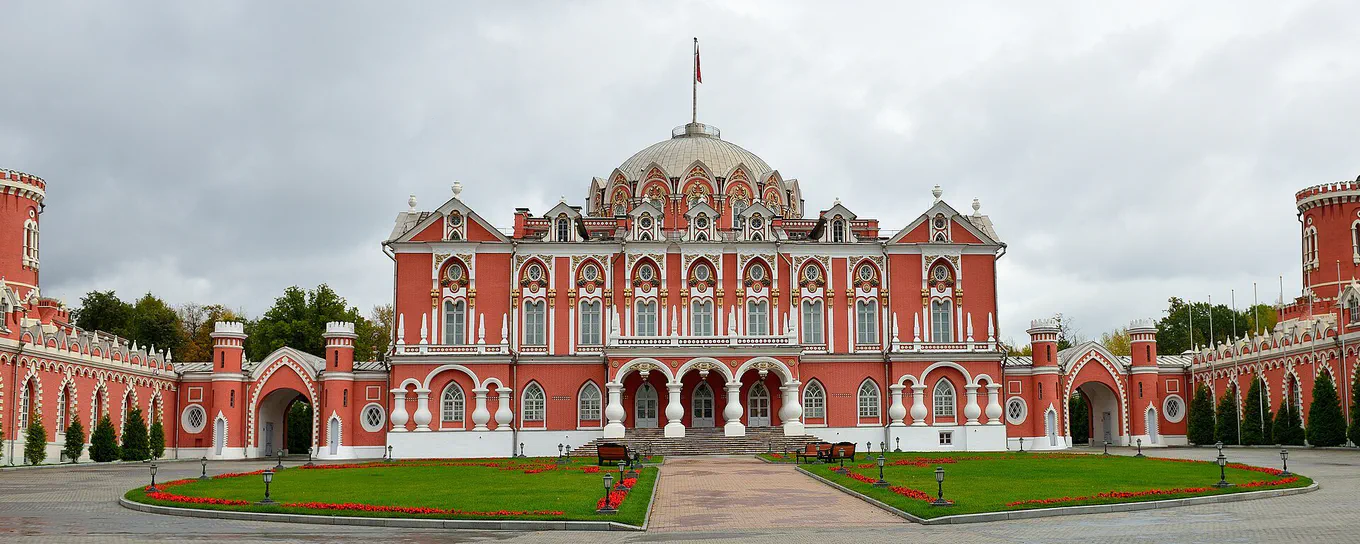
Stand here. The Petrovsky Palace, on Leningradsky Prospect, which in 1812 stood empty on the road to St Petersburg. It is now the Moscow government’s Reception House.
On 14 September 1812, Napoleon entered Moscow expecting a delegation with the keys. None came. That day the city began to burn. Most historians blame Russia’s scorched-earth strategy. When the flames threatened the Kremlin, Napoleon took refuge in this empty palace outside the city. He offered the Tsar peace, but Alexander had decided France and Russia could not live side by side. Short of food and warned by the first snow, the French army abandoned the city it had come to take.
The Cathedral of Christ the Saviour and the swimming pool
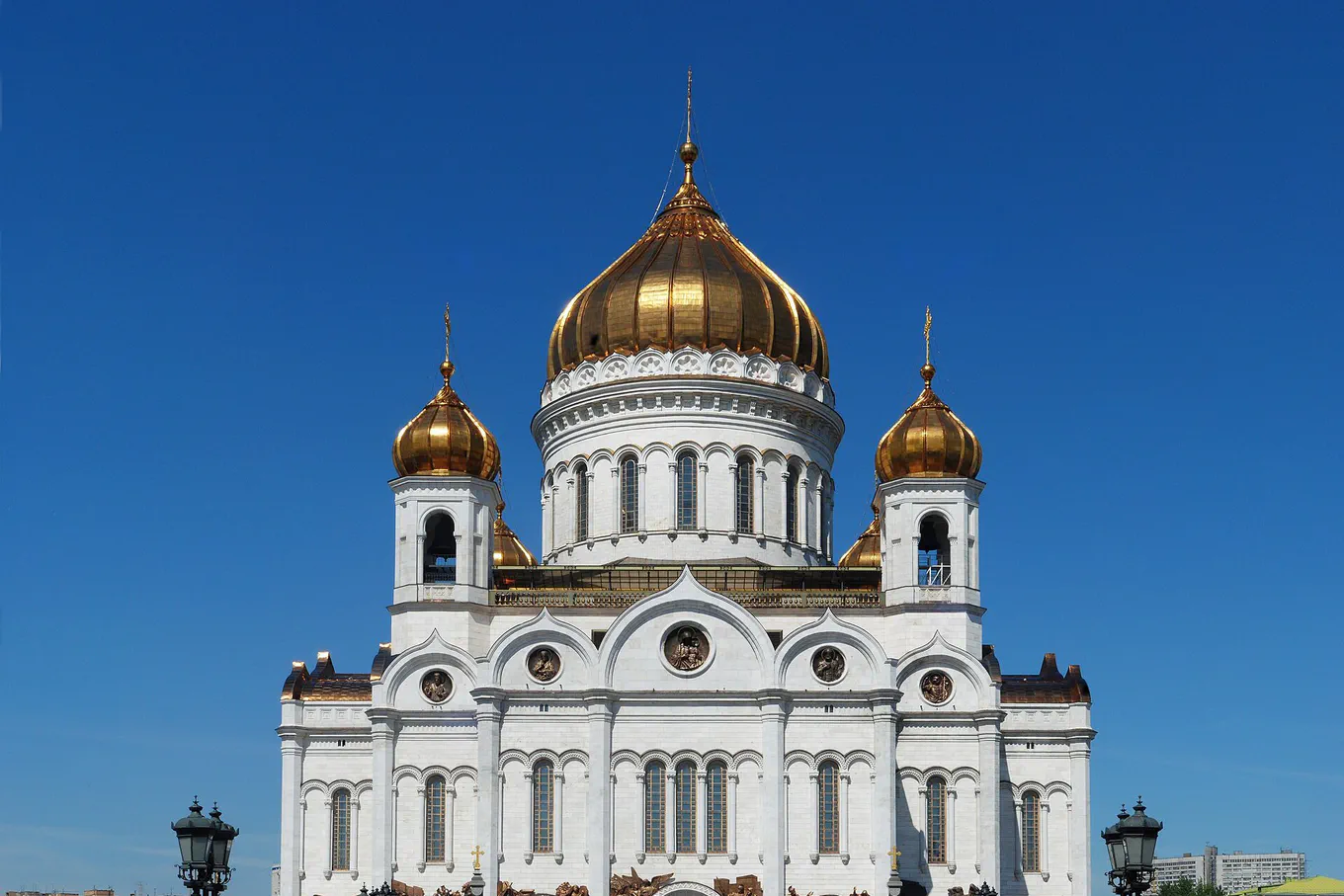
Stand here. The Cathedral of Christ the Saviour, 103 metres tall. The old cathedral’s marble reliefs were saved and are on show at the Donskoy Monastery.
Stalin chose this spot for a monument to socialism, the Palace of the Soviets, a 416-metre tower that would have been the world’s tallest structure. The cathedral that stood here, planned after Napoleon’s retreat, was dynamited on 5 December 1931. The palace never rose. War took its steel for fortifications and bridges, and river water flooded the foundations. Years later, the site became the world’s largest open-air swimming pool. The cathedral was built again, and in 2000 it was consecrated where the pool had been.
Pack nothing. Leave Friday.
Every Friday, I write a free letter, Journey, that takes us on a trip through places, stories, and ideas.
The Master and Margarita(Mikhail Bulgakov, 1966–67). A novel. The Devil comes to Soviet Moscow at Patriarch’s Ponds and settles in a flat modelled on Bulgakov’s own, at Bolshaya Sadovaya 10.
A Gentleman in Moscow(Amor Towles, 2016). A novel. Its hero is placed under house arrest for life in the Hotel Metropol, in central Moscow.
Gorky Park(Martin Cruz Smith, 1981). A novel. An investigator is assigned the case of three corpses found in Gorky Park, a large park in the city.
War and Peace(Leo Tolstoy, 1869). A novel. The Tsar throws a biscuit from a balcony window of the Kremlin’s Cathedral of the Assumption, and Book XI describes Moscow burning in 1812.
Films to watch before you visit Moscow
Moscow Does Not Believe in Tears(Vladimir Menshov, 1980). A Soviet film set in Moscow, where in 1958 three young women from the provinces live in a workers’ dormitory. It won the Academy Award for Best Foreign Language Film.
Walking the Streets of Moscow(Georgiy Daneliya, 1964). A Soviet romantic comedy film. Volodya, invited to Moscow to discuss his work, makes a friend in the Moscow Metro and is bitten by a dog near Clean Ponds.
Night Watch(Timur Bekmambetov, 2004). A Russian urban fantasy film set in Moscow in 1992, loosely based on Sergei Lukyanenko’s 1998 novel. At its climax, Anton prevents a catastrophic storm from levelling the city.
Questions
Where is Patriarch’s Ponds, and was there ever a tram?
Patriarch’s Ponds is a park and pond in the Presnensky District of central Moscow, reached from Mayakovskaya and Pushkinskaya metro stations, with monuments to Bulgakov and Ivan Krylov. Despite the novel’s famous tram, no regular tram service ever ran around the pond, though a temporary track was used for night storage for a short time in the 1930s.
Can you see the Tsar Bell?
Yes, when the Kremlin is open to the public. The bell is on display in the Kremlin grounds, on a stone pedestal between the Ivan the Great Bell Tower and the Kremlin Wall. Supervised tours are offered of the Moscow Kremlin Museums.
Why is Red Square called Red Square?
Not because of communism. The Russian word krasnaya once meant “beautiful” and now means “red”. The square was first recorded by that name in 1661–62, long before the Soviet Union. Together with the Kremlin, it has been a UNESCO World Heritage Site since 1990.